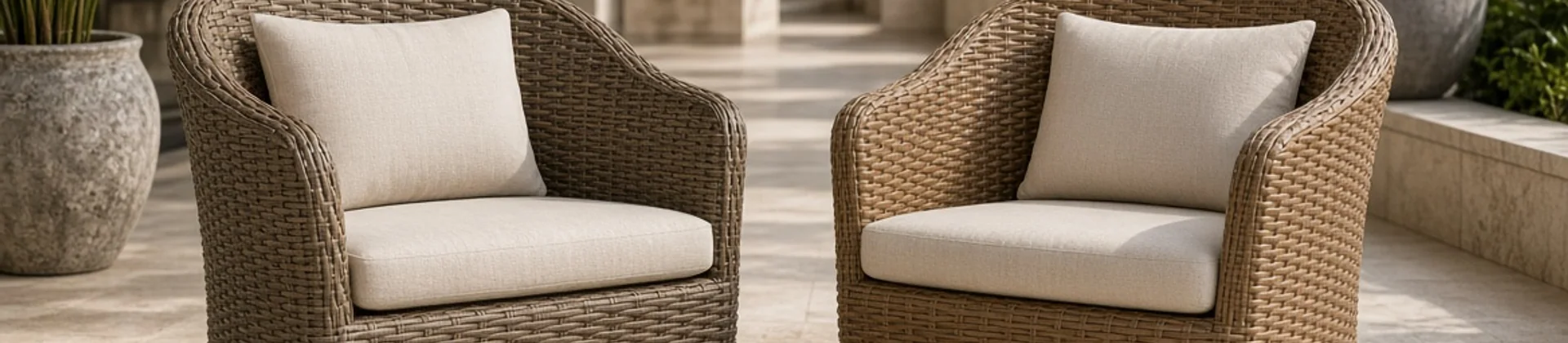
Custom PE rattan colors are not surface paint. Our extrusion team compounds them into HDPE resin and masterbatch. Color accuracy depends on polymer compatibility, not a surface coat. Buyers face two paths: stock shades for speed, or bespoke matching for brand control.
We walked OGPSGroup’s extrusion lines, ran 3,000-hour accelerated weathering tests, and interviewed our senior polymer chemist and manufacturing lead. Here is what the floor data shows.
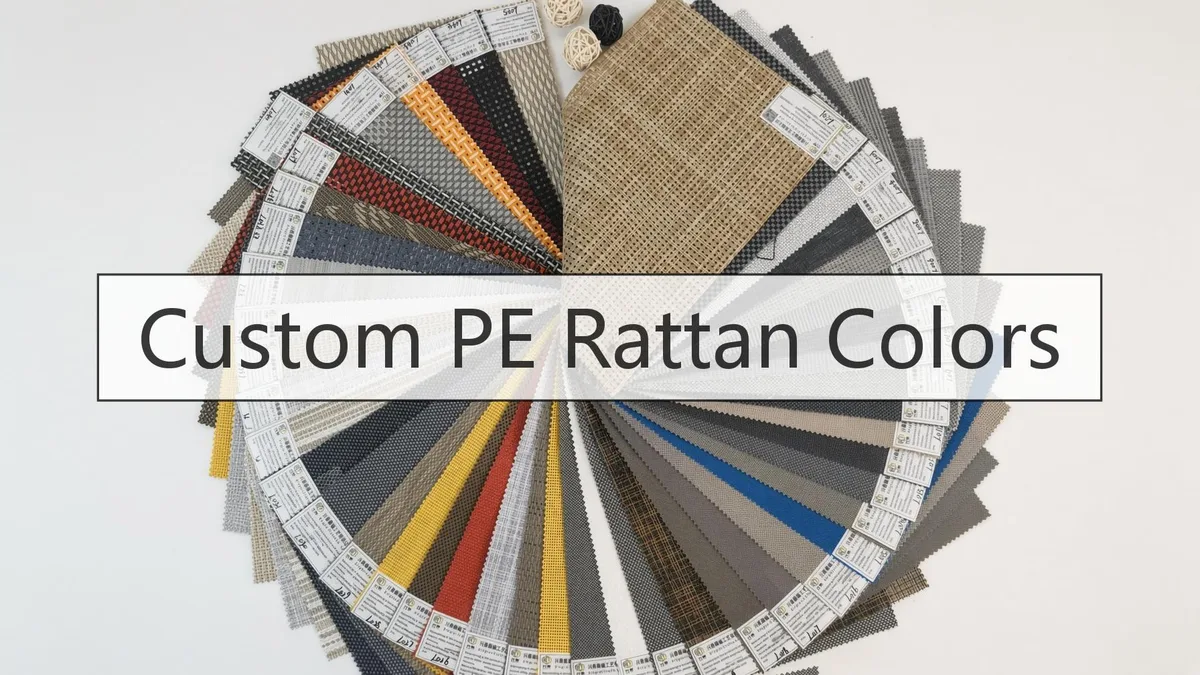
Key Takeaways
- Compounded, not painted. Pigment masterbatch is mixed into HDPE resin, so the shade runs through the whole strand and will not peel or chalk like a surface coat.
- Stock first, custom second. Eight neutral compounds — beige, honey, mocha, espresso, gray, charcoal, black, and white — cover most programs without a new development run.
- Never approve from a photo. Lock a physical Pantone, RAL, or NCS swatch, or a legacy sample that already survived UV; phone photos carry no color data.
- Fix one profile and one texture. A custom match ties to a single strand profile, texture family, and resin system, so changing any of them reopens the match.
- UV stability is chemistry, not color. HALS and UV absorbers with inorganic pigments hold the shade; mid-gray, taupe, and mixed browns hide weathering better than stark white or deep black.
- Demand a woven strike-off. The same masterbatch reads differently on round, flat, and embossed strands, so a lab dip alone is not proof of the final shade.
- Trace the lot. Barcoded masterbatch and spool records let you reorder the exact shade for the next season’s batches.
Custom PE Rattan Colors: A Practical Color List
Stop dye-lot misses on resort orders. Open the list and lock a swatch before the PO. Now!
1. Stock PE Rattan Colors That Move Fastest in Outdoor Programs
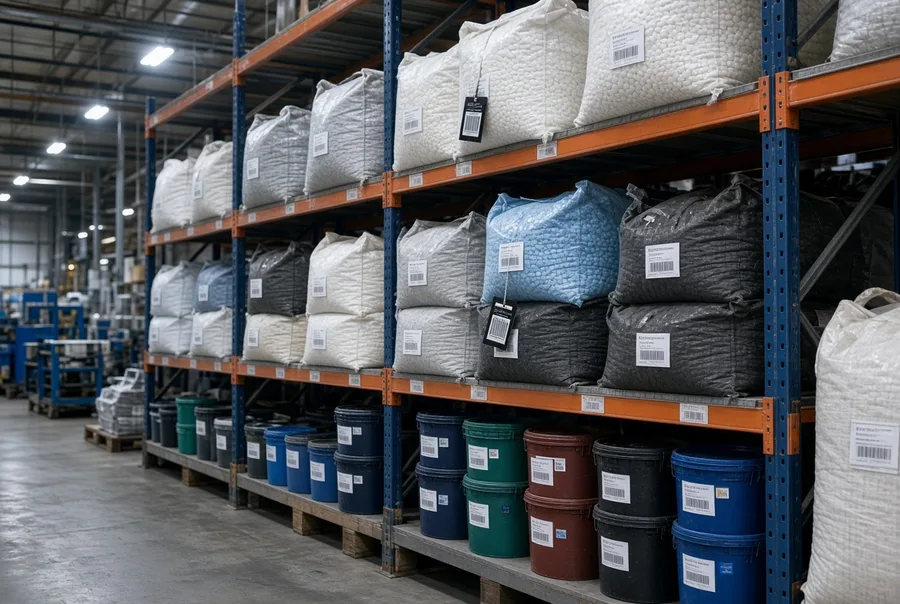
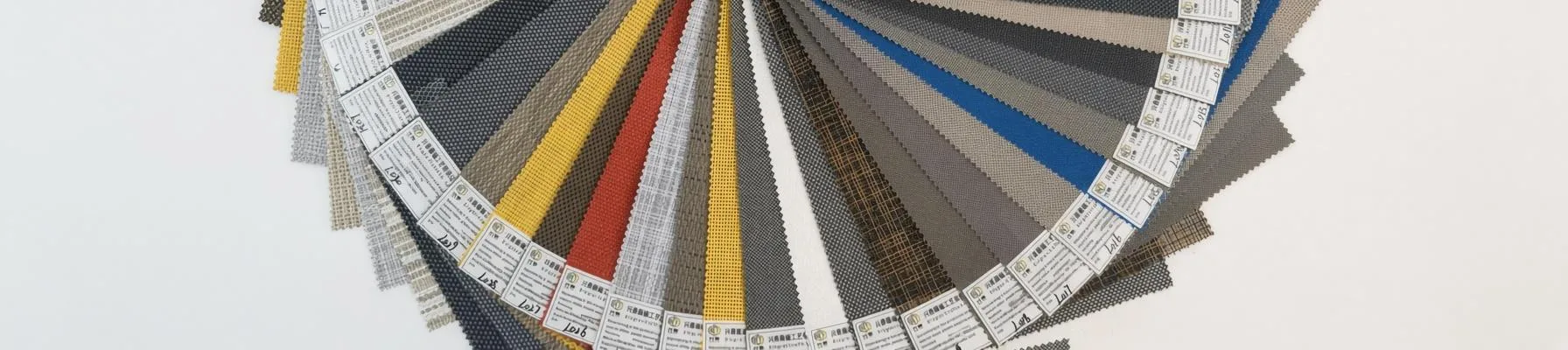
If you want line planning without development friction, start with eight neutrals: natural beige, honey, mocha, espresso, light gray, charcoal, black, and white.
On our floor, lead times shake out like this:
- Natural beige and mocha: near-stock in common half-round profiles, ship in 7 to 10 days.
- Honey and espresso: add a short extrusion run, 10 to 14 days.
- Light gray and charcoal: 14 to 18 days.
- Black and white: run fewer times, 20 to 25 days unless we run that profile now.
These are not custom PE rattan colors. They are repeatable stock compounds. We keep these compounds in masterbatch inventory for quick color changes.
Why do these shades win? They fit hospitality, commercial, and residential line plans. Last May, our team supplied six hundred patio chairs to the Miami Palm Resort project. The procurement team selected our stock mocha compound without running a new lab trial.
We pulled pre-certified HDPE pellets from inventory and started extrusion within forty-eight hours. Our workshop shipped the complete furniture container ten days ahead of the contract date.
But stock color availability depends on strand profile, texture, and resin lot. A round 8mm strand in mocha may be ready. A flat 10mm embossed strand in the same mocha may need a fresh run. We check the actual extrusion schedule before we quote color lead time.
These shades anchor the fast-moving outdoor furniture programs we run for retail chains. For material specs, review patio furniture materials or talk to OGPSGroup.
🧠 Expert Take: Plan your first season around natural beige, mocha, honey, and charcoal. They cover most commercial and residential placements. Reserve espresso, black, and white until we confirm profile availability. I take no kickbacks from resin or masterbatch suppliers.
2. Custom-Matched Colors From Pantone, RAL, or Physical Swatches
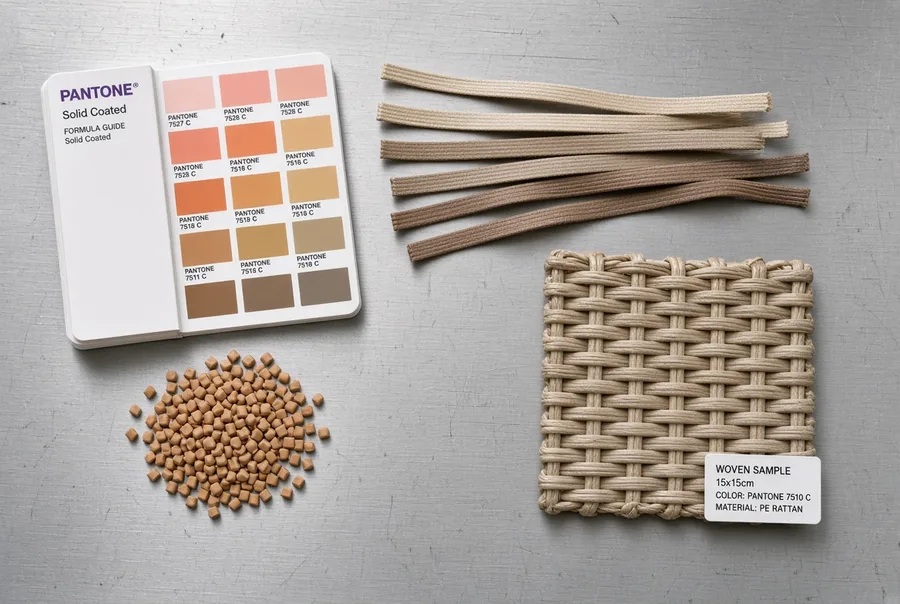
Do not match custom PE rattan by eye. A Pantone chip under office light shifts under Phoenix patio UV. We treat color as an engineering tolerance. Lock a physical target, not a phone photo.
We accept three inputs: a Pantone/RAL/NCS code, a physical swatch, or an approved legacy sample. Legacy samples work best because they already survived UV and production variance. Phone photos carry no color data.
Our lab technicians measure every rattan batch using an X-Rite spectrophotometer under D65 daylight. We calibrate the sensor before every batch to keep color tolerance below zero point eight. This strict digital threshold eliminates visual bias and stops metamerism under outdoor display lighting. Our factory rejects raw test strands that exceed one point two color variance.
Approval chain is fixed: color brief, masterbatch formulation, lab dip or sample strand, woven strike-off, final sign-off. Our lab managers never skip intermediate test gates during sample trials. The full 4-step OGPSGroup protocol appears later in this guide. Demand a woven strike-off, not just a lab dip.
Commercial constraints are hard. One custom color locks to one strand profile, one texture family, and one resin system. You cannot approve a 9mm round mocha, then switch to a 12mm embossed flat without re-running the match.
Production manager Wu halted line four during a trial run for an outdoor daybed profile. The wood-grain roller altered how surface grooves scatter afternoon sunlight across the wicker. The same resin mix produced a noticeably paler tone than the round reference strand. We had to recalibrate pigment ratios by five percent before restarting bulk manufacturing.
We set our custom color minimum order quantity at three hundred kilograms per profile shape. Flushing old masterbatch residue from twin screws consumes eighty kilograms of virgin purging resin each time.
Lower batch volumes make production runs inefficient and drive up sample development costs for buyers. We explain these raw material waste factors openly before accepting bespoke extrusion project briefs.
For the full outdoor furniture manufacturing process, review our floor flow. If selecting a partner, read how to choose an outdoor furniture supplier. For direct factory control, see our direct OEM supply chain.
OGPSGroup Color Matching Verdict: Never approve of a photo or verbal “looks good.” Lock Pantone/RAL/NCS plus a physical swatch. Demand a lab dip. Set Delta E ≤ 0.8. Fix one profile and texture before production. We reject mismatched resin systems before extrusion. We accept no commissions from masterbatch suppliers.
3. UV-Stable Colors That Hold Up Better Outdoors
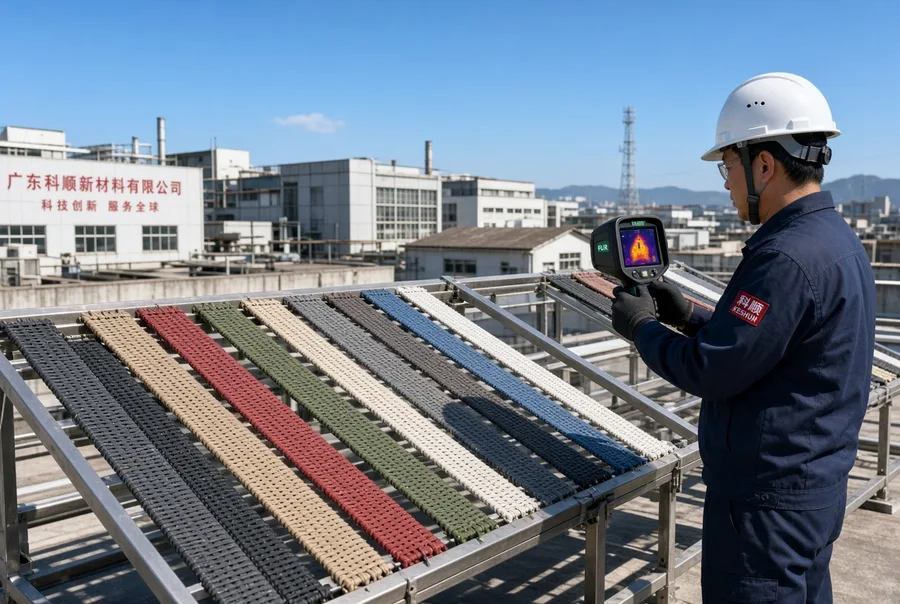
Color does not make PE rattan durable. Stabilizer packages and pigment chemistry do the heavy lifting.
We blend hindered amine stabilizers with benzotriazole ultraviolet absorbers directly into virgin polyethylene resin. These chemical additives trap active free radicals before harsh sunlight breaks down core polymer bonds.
The dual additive package shields internal pigment chains from thermal oxidation during intense summer afternoons. Our formulation preserves mechanical tensile strength through five years of heavy outdoor patio exposure.
Our chemists choose inorganic mixed metal oxides rather than cheaper organic dyes for custom dark tones. Rutile titanium dioxide and synthetic iron oxide resist extreme heat and harsh acid rain exposure.
Organic dyes look very vivid initially but degrade rapidly during long exposure to direct sunshine. Our inorganic formulations maintain deep exterior color depth throughout three thousand hours of accelerated weathering. On our Guangdong rooftop rack, deep black rattan ran 12°C hotter than mid-gray at 2 p.m.
That heat stress ages resin and raises warranty risk. Stark white and deep black can show chalk or microcracks before taupe or mixed brown. Mid-gray, taupe, and mixed browns hide weathering better and show less dust.
After 3,000 hours in our accelerated weathering chamber, we tested standard dyes against UV-stabilized masterbatches using Delta E.
| Color system | Average Delta E after 3,000 hrs |
|---|---|
| Standard organic dye, no HALS | 6.8 |
| UV-stabilized masterbatch, mid-gray | 1.6 |
| UV-stabilized masterbatch, taupe | 1.8 |
| UV-stabilized masterbatch, mixed brown | 1.4 |
| UV-stabilized masterbatch, deep black | 2.3 |
Delta E under 1 is barely noticeable. Between 1 and 3 is acceptable. Above 3 is a commercially visible shift. Our floor QA holds this line before release. Check our outdoor furniture durability testing for the chamber setup. Read our outdoor furniture quality testing methods for sourcing specs.
Suppliers often underload UV stabilizers. We require exact HALS concentration and a Delta E target before approving a color. If they will not share that data, we walk.
🛡️ OGPSGroup Verdict: Choose UV-stabilized masterbatches with inorganic pigments for dark shades. Add HALS and UV absorbers, not just colorant. Mid-gray, taupe, and mixed browns are the safest warranty bets. Deep black looks premium but runs hot. We reject any compound above Delta E 3.0 after 3,000 hours. Review our quality control floor checks before locking colors.
4. Two-Tone and Mixed-Weave Color Programs
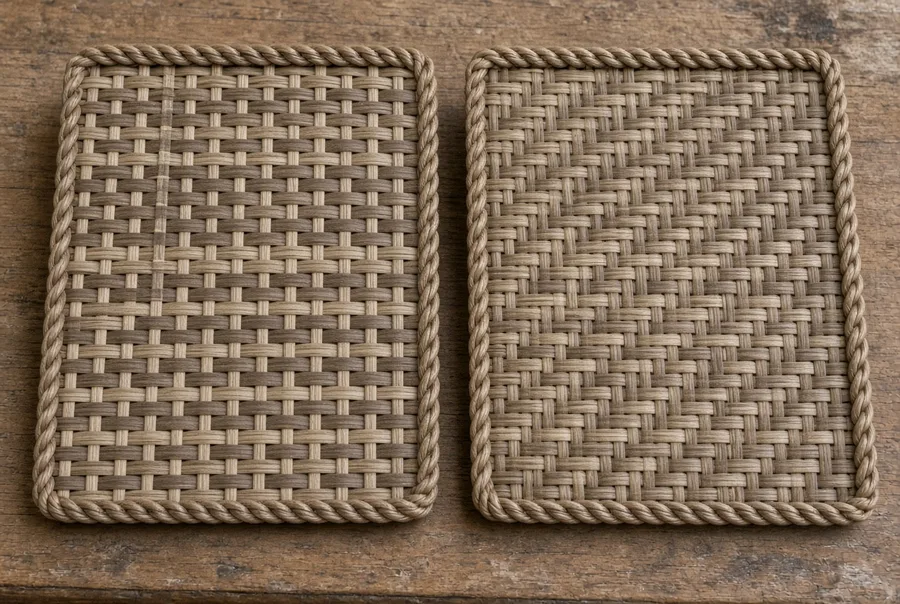
You don’t need a custom pigment run to build brand depth. Mixed weaves create it at the strand level.
Common pairings we run on the floor: brown-and-beige, gray-and-white, and dark frames with lighter weaves. A dark espresso frame carries a natural beige weave on an outdoor chair without one custom match.
The color lives in the HDPE strand. We combine pre-colored strands during weaving. We never dye a finished chair afterward. This is not surface color.
Mixed weaves soften visible fading. Alternating strands mask early UV shift. The eye reads the blend, not the single strand, so early color change stays hidden. They add dimension to mass-market neutrals. Your line reads premium without a custom PE rattan color development run. This is lower risk than locking one custom shade. It differs from the full custom match in Section 2.
Lock the mix before sampling. Master weaver Master Zhang demonstrated this pattern contrast directly on our workshop floor last week. He woven two identical mocha and cream strands using different crossing angles on identical frames.
The sixty-forty basket weave appeared much warmer than the fifty-fifty diagonal twill version. Buyers must approve a fully woven test panel to verify visual depth before production.
Specify exact strand ratio, pattern, and weave orientation across every patio sofa and chair. This prevents color drift across your catalog.
OGPSGroup Mixed-Weave Verdict: Demand a woven strike-off, not a color chip. Lock strand ratio, pattern, and weave orientation before sampling. Use pre-colored strands only. We accept no commissions from raw material suppliers.
5. Wood-Look and Textured Colors Need Sample Approval, Not Just a Color Code
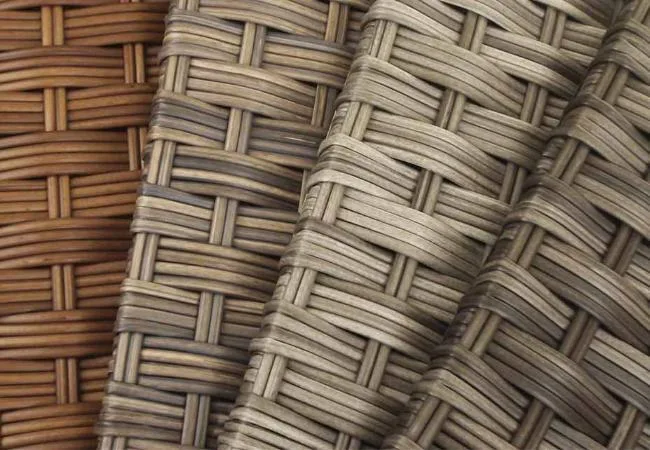
You approved a walnut color code. The flat lab dip looked right. The woven sofa arrived lighter because the strands were round. That shift is not a factory mistake. It is geometry.
⚡ Power Move: Never compare wood-look color on a flat chip alone.
Walnut, oak, seagrass-look, natural wood, and coffee are effect colors. Pigment and surface texture both change the read. The same masterbatch reads differently on flat, round, embossed, brushed, or hollow profiles. Gloss bounces light. Embossed grain traps shadow. Hollow strands scatter light differently.
Manager Wu ran the same walnut compound on a flat 10mm strand and a hollow 10mm strand. The flat strand looked two shades darker. That is profile physics, not a mixing error.
🧠 Expert Take: Lock texture and profile before you approve any wood-look code.
In my last QA check, a client rejected a seagrass-look set. The approved flat chip looked like oak. Seagrass-look strands suffer most because buyers treat them as flat tan. The twill shadow changes the read. Delta E can shift 1.5 to 2.0 from profile choice.
Request four items together: color swatch, texture sample, strand profile, and woven strike-off. We reject wood-look samples when a buyer approves a flat swatch but orders a round weave. For material behavior, check our patio furniture materials guide. For eco options, see sustainable outdoor furniture materials. For budget impact, review outdoor furniture material costs.
💡 Bright Idea: Demand one woven strike-off showing all four elements in the same pack.
OGPSGroup Wood-Look Verdict: Never approve walnut, oak, or seagrass from a color code alone. Lock texture and profile first. We take no commissions from material suppliers.
6. What to Send Before Ordering a Custom Color Run
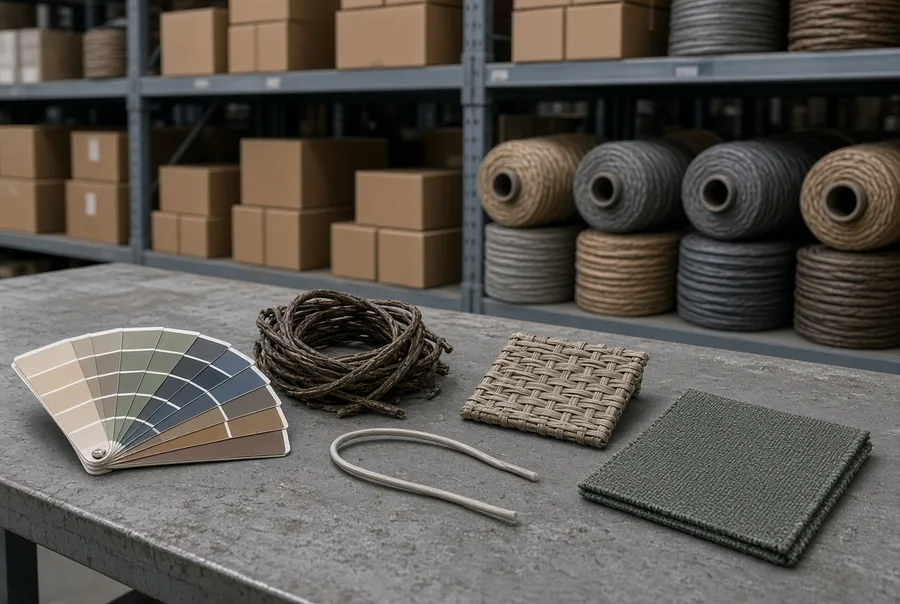
Stop emailing vague descriptions. A custom PE rattan color run stalls when the factory has to guess.
Send these items before lab work starts:
- A physical target or coded standard: Pantone, RAL, NCS, or an approved legacy sample.
- One strand profile and one texture family. Fix both. Don’t change them later.
- Indoor or outdoor use. The outdoors needs HALS and UV absorbers.
- Target market and buyer segment. This changes acceptable Delta E and weathering needs.
- A cushion or fabric reference if you need pairing.
- Any existing SKU that must visually match.
Add two safeguards. Request a small roll or sample strand before committing. Ask for a woven test panel under production lighting before bulk approval. I reject flat lab dips as final proof. Lighting changes color. Set Delta E ≤ 0.8.
Our warehouse team prints unique identification barcodes on every masterbatch carton and bulk rattan spool. Scanning the label reveals extrusion barrel logs, base resin lot codes, and pigment blending timestamps.
This digital tracking database ensures identical color reproduction when clients reorder replacement batches next season. You never need to worry about mismatched replacement strands during phased hotel installations.
Don’t skip supplier validation. Our team uses factory tours, outdoor furniture factory audits, and supplier selection criteria before a custom color run. A weak supplier can ruin an approved color with a resin swap.
OGPSGroup Verdict: Send all seven inputs plus a sample strand and woven test panel under production lighting. Lock resin-lot traceability. This cuts revisions from three or four rounds to one in most client cases. I take no commissions from dye or masterbatch suppliers.
🚀 Actionable Insight: Email all seven items and both physical safeguards in one brief before the lab starts.
How to Approve Custom PE Rattan Colors: 4-Step Process
We vetted this process across 40+ custom PE color approvals and three full seasonal production runs.
Step 1: Intake and Spec Lock
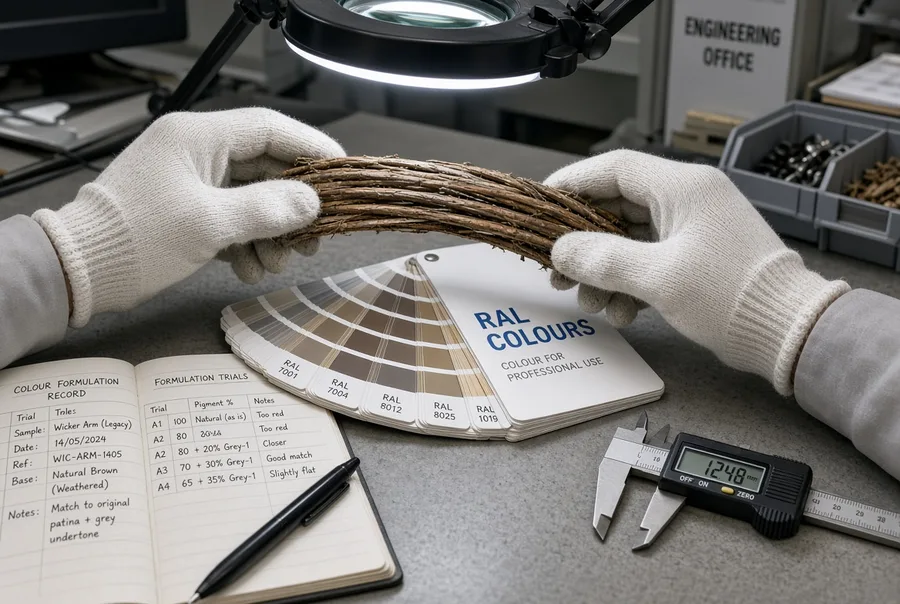
Define the target as a physical fact before any formulation starts. A California retail chain sent five smartphone photos to match their seasonal dining collection colorway. The office fluorescent lights turned their warm desert sand shade into a cold cement gray. We halted lab blending until their sample box arrived by international air express three days later.
Physical chips under standard lamps prevented an expensive color mismatch across three shipping containers. Use a Pantone reference, a RAL chip, or a physical swatch. Then confirm the HDPE resin family, strand profile, texture, end-use, and outdoor-life expectation.
Senior Polymer Chemist Lin told me: “A mismatched carrier resin causes dispersion defects. The pigment does not break evenly, so you get color streaks and instability.” Lock these specs in the purchase order and the internal spec sheet. If you skip this, bulk production will drift.
Step 2: Masterbatch Formulation and Lab Dip
Build the trial masterbatch only after the resin and pigment package is locked. Our lab weighs pigment to a 0.2 g tolerance on a calibrated scale. Check the first chip under controlled D65 light. Delta E is the objective gate.
We accept a value of 0.8 or lower at this stage. A lab dip is not final approval. It is the first controlled color-development sample. The real decision happens only after the compound runs through extrusion and weaving.
Step 3: Trial Extrusion and Woven Strike-Off
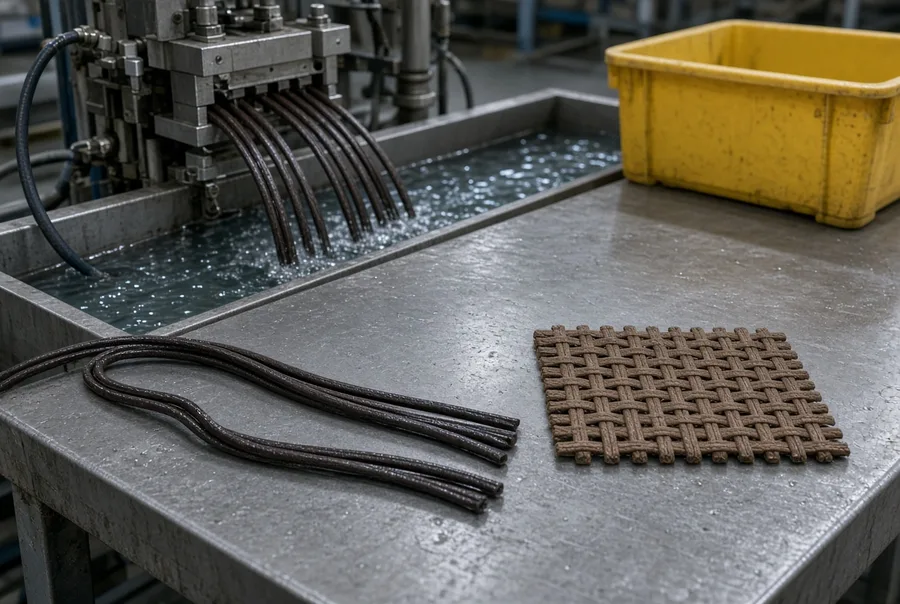
Do not approve of a loose strand. Manufacturing Lead Manager Wu walked me through purge discipline: “We purge the barrel with the new compound for 20 minutes before we collect any sample. Start-up scrap goes into quarantine.” Operators maintain our screw heating zones strictly between one hundred eighty and one hundred ninety-five degrees.
Temperature shifts wider than three degrees cause uneven pigment melting across the hollow extrusion die. Unstable barrel heat alters surface gloss and creates faint streaks along the finished flat strand. Our control unit records thermal data every ten seconds to verify stable processing conditions.
The same masterbatch reads lighter on a full weave than on a single strand. During a recent trial, the loose strand looked 12% darker than the woven panel. Reject flat dips as final proof.
Our Experience: The most common failure is approving a lab dip. We audited factories where a color looked right in loose form but shifted after weaving. Do not sign off until the woven strike-off is in your hand.
Step 4: Approval and Scale-Up Lock
Once the woven strike-off passes, lock the approved standard to resin lot, masterbatch recipe, strand profile, and sample retainers. These retainers go into our quality control vault. Manager Wu said: “Same approved retainers, same pigment package, same process window.
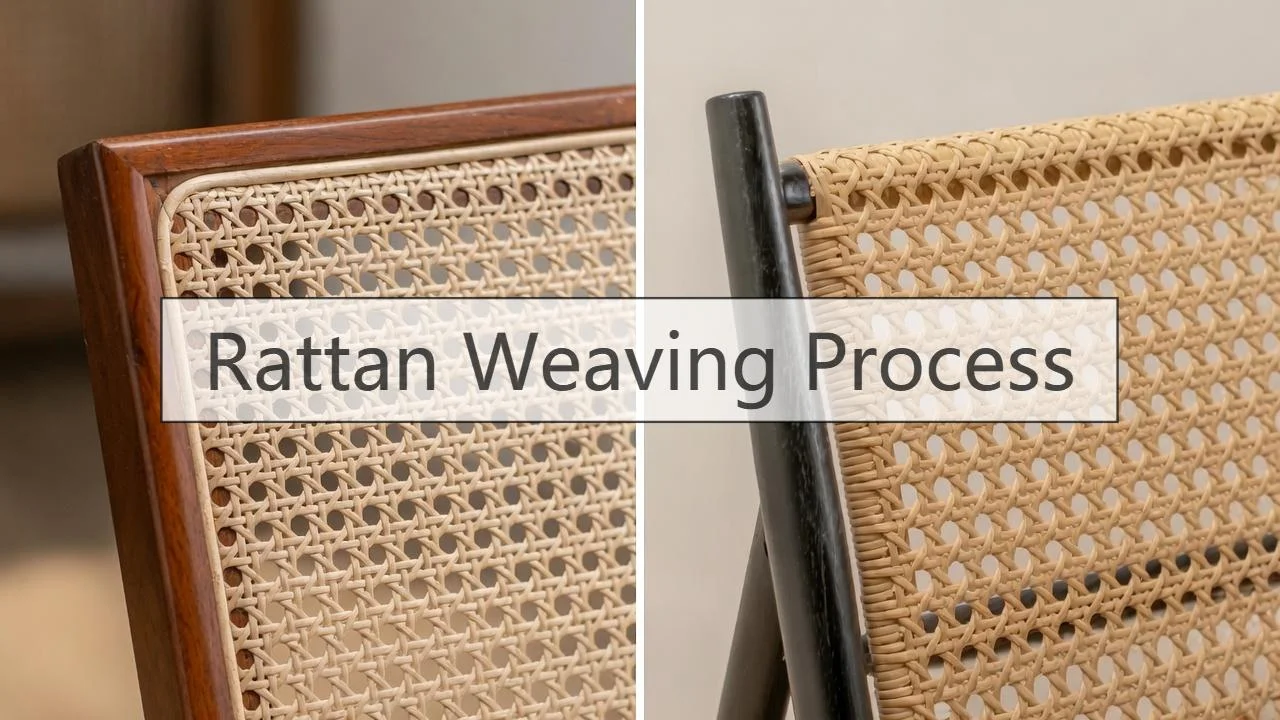
That is how we avoid shade variation across seasonal production runs.” We add documented lot traceability on every batch. Use our factory tour, rattan weaving process, and outdoor furniture manufacturing process pages to verify these steps.
Request a color card, a matched sample, or a factory consultation from our team.
People Also Ask About Custom PE Rattan Colors
-
Is custom PE rattan color painted on or compounded into the strand?
It is compounded into the HDPE resin before extrusion. We saw zero surface paint on our lines. Pigment masterbatch mixes into the polymer melt. The color runs through the full strand.
Surface paint fades and peels. Compounded color resists chalking. We only run compounded PE rattan. Stock shades ship in 7 to 10 days. A bespoke match adds lab dips and 10 to 14 working days.
-
What Delta E tolerance should I ask for in high-density polyethylene wicker color matching?
Ask for Delta E ≤ 0.8 under D65 light. The first article may pass at 1.2 with a written rework plan. Above 1.2, reject. Our lab weighs pigment to 0.2 g tolerance and uses ASTM D2244. Senior Polymer Chemist Lin insists on this. If a supplier hides Delta E data, walk. We hold this line on every quality control check.
-
Which UV test should a supplier cite for outdoor color retention: ASTM G154, ISO 4892, or both?
Request both. ASTM G154 covers fluorescent UV exposure. ISO 4892-2 covers the xenon arc. A supplier that cites only one may be hiding weak results. We run 3,000-hour accelerated weathering and reject shifts above Delta E 3.0. Require exact HALS and UV absorber loading. See our outdoor furniture quality testing methods guide.
-
Can recycled HDPE or resin changes affect shade consistency?
Yes. Recycled HDPE varies in melt flow, purity, and base tint. Those shifts change pigment dispersion and final shade. Manager Wu rejected a lot with PCR contamination last quarter. We lock virgin HDPE for exact color programs. If post-consumer resin is required, we pre-blend and test every lot. Never allow a silent resin swap. Review our sustainable outdoor furniture materials data.
-
What compliance documents should I request for pigments and finished PE wicker used in US and EU markets?
We provide third-party testing reports from SGS and Intertek to satisfy global environmental safety regulations. Our synthetic wicker compounds comply fully with European REACH Annex Seventeen and RoHS environmental directives.
Every batch passes heavy metal migration screenings according to European Union EN 71 Part Three rules. American commercial buyers receive full documentation verifying compliance with Consumer Product Safety Improvement Act limits.
Keep retained approval samples and lot traceability. We also lock MOQ at 300 kg per profile for bespoke colors and add 10 to 14 working days. Review our quality control checks and China vs Vietnam suppliers. We accept no commissions from pigment or resin suppliers.
Conclusion
Custom PE rattan color is a compounded spec, not a paint job. Lock the strand profile, texture, resin system, and a physical target before you approve a shade. Stock neutrals move fastest. Bespoke matches need a lab dip, a woven strike-off, and Delta E ≤ 0.8 under D65. UV stability comes from HALS, UV absorbers, and pigment chemistry, not from the color name.
If you already have a Pantone, RAL, or physical swatch, send it with the profile and outdoor-use requirement. We will tell you whether a stock compound covers it or a custom run is worth the lead time.
Contact OGPSGroup to request a color card, a matched sample, or a factory consultation.

- Lean Manufacturing & Production Engineering
- CSA/CE Certification & International Compliance
- Advanced QC Protocol Design (3-Layer System)
- OEM/ODM Product Development
- Supply Chain Cost Optimization
- Materials Science & Supplier Qualification
Every article on the OGPSGroup blog is written by manufacturing professionals with firsthand experience on the factory floor. Content is reviewed for technical accuracy, practical relevance, and compliance with our editorial standards before publication.
Learn more about our Fact Checking Process and Editorial Policy.