
Cost Optimization Services —
10–25% Savings, Zero Quality Compromise.
Engineering-led cost optimization built for volume buyers. Behind every quote is a team of product engineers, not traders. Factory-direct sourcing, cross-category consolidation, and value analysis — reduce per-unit cost by 10–25% while maintaining full destination-market compliance.
Real Cost Reduction Starts
On the Factory Floor.
Most cost optimization services start with a spreadsheet and end with a price negotiation. OGPSGroup starts with manufacturing ownership, adds engineering analysis, and finishes with a supply chain that stays optimized — not one that drifts back the moment the consultant leaves.
Manufacturing Leverage Creates the Price Anchor
We manufacture high-barrier products — BBQ grills, portable water heaters, RV hot water systems — in-house. That ownership over design, process, and yield rate means our cost optimization starts at the factory floor, not a spreadsheet.
Engineering Optimization Attacks Hidden Costs
The real margin killers aren't unit prices — they're poor structural design, export-incompatible packaging, and high return rates. Our engineers systematically address every cost layer before production begins, not after problems appear.
Supply Chain Integration Eliminates Management Waste
Multiple factories, categories, lead times, and QC standards drain your team's bandwidth. OGPSGroup consolidates these fragmented touch points into one coordinated platform — cutting communication overhead, procurement risk, and project management pressure simultaneously.
Where Your Margin
Actually Dies.
Most procurement teams focus on unit price negotiation. But the real margin destruction happens in four places most buyers never look. Here is where we find it — and fix it.
Structural Over-Engineering
Excess material weight directly inflates freight cost. Our engineers right-size every component for its actual load path — not for the safety factor someone guessed at a decade ago.
Export-Inefficient Packaging
Poor cube utilization burns container cost on every shipment. We redesign packaging geometry and stacking logic to maximize density — turning air into margin.
Fragmented Supplier Management
Every additional supplier adds coordination overhead. We consolidate your supply base into a unified platform, cutting management complexity and procurement risk.
Compliance Re-work
Failed inspection batches wipe out quarters of savings. Our pre-production compliance alignment ensures certification requirements are met before the first unit ships.
Four Steps.
Zero Guesswork.
From diagnostic session to decision-ready report — a structured process that eliminates uncertainty and delivers quantifiable cost reduction opportunities at every stage.
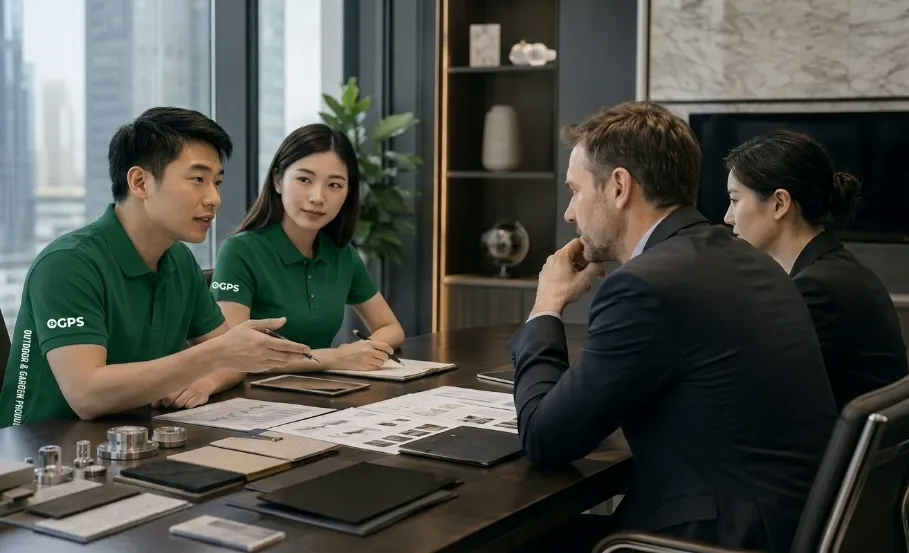
Needs Confirmation Meeting
This is not a sales call — it is a diagnostic session. We confirm your current categories and supplier structure, establish your existing pricing and MOQ baseline, map target-market compliance requirements, and define the specific cost reduction goals that will guide every subsequent decision.
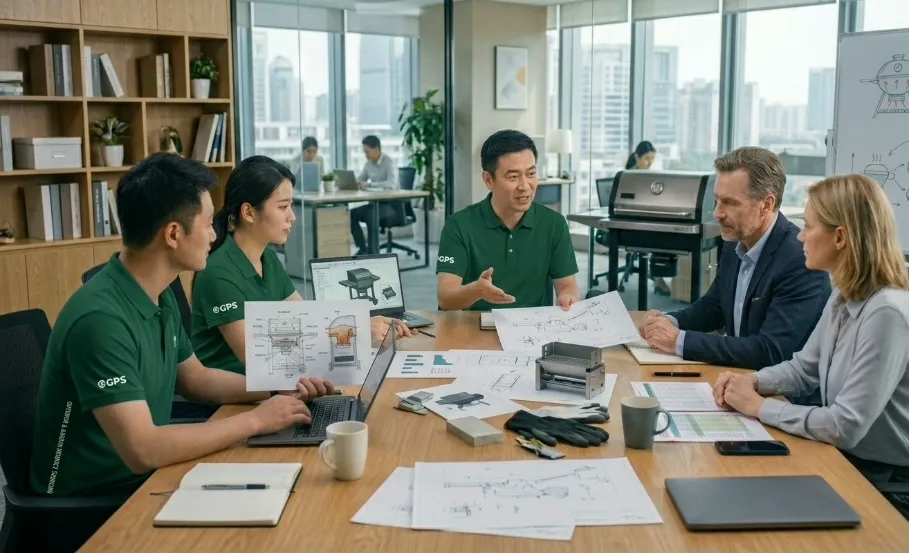
Information Collection & Project Evaluation
Before proposing any solution, we gather the facts needed for an honest feasibility assessment. Product specifications, technical drawings, historical pricing, volume forecasts, and certification requirements. Once validated, we proceed to contract and official launch — both sides aligned on scope and savings potential.
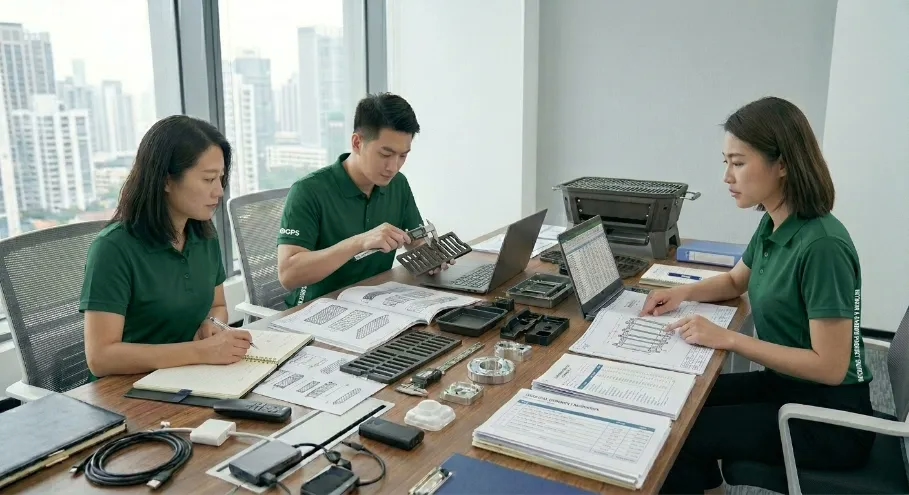
Three-Dimensional Solution Design
We attack cost through three tracks simultaneously. Re-sourcing identifies better production paths and consolidates suppliers. Negotiation secures more favorable terms on pricing, mold investment, and lead times. Product engineering adjusts materials, construction methods, flat-pack design, and packing configuration to improve shipping efficiency.
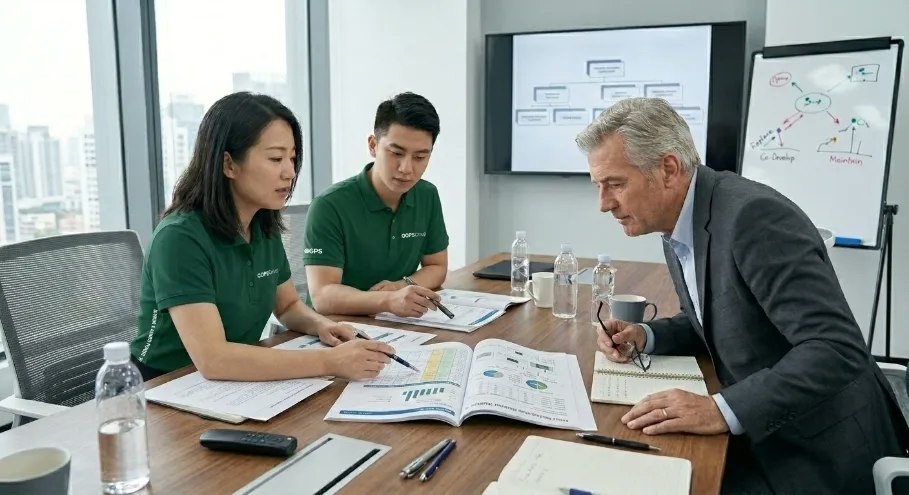
Cost Reduction Report & Decision Matrix
The final output is not a generic consultant summary. It is a practical procurement decision tool that maps your current cost structure, identifies where savings are realistically achievable, and defines the best action path for each SKU or product group — with risk assessment covering quality, lead time, compliance, and supplier stability.
Cost Reduction That
Protects Quality.
Three capabilities that distinguish real, sustainable cost optimization from short-term price squeezing. Each one builds on OGPSGroup's identity as a manufacturer — not a trading desk.
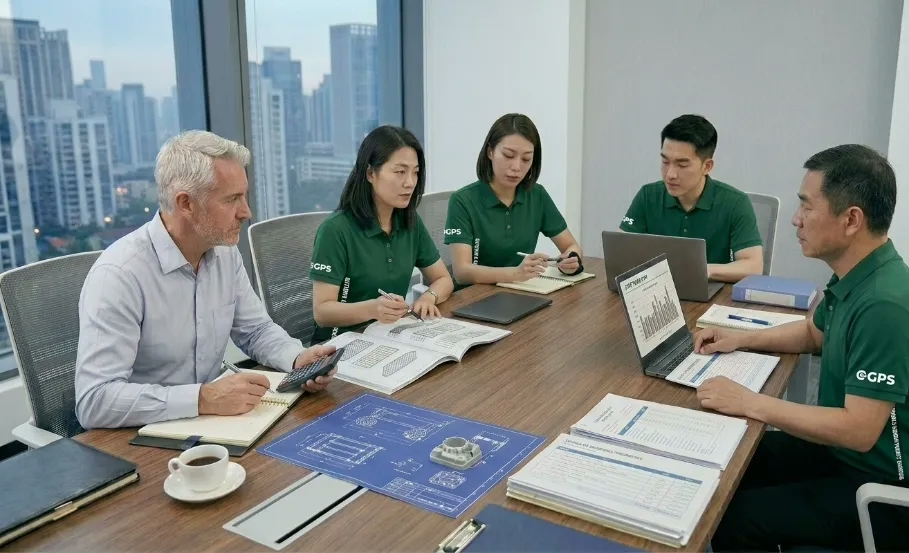
Rooted in Manufacturing Expertise
As active garden product manufacturers, we bring factory-floor knowledge to every engagement. This allows us to reduce costs at the source — redesigning components, optimizing processes, and eliminating waste — rather than simply negotiating lower quotes from a distance.
Cross-Category Integration Capability
We design integrated supply chains across outdoor living, garden furniture, RV systems, and overlanding equipment. Clients consolidate fragmented supplier bases into one coordinated platform — delivering better efficiency, lower total costs, and a single partner accountable for the outcome.
Quality-First Cost Reduction
Cost reduction should strengthen, not weaken, product value. Our quality-first approach lowers returns, complaints, and post-sale losses — giving you a more reliable way to save money across the full product lifecycle, not just at the purchase order level.
Different Paths.
Same Outcome.
Every supply chain has different cost pressure points. Here is how we tailor the approach to your specific situation — and what you can expect from each path.
Re-negotiate pricing and terms based on order volume, purchasing pace, and raw material trends.
Optimize structure, materials, packaging, and container loading methods to improve load efficiency and reduce DIM weight and damage rates.
Rematch factory resources, centralize purchasing, and manage supply through one coordinated system.
Improve structure, assembly, and packaging design to reduce damage during transit and use.
Advance product design, sampling, materials, and supply chain resources in parallel.
Align with certification standards, technical documentation, and testing requirements.
Questions You're Probably
Already Asking.
No. Negotiation is one lever among several. The larger savings typically come from engineering-led optimization: redesigning components for manufacturability, reconfiguring packaging for container density, and right-sizing material specifications. These structural changes produce recurring savings on every order — not just a one-time price concession.
Yes. We encourage starting with a single product category or a defined SKU group. The pilot follows the same four-step process — needs confirmation, information collection, solution design, and a decision-ready report — just scoped to a narrower set. If the pilot delivers, we expand. If it does not, there is no further obligation.
Across our engagements, clients typically see 10–25% total cost reduction when sourcing, engineering, and logistics optimization are applied together. The exact range depends on product complexity, current cost structure, and annual volume. We quantify the estimated range for each SKU group in the Cost Reduction Report before you commit to implementation.
For products entering North America and Europe, we support certification preparation, technical documentation, testing requirements, and supplier readiness in parallel with cost optimization work. Compliance requirements are locked in during the Needs Confirmation Meeting — they are constraints we optimize within, never corners we cut.
From signed agreement to final Cost Reduction Report, most engagements complete within 3–5 weeks. Implementation of the recommendations — factory transitions, tooling modifications, packaging redesign — follows a timeline scoped to your specific program and peak season requirements.
Your 10–25% Savings Are
Already in the Supply Chain.
Schedule a consultation. We will map your current cost structure against manufacturing benchmarks, identify exactly where savings live — across sourcing, engineering, and logistics — and deliver a decision-ready Cost Reduction Report within 3 weeks, no obligation.
Minimum annual procurement volume: $400K+. Enterprise engagements only.