
Custom Patio Sofa Manufacturer.
5-Year Structural Warranty. 100% Your Specification.
Full production on a single factory floor — material inspection, frame welding, cushion fabrication, finish application, and packaging all under one QC system. Dedicated project engineer returns a DFM analysis within 48 hours. All batches AQL 2.5 inspected with QC reports filed per shipment. 0.3% transit damage rate across all programmes.
Six Sofa Types.
One Custom Programme.
All six categories can be fully customised — frame, fabric, cushion, dimensions, and branding. Select the type that fits your market, then specify how you want it built.
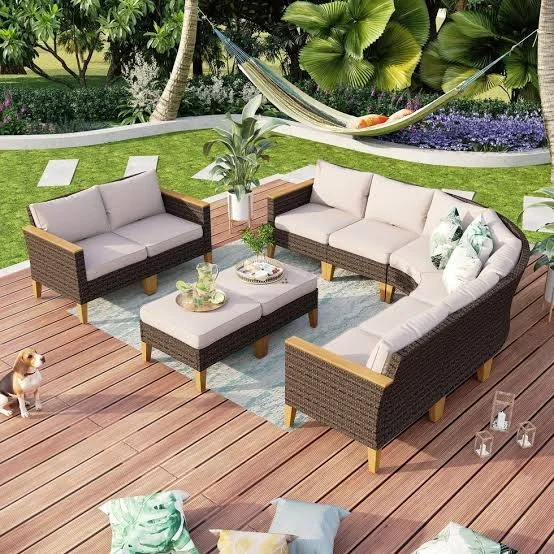
Sectional Sofas
Modular L-shaped and U-shaped configurations. 6063-T5 aluminium subframes with quick-dry foam cushions. Reconfigurable seating for hospitality and residential. Each section independently replaceable — no forced full-set replacement.
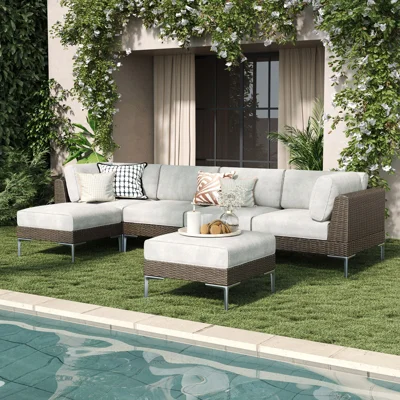
Deep-Seating Sofas
Extended seat depth (80–100cm) with multi-density foam build-up. Solution-dyed acrylic upholstery. Designed for resort lobbies, rooftop lounges, and high-end residential. Ergonomic backrest angle verified per EN 581-2.
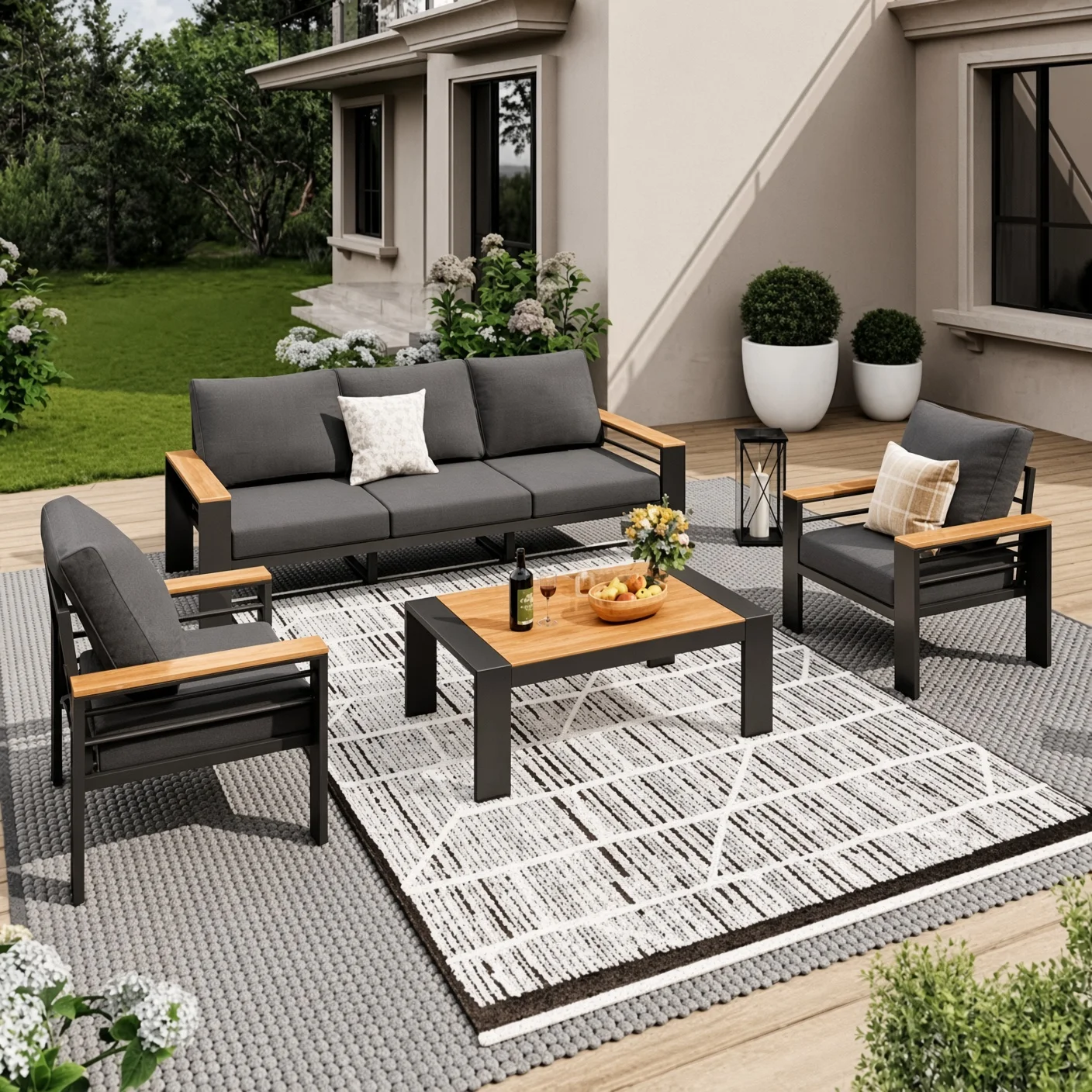
Conversation Sofa Sets
Coordinated 2-seater + 4-seater + coffee table groupings. Unified frame language across pieces. Cushion fabric matched from a single dye lot per set. Suitable for hotel terraces, clubhouses, and outdoor living retailers.
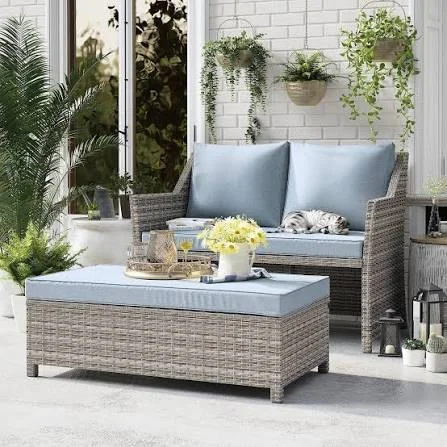
Loveseats
Compact 2-seater designs for balconies, bistro corners, and boutique hotel suites. Aluminium or PE wicker frames. Custom backrest height for privacy screening. Stackable models available for event venues.
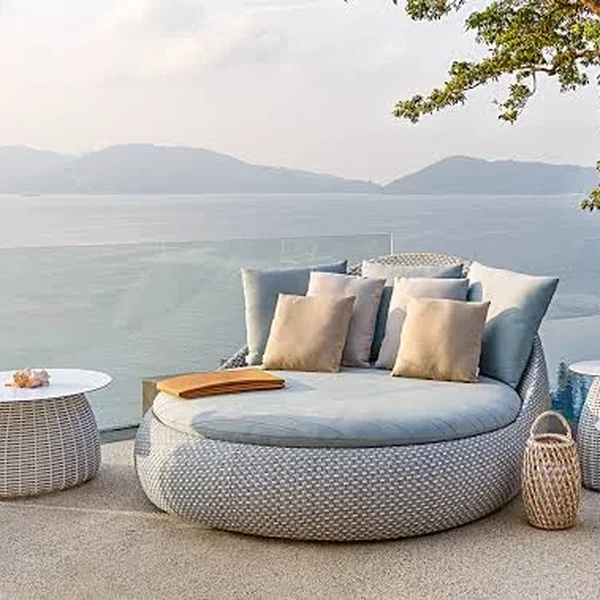
Outdoor Daybeds
Oversized single-piece lounging sofas with adjustable canopies. Poolside and resort-grade construction with marine-grade hardware. Quick-dry mattress system with drainage mesh. Optional privacy curtains and integrated side tables.
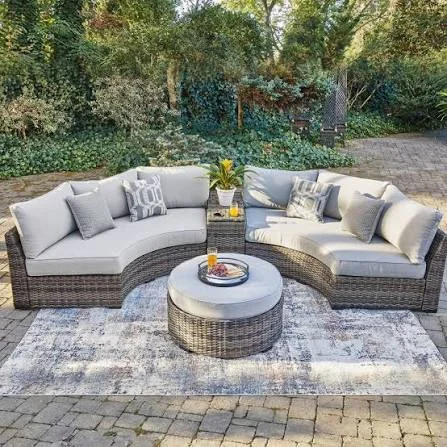
Curved & Circular Sofas
Radius seating engineered for fire pit surrounds, architectural installations, and statement lobby layouts. Custom-bent aluminium tube profiles with precision jig welding. Modular curved sections that form continuous arcs. Cushions pattern-cut to exact radius spec.
Four Dimensions That Define
Your Sofa.
Each sofa that leaves our floor starts with your specification — not a catalogue pick. Frame engineering, fabric selection, cushion system, and brand identity. Each dimension affects cost, durability, and the end user's experience.
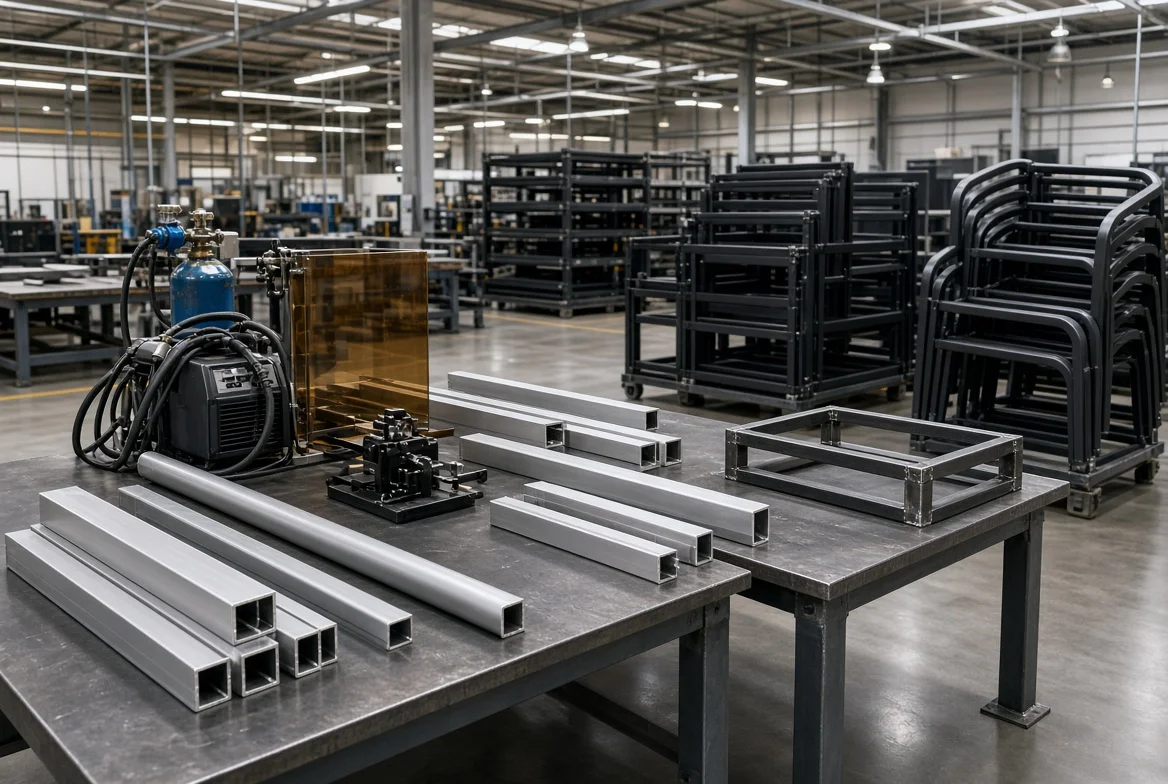
Frame engineering
Seat depth, seat height, backrest angle, armrest profile — all dimensions set to your specification. 6063-T5 or 6061-T6 aluminium tube in round, square, rectangular, or custom extrusion profiles. Wall thickness from 1.5mm to 3.0mm depending on load requirement. All load-bearing joints TIG-welded with argon back-purge. Frame load-tested to 250kg per seat position — well beyond EN 581-2 requirements.
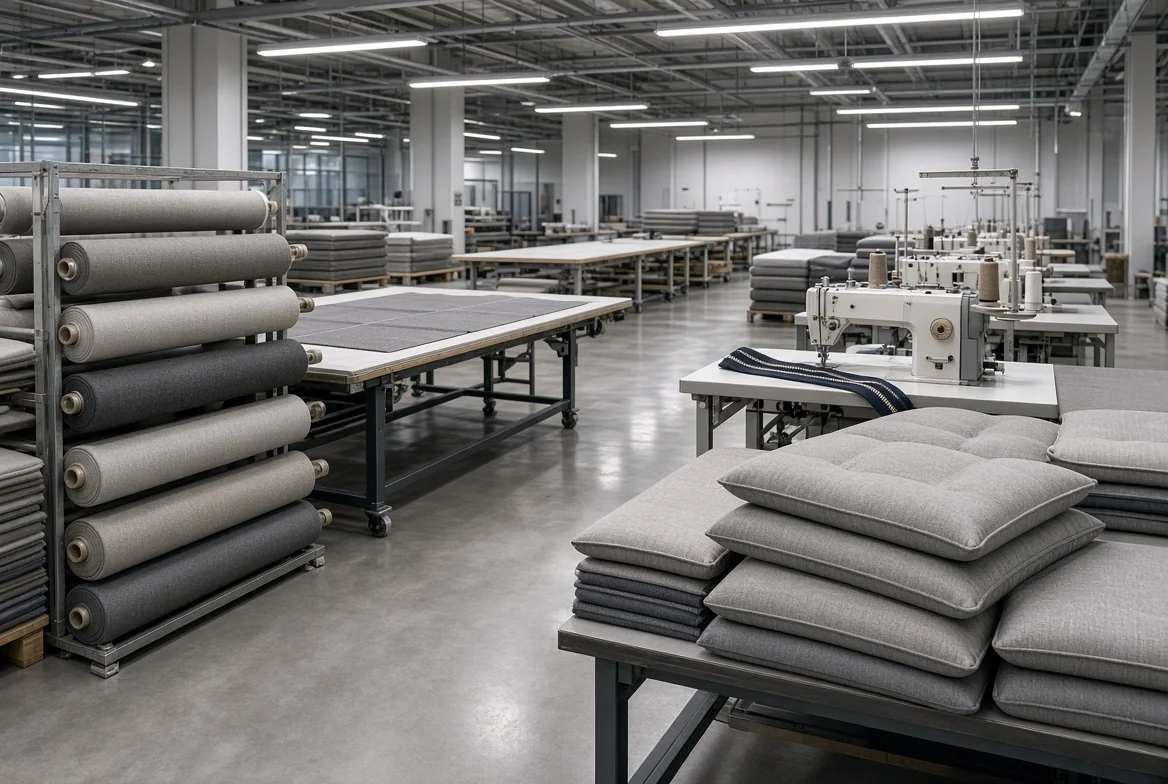
Fabric & upholstery
Solution-dyed acrylic (Sunbrella-grade), olefin, or textilene mesh. UV-stabilised to 1,500+ hours ASTM G154 without visible fading. All cushion covers cut from the same fabric roll — no batch-to-batch colour shift within a set. Custom colour matching to your Pantone or brand palette. Removable, washable covers with YKK marine-grade zippers. Thread: UV-stabilised polyester, matched to fabric colour.
Cushion systems
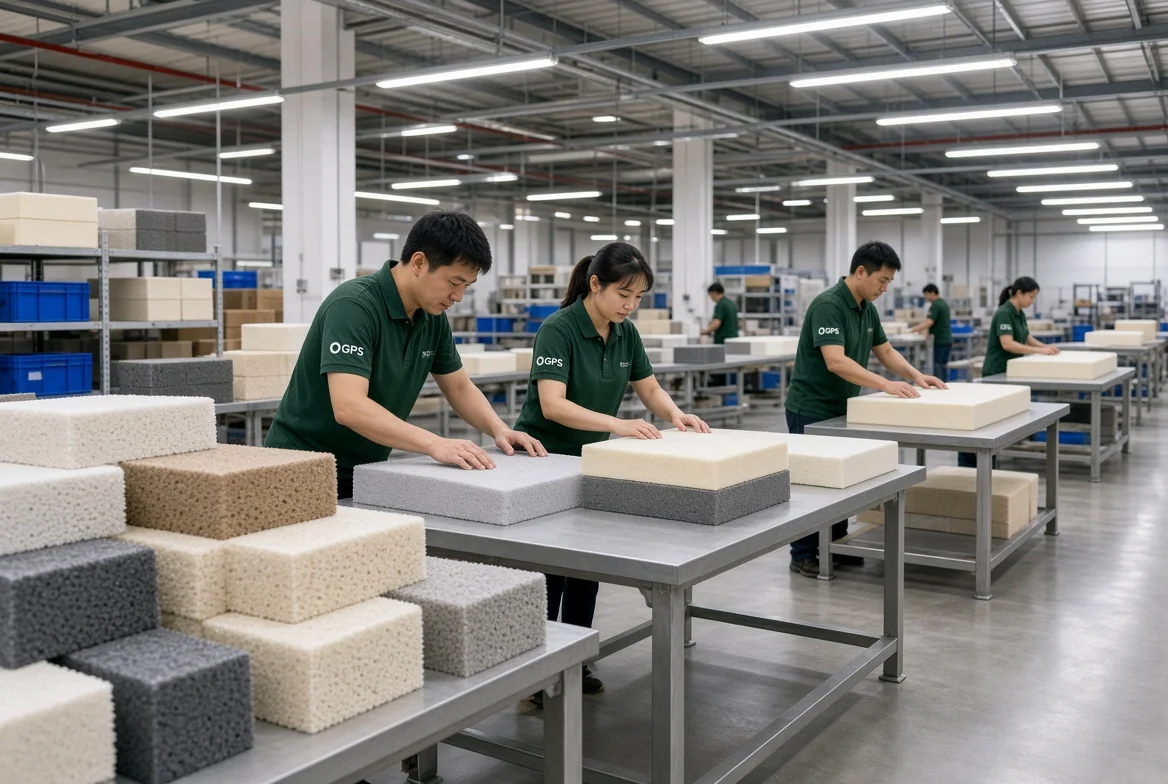
Three foam density tiers to match your application — from plush residential to high-turnover hospitality. Open-cell reticulated structure drains rapidly after rain. Anti-microbial treatment prevents mould in humid climates. Dual-density build-up available: firm base layer + softer comfort layer. All foam certified CertiPUR-US or OEKO-TEX Standard 100. Full density specifications and drain-time data in the Materials section below.
Branding & identity
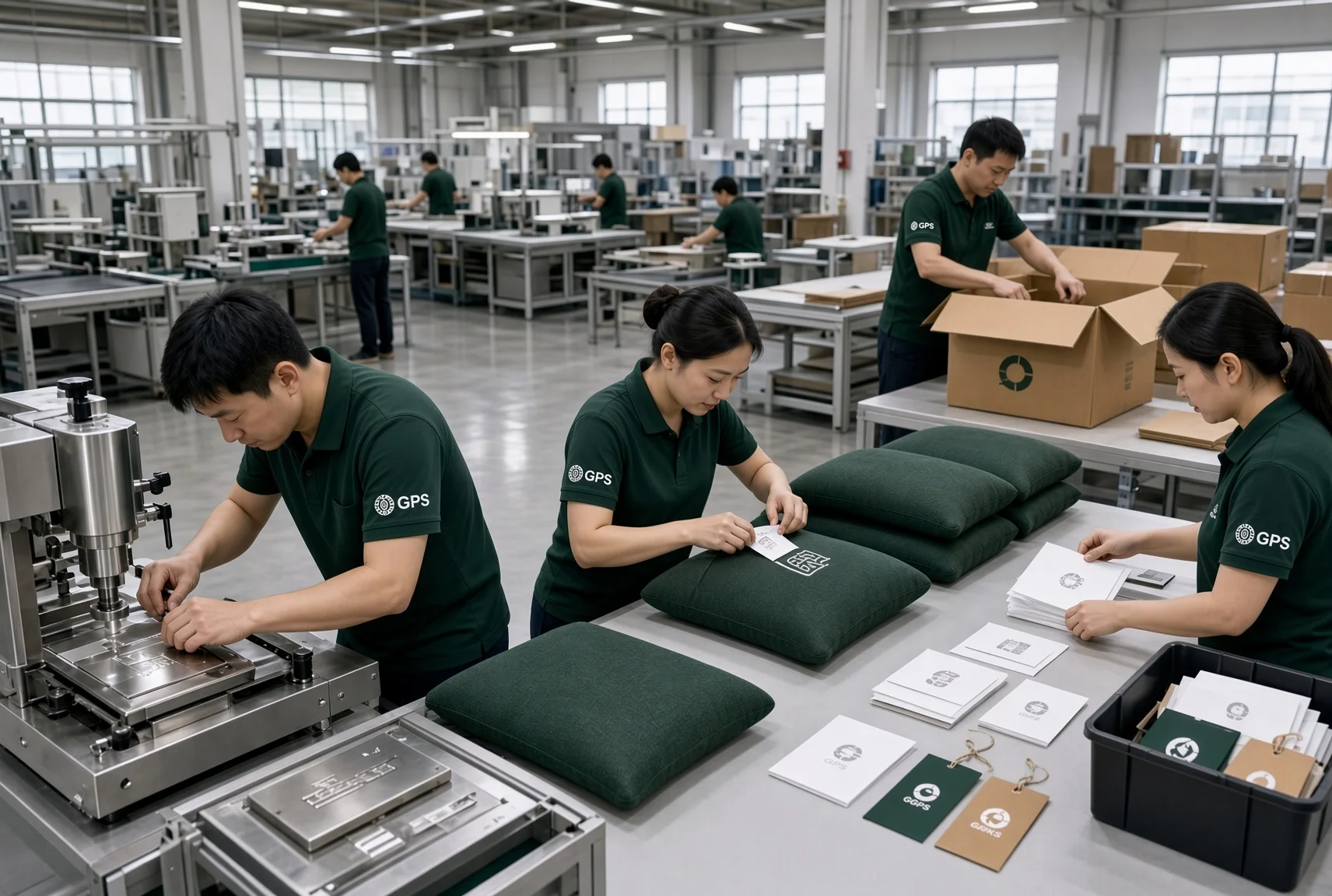
Hot-stamped or laser-engraved logo plates in stainless steel or aluminium. Embroidered brand labels on all cushions. Custom-printed hangtags, care guides, and assembly instructions in your language and brand voice. Cartons printed with your identity — not generic brown boxes. Barcode-level SKU traceability from production to container. Your brand should be visible at each customer touchpoint, not just the product itself.
Six Materials.
Informed Decisions.
Material choice drives your sofa's cost structure, production timeline, and target market positioning. Below are the six paths — with real specs, real trade-offs, and the context to make the right call.
Aluminium
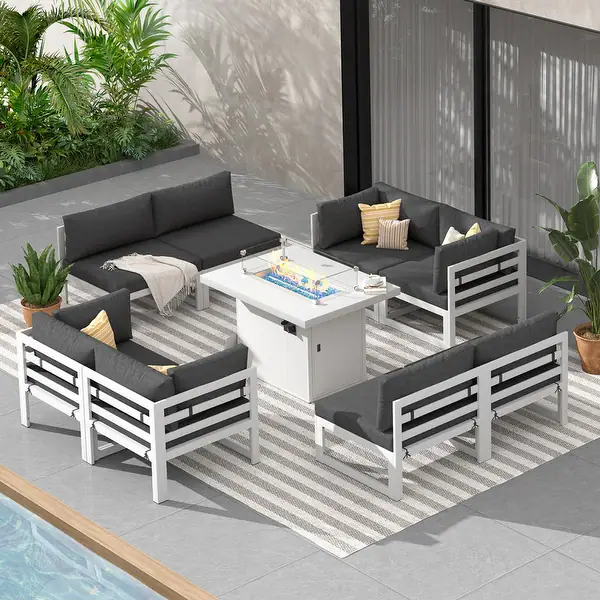
6063-T5 / 6061-T6- Weight
- 12–25 kg per sofa (sectional), 8–15 kg (loveseat)
- Corrosion
- 500+ hr ASTM B117 salt spray; 1,000+ hr with E-coat underlayer
- Finish
- Electrostatic powder, 60–120 micron DFT; matte, textured, semi-gloss
- Best For
- Modern sectional and deep-seating sofas. Best strength-to-weight ratio. Lightweight for modular reconfiguration. Zero structural rust — the default for coastal resorts, poolside, and high-humidity environments.
- Trade-Off
- Higher material cost than steel. Requires skilled TIG welding. Thin-walled tube (below 1.5mm) will deflect under heavy seating loads — minimum 2.0mm recommended for commercial use.
Stainless Steel
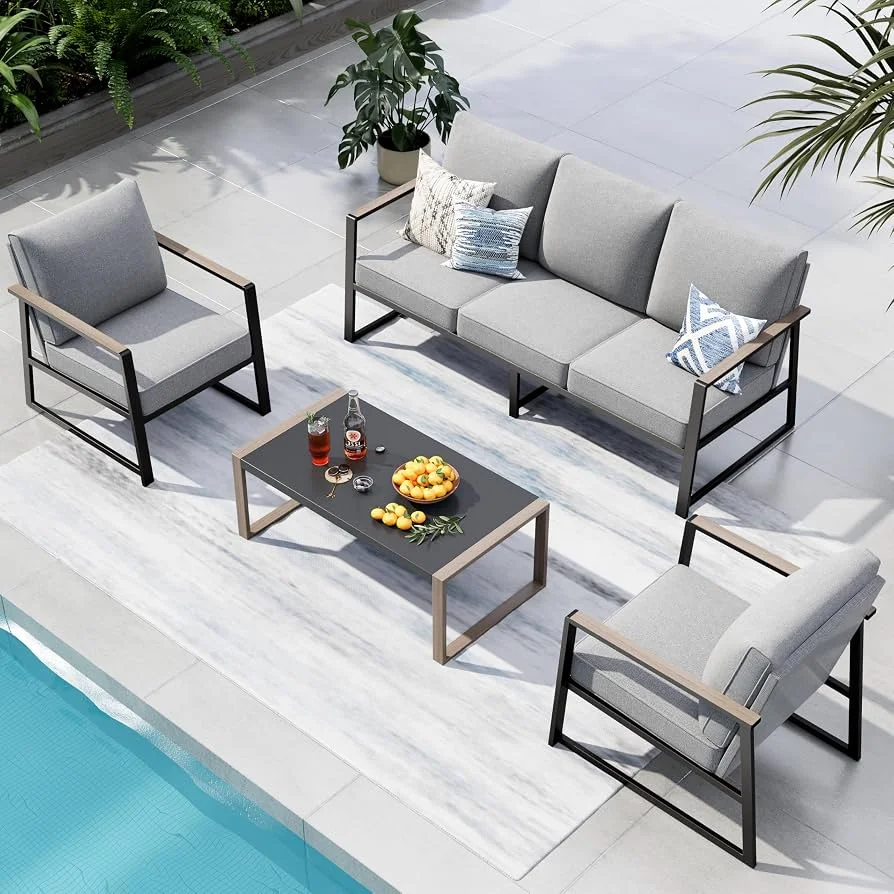
304 / 316 marine-grade- Weight
- 18–35 kg per sofa
- Corrosion
- 1,000+ hr (304); 2,000+ hr (316 marine-grade)
- Finish
- Brushed, polished, or PVD-coated; electropolished for marine environments
- Best For
- Coastal and marine environments where salt-laden air is constant. Luxury hotels and beachfront properties. Heavier weight provides wind resistance for exposed locations. Premium perceived value.
- Trade-Off
- Heaviest material — freight cost is higher per unit. 316 marine-grade adds 30–40% to material cost versus 304. Requires passivation treatment for weld zones. Not stackable.
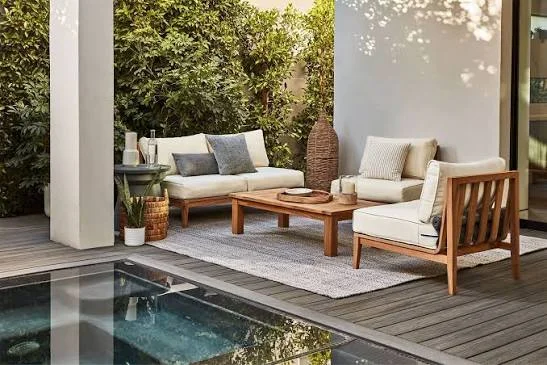
Teak & Hardwood
A-Grade plantation teak; FSC-certified options- Weight
- 20–40 kg per sofa
- Corrosion
- Natural oil content resists rot and insects; annual oiling recommended for colour retention
- Finish
- Natural, oiled, or weathered grey patina; no paint or powder needed
- Best For
- High-end residential and designer hospitality. Natural silvery-grey patina over time is part of the aesthetic. Premium material that signals luxury and sustainability.
- Trade-Off
- Highest material cost. Requires periodic maintenance (oiling) to preserve golden colour. Weight and volume increase freight cost. Supply chain subject to harvest regulations — lead times can fluctuate. Minimum 100 units for custom teak designs.
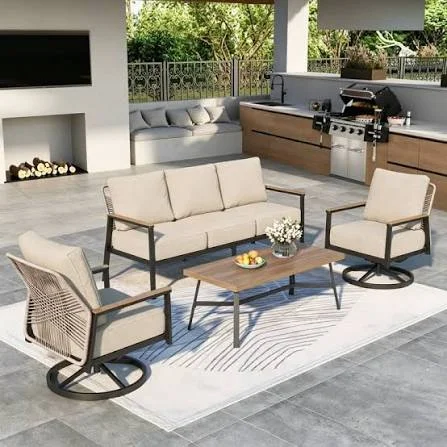
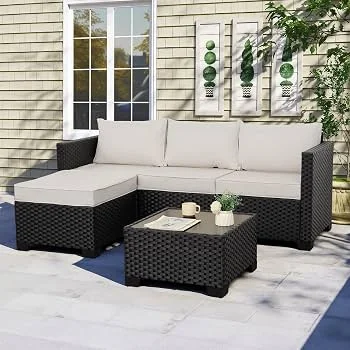
PE Wicker & Rope
UV-8 HDPE flat/round/half-round over 6063-T5 aluminium subframe- Weight
- 10–20 kg per sofa
- Corrosion
- 1,500+ hr ASTM G154 UV ageing; aluminium subframe: 500+ hr salt spray
- Finish
- Colour-through formulation; custom colour compounding above 1,000 kg
- Best For
- Deep-seating conversation sets and resort collections where texture and visual warmth matter. UV-stabilised colour-through means scratches don't reveal a different colour. Pairs well with cushion-forward designs.
- Trade-Off
- Hand-weaving labour cost scales with sofa surface area. Tension consistency is the #1 quality risk — requires defined N/m² spec and batch-level QC sampling. Not suitable for fully-exposed marine environments without additional frame treatment.
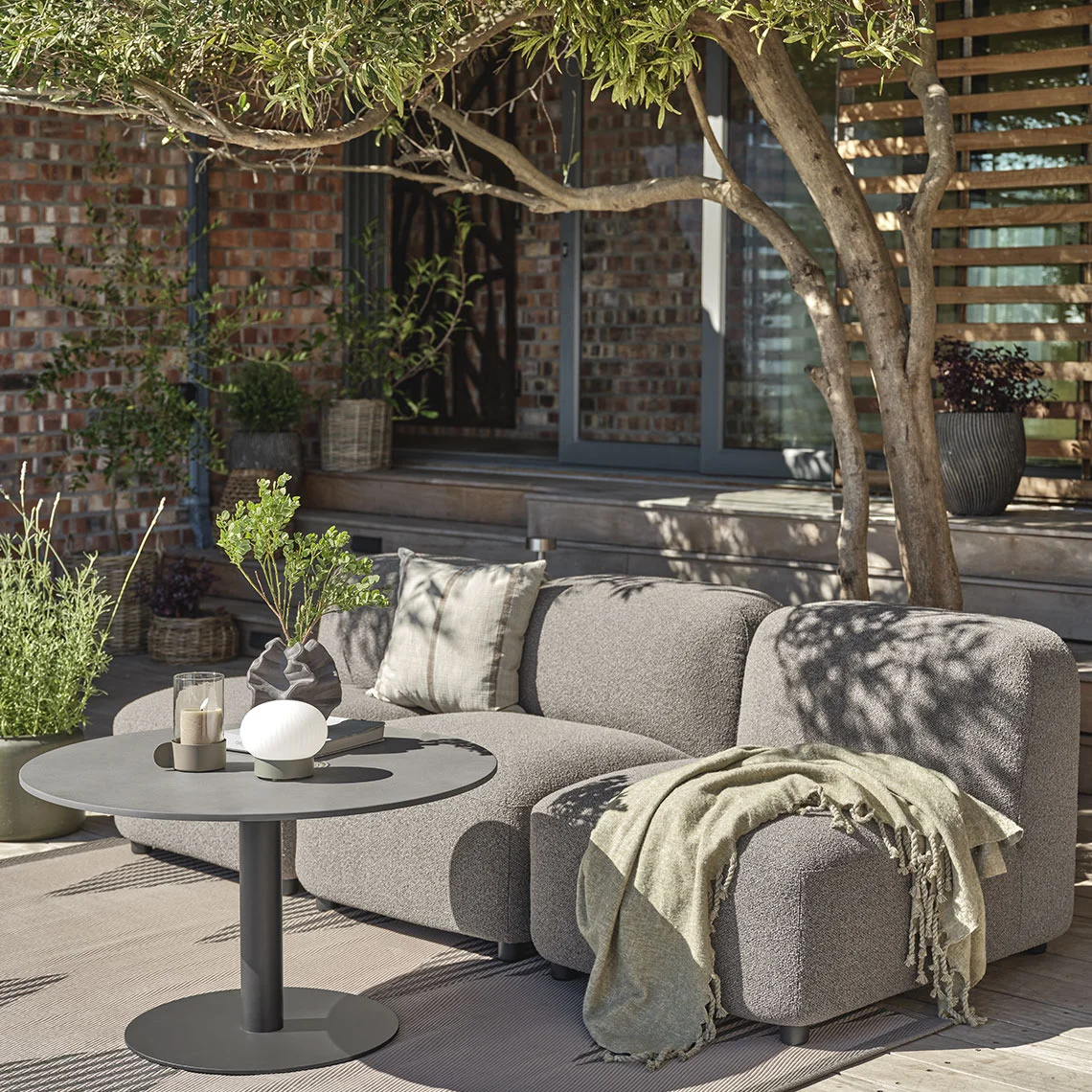
Performance Fabric
Solution-dyed acrylic / olefin / textilene- Weight
- Upholstery layer — 200–350 g/m²
- Corrosion
- 1,500+ hr ASTM G154 UV ageing; AATCC 169 weather resistance
- Finish
- Custom colour matching to Pantone; stain-resistant treatment standard
- Best For
- All upholstered sofa applications. Solution-dyed means colour runs through the entire fibre — no surface-only pigment that wears off. 5-year UV degradation warranty on acrylic grades. Mould and mildew resistant.
- Trade-Off
- Premium solution-dyed acrylic (Sunbrella-grade) is 2–3x the cost of olefin. Custom colour matching requires 500+ metre minimum per colour. Textilene mesh offers breathability but less softness.
Quick-Dry Foam
Open-cell reticulated polyurethane; 25–55 kg/m³- Weight
- Cushion core — density-dependent
- Corrosion
- Anti-microbial treated; passes ASTM E2180 mould resistance
- Finish
- Dual-density build-up available: firm base + softer top layer
- Best For
- All outdoor cushioning. Open-cell structure allows water to drain through in under 20 minutes — no trapped moisture, no mould, no mildew. Three density options let you match comfort to application: plush residential, supportive commercial, firm hospitality.
- Trade-Off
- Higher density = longer dry time — 55 kg/m³ foam takes slightly longer to drain than 25 kg/m³. Reticulation process adds cost versus closed-cell foam. Must be paired with breathable fabric — vinyl covers negate the drainage benefit.
The Four Problems With
Sofa Sourcing. Solved.
Any sourcing director we work with has faced these challenges. Here's how we address each one — not with promises, but with process.
The most common failure in custom furniture: the pre-production sample was flawless, but production quality drifted. Here's how we prevent it:
- Golden sample stays on the production floor — each production batch compared against it under D65 lighting
- Colour ΔE ≤ 1.5, weld appearance match, cushion density within tolerance
- Variance beyond spec stops the line — same cell, same operators, same standard
Tooling fees, packaging upgrades, rush premiums — charges that surface after the PO is signed. Our pricing model:
- All-in quote before you sign: tooling, packaging, finish, inspection, and loading as separate line items
- Scope changes require your written approval before we proceed
- No retrospective charges. No post-PO surcharges. No surprises.
Engineering clarifications shouldn't pass through a chain of non-technical intermediaries. Our communication model:
- Dedicated English-speaking project engineer — your single point of contact
- Direct WeChat and WhatsApp access, 24-hour response SLA
- Technical questions answered by the person who can answer them — no telephone game
Coordinating separate suppliers for frames, cushions, and accessories creates fragmented accountability. Our single-source model:
- Frames, cushions, fabrics, and accessories produced under one roof
- One production schedule, one QC system, one container, one set of customs documents
- Single point of accountability — no finger-pointing between suppliers
Your Container Matches
the Approved Sample.
The real test of a manufacturer isn't the pre-production sample — it's whether the 500th unit matches the first. Here's how we ensure each production run lands identical to what you signed off.
Dedicated Production Cell
Your sofa programme runs on a fixed production cell — not shuffled between whichever line happens to be free that day.
- Production slots reserved per programme — your order is never queued behind another client's rush job
- Production team builds your design repeatedly — they know the weld points, the weave pattern, the finish spec without relearning
- Consistent environmental conditions: same lighting, same curing oven, same inspection angles — variables that affect finish quality are locked down
In-Line QC at Four Gates
Production gets inspected during the run, not after — four mandatory checkpoints with documented pass/fail at each.
- Gate 1: Incoming material — XRF spectrometer + mill cert cross-check
- Gate 2: Frame welding — visual inspection + dimensional gauge
- Gate 3: Finish application — DFT measurement + ΔE colour verification
- Gate 4: Final assembly — fit, function, hardware torque
Container-Ready, Not Just Factory-Ready
A sofa that passes QC but arrives damaged is still a failure. All shipments are packaged and loaded to survive real cross-border transit.
- ISTA 3A protocol: 17-drop test, vibration simulation, corner boards, edge guards, moisture barrier
- Container loading supervised with photographic record of each layer
- Dossier per shipment: QC reports, batch photos, packing list, compliance certificates
Quality Is Measured,
Not Claimed.
Certifications open doors. But what happens between audits — who inspects your product, what gets rejected at the gate, how equipment stays calibrated — is what lands in your container. Here's the QC infrastructure behind each programme.
Each client programme has an assigned QC inspector — not a rotating pool. This person attends your pre-production sample review, knows your spec, and inspects all batches in your order. Same eyes on your product from first sample to final container.
All raw material deliveries — aluminium extrusions, fabric rolls, foam buns, hardware cartons — are physically segregated on arrival. Nothing moves to the production floor until it passes inspection. Failed material is tagged, logged, and returned to supplier. No "conditionally accepted" pile. No "use it and we'll negotiate a discount later." Pass or return. Binary.
Before your production run starts, each workstation — welding bay, powder booth, sewing station, assembly bench — is audited against your programme's process sheet. Jig calibration verified. Oven temperature profiled. Tension gauges checked. Only when all stations pass does production begin.
All measurement instruments — spectrophotometer, force gauge, calliper, micrometer, DFT gauge — are on a scheduled calibration cycle traceable to NIST or CNAS standards. Calibration certificates filed and available for audit. If an instrument is out of its calibration window, it's pulled from the floor. No uncalibrated tool touches your product.
How OGPSGroup Stacks Up
Against the Alternatives.
Not all suppliers play the same game. Below is a direct comparison across the dimensions that affect your landed cost, your timeline, and your customer's experience.
| OGPSGroup | US / EU Manufacturers | Chinese Trading Companies | |
|---|---|---|---|
| Factory | Owned & operated | Owned | None — subcontracts to third parties |
| Custom depth | Full custom from CAD — frame, fabric, cushion, branding | Menu-based — fixed frame styles, limited finishes | Catalogue only — what the factory has, you get |
| MOQ per design | 50 units | 100–300 units | Varies — often 200+ to get factory attention |
| Lead time | 4–6 weeks design freeze to FOB | 12–16 weeks | Unpredictable — 8–20 weeks depending on factory availability |
| Pricing model | BOM-level line-by-line transparency | Bottom-line quote — opaque cost structure | Factory price + 8–15% commission — no breakdown |
| QC standards | AQL 2.5 Level II · golden sample on floor · 4 in-line gates | Internal QC — standards vary by manufacturer | Relies on factory QC — no independent inspection |
| IP protection | NNN agreement · locked tooling room · segregated production records | Contract law — enforceable in domestic courts | Typically no formal protection — designs can appear elsewhere |
| Single-source consolidation | Yes — frames, cushions, fabric, accessories under one roof | Rare — most specialise in one material or category | Possible — but each product from a different factory, different QC |
Two Sofa Programmes.
Two Transformations.
“We run 14 resort properties across the Caribbean and Mexico. All 14 properties have poolside seating — sectionals, daybeds, conversation sets — roughly 40–60 pieces per property. Before OGPSGroup, we sourced from three different suppliers: aluminium frames from one, cushions from another, umbrellas from a third.
Consolidating shipments was a nightmare. One late factory meant the whole container waited, and we paid demurrage twice in 2023 alone.
OGPSGroup now produces everything under one roof. Our last order was 320 pieces across six designs — all loaded into two 40HQ containers, shipped together, cleared customs together, and installed across two properties in the same week. Landed cost dropped 28% per property.
More importantly, I now have one project manager and one set of QC documents instead of three separate email chains I was constantly chasing.”

“I brought OGPSGroup a design for a curved sectional that was supposed to wrap around a 6-metre fire pit. My previous manufacturer in Italy had quoted 14 weeks and €4,200 per seat — beautiful work, but the maths didn't work for a 28-seat installation.
OGPSGroup's engineering team reviewed the CAD and proposed a compound-bent aluminium profile with a two-piece backrest assembly that maintained the continuous curve but eliminated the need for custom extrusion tooling. Tooling cost came in at $2,800 instead of the $18,000 I was expecting.
First article sample arrived in 19 days. Full production of 32 seats delivered in 5 weeks. The powder coat was matched to our brand's RAL 7022 — they hit ΔE 1.2 on the first try.
The curve reads as continuous to the eye, but the assembly is actually 8 modular sections that we can reconfigure for different event layouts. That modularity wasn't even in the original brief — their team suggested it during the DFM review.”

Business & Logistics.
Direct Answers.
50 units per design for standard customisation. Sampling fee is 1.5x unit cost, fully refundable against your first production order. For multi-SKU programmes (e.g., sectional + loveseat + coffee table), the MOQ applies per design, not per container — and we consolidate all SKUs into one shipment. Payment terms: 30% deposit with PO, 70% before container loading.
Yes. Mixed-container consolidation is one of our core advantages. A typical 40HQ configuration: sofa frames as the base layer, flat-packed chairs and side tables on top, umbrella canopies and cushion boxes filling remaining volume. One PO, one project manager, one set of customs documents. Clients typically save 15–25% on freight versus fragmented LCL shipping from multiple factories.
FOB Shenzhen or Guangzhou to US West Coast: 14–18 days port-to-port. US East Coast: 28–32 days (Panama Canal routing). Northern Europe (Rotterdam/Hamburg): 28–32 days. Mediterranean: 22–26 days. Door-to-door delivery with customs clearance and inland trucking typically adds 5–7 days. We provide a live vessel tracking link for all shipments.
5-year structural warranty on aluminium and stainless steel frames. 3-year warranty on PE wicker weave (UV degradation and unravelling). 2-year warranty on cushion foam (excessive compression set). 1-year warranty on fabric (colour fastness and seam integrity). Warranty covers manufacturing defects — not normal wear, misuse, or failure to follow care instructions. Spare parts and replacement cushions are stocked for 3 years after programme completion.
We file a claim with photographic evidence within 48 hours of container arrival. For manufacturing defects covered by warranty: replacement parts or units are produced and shipped within 2 weeks at our cost. For transit damage: ISTA 3A certification supports your insurance claim. In practice, our damage rate is below 0.3% of shipped units — thanks to the packaging protocol and container loading supervision.
Four layers. First: NNN agreement (Non-Use, Non-Disclosure, Non-Circumvention) signed before any design file is shared — enforceable in Chinese courts. Second: your tooling (molds, jigs, fixtures) is stored in a locked, access-controlled room with unique ID tracking. Third: production records are segregated per client — your designs, BOM, and QC standards are never visible to other buyers. Fourth: we do not exhibit or market client-specific designs. Your sofa programme stays yours.
Send Us Your Design Brief.
We'll Send You a Plan.
Share your concept — CAD file, reference image, material preference, target price point — and we'll return a DFM analysis, estimated tooling cost, and production timeline. No cost. No commitment. Just a clear answer about what it takes to build your sofa on our floor.
On-site testing lab. BOM-level pricing. NNN-protected IP.