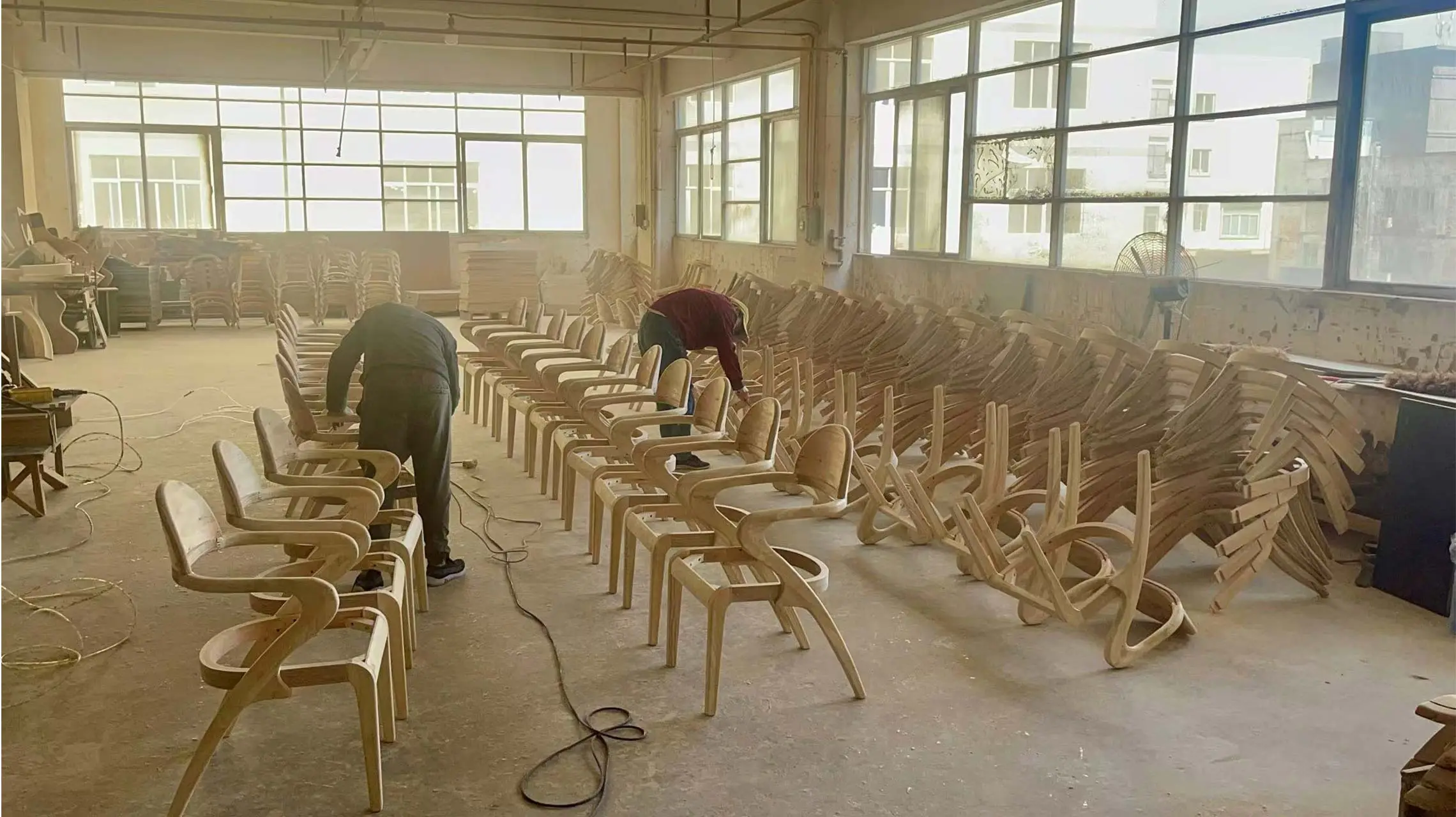
One weak patio shipment can wipe out a retail season. In my experience, hidden rust, UV fading, and shattered flat-pack boxes often only appear after the container lands.
I have worked in quality control for 15 years. My OGPSGroup engineering team includes certified ISO 9001 lead auditors. We designed this 10-point audit specifically for outdoor furniture. Major retailers use our scorecard to vet their top suppliers.
During every factory tour, we execute physical floor checks, verify quality control documents, and enforce strict ANSI/ASQ Z1.4 AQL pass/fail logic. This scorecard separates real manufacturers from showroom promises.

Top 10 Key Inspection Points for Outdoor Furniture Factory Audits
Master the 10 critical inspection points for outdoor furniture factory audits and eliminate risky suppliers.
1. Verify the Supplier Is a Real Manufacturer With the Capacity You Need

A proper outdoor furniture factory audit starts by disqualifying traders with borrowed showrooms. Without real production capacity, later quality checks mean nothing.
When building a direct OEM supply chain, I bypass the front office and hit the floor. Last month, my lead inspector David visited a Foshan factory. The boss promised us 50 containers every month. David walked past the front office and counted the staff. He saw only 12 welders on the floor. They lied about their capacity.
The factory business license is cross-checked against official export records. The legal name is verified through government databases. Live videos of active production lines are recorded. The real factory floor is shown directly to the client. Whether comparing China vs. Vietnam suppliers, you must choose an outdoor furniture supplier who controls their entire footprint.
OGPSGroup Methodology: Capacity Scoring
- 0 Points: Shell company. No real production evidence or a major mismatch with reality.
- 5 Points: Partial capability. They assemble in-house but outsource bottlenecks like powder coating.
- 10 Points: Traceable manufacturer. They prove stable capacity, clear process flow, and actual records.
🛡️ Our Verdict: Never pay a deposit until you verify the physical footprint matches the sales pitch.
2. Audit Incoming Materials Before They Disappear Into Finished Goods
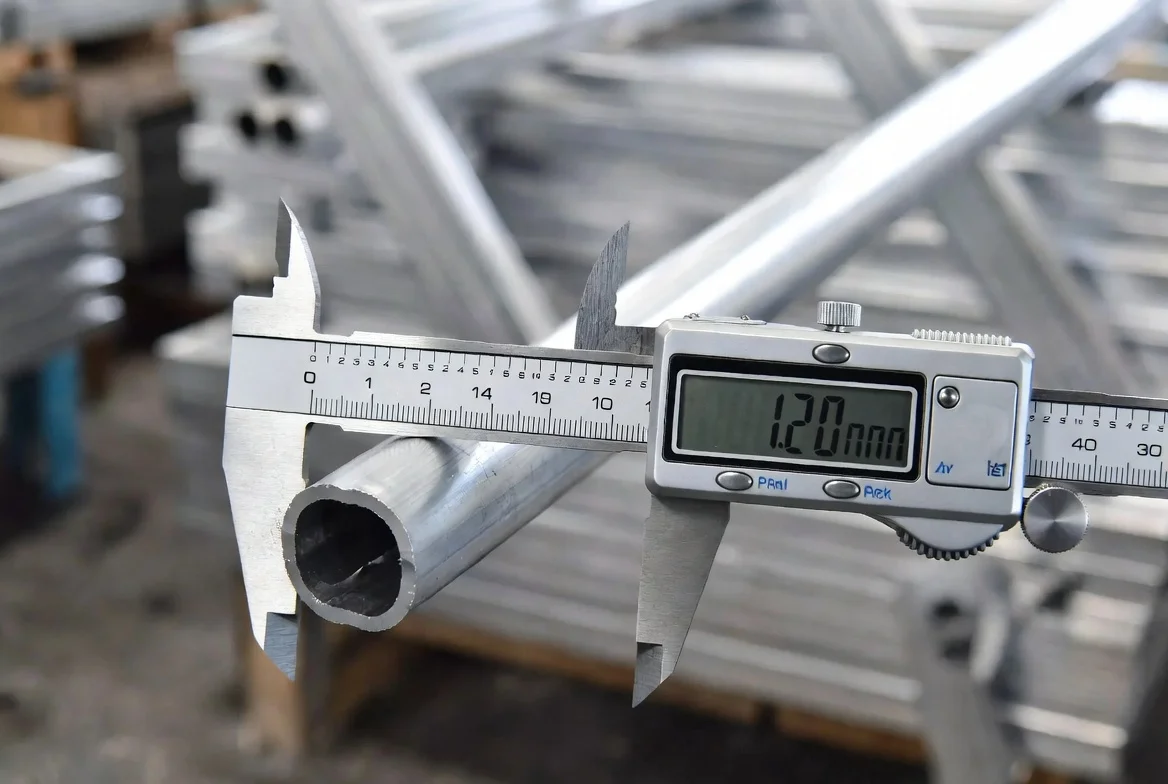
The most expensive time to find a bad aluminum tube is after welding and coating. Move your outdoor furniture factory audit upstream.
Two weeks ago, our engineer Sarah inspected a patio set batch. She used her digital caliper on the frames. The factory boss claimed they used 1.5mm aluminum. Sarah found they secretly used 1.2mm metal. We stopped the shipment immediately.
This trick creates hidden durability problems. To stop spec substitution, we check incoming lots against the approved bill of materials (BOM) and golden sample. Inspectors use Mitutoyo digital calipers to measure the wall thickness of every aluminum tube. The metal is tested to confirm it is 6063-T5 aluminum. Material quality is never guessed — it is always proven with exact measurements.
For sustainable outdoor furniture materials like teak, we demand physical moisture readings under 12% per ASTM standards. Random PE rattan strips are pulled and tested for tensile strength.
Cushions are cut open to verify exact foam density. Fabric is weighed using digital scales. All these tests are performed directly on the factory floor. Catching deviations early protects your true outdoor furniture material costs.
🛡️ Our Verdict: Incoming Material Scoring
- 0 Points: Undocumented substitutions or out-of-spec readings.
- 5 Points: Mixed traceability or weak incoming QC protocols.
- 10 Points: Lot-coded inputs, calibrated measuring tools, and clear quarantine for nonconforming stock.
⚡ Power Move: Quarantine unverified raw materials behind physical barriers until an inspector approves the exact dimensions.
3. Inspect Frame Welds Before Powder Coating
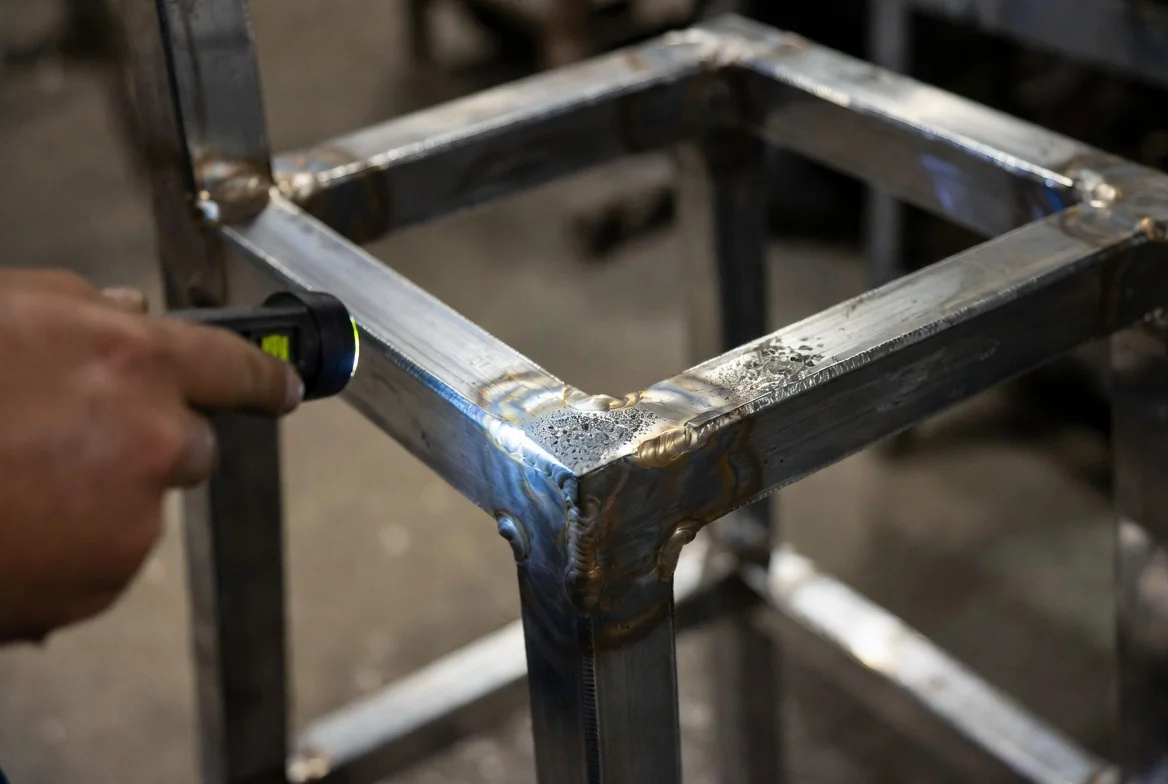
Last Tuesday, a supplier tried to rush an order of aluminum pergolas. Our inspector Mark halted the painting line. He checked the raw metal joints. He found severe gaps and bad welds. The powder coating would hide these dangerous flaws.
I found severe porosity and a lack of fusion at the main stress points. Powder coating hides these flaws perfectly until stress destroys the frame.
You must inspect frames in their raw metal state. Look for cracks, undercut, and inconsistent bead shapes. Check for heat distortion that misaligns load paths. Ensure workers completely seal tube ends. If they skip proper drain paths, trapped rainwater causes rapid internal corrosion. Never let a floor manager dismiss poor penetration as a simple cosmetic flaw.
OGPSGroup Methodology: Weld Scoring
- 0 Points: Structural cracks, obvious lack of fusion, unstable joints, or hidden water traps.
- 5 Points: Repairable spatter or minor cosmetic inconsistencies.
- 10 Points: Consistent welds at load paths with supporting Welding Procedure Specifications (WPS), qualified welders, and zero moisture traps.
🛡️ Our Verdict: Never let suppliers paint over a structural void.
4. Check Surface Treatment, Powder-Coating Adhesion, and Corrosion Protection
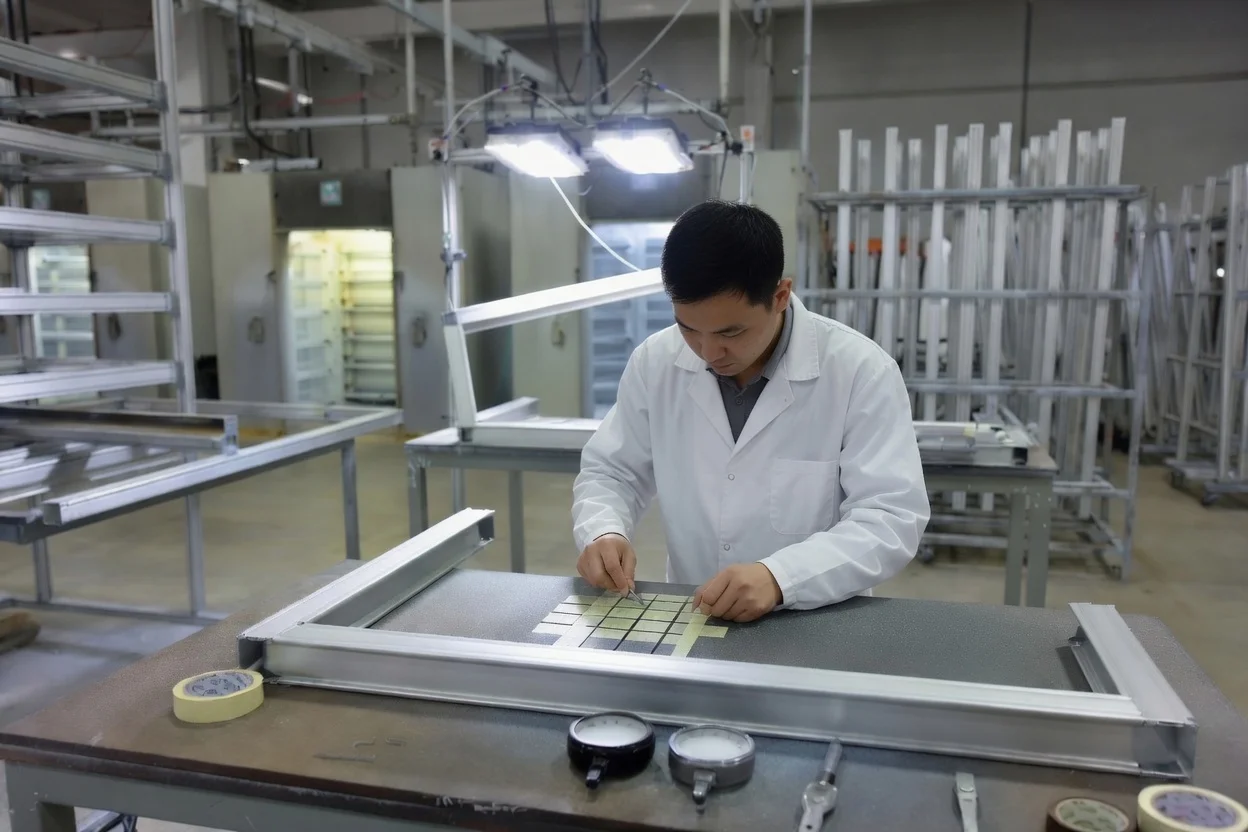
After verifying weld integrity, your outdoor furniture factory audit must evaluate finish durability against weather and handling.
Last month, Manager Chen rushed aluminum pergolas through a short 15-minute cure cycle. The finish looked fine, but I spotted tiny pinholes and thin edges. Without strict oven cure discipline and chemical pretreatment, powder coating fails.
We review factory pretreatment records and verify coating thickness controls directly on the floor. Because visuals deceive, we mandate strict outdoor furniture quality testing methods.
I always execute a live cross-hatch adhesion test. We score a grid into the frame, apply tape, and rip it off. Flaking paint means an instant batch failure and rework. This physical proof anchors our outdoor furniture durability testing.
Methodology: Surface Treatment Scoring
- 0 Points: Flaking adhesion, bare edges, or missing pretreatment logs.
- 5 Points: Acceptable visual appearance but incomplete process control.
- 10 Points: Clean finish, documented curing records, and flawless adhesion results.
🛡️ Our Verdict: Verifying these exact processes prevents early rust claims, finish peeling, and massive retailer complaints caused by weak pretreatment.
5. Center Your Outdoor Furniture Factory Audit on UV Data
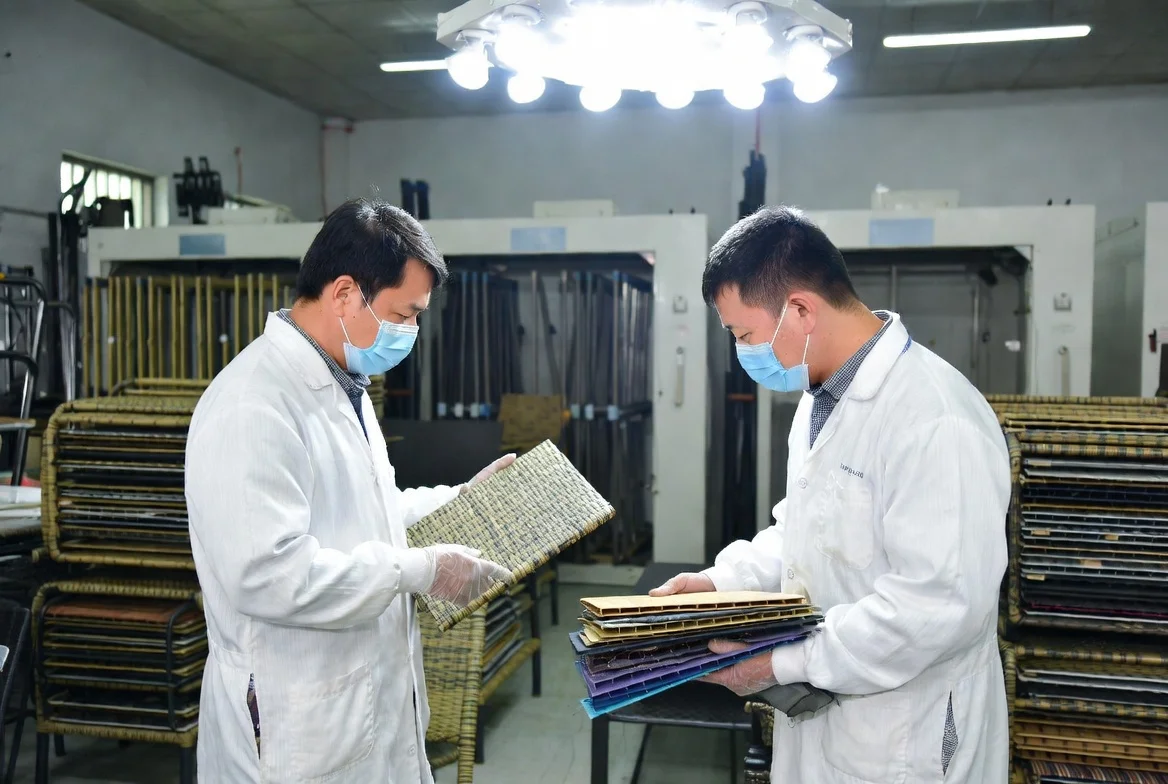
Outdoor furniture fails in the sun long before it fails in a brochure. During an outdoor furniture factory audit, a supplier handed me a flawless ISO 4892-3 weathering report. There was a huge catch. They tested premium high-density polyethylene. The actual production SKU used a cheap recycled blend.
Demand accelerated weathering reports for all wicker, plastics, coatings, and fabric. Verify the exact test methods and colorfastness expectations. Ensure the tested construction matches your specific SKU.
We enforce strict outdoor furniture quality testing methods to prevent fade and brittleness. As Senior Quality Manager Huang Rain noted during a 1000-hour test, “Drop the UV stabilizer ratio by just 2%, and this wicker snaps in three months.”
OGPSGroup Methodology: UV Scoring
- 0 Points: Missing data or tests on mismatched materials.
- 5 Points: Outdated or partial reports.
- 10 Points: Current, SKU-relevant weathering evidence matching our outdoor furniture durability testing standards, plus physical retention samples.
🛡️ Our Verdict: Base your purchasing decisions entirely on raw lab data matching your exact SKU.
6. Run Practical Floor-Level Stability and Load Tests
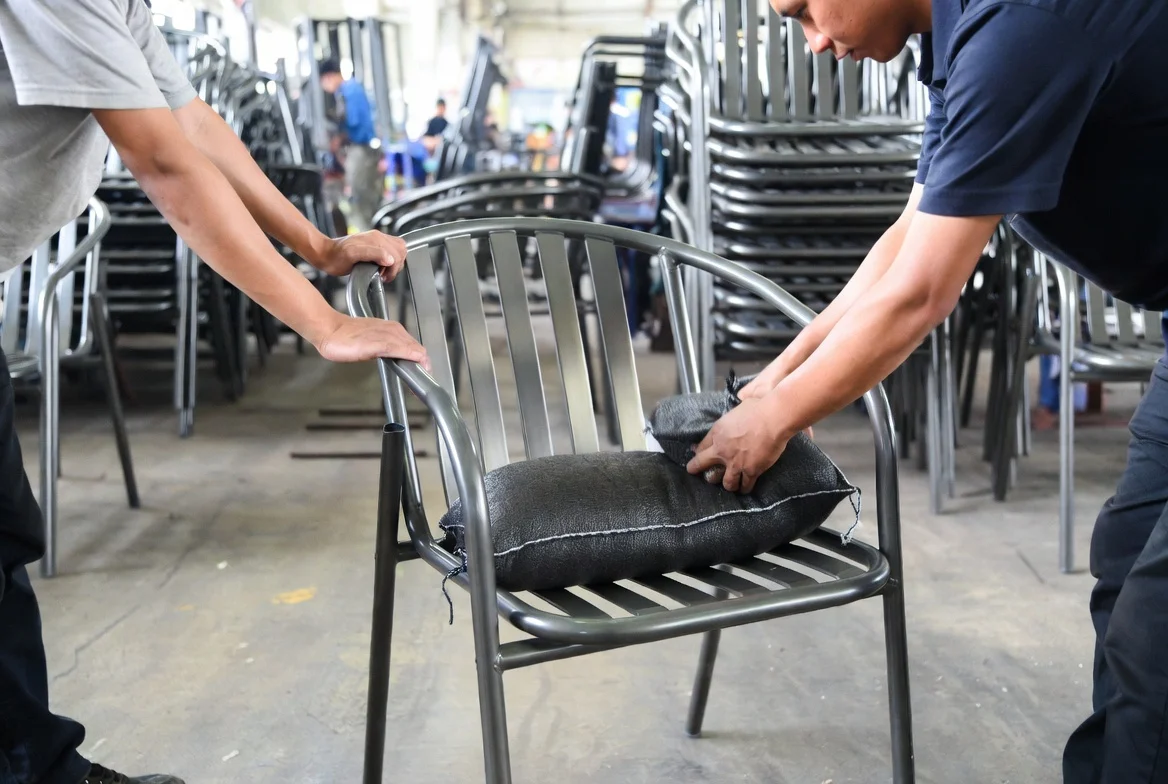
You cannot wait four weeks for a formal lab report to tell you a chair wobbles. You need immediate answers during your outdoor furniture factory audit.
During a recent hospitality project, the supplier’s dining chairs looked perfect on the padded showroom rug. I moved them onto the bare warehouse concrete to mimic a high-use retail environment. I dropped a 250 lb static sandbag onto the seat, then applied harsh outward pressure to the armrests and backrest. The 1.2mm aluminum frame twisted instantly at the welds.
Execute these manual stress checks before commissioning expensive EN 581 testing or BIFMA lab standards. Test every tabletop and leg for wobble on flat flooring. Push hard on all load paths to assess tip-risk.
OGPSGroup Methodology: Stability Scoring
- 0 Points: Obvious rocking or structural movement.
- 5 Points: Borderline stability requiring leveling or rework.
- 10 Points: Repeatable stability under floor testing with zero deformation.
🛡️ Our Verdict: Never trust the showroom rug. Stress-test frames on raw concrete before approving mass production.
7. Inspect Wicker, Sewing, and Buyer-Touchpoint Workmanship
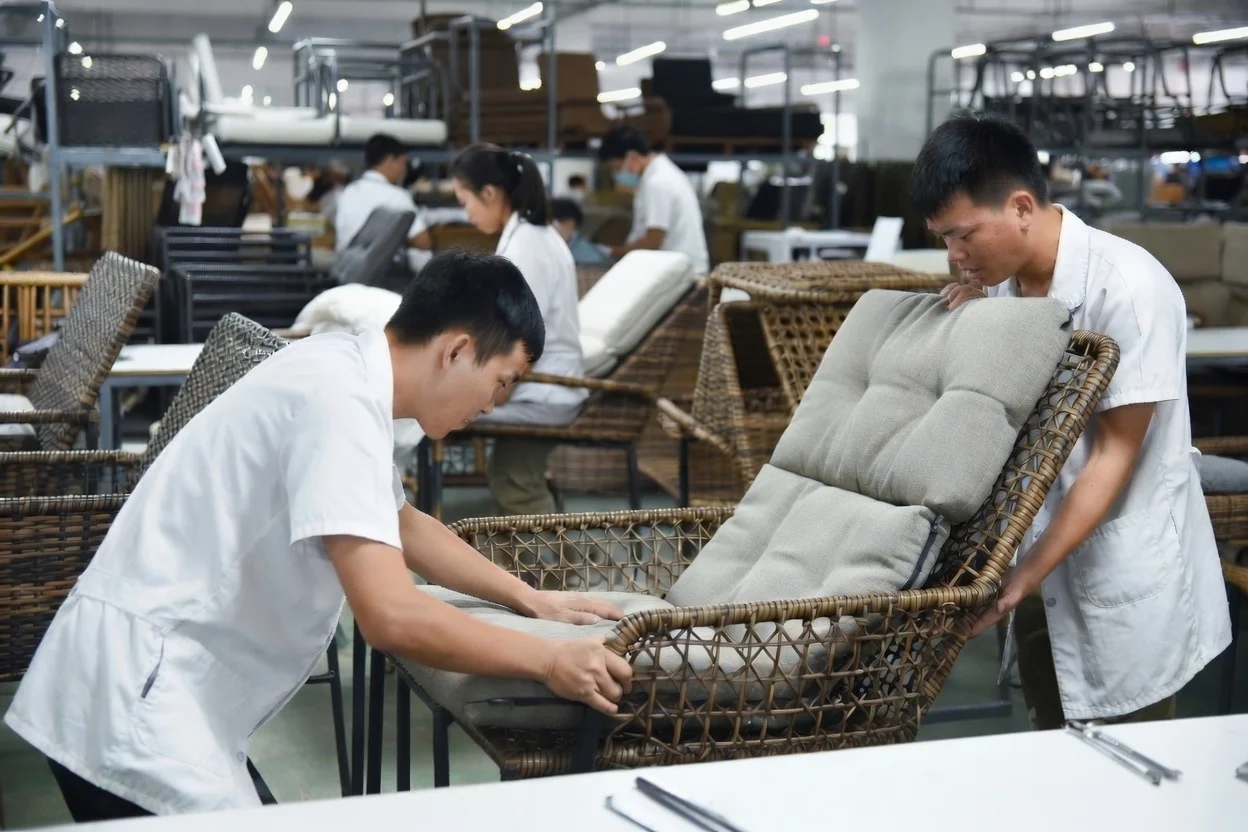
Structural strength means nothing if the furniture scratches a buyer. Most returns and hospitality complaints happen because the first touch feels cheap.
During an audit, a hidden wire on a woven outdoor chair snagged my jacket. We halted the production line. You must physically test tactile details to prevent online review damage. Pull cushion seams to verify zipper durability and fabric alignment. Press firmly to check foam recovery and comfort realism.
Supervisor Wang showed me how loose wicker tension sags after one summer. We demand physical reinforcement at stress points across all outdoor furniture, especially high-wear outdoor loungers. Never accept fake premium styling.
OGPSGroup Methodology: Workmanship Scoring
- 0 Points: Sharp ends, broken weave, seam failure, unusable comfort, or obvious mismatch to the approved sample.
- 5 Points: Visible inconsistency in fabric alignment or tension, but still serviceable.
- 10 Points: Consistent fit, tight tension, flawless sewing, and a premium finish across the sampled lot.
🛡️ Our Verdict: Catching tactile defects early prevents the aesthetic failures that trigger high retail return rates.
8. Verify Compliance Documents and Traceability
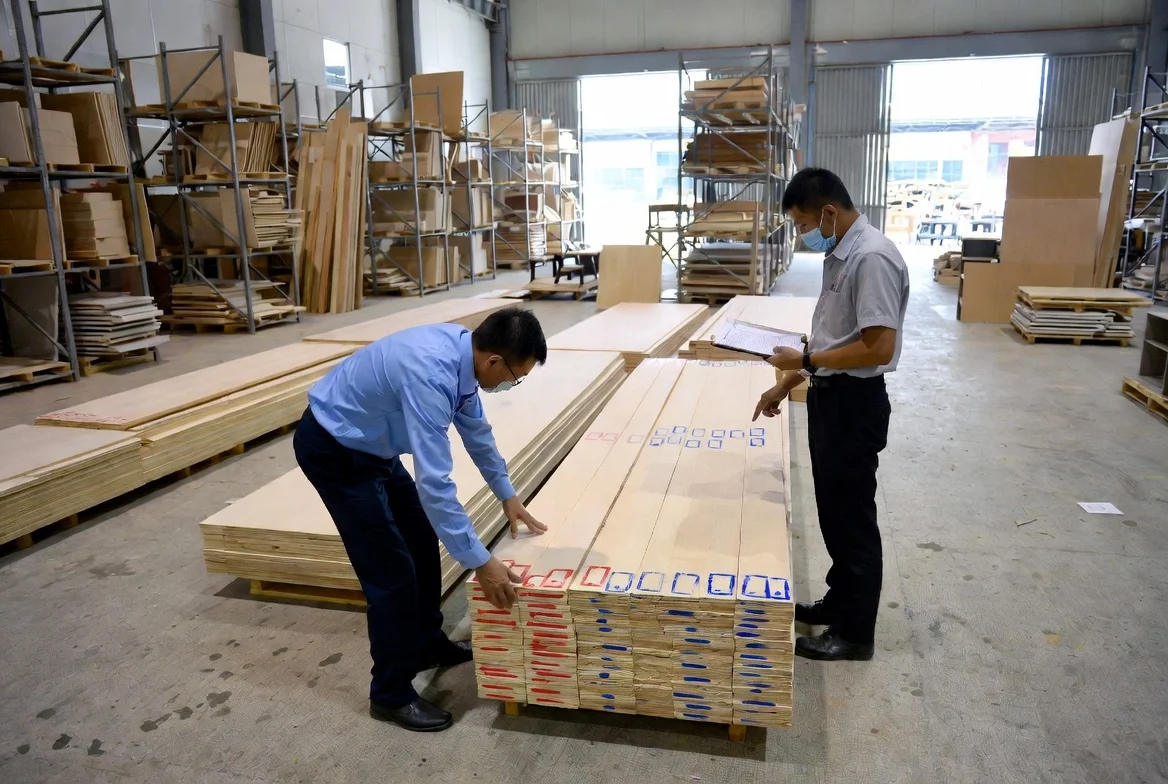
A PDF certificate means nothing if the raw materials tell a different story. During an outdoor furniture factory audit, treat compliance as a physical inspection.
Last quarter, a supplier handed me a pristine FSC certificate for teak. But when I walked their warehouse, they stored the certified wood touching undocumented timber. They lacked physical segregation and lot numbers. We failed them instantly.
You must verify traceability down to the exact batch. Demand physical proof for FSC chain of custody claims. Review REACH declarations for chemical safety and OEKO-TEX paperwork for textile components.
Next, cross-reference their internal chemical inventory against actual purchasing invoices. The lot numbers on the physical materials must match the certificates exactly.
OGPSGroup Methodology: Compliance Scoring
- 0 Points: Forged, expired, or non-traceable documents.
- 5 Points: Documents exist, but floor segregation is weak.
- 10 Points: Valid certificates, clear lot traceability, and exact physical segregation.
🛡️ Our Verdict: Genuine manufacturers tie every invoice directly to a physical lot. This prevents customs holds, retailer chargebacks, and legal exposure.
9. Inspect Packaging, Hardware Completeness, and Shipment Readiness
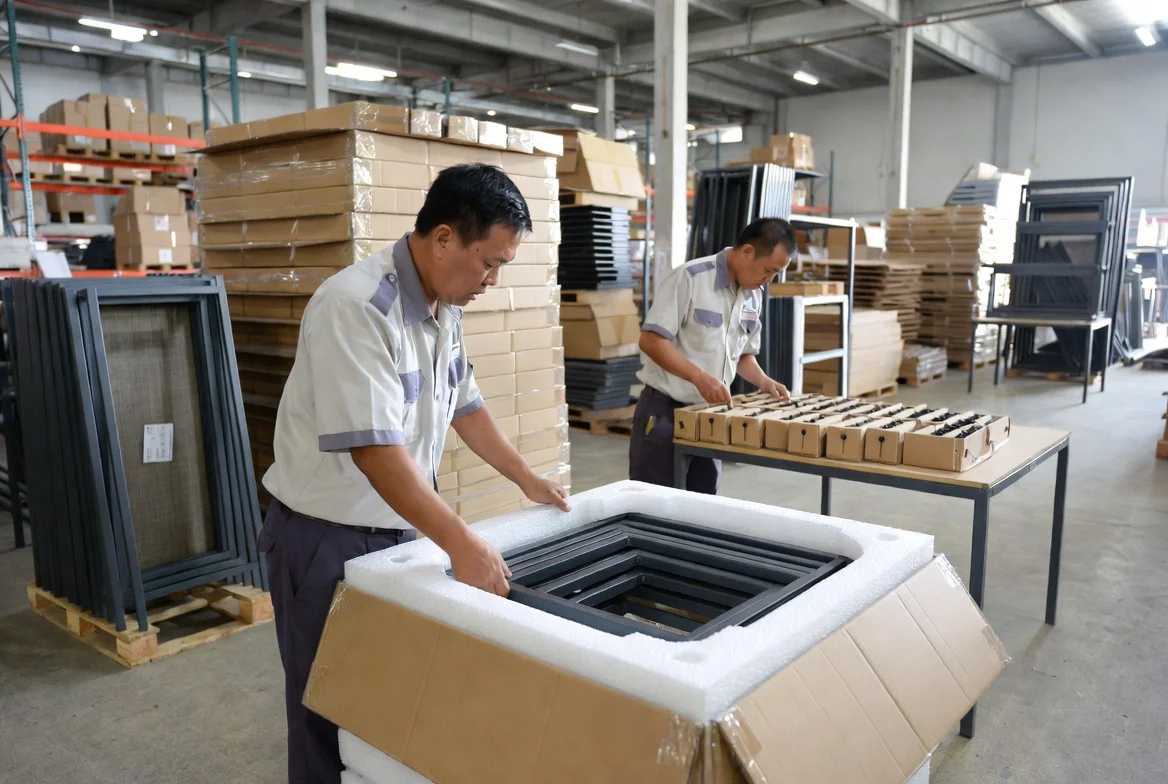
During an outdoor furniture factory audit, prevent margin loss by inspecting packaging. Mixed-container shipping destroys weak boxes.
Last month, we consolidated heavy fire pits alongside flat-pack patio sets. Manager Chen used standard 5-ply cartons for powder-coated frames and glass tops. I stopped the load immediately. Heavy ballast products crush standard corrugated boxes.
We demanded 7-ply honeycomb cartons with custom EPS foam at all fabric and metal abrasion points. This meets ISTA 3A transit testing standards. Next, my team executes a pilot assembly on the factory floor. We count the knock-down (KD) hardware.
We verify spare parts logic and test instruction clarity. Finally, we scan carton marks to ensure compliance with GS1 global supply chain standards. This prevents missing-parts tickets and installer frustration.
OGPSGroup Methodology: Shipment Readiness Scoring
- 0 Points: Missing hardware, weak cartons, or assembly confusion likely to generate claims.
- 5 Points: Adequate packaging with known weak spots.
- 10 Points: Shipment-ready packaging validated by pilot assembly and transit-risk thinking.
🛡️ Our Verdict: Engineer your packaging exactly like your product to eliminate destination damage claims.
10. Set an AQL Defect Matrix Before Shipment
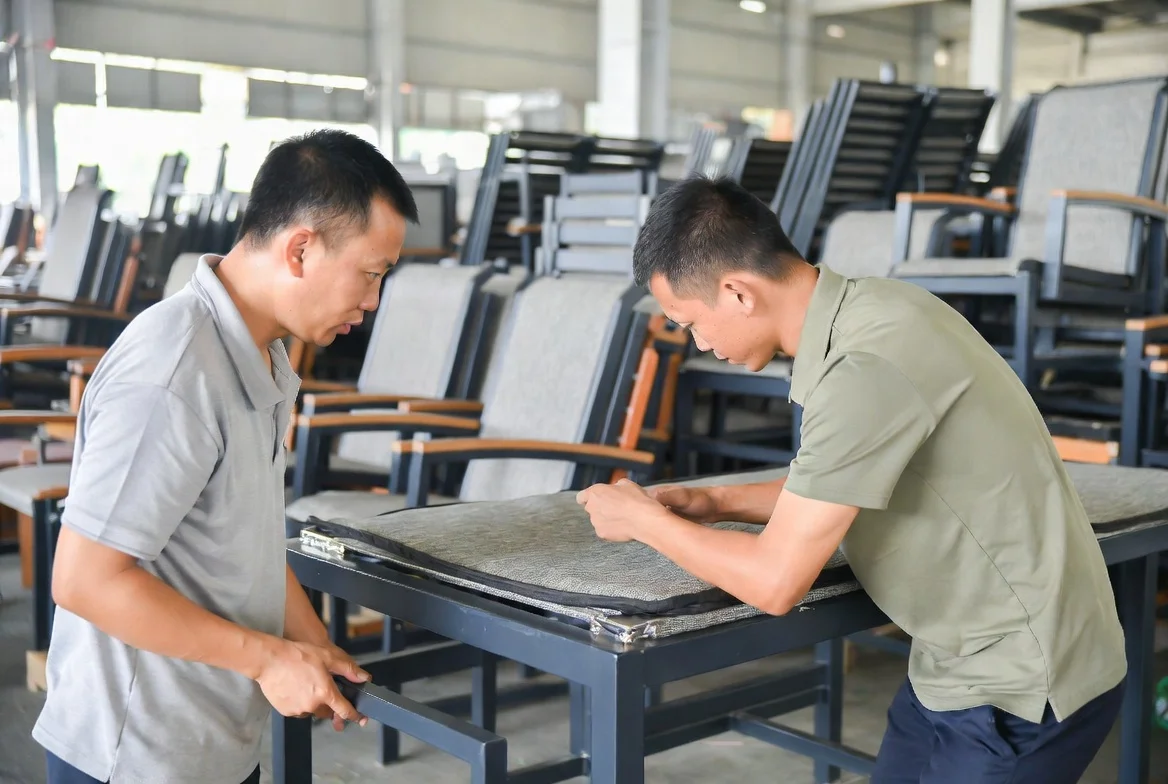
A perfect outdoor furniture factory audit fails if you and the supplier disagree on defect definitions. Set a strict decision framework before production begins.
Last season, a factory manager argued that exposed wire ends on a wicker sofa were a cosmetic flaw. I consider them a critical hazard. Define these boundaries early. We classify defects into three tiers based on ISO 2859-1 sampling standards:
- Critical: Safety or compliance failures like cracked structural welds or exposed wire ends.
- Major: Structural weaknesses, functional defects, or severe finish failures. Frame wobble, powder-coat pinholes, and fabric shade mismatches fall here.
- Minor: Cosmetic variances that do not affect use, like minor carton damage.
Combine your 10-point audit score with strict AQL standards for outdoor furniture.
🛡️ Our Verdict: The Final Decision Layer We merge our AQL sampling plan with an absolute no-ship rule. If we spot one critical failure, we halt the container. This logic powers the sample audit report in our next section.
How to Execute the OGPSGroup 100-Point Factory Audit Plan?
Step 1: Deploy the Scorecard and Report Template
Grade your supplier using our compact 100-point scorecard. Assign 10 points to each of the 10 inspection checkpoints. Fail any factory scoring below 70 immediately. For scores between 70 and 85, trigger a Corrective and Preventive Action (CAPA) plan.
Create your factory audit report using this exact structure:
- Supplier Basics: Record factory name and business license.
- Audit Date: Note the exact inspection time.
- Product Family: Log the specific item category.
- Findings by Checkpoint: List grades for all 10 steps.
- Photo Evidence: Attach raw visual proof of defects.
- Total Score: Calculate out of 100 points.
- CAPA Status: Document required actions.
- Shipment Decision: State pass or fail.
Step 2: Run the Physical Floor Checklist
I never trust paper records alone. When I run an outdoor furniture factory audit, I walk the production floor to find hidden defects.
Inspect Frame Welds: Ask to see the raw metal frames before powder coating. Photograph every load-bearing joint. During my last audit, Manager Huang showed me a batch of aluminum frames. I spotted porosity and weak penetration on the main truss. I immediately escalated the issue to the plant director and halted production.
Verify UV Degradation: Demand physical retention samples on the floor. Cross-reference the batch codes against the raw material invoices. If the factory cannot prove they used ISO 4892 compliant UV stabilizers, fail the audit. We test these batches in our own lab.
Field Notes from an OGPSGroup Lead Auditor: Last October, a factory floor manager presented a batch of flawless aluminum pergolas. The powder coat looked perfect. However, when I checked the bottom of the leg posts, I found a critical hidden defect.
The workers left the tube ends unsealed and skipped drilling proper drain logic. This traps rainwater inside the frame. Trapped water causes inside-out corrosion under an otherwise clean coating. I forced the team to drill 5mm drain holes into every post before shipping.
Step 3: Issue the Final AQL Report
Finally, grade the batch using an official Acceptable Quality Limit (AQL) sampling chart. Here is an anonymized AQL report from our recent metal-frame order.
- Lot Size: 1,200 units.
- Sample Size: 80 units.
- Defect Counts: 0 Critical, 2 Major (frame wobble), 4 Minor (carton scuffs).
- Disposition: Passed with conditions.
- Buyer Recommendation: Ship the goods. Enforce a strict 100% sort on the next production run.
Implement this framework immediately. Visit our homepage to explore our standards in action, or review our quality control protocol and virtual factory tour. Educate your team on smart supplier selection, durability testing methods, and key material choices.
Need to scale your supply chain? Contact us today and take the next step toward a worry-free outdoor furniture supply chain.
People Also Ask About Outdoor Furniture Factory Audits
1. Do I still need a factory audit if I sourced online?
Yes. You must audit every supplier in person. Online platforms verify basic business licenses, not factory floor capacity. In my experience, top-rated online suppliers often outsource complex orders to unverified workshops. Last year, we audited a supplier claiming 50 production lines online. We found only eight active welders. We use physical audits to verify real output and trace quality management requirements.
2. How do I know whether a supplier is a real factory or a trader?
Walk past the showroom and inspect the production floor. Traders hide their lack of heavy equipment. A true factory maintains massive raw material stockpiles and active assembly lines. I always check in-process work. We match the physical lot numbers on the floor to official factory invoices. If raw material inventory fails to match their claimed output, you face a middleman.
3. What AQL level is reasonable for outdoor furniture?
Our lead engineers hold ASQ Quality Auditor certifications. We apply the official ISO 2859-1 sampling rules to every order. We train factory managers on how to meet these global standards. Retailers trust our team to enforce zero safety defects.
We set major defects at 1.5 and minor defects at 4.0. During a recent inspection, we found two major defects involving loose chair frames. We halted the entire container. Define these exact thresholds in your contract before mass production begins.
4. Can showroom samples or trade-show meetings predict durability?
No. Factories build showroom samples by hand. Mass production runs face extreme assembly line pressure. A trade show meeting cannot reveal weak powder coating or substituted frame materials. We rely on raw lab data. We demand accelerated weathering test records for every wicker batch. You must test random units pulled from the assembly line. Showroom visuals never predict shipping reality.
We catch the defects that factories try to hide. Call us to inspect your next shipment. Contact our engineering team to build a bulletproof supplier vetting process.
Disclaimer: I am not paid by any manufacturer to promote these findings. Our team executed these vetting protocols across 40 Chinese factories this year. We buy our own testing tools.

- Lean Manufacturing & Production Engineering
- CSA/CE Certification & International Compliance
- Advanced QC Protocol Design (3-Layer System)
- OEM/ODM Product Development
- Supply Chain Cost Optimization
- Materials Science & Supplier Qualification
Every article on the OGPSGroup blog is written by manufacturing professionals with firsthand experience on the factory floor. Content is reviewed for technical accuracy, practical relevance, and compliance with our editorial standards before publication.
Learn more about our Fact Checking Process and Editorial Policy.