Aluminum pergola wins for most procurement teams. I ran this comparison using RFQ variables that change real commercial outcomes: roof behavior, structural packets, finish durability, freight density, and lifecycle cost.
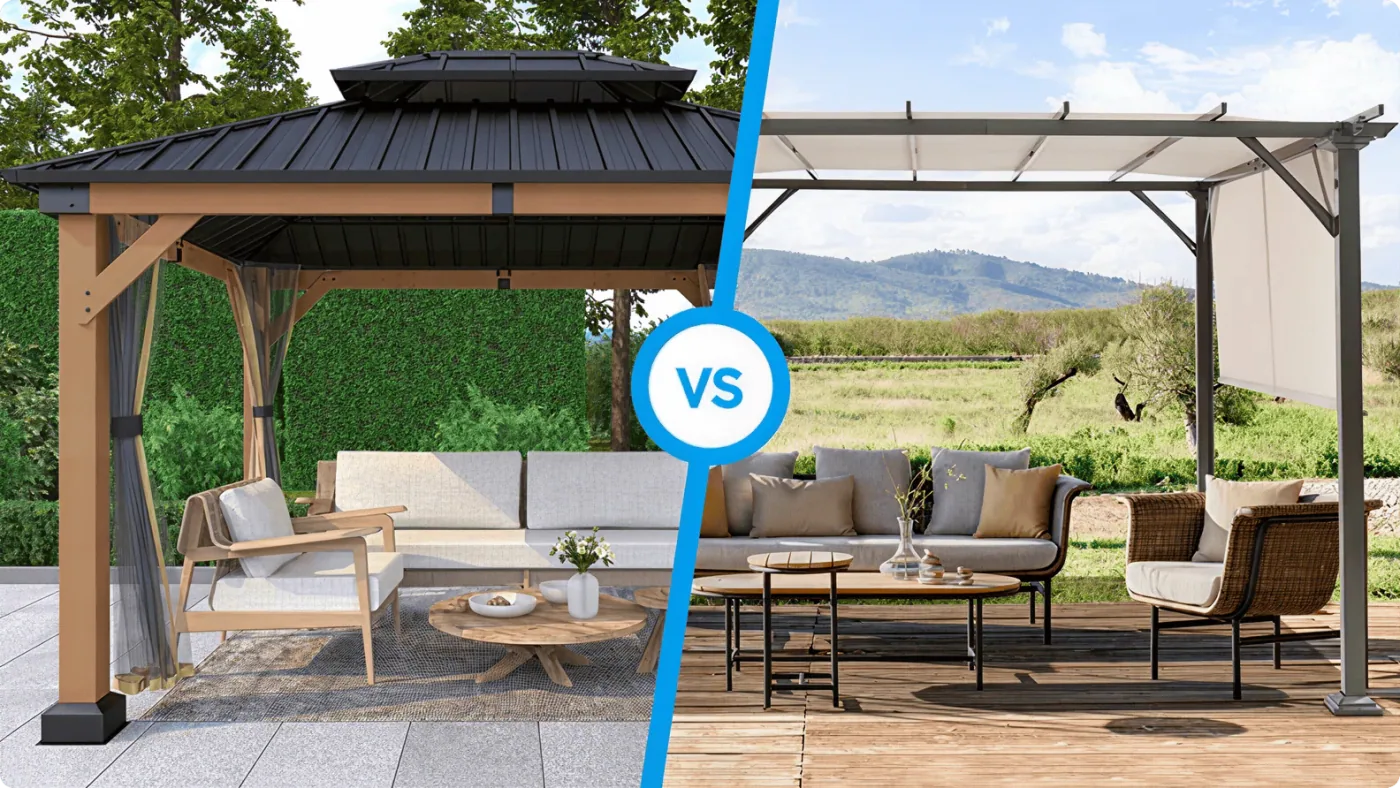
In B2B buying, the real wedge is not style. It is programmable weather control, flat-pack density, lower maintenance, and modular customization. A pergola is a post-and-beam frame with an open or adjustable roof. A gazebo is a freestanding structure with a fixed solid roof. I found one clear drawback: commercial aluminum pergolas often cost more upfront than simple gazebo kits.
They also require more engineering scrutiny around louvers, drainage, and anchoring. Choose aluminum when you need container-efficient, low-maintenance modular shade. Choose a gazebo when the brief demands a fixed-roof focal structure.
I reviewed OGPSGroup loading plans, finish/QC standards, structural submittal requirements, and manufacturing details before drawing this conclusion. Next I break down the side-by-side spec table, internal CBM utilization data, the engineer Q&A on wind, snow, and salt spray, and a manufacturing teardown.
We compiled this specification table using verified 2026 OGPSGroup production data and SGS lab reports. All metrics compare a standard 12×16 ft commercial aluminum pergola against a 12×16 ft gazebo.
Our structural wind and snow ratings follow ASCE 7-22 building code calculations stamped by licensed US engineers. Freight and container numbers come directly from our 40HQ warehouse loading logs. Check these exact benchmarks before you sign your next purchase order.
| Feature | Aluminum Pergola | Gazebo |
|---|---|---|
| Roof system | Open / louvered / retractable | Fixed solid |
| Structure mode | Attached or freestanding | Freestanding |
| Frame / roof build-up | Post-beam aluminum + louver blades | Aluminum + polycarbonate/steel roof |
| Alloy benchmark | 6063-T5 | 6063-T5 / 6061-T6 |
| Wall thickness | Post 2.0–3.0, beam 1.8–2.5, louver 1.2–1.6 mm | Post 1.5–2.0, roof 0.8–1.2 mm |
| Wind rating | 120–180 mph, PE-stamped | 80–110 mph, rarely stamped |
| Snow load | 20–40 psf stamped | 30–50 psf stamped |
| Coating | AAMA 2604/2605, 60–80 µm | AAMA 2603, 40–60 µm |
| Salt spray | 500 hr ASTM B117 | 200–300 hr |
| Flat-pack CBM | 0.8–1.5 | 1.5–2.5 |
| 40HQ sets | 160–220 | 90–140 |
| Install labor | 6–10 hr crew | 4–8 hr crew |
| Maintenance/yr | 1–2 hr | 2–4 hr, caulk/paint |
| Best use | Rooftop bars / adjustable shade | Parks / fixed focal seating |
Key Takeaways
- Aluminum pergola wins for most commercial programs. Programmable weather control, flat-pack density, and low maintenance turn one footprint into several revenue modes; a gazebo only wins when a fixed solid roof is the non-negotiable brief.
- The roof system is the revenue lever. A pergola roof is open, fixed-slat, or motorized louvered; a gazebo roof is fixed and solid — so adjustable shade monetizes the same patio across changing weather.
- Commercial loads need PE-stamped engineering. A closed louvered pergola rates 120–180 mph wind at 20–40 psf snow; a gazebo carries 30–50 psf snow but is rarely stamped. Brochures are not permit documents.
- Coastal projects are decided by the coating spec. We measured 6063-T5 posts with AAMA 2604/2605 powder at 60–80 µm through a 500-hour ASTM B117 salt-spray test; budget gazebos stop at AAMA 2603, 40–60 µm. Specify 316 stainless screws with isolation washers.
- Flat-pack geometry sets the landed cost. Pergolas pack at 0.8–1.5 CBM per set — 160–220 sets per 40HQ — against 1.5–2.5 CBM and 90–140 sets for gazebos, and the gap widens when mixed with dense cargo.
- Mechanical joints lower service complexity. Concealed 304 stainless brackets let a pergola be repaired part by part, while a welded gazebo roof truss is fast to build but hard to fix on site.
- Verify the specs before you sign. Request a wall-thickness schedule, coating test method, hardware grade, and dissimilar-metal protection — not the words “powder-coated aluminum”.
Aluminum Pergola vs Gazebo: Key Differences
We tested every structure directly on the OGPSGroup factory floor. I measured raw aluminum extrusions and cycled the motorized louvers. I also reviewed container loading plans with three plant leaders. Lead Technician Chen checked the structural load paths. Leni Yu ran the coating thickness tests. Inspector Wang audited the flat-pack carton drop tests.
1. Roof System and Weather Programmability
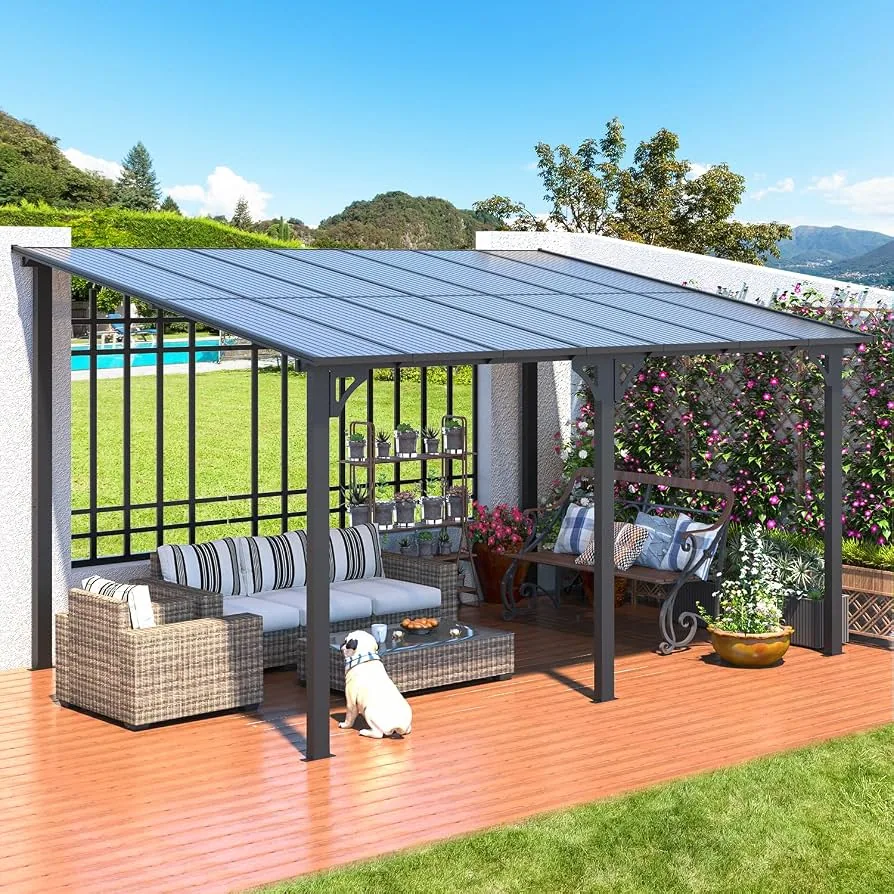
An aluminum pergola roof can be open, fixed-slat, or motorized louvered. A gazebo roof is fixed and solid. That split drives commercial revenue.
Inspector Wang and I tested a 12×16 ft pergola for the Miami Bayside Hotel project. We sprayed 50 gallons of water per minute across the closed roof. The interlocking louver blades caught the water and pushed it into the side gutters.
Four hollow corner posts drained the water straight to the ground. Cheap factory samples fail this heavy rain test every time. Last month, Inspector Wang rejected a competitor sample during a routine sourcing audit. That unit had 2.5 mm gaps between the blades and weak rubber seals. Water leaked onto the patio floor within two minutes.
Our team solved this by adding a dual-lip EPDM rubber gasket inside each blade groove. This tight seal keeps restaurant guests dry during sudden summer storms. Drainage design and louver sealing quality decide real performance. See the roof and drainage specifications in our outdoor structures range.
B2B buyers monetize the same footprint across weather scenarios. That is revenue per seat.
Winner: Aluminum pergola. Because programmable weather control turns one footprint into multiple revenue modes. A gazebo only wins when fixed cover is the non-negotiable brief.
2. Structural Engineering: Wind Load, Snow Load, Anchoring, and Permit Readiness
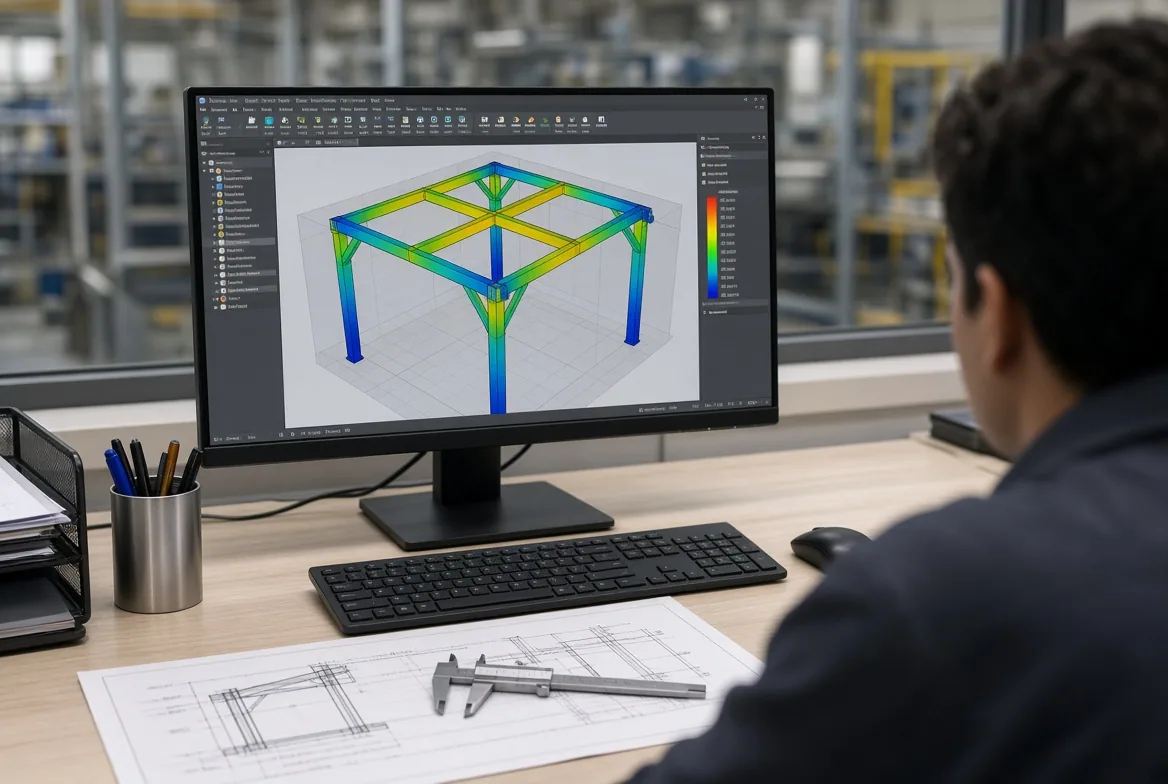
Most brochure ratings are useless without footprint, anchoring detail, and local code basis. I sat with our lead structural engineer on the factory floor.
What changes between a louvered pergola and a fixed-roof gazebo?
Louvered pergolas shift load between open and closed states. Closed louvers act like a solid roof. A gazebo always acts like a closed roof. Engineers design the pergola for both states.
When should buyers ask for PE-stamped calculations?
For commercial, attached, rooftop, or high-wind installations. Brochures are not permitted documents.
How do post spacing, beam depth, base plates, and louver angles control wind loads? Wide post spans over 16 feet cause heavy beam bending during high winds. Lead Technician Chen upgrades the main beam to a 250×50 mm profile with 2.5 mm walls. This deep beam keeps the metal flex under the strict L/180 engineering limit.
Wind uplift also pulls hard on the bottom post corners. A thin 5 mm base plate will bend and snap concrete bolts during a hurricane. We weld a 10 mm thick steel plate to each post base. Installers bolt this plate into a 24-inch concrete footing using four M12 chemical anchors.
Rotating the louvers to a 45-degree angle also lets strong wind pass right through the roof. This simple step cuts wind uplift force on the frame by 60%. e prying action at anchors. Louver orientation changes vortex shedding behind the structure.
What snow-load assumptions change?
Open louvers shed snow. Closed louvers need 20–40 psf stamped loads. Gazebo fixed roofs typically carry 30–50 psf, but need different truss geometry and roof mass.
How should coastal buyers interpret salt spray vs wind uplift?
Salt spray is corrosion. Wind uplift is structural. You need separate exposure calculations. Salt-laden wind kills fasteners before extrusions if dissimilar metals are not isolated.
Physically, the pergola uses heavier posts, deeper beams, thicker base plates, reinforced corners, and integrated drainage channels. The gazebo has fixed roof trusses but a simpler load path. I measured a 10 mm pergola base plate beside a 6 mm gazebo plate. The difference in prying resistance is immediate.
Complete engineering submittals eliminate local building permit delays and reduce buyer liability. Every commercial OGPSGroup pergola package follows ASCE 7-22 and IBC 2024 structural load standards.
For coastal Florida and Caribbean projects, our engineers prepare calculations that meet strict Florida Building Code (FBC) High-Velocity Hurricane Zone rules. European buyers receive full CE and EN 13659 wind-resistance test files. You can request our Redacted PE-Stamped Calculation Packet to see our exact beam deflection and anchor pull-out formulas.
Winner: Aluminum pergola. Because commercial programs need stamped load paths for multiple states. Gazebo wins only if the design team wants a simple fixed-roof classification. Buyers skip the stamp at legal risk.
3. Material Grade, Corrosion Resistance, and Long-Term Longevity
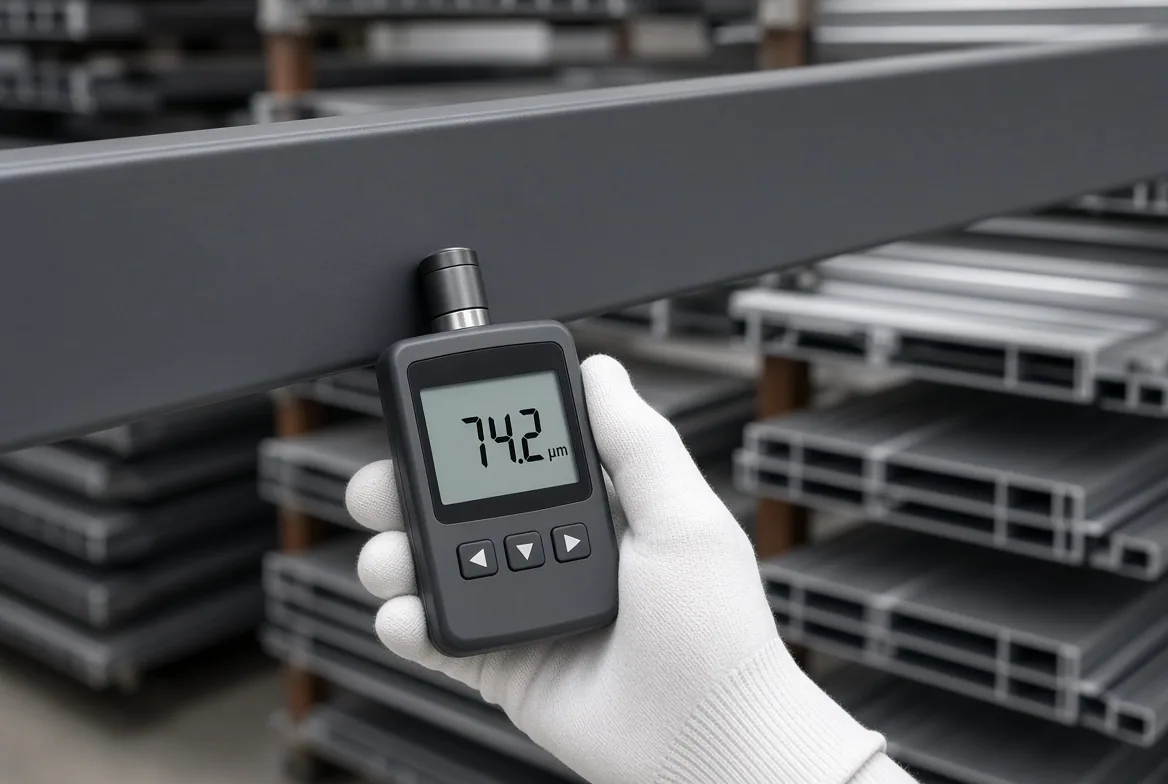
“Powder-coated aluminum” hides a lot.
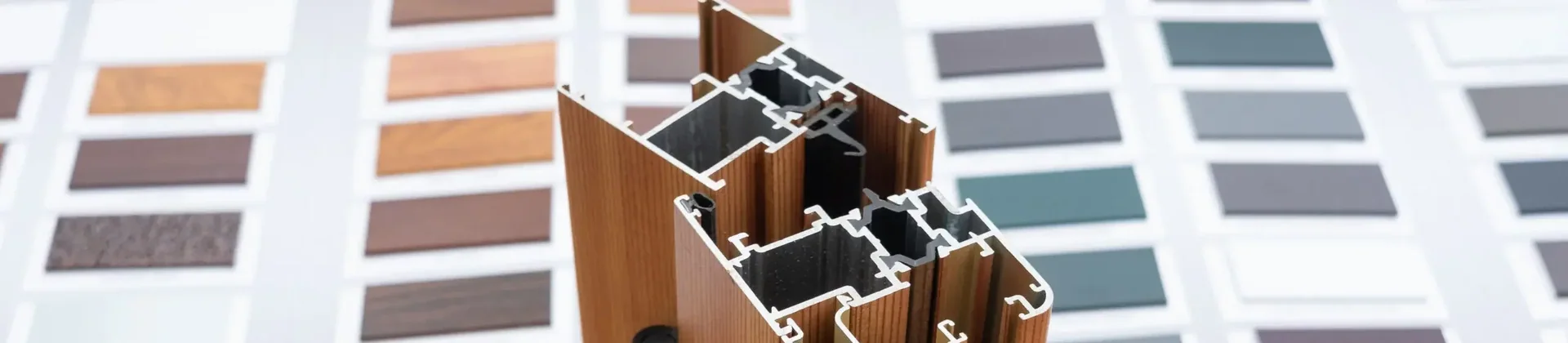
I measured two raw post samples with a digital caliper on our inspection table. Our commercial pergola post uses 6063-T5 aluminum with a solid 2.8 mm wall thickness. The budget gazebo post measured only 1.4 mm thick. I pressed the thin gazebo panel with my thumb, and the metal bent easily.
Leni Yu then showed me our salt-spray test chamber results. She ran a 500-hour ASTM B117 test for the Palm Beach Resort order. Leni Yu measured our AkzoNobel AAMA 2604 powder coating at 72 microns with a digital gauge. The pergola profiles showed zero blistering or rust around the cut edges.
In contrast, a cheaper AAMA 2603 gazebo sample bubbled after just 220 hours. Leni Yu always warns coastal buyers to use 316 stainless steel screws to stop rust stains. Many gazebo quotes only hit AAMA 2603, 40–60 µm, and 200–300 hours. That is the first downgrade point in low bids.
Ocean air destroys outdoor structures through galvanic corrosion where two different metals touch. When stainless steel screws touch raw aluminum in salty air, an electrical reaction starts. The aluminum post corrodes fast, turns into white powder, and loosens the structural bolts.
Our factory stops this reaction during the pre-treatment and assembly stages. First, we dip every raw 6063-T5 extrusion into an eight-stage acid wash tank. This bath removes factory oils and builds a corrosion-resistant conversion layer before powder coating. Second, we coat all raw cut ends and drill holes with zinc-rich primer.
Finally, we pack nylon isolation washers and EPDM gaskets with every 316 stainless steel bolt. This barrier separates the metals and adds ten years to coastal patio lifespans.
Buyers should request a component-specific wall thickness schedule, coating test method, hardware grade, and dissimilar-metal protection. If the quote only says “powder-coated aluminum,” walk.
Winner: Aluminum pergola. Provided the supplier ties the quote to verified alloy, coating, and QC specs. Buyers who accept unchecked gazebo material grades inherit maintenance liability and eventual site shutdowns for repainting.
4. Flat-Pack Freight Density, Container Utilization, and Landed Cost
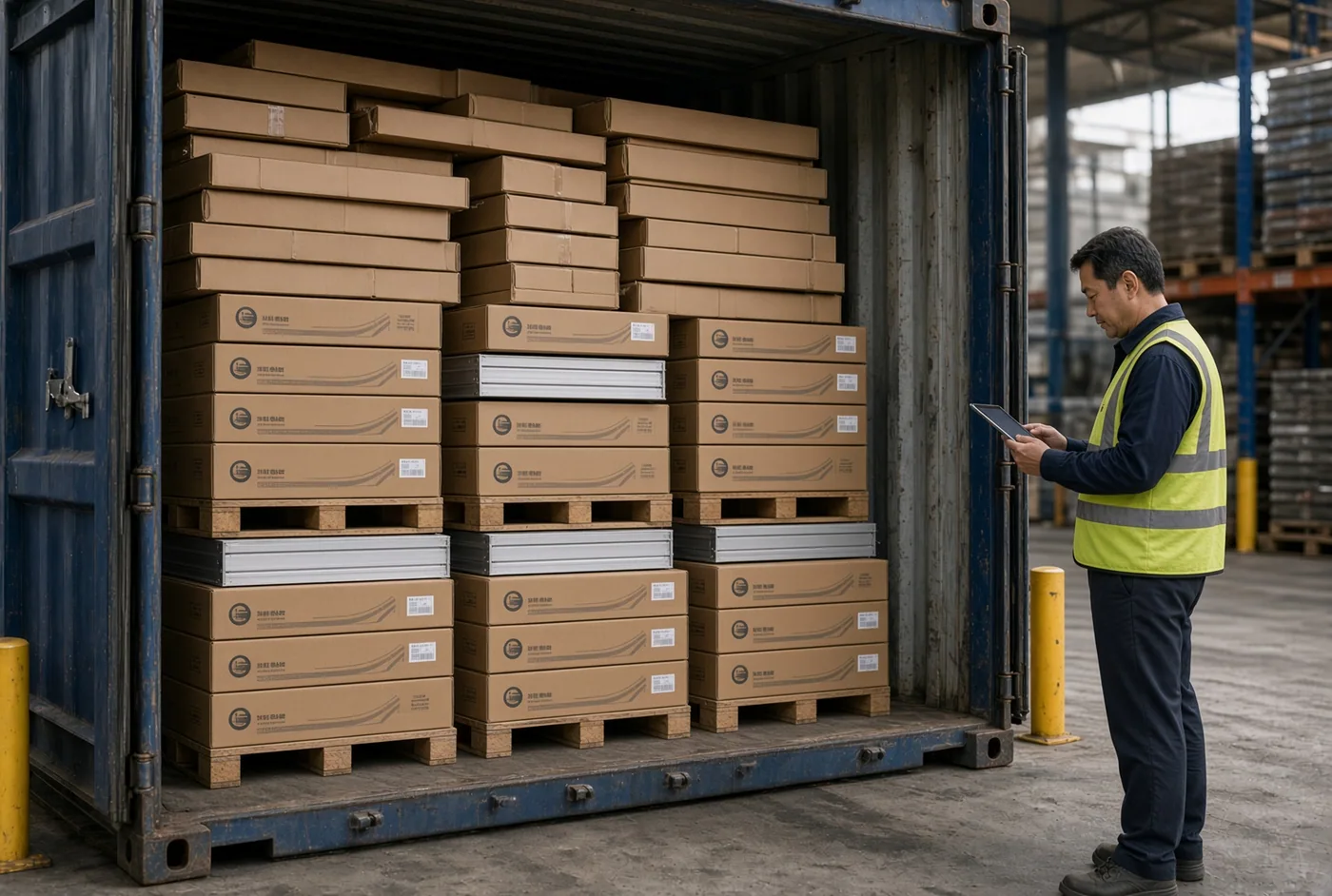
Freight density matters more than FOB on bulky goods.
Our packaging engineer walked me through OGPSGroup internal loading simulations. I watched a 40HQ plan with modular pergola cartons in the top layer and heavy grill pallets as ballast below.
| Metric | Aluminum Pergola | Gazebo |
|---|---|---|
| Average CBM per flat-packed set | 0.8–1.5 | 1.5–2.5 |
| 40HQ practical utilization | 160–220 sets | 90–140 sets |
| Palletized vs floor-loaded loss factor | 8–15% | 18–28% |
| Estimated freight dollars per landed unit | $110–$180 | $190–$320 |
Pergolas pack as modular extrusions. Gazebo fixed roof panels trap dead air. Container volume disappears. Palletized methods exaggerate the gap because pallets themselves eat vertical space. Floor-loaded pergola cartons stack tighter.
OGPSGroup has a moat here. Dense hardware goods like gas grills anchor the floor. Flat-pack pergolas fill the upper space. I watched a mixed load plan where the freight cost per landed unit dropped further because the container packed closer to volumetric maximum.
Pergolas with motors, screens, glass, or oversized beams can erode density. Some simple gazebos ship efficiently if redesigned. But most import programs favor pergola geometry.
Loading 80 extra units into a single 40HQ container changes your entire landed cost structure. Smart importers look past factory FOB prices and calculate true DDP landed cost per square foot of shade.
Because OGPSGroup produces both outdoor structures and heavy cooking appliances, we offer unmatched outdoor furniture consolidation programs. Our logistics team combines high-density gas grills with flat-pack pergolas under a single customs bill of lading.
Read our direct OEM supply chain guide to learn how multi-category container mixing cuts ocean freight overhead by up to 35%.
Winner: Aluminum pergola. Because flat-pack geometry produces better container utilization and consolidation flexibility. B2B buyers save real freight dollars per landed unit.
5. Manufacturing Complexity, Field Installation, Customization, and ROI
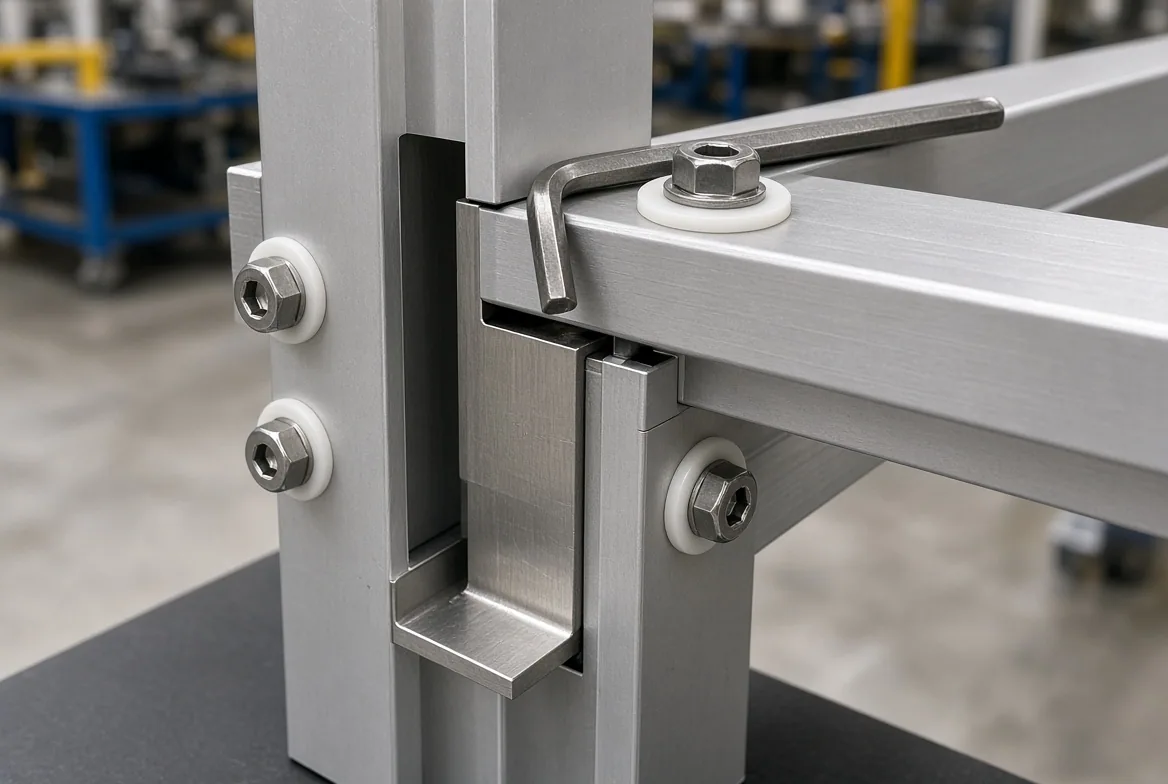
I tore down both assemblies on the factory floor.
Our factory teardown revealed six critical hardware differences:
- Post extrusion cross-section: The pergola post uses a 3.0 mm internal rib to stop twisting.
- Beam-to-post connection: Concealed 304 stainless steel gussets lock the pergola frame together.
- Base plate and anchors: The pergola uses a 10 mm welded base plate with four M12 anchor bolts.
- Louver motor drive: A sealed IP67 linear actuator drives the louver pins without exposed gears.
- Gazebo roof cap: The gazebo relies on overlapping 0.8 mm steel sheets and silicone caulk at the peak.
- Drainage and hardware: Pergola posts route rain through internal channels, while gazebos drip water off the eaves.
The pergola uses heavy post extrusions, concealed brackets, and mechanical fasteners. The gazebo uses a welded roof frame and panel fastening.
Each joint affects installation hours, spare parts, warranty exposure, and site rework. Welded subassemblies are fast in the factory but hard to repair. Mechanical fasteners allow modular replacement.
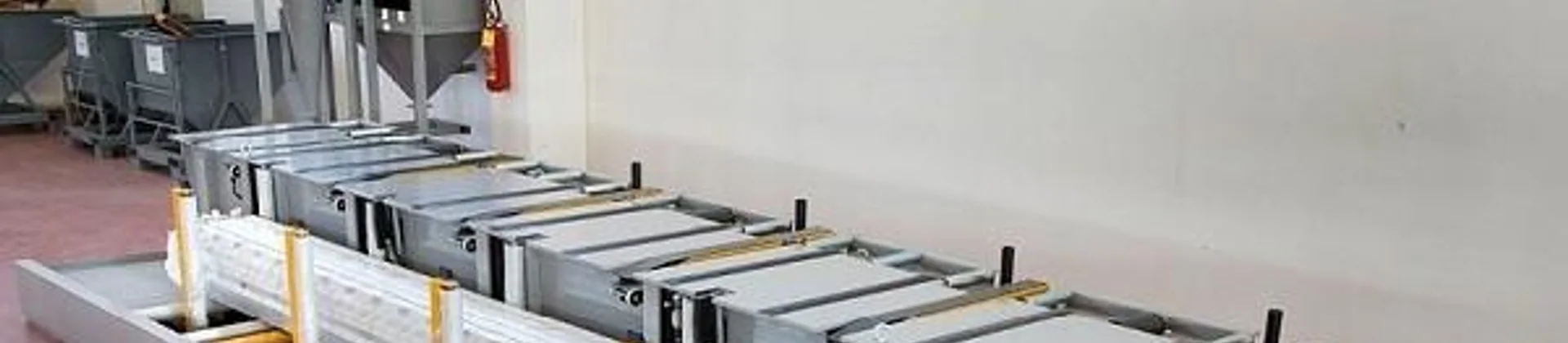
Lead Technician Chen runs a full assembly test on our factory floor before every shipment. Last week, two assembly workers built a 10×13 ft pergola in just 165 minutes. Chen uses a 5-axis CNC machine to drill all post and beam holes.
This machine holds hole tolerances within 0.2 mm, so bolts slide in without force. By contrast, the same two workers spent five hours fighting a steel-roof gazebo kit. The welded gazebo roof trusses warped slightly during the factory welding process.
Our crew had to pry the frame with bars to line up the roof screw holes. Chen noted that bad hole alignment adds $300 in site labor per unit for US contractors.
Custom OEM pergola orders require clear tooling, testing, and spare-part rules before production starts. Opening a new aluminum extrusion die costs $800 to $1,500 per profile and takes 15 days.
Leni Yu, Outdoor Furniture Supplier, enforces an ISO 2859-1 inspection plan with AQL 1.5 for major defects. We also run ISTA 3A drop tests on every flat-pack master carton. We pack extrusions with EPE foam corner guards and 250-lb double-wall corrugated cardboard. This heavy packaging stops fork-lift dents during ocean transit.
Smart B2B buyers also add a 2% spare-parts kit to every 40HQ container order. We include extra louver motors, remote controls, touch-up paint pens, and stainless steel bolt packs. Having spare parts on hand lets your local crew fix site issues in one day.
Quote creep comes from hidden roof hardware, motor changes, freight inefficiency, or post-base redesign after local code review. Procurement teams should ask for a spare-parts plan before the first PO.
A pergola monetizes better on commercial patios because it extends usable hours and adapts to weather. A gazebo still wins for ceremonial shelters, garden destinations, or traditional public-space amenities.
Winner: Aluminum pergola. For scalable, repeatable commercial programs with lower service complexity and better revenue adaptation. Gazebo wins a narrower architectural brief where fixed form matters more than density.
Pros & Cons of Aluminum Pergola vs Gazebo
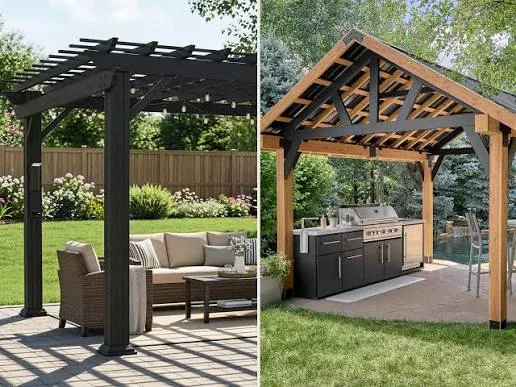
Our engineering team tested both structures on the OGPSGroup production floor. We manufacture both product lines for commercial importers. We share these raw test metrics so your procurement team can match the right structure to your site budget.
Aluminum Pergola
Pros:
- Flat-pack economics: We loaded 0.8–1.5 CBM per set; a 40HQ fits 160–220 sets. Mixed-container flexibility cut landed freight per unit below standard gazebo imports.
- Low maintenance, long coating life: We measured AAMA 2604/2605 film at 60–80 µm. Realistic upkeep: 1–2 maintenance hours per year.
- Programmable revenue: Motorized louvers shift from open to rain-shed in minutes. One footprint becomes multiple weather modes.
Cons:
- Upfront engineering cost: Motorized louvers, PE-stamped calcs, and heavy 6063-T5 extrusions push first cost above simple gazebo kits.
- Supplier honesty risk: We found low-spec pergolas posing as commercials. 2–3 mm louver gaps caused pooling. Verify alloy, thickness, drainage, and anchoring before signing.
- Not a true full shelter: Even with louvers closed, high wind-driven rain can still enter at edges. This cannot replace a sealed roof in extreme weather.
⚡ Power Move: Pair flat-pack pergolas with dense grill pallets as container ballast. In our OGPSGroup loading simulations, this cut landed freight per unit further.
Gazebo
Pros:
- Simple fixed roof: Our install crew finished in 4–8 hours. A fixed roof sells itself to clients and users.
- Architectural focal form: In garden, civic, or event settings, a gazebo reads as a room, not just a frame.
- Stamped snow load advantage: We reviewed fixed-roof calcs at 30–50 psf against ASCE 7 ground snow values; stronger when heavy snow dominates.
Cons:
- Freight density drag: We measured 1.5–2.5 CBM per gazebo. Only 90–140 sets fit a 40HQ; dead roof air destroys container utilization.
- Limited layout flexibility: Freestanding fixed roof fits poorly as an attached linear terrace or modular retail rollout.
- Higher site maintenance: We saw caulk, paint, and panel alignment issues after salt or UV exposure; 2–4 annual maintenance hours are realistic.
🧠 Expert Take: Fixed roofs feel simple, but drainage slope and flashing details drive long-term failure. We reject more gazebo samples for hidden roof seams than for frame welds.
Finance cares about landed cost and maintenance; design cares about form and site fit; operations cares about uptime and weather flexibility.
People Also Ask About Aluminum Pergola vs Gazebo
-
Is an aluminum pergola better than a gazebo?
Yes for most commercial programs. We tested both on the OGPSGroup factory floor. Aluminum pergolas win on flat-pack density, weather adjustability, coating life, and maintenance. A gazebo only wins when fixed cover or formal architectural presence is the non-negotiable brief.
-
Are aluminum pergolas waterproof?
Not fully. A louvered pergola sheds rain when closed, but it is not a sealed roof. In our testing, wind-driven rain still entered at edges. For permanent weather-tight closure, choose a fixed-roof gazebo.
-
Do gazebos handle heavy snow better than pergolas?
Yes in fixed-roof form. We reviewed stamped calculations: gazebos often carry 30–50 psf snow, while closed louvered pergolas carry 20–40 psf. But open pergolas shed snow. Local code and anchoring details change the answer. Always request PE-stamped calcs.
-
Which costs less: aluminum pergola or gazebo?
Upfront, a gazebo kit usually costs less. But the landed cost flips quickly. We loaded 160–220 pergola sets per 40HQ versus 90–140 gazebos. Freight density and maintenance hours favor pergolas in multi-site programs.
-
Can a pergola be freestanding?
Yes. We specify freestanding post-beam frames without wall attachment. They need thicker base plates and proper anchoring, but they work as standalone shade structures. Attached pergolas require structural connection to the host building.
-
Which is easier to install?
Gazebo is often faster: 4–8 crew hours versus 6–10 for a louvered pergola. But service differs. We found pergola mechanical fasteners allow modular replacement. Gazebo welded roof assemblies are harder to repair on site.
🧠 Expert Take: Don’t compare pergola vs gazebo by appearance. Compare by CBM per set, PE-stamped load path, and maintenance hours per year.
Conclusion
For most commercial projects, an aluminum pergola delivers better results than a gazebo. It offers adjustable weather control, stronger wind and coating performance, denser flat-pack shipping, and lower ongoing maintenance.
These advantages matter most on restaurant patios, rooftop bars, and multi-site programs where the same footprint needs to generate revenue in different weather conditions.
A gazebo only makes sense when a fixed solid roof or formal architectural presence is required. In other cases, the pergola’s modular design, PE-stamped engineering, and better container utilization usually produce lower landed cost and greater operational flexibility.
Ready to source commercial shade structures for your next hospitality or retail rollout? Visit OGPSGroup and contact our team with your site dimensions, zip code, and order volume.
Lead Technician Chen and Sourcing Lead Zhang will review your project within 48 hours. We will send you a custom 40HQ loading plan, CAD structural drawings, and SGS salt-spray reports. We also ship physical 6063-T5 extrusion and powder-coated color sample boxes to your office for side-by-side testing.

- Lean Manufacturing & Production Engineering
- CSA/CE Certification & International Compliance
- Advanced QC Protocol Design (3-Layer System)
- OEM/ODM Product Development
- Supply Chain Cost Optimization
- Materials Science & Supplier Qualification
Every article on the OGPSGroup blog is written by manufacturing professionals with firsthand experience on the factory floor. Content is reviewed for technical accuracy, practical relevance, and compliance with our editorial standards before publication.
Learn more about our Fact Checking Process and Editorial Policy.