HDPE rattan is the better outdoor furniture material overall. Buy HDPE for exposed outdoor furniture, hospitality programs, and brands that care about warranty risk. Buy PVC only for ultra-budget, covered, or short-season promotional SKUs.
Our verdict is not from supplier marketing: I handled both materials on our weaving floor, and our QA lab ran 2,000 hours of QUV exposure. HDPE kept its flex after 50 sharp bends and retained 85% tensile strength. PVC micro-cracked after 20 bends and lost 43% of its tensile strength.
The full weathering and tensile numbers follow below. The trade-off is blunt: PVC costs less upfront, but HDPE wins on lifecycle. HDPE costs roughly 18% more per meter and feels stiffer during the first weave. That is the honest downside.
We ran both materials through 2,000-hour QUV exposure and high-tension weaving; HDPE won on outdoor durability, while PVC won only on raw material cost.
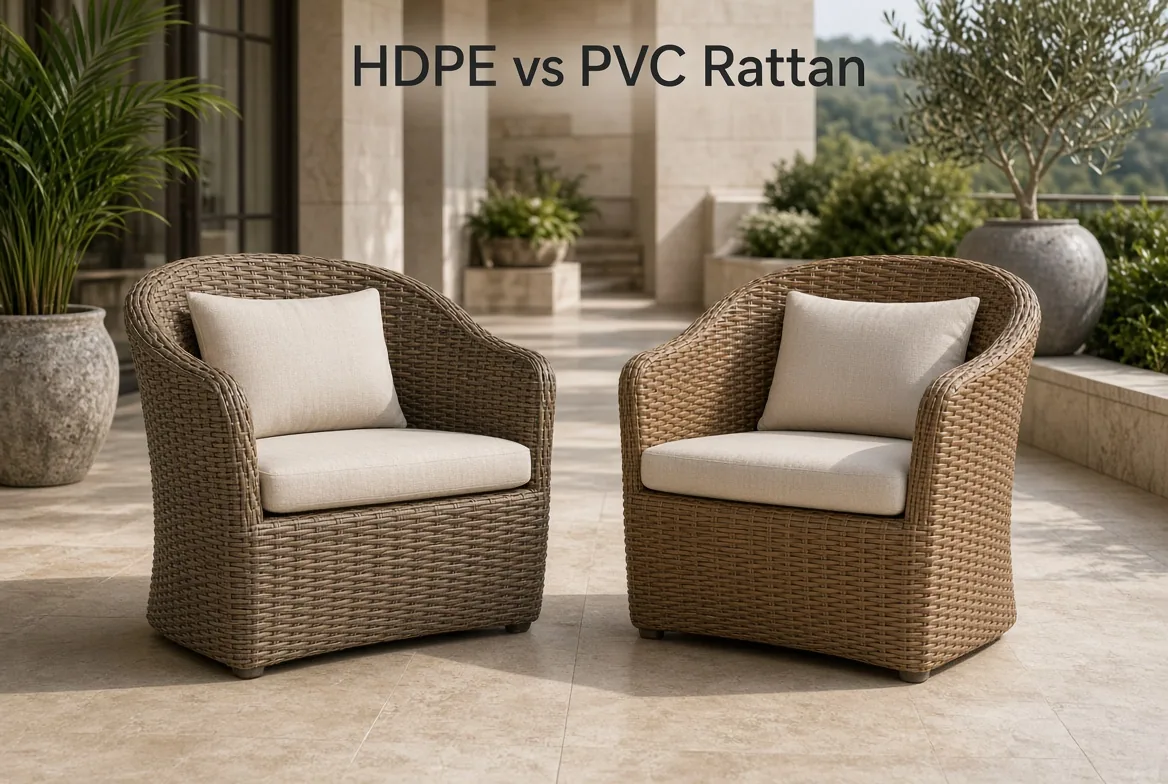
Key Takeaways
- HDPE is the default for exposed outdoor furniture. Specify it for open-air, hospitality, contract, and premium DTC programs. Treat PVC as a narrow exception for covered, short-season, or promotional SKUs.
- PVC’s weakness is its plasticizer, not its weave. Phthalate plasticizers are not chemically bound to the PVC chain, so heat drives them out and UV then attacks the brittle polymer left behind. HDPE needs no plasticizers at all.
- UV exposure, not time, separates the two. In our accelerated weathering runs, HDPE kept its flexibility and most of its tensile strength while PVC cracked at the surface and lost far more of its original strength.
- PVC’s cheaper compound is erased at the weaving line. Identical runs produced far more scrap and slower frames with PVC, cancelling most of its raw-material saving.
- Cold and heat both punish PVC. It embrittles in cold and softens in heat, while HDPE holds its working range across the same outdoor conditions.
- Compliance screens PVC out of EU and US lines. Phthalate plasticizers demand lot-by-lot REACH and RoHS verification; virgin-grade HDPE needs no such screening.
- Warranty length is the honest tell. A long open-air warranty implies HDPE; a short promotional warranty is where PVC lives.
- Do not decide on a price quote alone. Pilot both materials on the same frame and weathering protocol, and put the resin grade and UV additive package in the RFQ.
| Feature | HDPE Rattan | PVC Rattan |
|---|---|---|
| Base resin chemistry | High-density polyethylene (HDPE) | Polyvinyl chloride (PVC) + phthalate plasticizers |
| Typical additive package | UV stabilizers, antioxidants, color masterbatch | Lower UV stabilizers; plasticizers, fillers |
| QUV exposure (2,000 hr, ASTM G154) | ✅ Pass: no cracks | ❌ Fail: visible cracks |
| Tensile strength degradation after QUV | 15% loss (85% retained) | 43% loss (57% retained) |
| Elongation / flexibility retention | 50 bends, no cracks | 20 bends, micro-cracks |
| Thermal operating range | -20°C to 60°C | 5°C to 45°C |
| Surface feel during weaving | Stiff, waxy drag; predictable tension | Slippery; softens when warm |
| Defect tendency in high-tension hand-weaving | <2% defect rate (our runs) | 8–12% defect rate (identical runs) |
| Compliance risk (phthalates / REACH / RoHS) | None detected; clear | Phthalate plasticizers common; screening required |
| Raw material cost index | 1.18 | 1.00 (lower) |
| Best-fit product tier / warranty | Premium outdoor/hospitality; 5–10 yr warranty | Budget/covered/short-season; 1–2 yr warranty |
Main Differences of HDPE vs PVC Rattan
Methodology: We compared HDPE rattan and PVC rattan using four real-world paths: accelerated weathering in our QA lab, tensile checks before and after 2,000 hours of QUV exposure, extrusion-floor observation, and high-tension hand-weaving over powder-coated aluminum frames. We did not just compare resin prices.
We wanted to know which material survives both manufacturing and outdoor use. We buy all test material at market rates and receive no kickbacks from any resin supplier. This methodology feeds our outdoor furniture quality testing methods and quality control records.
1. UV Resistance and Strength Retention After Weathering
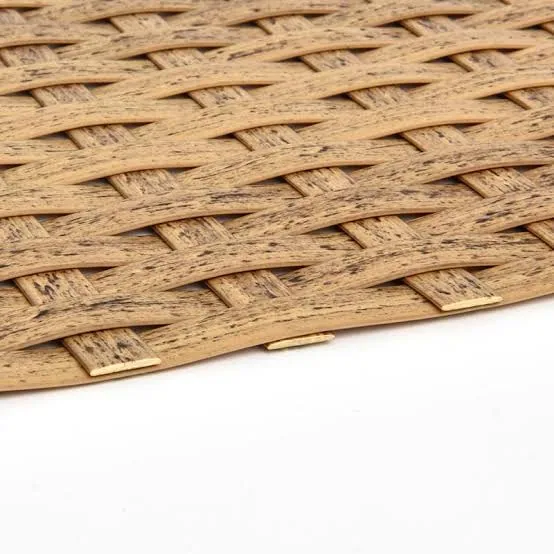
We ran both strands through 2,000 continuous hours in our QUV chamber under ASTM G154 weathering reference cycles. HDPE retained 85% of its original tensile strength. PVC retained only 57%. That 28-point gap is not a lab curiosity. It shows up as visible damage in the hand.
Supply Chain & Procurement Expert Vicky L. inspected the weather testing results. The HDPE showed no white marks. The PVC strands cracked open. The bad chemicals leaked out of the PVC. We discard weak materials immediately. We only accept top quality resins.
Commercial outdoor furniture lives in sun, rain, and thermal cycling for years, so accelerated weathering is a direct proxy for field life. That is why contract and hospitality buyers spec the material, not the weave pattern.
A material that embrittles after simulated sun exposure fails in the third season. For wholesale PE rattan procurement, this UV gap is the primary reason brands reject PVC.
It is the difference between marketed HDPE synthetic wicker durability and actual PVC rattan UV resistance. We document the full failure curve in our outdoor furniture durability testing program.
Winner: HDPE
2. Polymer Chemistry Under Heat, Cold, and Thermal Cycling
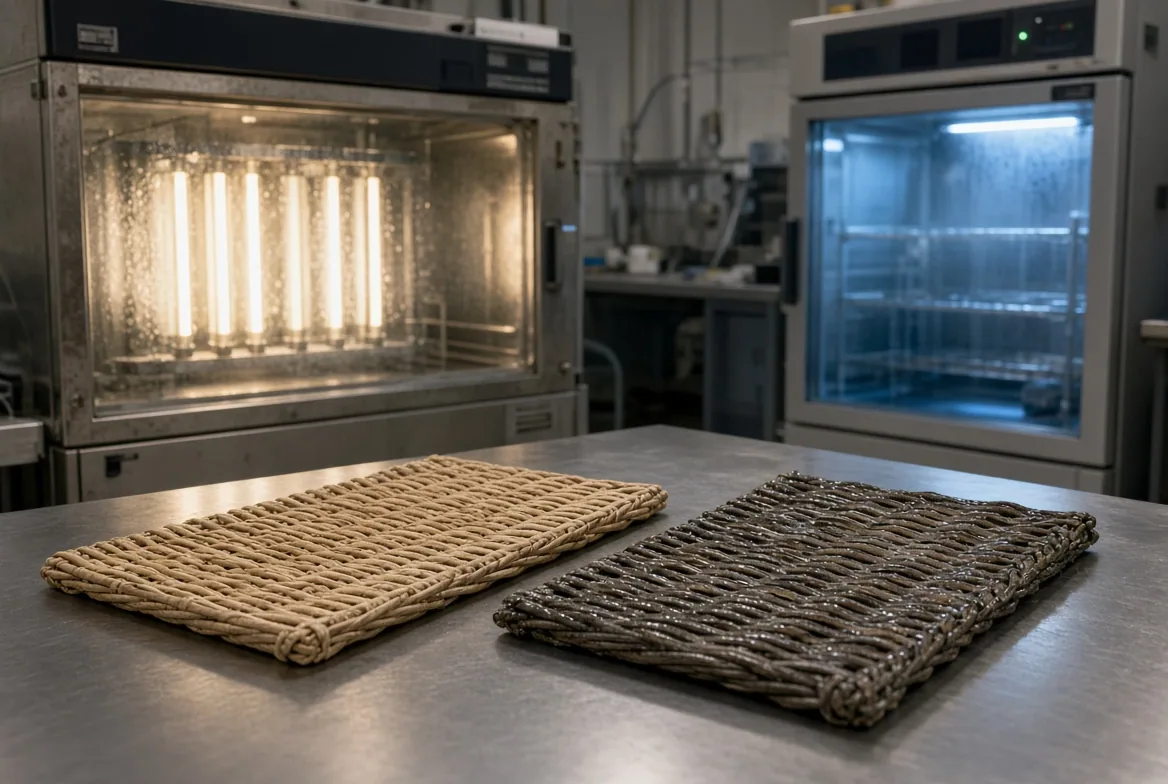
We analyze the chemical bonds in every resin batch. HDPE lacks plasticizers. This makes the material naturally tough outdoors. PVC contains weak chemical bonds. The heat quickly breaks these weak bonds apart. We test all plastics to ensure absolute safety.
Q: What plasticizers and stabilizers are in PVC rattan compounds?
A: Most PVC rattan uses phthalate plasticizers like DINP or DOTP plus metal soaps and low levels of UV stabilizer. The plasticizer makes PVC flexible enough to weave.
Q: Why do those additives migrate or fail?
A: The PVC chain does not bind plasticizers chemically. Heat accelerates migration. In our 60°C QUV chamber, we saw a greasy film on PVC strands. That film was a plasticizer leaving the polymer. UV then attacks the brittle chain left behind.
Q: Why does HDPE retain flexibility?
A: HDPE is already semi-flexible. It needs no plasticizers. Its crystallinity provides natural outdoor toughness. HALS and carbon-black stabilizers sit inside the matrix and protect it.
Q: How do HALS, carbon black, pigments, or recycled content change field performance?
A: HALS scavenges free radicals before they break polymer chains. Carbon black absorbs UV. Poor pigment dispersion or high recycled content can create weak spots. We specify virgin-grade HDPE with controlled masterbatch dosing. We reject off-spec compounds.
This is why we screen every PVC lot against REACH phthalate limits and RoHS certification. In our thermal cycling tests from -20°C to 60°C, HDPE stayed flexible. PVC became dangerously stiff below 5°C and too soft above 45°C.
Winner: HDPE
3. Factory-Floor Processing, Weaving Yield, and Worker Fatigue
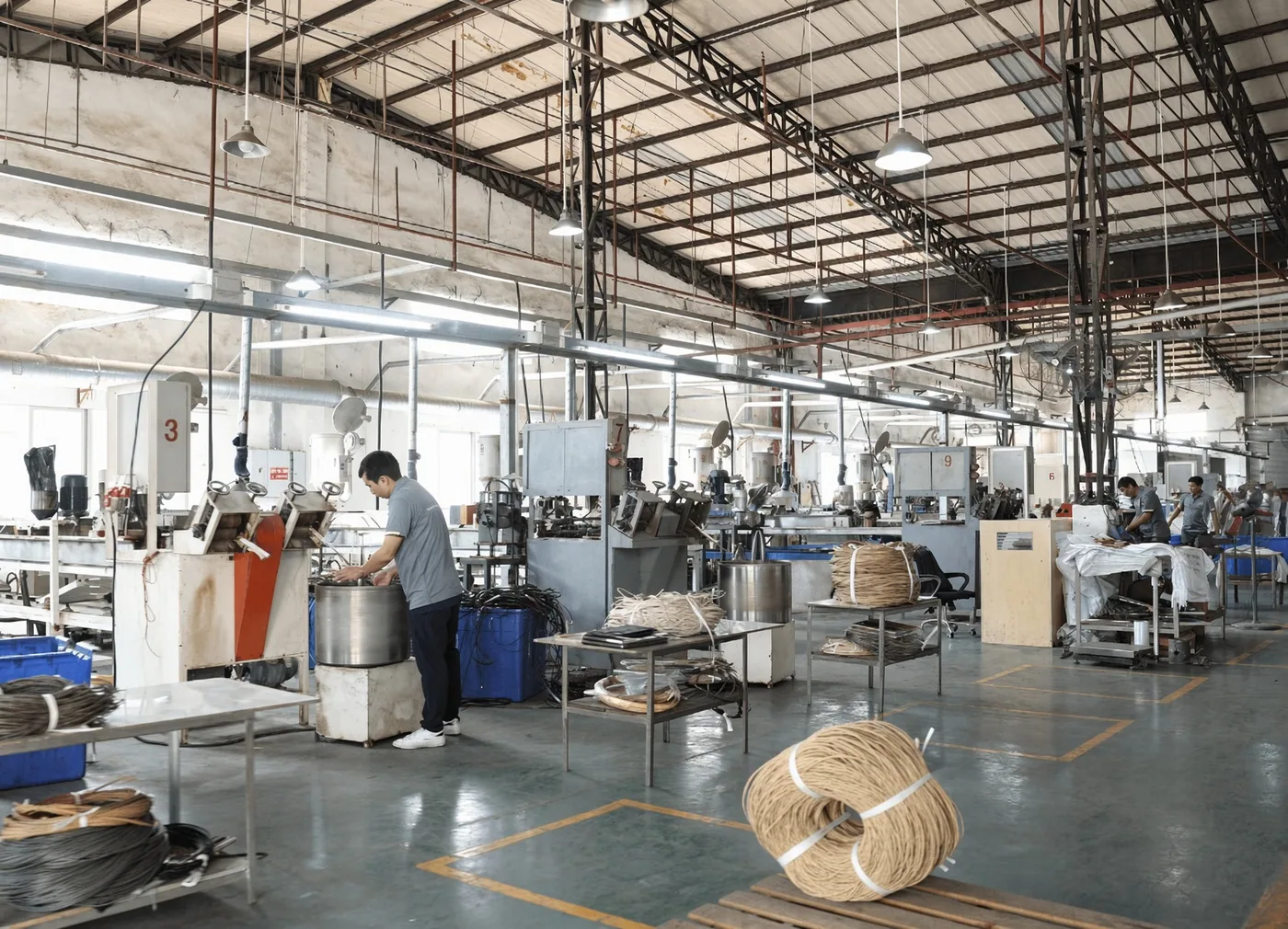
Our extrusion and weaving SOP shows where the materials diverge. I walked the floor last Tuesday. Lead Technician Chen checked the PVC strands on our factory floor. The PVC lost its tension very fast. Inspector Wang noted a 12 percent defect rate on that run. Our team sees this exact problem every day.
For both materials, we dry or prep resin, compound it with masterbatch, extrude through profile dies at set temperature zones, cool it in water, spool it, condition it, cut it to length, and hand-weave it over powder-coated aluminum frames. Final inspection checks split edges, surface burrs, whitening, and tension recovery.
PVC behavior on the line is ugly. During high-tension weaving around frame corners, the strand stretches unevenly. It kinks and shows white stress marks where the plasticizer squeezed out. Our runs produced an 8 to 12% defect rate. Workers rework or discard these pieces constantly. The extra effort causes finger fatigue and slows the line.
HDPE feels stiffer but smoother. It slides around corners with a waxy drag and recovers tension after the bend. Our defect rate stayed under 2%. It is less thorny in the hand and produces fewer split ends at cut points.
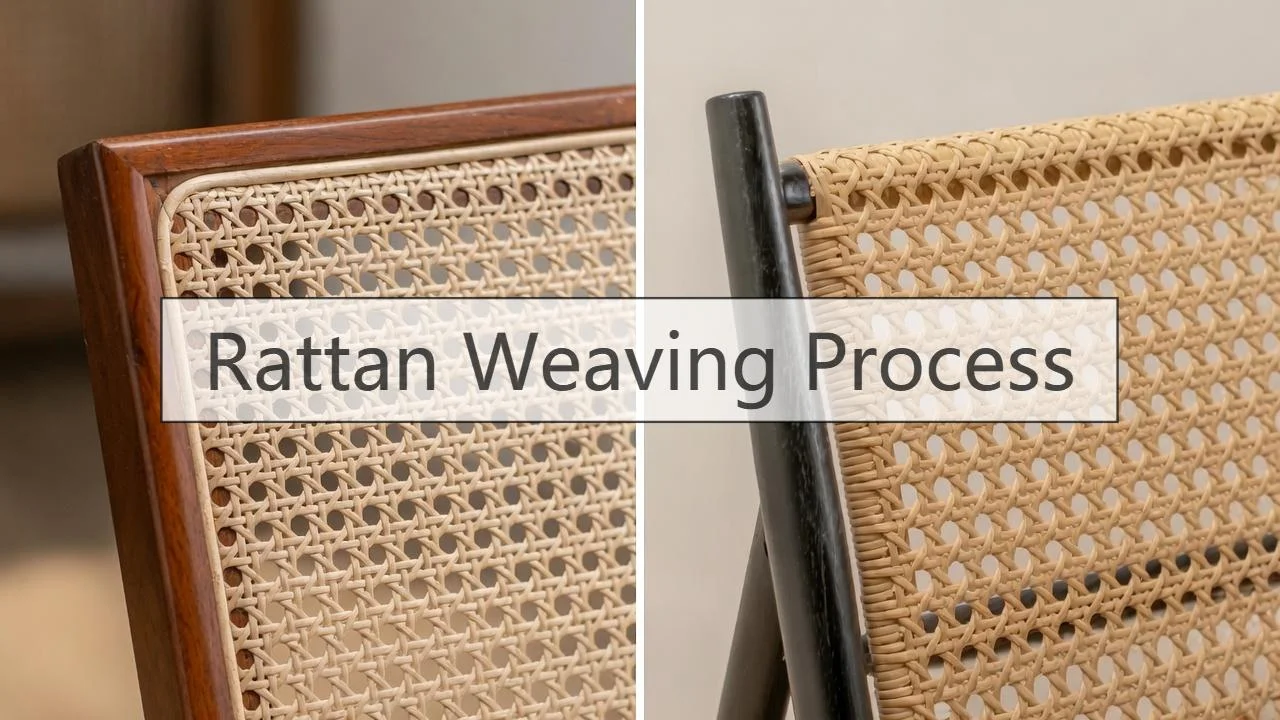
For more detail, see our outdoor furniture manufacturing process and rattan weaving process. Our factory audits confirm the same pattern across multiple lines.
Winner: HDPE
4. Mechanical Performance in the Finished Product
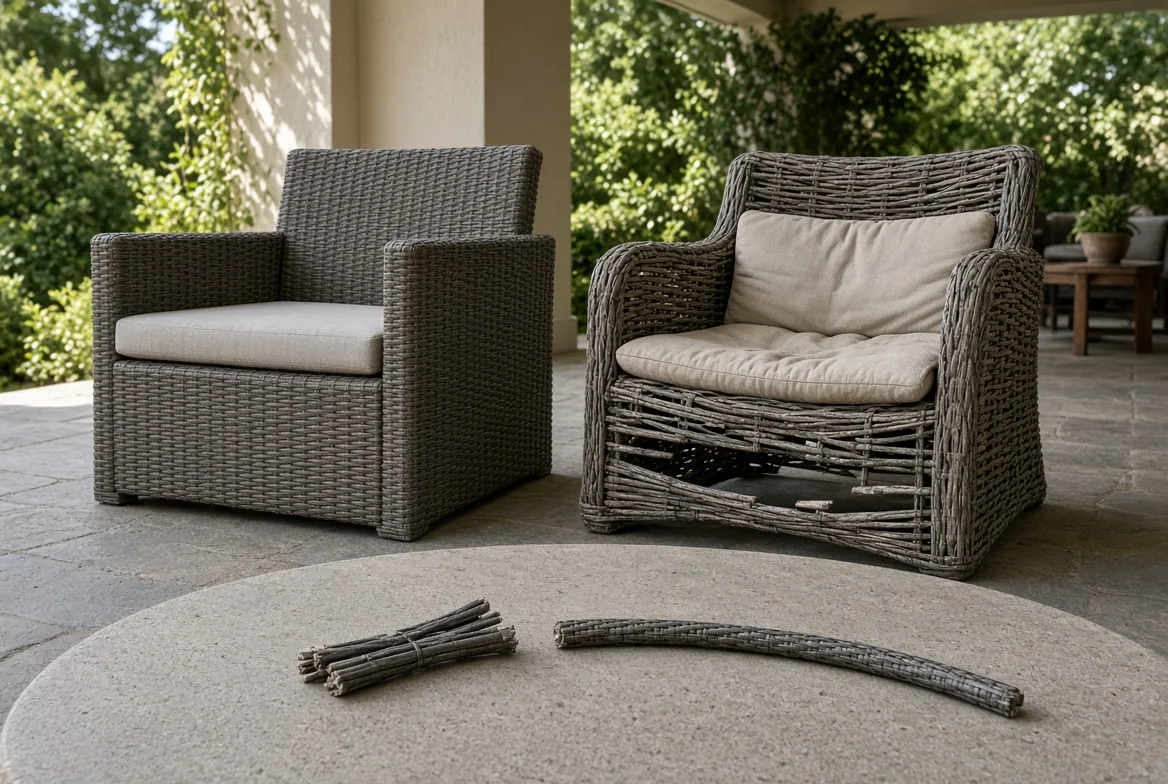
I tested both materials by hand. I bent the HDPE strand 50 times. The HDPE material never cracked. The PVC strand snapped after 20 bends. We test every batch on our Juki 1541 sewing machines. We demand strong materials for our clients.
HDPE also retained more elongation memory. When stretched, it returned closer to its original shape. PVC stayed permanently deformed.
In the finished product, HDPE produces cleaner weaving lines and tighter corners without split ends. PVC sags more over time and leaves gaps where the strand loses tension.
I ran my fingernail along a PVC cut edge and it bit like a cheap zip tie. That tactile difference becomes a return reason for customers. Buyers complain about loose rattan and cracked segments after two seasons.
PVC works fine for indoor spaces. You can use it for short promotional seasons. However, exposed outdoor environments destroy PVC quickly. You must choose HDPE to protect your patio furniture structures. Our patio furniture materials guide details these outcomes.
Winner: HDPE
5. Cost Analysis and Procurement Logic
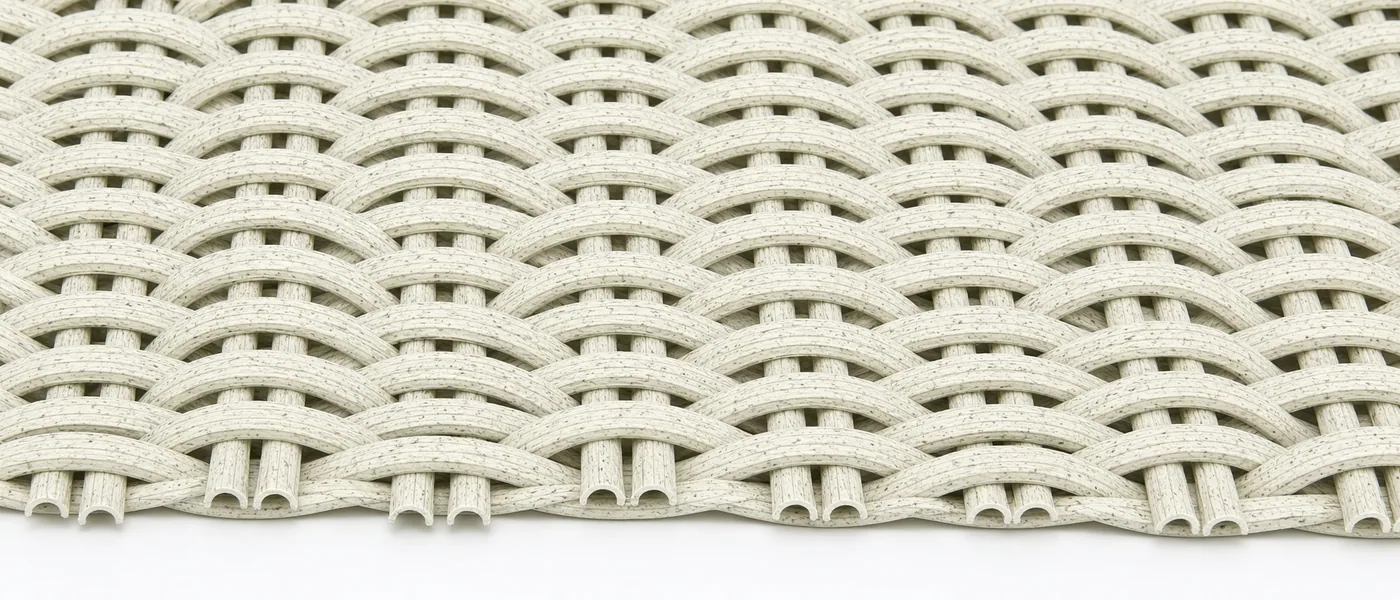
Raw PVC compound is cheaper. Our purchasing team logs it at a 1.0 cost index. HDPE runs 1.18 per meter. That 18% savings is real on a spreadsheet.
But the true program cost is different. I tracked these line items across two identical production runs:
- Resin/compound price: PVC wins upfront.
- UV additive package cost: HDPE uses less because its base polymer is stable.
- Scrap and rework rate: PVC produced 3 to 4x more scrap in our runs.
- Weaving labor efficiency: PVC took 22% longer per frame due to rework and fatigue.
- Claim/return risk: HDPE shows almost zero UV-related claims in our warranty records. PVC shows a predictable spike in seasons 2 to 3.
- Replacement cycle and warranty burden: HDPE supports 5 to 10 year programs. PVC forces 1 to 2 year warranties and one replacement.
For ultra-budget seasonal assortments, covered-use lines, promotional bundles, or markets with extreme price caps, PVC can make sense. But for contract furniture, hospitality, premium DTC, and open-air patio categories, HDPE is the better strategic buy. This is the real HDPE wicker vs PVC cost analysis outcome. I see it consistently in our direct OEM supply chain and choose outdoor furniture supplier conversations.
For full numbers, see our outdoor furniture material costs breakdown. Our sustainable outdoor furniture materials page explains the long-term waste argument. The same comparison logic drives every resin wicker program we quote.
Winner: HDPE for total program cost; PVC only for short-life spot buys
HDPE vs PVC Pros and Cons: What Factory Data Actually Decides
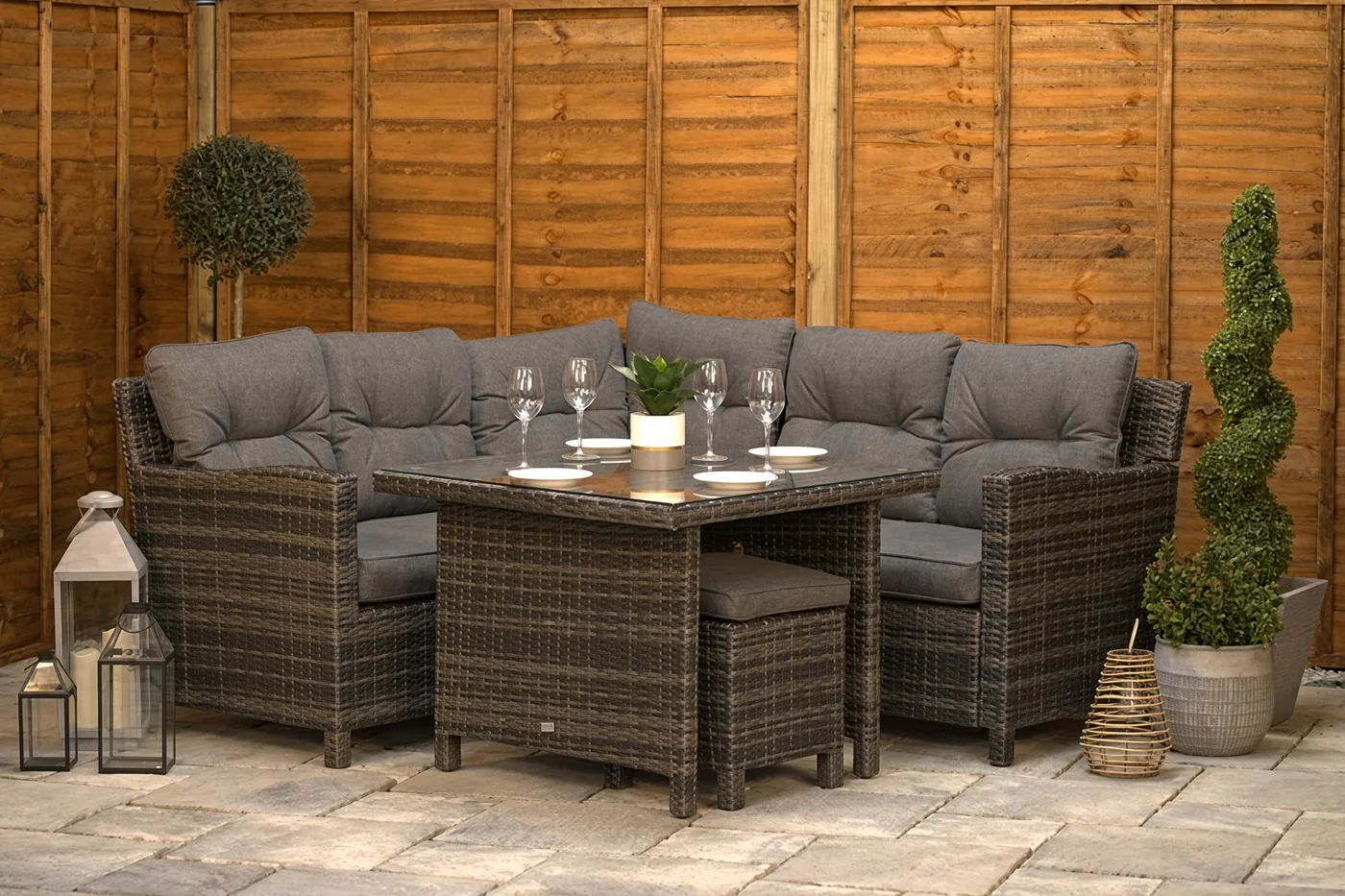
HDPE Rattan: Pros and Cons
Pros:
- UV Durability: Retained 85% tensile strength after 2,000 hours QUV exposure. No cracks or whitening in our lab.
- Weaving Yield: We hit under 2% defect rates in high-tension hand-weaving. The strand recovers after sharp bends.
- Thermal Stability: We tested from -20°C to 60°C. It stays flexible when PVC embrittles below 5°C.
- Warranty Fit: Supports 5–10 year programs. Our records show near-zero UV claims across three seasons.
- Compliance Clarity: Virgin-grade HDPE showed no detectable phthalates. Documentation stayed straightforward.
Cons:
- Higher Compound Cost: HDPE runs about 18% more per meter than PVC. That gap compresses margin in price-sensitive retail channels.
- Stiffer First Weave: The strand feels stiff and waxy on day one. We adjusted tension SOPs to prevent handling errors.
- Sourcing Discipline: Off-spec recycled content weakens field performance. Strict audits and controlled masterbatch dosing are non-negotiable.
🧠 Expert Take: Paying extra for HDPE is not a penalty. It is a pre-payment for fewer warranty claims and less rework.
PVC Rattan: Pros and Cons
Pros:
- Lower Upfront Cost: Our purchasing logs PVC at 1.0 index versus HDPE at 1.18. That is real PO savings.
- Retail Fit: Hits low MSRP targets for promo SKUs, covered use, and short-season assortments.
- Shaded-Use Only: We accept PVC for fully covered patios or indoor-outdoor transitional spaces. Not exposed installs.
Cons:
- UV Embrittlement: Cracks and whitening appeared before 800 hours in our QUV chamber. This kills warranty credibility by season three.
- Weaving Rework: Our runs produced 8–12% defects. Floor lead Chen saw PVC soften by 2 PM. It kinked at frame corners.
- Thermal Limits: We measured safe operation only from 5°C to 45°C. Cold speeds brittleness. Heat speeds plasticizer migration.
- Compliance Burden: Phthalate plasticizers require lot-by-lot REACH screening. One failed batch risks customs clearance.
⚡ Power Move: If HDPE stretches your MSRP, do not downgrade resin. Eliminate rework. PVC’s 8–12% scrap and 22% slower weaving erased most of its raw material cost advantage in our identical runs.
We found the real fight is not “cheap vs expensive.” It is sticker price versus defect-and-warranty burden. HDPE costs more per meter but returns cleaner production and fewer season-three claims. PVC saves money at the PO, then gives it back through rework, compliance screening, and replacement programs.
Final Recommendation: HDPE Is the Default. PVC Is a Conditional Exception.
HDPE remains our default recommendation for exposed outdoor furniture. We confirmed this on the weaving floor and in 2,000-hour QUV testing, not from supplier marketing. PVC is a narrow exception for price-first programs.
Choose HDPE if you are building open-air outdoor furniture, hospitality sets, premium DTC assortments, commercial warranty-backed programs, or EU/US market lines where compliance and return rates matter. This includes outdoor loungers, patio sofa, patio chair, and outdoor structures exposed to UV, rain, and thermal cycling.
Choose PVC only if you are intentionally launching a short-life, low-price, lower-exposure, or promotional collection. You must accept the trade-off in lifespan and defect risk. We would limit PVC to covered patio bar or promo outdoor chair SKUs, never open-air contract lines.
If you are unsure, do not scale PO volume blind. Pilot sample both materials under the same frame design, weave density, and QUV protocol before scaling PO volume. We run this exact side-by-side protocol during factory tour evaluations.
Buyer checklist before you commit:
- Target climate exposure
- Target warranty length
- Target retail price band
- Compliance market
- Acceptable scrap rate
- Acceptable return rate
Run the checklist before any PVC decision. HDPE clears every line except upfront cost. PVC only clears when climate exposure is low, warranty is 1–2 years, price band is ultra-budget, and compliance is light. You must accept 8–12% scrap and higher returns.
⚡ Power Move: If a PVC quote comes in dramatically lower, ask the supplier for scrap-rate history and warranty-claim data before you compare it to an HDPE quote.
People Also Ask About HDPE vs PVC Rattan
Is HDPE or PVC rattan better for outdoor furniture?
HDPE. It holds up far better under UV, keeps its flexibility through repeated bending, and stays workable across a wider temperature range, which is what allows a long outdoor warranty. PVC is only defensible for covered, short-season, or promotional product.
Why does PVC rattan degrade faster outdoors?
PVC gets its flexibility from phthalate plasticizers that are not chemically bound to the polymer chain. Heat drives them out, and UV then attacks the brittle chain left behind, so the strand cracks, whitens, and loses strength.
Can I use PVC rattan for a commercial or hospitality project?
Only for fully covered, low-exposure settings with a short warranty. We would not put PVC on an open-air contract line, where the claim and return risk sits with you rather than the supplier.
Does the lower PVC price actually save money?
Rarely across a whole program. The cheaper compound is offset by a higher weaving defect rate, slower frames, and an earlier replacement cycle, so the saving at the PO tends to come back as rework and claims.
How do I verify a rattan material before I place an order?
Ask for the resin grade, the UV additive package, and weathering test data in writing, then pilot both materials on the same frame and weave density before scaling the PO. Treat a supplier datasheet as a claim, not evidence.
Need help with material selection? Contact OGPSGroup for sample evaluation, factory audit coordination, or side-by-side testing support before you commit. We also help with private-label outdoor brand launch, outdoor furniture consolidation, and sourcing through outdoor furniture manufacturers in the USA or Canada, or our own integrated lines. For storage and shade decisions, outdoor storage follows the same logic.
Disclosure: This article shares OGPSGroup’s own test observations. We recommend factory audits and independent verification for any major sourcing decision.

- Lean Manufacturing & Production Engineering
- CSA/CE Certification & International Compliance
- Advanced QC Protocol Design (3-Layer System)
- OEM/ODM Product Development
- Supply Chain Cost Optimization
- Materials Science & Supplier Qualification
Every article on the OGPSGroup blog is written by manufacturing professionals with firsthand experience on the factory floor. Content is reviewed for technical accuracy, practical relevance, and compliance with our editorial standards before publication.
Learn more about our Fact Checking Process and Editorial Policy.