
Built to Outlive the Season. 300+ contract-grade SKUs. 48h sample response.
Your terrace isn't a weekend patio. Pool chemicals, salt air, and nightly turnover are a different load case. We engineer contract-grade furniture and shade to a spec you can put in writing: 15+ years manufacturing, 0.5% defect target, AQL 2.5 — documented per batch for your consultant to audit. So it's one project, not a purchase: your opening stays on schedule, every property matches the sample you approved, and a repair costs one part — not the whole set.
Four Buyers.
One Contract-Grade Spec.
This program is for the people who specify, buy, and operate the outdoor public spaces of a hospitality property — not for a retailer looking for fifty patio sets. If you need cross-property consistency, spare-part coverage, and a delivery calendar that lands with the builder, you're in the right place.
Hotel / Resort Owner-Operator
Multiple properties, one outdoor language. You have a guest experience to protect and no appetite for a D-hotel chaise at the A-hotel pool.
One standard across the portfolio, tracked to your opening calendar.
FF&E Purchaser / Procurement
You write and award tenders. You need specifiable drawings, supporting test documentation, and a delivery schedule you can hold a contractor to — not a catalog quote.
Drawings, test data, and a schedule you can hold a contractor to.
Hospitality Designer / Specifier
You have a mood board and a finish. What you lack is a factory that can turn that look into a structure that survives a decade of guests.
A mockup you can sign off before mass production — not a "we can do that."
Restaurant Group / Pool & Beach Club
High churn, oil, sunscreen, stacking and re-stacking nightly. You need pieces that get dragged, wiped, and sat in all day without failing.
Quick-to-replace parts and a finish that shrugs off cleaning chemicals.
The Cost of
A Patio Line in a Hotel.
Retail furniture isn't built for a public terrace. It's built for one family, one afternoon, one weekend. Put it in front of a hundred guests a day and it doesn't just wear out — it damages your reputation in public, where the reviews are.
Coating flakes, webbing stretches, weld points crack — the TripAdvisor photos you never wanted.
OGPSGroup: A finish specified for the site: aluminum alloy with a documented film build.
A single broken leg means replacing the whole set — because the leg was never sold separately.
OGPSGroup: A replacement-part SKU book at handover — so a leg is a leg, not a whole reorder.
Built to reach a doorstep, not to be off-loaded by zone across a half-finished building site.
OGPSGroup: Packed by zone and shipped to your opening sequence, not to a warehouse.
Same family, different suppliers: mismatched colors and screws that don't share a spec.
OGPSGroup: One engineering team signs the spec, so every batch shares the same frame, finish, and fasteners.
Retail Patio Line.
Contract-Grade Program.
This is the line that separates a catalog buy from a project buy. Every row below is a decision an FF&E specifier has to defend — and the reason a residential line can't simply be "specced up."
Specified Like a Building Product.
Not a Catalog SKU.
The load case on a hotel terrace is real: guests stepping on the edge of a lounger, servers dragging chairs over stone, pool chemicals and salt air every night. We engineer and test to those moments — not to a brochure photo. Full testing detail lives on our durability pages.
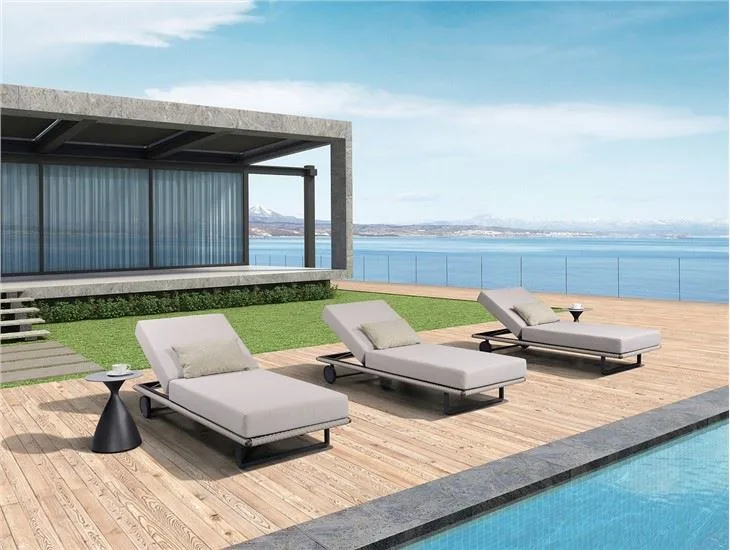
Tube wall thickness, weld specification, and fastener design are engineered for real loads — a guest stepping on the edge of a lounger, a server dragging a chair across stone. Not lab-static, use-case.
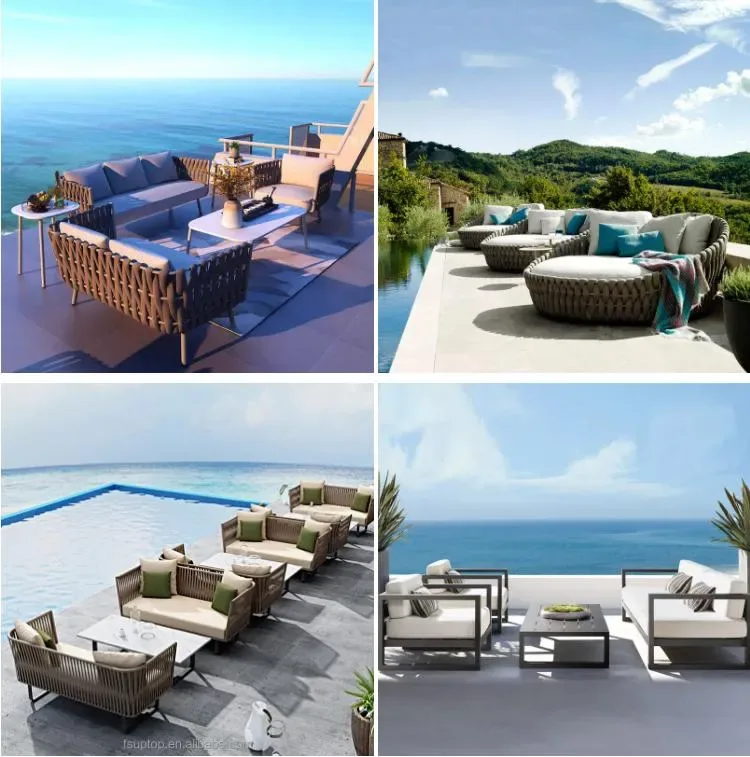
Coastal and pool environments are defined by the project site, not an assumption. Aluminum alloy, specified powder film build, and salt-spray verification so the finish is a spec your consultant can audit.
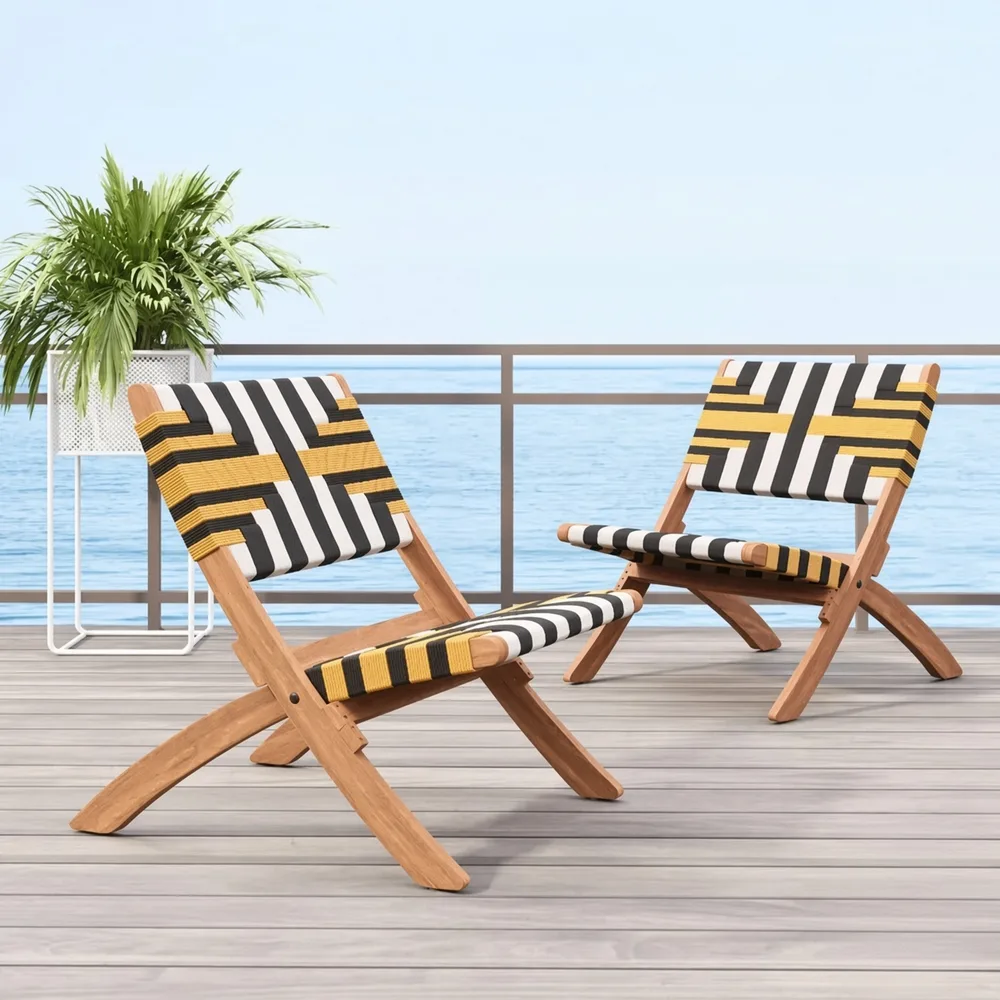
Solution-dyed yarn so the color runs through, UV-rated, wet-abrasion tested against commercial cleaning agents. Slings and webbing are replaceable — not a glued, one-piece failure.
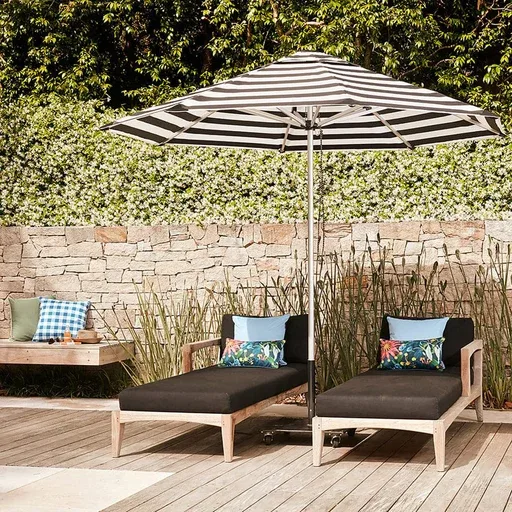
Pergola, cabana, and umbrella-base systems are selected against the project wind zone. We discuss it in the spec, not as an invented certification number on the page.
Every Zone, Specced.
One Supplier, One Calendar.
Instead of a product catalog, we spec what each part of the property actually needs — pool deck, terrace, restaurant bar, event lawn. The right furniture and shade for the way that space is used, all on one project calendar.
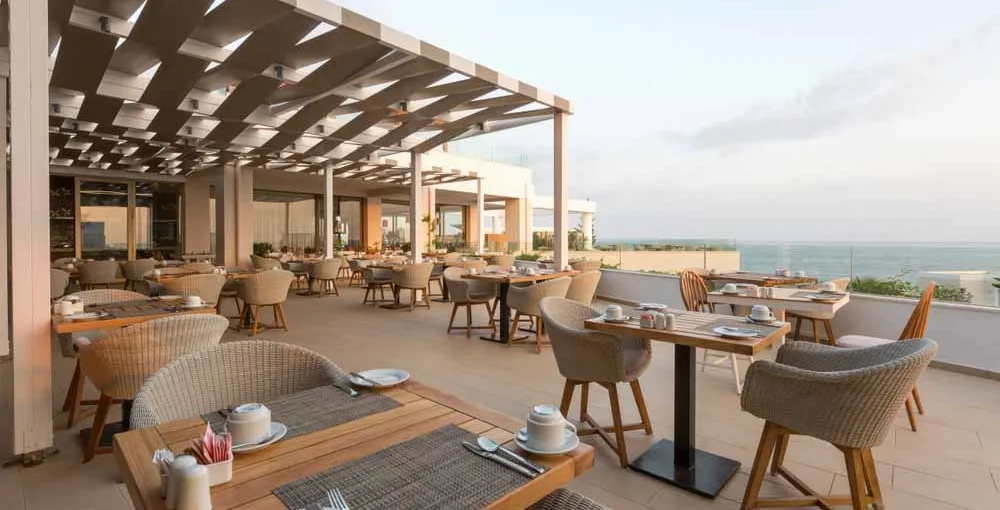
Arrival / lobby terrace
Dining sets, lounge seating, planter screening, pendant shade. Sets the first impression before the door opens.
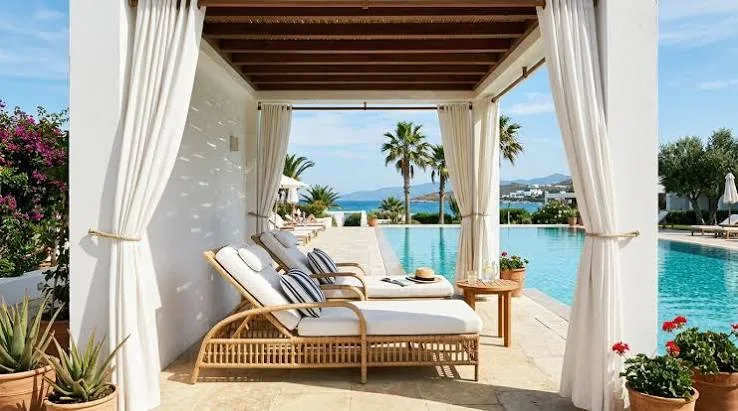
Pool deck & cabana
Chaise loungers, cabana frames, side tables, umbrella bases. The highest-wear, most chlorine-exposed zone on site.
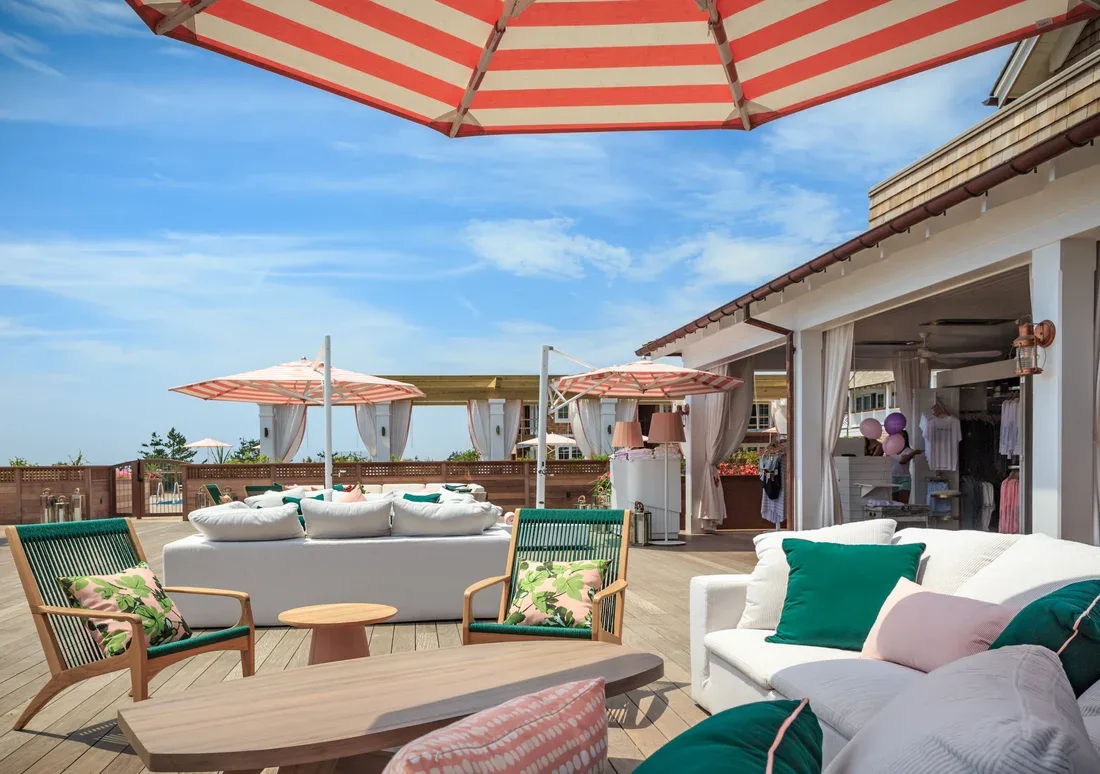
Beach / waterfront
Lay-flat sunbeds, low tables, wind-rated umbrellas. Salt air and full UV — the brutal end of the durability range.
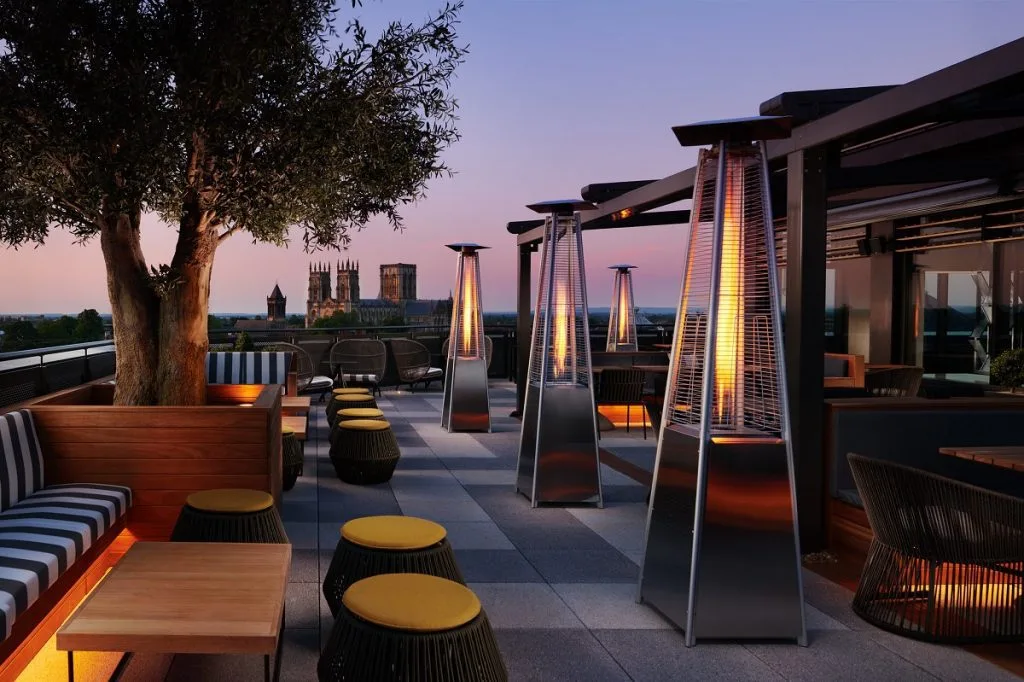
Restaurant terrace & bar
Dining chairs, bar stools, high-tops, stackable storage. Overnight turnover and nightly wipe-down.
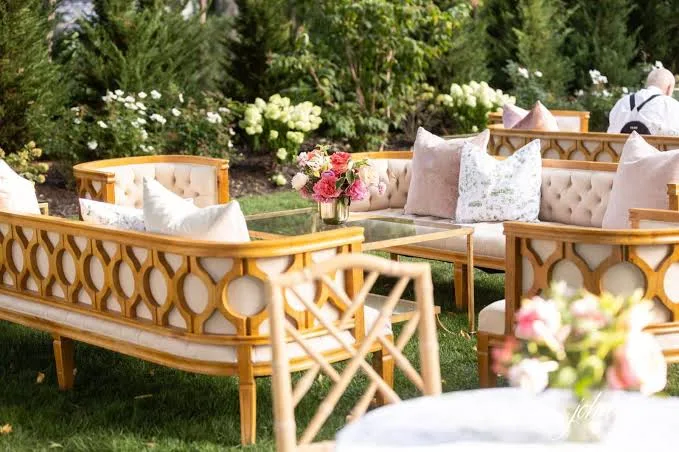
Event lawn / wedding set
Banquet rounds, flexible lounge, ceremony seating, stage-dress furniture. Configurable, fast to redeploy.
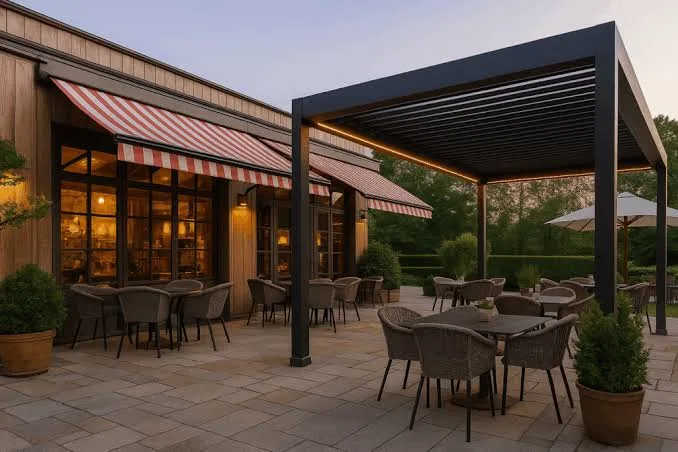
Shade & pergola program
Louvered and hardtop pergolas, cabana frames, umbrella bases. Engineered to the project wind zone, so shade is a spec — not a guess.
Furniture and shade structures run on a single calendar, from our own Foshan lines and a vetted Tier-1 network. Browse the full outdoor furniture range.
The Piece That Fails in Month 14
Should Not Kill the Set.
This is the difference between a party and a program. We hand over a replacement-part SKU book when the project closes — so replacement is a repair, not a repurchase. Same mold, same color batch, available in small quantities long after the first drop.
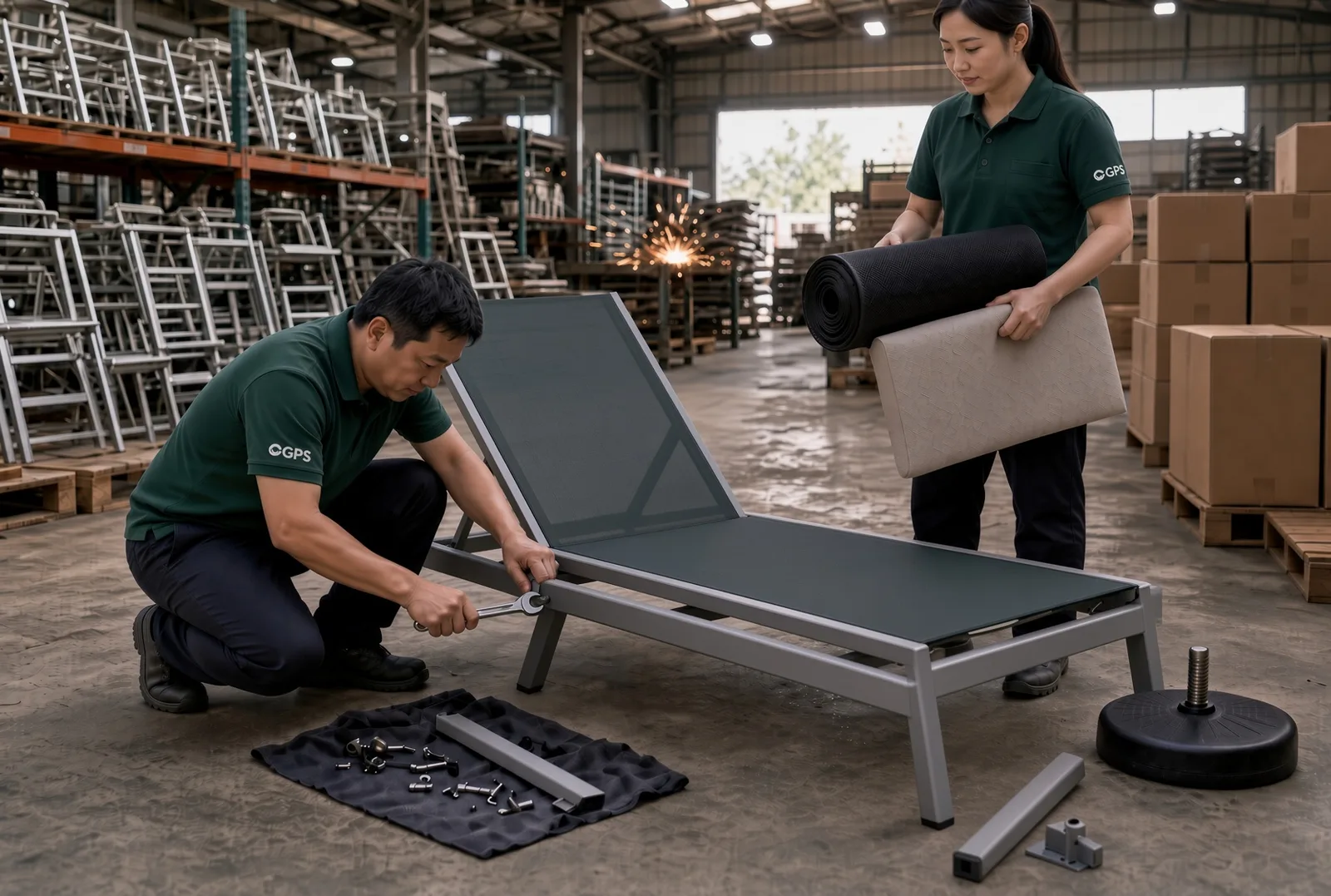
Replacement legs, slings, cushion cores, and hardware — kept in production after the first container, not abandoned to a discontinued SKU.
- Legs & feetThe highest-failure component in hospitality. Sold as a live SKU, matched to the original mold.
- Sling & webbingReplaceable straps and fabric cores — no need to scrap the frame when the textile wears.
- Cushion coresCommercial cushions with serviceable cores, sized to the same spec for consistent replacement.
- Tops & hardwareTable tops, connector sets, and a fastener kit for on-site assembly and field repair.
- Umbrella partsBases, ribs, and covers kept in production so a wind event is a repair, not a write-off.
Reserve a 3–8% fast-moving parts buffer against installed units — the exact ratio is defined with your program. Warranty repairs run through a project channel, not a retail RMA inbox.
Brief → Mockup → First Drop.
18–24 Weeks.
A hospitality program runs on a project path, not a sample-then-release flow. Mass production doesn't start until the designer locks the mockup. Stock-model changes compress the window; new tooling is quoted separately.
The Goods Landed in 2026.
They Also Match.
The two things that keep a hospitality operator up at night: the furniture arrives before the site is ready, and three properties don't quite match. Both are delivery problems — and both have an engineered answer.
Built to the building
Containers are packed by zone — pool deck, restaurant bar, guest balcony — with shipping marks that tell the site crew where each crate goes.
Flagship first
We lock color and structure at one flagship property, then repeat the exact spec to the next. No cross-property drift.
Buffer rides along
Opening buffer parts ship with the order, so a lost foot or torn sling doesn't stall a photo-ready day.
A Trader Holds a Catalog.
A Manufacturer Answers.
Everything below comes down to one thing: who owns the outcome after the last container leaves the dock.
Operators Who
Stopped Restocking.
The same discipline we run for hospitality specifiers, applied to the people who actually buy it. Each case is the challenge they brought, what we engineered, and the result they measured.
A five-property coastal resort group had three years of patio furniture that looked nothing alike — different colors, different frames, different suppliers. Guests noticed the mismatch, and buyouts for replacements kept getting bigger.
We took the flagship, locked one contract-grade spec (frame, finish, and fabric on a single line), then ran a mockup lock-in before mass production. The same spec repeated across the next two properties, and every project closed with a replacement-part SKU book.
The next properties arrived as the same set. A spare-part order replaced two whole buyouts.
- Properties matched to the same color and structure
- No cross-property drift on finish or frame
- Two buyouts avoided by the replacement-part book

A twelve-location coastal restaurant group was restocking terrace furniture every single year. Bar stools broke under nightly turnover, the finish faded in full sun, and the "annual restock" became a budget line they couldn't escape.
We re-engineered the terrace pack for contract-grade use — thicker frames, solution-dyed fabric, and a quick-to-replace parts list. We identified the highest-failure components (legs, slings, tops) and made each one a live SKU, so a repair is a single part, not a whole set.
They stopped the annual restock cycle. Now they order parts, not sets.
- Stopped the annual full-line restock
- Repairs are single parts, not whole sets
- Finish stands up to all-day sun and nightly clean-down

Questions From
Specifiers & Operators.
Scope the First Property.
Then Repeat the Spec.
A 30–45 minute project alignment. We come back with a draft space list, the contract-vs-retail difference for your site, and a mockup path to the first building — so property two matches with zero rework.
No obligation · factory-level guidance · $400K+ annual program level