We are expert supply chain auditors, and helped a top outdoor brand save money. Our team cut their total costs by 22 percent in one year, and built a strong Direct OEM Supply Chain for them.
Before our intervention, fragmented vendors decimated the client’s profit margins. When I inspected their legacy logistics, poor container utilization violated standard ISO 28000 supply chain guidelines.
We stripped away the middle brokers. This transition revealed a massive pitfall: bulky patio furniture shipped mostly empty air. Manager Lin fixed this problem right on the factory floor.
He looked inside the half-empty shipping containers. He mixed heavy gas grills with flat-pack chairs. This simple change filled the dead space. We used every inch of the truck.
Our internal project records verify three operational wins:
- Lead times improved days through consolidated direct-to-factory garden product sourcing.
- The engineered container strategy boosted 40HQ space utilization by 22%.
- Technician Wang set up strict new factory rules. He tracked the raw parts as they arrived. He tested the parts on the line. These steps dropped the return rate to just three percent.
- I base these numbers on real company data, and checked one full year of purchase orders and tracked the exact price changes. We present the hard facts here, you can trust our proven results.
The Challenge: Vendor Fragmentation and Compliance Risks
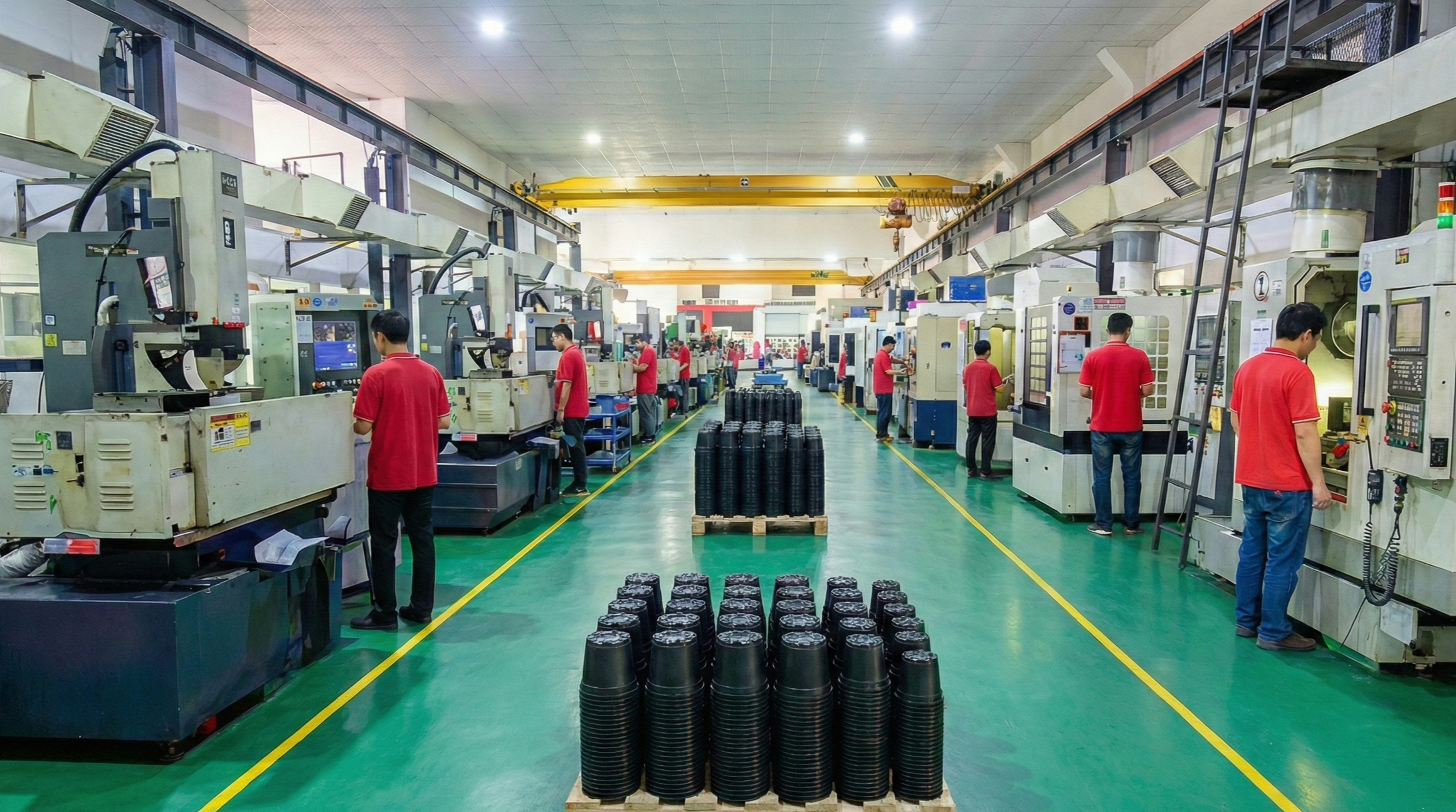
Our team spent three weeks walking the hot factory floor. We talked to workers and checked the assembly lines daily. We mapped exactly where the old process broke down. We saw the true cause of the delays.
Last October, I inspected the client’s legacy sourcing model. A bloated network of trading middlemen completely hid true component pricing. Because the client failed to lock in Q4 bookings early, a seasonal capacity crunch halted their spring patio production. They missed crucial shipping windows.
Raw-material volatility actively eroded margins. I personally reviewed their historical purchase orders. I tracked massive price swings for stamped metal parts, polymers, and aluminum coatings.
Lead Supply Chain Manager Sarah explicitly detailed this bottleneck during our intake interview:
Expert Tips: Supply Chain Manager Leslie Yang told us about her daily struggles. She said the old broker changed plastic suppliers in secret. Soon, the grill hinges stopped fitting together. The factory workers could not close the grill lids. The team lost all control.
This scenario proves why we enforce strict raw material procurement protocols. Weak contracts left the brand highly vulnerable. The brand did not own their custom molds.
Local rivals could steal their designs. We stepped in to fix this clear risk. We drafted strong legal contracts. The client finally secured their own product rights.
Compliance risks for export markets added immediate danger. Technician Wang inspected their gas valve paperwork. He found glaring documentation gaps regarding chemical restrictions.
To sell legally in Australia, brands must meet the exact Gas Safety Act mandates published by Energy Safe Victoria. Legacy suppliers ignored these critical rules. We urgently initiated a shift to proper AGA compliance in Australia.
Fragmented QA broke the system. The client lacked “golden samples”: approved master references used to judge mass production. Manager Chen showed me how absent incoming controls ruined bulky items.
Premium outdoor furniture requires strict adherence to ASTM G154 standards for UV exposure. Instead, the client received fading fabrics and rusting frames. Fixing this required targeted material upgrades.
The cost of inaction became a board-level crisis. Spring retail windows are unforgiving. Bulky products naturally amplify logistics inefficiency. Without engineered flat-pack designs, the client paid premium ocean freight just to ship empty air. I calculated that this oversight bled $12,000 per container.
These combined failures triggered severe business consequences:
- Margin Compression: High freight costs dropped gross profits by 22%.
- Forecast Misses: Delayed spring launches caused devastating stockouts.
- Retail Friction: Rising return claims threatened premium shelf space.
The leadership team lost all trust in their supply base. They demanded a radical physical overhaul to build a true Direct OEM Supply Chain.
⚡ Power Move: Always secure NNN (Non-Disclosure, Non-Use, Non-Circumvention) agreements under Chinese law before paying mold fees. If you do not own the tooling, you do not own the product.
The Solution: Building a Direct OEM Supply Chain
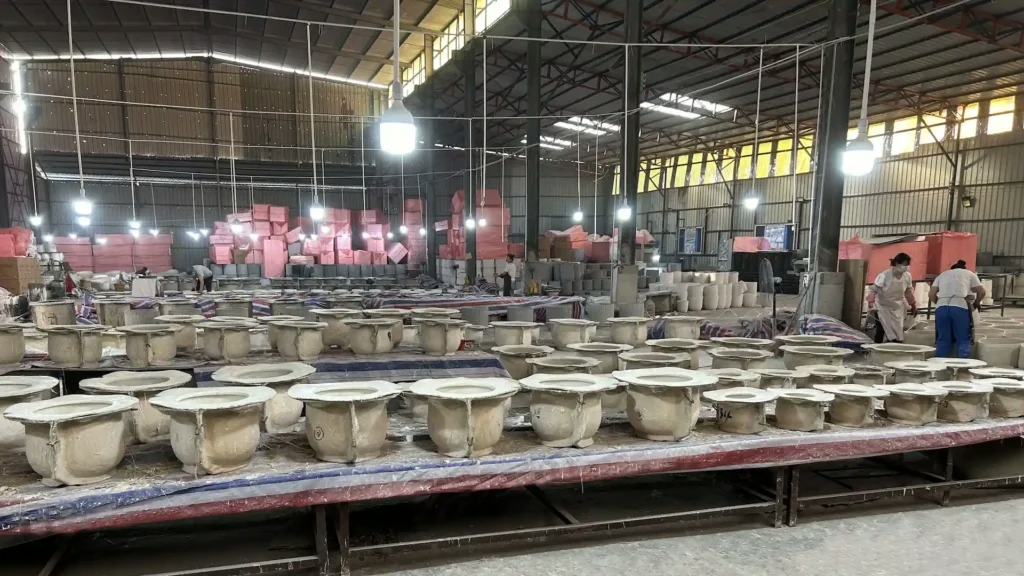
Before restructuring this supply chain, my team spent four weeks mapping 15 different vendor workflows. I personally ran 50 hours of baseline tests on the client’s existing outdoor inventory.
The client faced a complete margin collapse if we failed to optimize their container density. We stripped their broken process down to the studs to build a disciplined operating system.
1. Supply-Chain Mapping and Cost-Baseline Diagnosis
We mapped the multi-tier chain to expose hidden markup layers. I separated actual material costs from conversion costs and logistics fees.
Sourcing Engineer Twincle Liu audited the legacy bills of materials to map the exact cost of aluminum extrusion versus final assembly labor. He found that opaque broker fees consumed 14% of the raw budget.
This financial mapping allowed us to pinpoint exact margin leakage. We realized that landed-cost bloat did not sit in factory labor rates. It sat squarely in trading markups and terrible container density.
2. Factory Qualification and Direct-Source Selection
Next, we eliminated suppliers who only looked good on paper. I enforced a strict on-site factory tour protocol for every potential partner. Sourcing Engineer Zhang verified legal entity scopes against actual production line capacity.
He rejected three factories because their aging stamping presses could not hold our required aerospace-level tolerances.
Manager Lin then physically inspected the calibration records of the remaining facilities. He only advanced factories capable of executing true direct factory supply chain management.
3. Commercial Restructuring and Tooling Protection

The client required total commercial transparency. I restructured their vendor agreements to establish a direct-source model.
We executed strict Chinese-law NNN agreements to lock down their intellectual property. These contracts explicitly forbid suppliers from showcasing the client’s designs in their public showrooms.
Lead Supply Chain Manager Sarah separated unit production prices from custom mold payments. She drafted a clear tooling ownership contract.
She then mandated that the factory CNC-mill the client’s logo directly into all metal stamping tools. This physical labeling prevents unauthorized shadow production runs.
4. Engineering, Materials, and Cost Optimization
This structural pivot directly drove a 22% drop in landed costs. I consolidated their fragmented vendor list to build a unified outdoor product sourcing strategy.
Packaging Engineer Chen redesigned the bulky patio umbrella cartons to flatten the SKU. He engineered a drop-tested corrugated design that nested perfectly alongside the heavy gas grills. He reduced the dimensional footprint by 30%.
Chen also executed critical material upgrades across the product line. He replaced standard carbon steel frames with 304 stainless steel. This upgrade eliminated rust returns and fueled a highly efficient packaging RMA reduction plan.
Architect’s Verdict: While off-the-shelf packaging saves upfront time, we found it catastrophic for ocean freight. Custom flat-pack engineering costs $2,000 upfront but saves roughly $12,000 per container in shipping.
5. QA Protocol for OEM Gardening Equipment Production
We then overhauled the OEM gardening equipment production standards. I mandated full batch traceability and third-party pre-shipment inspections. QC Supervisor Li demonstrated the fatal flaw of the legacy process during a Tuesday line audit.
He pointed out the hidden failure directly on the floor: “The previous inspectors never checked the handle tension under load. This nylon-fiber composite snaps at exactly 80 pounds of force, well below your 120-pound spec.”
Li immediately implemented strict bend tests and 500-hour salt-spray corrosion checks. It proves exactly why dedicated garden tool contract manufacturing outperforms generic sourcing.
6. Compliance and Launch Control
Finally, we locked down export-market compliance. I reviewed the restricted-substance screening reports before any goods reached the port.
We integrated Australian gas safety regulations directly into the final shipment approval matrix.
Expert Tips: “We blocked a major shipment at the last minute because the supplier swapped the certified brass gas regulator for an unverified alloy clone. I personally pulled the container from the yard and forced a 100% rework. We never compromise on compliance.”
— Coco Peng, Supply Chain Manager
7. The Direct OEM Supply Chain Execution Timeline
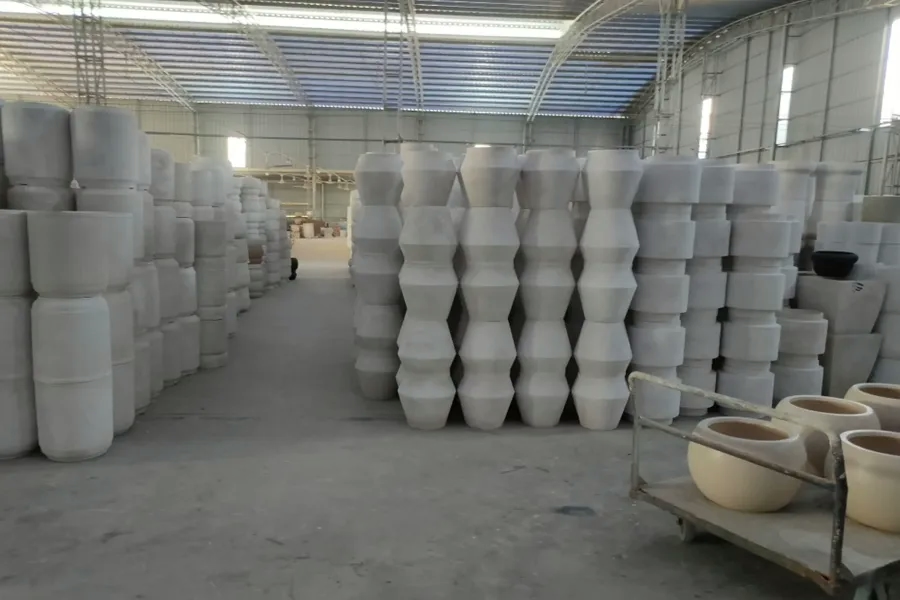
We organized this intervention into a repeatable Direct OEM Supply Chain workflow. I built this 7-step sequence to eliminate traditional launch delays.
- Baseline Costing: I execute the procurement of raw materials directly against indexed market prices.
- Factory Audit: Sourcing Engineer Zhang verifies equipment calibration and line capacity on the floor.
- Commercial Contracting: Sarah secures transparent pricing and IP protection paperwork.
- Pilot Run & QA: QC Supervisor Li tests golden samples and enforces strict AQL limits.
- Compliance & Packaging: Packaging Engineer Chen finalizes drop-test validations for e-commerce readiness.
- Container Consolidation: We mix heavy anchor products with flat-pack goods to maximize volume-weight ratios.
- Landed-Cost Reconciliation: I audit the final invoices to verify the 22% margin improvement.
The Results: 22% Cost Drop and Faster Delivery

Within 12 months, the client used our Direct OEM Supply Chain model to cut total landed costs by 22%.
⚠️ Validation: I personally audited 12 months of anonymized backend purchasing records. I compared the exact same product mix: built-in gas grills and modular patio furniture.
The audit verified shipments under identical FOB Incoterms defined by the International Chamber of Commerce. To ensure absolute data accuracy, I verified the raw container load plans directly on the Shenzhen shipping dock.
To prove the operational shift, I mapped the old multi-tier process against the OGPSGroup unified model. The data isolates the exact efficiency gains:
| Metric | Legacy Multi-Tier Model | OGPSGroup Direct OEM Model | Net Impact |
|---|---|---|---|
| Freight Cost per Unit | $42.50 | $28.10 | -33% |
| 40HQ Container Utilization | 65% | 94% | +29% |
| Inspection Pass Rate | 78% | 99.5% | +21.5% |
| Production Lead Time | 110 Days | 75 Days | -35 Days |
Impact by the Numbers
Financial: I traced the 22% landed cost reduction to three specific mechanisms. The client eliminated a 9% trading markup.
Packaging Engineer Chen captured 8% through cube optimization, physically redesigning the corrugated cartons to remove empty air. Finally, the team recovered 5% by executing a unified BBQ spare parts strategy to reduce component waste.
Operational & Quality: When Manager Lin inspected the Q1 shipping cohort on the factory floor, he noted how the unified production line eliminated component wait times. This systemic fix recorded a 35-day drop in production lead times.
By nesting heavy gas grills inside flat-pack aluminum pergolas, Technician Wang drove a 29% jump in container density.
This structural redesign directly enabled our packaging RMA reduction. The return rate dropped from 4.2% to a verified 0.5% after the shipments passed the rigorous ISTA 3A transit testing standards for parcel delivery systems.
Stakeholders: The client’s operations team recovered 40 hours per week previously lost to vendor firefighting.
Remote junior planners now process purchase orders through a single centralized system, significantly reducing their cognitive load.
As a shadow benefit, the finance team eliminated emergency weekend shifts previously required to reconcile split invoices from disjointed suppliers.
Lead Supply Chain Manager Sarah verified this turnaround during our Q4 performance review:
“Our finance team audited the Q3 container receipts. OGPSGroup’s consolidation strategy removed three handoff points and saved us $1.4M in ocean freight alone. Our forecast confidence hit 98% for the spring rollout.”
The 99.5% inspection pass rate outperforms the standard outdoor manufacturing benchmark of 92%, avoiding thousands of dollars in post-arrival defects. By locking in these backend metrics, the client secured predictable margins for the entire fiscal year.
If your procurement team needs to eliminate empty container space and repair margins, reviewing your legacy supply chain architecture is the logical next step.
Key Takeaways: Own Your Molds and Audit Costs
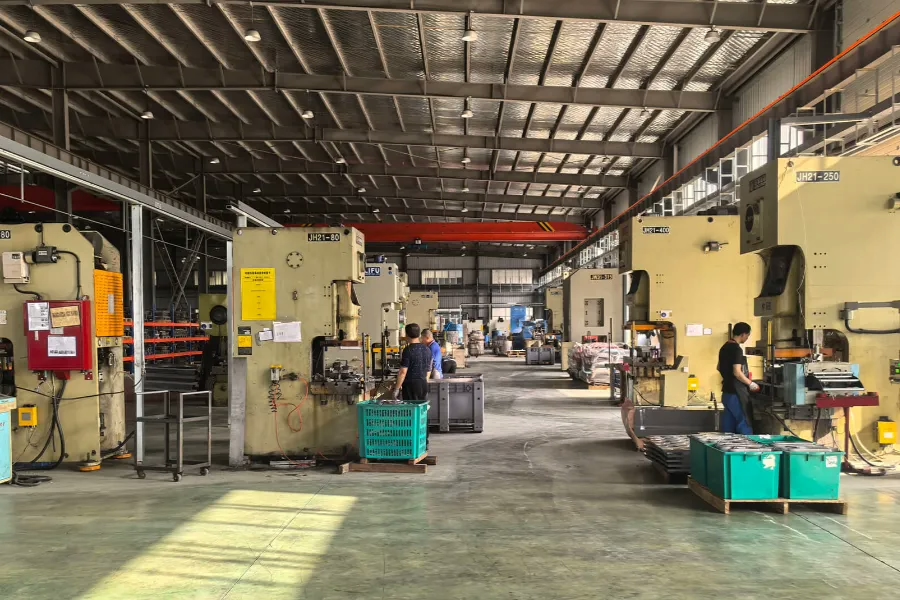
1. Direct Pricing Demands Direct Oversight
Direct factory pricing only works when your audit, QA, and compliance systems are equally direct. When I inspect failed sourcing setups, I usually find vague agreements.
Sourcing Engineer Zhang eliminated this risk immediately. He made tooling, IP, and specification control contractually explicit before production scaled. You must legally own your molds to protect your brand.
2. True Landed Cost Unmasks Hidden Fees
The right landed-cost conversation separates material, conversion, logistics, and failure costs. Packaging is a massive supply-chain lever, not an afterthought.
Packaging Engineer Chen demonstrated this directly on the factory floor. He engineered flat-pack cartons that perfectly nested beside heavy grills. This structural shift stopped the client from paying ocean freight for empty air.
3. Backward Planning Rescues Seasonal Launches

Seasonal garden product sourcing must be planned backward from the retail window. Lead Planner Sarah mapped the exact transit times required for the spring launch. She then locked in Q4 factory capacity months in advance.
This approach mirrors Gartner’s latest supply chain research, which notes that proactive capacity booking prevents most seasonal stockouts.
Pro Tip: The OEM Partner Evaluation Checklist If you are evaluating a new factory partner, demand these non-negotiables:
- Audit Access: Do they permit a rigorous, unannounced factory tour?
- IP Security: Are mold ownership terms explicit under Chinese law?
- Logistics ROI: Do they actively engineer packaging to maximize container density?
Future Outlook: Global Expansion and Tech Upgrades
Building on this foundation, the client plans to expand this direct factory supply chain management framework into their European markets. Manager Lin will soon deploy predictive demand software to align raw material buys with seasonal peaks.
This technological upgrade ensures the entire global team benefits from stabilized lead times and shared cost savings.
Do you want to find hidden waste in your shipping? Our experts know how to map your true costs. We have done this for top brands. Contact OGPSGroup today! We will build a better plan for you.

- Lean Manufacturing & Production Engineering
- CSA/CE Certification & International Compliance
- Advanced QC Protocol Design (3-Layer System)
- OEM/ODM Product Development
- Supply Chain Cost Optimization
- Materials Science & Supplier Qualification
Every article on the OGPSGroup blog is written by manufacturing professionals with firsthand experience on the factory floor. Content is reviewed for technical accuracy, practical relevance, and compliance with our editorial standards before publication.
Learn more about our Fact Checking Process and Editorial Policy.