
Quality Control Services —
100% Unit Testing, 0.5% Defect Rate.
Industry-leading outdoor product quality control trusted by B2B buyers in 75+ countries. Four embedded QC gates — from raw material traceability to container loading supervision — with combustion safety protocols, structural load testing, and UV-aging validation. Ship with certainty, not rework costs.
QC That Lives
Inside the Production Line.
Most trading agents sample-check at the dock. OGPSGroup engineers are embedded at four sequential control points — catching defects at the station that creates them, not hours later in a batch audit.
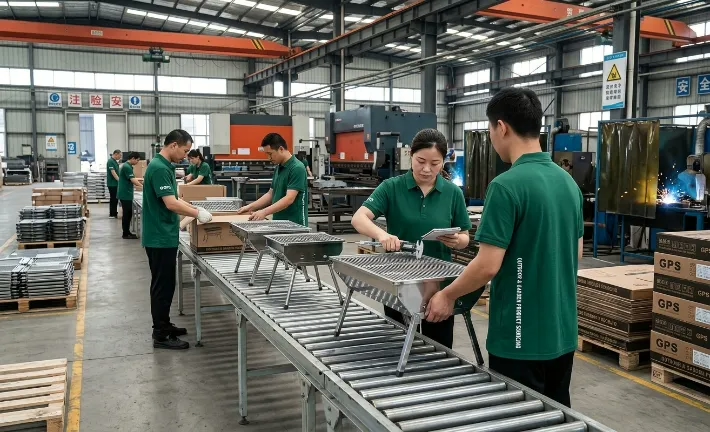
Pre-Production Inspection & Material Traceability
Before a single unit enters production, our engineers verify raw material certifications — steel grade, coating composition, ceramic density, and hardware specifications — against your approved bill of materials. Supplier batch records are audited for traceability. Discrepancies are flagged and resolved before tooling begins, eliminating the root cause of 60% of downstream defects.
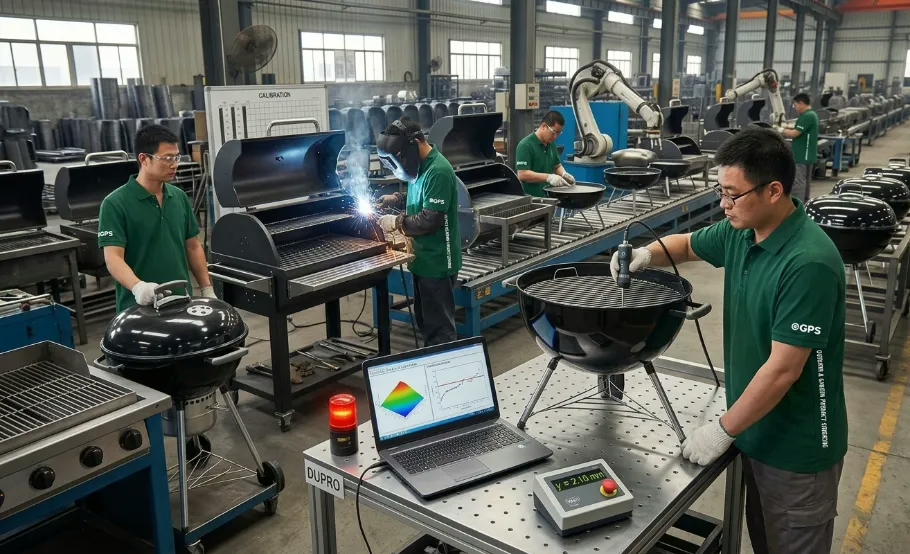
During Production Inspection — The DUPRO Gate
Our engineers intervene at 20–30% batch completion — the earliest point where systemic deviations become detectable. Torque consistency, weld penetration, coating thickness, and assembly sequencing are measured against documented production protocols. This mid-production checkpoint prevents compounding failures and protects your delivery schedule.
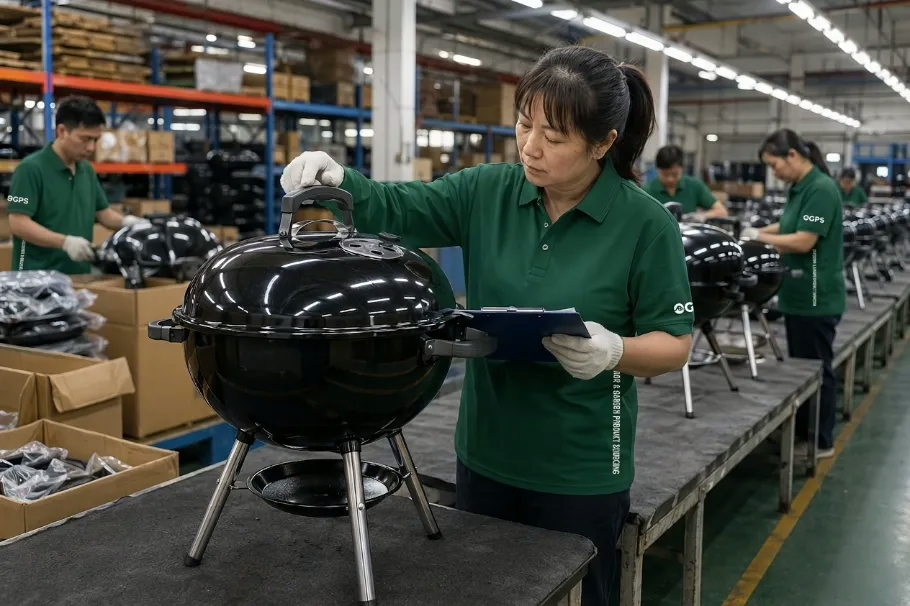
Pre-Shipment Inspection — The AQL Barrier
Every batch undergoes AQL 2.5 sampling as the minimum standard, with critical safety components tested at AQL 1.0. Beyond individual unit compliance, inspectors assess cross-category visual consistency — finish matching, color accuracy, hardware alignment — ensuring your entire product lineup presents a unified premium appearance at retail.
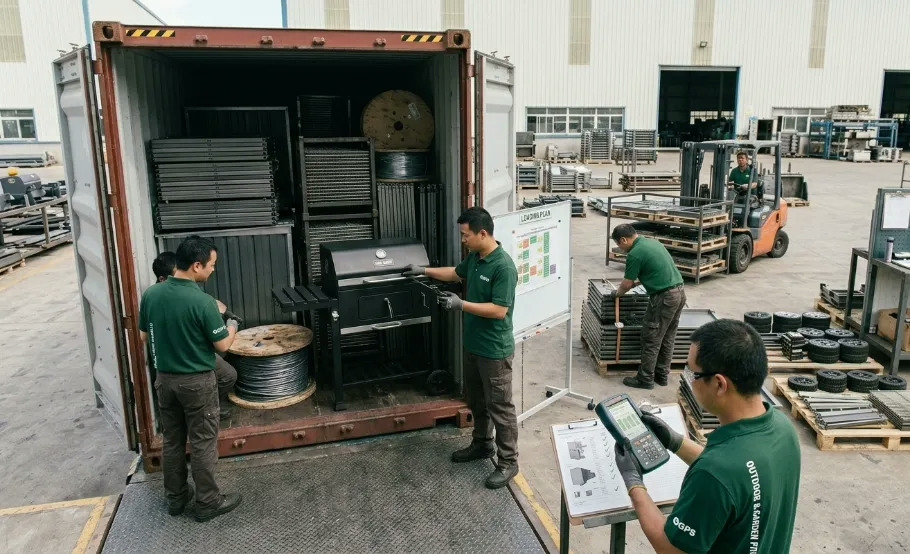
Container Loading Supervision & DIM Integrity
Container loading is supervised and engineered — not left to standard warehouse procedures. Load plans are verified against the approved stacking matrix. Pallet integrity, moisture barriers, and strapping tension are checked at the dock. Every container is photographed before sealing, producing a digital loading record that accompanies your shipping documents.
See Our QC
In Action.
Walk the production floor with our QC engineers — real factory footage, not staged marketing material.
Engineering Standards That
Protect Grill Performance.
Every charcoal and gas grill platform is locked to documented QC protocols — from incoming steel grade verification through to combustion testing on every completed unit.
Combustion Safety Validation
100% of gas and charcoal grill units undergo fire-in-the-box testing. Multi-point thermocouple arrays validate heat distribution. Gas routing components are pressure-tested at 3-bar before assembly. CSA/CE test protocols are embedded into the production QC checklist — not treated as a separate certification exercise.
Structural & Material Integrity
Steel thickness, weld penetration, ceramic density, and coating adhesion are measured at defined control points. Porcelain enamel is verified for chip resistance and thermal cycling durability. Every grill platform is validated for structural stability under full thermal load before leaving the factory floor.
Weathering & Endurance
ASTM G85 salt-spray testing, 500+ hour UV exposure cycles, and thermal shock validation are conducted on scheduled production samples. Components that fail any threshold trigger a full lot review — not a waiver. Field warranty data feeds back into the QC protocol for continuous threshold refinement.
Patio, Garden & Overlanding.
One QC Standard.
The same four-stage QC protocol governs every ecosystem product — pergolas, sheds, furniture, heaters, tents, and coolers. Cross-category visual consistency is validated at every pre-shipment gate.
Supplier Audit & Pre-Production Validation
Every Tier-1 partner factory undergoes on-site capability audits before onboarding. Material certifications are verified against destination-market standards. Production samples are destructively tested for structural load, UV stability, and corrosion resistance before mass production authorization.
In-Process & Pre-Shipment Control
Workmanship, functional performance, assembly accuracy, and packaging integrity are inspected at defined production milestones. Cross-category visual consistency — finish matching across pergolas, furniture, and storage units — is validated to maintain a unified brand appearance across your entire outdoor catalog.
FCL Consolidation QC
When multiple product categories ship in a single 40HQ, mixed-load integrity is verified: heavy anchors correctly positioned, flat-pack goods properly nested, load-securing hardware torque-checked. Every consolidated container is photographed at loading and documented for your receiving team.
What Separates a Dock Check
From Embedded QC.
Most trading companies sample-inspect finished goods at the warehouse. OGPSGroup engineers are embedded inside the production line — catching defects before they compound, not after.
End-of-line sampling at AQL 4.0 or looser. Defects caught after production is complete — rework is expensive, timelines slip, and the root cause goes uninvestigated. Same issues repeat next order because the process never changed.
Four embedded control points from material receiving through container loading. AQL 2.5 across all categories, AQL 1.0 on critical safety components. 100% combustion testing on every gas unit. Every defect traced to its root cause and eliminated from the next production run.
QC That
Delivers.

“We had a 1,200-unit grill order rejected by our previous supplier — warped lids on 40% of the batch, caught too late. OGPSGroup embedded their QC engineer on our line from day one. First container: zero structural defects, zero combustion failures.”

“Our patio furniture program was fragmented across three factories — inconsistent finishes, mismatched hardware. OGPSGroup consolidated QC under one protocol. Cross-category visual consistency is now verified at every pre-shipment gate. Returns dropped below 0.8%.”
Every Category.
One Standard.
From gas grills to garden sheds — the same four-stage QC protocol governs every product category. Every unit fire-tested. Every batch AQL-verified. Every container documented.


Questions About
Quality Control.
AQL 2.5 is our default inspection standard for general workmanship and aesthetics. Critical safety components — gas fittings, burner assemblies, structural welds — are inspected at AQL 1.0. For brands with specific retail intake requirements, we can align to tighter thresholds including zero-defect sampling for designated high-risk components.
QC gates are non-negotiable regardless of timeline. For rush orders, we deploy additional QC personnel to compressed production windows and accelerate inspection reporting, but control points are never skipped. In-line inspection accelerates detection — defects are caught at the station, not hours later in batch audit.
Yes. Many of our clients use third-party inspectors such as SGS, Bureau Veritas, or Intertek for independent verification. Our QC team coordinates directly with their inspectors — providing production schedules, control point documentation, and full access to test records. The OGPSGroup protocol serves as the foundation; third-party validation adds independent confidence.
Every container ships with a complete QC documentation package: material certifications, in-process inspection reports, pre-shipment AQL sampling results, functional test records for critical components, and container loading photographs. Documentation is organized to the structure your compliance team requires — audit-ready from the moment the container leaves our dock.
Stop Paying for QC
That Catches Defects Too Late.
Embedded QC catches defects at the station — not at the dock. Connect with our quality engineering team to design a four-stage QC protocol for your next production run. Complete documentation packages shipped with every container.
Minimum annual procurement volume: $400K+. Enterprise engagements only.