
Your Program, Ready to Ship.
One Partner, Zero Supply-Chain Worry.
You've got a store to run. The hard part is everything that has to happen before a single unit reaches a customer — finding a factory you can actually trust, hitting a selling season that won't wait, keeping quality consistent, and getting bulky outdoor product to market without it arriving damaged. OGPSGroup is the asset-heavy manufacturer, not a trading desk, that owns the whole path: sourcing, QC, compliance, packaging tested to ISTA 3A and 6-Amazon, and containers that load dense and ship ready. One partner. One program. Zero supply-chain worry.
Who This Program
Is Built For.
If you're importing outdoor goods and can't tell whether your supplier is a real factory or a trading desk, this program is the fit. Whether it's damage and returns eating your margin, the stress of a supply chain you can't see, or a brand scaling across channels — these are the profiles we built it for. If any sound familiar, you're in the right place.
The Seller Who Can't Judge a Supplier
No supply-chain background. You find suppliers on Google, Alibaba, or social media — and every deal is a gamble: quality swings, MOQs that shift, and a selling season that slips before you knew there was a problem.
A validated partner, not a gamble — the vetting is done for you before you commit.
The Founder Running It All
You're the owner and the first call. Unstable quality and high returns land squarely on you, and there's no one else to take the hit or chase the fix.
One accountable contact and stable quality — a single owner for the outcome.
The Multi-Platform Brand Scaling Cross-Border
Selling on Amazon, your own site, and other marketplaces. You need one standard across every channel — and no 3PL rework between the container and the customer.
Consistent ready-to-ship units across every channel, with zero extra handling.
Designed for brands with meaningful Amazon / cross-border volume — typically $400K+ annual outdoor procurement. For smaller programs, we recommend starting with an individual sourcing engagement.
Tell a Real Factory
From a Trading Desk.
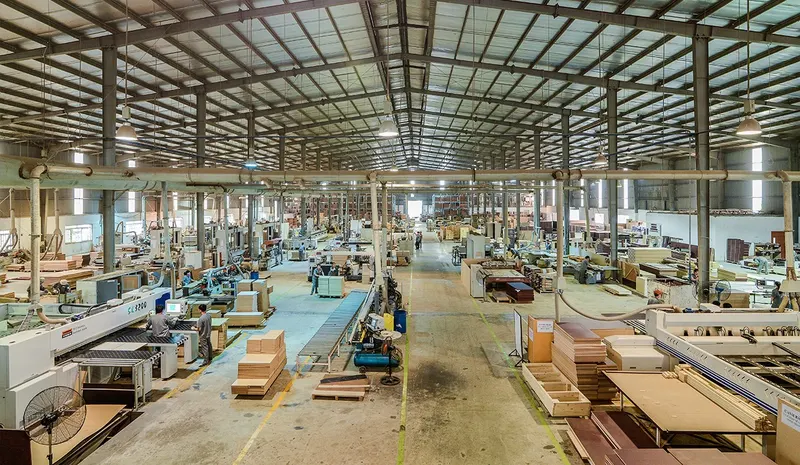
The hardest part of importing outdoor goods isn't the design — it's knowing who you're really buying from. When you can't evaluate a supplier, you fall into the same pitfalls: quality that swings, MOQs that shift, a selling season that slips, and a blame game the moment something arrives damaged. Here's how an asset-heavy manufacturer, not a trading desk, shows itself.
One Partner Runs the Line.
You Run the Store.
The fear behind sourcing overseas isn't the product — it's everything you can't see. When one partner owns sourcing, QC, compliance, development, loading, and after-sales, you stop carrying the supply chain and start running the store.
Sourcing & Factory Vetting
You stop carrying Trying to judge a factory from a listing, a phone call, or a social-media ad.
OGPSGroup owns 60+ vetted partner facilities, qualified before you commit a single dollar.
Product sourcing →Compliance & Platform Rules
You stop carrying Chasing marketplace and destination-market requirements yourself.
OGPSGroup owns Correct labeling, documentation, and intake compliance handled for you.
QC & Test Evidence
You stop carrying Hoping what ships matches what was promised.
OGPSGroup owns AQL inspections, ISTA validation, and certificates — shared before mass production.
Quality control →Product Development
You stop carrying Discovering design flaws only after they become returns and warranty claims.
OGPSGroup owns DFM reviews and structural fixes that solve issues at the source.
Product development →Container Loading & Freight
You stop carrying Paying for empty air on every bulky unit.
OGPSGroup owns Density-optimized FCLs that leave the container ready to ship.
After-Sales Troubleshooting
You stop carrying Owning the problem the moment a unit arrives damaged.
OGPSGroup owns One accountable partner for the fix — not the carrier, not a middleman.
Troubleshooting →Operational Visibility
You stop carrying Chasing order, QC, and shipment status across three suppliers.
OGPSGroup owns Order, QC, and shipment data tracked together in one view of your program.
What Damage and Dimensional Weight
Actually Cost You.
Most suppliers treat packaging as a cost to minimize. But the leaks below aren't really a packaging problem — they're a symptom of a supply chain you don't control. When one accountable partner owns the packaging, the testing, and the loading, they close at the source. Here's the real, quantified cost of weak packaging.
“Arrived damaged” feedback lowers conversion and search visibility. One high-damage SKU can drag an entire listing's rating.
Every damaged unit triggers a claim, return shipping, and a replacement. At scale this becomes a continuous margin leak.
Bulky outdoor products ship with high volume and low density. Poor packaging makes you pay for air on every single unit.
A damaged container misses the Q2/Q3 selling season. The season is gone regardless of whose fault the damage was.
Three Engineering Levers
That Move the Numbers.
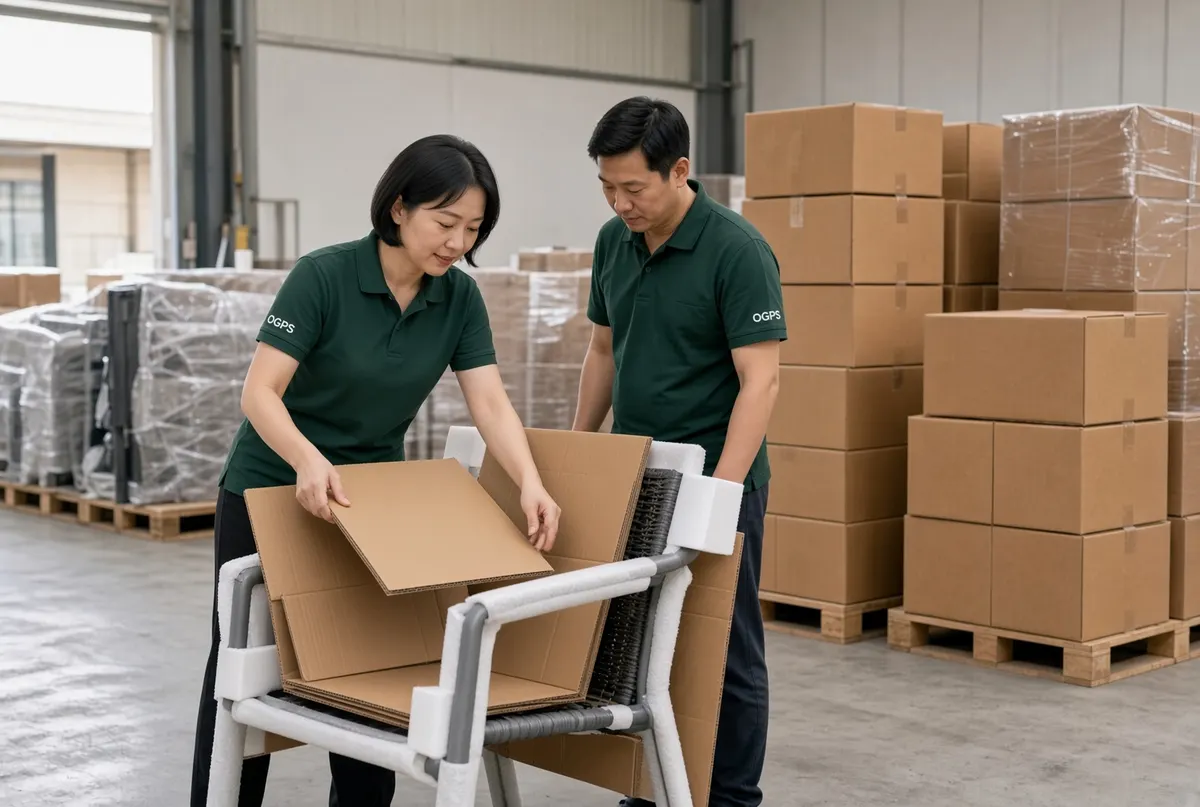
This isn't a generic packaging service. It's a structured engineering program — three levers applied in sequence, each validated with evidence before you commit to mass production.
Weakest-Point Flat-Pack Redesign
We don't just “make it smaller.” We analyze real transit failure modes — load paths, corner protection, nesting — then redesign the internal structure so the package protects the product's weakest areas first.
ISTA Validation Before Production
Packaging is tested to the relevant ISTA protocols — including ISTA 3A and Amazon's ISTA 6-Amazon.com-SIOC where applicable — before mass production. You receive the test evidence, not a claim.
Density-Optimized Container Loading
Once unit packaging is locked, we model the full FCL. Heavy items as ballast, high-cube flat-packs filling remaining space. Documented cube improvements up to 34% and 20–22% lower freight per unit.
Ready to Ship.
Out of the Container.
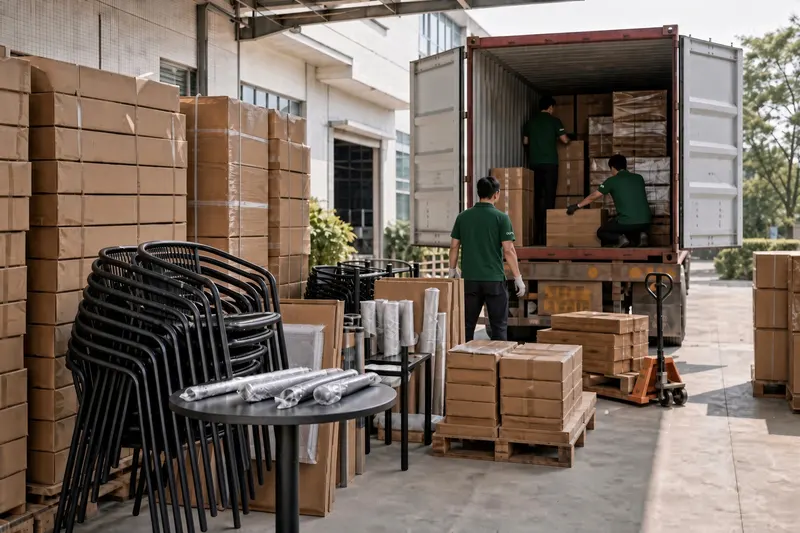
The goal is units that move from container to fulfillment with minimal extra handling — correctly labeled, barcode-verified, and compliant with the marketplace intake process from day one — with one team owning the whole path from production line to dock.
Correct Labeling & Barcode Verification
Every carton carries verified barcodes and marketplace-compliant labels. Your units pass intake scanning on the first attempt.
Marketplace Intake Compliance
Documentation aligned with Amazon and major marketplace requirements — no last-minute repacking or rejected pallets at the dock.
Mixed-SKU Optimized Containers
Ship multiple SKUs in one FCL with a density load plan. Dense grills as ballast, flat-packs filling the cube.
Skip 3PL Rework
Pre-packaged, pre-labeled units move straight from container to fulfillment — eliminating the repack step entirely.
End-User Experience Support
Clear assembly instructions and customer-facing inserts protect the unboxing experience that drives repeat purchase and reviews.
One Accountable Team
Product, packaging, and loading owned by a single team. When something ships wrong, one partner owns the fix — not the shipping carrier.
Works Across
Outdoor Categories.
The same engineering method — weakest-point analysis, ISTA validation, and density modeling — transfers to any bulky outdoor SKU currently losing money to damage or dimensional weight.
Standard Sourcing vs.
OGPSGroup Packaging-First.
The difference isn't a nicer box. It's who owns the engineering, who owns the outcome — and who you're actually buying from.
Four to Six Weeks.
You Approve at Every Gate.
Here's how a program runs for you — the timeline, what you receive, and where you stay in control. The engineering behind each stage is detailed in the three levers above, and it all lands on units that ship ready.
Damage & Cost Audit
Deliverable: Damage-rate analysis · high-risk SKU list · freight-impact estimateYou see your real damage numbers and what weak packaging is costing you — before anything else happens.
✓ Target SKUs locked before redesign begins
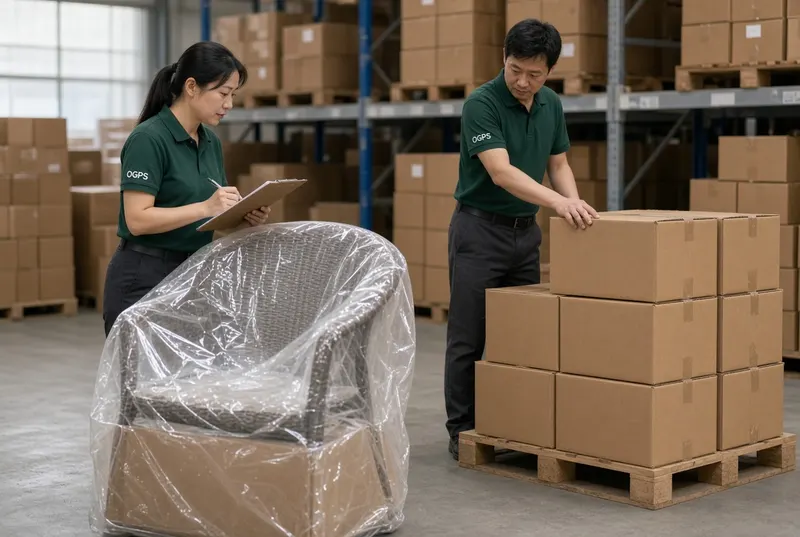
Redesign & Prototypes
Deliverable: Structure concepts · physical packaging samplesYou hold the physical packaging samples in your hands. Nothing enters tooling until you sign off.
✓ Samples approved before tooling
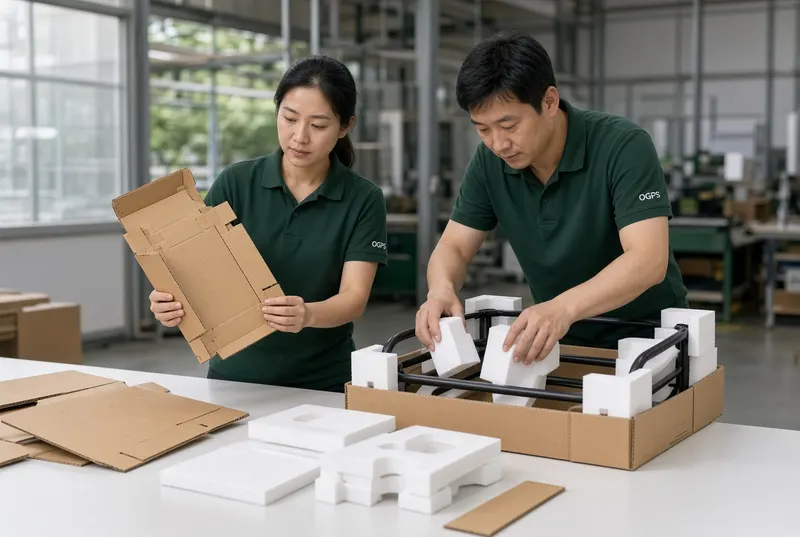
ISTA Validation
Deliverable: ISTA test report + photo/video evidenceYou receive the test evidence and review it. This is the approval gate before any mass-production commitment.
✓ Test evidence approved before mass production
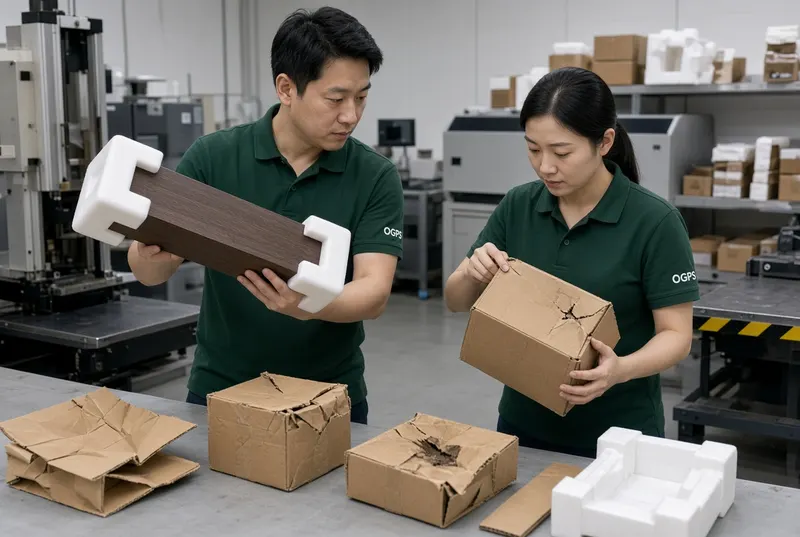
Production & Container Loading
Deliverable: Locked packaging specs · density load planProduction runs under the standard you approved, and the container loads to the density plan.
✓ Specs approved before the line runs
Container Ships FBA-Ready
Deliverable: Container loading confirmed · sailing + arrival dateThe container departs on schedule and arrives ready to move straight into fulfillment — your units cross into the marketplace with no rework.
✓ Final approval before the container seals
Real Numbers From
Real Programs.
These are not projections. They're outcomes from packaging-first programs — with test data and engineering evidence shared before commitment. Read the full RMA-reduction methodology here.
A single-layer inner packaging tray collapsed under stack pressure during ocean transit. We lost an entire Q2 promotional window dealing with returns.
12% → 0.3% damage on the redesigned pilot
Resin storage boxes from a Zhejiang supplier were arriving with stress cracks at a 12% rate — hairline fractures radiating from the lid hinge mounts. OGPSGroup caught the root cause (mold temperature off by 8°C) in the DFM review, then redesigned the inner tray as dual-layer corrugated with die-cut corner posts and cross-strap channels, after instrumenting a test shipment with impact loggers. The pilot landed at 0.3% damage. Over 8,000+ units since, total warranty claims: one. Damage rate has never crossed 0.5%, landed cost is 9% lower, and category margin improved 320 basis points.

Claire Dubois
Category Director, European Home & Garden Chain
Packaging was generic: one corrugated carton per SKU, zero custom inner fitments, damage rates running at 7–8%.
34% cube reduction · 22% lower freight per unit
A North American big-box program sourced galvanized sheds through a trading company — three factories behind one invoice, generic packaging, and 7–8% damage rates. OGPSGroup's flat-pack engineering redesigned the cartons around the panels' weakest points. Twelve containers shipped in one season — 2,800+ units across 3 mixed SKUs per container. Container cube dropped 34%, freight per unit fell 22%, and the category recorded zero rust claims after a full Pacific Northwest winter, with a 9.2 unboxing experience score.

Daniel Reeves
VP Global Sourcing, North American Big-Box Retailer

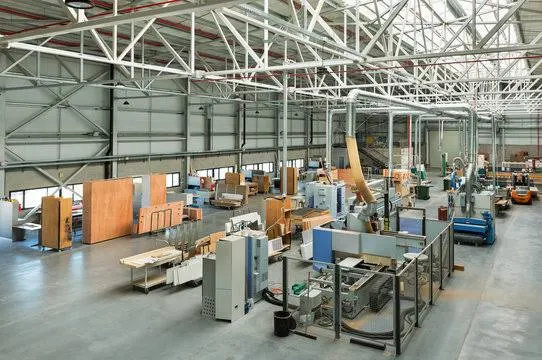
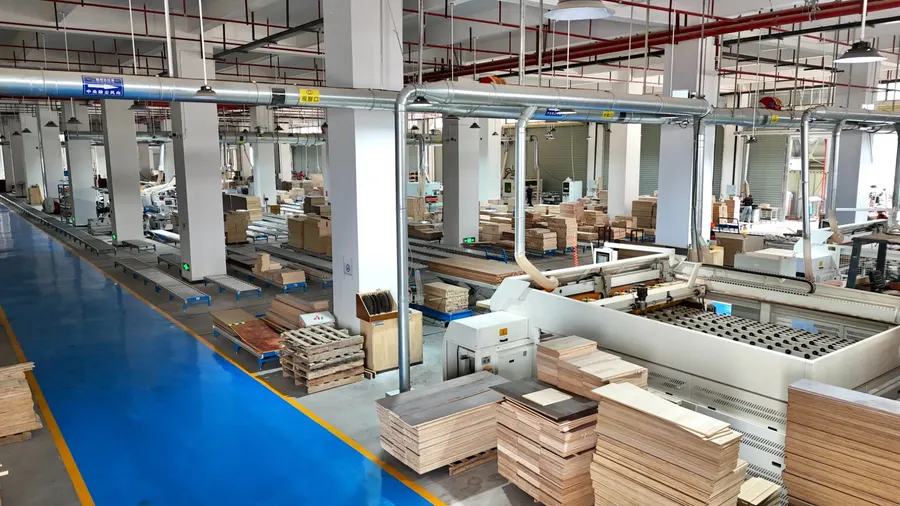
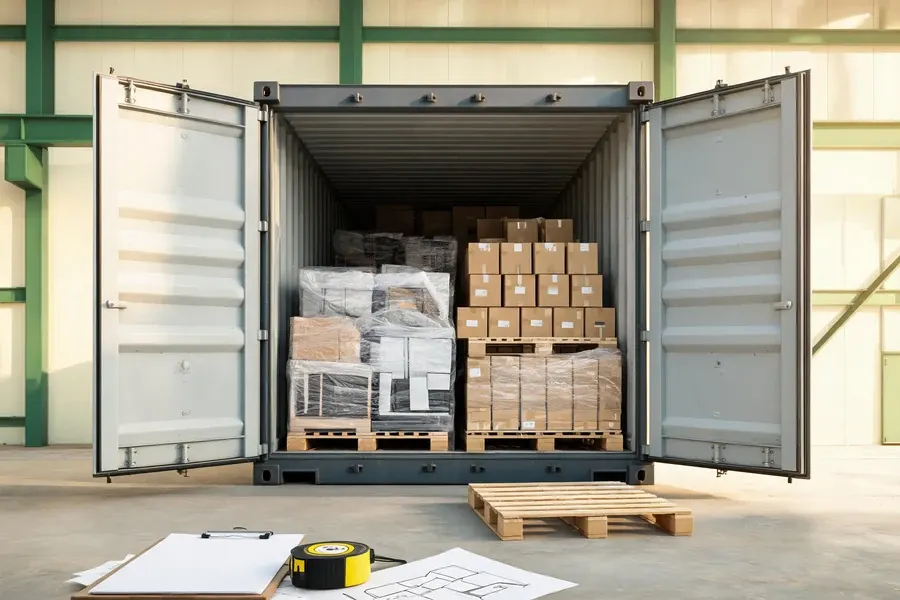
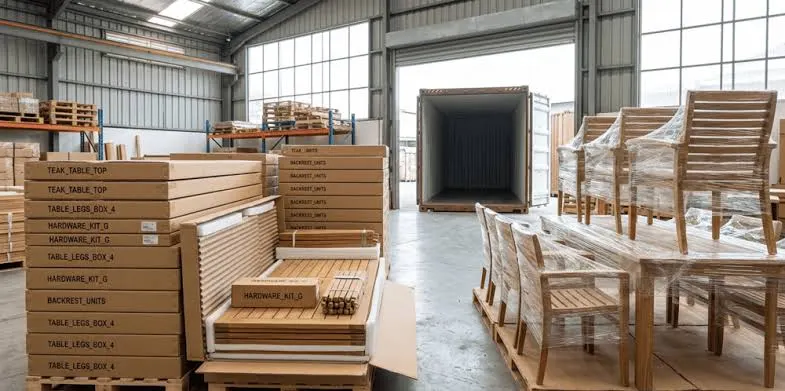
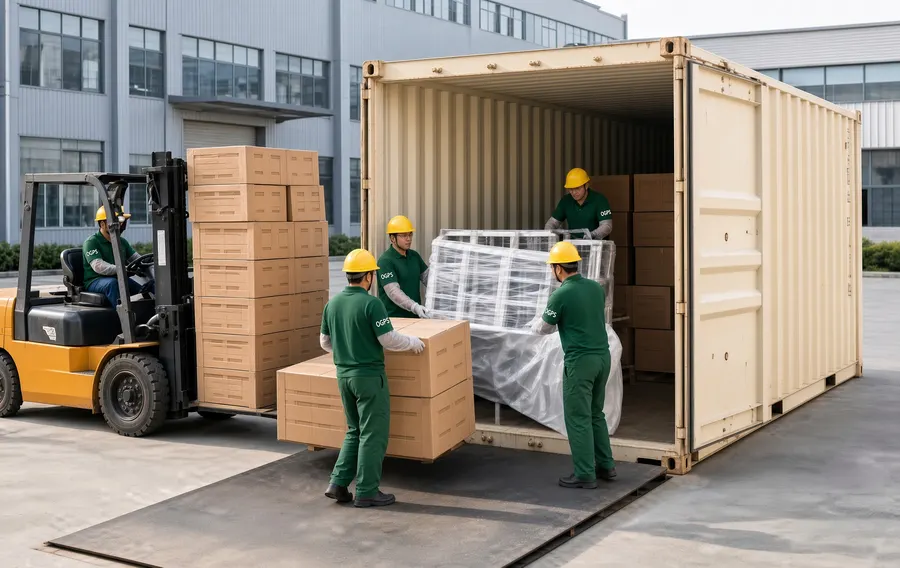
You don't just receive products — you receive a complete, traceable verification record. Test data is shared before commitment, not after the fact.
Questions From
Amazon & DTC Brands.
The method transfers across every bulky outdoor SKU. We've engineered packaging for patio furniture, garden storage, grills, shade structures, and heaters. What matters is the weakest-point analysis, ISTA validation, and density modeling — not the specific category. We'll assess your SKUs in the initial audit and tell you honestly where packaging engineering can move the numbers.
We run the protocols relevant to your fulfillment path. ISTA 3A covers parcel and palletized shipments for e-commerce distribution. Amazon's ISTA 6-Amazon.com-SIOC (Ships In Own Container) simulates the FBA network when your product ships in its own carton. In one validated case, applying the ISTA 6-Amazon.com-SIOC fix dropped a heavy 20kg firebox's arrival damage rate to 0%. Test evidence is shared with you before mass production.
A focused redesign and validation typically runs 4–6 weeks from audit to production-ready packaging. The initial damage and cost audit takes 3–5 days. Complex structures with custom tooling or new inner trays can extend to 8–10 weeks. You'll get a schedule with explicit milestones — and an approval gate after ISTA validation before any mass-production commitment.
In most cases we work with your existing product designs. Packaging engineering absorbs the change — structural redesign, inner trays, load-path protection, and container density — without touching the product. If the audit reveals a product-side issue that packaging alone can't fix, we'll tell you exactly what it is, what it would cost to change, and what the margin impact would be.
Every carton ships with marketplace-compliant labels and barcode verification. We handle FNSKU/UPC labeling requirements, shipping labels, compliance documentation, and pallet configurations so your units pass intake scanning on the first attempt — no rejected pallets, no last-minute repacking.
Yes. Mixed-SKU FCL loading is one of our core advantages. We model each container so dense items (grills, heaters) act as ballast and high-cube flat-packs fill the remaining space. A typical 40HQ might hold several furniture SKUs, storage units, and grills under one PO — with documented 20–22% lower freight per unit versus fragmented LCL shipping.
Both. For brands already live, we start from your current damage data and highest-damage SKUs — the ROI is usually fastest there. For new launches, packaging engineering is built in from the first sample, so you never pay the damage tax in the first place. Either way, the program starts with a data-driven audit, not a sales pitch.
We are an asset-heavy manufacturer, not a trading desk — we own and run vetted production lines across 60+ partner facilities. Every engagement ships with a documented evidence pack: AQL inspection reports, ISTA validation certificates, salt-spray results, and container load plans. We will also open the factory floor to you — tour the lines in person or on a China sourcing tour — and we back any quote we make with the dossier behind it. If you ask and we cannot show real records, walk away.
Yes. A focused program runs 4–6 weeks from audit to ready-to-ship, with explicit approval gates at each stage so nothing slips. For MOQs we give you explicit numbers up front — not vague ranges that shift after you commit. If you are racing a Q2/Q3 window, we will be direct about whether the timeline is reachable before you spend anything. The audit takes 3–5 days and tells you what is realistic for your seasonal window and volume.
Yes — packaging is the flagship, but it is one lever inside a single accountable program. The same team handles sourcing and factory vetting, compliance and platform rules, QC with test evidence (AQL, ISTA, salt-spray), container loading and freight, and after-sales troubleshooting when something does go wrong. That is the point: one partner owns the outcome, so you are not coordinating a packaging supplier, a QC inspector, and a freight forwarder separately.
You get one view across the program — order status, QC results, and shipment tracking tracked together rather than scattered across emails and middlemen. You see the test evidence before mass production rather than after, and the container load plan before the container seals. You keep control at every approval gate, and you do not have to chase status across three suppliers to know where your program stands.
Ready to Stop Managing
Your Supply Chain?
Stop coordinating a packaging supplier, a QC inspector, and a freight forwarder separately. Send us your highest-damage or highest-cube SKUs, current damage rates (if available), and annual volume — we'll show you what packaging engineering can move and which parts of the supply chain you can hand off. No obligation. Manufacturing-grade analysis only.
Designed for brands with meaningful Amazon / cross-border volume — typically $400K+ annual outdoor procurement.