
Custom Outdoor Patio Chairs Manufacturer.
Designed to Your Spec. Built on Our Floor.
Send us your design — CAD file, reference photo, or a conversation about what your market needs next season. We'll engineer it for production, build a pre-production sample on your assigned line, and deliver finished chairs with full compliance documentation. Factory-direct manufacturing. No trading company. No catalogue constraints.
Six Chair Types.
One Custom Programme.
Every category below can be fully customised — frame, weave, cushion, dimensions, hardware, and branding. Select the type that fits your market, then specify how you want it built.
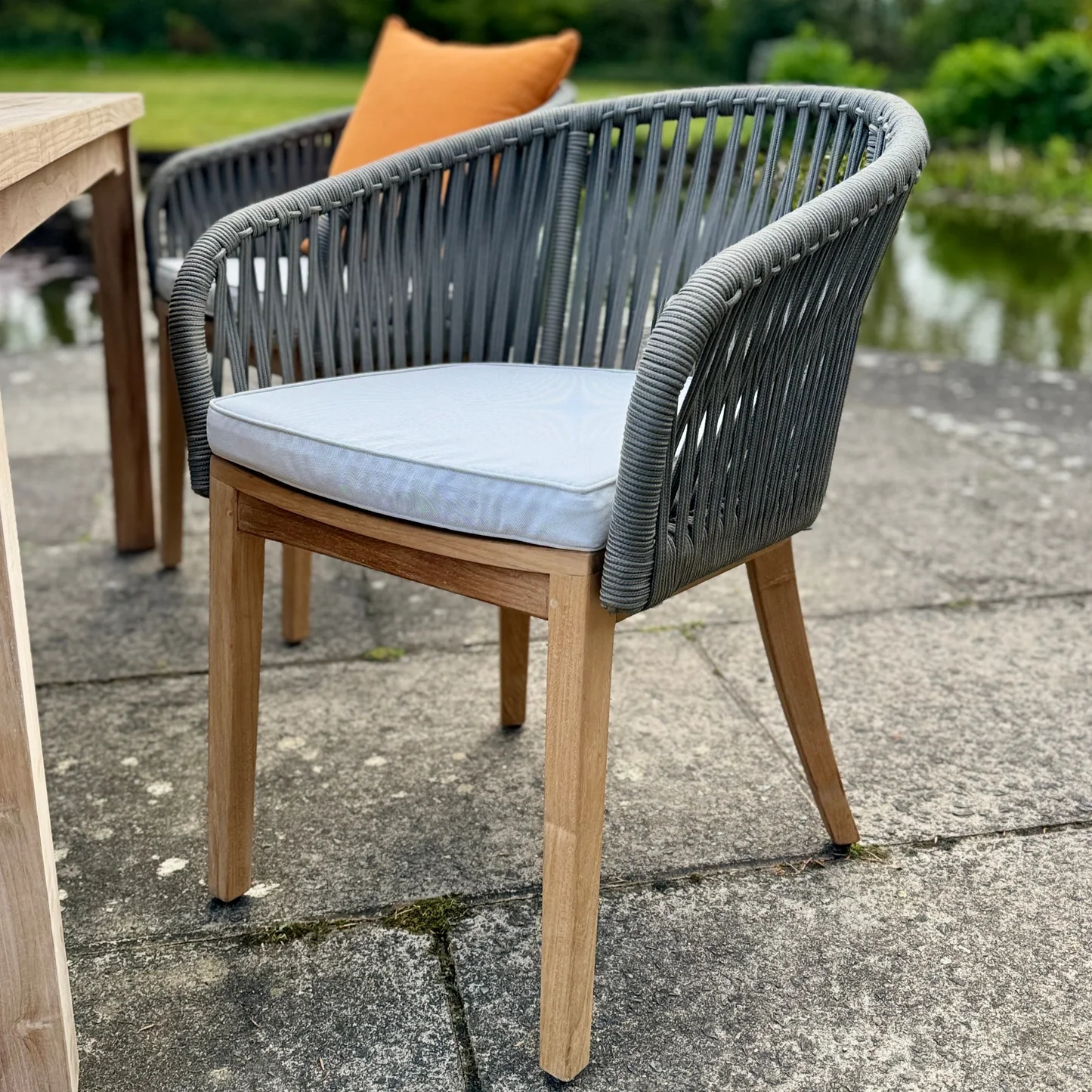
Patio Dining Chairs
Stackable and non-stackable dining chairs. 6063-T5 aluminium frames, UV-stabilised sling or cushioned seat options. TIG-welded 304 stainless hardware. Designed for daily restaurant and residential use.
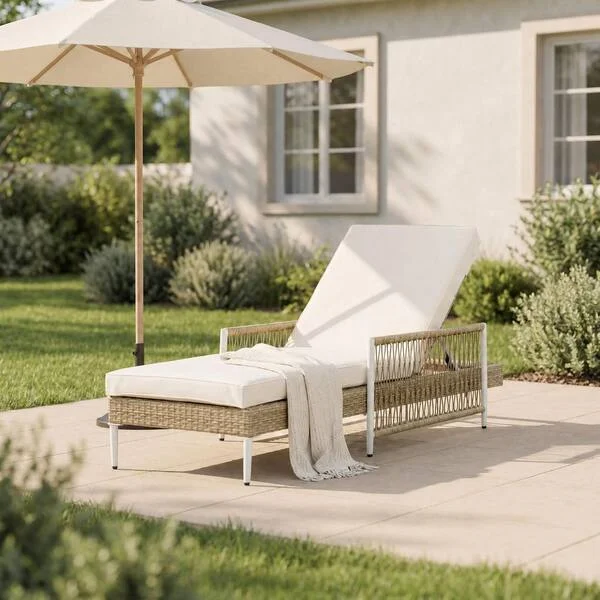
Patio Lounge Chairs
Deep-seating lounge and accent chairs with quick-dry foam cushions. Solution-dyed acrylic fabric. Adjustable backrest angles. Suitable for resort poolsides, rooftop bars, and residential patios.
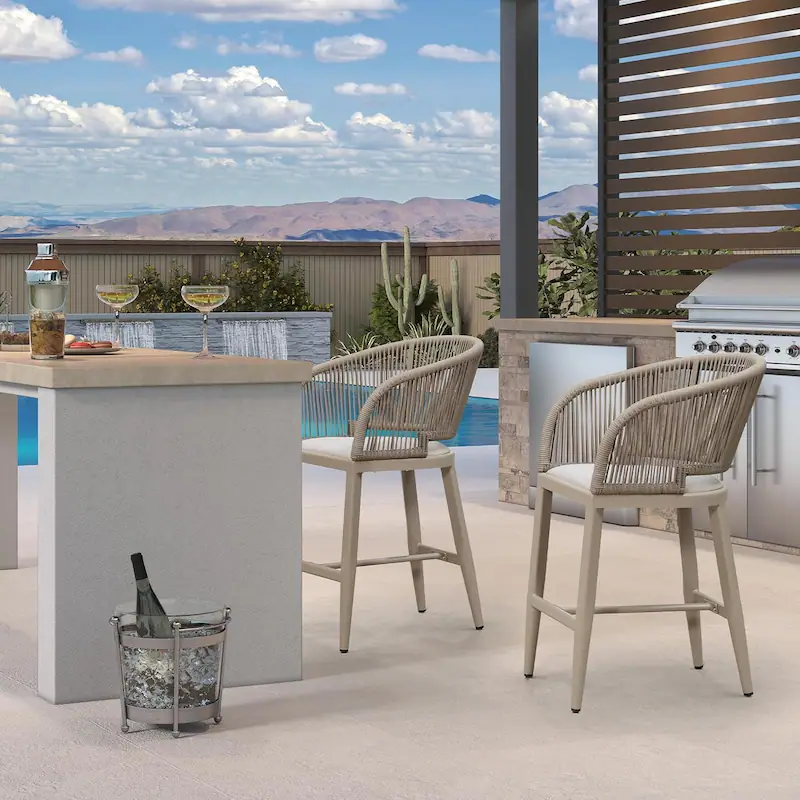
Patio Bar Stools
Counter-height (65cm) and bar-height (75cm) stools. Swivel mechanisms available. Integrated footrests. Powder-coated aluminium or stainless steel. Stackable for event venues.
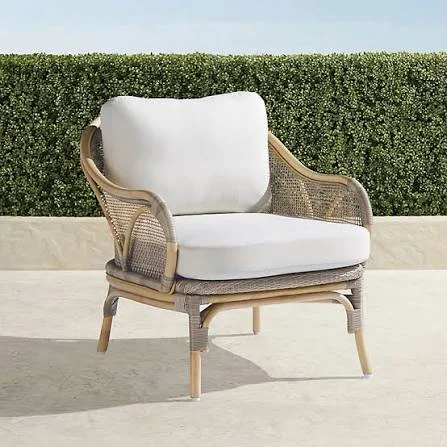
Wicker Accent Chairs
Hand-woven HDPE PE rattan over rust-proof 6063-T5 frames. Colour-through formulation in flat, round, or half-round profiles. Custom colour compounding for exclusive brand palettes.
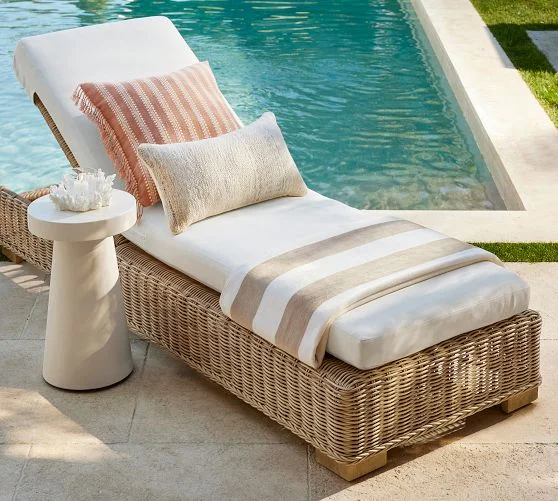
Chaise Lounge Chairs
Reclining chaise lounges with multi-position backrests. Quick-dry foam mattress with drainage mesh. Wheel kit for poolside mobility. Marine-grade 316 stainless hardware available.
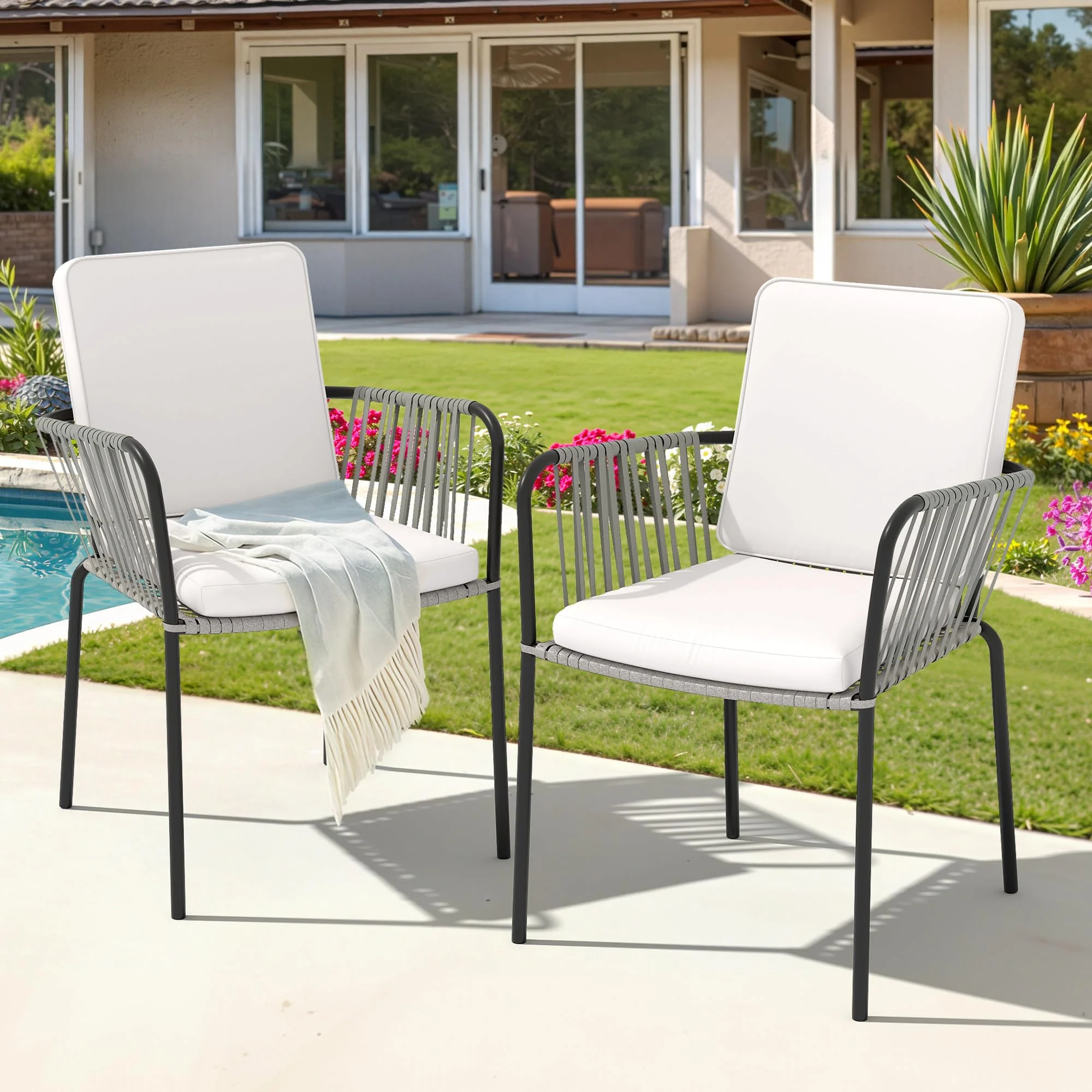
Mixed-Material Chairs
Aluminium frames with teak armrests. Iron bases with wicker backrests. Engineered combinations with galvanic corrosion isolation. Each combination structurally tested as a complete assembly.
Six Decisions That Define
Your Chair.
Every chair that leaves our floor starts with your specification — not a catalogue pick. Frame geometry, weave tension, cushion density, surface finish, hardware grade, and brand identity. Each decision affects cost, durability, and the end user's experience.
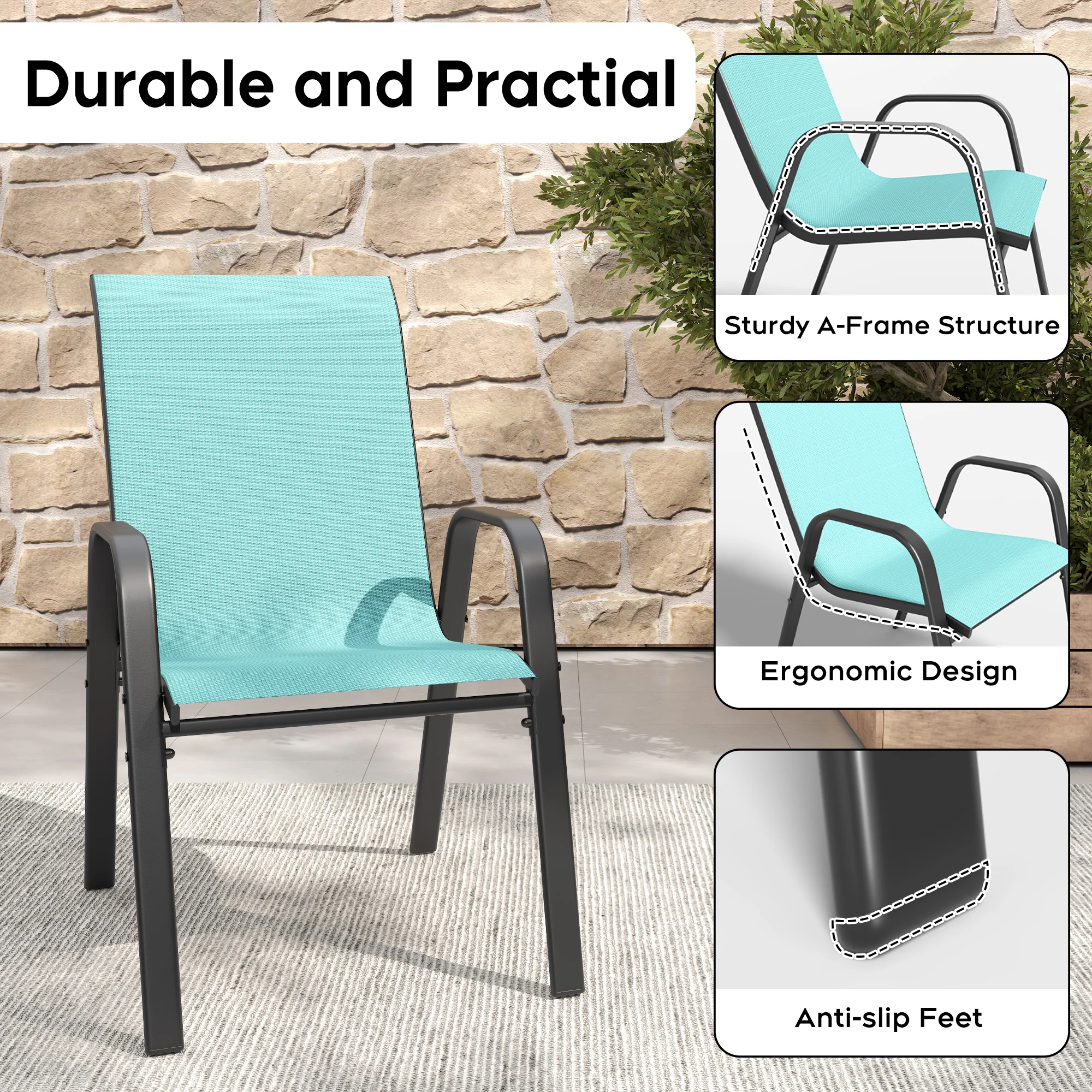
Frame geometry
Seat height, seat depth, backrest angle, armrest height — every ergonomic dimension set to your specification. 6063-T5 or 6061-T6 aluminium verified by XRF at receiving. Tube profiles available: round, square, rectangular, and custom extrusion. Wall thickness from 1.2mm to 2.5mm depending on structural requirement. TIG-welded joints with argon back-purge on all structural connections — no MIG shortcuts.
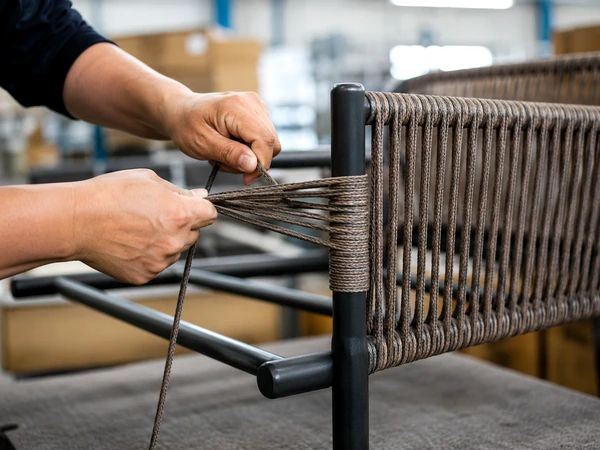
Weave material & tension
HDPE flat (8mm, 10mm, 12mm), round (6mm, 8mm), or half-round profile. Colour-through formulation — the pigment runs through the entire cross-section, so scratches don't reveal a different colour underneath. Tension set at specified N/m² and verified at batch level against a golden sample. Custom colour compounding available above 1,000 kg — exclusive to your brand.
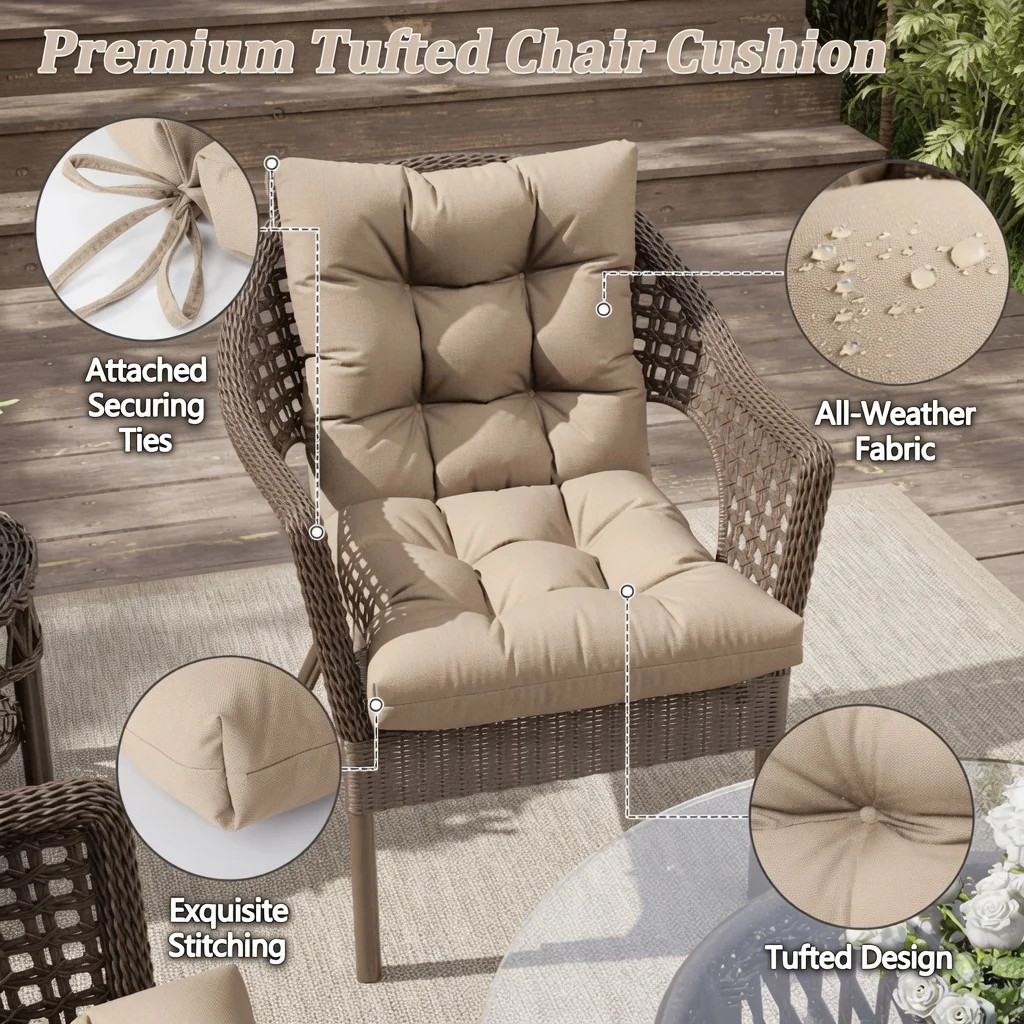
Cushion engineering
Three foam densities available: 25 kg/m³ (standard residential), 35 kg/m³ (commercial daily use), 55 kg/m³ (hospitality high-turnover). Open-cell reticulated structure drains water in under 20 minutes — no trapped moisture, no mould. Fabric options: solution-dyed acrylic (5-year UV warranty), olefin, or Sunbrella-grade. All cuts within a set from the same fabric roll — no batch-to-batch colour shift.
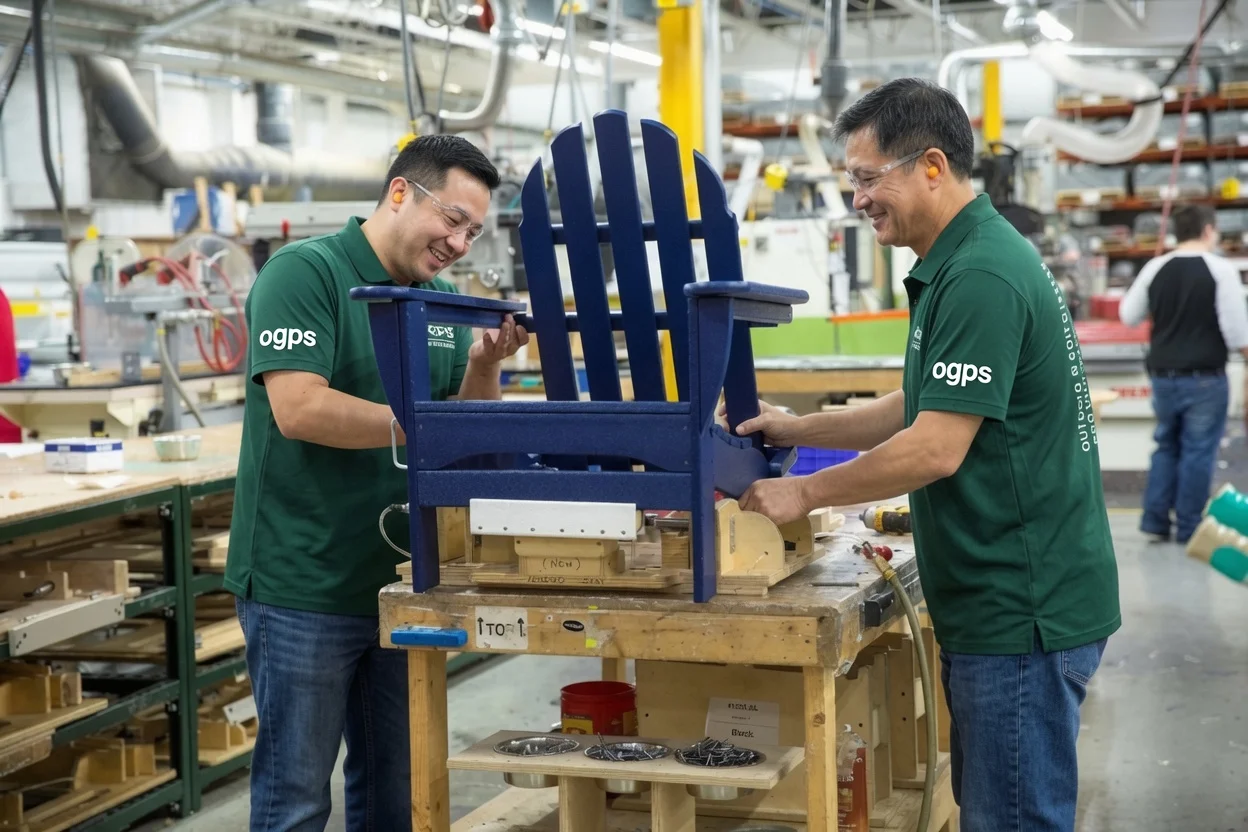
Finish & corrosion protection
5-stage pre-treatment: degrease → rinse → phosphate → rinse → seal. TGIC-free polyester powder applied electrostatically, cured at 200°C. DFT 60–120 micron measured on every production lot. For coastal or marine environments: add an electrophoretic (E-coat) underlayer before powder — pushes salt-spray rating past 1,000 hours (ASTM B117). Colour matched to your Pantone/RAL under D65 lighting, ΔE ≤ 1.5.
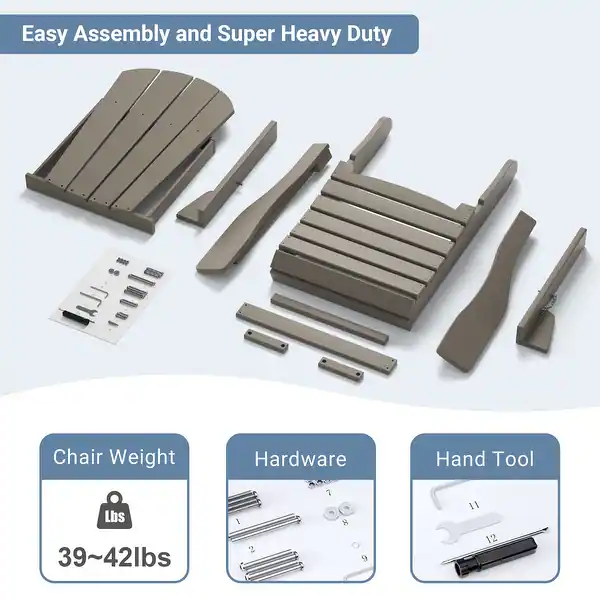
Hardware & assembly
304 stainless steel bolts, washers, and inserts as standard. 316 marine-grade available for coastal projects. TIG-welded joints, not MIG — cleaner bead profile, less spatter, better corrosion resistance. Weld logs with operator ID per batch for full traceability. Nylon glides on feet — no metal-to-deck contact. Stacking bumpers included when stackability is specified.
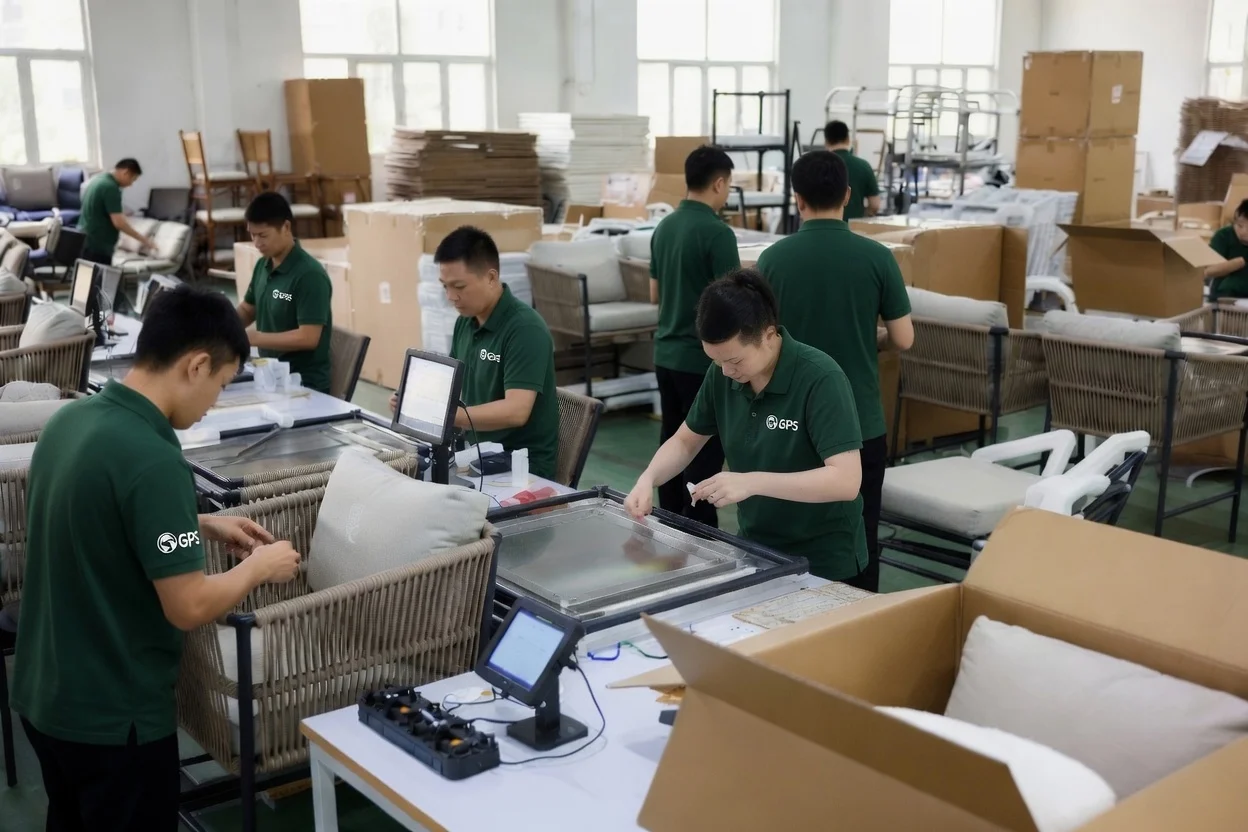
Branding & packaging
Hot-stamped or laser-engraved logo plates in stainless or aluminium. Embroidered cushion labels, branded hardware caps, custom-printed hangtags. Assembly guide in your language and brand voice. ISTA 3A packaging protocol: 17-drop test, vibration simulation, corner boards and edge guards per carton. Custom-printed cartons with your brand identity. Barcode-level SKU traceability throughout.
Four Ways to Build a Chair.
Pick Your Foundation.
Material choice drives your chair's cost structure, production timeline, and target market positioning. Below are the four paths — with real specs, real trade-offs, and the context to make an informed decision.
Aluminium
6063-T5 / 6061-T6Wrought Iron
Solid bar + forged scrollwork; Z275+ galvanised undercoatPE Wicker
UV-8 HDPE flat/round/half-round over 6063-T5 aluminium subframeMixed Material
Engineered combinations with galvanic isolation at all dissimilar metal junctionsThis Is Where the World's
Outdoor Chairs Are Made.
Not metaphorically. Physically. The extrusion presses, weaving workshops, powder-coating booths, and fabric mills that produce the majority of the world's outdoor chairs sit within a 50km radius of our factory. This isn't a marketing claim — it's geography, and it has real consequences for your chair programme.
Foshan alone produces over 60% of the world's outdoor aluminium furniture. The extrusion presses, powder-coating lines, and weaving workshops are here — within 50km of each other. When you need to change a tube profile, the extrusion die is fabricated across town, not across an ocean.
200,000+ skilled workers in this corridor — TIG welders, powder-coating technicians, PE weavers, QC inspectors — with decades of chair-specific experience. The welder who built your pre-production sample has likely built chairs for European brands you've seen in design magazines.
Material samples arrive same day from the extrusion plant, the powder supplier, and the fabric mill. A colour match that would take two weeks of international courier back-and-forth gets resolved in an afternoon. This speed is structural — it's built into the geography of the supply chain.
Mixed-container consolidation: heavy goods (grills, fire pits) as ballast, flat-packed chairs on top. One 40HQ container, one PO, one project manager, one set of customs documents. 15–25% freight savings versus fragmented LCL shipping from multiple factories.
Quality Is Measured,
Not Claimed.
These are the numbers we track at every production checkpoint. No vague promises — just specific metrics, specific testing standards, and documentation that goes in your container dossier.
Spectrophotometer verified under D65 calibrated lighting. Every production lot checked against your approved sample. Swatches retained for 3 years.
ASTM B117 neutral salt spray on aluminium frames. 1,000+ hours with electrophoretic undercoat. Tested per production lot, not per design.
EN 581-1/-2/-3 tested: static load, stability, and durability. Every frame design certified before production. Reports included in your container dossier.
Level II sampling plan per ISO 2859-1. Every batch undergoes AQL 2.5 inspection before container loading. QC report with photos filed per shipment.
Most "custom chair suppliers" are trading companies. We own the factory floor. That changes everything.
The factory price of a chair — aluminium, labour, powder coat, packaging — hasn't changed. What changes is who stands between you and that price. A trading company adds 8–15% and calls it "sourcing." Our BOM-level breakdown shows you every cost component at the factory gate. Most clients land 20–35% below their previous supplier. Not because the chairs are cheaper to make — because the middleman is gone.
When your order bounces between factories chasing the lowest quote, quality becomes a lottery. Different welders. Different QC thresholds. Different powder. Your chair programme gets a fixed production cell — same people, same stations, same standards, every batch. Weld logs carry operator ID. Powder DFT is measured per lot. Colour swatches are retained for three years. If something goes wrong, we know exactly where — and who.
Your CAD file, your material spec, your colour reference — that's your IP. NNN agreement signed before anything is shared. Private tooling in a locked, access-controlled room. We don't build your chair for anyone else. It's that simple.
Two Chair Programmes.
Two Different Outcomes.


Questions Buyers Actually Ask.
Direct Answers.
It means you can test a new chair design with a pilot batch of 50 units before committing to volume. We don't amortise tooling across only 50 units — that would make your per-unit cost unreasonable. Instead, we structure phased production: 50-unit pilot for market validation, then 200+ units for scaled production. The pilot batch uses semi-production tooling (lower upfront cost), full production uses hardened production tooling (higher upfront, lower per-unit). This approach lets you validate designs with real customers before the tooling investment.
Every incoming aluminium batch is tested with a handheld XRF (X-ray fluorescence) spectrometer before it enters production. The spectrometer identifies the alloy composition in seconds — silicon, magnesium, iron, chromium levels that distinguish 6063 from 6061 from generic "aluminium." Mill certificates from the extrusion supplier are filed per lot and cross-referenced against our XRF readings. If the two don't match, the material is rejected. This check takes about 30 seconds per batch and prevents the single most common quality failure in outdoor furniture: wrong alloy.
6–8 weeks from design freeze to FOB. The pre-production sample is the pacing item — typically 2–3 weeks including your review and sign-off. Production itself runs 3–4 weeks with in-line QC at every checkpoint. Packaging validation and container loading take another 3–5 days. Rush programmes are available for seasonal deadlines — contact us with your timeline and we'll tell you what's feasible.
The pre-production sample is the contract. It sets the standard for every chair in your production batch — weld appearance, powder finish, weave tension, cushion density. During production, we pull random samples from each batch and compare them against the approved sample under the same D65 lighting. If ΔE exceeds 1.5 on colour, or if weld appearance doesn't match, production stops until the variance is corrected. Final inspection (AQL 2.5, Level II) is performed before container loading. QC reports and comparison photos are included in your container dossier.
Yes. We encourage it. You can walk your production line, inspect in-process chairs, and review QC documentation in person. We're in Foshan, about an hour from Guangzhou Baiyun International Airport (CAN). Factory visits are typically scheduled during the first production run so you can sign off on initial units coming off the line. If you're attending CIFF Guangzhou (spring) or the Canton Fair (spring/autumn), we can coordinate your visit around the trade show.
Three layers. First: NNN agreement (Non-Use, Non-Disclosure, Non-Circumvention) signed before any CAD file is shared — this is enforceable in Chinese courts. Second: your tooling (molds, jigs, fixtures) is stored in a locked, access-controlled room with unique ID tracking — no other client's production ever touches your tooling. Third: production records are segregated — your chair designs, BOM, and QC standards are not visible to other clients. We don't sell "similar" products to other buyers. Your chair stays yours.
That's common. Multi-SKU programmes are structured as a single engagement with a master production schedule. Each design gets its own pre-production sample and QC standard, but production is coordinated across all SKUs so they ship together in one or more consolidated containers. Pricing improves with total programme volume — 10 designs at 50 units each (500 total) gets better per-unit pricing than one design at 500 units because we can batch material procurement and optimise production line scheduling across SKUs.
Send Us Your Chair Design.
We'll Send You a Plan.
Share your concept — CAD file, reference image, material preference, target price point — and we'll return a DFM analysis, estimated tooling cost, and production timeline within 24 hours. No cost. No commitment. Just a clear answer about what it takes to build your chair on our floor.
MOQ 50–100 units. ISO · BSCI · CSA · CE certified facility.