

Outdoor Chair Manufacturer
48-Hour Sample Response, Custom to Your Spec
Every Chair Tested Before It Ships.
Custom manufacturing with color and finish matching to your brand palette — Pantone, RAL, or your own reference, reproduced on the finished chair — plus private molds under NNN IP protection. From your first brief to the shipped order, one roof handles it all, with 98% of our clients reordering season after season. Your chairs arrive on time and retail-ready.
The World's Outdoor Chairs
Are Made in One Region.
Here's What That Means For Your Business.
Foshan-Guangzhou is the undisputed global center of outdoor chair manufacturing — the densest co-located outdoor furniture supply chain on earth, and the home base of a wholesale outdoor chair manufacturer like ours. This co-location creates five structural advantages no other sourcing destination can replicate, and they directly impact your per-unit cost, quality consistency, and speed to market.
China is the world's leading outdoor furniture exporter, producing over 60% of global output — and the Foshan–Nanhai corridor concentrates the metal and PE-rattan chair lines that supply most of North America and Europe. No other country matches this production density or speed.
Aluminum tube extrusion, PE rattan weaving, powder coating, fabric cutting, and packaging run in one co-located cluster — most components within a ~50km radius. Prototypes and rework move between shops in hours, not weeks, keeping iteration fast and quality consistent.
Our crews include specialized weavers with 10–20 years of hand-weaving experience and TIG welders certified to AWS D1.2 aluminum standards — craft skill applied at industrial scale across thousands of units per day.
On chairs produced in our own factories, pricing is direct with BOM-level transparency — no 8–15% trading-company commission. For programs that run through our quarterly-audited Tier-1 partner factories, our margin is quoted openly in the proposal. You always know what you are paying for.
Combine chairs with grills, pergolas, or garden storage in a single 40HQ — dense goods as ballast, flat-packs on top. One PO, one container, one project manager. Freight savings are quantified per program in your proposal, not guessed.
Six Outdoor Chair Categories.
One Manufacturing Standard.
As an outdoor patio chair manufacturer, every chair category below — from hand-woven PE rattan dining chairs to injection-molded resin stackables — is produced on our own manufacturing lines or through quarterly-audited Tier-1 partners operating under our QC umbrella. Each product description is backed by specific material grades, testing standards, and production specifications — not marketing adjectives.
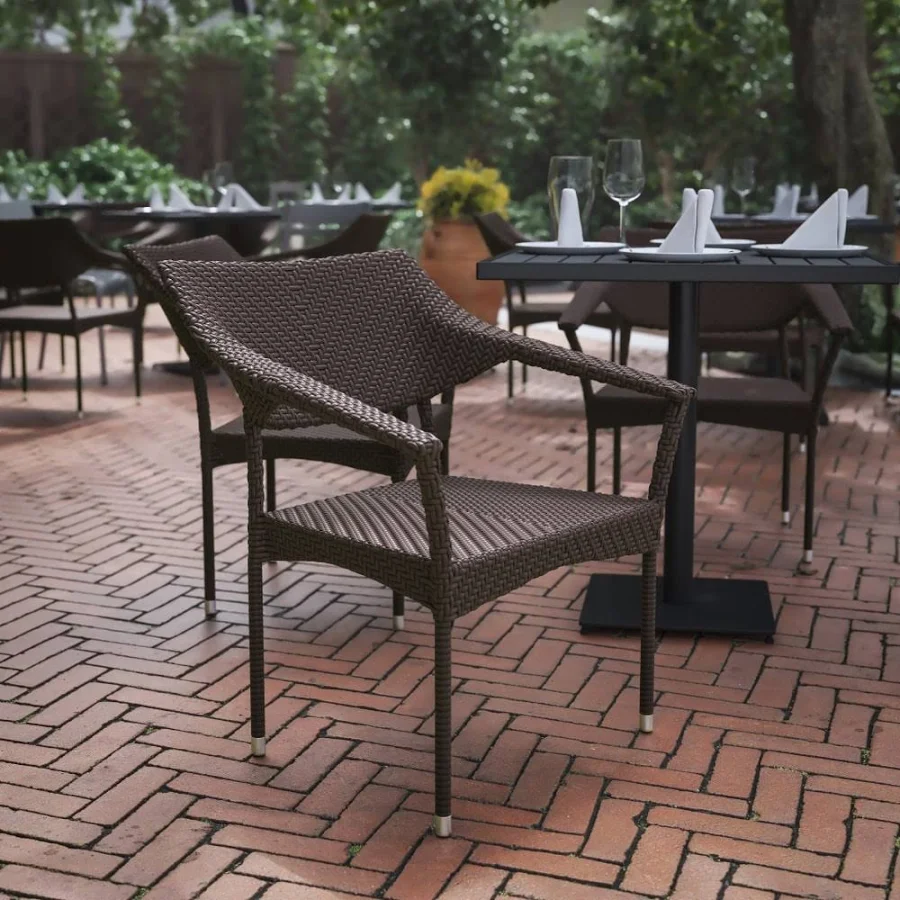
PE Rattan Outdoor Chairs
Hand-woven HDPE flat rattan over rust-proof 6063-T5 aluminum frames. UV-8 stabilized compound — no peeling, no cracking, no painting required. Quick-dry foam cushions with solution-dyed acrylic covers. Stackable 4-high for dense container loading.
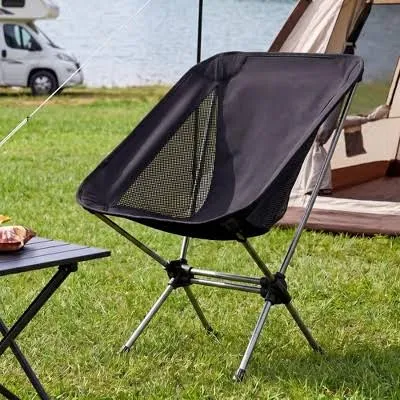
Aluminum Folding Camping Chairs
As a folding outdoor chair manufacturer, we build this 6063-T5 aluminum camping chair — powder-coated at 60–120 micron DFT, 600D oxford seat with reinforced stress-point bartacking. Folds to 85 × 12 × 10 cm for 1,200+ units per 40HQ. Includes carry bag with brand-printable panel.
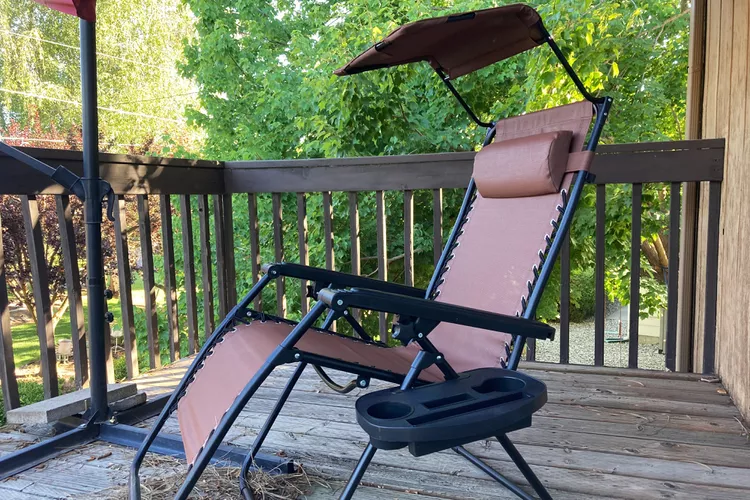
Zero Gravity Lounge Chairs
Multi-position reclining mechanism with locking levers. Textilene®-grade PVC-coated polyester sling — breathable, quick-drying, high UV rating. Removable headrest pillow. Rated to 150 kg static load. Pairs with matching side table for retail bundling.
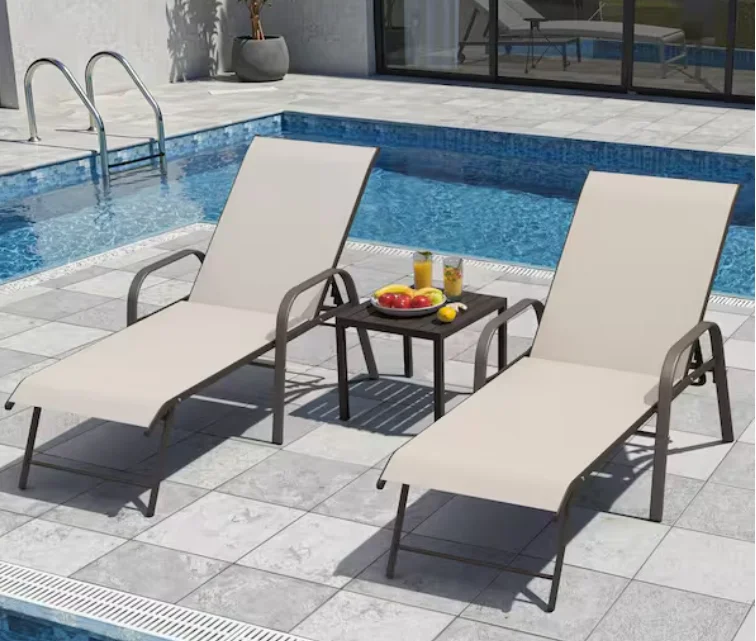
Aluminum Patio Leisure Chairs
Stackable dining and accent chairs for hospitality-volume use. TIG-welded 6063-T5 frames with argon back-purge on structural joints. 304 stainless steel hardware throughout. Quick-dry reticulated foam cushions drain in under 20 minutes. Cross-hatch adhesion tested per ISO 2409.
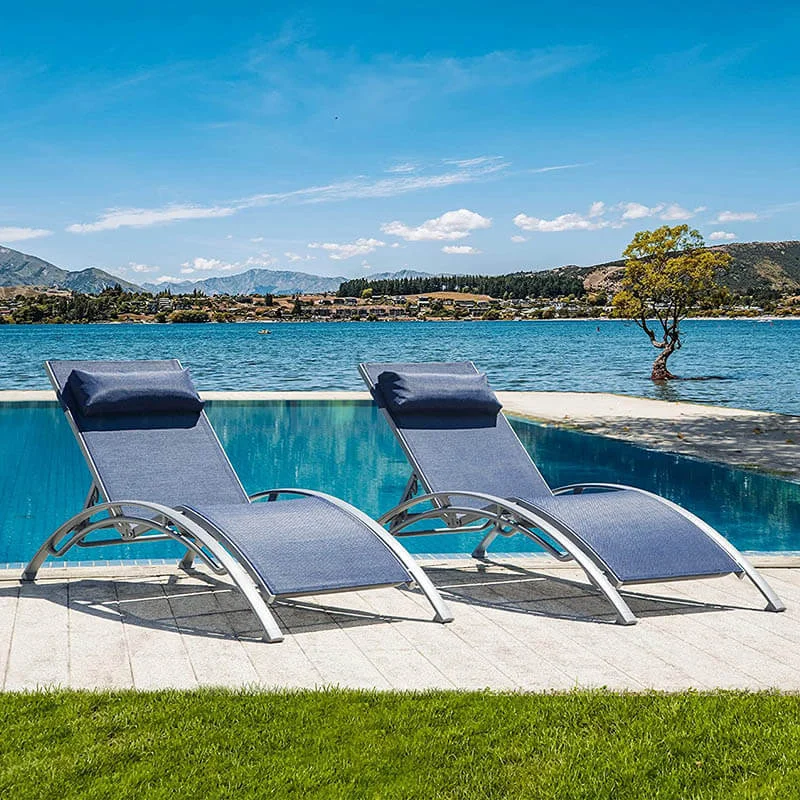
Beach & Poolside Lounge Chairs
5-position adjustable backrest with UV-stabilized Textilene® or Batyline® sling. 6063-T5 marine-grade aluminum frame. Non-slip foot caps. Stackable for resort operations. Rated to 160 kg static load. Available with wheel kit for pool-deck mobility.
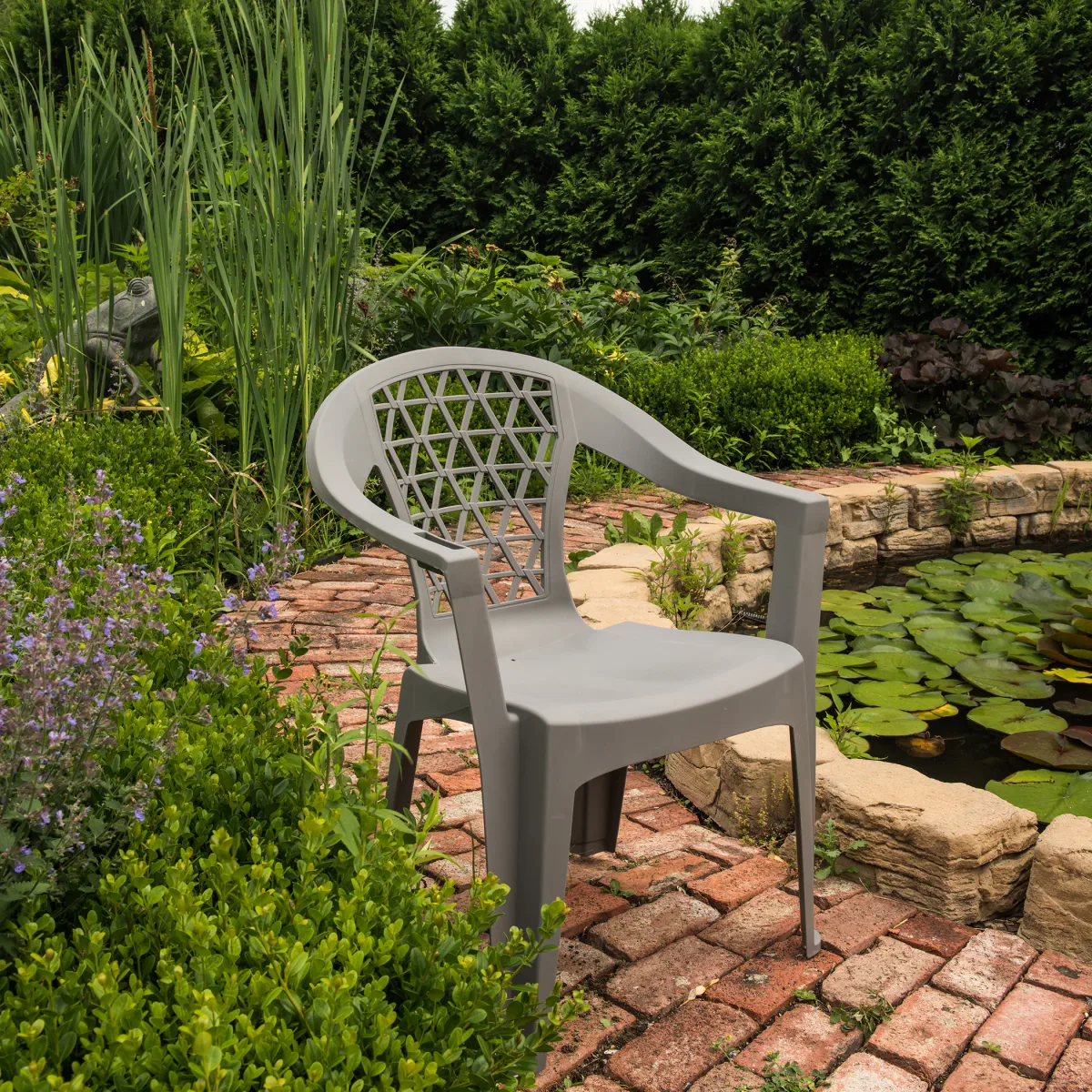
Stackable Resin / Plastic Chairs
Injection-molded polypropylene with UV-8 stabilizer package. ASTM G154 tested for UV stability — no chalk, no fade, no brittleness. Stackable 8-high. 140 kg rated. Matte and wood-grain textures available. Commercial-grade for restaurants, event venues, and cruise lines.
Six Materials.
One Decision Table.
Compare the chair materials we manufacture side by side — UV resistance, corrosion protection, stackability, MOQ, and where each performs best. Whether you need an aluminum outdoor chair manufacturer or a multi-material supplier, this table helps you shortlist before you brief our engineers.
| Material | UV Resistance | Corrosion | Stacking | MOQ | Cost | Best For |
|---|---|---|---|---|---|---|
| PE Rattan (HDPE) | 1,500+ h ASTM G154 | UV-8 stabilized, no rust | 4-high | 300 units | $ | Retail & casual dining |
| Aluminum 6063-T5 | Powder-coated, UV-stable | 500+ h salt spray | 6-high | 200 units | $$ | Hospitality & residential |
| Textilene® Sling | 1,500+ h UV rating | Breathable, quick-dry | 6-high | On request | $$ | Poolside & loungers |
| Injection-Molded PP | 1,500+ h ASTM G154 | No rust, no fade | 8-high | 500 units | $ | Events, venues, cruise lines |
| Stainless Steel 304/316 | UV-stable finish | 1,000+ h salt spray | — | On request | $$$ | Coastal / high-wind |
| Solid Teak (FSC) | Naturally ages to silver-grey | Naturally rot-resistant | — | On request | $$$$ | Luxury hospitality |
Cost is a relative indicator ($ = lowest to $$$$ = premium). MOQ varies by design and is confirmed per program in your proposal. UV hours reference our ASTM G154 weatherometer protocol. For a deeper material breakdown, see Aluminum vs Teak Outdoor Furniture.
4 Outdoor Chair Sourcing Problems.
Solved at the Production Line.

Frame Fatigue & Weld Failure Under Repeated Use
Thin-wall tube and cold-wire welds crack at the seat junction within a season — wobble becomes a recall.
Full-penetration 6063-T5 welds survive 50,000 cycles in our fatigue testing. Your brand stays recall-free, season after season.

UV Degradation of Sling Fabric Within One Season
Standard sling fabric chalks, fades, and tears within one sun season — bad reviews follow.
Solution-dyed Textilene-grade fabric holds color and strength through 1,500+ hours of UV testing. Chairs still look new in year five — no damage reviews.

Stackability Failure — Chairs That Don't Nest
Chairs that "should stack" wobble at 3-high instead of 6 — warehouse space and freight per unit balloon.
CNC-bent tubes to ±0.5° and controlled coating keep chairs nesting 6-high, batch after batch. More chairs per container and less warehouse floor — a lower landed cost.
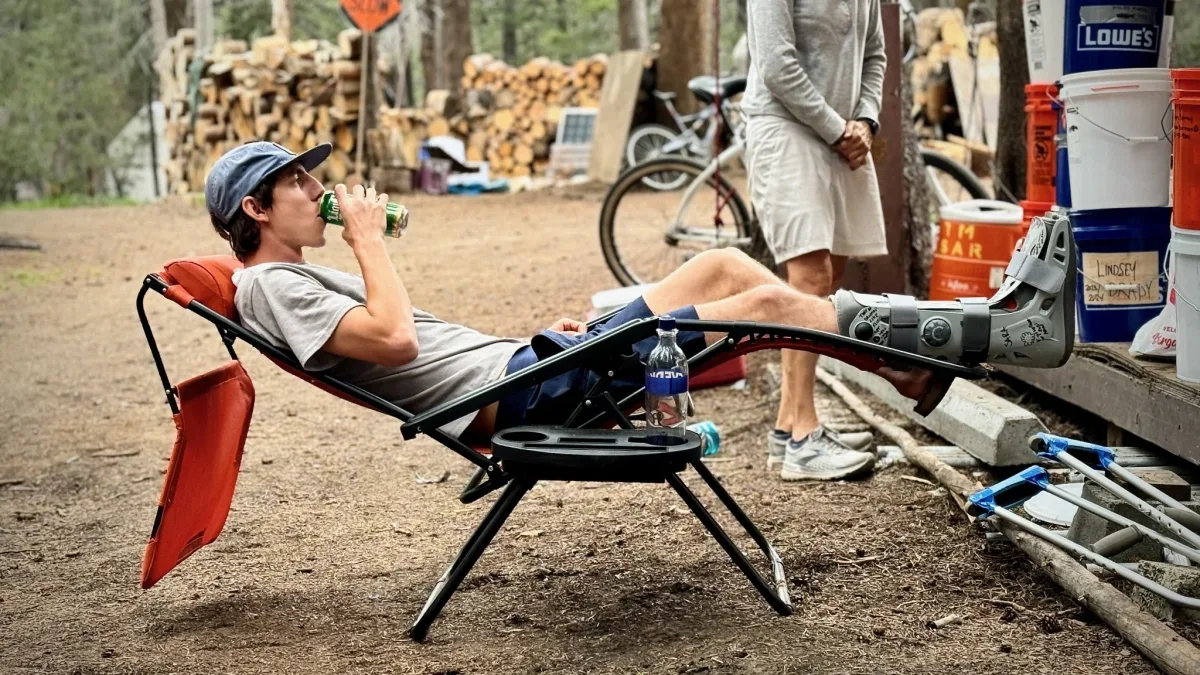
Weight Capacity Claims That Fail Real-World Testing
A "150 kg" rating tested once on a prototype becomes a legal liability in production.
Every production chair is proof-loaded to 2× its rating, and the rated capacity is embossed on the frame. Your spec sheet is fact, and your insurance carrier sees documented proof.
From Tube Stock
To Your Distribution Center.
Four controlled production stages, each with defined inputs and inspection gates — from raw tube to a container-ready chair.
Frame Engineering & Tube Bending
CNC-bent 6063-T5 tube to ±0.5° from your CAD geometry — grade matched to your weight target and market.
TIG Welding & Joint Integrity
Full-penetration TIG welds with argon back-purge and dye-penetrant inspection — traceable to operator and batch.
Surface Treatment & Assembly
Phosphate pre-treatment, TGIC-free powder coat, and 200°C cure on a continuous line — assembled and torqued to spec.
Load Testing & Container-Ready Packaging
Every chair proof-loaded before packing, then ISTA 3A-packed with barcode-verified SKUs for container-ready shipping.
Every Chair Tested.
Every Batch Documented.
Claims about weight capacity, UV resistance, and corrosion protection are meaningless without test data. Here are the four testing protocols every production lot undergoes — with specific standards, acceptance criteria, and evidence formats included in your container dossier.

Static Load Testing
Seat: 1,600 N (≈163 kg). Backrest: 800 N (≈82 kg). Armrest: 500 N (≈51 kg). Applied simultaneously for 30 minutes on production-line-pulled samples — not prototypes. Load-cell data recorded per test. 100% of units withstand 2× rated load for 5 seconds on pneumatic stand before packaging.

UV Accelerated Weathering
Xenon-arc weatherometer exposure: 1,500+ hours at 0.89 W/m² irradiance. Acceptance: ΔE color shift ≤ 4, no surface cracking, tensile retention ≥ 80%. All sling fabric, PE wicker, and powder-coated surfaces tested. Data included in the container's compliance documentation.

Salt Spray Corrosion
Continuous neutral salt spray (5% NaCl, 35°C). Aluminum frames: 500+ hours. Stainless steel (304/316): 1,000+ hours. Acceptance: no base-metal corrosion, no blistering beyond 2mm from scribe. Electrophoretic undercoat available for coastal/marine environments — extends protection to 1,500+ hours.

Packaging Drop & Vibration
Packaged chair undergoes 17 controlled drops at varying orientations, vibration testing at 0.5 Grms for 60 minutes, and edge-drop impact. Acceptance: zero structural damage, zero finish scratches, chair nests correctly post-test. All hardware counts verified. Packaging engineered for container density — 20% more chairs per 40HQ.
Standards & Compliance Summary
| Standard | What It Validates | Market / Scope |
|---|---|---|
| EN 581-2 | Outdoor seating structural load & durability testing | European market |
| ANSI / BIFMA X5.4 | Chair strength, stability and fatigue performance | North America |
| ASTM G154 | UV accelerated weathering (1,500+ h) | Sling, PE wicker, powder coat |
| ASTM B117 | Salt spray corrosion (500+ / 1,000+ h) | Aluminum & stainless frames |
| ISO 2409 | Cross-hatch coating adhesion | Powder-coated surfaces |
| ISTA 3A | Packaged drop & vibration (17-drop protocol) | Container shipments |
| REACH / RoHS | Restricted substances declarations | European & global |
| ISO 9001 | Quality management system | Factory operations |
| BSCI | Social compliance audit | Factory & supply chain |
Audited. Certified. Documented.
Our production lines operate under ISO 9001 quality management and BSCI social compliance. Every container ships with the full evidence pack — material certificates, in-process inspection reports, and pre-shipment AQL results — so the claims above are verifiable, not promises.
Engineering & quality claims on this page are reviewed by Jiang Xiang, Product Engineer, OGPSGroup.
Custom Outdoor Chairs:
Your Design. Our Factory. Your IP.
A custom outdoor chair manufacturer doesn't mean locked to a catalog — standard catalogs are a starting point, not a limitation. Most chairs that ship from our factory floor began as a CAD file, a material swatch, and a conversation about what a specific market needs next season. Whether you're adapting an existing design or engineering something entirely new, our process is built for brand-driven customization.

OEM From Your CAD — Not From a Catalog
Submit CAD, renders, reference samples, or a sketch. Our engineering team returns a Design-for-Manufacturing (DFM) review before any tooling is cut.
- DFM analysis within 5 business days — tolerance stack-up, weight-capacity FEA, and cost drivers
- Pre-production samples tested to EN 581-2
- D65-calibrated photo sign-off against your reference
The engineering catch that saves a recall happens before production — not after.

Branded Packaging & Retail-Ready Presentation
From custom cartons to shelf-ready labeling — your branding applied at the factory.
- Custom cartons, logo printing, and UPC / barcode labeling
- Retail-ready packaging aligned to big-box requirements
- Instruction sheets, polybags, and counted hardware kits
- Load plans matched to your retail channels
Products that arrive ready to sell — not ready to re-pack.

Material Engineering & Batch Traceability
The grade you spec is the grade you get — traceable to its mill certificate.
- Traceable 6063-T5 / 6061-T6 tube with mill certificates
- Batch-level records for every production lot
- Material matched to your market, climate, and warranty strategy
- Approved BOM locked before the production line runs
Your spec sheet describes the actual product — not an approximation.
Trading Company Claims
vs OGPSGroup Manufacturer Standard.
The difference between a chair that lasts five seasons and one that fails in six months is what happens on the factory floor — not what's written in a catalog.
Trusted by Outdoor Chair Buyers.
Proven Across Continents.
14,000 chairs/yr across three categories, on one PO — consistent stacking across every production lot.

DFM review caught a tube-wall issue that would have failed EN 581-2 — before any tooling was cut.

James Hartley and Elena Conti are current OGPSGroup clients. We will connect you with a reference on request — ask your account manager during your call.
Outdoor Chair Sourcing FAQ.
Straight Answers for B2B Buyers.
MOQ varies by material — see the Material Comparison table above for the exact units per category. For brands launching new collections, we offer phased production: a pilot batch of 50–100 units for market validation, then scaled production. Engagements are structured for brands with annual outdoor chair procurement volumes of $400K+. Contact our team for a product-specific MOQ breakdown based on your target design and volume.
We manufacture six chair materials — aluminum (6063-T5 / 6061-T6), PE rattan (HDPE), Textilene® sling, injection-molded polypropylene, stainless steel (304/316), and solid teak (FSC) — each with different weight, weather resistance, and price points. The Material Comparison table above shows UV resistance, corrosion protection, stacking, MOQ, and best use case for each. We guide the final selection based on your target market, warranty strategy, and retail price point.
Three-tier verification — design, pre-production, and production. At the design stage, FEA (Finite Element Analysis) on the CAD model identifies stress concentrations before prototyping. Pre-production prototypes undergo full EN 581-2 static and 50,000-cycle fatigue testing with load-cell data recording. In production, 100% of chairs are proof-loaded to 2× their rated capacity on a pneumatic test stand before packaging. One chair per 200-unit batch is pulled for full destructive re-testing. This is a production-line quality gate, not a one-time prototype exercise. Complete test protocols, load values, and acceptance criteria are documented in the Quality & Testing section above.
Three-layer protection system: (1) Material selection — traceable 6063-T5 aluminum, UV-8 stabilized HDPE rattan, solution-dyed acrylic fabrics. We spec the chemistry, not just the appearance. (2) Surface treatment — continuous-line phosphate pretreatment, TGIC-free polyester powder coating, and high-temperature cure. (3) Production-lot testing — every batch is sampled for salt-spray corrosion resistance and UV accelerated weathering with data included in the shipping documentation. For coastal or marine environments, we add an electrophoretic undercoat before the powder topcoat. Full testing standards and acceptance thresholds are in the Quality & Testing section above.
Yes. Submit your CAD files, renders, reference samples, or even a napkin sketch. Our engineering team returns a Design-for-Manufacturing (DFM) review before any tooling is cut, and pre-production samples are tested and shipped for sign-off. Private molds are protected under NNN agreements. See the OEM / ODM Capability section above for the full customization workflow — from your CAD to branded, container-ready delivery.
Yes — this is OGPSGroup's core logistics advantage. Our density-optimized FCL consolidation allows you to combine heavy items (gas grills, fire pits, cast-iron components) as ballast with flat-packed outdoor chairs in a single 40HQ container. Chairs are packaged in ISTA 3A-certified flat-pack or nested-stack configurations. One PO, one shipment, one project manager, one compliance package. Typical freight savings of 15–25% versus fragmented LCL shipping across multiple suppliers. This mixed-container capability is unique to multi-category manufacturers operating within the Foshan supply chain cluster.
One Chair Program.
Specified for Your Market.
Whether you source as a commercial outdoor chair supplier serving resorts or as a brand retailing to homeowners, material, testing, and compliance choices should follow your destination market. Here is how we spec outdoor chair programs for the three segments we serve most.
Retail & Big-Box Programs
Best Materials
- Aluminum 6063-T5 frames
- Injection-molded polypropylene
- Resin / PE rattan for value lines
Key Standards
- ANSI / BIFMA X5.4 structural
- ASTM G154 UV & ASTM B117 salt spray
- ISTA 3A for retail shelf condition
Compliance Notes
- California Prop 65 labeling
- UPC / barcode & branded packaging
- High stackability for warehouse density
Garden & Lifestyle Brands
Best Materials
- PE rattan dining & loungers
- Textilene® sling chairs
- FSC-certified teak for premium lines
Key Standards
- EN 581-2 structural compliance
- REACH / RoHS substance declarations
- Flammability testing for cushions
Compliance Notes
- CE-relevant documentation on request
- Low-VOC, TGIC-free coatings
- Color consistency across production lots
High-Durability Commercial
Best Materials
- Stainless 304/316 for coastal
- Stackable beach & pool loungers
- Quick-dry foam cushion systems
Key Standards
- 1,000+ h salt spray for marine
- EN 581-2 / BIFMA X5.4 commercial ratings
- 150 kg+ rated static load
Compliance Notes
- Rated capacity embossed on frame
- Wheel kits for pool-deck mobility
- Mixed-container consolidation
Related reading: Aluminum vs Teak Outdoor Furniture · Outdoor Furniture Material Costs · PE Rattan Weaving Process
Stop Hoping Your Chairs Hold Up.
Start Knowing They Will.
Tell us your chair category, material preferences, target weight capacity, and annual volume. We will map your outdoor chair program, match materials and testing protocols to your market, and deliver a custom B2B sourcing proposal with transparent factory-direct pricing and lead times — within 24 hours, no obligation.
Minimum annual procurement volume: $400K+. Enterprise engagements only.