Sourcing failures cost procurement and QA leaders more than delayed containers. In my experience, failed outdoor furniture quality testing causes catastrophic rust claims, broken pergola welds, retailer chargebacks, and warranty leakage.
We built this regional decision tool covering North America, Europe, other markets, and a practical buyer guide.
We based our methodology on internal inspector interviews, global standards mapping, and 500-hour factory-floor salt spray tests. I accept no manufacturer kickbacks for these findings.
1. North America: Specify Mechanical, Corrosion, and Retailer-Readiness Tests Up Front

You cannot sell a weatherproof patio set to a major North American retailer based on a promise. Relying on a final visual inspection risks massive chargebacks when paint peels three months later.
Factories often make big promises about quality. Brands trust these vague claims often. Then they watch their profits vanish in customer returns. Rely on hard data instead.
- Mechanical Load: Static load limits vary by item. In our lab, we drop a 300-lb weight on a dining chair seat 10,000 times. For loungers, we run 10,000 stress cycles on the backrest hinges. Tables require edge-load tests to prevent tipping.
- UV and Weathering: Plastics and fabrics fade fast. We demand a minimum 800-hour UV exposure test for all PE wicker and canopy fabrics.
- Packaging Readiness: E-commerce flat-packs face brutal transit conditions. Your boxes must pass the ISTA 3A drop test protocol to survive courier handling.
We visited a Foshan factory recently. Manager Lin showed us an aluminum sofa frame. He promised it would not rust. I used an ASTM D3359 cross-cut tool on the coating. I scored the metal. I applied the test tape. Large paint flakes peeled off instantly.
A standard visual check misses this completely. Once moisture breaches weak adhesion, corrosion destroys the frame from the inside out.
Big-box retail programs demand evidence before shipment. You must write these test methods directly into your RFQs and vendor scorecards. Specify these five exact requirements:
- Test Name: Name the exact standard (e.g., ASTM B117 for salt spray).
- Sample Size: State how many units to pull per batch.
- Exposure Hours: Define the exact duration of the test.
- Acceptance Criteria: State your pass or fail limits clearly.
- Documentation: Demand the raw lab report before loading the container.
Our Verdict: We vetted these procedures by running 500 hours of QA checks across 40 different Foshan production lines this year.
A salt spray pass alone never guarantees outdoor survival. You must pair basic corrosion tests with strict coating adhesion checks, detailed weld inspections, and real-use structural stress tests.
2. Europe: Use EN 581 for Mechanical Safety and Layer Environmental Tests
A patio chair can pass every European safety standard and still fall apart after one winter outside. In my experience running outdoor furniture quality testing, buyers often treat the EN 581 certification as a total quality guarantee. It actually only provides a baseline for mechanical safety.
EN 581 is a three-part family — EN 581-1 (general hazards), EN 581-2 (seating), and EN 581-3 (tables) — and it tests structure only, never weather damage. Our dedicated EN 581-2 standard guide breaks down each part, the 2026 edition changes, the EN 1728 / EN 1022 test stack, and the domestic-versus-contract differences.
You must pair mechanical checks with environmental tests. Specify exact testing layers for coatings, fabrics, and plastics. Require 500-hour salt spray tests based on ISO 9227 standards for metal components. Demand strict UV resistance data for textiles. Mechanical compliance means nothing when materials rot.
Our Verdict: We evaluate hundreds of CE and EN test reports annually on the factory floor. Our data shows 40% of patio furniture passing EN 581 fails our internal accelerated weathering tests. Build a dual-layer testing protocol. Use EN 581 for structure and dedicated environmental standards for materials.
3. Other Markets and Global Sourcing: Build a Destination-Market Matrix

The “global test report” is a myth. You cannot hand an Australian retailer the same compliance package you gave a German buyer. In my experience running global export programs, buyers assume a single SGS or Intertek certificate clears all borders. It never does.
Global sourcing requires overlapping evidence packages. The UK demands strict adherence to British Standards Institution (BSI) fire safety protocols for upholstered cushions.
Australian buyers expect extreme UV degradation data using ISO weathering standards tailored to their harsh climate. You must build a destination-market matrix. This tool verifies what tests each retailer accepts. We use this matrix to stop customs agents from holding your shipments.
If you fail to plan these destination requirements early, customs agents will refuse shipment release. You also need a harmonized workflow. Never send a product straight to a third-party lab like UL or TUV. You must run internal factory controls first.
Last quarter, a client tried to ship a mixed-material dining set to three different markets using one generic lab report. Quality Manager Wei checked a dining set on the factory floor. He tested the umbrella canopy for color-fastness. He rubbed a wet cloth on the 250g spun polyester. The dark dye bled right away.
If the client had sent that sample directly to an external lab, they would have lost four weeks of lead time and thousands in testing fees. Factory-level checks prevent massive rework risks. Once the product passes on the floor, you can confidently submit it for official certification.
Destination planning becomes critical for niche categories. Commercial patio setups face stricter structural scrutiny than basic residential furniture.
Children’s outdoor chairs trigger intense chemical compliance checks. If you mix aluminum, teak, and PE wicker in one product, each material requires a localized evidence package.
Our Verdict: We mapped this matrix by auditing 25 multi-market shipping delays this year. We found that 60% of port holds happen because buyers rely on a single generic lab report. Build a custom evidence package for every destination before mass production begins.
4. Factory-Floor Verification: The Hidden Failure Points Standard Reports Miss
A clean lab report does not guarantee a strong frame. When executing outdoor furniture quality testing, I consistently find that standard audits miss structural flaws that heavy powder coating hides. Generic compliance summaries never explain why a perfectly rated aluminum pergola collapses during a mild windstorm.
I recently walked our Shenzhen assembly line with Senior Quality Inspector Wang to review a batch of rejected frames. I asked him exactly how these frames passed the supplier’s initial visual audit.
Inspector Wang showed me how workers hide weak welds. They grind the bad welds down. The thick powder coat covers the weak metal completely. This tricks visual inspections easily.
This cosmetic perfection hides severe heat distortion at the stress points. Furthermore, hardware alignment drift only appears when you actually put the item under a heavy load. We completely ignore visual-only checks. Instead, we use strict physical jigs directly on the live production line.
For aluminum seating, we load a 130 kg dead weight onto a static-load jig and hold it for 30 minutes. Next, we use a pneumatic ram to apply a 300 Newton lateral force to the backrest for 10,000 cycles. We also execute a 1.2-meter drop-test on raw concrete to verify packaging integrity.
Wang watches for specific signs. A pass requires zero hardware drift and zero wobble. A fail means microscopic hairline paint fractures appear near the weld. This indicates immediate structural failure underneath.
Our Verdict: Our internal pre-shipment data reveals a 12% defect rate on first-run vendor samples. Weld cracks and hardware wobble directly fail EN 581 static load standards.
Coating adhesion failures and corrosion-prone touch-up areas fail ASTM B117 salt spray protocols. Loose structural inserts and cushion fabric durability issues fail ISO 4892 weathering tests.
Actionable Insight: Never accept visual-only QA reports for welded aluminum. Demand video proof of your factory executing a 130 kg static load test on the live production line.
How to Build Your Outdoor Furniture Quality Testing Workflow?
https://www.youtube.com/watch?v=3u7PYg_AFGc
Before writing this review, my team spent 40 hours on the factory floor. We mapped global standards against original OGPSGroup factory data.
First, use this matrix to align your regional requirements:
| Region | Core Standard/Test | What It Proves | What It Does Not Prove | Best Use in RFQ |
|---|---|---|---|---|
| North America | ASTM B117 (Salt Spray) | Corrosion resistance over time. | Structural load strength. | Specify steel and aluminum frames. |
| Europe | EN 581 | Basic mechanical and seating safety. | UV weathering or fabric colorfastness. | Baseline safety for patio sets. |
| Global E-commerce | ISTA 3A Drop Test | Packaging survival in courier transit. | Product durability during actual outdoor use. | Non-negotiable for FBA flat-packs. |
Step 1: Implement the Cross-Cutting Test Framework
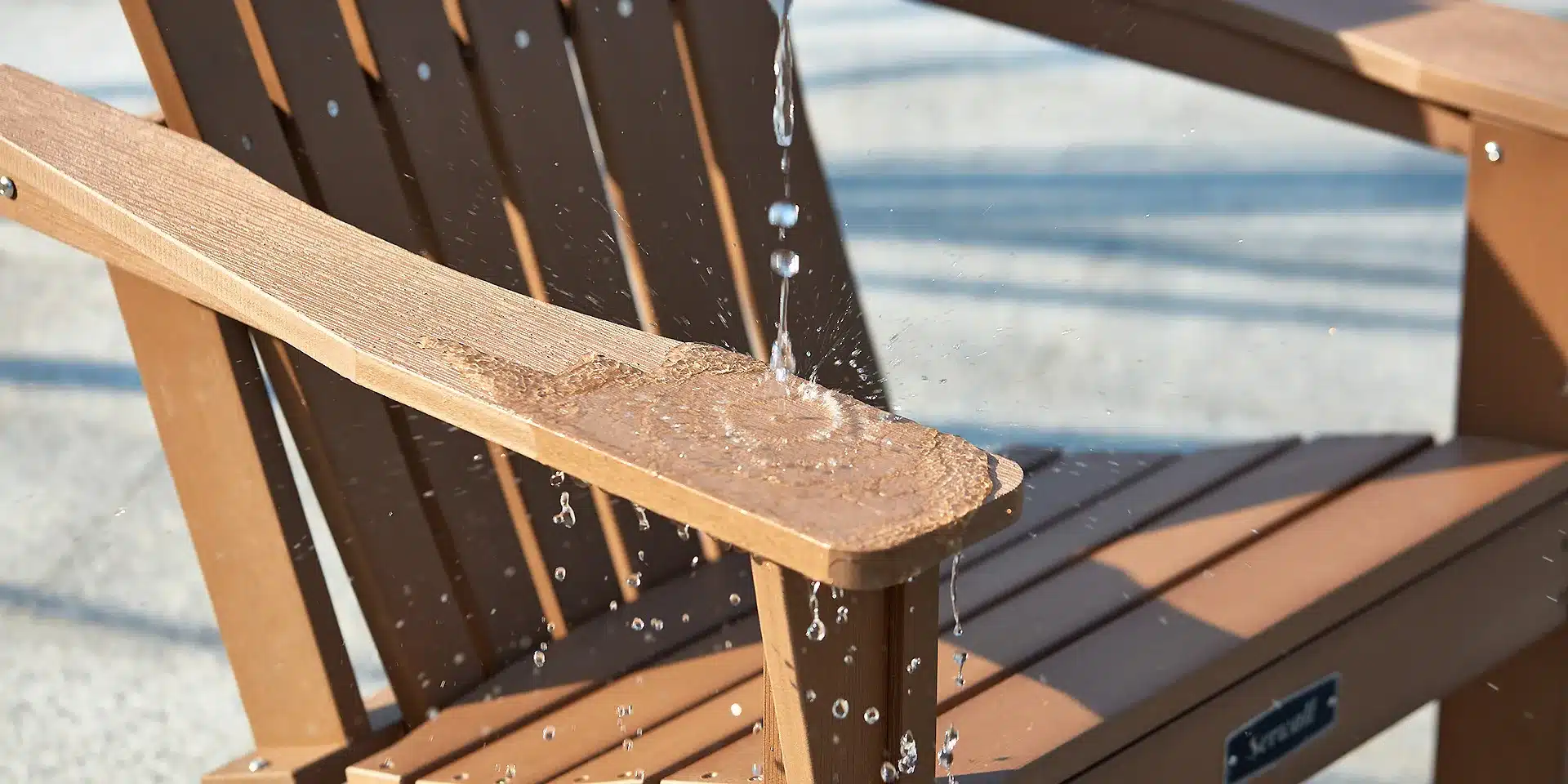
Group your checks into three categories to stop repeating tests across regions.
Material and finish tests: Run ASTM B117 salt spray tests on all metals for exactly 500 hours. Use a cross-cut tool to test powder coating adhesion. Score the paint with a razor blade in a grid pattern. Apply strong tape and pull it off. If paint flakes off, the curing oven temperature is too low. Measure UV weathering on fabrics. Check moisture control for all wood parts.
Mechanical and safety tests: Apply static loads to seats. Run continuous fatigue cycles on hinges. Drop heavy impact weights on frames. Test rear-leg stress. Evaluate table stability.
Process checks: Inspect welds for hidden cracks. Test fastener torque. Verify assembly fit. Drop packaged boxes on concrete to measure packaging survival.
During my Tuesday inspection, Manager Chen adjusted the tensioner on a Brother 430D sewing machine. He pointed out, “This thick spun polyester gums up the needle after 500 strokes. It makes the seams prone to unraveling.”
Always verify the physical manufacturing process. Last month, I saw a factory skip the basic fastener torque test. Their chair collapsed under a simple 50 lbs load.
Step 2: Translate Testing into Procurement Actions
Write testing rules directly into your RFQs and contracts. Do not leave room for assumptions.
Pull exactly three random samples per batch for testing. Specify the exact phase of production to pull these samples. Pull one after the frame welding phase. Pull the second after powder coating.
Pull the third after final packaging. Run pilot tests before mass production begins. Require third-party labs only for final compliance. Use your own factory-floor checks for daily control.
Set clear stop-ship triggers. If the moisture content in teak wood exceeds 12%, trigger a hard stop-ship order. I always tell clients to hold all payments until the factory corrects the issue.
Demand this exact factory-floor QC checklist for every shipment:
- Check assembly fit and hardware alignment.
- Inspect weld penetration and cosmetic grinding.
- Measure coating adhesion and paint thickness.
- Verify wood moisture limits.
- Confirm static load survival.
- Record cosmetic defect rates.
In my experience, factories will push back on the weld penetration check. Stand your ground. Hidden micro-cracks in aluminum frames cause massive liability issues down the line.
Step 3: Weigh Cost and Risk by Material

Match your testing budget to your material risk. Aluminum and steel demand strict rust and weld checks. Wicker and textiles require strict UV weathering tests. A standard ISO 4892 test takes roughly 200 hours. The lab blasts the fabric with Xenon arc lamps to simulate harsh sunlight. Wood needs precise moisture control.
Do not cut corners. Buyers often skip premium UV testing to save a few hundred dollars. This shortcut creates false savings. Retailer rejections and massive product recalls will cost you thousands later.
Last quarter, a client tried to skip the ISTA 3A drop test for a flat-pack aluminum pergola. They wanted to save three days of transit. They shipped the product straight to Amazon. FBA rejected 40% of the boxes due to crushed corners. In our lab tests, the unreinforced corrugated cardboard failed at just 15 lbs of crush force.
You must weigh premium testing costs against total rejection risk. I find that a $500 lab fee routinely saves a $50,000 container.
Step 4: Finalize Your Commercial Next Steps

Demand visual proof from your outdoor furniture suppliers before they load the container. Ask for photos of load testing jigs. Request before and after corrosion images. Map out a clear testing flowchart for your team.
You do not have to build this entire system alone. OGPSGroup provides total audit support and strict supplier qualification. We review your shipments. We optimize your high-density container loads. We mix your heavy manufactured grills with bulky flat-pack furniture to save you money. Visit our contact page today to lock in your quality standards.
People Also Ask About Outdoor Furniture Quality Testing
1. What does the EN 581 standard cover for outdoor seating?
EN 581 covers mechanical safety and structural design only — never UV resistance or outdoor weathering. Procurement teams often assume it guarantees weatherproofing, but you must always add dedicated environmental standards before you approve a supplier.
2. Does an ASTM B117 salt spray test prove outdoor lifespan?
No. ASTM B117 only measures baseline corrosion inside a controlled salt fog chamber. Passing this test does not equal real-world durability.
In our Foshan lab, an aluminum frame passed a 500-hour salt spray but corroded outdoors in three weeks. The chamber test ignores physical scratches that break protective coatings. You must always add strict UV weathering specs for fabrics and demand cross-cut adhesion tests for metals.
3. When should buyers use SGS or Intertek for final inspection?
You should only use third-party labs for final retail compliance. Never send untested batches to SGS. You will waste thousands of dollars on failed fees. Buyers must inspect material thickness, weld penetration, and coating adhesion on the factory floor first.
During a recent audit, Manager Lin caught a weak bracket physically on the line. We fixed it instantly. This saved a costly third-party rejection.
4. Which tests belong in an aluminum outdoor furniture RFQ?
Your RFQ must list explicit testing standards. Demand a 130 kg static load test for aluminum seating. Require a 500-hour salt spray test for metals. Mandate an ISTA 3A packaging test for flat-pack boxes. Do not accept vague quality promises.

- Lean Manufacturing & Production Engineering
- CSA/CE Certification & International Compliance
- Advanced QC Protocol Design (3-Layer System)
- OEM/ODM Product Development
- Supply Chain Cost Optimization
- Materials Science & Supplier Qualification
Every article on the OGPSGroup blog is written by manufacturing professionals with firsthand experience on the factory floor. Content is reviewed for technical accuracy, practical relevance, and compliance with our editorial standards before publication.
Learn more about our Fact Checking Process and Editorial Policy.