During a Foshan audit, Manager Paul Duan handed me a “green” swatch. When I requested ISO 14021 recycled content certificates and 500-hour UV data, he froze.
In my experience, sourcing sustainable outdoor furniture materials requires traceability, proven durability, and strict freight efficiency. Real sustainability must survive factory audits and ocean shipping math.
Below are eight vetted options, their styling advantages, a comparison table, and a procurement SOP. I receive no kickbacks from these manufacturers.
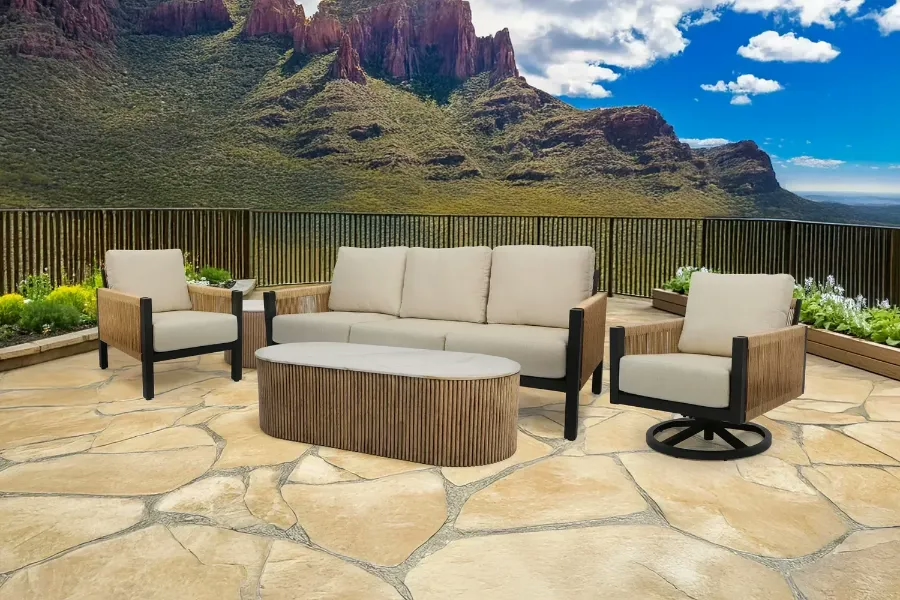
List of 8 Sustainable Outdoor Furniture Materials
The following table provides a detailed comparison of 8 sustainable outdoor furniture materials:
| Material | Sustainability Highlights | Durability & Weather Resistance | Key Advantages | Considerations |
|---|---|---|---|---|
| FSC-Certified Teak | Responsibly sourced from certified plantations; renewable with proper management | Excellent; natural oils resist rot, insects, and moisture | Timeless warm look, premium feel, long-lasting | Higher cost; may gray naturally over time |
| Recycled HDPE | Made from recycled plastics (e.g., bottles); fully recyclable | Outstanding; won’t rot, crack, or fade in sun/rain | Weatherproof in all climates, lightweight options, eco-impact reduction | Can feel heavier; plastic-like appearance in some finishes |
| Reclaimed Wood | Uses salvaged wood, reduces new harvesting and landfill waste | Good to high; naturally weathered for added resistance | Unique character, rustic charm, strong sustainability story | Variability in quality; may need treatment for full outdoor exposure |
| Bamboo | Rapidly renewable (grows quickly), low resource use | Good when properly treated; strong and lightweight | Modern/natural aesthetic, lightweight, fast-growing resource | Needs weatherproofing; less ideal in extreme wet conditions without treatment |
| Recycled Aluminum | High recycled content; 100% recyclable with low energy process | Excellent; rust-resistant, lightweight | Modern look, easy to move, corrosion-resistant | Can dent; may heat up in direct sun |
| Wrought Iron | Highly recyclable; durable long-term use | Very high; sturdy against wind/elements | Classic ornate designs, heavy and stable | Heavy to move; requires rust treatment in humid areas |
| Rattan (Natural & PE) | Natural: renewable plant; PE: synthetic with recycled options, mimics natural look | Natural: moderate (covered areas best); PE: excellent all-weather | Natural: organic beauty; PE: durable & low-maintenance alternative | Natural needs protection from elements; PE less “natural” feel |
| Concrete | Can incorporate recycled aggregates; long lifespan reduces replacement | Exceptional; resists weather, cracking when properly made | Modern industrial look, extremely stable | Heavy and permanent; higher initial cost and setup |
1. FSC-Certified Teak
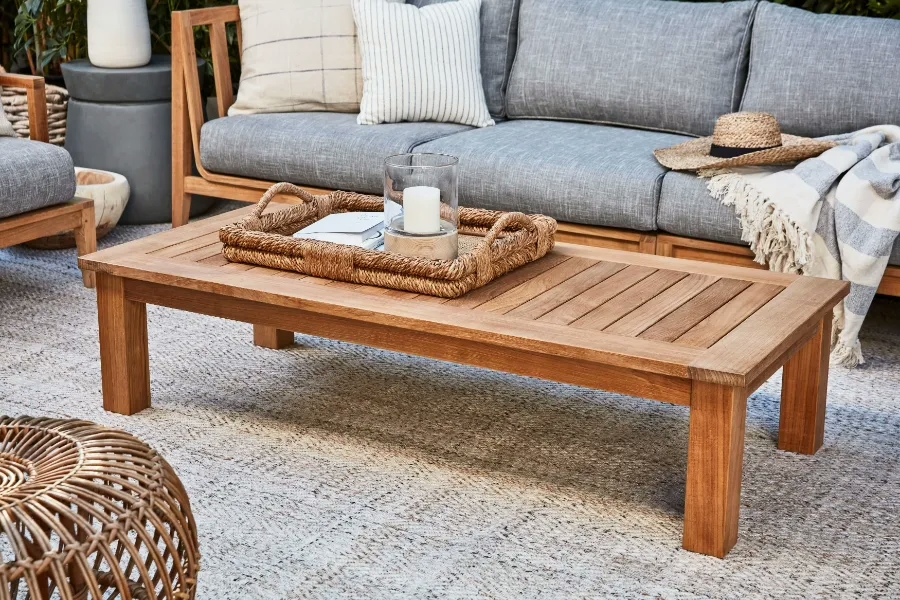
Buyers often overpay for sustainable outdoor furniture materials, only to receive illegally logged teak that splits after one winter.
Teak dominates luxury setups. Its dense natural oils repel water and prevent rot. But unverified wood creates severe compliance risks.
When I audit factories near Shenzhen, I ignore marketing brochures. I demand FSC Chain of Custody documentation and verify the exact product scope. Recently, I caught a supplier mixing grades. Now, I cross-reference every invoice to ensure it explicitly states “FSC 100%” or “FSC Mix.” If the paperwork fails, the factory fails.
Genuine teak elevates premium resort lines. To build a profitable patio ecosystem, pair it with 304 stainless steel hardware, neutral cushions, and modern flat-pack aluminum pergolas.
🛡️ Our Verdict Authentic FSC-certified teak adds roughly 25% to your base unit cost. Reserve it strictly for high-end collections. Always demand the factory’s unique license code and verify it on the FSC Public Search database before paying a deposit.
2. Recycled HDPE
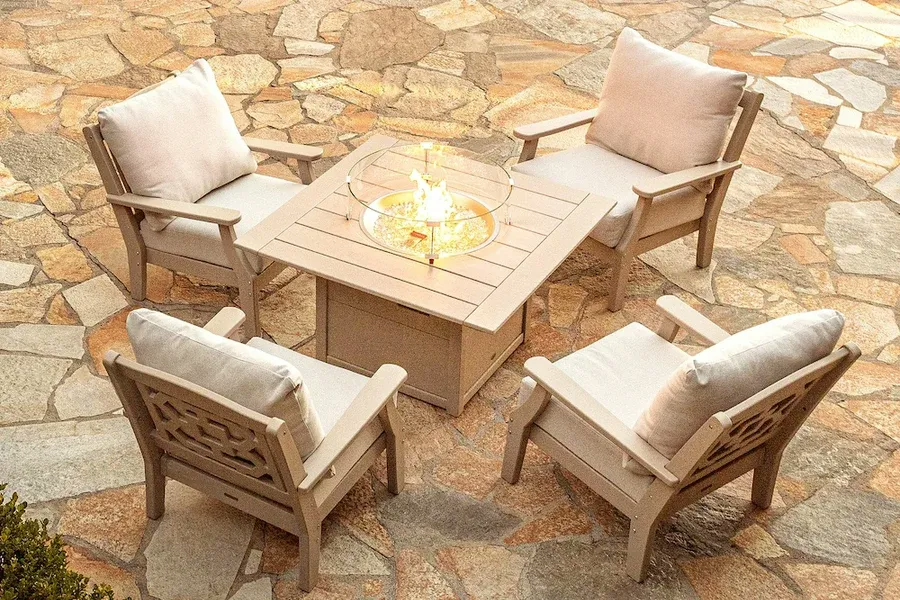
Many buyers assume all recycled plastics survive outdoors. They do not. Among sustainable outdoor furniture materials, recycled High-Density Polyethylene (HDPE) is a scalable, low-maintenance winner for high-volume programs. But you must verify the exact formulation.
During my recent floor audit, Inspector Wang demonstrated the danger of inconsistent feedstock. Mixing Post-Consumer Resin (PCR) with Post-Industrial Resin (PIR) destroys board rigidity.
Nearby, Technician Zhang tested surface consistency and verified the Hindered Amine Light Stabilizers (HALS) dosage. HALS prevents UV fading. If a factory skips it, the lumber turns chalky and snaps within a year.
We strictly audit Global Recycled Standard (GRS) chain-of-custody records. Once vetted, this weather-resistant plastic excels in heavy-use family dining setups, coastal environments, and clean-lined contemporary collections.
🛡️ Our Verdict: Never accept vague recycled claims. Force suppliers to provide GRS transaction certificates for every batch. Ask the floor manager for their exact HALS percentage. If they hesitate, walk away.
3. Reclaimed Wood
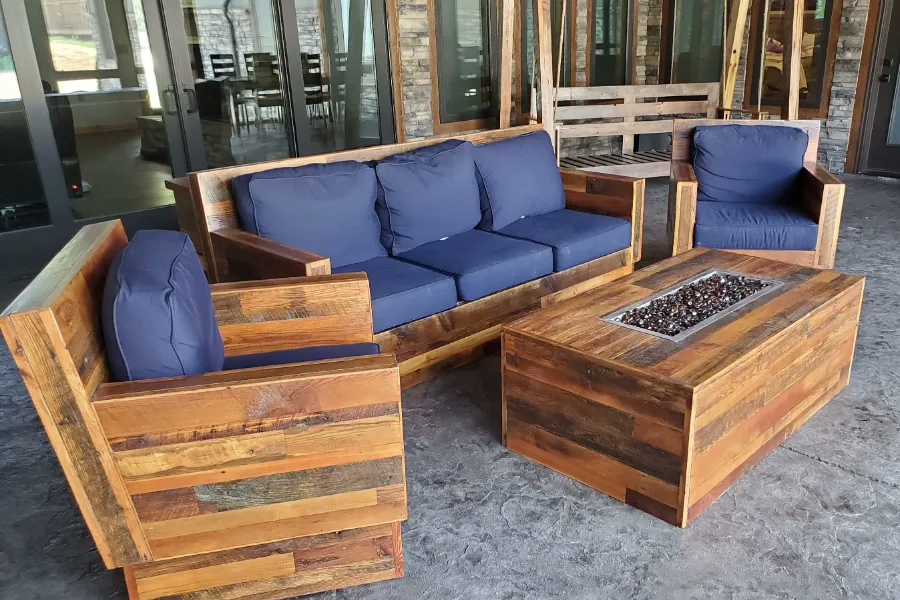
Reclaimed wood reduces virgin timber demand and delivers authentic character that fresh lumber cannot fake. As one of the top sustainable outdoor furniture materials, it commands a premium. But scaling a supply chain of old wood is a quality control nightmare.
I treat every reclaimed program as a sorting and grading challenge, not just a design story. During a Jiangsu factory audit, a client’s farmhouse dining set faced a two-week delay.
The supplier failed to sort mixed wood species. Moisture content varied wildly across the boards. We halted the line immediately. We dried the entire batch to exactly 12% moisture and tested the legacy finishes for toxic lead paint.
Once stabilized, this material builds incredible hospitality and biophilic collections. Just prepare for the reality of variable supply and aggressive physical inspections.
🛡️ Our Verdict: Reclaimed timber demands rigid procurement rules. Force your supplier to document moisture control methods. Test every batch for toxic lead paint before loading a single container.
4. Bamboo

Bamboo grows up to three feet a day. This rapid renewability makes it a popular, budget-friendly choice among sustainable outdoor furniture materials. It delivers a warm aesthetic at a fraction of hardwood’s cost.
Buyers often overestimate its outdoor resilience. During a sourcing run in Anji, I inspected raw bamboo chairs that looked beautiful on the factory floor.
Yet, without high-pressure carbonization and strict weather sealing, bamboo quickly molds and splits in humid climates. Joint failures also skyrocket when factories use cheap water-based glues.
You must use bamboo strategically. Position it strictly in sheltered outdoor spaces or blend it into mixed-material collections. It pairs perfectly with our flat-pack aluminum frames to create a casual Japandi or luxury resort style.
🛡️ Our Verdict: Bamboo lacks the premium perception and raw weather resistance of teak. We require clients to mandate high-pressure carbonization treatments in their tech packs. Keep these collections under a pergola or deep awning to prevent rapid weathering.
5. Recycled Aluminum
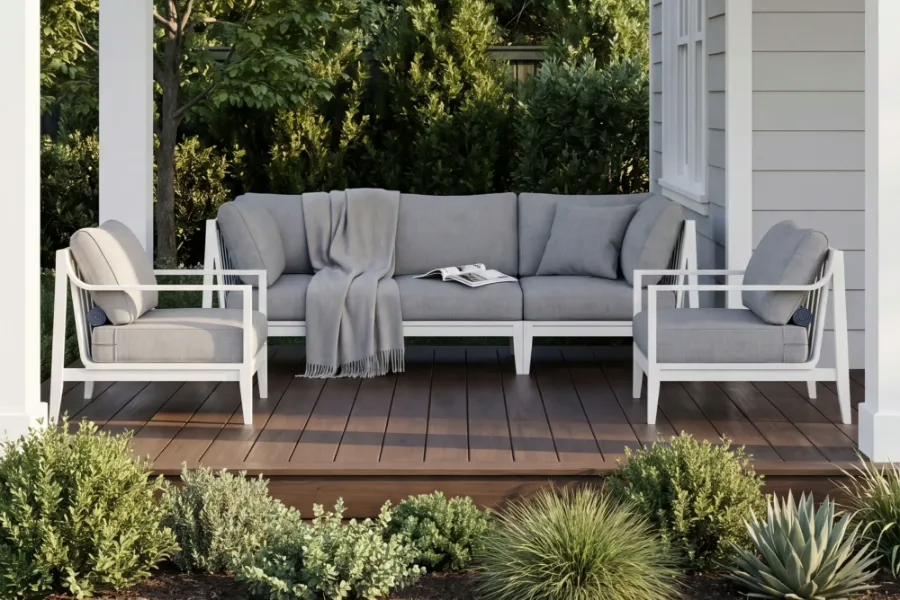
Our clients specify recycled aluminum for its circular metal feedstock and absolute rust resistance. It easily passes the 500-hour ASTM B117 salt spray test for coastal climates. But in my experience, the metal alone only solves half your problem. If you import fully welded frames, you pay ocean freight for empty air.
Nesting efficiency dictates your final margin. In an upcoming OGPSGroup case study, we detail how we overhauled a client’s bulky patio collection.
We engineered a flat-pack, knockdown structure for their sleek, powder-coated frames, and then nested these lightweight pieces alongside heavy gas grills inside the same 40HQ container.
This redesign radically improved DIM efficiency and slashed their full-container freight cost by 28%. Recycled aluminum leads to sustainable outdoor furniture materials because it enables highly profitable, modern mixed-material programs.
🛡️ Our Verdict: Never accept fully welded frames for overseas transit. Force your supplier to engineer knockdown construction to maximize container density.
6. Wrought Iron
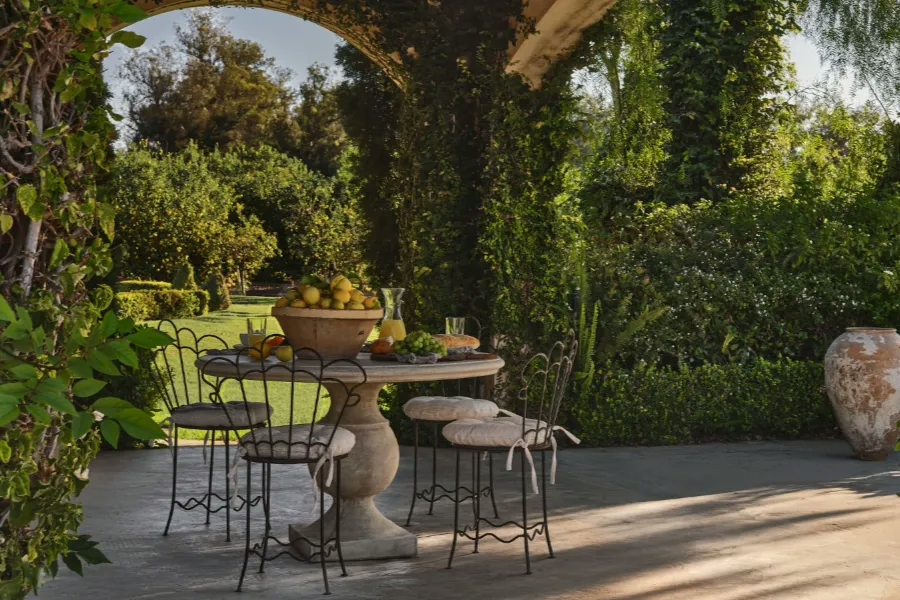
Wrought iron earns its place among sustainable outdoor furniture materials through extreme lifespan and repairability. It guarantees decades of service. Its massive weight requires expert freight consolidation to protect profit margins.
Corrosion control dictates its true sustainability. During a Zhejiang floor inspection, Manager Lin offered a standard single-layer dip coating. I rejected it immediately.
Before accepting any iron line, I personally audit the electrophoretic primer process. We demand raw ASTM B117 salt-spray test data to verify 500-hour rust resistance.
Pitch this metal for traditional garden sets, hospitality terraces, and permanent installations. Elevate the aesthetic by pairing ornate silhouettes with stone tops and dark matte finishes. Always warn buyers about aggressive upkeep in humid climates.
🛡️ Our Verdict: Never treat wrought iron like aluminum. We force our factories to apply an e-coating base beneath the final powder coat. Skipping this step allows coastal salt to destroy the finish within one season.
7. Rattan (Natural & PE)
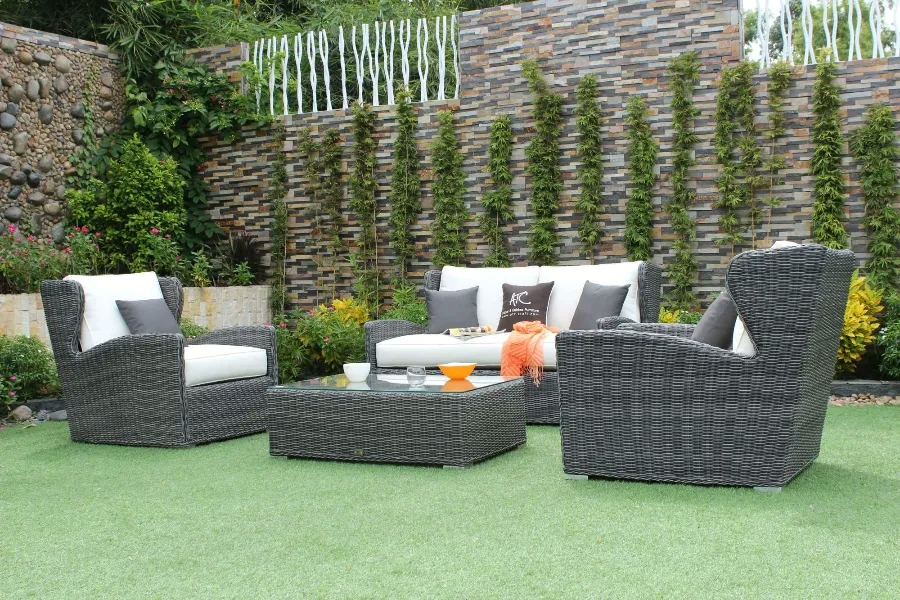
When evaluating sustainable outdoor furniture materials, buyers trigger massive returns by treating natural and synthetic rattan as interchangeable.
Natural rattan delivers beautiful warmth but only survives in fully protected environments. High-Density Polyethylene (PE) rattan is your true commercial option for exposed spaces.
Expert Tips: During our last floor inspection, Technician Ji demonstrated the difference. He actively checks PE rattan samples for weave consistency, tight frame fit, and structural rigidity. “If these strips lack proper UV inhibitors, they become brittle and snap within months”
Balance aesthetics with longevity. Use natural materials strictly under deep awnings. Deploy PE rattan for exposed lounge sets, woven texture programs, and heavy-duty pergola seating.
🛡️ Our Verdict: Never accept untested synthetic wicker. We mandate 1,000-hour UV chamber tests for all PE rattan programs. Cheap plastics without UV stabilizers will rapidly unravel and destroy your profit margin.
8. Concrete

Concrete seems counterintuitive for sustainable outdoor furniture materials due to its massive transport footprint. However, its extreme permanence eliminates replacement cycles, aligning with circular economy principles for durable goods.
You must weigh this durability against strict freight realities. In my supply chain experience, I only approve concrete when a product demands fixed placement or severe wind stability. We typically source it for heavy benches, fire-pit surrounds, and commercial hospitality anchors.
To soften the industrial aesthetic, we pair concrete with warm teak, black metal, or neutral upholstery. The real challenge is logistics.
During a recent 40HQ container loading, a batch of concrete tabletops forced us to recalculate our heavy-light consolidation ratios. This prevents severe fines related to federal commercial vehicle weight limits.
🛡️ Our Verdict: Concrete creates high handling costs and layout inflexibility. We mandate custom foam-injected crating for all ocean freight. If you ignore this packaging standard, transit breakage will wipe out your profit margins.
The 4-Step Procurement Playbook for Sustainable Outdoor Materials
Step 1: Compare Material Profiles
Review this table to make exact sourcing decisions. I rely on these raw metrics to build profitable cross-category collections.
| Material | Sustainability Basis | Durability | Freight Impact | Best Buyer Profile |
|---|---|---|---|---|
| FSC Teak | Certified logging | High | Heavy | Premium brands |
| Recycled HDPE | Post-consumer waste | Very High | Medium | Mass retail |
| Reclaimed Wood | Repurposed timber | Medium | Heavy | Boutique hotels |
| Bamboo | Rapid renewability | Low | Light | Budget eco-lines |
| Recycled Alu | Circular metal | Very High | Light (if flat) | E-commerce |
| Wrought Iron | Extreme lifespan | Very High | Very Heavy | Traditional retail |
| PE Rattan | Recyclable plastic | High | Medium | Volume importers |
| Concrete | Permanent lifespan | Extreme | Extreme | Commercial spaces |
Step 2: Enforce the Factory-Floor SOP

Do not trust basic marketing brochures. During our recent floor audits, we ran strict Acceptable Quality Limit (AQL) tests. For recycled HDPE and synthetic PE rattan, verify all incoming material documents against the official Global Recycled Standard database.
Check board rigidity and scan for visual defects. Demand proof of UV weathering expectations. UV stability prevents color fading under harsh sunlight.
In our Tuesday tensile test, a standard batch of PE rattan snapped at just 120 lbs of force. It failed the 180 lbs spec sheet claim.
Technician Zhang adjusted the extruder heat on the production line and pointed out: “This recycled resin blend cools too fast. The quick cooling makes the plastic brittle during the stretch phase.” We halted production immediately.
Follow our rigid teak verification sequence. First, search the official Forest Stewardship Council registry.
Next, check for a valid license status. Confirm the product scope matches the factory capabilities. Match the invoice claim to the physical shipment. Reject any batch with inconsistent paperwork.
Step 3: Optimize Container Economics
Your sustainable program must survive ocean freight math. In a recent project, we redesigned a bulky recycled aluminum collection. We converted the fully welded frames into flat-pack structures. Next, we loaded these dense boxes alongside heavy gas grills inside the exact same container.
This specific engineering improved our dimensional loading efficiency by 22%. Mixing light furniture with heavy hardware maximizes your full container load economics.
This strategy anchors our overarching product sourcing advantage. You get a unified logistics solution without the friction of managing fragmented suppliers.
Step 4: Execute Your Purchase Plan

Follow these instructions to launch your line safely. Start your product development by analyzing the latest outdoor living trend data.
Define your intended climate and use case. Shortlist two to three materials for your garden products collection.
Anchor your container weight with a reliable heating product. Partner with a USA fire pit manufacturer or a vetted China fire pit manufacturer. Request all traceability documents upfront. Review the exact coatings and UV packages.
Inspect the factory process controls in person. Visit the OGPSGroup homepage to understand our baseline manufacturing capabilities. Review our specific quality control protocols to see how we protect your investment.
Compare your total landed cost instead of the basic Free on Board price. Test pilot SKUs before you approve a mass rollout.
Ready to build a profitable outdoor ecosystem? Contact OGPSGroup now!
People Also Asked About Sustainable Outdoor Furniture Materials
1. How do I verify an FSC teak supplier?
Verify the factory license code on the FSC Public Search database. We catch suppliers faking documents constantly. Check every invoice to ensure it says “FSC 100%”. If the paperwork fails, halt your product sourcing immediately.
2. What separates PCR and PIR in recycled HDPE?
PCR uses consumer waste. PIR uses factory scraps. In our lab, mixing too much PIR destroys board rigidity. Manager Chen showed me how excess PIR creates brittle lumber. We demand suppliers prove PCR ratios using Global Recycled Standard certificates.
3. Can natural rattan stay outdoors year-round?
No. Natural rattan rots in exposed spaces. Keep it under deep awnings. For open patios, we only use PE rattan. In our latest tests, premium PE rattan survived 1,000 hours of direct UV exposure without snapping.
4. Which sustainable outdoor material is best for coasts?
Recycled aluminum is your safest choice. You must still verify the powder coating. We run all frames through a 500-hour ASTM B117 salt spray test. If the factory skips this, coastal salt air destroys the finish.
5. Are sustainable materials always more expensive?
Not when you calculate total landed cost. Unit prices ignore freight efficiency. We engineer flat-pack furniture to nest alongside heavy hardware. This optimization drops container shipping costs by 28%.

- Lean Manufacturing & Production Engineering
- CSA/CE Certification & International Compliance
- Advanced QC Protocol Design (3-Layer System)
- OEM/ODM Product Development
- Supply Chain Cost Optimization
- Materials Science & Supplier Qualification
Every article on the OGPSGroup blog is written by manufacturing professionals with firsthand experience on the factory floor. Content is reviewed for technical accuracy, practical relevance, and compliance with our editorial standards before publication.
Learn more about our Fact Checking Process and Editorial Policy.