
The Garden Center Program Open on Time. Sell Through.
OGPSGroup plans, produces and ships your whole spring outdoor-living range as one programme — furniture, shade, grills, fire pits and storage, from the Good–Better–Best range plan to one mixed container at your DC.
One range document. One display and POS standard. One retail-ready packaging file. One compliance file. One opening date.
For UK independents, UK & EU chains, US IGCs & nurseries, and buying groups.
The Season Is Won
Before the Floor Set.
A garden centre does not buy a floor set in March; it buys the right to open one. The range, the price ladder and the container are locked months earlier. Miss that window and the season still opens — just with what could be shipped, not what was planned.
Trade-show shortlist, the Good–Better–Best ladder and open-to-buy.
Samples, POS and packaging approved; SKUs and volumes committed.
Capacity reserved; line inspection and gas-grill burn test.
One mixed FCL in transit on one set of documents.
Floor set to the planogram; top-up against sell-through.
Sell-through, returns and the next range.
One 12-month cycle, not two seasons: the range is selected in the previous autumn, while the floor set, sell-through and review fall in the opening year. Exact dates are locked per programme against the customer’s floor-set date.
Where the range is selected.
Show dates as published for 2027. IGC Show dates are confirmed by the organiser; we will update the programme calendar when they are announced.
The season, in four drops.
Shade structures, storage and cushions arrive first, so the floor has its frame before the hero sets land.
Furniture, loungers and grills arrive together, built to the planogram, so the floor opens as one collection.
Replenishment is keyed to the SKUs the first eight weeks proved, not to a forecast written last September.
Carry-over stock and next-range samples ship together, protecting the margin that is left in the season.
One Range. Three Tiers.
Every Category.
A garden centre needs breadth at low volume. The range is planned as a Good–Better–Best ladder, so every category has an opening price point, a step-up and a hero — and the store knows what each tier is for.
| Category | Good | Better | Best | What it sells on |
|---|---|---|---|---|
| Furniture sets | Aluminium frame, sling or basic cushions | Powder-coated aluminium, quick-dry cushions | Teak or acacia, performance fabric | The main floor set and the highest basket value. |
| Loungers & daybeds | Stackable aluminium frame | Multi-position aluminium, wheels and side table | Teak lounger with performance cushion | The poolside hero and the easiest add-on to a set. |
| Umbrellas | Steel pole, polyester canopy, basic base | Aluminium crank-and-tilt, weighted base | Cantilever with wind-rated frame and base | High-margin shade sold alongside every dining set. |
| BBQ grills | Barrel charcoal grill | 3–4 burner gas grill | Built-in or premium gas grill | Seasonal impulse buy and a strong Father’s Day line. |
| Kamado grills | 13-inch ceramic kamado | 18-inch ceramic with cart | 22-inch ceramic with cart and accessories | Premium display piece that lifts the category. |
| Fire pits | Steel bowl fire pit | Corten-style steel bowl | Steel fire table | Extends the season into autumn and shoulder months. |
| Storage | Resin deck box | Aluminium deck box | Teak storage bench | Attach-rate product sold with cushions and covers. |
| Pergolas | Steel gazebo | Flat-pack aluminium pergola | Louvered or hardtop aluminium pergola | High-ticket anchor that needs display space and a good sample. |
Good, Better and Best are positions on the ladder, not published prices. FOB and MOQ are quoted per SKU at spec lock.
Six Things That
Break a Floor Set.
These are not manufacturing problems. They are retail problems that a supplier has to solve before the goods leave the factory.
The window is narrow.
A spring range has weeks to sell. If the container lands late, the opening price becomes a markdown, and the season is decided by the freight calendar rather than the buying plan.
The sample has to sell for the stock.
A floor set is sold from one displayed set. If the display sample is not the production finish, the customer buys a promise the carton cannot keep.
Packaging must survive the car boot.
Store handling, customer self-pickup and last-mile delivery put more stress on a carton than a pallet does. Weak packaging turns a sale into a return.
Many SKUs, small batches, one container.
A garden centre needs breadth, not depth. Ten categories at low volume still have to fill one container without leaving half the range behind.
Returns start at the instructions.
Missing parts and unclear assembly drive customer-service cost. Hardware bagged by step and multilingual instructions prevent most of it before the phone rings.
Compliance blocks the chain listing.
A listing can stall on a missing technical file, a barcode or a fire-safety test. The documents have to ship with the goods, not be chased after them.
The Programme,
Bay by Bay.
Six services run in sequence, each with a document at the end of it. The programme is the product — the range is what comes out of it.
Range & Good–Better–Best planning
We build the range as a retail ladder, not a catalogue: Good, Better and Best at each category, with the price gaps and the display role of each tier written down. The output is a range document your buyer can sign and your visual-merchandising team can set — categories, facings, price points and the hero SKU in each bay.
- Good–Better–Best defined for every category in the range.
- SKU count sized to the floor, not to a factory’s capacity.
- Gaps and overlaps called out before the buy is committed.
- One range document for buyers and visual merchandising.

One spec & display standard
A floor set reads as one collection only when the finish, the hardware and the display language are shared. We lock aluminium thickness, powder colour, gloss, fasteners, weave, fabric and carton marks before production — then carry the same specification into hang tags, barcodes and POS so the store and the carton tell the same story.
- One powder colour batch and gloss target across categories.
- One hardware and fastener schedule.
- One tagging, barcode and POS standard for the range.
- A golden sample and a signed spec sheet held on file.

Samples & display approval
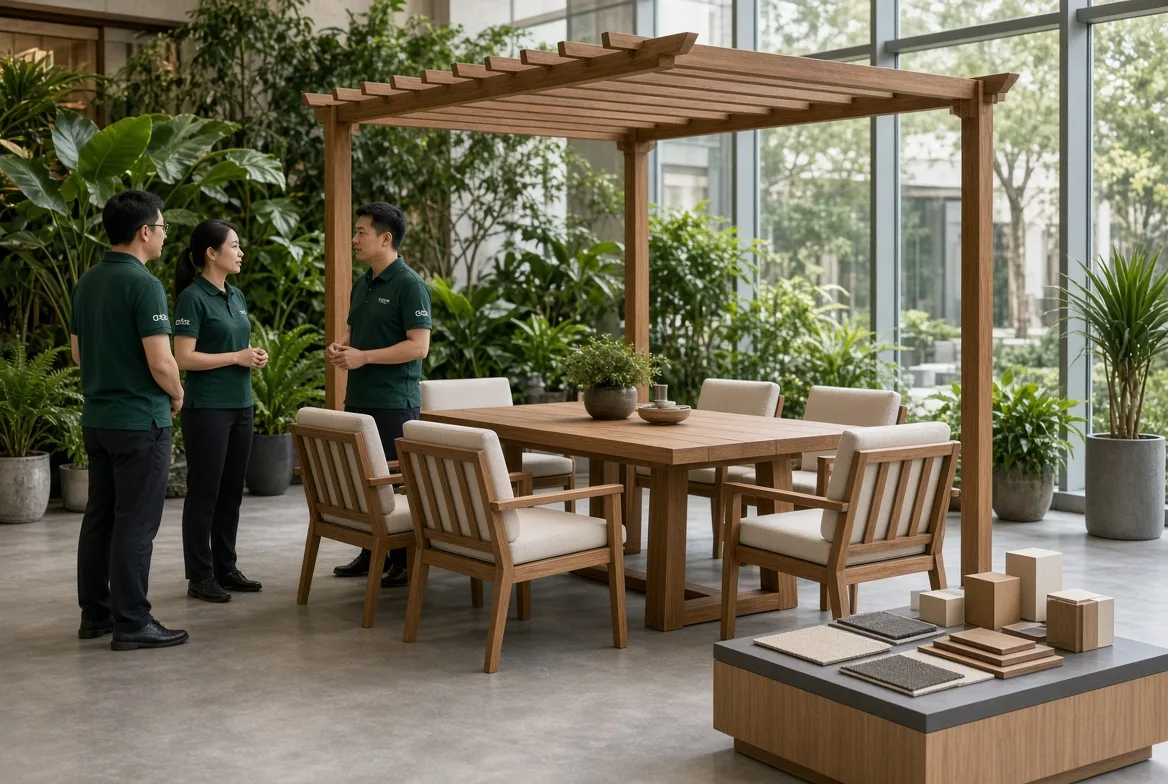
Buyers approve a floor set from a displayed sample, not a catalogue page. We build the hero set, the opening price point, the flat-pack pergola and the grill as production-representative samples, then send them with finish swatches, carton mock-ups, hang tags and the POS pack. Sample response runs to 48 hours so a range review does not stall the production calendar.
- Samples for every category, finished to the production spec.
- Swatches, carton mock-ups, hang tags and POS in one pack.
- Review against the planogram at your own floor dimensions.
- Changes captured in one revision sheet before production.
Production & line QC
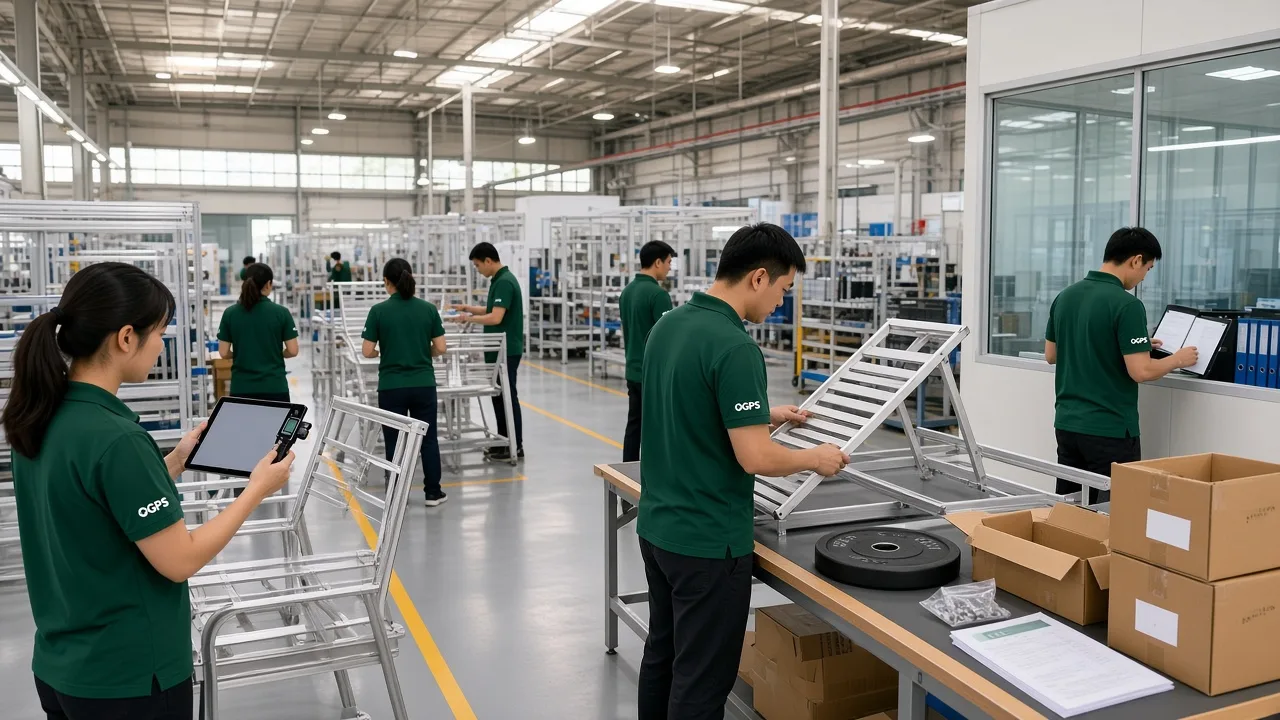
Production moves into the vetted factory network, each factory selected for the category it actually makes. Capacity is reserved against the floor-set calendar, and line QC runs at the inspection level set at spec lock, from incoming frame and finish through to pre-shipment packing. The point is to catch a finish drift or a failed burner before it reaches a pallet.
- Category-by-category factory allocation from a vetted network.
- Capacity held to the floor-set calendar.
- Line QC at the agreed inspection level and stages.
- One QC file per SKU, not one report per factory.

Retail packaging & instructions
A garden centre receives cartons, then hands them to a customer. Packaging is engineered for both: colour box or kraft carton, flat-pack, hardware bagged by assembly step, multilingual instructions, and carton marks that match the store’s aisle and bay. Every pack is drop-tested to ISTA 3A, and the packaging data is prepared for EU packaging reporting.
- Colour box or kraft carton, chosen for the selling price tier.
- Hardware bagged by assembly step, packed in the carton it belongs to.
- Multilingual instructions and QR-linked assembly content.
- Carton marks, barcodes and labelling to your standard.

Mixed-SKU seasonal delivery
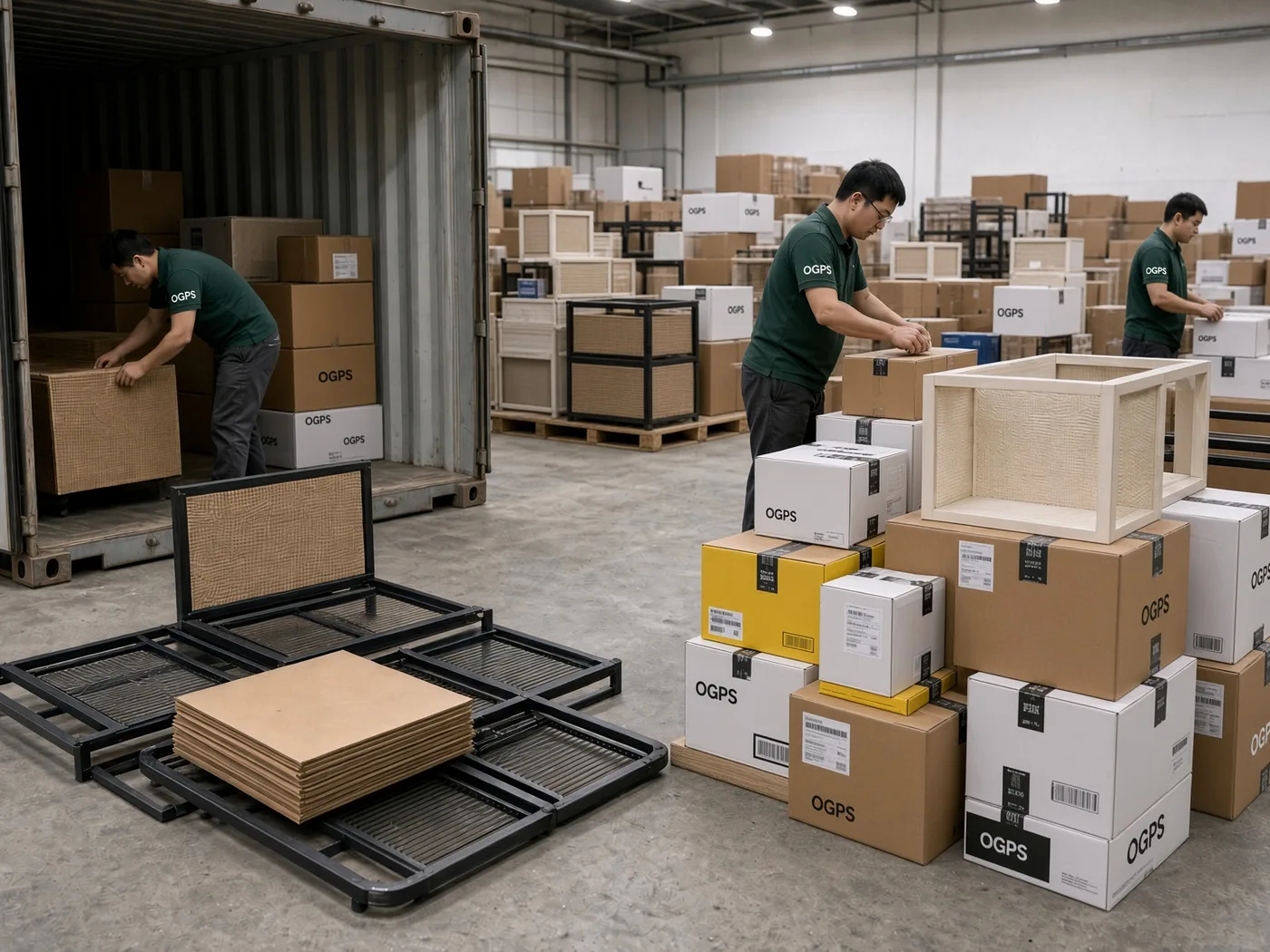
A garden centre needs breadth at low volume. We build one mixed container across furniture, shade, grills, fire pits and storage — heavy goods at the floor, light cartons above, packed in floor-set sequence so the first bays unload first. On-time FCL delivery runs at 98%, and the same load arrives on one calendar with one set of documents.
- One mixed-SKU FCL across the whole outdoor-living range.
- Heavy goods at the floor; light cartons and display units above.
- Packed in floor-set sequence, not factory sequence.
- One calendar and one document set for the season.
Pack It for the Store,
the Car and the Last Mile.
A carton has three journeys: to the DC, across the shop floor, and home in the customer’s car.
Packaging is engineered for all three: carton strength for store handling and self-pickup, flat-pack and nesting to cut cube, hardware bagged by assembly step, and multilingual instructions the customer can actually follow. The pallet plan is drawn before production — which SKUs share a pallet, how high a stack can go, and which bay each pallet feeds once it reaches the floor.
- Carton strength tested for store handling, self-pickup and last-mile delivery.
- Flat-pack and nesting designed to reduce cube, not just to fit a pallet.
- Hardware bagged by assembly step and packed in the carton it belongs to.
- Multilingual instruction sets and QR-linked assembly content.
- Heavy goods at the container floor; light cartons and display units above.
- Carton marks keyed to aisle, bay and set sequence.
Make the Sample
Sell the Stock.
A displayed set is the most expensive salesperson in the store. The programme supplies the sample, the tags and the content — and a display configuration that earns its floor space.
One hero set per category, finished and tagged to the production spec — the sample the customer actually touches.
Hang tags, shelf talkers, barcodes and the product story for the bay, supplied with the first drop.
Lifestyle and cut-out imagery, dimensions, assembly and care content for the store and the web listing.
Stackable and nesting configurations that keep the floor selling, not just showing one set.
Trust the File,
Not the Promise.
ISO 9001 and social-compliance records checked before a factory is allocated a category.
AQL 2.5, tightened to 1.0 where the retailer specifies, with one QC file per SKU.
A 100% burn test on every gas grill before packing, recorded in the QC file.
A parts pack, an RMA process and warranty terms agreed at order — so a missing bolt does not become a returned set.
The market file.
| Market | What the buyer asks for | What we compile |
|---|---|---|
| EU | CE where applicable, a GPSR technical file, packaging data under PPWR, and EUDR due diligence for regulated timber. | Declarations, test reports, material and packaging data, and an EUDR document pack where the species is in scope. |
| UK | UKCA where applicable, a UK product-safety file, and fire-safety evidence for upholstered items in scope. | UKCA files, safety documentation and fabric/foam test evidence where the item is in scope. |
| US | California Prop 65 and the retailer’s own product-safety and labelling requirements. | Prop 65 assessment and warning artwork, test reports, carton and label files. |
| Retailer onboarding | Barcodes, carton marks, spec sheets, imagery and the content pack the buying team needs to list the SKU. | Barcode placement to your GTIN standard, carton-mark file, spec sheet and an image/content pack. |
The exact document set is agreed per SKU and per market at spec lock.
The Edge of the Programme.
We would rather draw the edge of the programme on this page than have you discover it at the floor set. Plants and installation labour sit outside what we control. Lighting, paving, fencing, trellis and garden tools are different: we can supply them through vetted partners and include them in the same programme.
FOB, MOQ and
Lead Time.
We quote against the SKU and the calendar, not a single headline number that will not fit your order.
Quoted per SKU and fixed at spec lock.
Quoted per SKU; mixed-SKU containers are supported.
$400K+ in annual procurement.
Both; stock lines are quoted separately from custom development.
Quoted with the range and agreed before production.
Worked back from your floor-set date, not published as a single number.
Built for the Buyers
Who Set the Floor.
One site, one season, and a range that has to compete with the chains on look without their buying power.
Courtyard & Backyard Program →One spec across stores, store-level pallet plans, and packaging that works for the DC, the shop floor and the customer’s car.
A seasonal outdoor-living range with the compliance file, carton marks and retail-ready presentation the US market expects.
Outdoor furniture range →One programme that member centres or trade customers can order from, with mixed-SKU containers at programme level.
One Chain. One Floor Set.
One Calendar.
A European garden retail chain, multiple stores, one spring floor set.
One Good–Better–Best ladder across furniture, shade and storage, with the same finish carried between categories.
Range locked in early autumn, display samples signed off before production, and one mixed container booked to the store set date.
Sell-through by SKU, return rate and reason, transit damage and on-time floor-set — reported so the next season is a decision, not a guess.

Client name withheld under NDA.
We used to build our spring floor from four factories. Now it comes off one spec and one container — and it finally looks like one collection.
Buying team · European garden retail chain
Six Suppliers
or One Programme.
| What the floor set needs | Six suppliers | With OGPSGroup — one programme |
|---|---|---|
| Range | Six catalogues and six price ladders. | One Good–Better–Best range document for the whole floor. |
| Display | Each supplier’s own tags, POS and sample standard. | One display, tagging and POS standard across the range. |
| Packaging | Cartons built for a pallet, not for a customer. | Cartons built for store handling, self-pickup and last mile. |
| Compliance | Documents chased after the order. | One compliance file per SKU, compiled before shipping. |
| Delivery | Six arrival dates to manage. | One mixed FCL on one set calendar. |
| Replenishment | A new negotiation for every top-up. | Top-up SKUs held against sell-through, on the same spec. |
Questions From
Garden Centre Buyers.
The practical deadline is sample sign-off, not the PO date. Once the golden sample and packaging are approved, we lock SKUs, volumes and the sailing window; after that, the range can still change, but capacity and freight slots may not. For a spring set, sign-off usually falls in October–November.
Yes — the MOQ is per SKU, not per container, so a new category can be tested without filling a whole box with it. The load plan is built by bay and by weight: heavy goods at the floor, light cartons and display units above, and the first bays at the door.
Yes — the display sample ships with the first drop, built to the production spec, and the POS pack follows in the same container. Tags, shelf talkers and barcode artwork can carry your identity; imagery and spec assets are supplied for the store and the web listing.
Each shipment carries the file for its destination market, not a generic folder: EU GPSR and PPWR with CE where applicable, UKCA and UK safety evidence, or Prop 65 artwork for the US. The importer of record signs the final declaration; our file is built so that signature is a review, not a research project.
Conformity is confirmed per model and per market before the order is accepted, and the test file is compiled against the standard that applies to that model. We do not treat one certificate as proof for every grill in a range.
Where an item falls within the UK fire-safety rules, we compile the fabric and foam evidence and agree the test route at spec lock. Items outside scope are documented as such rather than assumed compliant.
Parts packs cover the failure points that stop an assembly — feet, fixings, hinges and connectors — and are quoted per SKU. The RMA route and warranty terms are agreed at order, so a claim is a process, not a negotiation.
Yes. The range can run as a private-label programme: your brand, barcode and product story on the carton and POS, with the tooling and spec file held in your programme. Exclusivity and tier structure are agreed at the start.
Where the species is in scope, we compile the due-diligence documentation and collect legality and traceability data through the supply chain. The exact evidence set is agreed at spec lock, because it depends on the species and the source.
Yes — each store can receive its own pallet allocation without splitting the range, and top-ups are triggered by sell-through rather than a fixed reorder date. The same carton and image pack serves the shop floor and the web listing, so online does not need a second SKU.
Plan Your Next-Season Range.
Then Repeat It.
Send us your store count, market, categories and target floor-set month. We’ll come back with one programme: the range ladder, the spec file, the display pack, the compliance file and one consolidated container.
Enterprise engagements only · One programme lead from range lock to floor set