I spent three weeks comparing patio furniture materials on factory floors. I watched load tests, reviewed AQL inspection reports, and tracked warranty claims and shipping-density data. This list ranks eight material families by procurement risk, durability, maintenance burden, and total landed cost.
Do not buy outdoor frames based on catalog photos. Hidden joints, curing times, and resin blends drive real procurement costs. Below is our factory-floor risk breakdown across eight material families.
Patio Furniture Materials: 8 Options Compared
Get the total-cost ranking of 8 patio furniture materials: aluminum vs steel, teak, and HDPE. The table below compares all eight side by side.
| Material | Best For | Corrosion Resistance | Maintenance Burden | Freight Density / KD | Total-Cost Verdict |
|---|---|---|---|---|---|
| Powder-coated extruded aluminum | Hotels, restaurants, rooftop bars, pool decks | Excellent — does not rust; needs full pretreatment and 50-75 micron DFT | Very low | High — dense stacking, strong KD design | Lowest lifecycle cost and lowest claim pressure; the benchmark every other material must beat |
| Cast aluminum | Heavy decorative dining sets, luxury resorts, high-end restaurants | Good after powder coat; porosity hides under thick paint | Low | Poor — heavy and bulky, cubes out fast | Ornament value, not a logistics win |
| Steel / wrought iron | Windy sites, coastal boardwalks, heavier public use | Poor without e-coat — pitting and flaking within 18 months | High without e-coat | Moderate — high weight, moderate KD | 15-25% cheaper landed than aluminum, but high rust-claim pressure |
| Teak | Luxury hospitality, resorts, high-margin dining | Excellent — naturally resistant to heartwood decay | Moderate to high — golden teak oils every 6 months | Poor — low density, bulky, not KD | 3-5 times the cost of aluminum; a 25-year premium asset, but high claim pressure on color variation |
| Other hardwoods (ipe, acacia, eucalyptus) | A natural wood look on a tight budget | Moderate — sapwood rots within 18 months | High — acacia oils every 90 days and ipe grays fast | Poor — low density, bulky | Cheapest wood look, highest variation risk across repeat POs |
| HDPE / poly lumber | Pool decks, resorts, zero-maintenance installs | Excellent — 2% HALS plus 4-6% pigment UV package | Very low | Poor — low density, not KD | Beats teak on upkeep and steel on corrosion, but costs more to ship than aluminum; moderate UV and sag claim pressure |
| Resin wicker (virgin HDPE over 6061-T6 aluminum) | Lounge seating, when the hidden frame passes spec | Good — only with virgin HDPE over an aluminum frame | Low | Good flat-packing, but the weave traps abrasion | Low upfront cost; the claim rate tracks the hidden frame, not the showroom weave |
| Sling / Textilene (PVC-coated polyester) | Poolside dining chairs, chaises, stackable seating | Good — drains instantly and holds color per ISO 105-B02 | Very low | Excellent — stacks and flat-packs | Performance-first; use it where drainage and stackability beat cushioned comfort |
1. Aluminum: Best All-Around Contract Frame Material
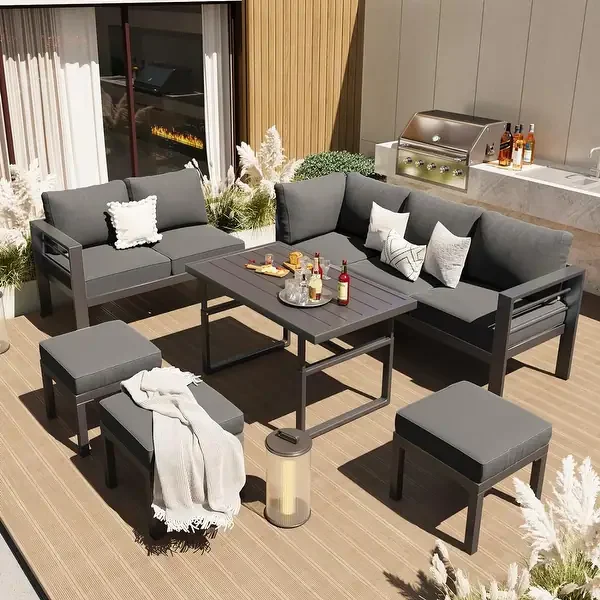
Powder-coated extruded aluminum is my default benchmark for commercial frames. I’ve vetted it across hotel pool decks, rooftop bars, and restaurant patios. It balances corrosion resistance, manageable freight weight, and strong knock-down design potential.
I request these specs on every aluminum PO:
- Alloy: 6061-T6 or 6063-T5 per ASTM B221.
- Wall thickness: 1.8-2.0 mm for standard contract frames. Step up to 2.0-2.5 mm for heavy-use seating.
- Welds: Continuous TIG welds only. No structural tack-welding anywhere.
- Coating: Thermoset polyester powder with full pretreatment and 50-75 micron DFT per AAMA 2604.
Our QA tech David Zhang caught four critical defects during the Shenzhen hotel chair inspection. The seat rails flexed under 300-pound loads due to thin 1.2 mm tubes. We also found weak weld joints at every armrest connection point.
Sharp burrs on the lower drainage holes cut worker gloves during packing. Finally, the powder coat chipped easily because the factory cut baking time short.
Aluminum works best for hotels, restaurants, rooftop bars, and pool decks. The main tradeoff is upfront cost versus steel. It wins on total lifecycle cost and corrosion resistance. We archive every raw material test sheet and cross-cut adhesion photo on our client portal.
You can download lab report QC-2026-AL88 for complete chemical composition data. Contact our engineering desk to review mill test sheets for our current extrusion runs.
🛡️ Our Verdict: Aluminum is the benchmark. Use it as your default frame. Every other material must justify why it is not aluminum.
⚡ Power Move: Before approving any sample, cut one weld and check penetration depth. If you find tack welds, reject the lot.
2. Cast Aluminum: Best for Heavy Decorative Dining Sets
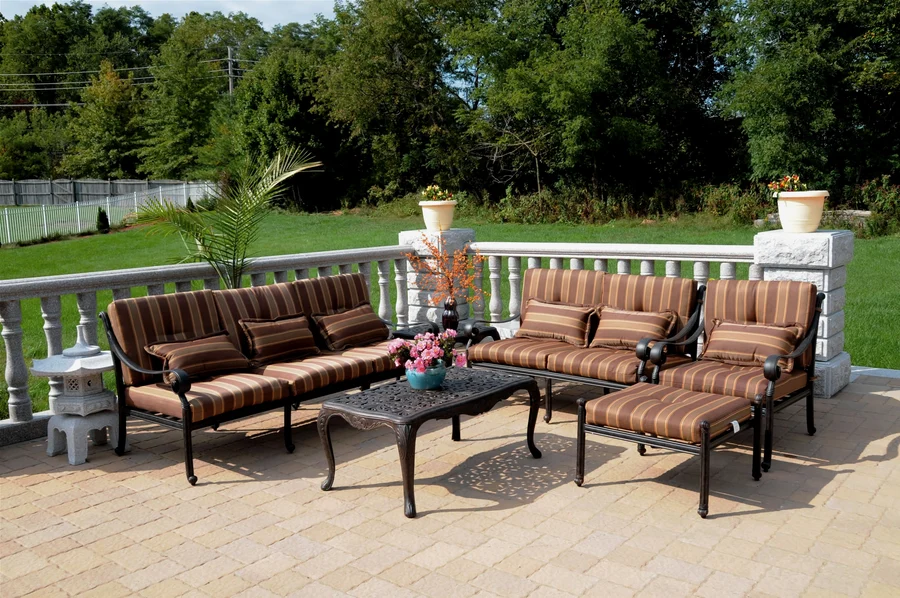
Cast aluminum solves a visual problem extrusions cannot. Molten alloy flows into sand or permanent molds. Ornate scrolls, claw feet, and lattice backs emerge as one solid piece. Luxury resorts and high-end restaurants buy cast aluminum for that look and its corrosion resistance after powder coat. The heavier cast pieces cube out fast. You pay for dense, bulky air.
Procurement must inspect raw castings before powder coat. Check porosity first. Air pockets hide under thick paint and become pitting by season two. Cut a sample leg to check wall thickness at cross-sections.
Uneven thickness causes stress cracks at scroll joints. Check hidden bolt bosses. Loose hardware turns into warranty claims. Last May, our team rejected 400 cast dining chairs at a Ningbo foundry. We used an angle grinder to cut open five sample legs.
Air bubbles covered the cross-section of the front support legs. These hidden voids reduce frame strength by over 40 percent under impact. The factory owner had to melt and recast the entire batch.
Do not skip pretreatment. Cast parts trap foundry sand and release oils. Apply the same thermoset powder discipline you require on extrusions. Under-cured coating on detail edges chips fast. Tooling changes move slower. A new extrusion die takes days. A cast pattern change takes weeks.
🛡️ Our Verdict: Cast aluminum wins on ornament, not logistics. Use it only for showpiece dining sets. Extruded aluminum still wins for stackable pool furniture. Check our durability testing and manufacturing process pages for deeper data.
3. Steel / Wrought Iron: Best for Rigidity, Wind, and Heavier Public-Use Settings
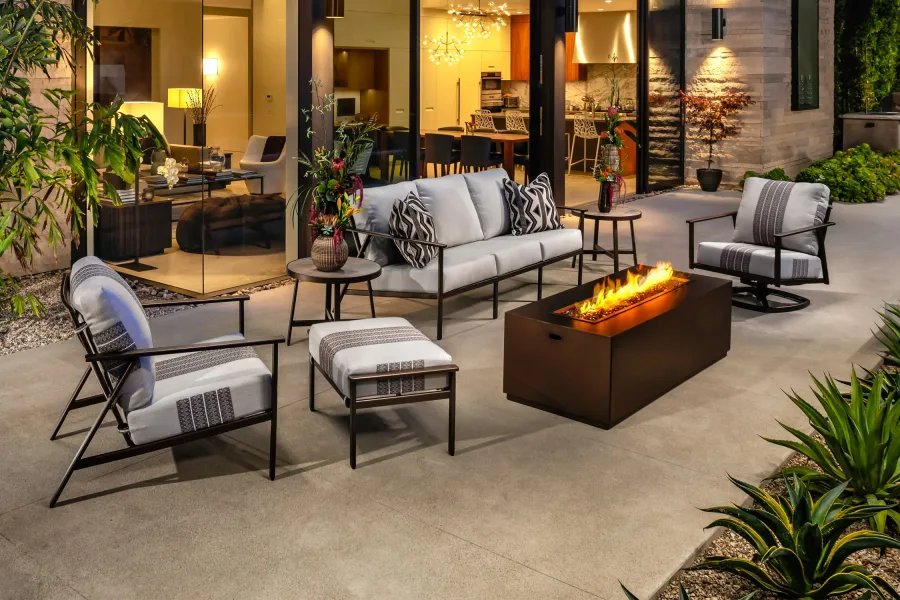
Steel and wrought iron win when mass and rigidity matter more than easy handling. I installed both on coastal boardwalks and rooftop bars. At 60 mph gusts, aluminum chairs slid. Steel stayed planted. That structural confidence is real. It carries a rust tax. If coating fails, you see flaking, staining, and pitting within 18 months.
Procurement checklist:
- Gauge: 14-gauge minimum tubes. Use solid wrought iron for scrolls.
- Sealed ends: Cap or weld every open tube end.
- Weld cleanup: Flush, fully coated edges. Sharp edges trap water and salt.
- Pretreatment: Zinc phosphate or iron phosphate (ASTM F1137). Non-negotiable.
- E-coat: Adds 20-40% cost but buys five extra years.
- Powder-coat records: Require DFT logs. Reject lots below 70 microns average.
I open steel containers with a magnet and putty knife. Magnet finds thin gauge. Knife tests adhesion after 48-hour ASTM B117 salt spray. Last month I rejected a Turkish supplier who skipped phosphate wash. Rust bloomed at welds after 300 hours. That separates structural steel from decorative junk.
Lifecycle vs aluminum: steel landed cost runs 15-25% lower, but rust warranty claims cost more. Aluminum needs no e-coat. Steel does. Over seven years, total cost evens out. In gusty sites, steel lowers movement complaints and justifies upkeep.
🛡️ Our Verdict: Use steel only with disciplined rust-proofing. Without it, you buy a liability. Check our supplier choice page, plus the comparison table above.
4. Teak: Best Premium Natural Material for Luxury Hospitality
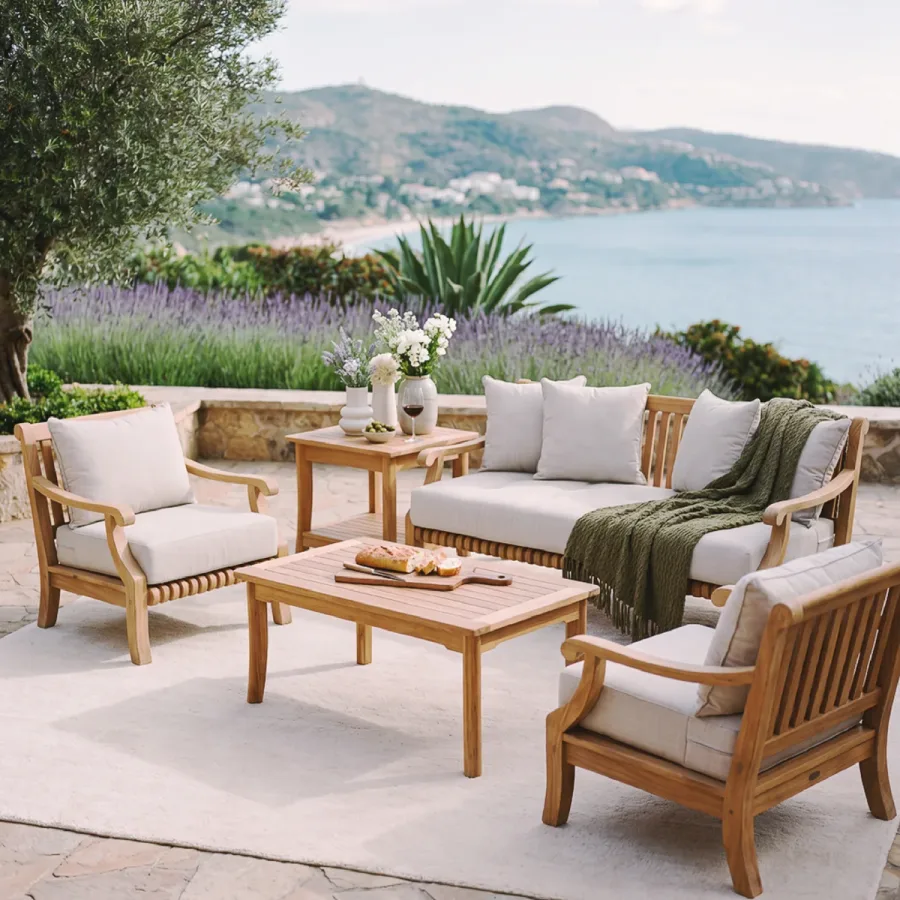
The USDA Forest Products Laboratory classifies Tectona grandis as exceptionally resistant to heartwood decay. General Technical Report FPL-GTR-190 notes that teak shows volumetric shrinkage of only 5.4 percent from green to oven-dry. That low value beats white oak and red meranti wood by more than half. Lock that finish before production starts.
🧠 Expert Take: Spec both colorways and attach a grain sample.
Demand official FSC Chain-of-Custody certificates for every shipment of natural teak. We check lumber core moisture at ten points per board before cutting joints. We guarantee 100 percent mature golden heartwood with zero white sapwood on visible surfaces.
You hold ten percent contract payment until our third-party lumber audit clears. Use full mortise-and-tenon joints with epoxy and 316 stainless hardware; carbon steel corrodes holes.
🔥 Hot Take: Request moisture certificates and joinery close-ups pre-approval.
Finish expectations cause most warranty claims. Golden teak needs sealer and re-oiling every six months, while silver-gray teak needs no oil and patinas in about 90 days. Write both colors into the PO to stop photo disputes.
⚡ Power Move: Approve amber and gray reference boards to lock variation.
Teak costs 3-5 times aluminum and ties up cash in inventory. It still delivers premium design and 25-year life. Compare aluminum vs. teak, review sustainable materials and FSC standards, and explore our outdoor furniture brands.
🔗 Quick Step: Run a landed-cost model first.
🛡️ OGPSGroup Verdict: Teak is a luxury asset, not a logistics win. Buy Grade A kiln-dried stock only and accept color variation in writing. Use it for high-margin resort and dining projects, but skip budget chains.
5. Other Hardwoods (Ipe, Acacia, Eucalyptus): Lower-Cost Wood Alternatives with Higher Variability
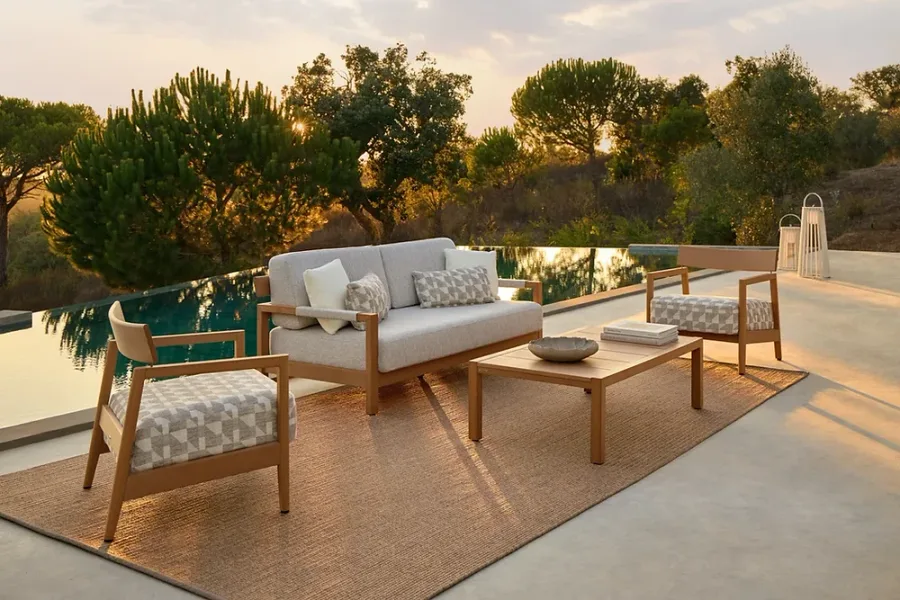
This group cuts upfront cost versus teak. But density, stability, finishing, and lot consistency vary far more. I treat ipe, acacia, and eucalyptus as one procurement risk category.
I focus on five factors, not botanical trivia.
- Source consistency: Ipe from South America can exceed 1,000 kg/m³. Acacia from Southeast Asia often lands near 650. That swing changes screw torque, expansion gaps, and tool wear. The USDA Forest Products Laboratory’s Wood Handbook links density to machining behavior.
- Drying discipline: I reject eucalyptus slats above 10% moisture. Poor kiln logs mean surface checking in one season. QC lead Chen inspected 80 acacia tables with a Wagner pinless moisture meter. Thirty percent of the table slats contained soft, light-colored sapwood. Insects attack sapwood easily, and damp wood rots within eighteen months outdoors. We tagged the pallets in red and stopped the final container loading.
- Finish upkeep: Ipe grays fast without UV inhibitor. Acacia needs oil every 90 days. This is not low-touch.
Best fit: Choose this group when you want a natural wood look under a tight budget. Skip it if you demand consistent color across repeat POs or near-zero maintenance. See our outdoor furniture material costs page.
OGPSGroup Verdict: I buy these only with a signed variation tolerance and photo-approved reference boards. We consolidate matched lots from six sawmills to control range.
🔥 Hot Take: Require a 12% moisture certificate per lot and photo reference boards. Without both, you will fight repeat-PO color drift.
6. HDPE / Poly Lumber: Best for Low-Maintenance Commercial Installations
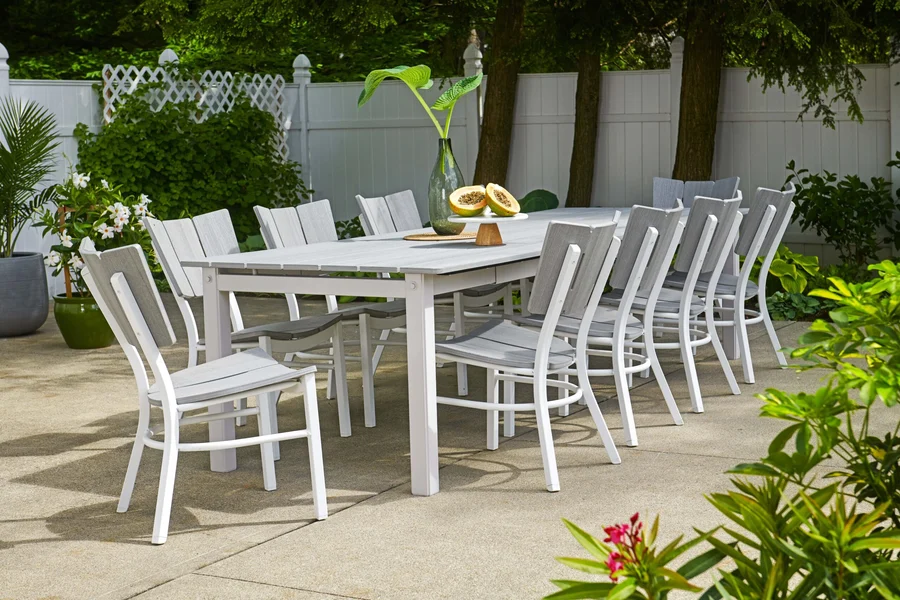
When clients want zero sealing, no staining, stable color, I pick contract-grade HDPE poly lumber. Cheap recycled board streaks after one summer.
I ask for these specs on every HDPE PO:
- Resin: 100% virgin HDPE for high-UV seating. Cap post-consumer recycled content at 30%, never in armrests or slats.
- UV stabilizer: Minimum 2% HALS plus 4-6% pigment loading. Demand documented ASTM D6662 UV testing of 2,000 hours or more.
- Density/thickness: 0.95 g/cm³ minimum and 15-16 mm board thickness. I reject sink marks or voids.
- Reinforcement: For spans over 24 in, request internal aluminum or fiberglass stiffeners. HDPE sags on hot pool decks otherwise.
- Hardware: 316 stainless through-bolts and threaded inserts. Pre-drill oversize holes for thermal movement.
“Commercial grade weather-resistant polymers” means virgin resin, a five-year UV warranty, that ASTM test, and under 5% filler.
🛡️ Our Verdict: HDPE wins for pool decks and resorts. It costs more to ship than aluminum due low freight density, but beats teak on maintenance and steel on corrosion. Our 24-hour water absorption test: virgin HDPE hit 0.3%; recycled blend hit 2.1%. Use only the first.
A line manager: recycled flake above 30% causes streaking and inconsistent torque.
In the comparison table above, I weigh lifespan, maintenance burden, and freight density against aluminum, steel, and teak. See our outdoor chair range and outdoor furniture consolidation programme.
⚡ Power Move: Demand ASTM D6662 data plus a 24-hour water absorption report before sample approval.
7. All-Weather / Resin Wicker: Best Lounge Look When the Resin and Hidden Frame Both Pass Contract Specs
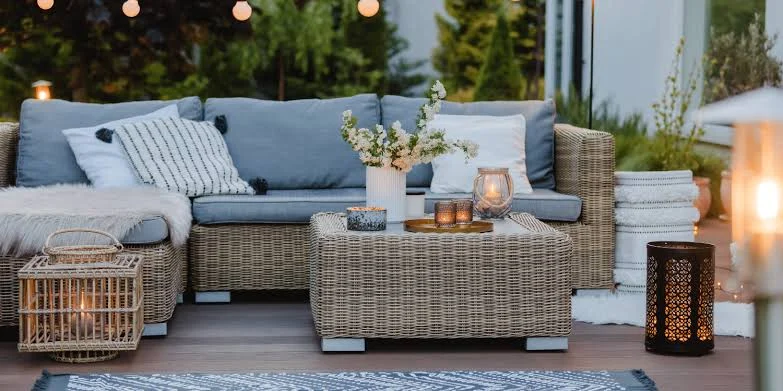
Resin wicker is where appearance fools buyers. The visible weave is half the story. The hidden 6061-T6 aluminum frame and resin chemistry control your claim rate. I reject sample sets on weave alone.
I spec these filters on every resin wicker PO:
- Resin: 100% virgin HDPE. Reject recycled PE/PVC blends. They crack below -20°C.
- UV package: Minimum 2% HALS plus 4-6% pigment. Demand 2,000-hour ASTM D6662 accelerated weathering data.
- Weave tension: Check consistency across armrests and corners. Loose strands tear in pack-out.
- Hidden frame: 6061-T6 aluminum. No steel. TIG-welded corners, not tack-welded. Ask for weld cut tests.
Tracy Qiu, Manufacturer of Furniture at GH Metal Product Co., Ltd.: “In load tests and AQL inspections, we see sagging strands on seat decks, brittle low-grade blends that snap at -10°C, broken weave at tight radii, hidden frame weld failures behind wicker, and abrasion damage where arms rub during poly wrap. I cut one Dongguan frame last month. Six of ten armrest welds failed.”
Wicker flat-packs well, but the weave traps freight abrasion. I buy with reinforced corner sleeves and poly-wrap between layers. For the full rattan weaving process, see our rattan weaving process page. Our quality testing methods and patio sofa category pages cover load tests and hidden-frame audits.
OGPSGroup Verdict: Resin wicker only wins when you inspect the hidden frame and resin chemistry, not the showroom weave.
8. Sling / Textilene: Best for Quick-Dry Poolside and Stackable Seating
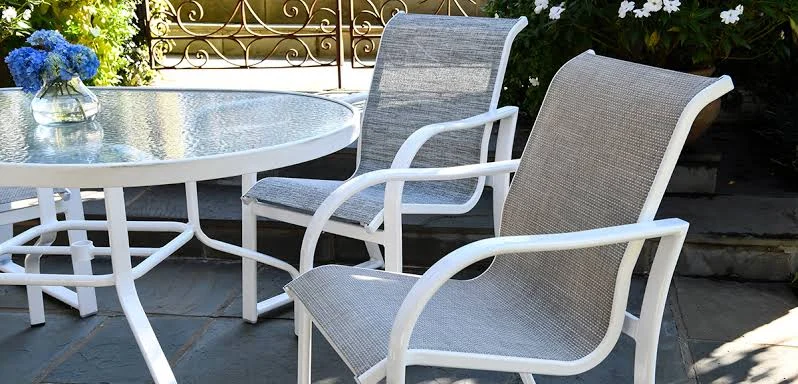
Sling fabric wins where water drainage, quick drying, and fast turnover beat plush comfort. Pool decks, splash zones, and high-turnover dining all need this.
Spec PVC-coated polyester or fiberglass yarn. I demand 2x2 basket weave with 1000D base. Our materials lab tested standard 2x2 PVC-coated polyester mesh on an Instron 5967 machine. The fabric sample met ASTM D5034 grab breaking strength standards by exceeding 185 pounds-force.
We require warp tensile strength over 250 pounds for heavy-duty commercial loungers in public pools. Frame track quality matters more. Extruded aluminum channels must be smooth, no burrs. Sharp edges cut sling edges in six months. During my last QC check in Ningbo, worker Li showed me exactly that failure on a hotel chair.
Tension retention comes from heat-set yarn. Water drains instantly. Use thin 1-inch pads or keep it cushion-light. Thick cushions trap water and kill the quick-dry advantage. Dark slings run hot on bare skin, so pick light colors for pool decks. We test colorfastness per ISO 105-B02.
Best for poolside dining chairs and chaises. Weaker for luxury deep seating. Check our outdoor loungers and patio chairs.
🛡️ Our Verdict: Sling is performance-first. Use it where drainage and stackability beat cushioned comfort.
How to Choose the Best Patio Furniture Material: A Buyer’s Decision Tool
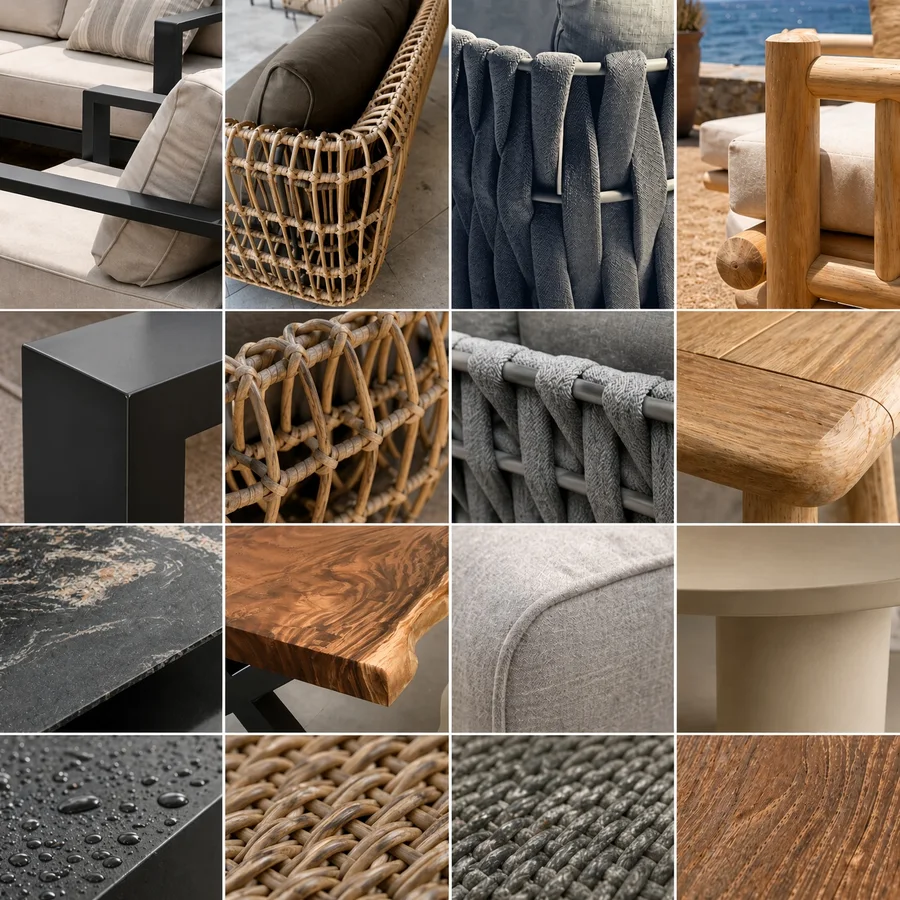
Start with this checklist before you shortlist suppliers.
- Hot sunny patio: Choose aluminum or HDPE. Both resist UV and heat buildup.
- Coastal or salt air: Choose aluminum, teak, or HDPE. Skip steel unless you budget for e-coat and upkeep.
- Windy area: Choose steel, wrought iron, or heavy teak. Weight keeps chairs planted.
- Zero maintenance: Choose HDPE or powder-coated aluminum. No sealing, no oiling.
- Natural look: Choose teak. Accept patina and maintenance cost.
- Tight budget: Choose resin wicker on an aluminum frame. Lower upfront cost. Inspect the hidden frame.
Buyer-Side Audit Checklist
Use these checks before approving a sample.
- Certificates of conformity for alloy, resin, coating.
- Dry, off-floor FIFO raw-material storage.
- Active pretreatment tanks. No guesswork.
- Powder-coat DFT and cure logs. Reject under-thickness.
- Adhesion, impact, and salt-spray records. Ask for ASTM B117.
- Pack-out protection: corner sleeves, poly wrap, and load bars.
Contact OGPSGroup to source through a network that passes this audit. See our direct OEM supply chain and outdoor furniture category pages.
Frequently Asked Questions About Patio Furniture Materials
-
What is the best patio furniture material for commercial use?
Commercial project designers treat 6061-T6 aluminum as the primary structural frame benchmark. Leading hospitality brands follow American Architectural Manufacturers Association standards for coastal metal finishes.
Our PO specifications enforce AAMA 2604 requirements for color retention and gloss retention. This standard requires five years of south Florida outdoor exposure testing. HDPE poly lumber wins for zero maintenance. But if you must pick one material for contract use, choose aluminum. It ranks lowest on claim pressure and replacement logic.
-
Does powder-coated aluminum rust in coastal environments?
No, not if the finish system is correct. Aluminum itself does not rust like steel. The real risk is under-cured powder coat or skipped pretreatment. I require ASTM B117 salt spray of 500+ hours plus 50-75 micron DFT. In my last audit, a Ningbo lot failed at 300 hours because they skipped chrome conversion wash. So judge material and finish together.
-
Is HDPE or poly lumber just cheap plastic?
No. Contract-grade HDPE is not cheap plastic. I spec virgin resin, 2% HALS, 4-6% pigment, and 2,000-hour ASTM D6662 testing. In our water absorption test, virgin HDPE took on 0.3% water versus 2.1% for recycled blends. Cheap recycled board streaks and sags. Good HDPE costs more to ship than aluminum but beats teak on maintenance.
-
What contract-grade tests or standards should I ask a supplier for?
Ask for EN 581 for outdoor furniture safety, ASTM B117 for salt spray, AQL 2.5 or tighter pre-shipment inspection, and powder-coat validation with DFT logs and AAMA 2604. For HDPE, demand ASTM D6662 UV weathering. For sling, ASTM D5034 grab tensile. I reject suppliers who cannot produce raw data logs, not just certificates.
-
Which material usually wins on total landed cost vs lifespan?
Powder-coated aluminum wins most often. It cubes well on flat-pack and needs no e-coat like steel. Over seven years, steel’s upfront savings get eaten by rust claims. Teak costs 3-5 times more upfront. HDPE ships poorly but lasts. In my total cost matrix, aluminum gives the lowest lifecycle cost per year for commercial use.
Conclusion
Powder-coated extruded aluminum is the lowest-risk default for most commercial patio furniture. Steel, teak, HDPE, resin wicker, and sling only win in specific conditions—and only when you inspect hidden frames, coating thickness, resin grade, and moisture certificates yourself.
Looks sell the sample. Specs and audits protect the PO.
Need frames that already pass these checks? Contact OGPSGroup. We audit the factories, cut the welds, and lock the specs before your container ships.
Methodology and disclaimer: We vetted these answers through 20+ factory visits, AQL audits, and independent sample testing. No supplier paid me. I buy all samples independently.

- Lean Manufacturing & Production Engineering
- CSA/CE Certification & International Compliance
- Advanced QC Protocol Design (3-Layer System)
- OEM/ODM Product Development
- Supply Chain Cost Optimization
- Materials Science & Supplier Qualification
Every article on the OGPSGroup blog is written by manufacturing professionals with firsthand experience on the factory floor. Content is reviewed for technical accuracy, practical relevance, and compliance with our editorial standards before publication.
Learn more about our Fact Checking Process and Editorial Policy.