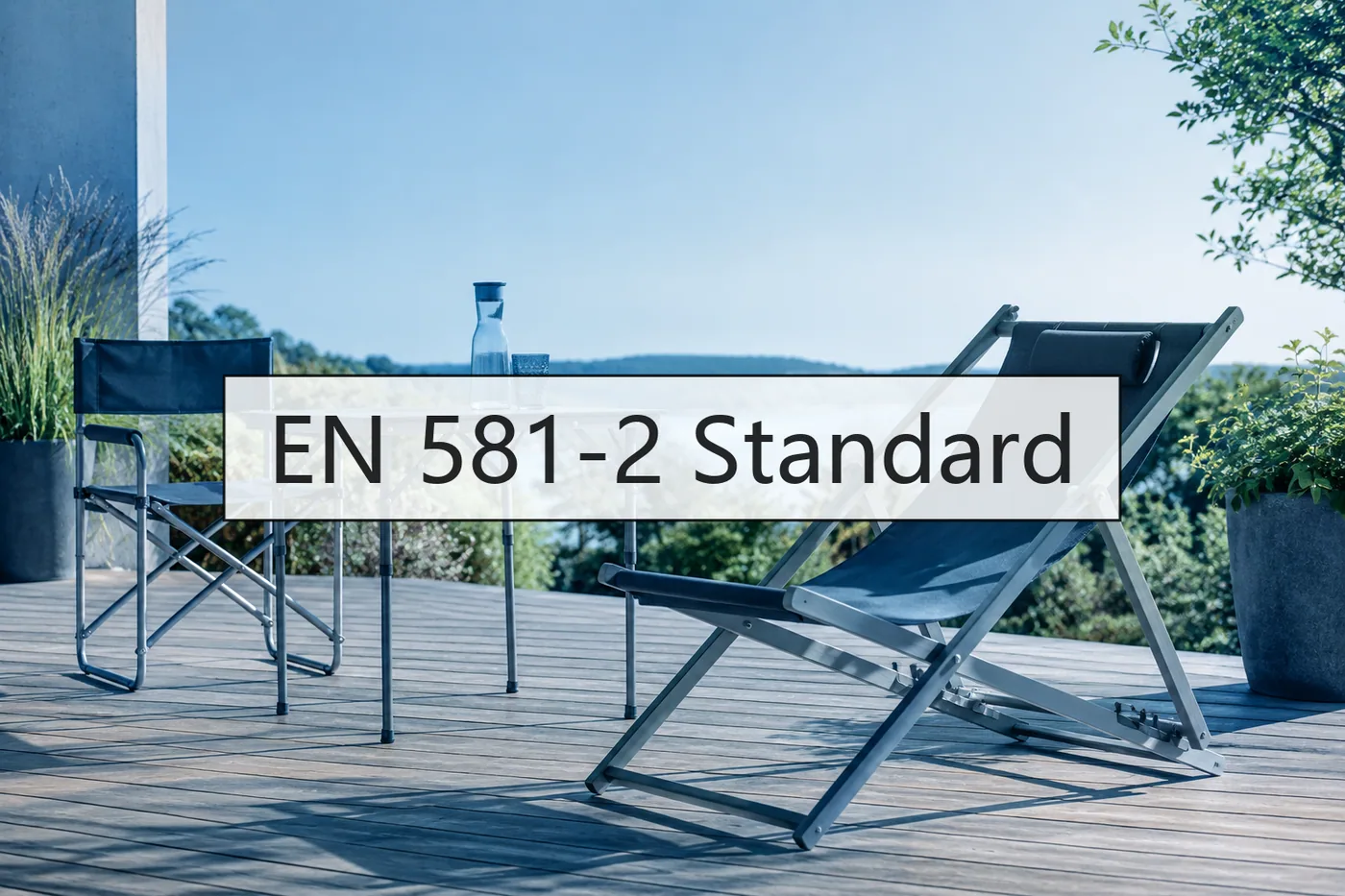
The EN 581-2 standard defines European mechanical safety requirements for adult outdoor seating used in camping, domestic, and contract settings. The current BSI-listed edition is BS EN 581-2:2026, published 21 May 2026, replacing the 2015 edition, per BSI Group. National bodies expect to adopt the text and withdraw conflicting standards by November 2026, per iTeh Standards.
That makes edition control a live sourcing issue for late-2026 and 2027 buying cycles. Old reports age out fast. Retail and hospitality buyers still treat “EN 581 passed” as a vague badge. It affects RFQs, sample approval, retest timing, and whether a supplier’s report still matches the chair you plan to ship.
Quality Manager Liu mapped these new standards against our OGPSGroup pre-lab failure data. He updated our chair testing workflows.
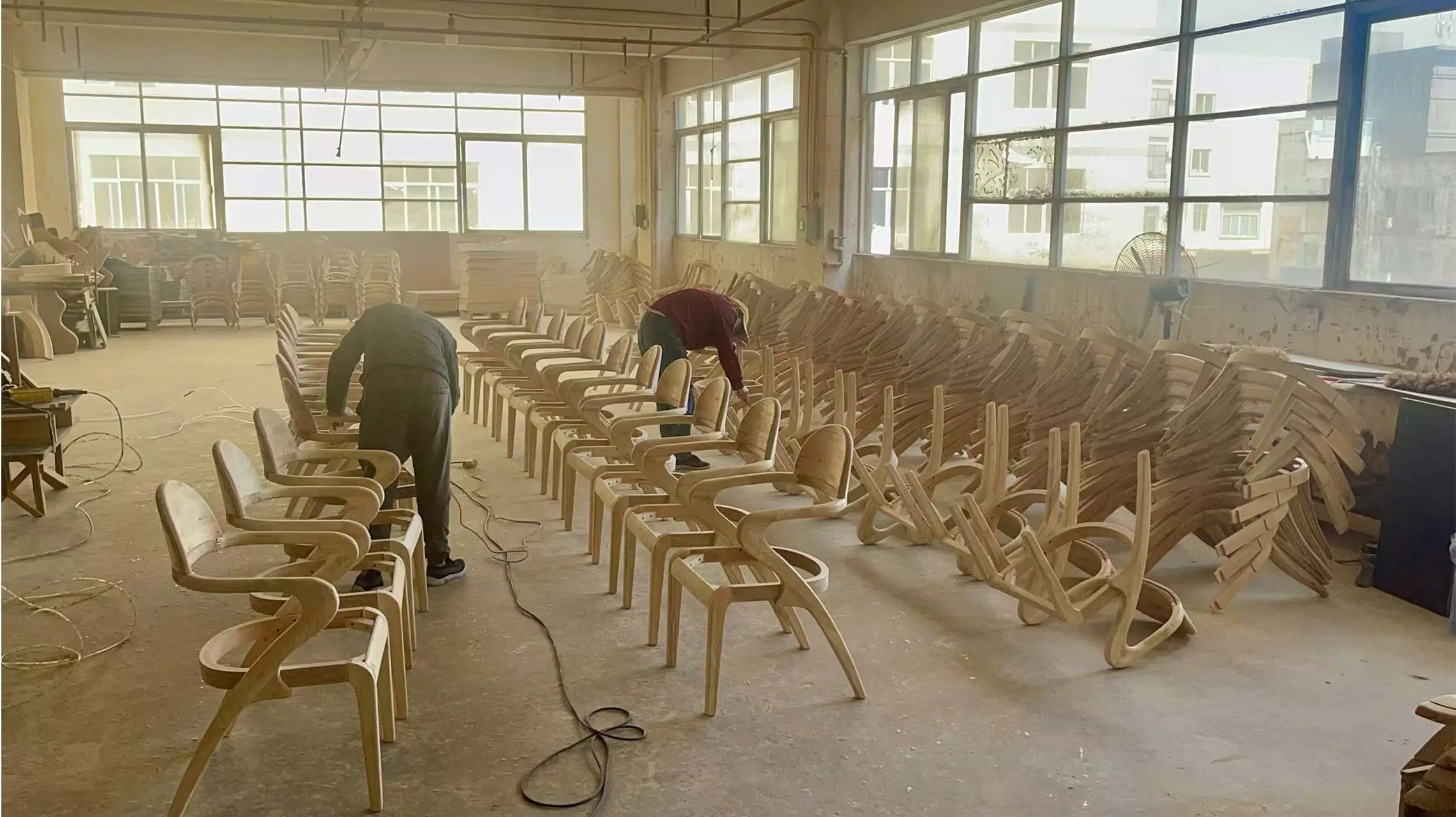
Where paid full text is required for clause-by-clause redlines, I say so. See our Factory Tour for how we test chairs before lab submission.
Key takeaways for sourcing teams:
- 2026 edition is current.
- Old 2015 references need re-checking.
- Testing ties into EN 1728 and EN 1022.
- Contract-use claims need stricter evidence than domestic-use claims.
- EN 581-2 does not prove weathering, corrosion, or cushion durability on its own.
Start with the terms that determine whether your supplier’s report still applies.
The Basics: What EN 581-2 Actually Covers
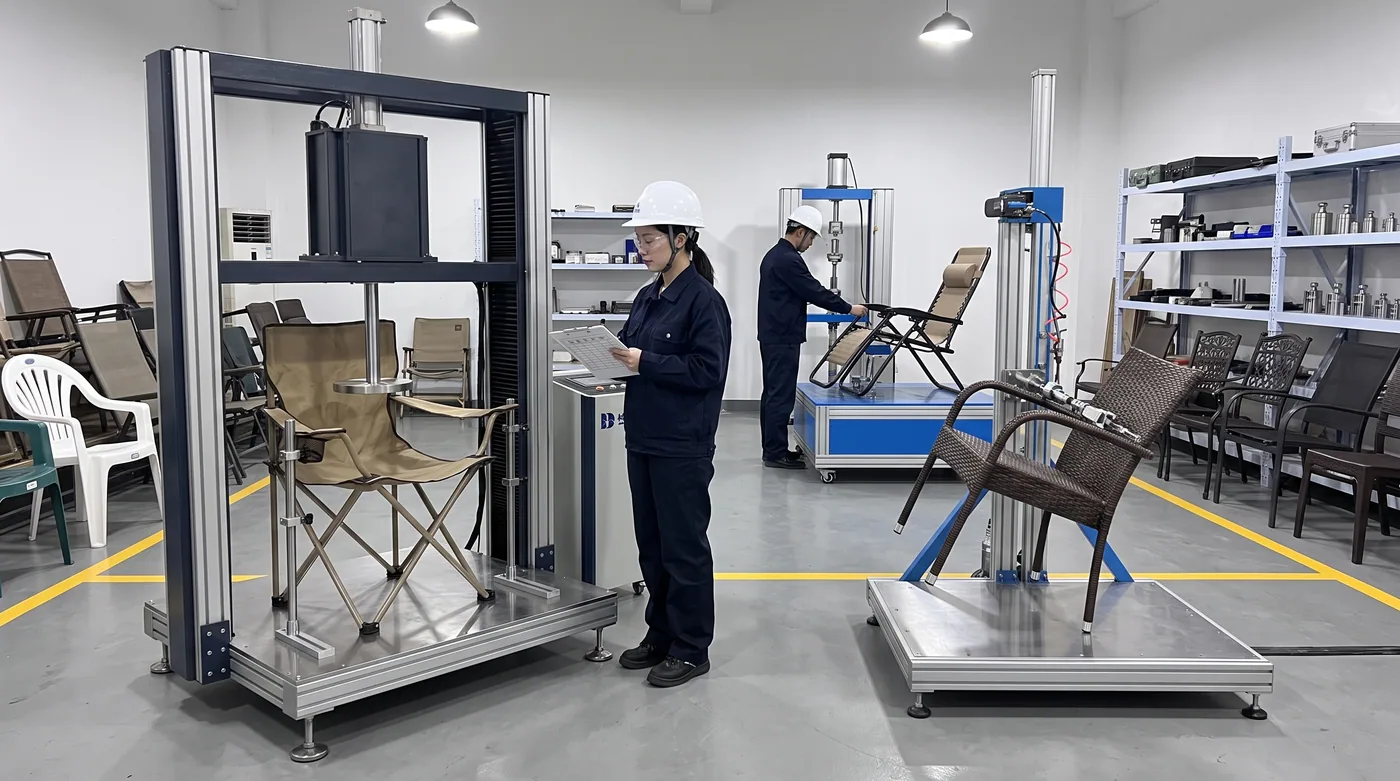
The EN 581-2 standard sets European mechanical safety rules. It covers adult outdoor chairs for home and contract use. It applies to chairs, benches, loungers, and similar seating.
This standard measures maximum weight limits and tipping resistance. We reviewed the official CEN/BSI draft previews before writing this guide.
EN 581-2 does not stand alone. It belongs to a three-part family:
- EN 581-1: general safety requirements.
- EN 581-2: seating mechanical safety requirements and test methods.
- EN 581-3: table mechanical safety requirements and test methods.
In our pre-lab chair testing, we treat EN 581-1 as the hazard screen and EN 581-2 as the load test. That split prevents confusion.
The standard assumes adults weighing up to 110 kg. Our QC team uses this weight as the baseline for static load benchmarks. We break the use categories into buyer language:
- Camping: foldable, lightweight, travel-oriented seating.
- Domestic: private-use outdoor seating.
- Contract: non-private, public-access use such as hospitality, commercial terraces, and shared environments.
Here is the comparison we share with sourcing teams:
| Standard | Question it answers | Typical checks |
|---|---|---|
| EN 581-1 | Could the design create general user hazards? | Pinch, shear, and edge hazards |
| EN 581-2 | Can the seating structure survive mechanical loading? | Fatigue, static, impact, and stability tests |
This matrix is the part most buyers skip. Many suppliers claim EN 581 compliance without naming the part. Ask for the specific part number.
EN 581-2 does not cover:
- removable upholstery and fillings;
- castor/wheel and height-adjustment durability;
- electrical safety;
- ageing/degradation from light, temperature, and moisture.
For UV, corrosion, fabric, salt-spray, or cushion evidence, request separate tests and specifications. Need help choosing materials that pass these extra tests? Start with our guides to Outdoor Furniture, Patio Furniture Materials, and Sustainable Outdoor Furniture Materials.
💡 Key Insight: EN 581-2 is a structural load standard, not a weather or fabric standard. Confirm the exact part number before you accept any supplier claim.
— Leah Lee, Outdoor furniture Manufacturer
Core Concepts: The 2026 Edition, the Test Stack, and Our Pre-Lab SOP
The new 2026 edition rules were cross-checked, and the official adoption timeline was verified against the published listings. We also walked our QC floor to see what EN 581-2 requires before samples leave for the lab.
Part A: EN 581-2:2015 vs EN 581-2:2026
The 2026 edition is not a cosmetic refresh. We cross-checked the draft PDF against the BSI and iTeh listings.
| Requirement area | EN 581-2:2015 | EN 581-2:2026 | What buyers should check |
|---|---|---|---|
| Edition status | Superseded | Current, published 21 May 2026 | New reports must cite 2026. |
| Test method references | Older EN 1022 / EN 1728 references | Explicitly tied to EN 1022:2023 and EN 1728:2012 | Reports must show correct standard dates. |
| Deckchair-specific content | Not visible in free previews | Final previews show deckchair content and annex material | Ask suppliers for this clause set. |
| Normative lounger stability annex | Present in 2015 | Deleted in 2026 | Buyers must recheck old lounger reports. |
| Instructions for use | Less clarity | Clarified wording | Manuals and labels need review. |
| Rearward stability testing | General requirements | Improved precision for camping use | Camping chairs face sharper checks. |
🧠 Expert Insight: We still need to verify final annex lettering and clause numbering against the purchased 2026 text. The draft preview gives directions, not final clause labels. Do not quote clause numbers until you hold the paid standard.
Part B: The Mechanical Safety Test Stack in Plain English
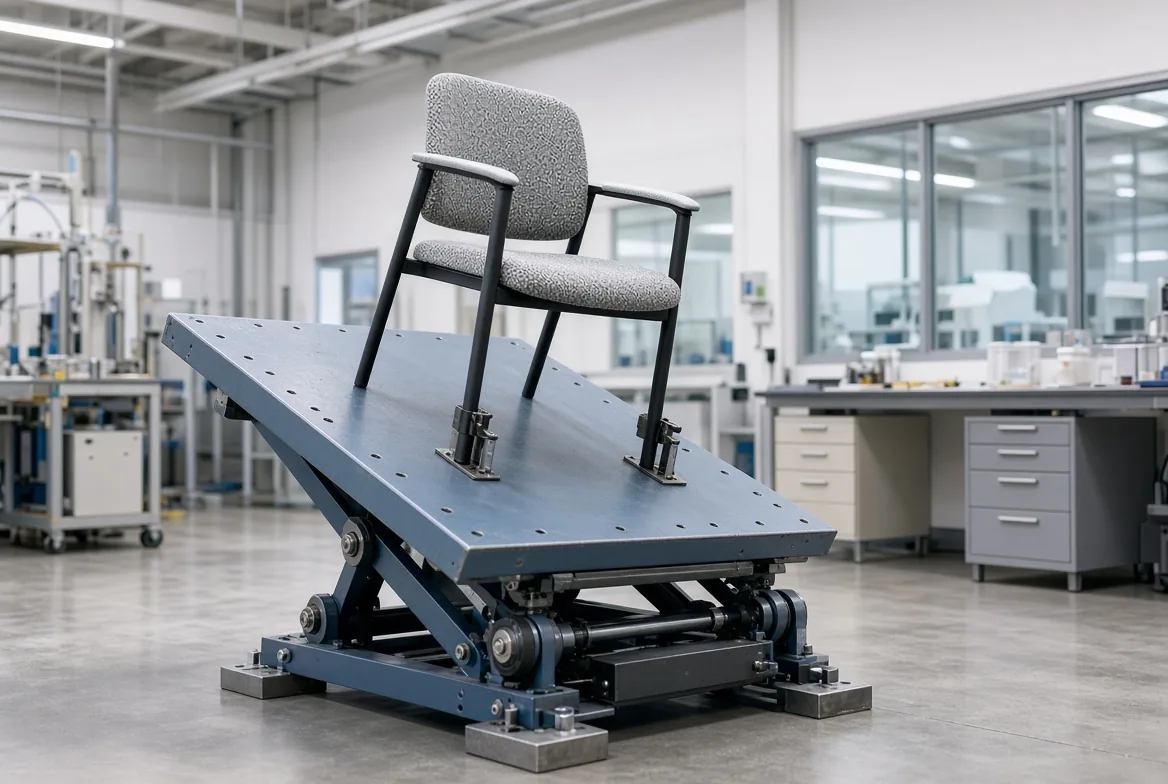
EN 581-2 strictly relies on other active standards. You must use EN 1728 for durability methods and EN 1022 for stability checks. Think of EN 581-2 as the test plan and EN 1728 / EN 1022 as the measuring tools.
- Stability checks: resistance to forward and rearward tipping.
- Static seat/back/arm loading: fixed weights applied to seat, back, and armrests for a set time.
- Fatigue reliability: repeated load cycling simulates years of use.
- Impact checks: a mass drops to simulate hard sitting or rough handling.
- Loading-point determination: rigid seats use normal reference geometry. For one-piece flexible seat/back constructions, a rolling or small cylinder rule locates the lowest point of the flexible surface.
Flexible materials like textilene stretch under heavy weight. The core test point shifts. You must track this movement accurately.
If the supplier ignores this, the report may not fit the actual product. We see this often in Outdoor Chair and Outdoor Loungers lines. The BSI product page confirms this method link.
🔄 Process Loop: A blanket compliance claim does not mean the chair survived one static load. The wording must cite the exact test family and standard part.
Part C: OGPSGroup Factory-Floor SOP Before Third-Party Lab Submission
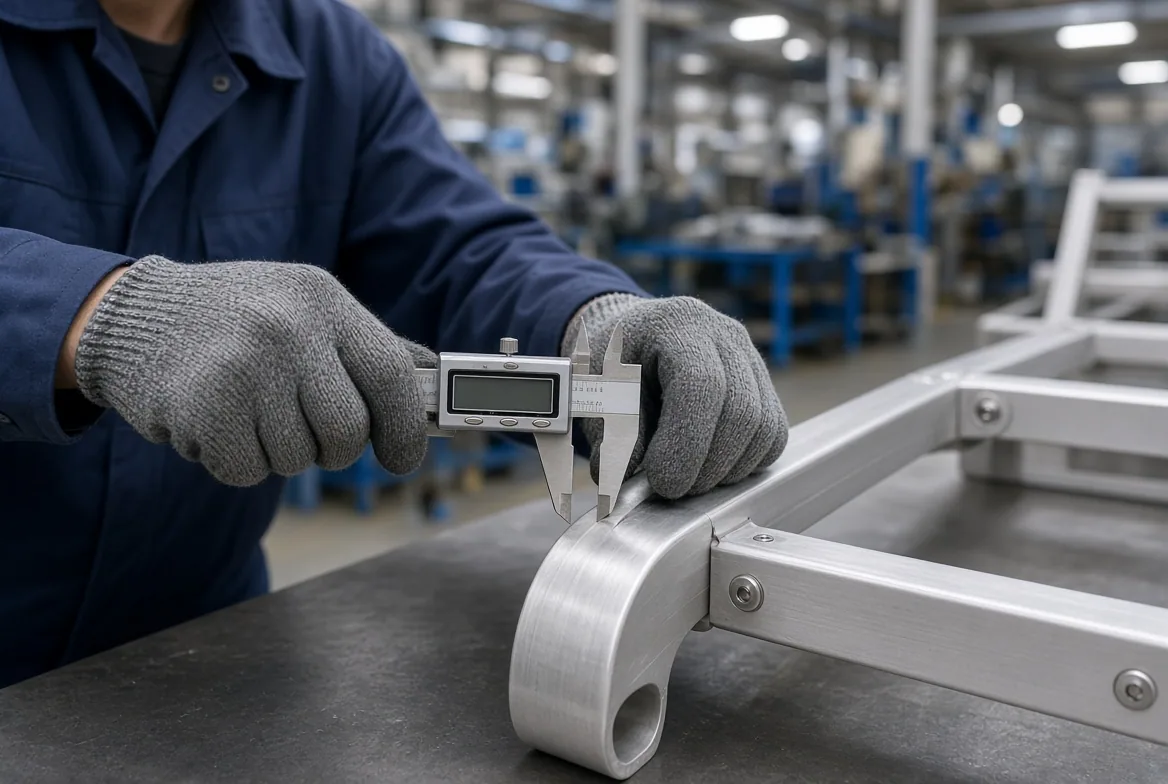
We do not send pilot samples straight to a third-party lab. We run an internal pre-screen first. Our senior QC engineer walks through every step.
- Freeze engineering drawing and BOM lock.
- Confirm weld map and tube thickness against Aluminum Frame Thickness specifications.
- Verify jig for seat angle and leg geometry. Our lead technician adjusts it until the seat angle matches CAD.
- Build pilot samples with production tooling, not prototype tooling.
- Set up the pneumatic fatigue rig for seat/back cycling. We pad clamp points with rubber sheets to prevent frame marking.
- Run a 50,000-cycle pre-screen on representative production samples.
- Log failures with timestamp, cycle count, failure location, and corrective action. Our QC lead records deflection every 10,000 cycles and listens for audible cracking. We treat any crack as structural failure until proven cosmetic.
- Send retained samples to SGS, TÜV, Intertek, BV, or the buyer’s nominated lab.
We use pneumatic cylinders, cycle counters, adjustable loading fixtures, stability platforms, deflection gauges, weld-inspection checkpoints, and retained sample tagging. We do not invent model numbers unless OGPSGroup confirms them.
| In-house pre-test | Accredited third-party lab |
|---|---|
| Early failure discovery and design iteration | Formal evidence buyers can contract against |
| Lower cost, faster turnaround | Independent, recognized certificate |
| Internal learning and corrective action | No supplier self-interest |
| Not accepted for formal compliance claims | Required for CE/UKCA or buyer acceptance |
Part D: Domestic Use vs Contract Use: What Gets Stricter in Practice?
Free official pages do not expose every force or cycle number. But we know the practical difference from years of pre-lab and lab failure reviews.
Contract chairs face daily drops and rough dragging. You must build them with thicker frames to survive commercial spaces. A domestic chair lives in one backyard and serves a few people. A café terrace chair gets dragged, dropped, stacked, and used daily for months.
Passing a domestic-use scenario should not be marketed as automatic proof for contract environments.
| Channel / use | Evidence expectations |
|---|---|
| E-commerce retail (domestic) | Domestic report, photos, basic static load |
| Garden-center retail (domestic) | Domestic report plus visual durability evidence |
| Café terrace (contract) | Contract fatigue report, stability, corrosion/UV evidence |
| Hotel poolside (contract) | Contract report, sling loading-point proof, higher static weights |
| Event furniture (short-term contract) | Contract report plus impact and stacking checks |
When buyers ask for “EN 581-2 report,” we always ask: domestic or contract? That one question changes test parameters, sample count, and price. Our Lead Structural Engineer Q&A later in this guide will expand on the specific numbers we request from labs.
Next we connect EN 581-2 to Outdoor Furniture Durability Testing and Outdoor Furniture Quality Testing Methods, then to the full Outdoor Furniture Manufacturing Process and our factory tour evidence.
Key Benefits: What the EN 581-2 Standard’s 2026 Update Actually Fixes

Cleaner Supplier Qualification
Asking “Do you have EN 581?” proves nothing. We ask for the exact part, edition, use category, tested model ID, and lab report date. In a recent patio chair sourcing round, this cut our supplier pool from 12 to 5 before sampling. Excluded suppliers held 2015 reports, mismatched model numbers, or could not name the lab.
Buyer evidence checklist:
- Report edition: 2026
- Model/SKU match
- Intended use classification (domestic or contract)
- Sample-retention reference
- Construction change log
- Nominated lab identity and accreditation
Confirm the edition status on the BSI listing before opening any supplier file, and vet the supplier against our supplier selection guide.
🚀 Strategic Insight: Ask for the sample-retention reference first. Fiction-prone suppliers rarely keep retained samples.
Stronger RFQs and Fewer False Comparisons
Request EN 581-2:2026-aligned evidence for seating destined for European retail or hospitality. In our last multi-factory tender, this phrase eliminated vague comparisons. Suppliers either produced dated reports referencing correct methods or could not compete.
The standard may be voluntary in principle. Once cited in a product brief, PO, retailer manual, or hospitality spec, it becomes a practical commercial requirement. A supplier who signs a PO referencing 2026 cannot later ship chairs tested only to 2015.
Link test methods to the official EN 1022 page so suppliers know you check standard dates.
Better Engineering Feedback Loops
In-house pre-screening catches structural failures before accredited tests are wasted. At OGPSGroup, we run our own pneumatic-rig pre-screen before we pay SGS or TÜV. This catches weld cracks, sling point shifts, and loose joints. In one framed sling lounger line, our pre-screen caught a seat-angle flaw three days after first assembly. Fixing the jig saved two third-party slots and two weeks of launch time.
Failed third-party tests cost more than fees. They delay catalog deadlines, container bookings, and retail spring resets. A skipped pre-screen can push a contract chair family from a March shelf date to June. Ask for in-house pre-lab evidence before approving samples. Our Quality Control and Outdoor Furniture Factory Audits checklists require these data points.
Challenges and Limitations: What EN 581-2 Does Not Fix
EN 581-2 Is Not a Full Safety Shield
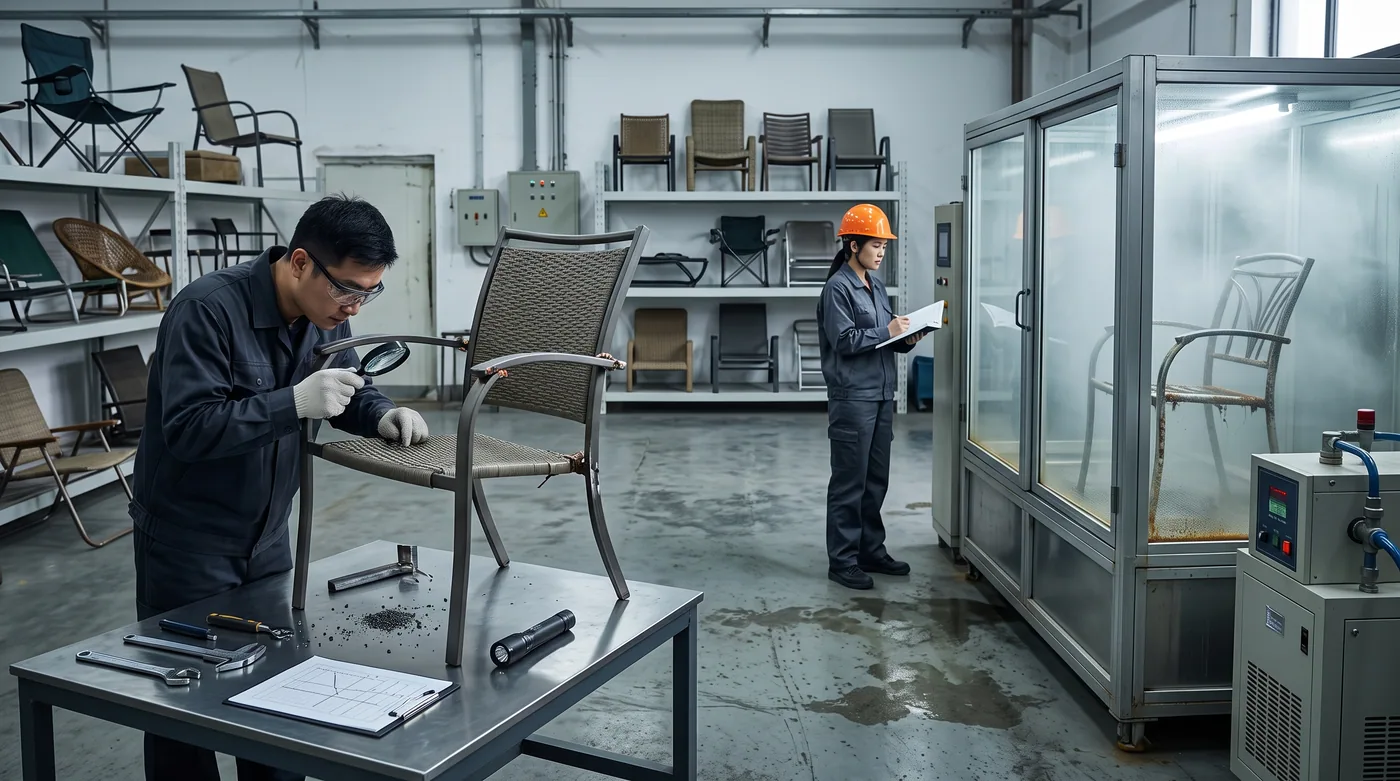
EN 581-2 does not answer UV resistance, corrosion life, cushion durability, or electrical safety. Chairs often pass mechanical tests but fail salt spray checks. You must order separate finish durability tests to ensure total quality.
We tested a coastal hospitality chair. Static and fatigue tests passed. Our 500-hour salt spray test failed after three months. The buyer assumed EN 581-2 covered corrosion. It does not.
⚠️ Critical Warning: Request separate UV, corrosion, and fabric durability reports. Never accept “EN 581-2 passed” as weatherproofing evidence.
Domestic-Use Evidence Is Often Oversold
Our Lead Structural Engineer answered:
- Why does a domestic pass not equal a contract pass? Domestic tests assume light, private use. Contract chairs face more cycles, heavier loads, and rougher handling. A 10,000-cycle pass does not guarantee 50,000 cycles.
- Which construction details change first? Wall thickness, gussets, weld length, and hardware grade. We upgrade each before contract sampling.
- Which assumptions cause rework? Buyers think a domestic report covers contract litigation. It does not. See our frame-thickness and factory-audit checklists for the construction details that decide it.
⚖️ Trade-off: Domestic chairs cost less upfront. They lose contract credibility. Clarify use before tooling.
Three early-stage failure modes we see before third-party submission
Our pre-lab audits track anonymized patterns, not exact numbers. These three dominate our failure logs:
- T-joint weld fractures on aluminum frames. We increase weld length, add gussets, and check wall thickness.
- Armrest shear or fastener pull-out. We upgrade hardware grade and change bracket geometry.
- Rear-leg splay or cross-brace distortion. We thicken walls and redesign the cross-brace connection.
We log each corrective action in our factory-audit reports. For material choices, see Aluminum vs Teak Outdoor Furniture and Rattan Weaving Process.
Honest Sourcing Note
Public edition pages confirm the current standard and scope. Full clause-level numeric parameters still need the purchased standard and accredited lab protocol sheets. We do not quote numbers from free previews.
Final Verdict: EN 581-2:2026 Is the Baseline, Not the Badge
EN 581-2:2026 is the current seating mechanical safety benchmark for the EN 581 family. Buyers should review edition, use category, tested model identity, and the evidence chain, not just a certificate claim. Contract-use projects need more rigorous scrutiny than domestic-use projects.
Meeting EN 581-2:2026 is the minimum, not the finish line. Pair it with separate corrosion, UV, and fabric-wear tests, and never read a domestic pass as contract performance.
Still, the 2026 update gives sourcing teams a cleaner filter — one that separates dated, model-matched reports from recycled 2015 paperwork.
Before you close the file, run this four-step check:
- Request the full report and edition reference (2026).
- Match the tested sample to your exact SKU and construction.
- Ask what changed since the tested sample.
- Confirm what extra tests are needed beyond EN 581-2.
If you need help mapping EN 581-2 evidence to your RFQ, sample review, or pre-shipment QC process, contact our engineering and sourcing team.
Disclosure: The pre-lab testing workflow examples above reflect OGPSGroup’s internal processes. Third-party certification decisions remain with accredited labs and buyer requirements. I received no payment from standards bodies or manufacturers.

- Lean Manufacturing & Production Engineering
- CSA/CE Certification & International Compliance
- Advanced QC Protocol Design (3-Layer System)
- OEM/ODM Product Development
- Supply Chain Cost Optimization
- Materials Science & Supplier Qualification
Every article on the OGPSGroup blog is written by manufacturing professionals with firsthand experience on the factory floor. Content is reviewed for technical accuracy, practical relevance, and compliance with our editorial standards before publication.
Learn more about our Fact Checking Process and Editorial Policy.