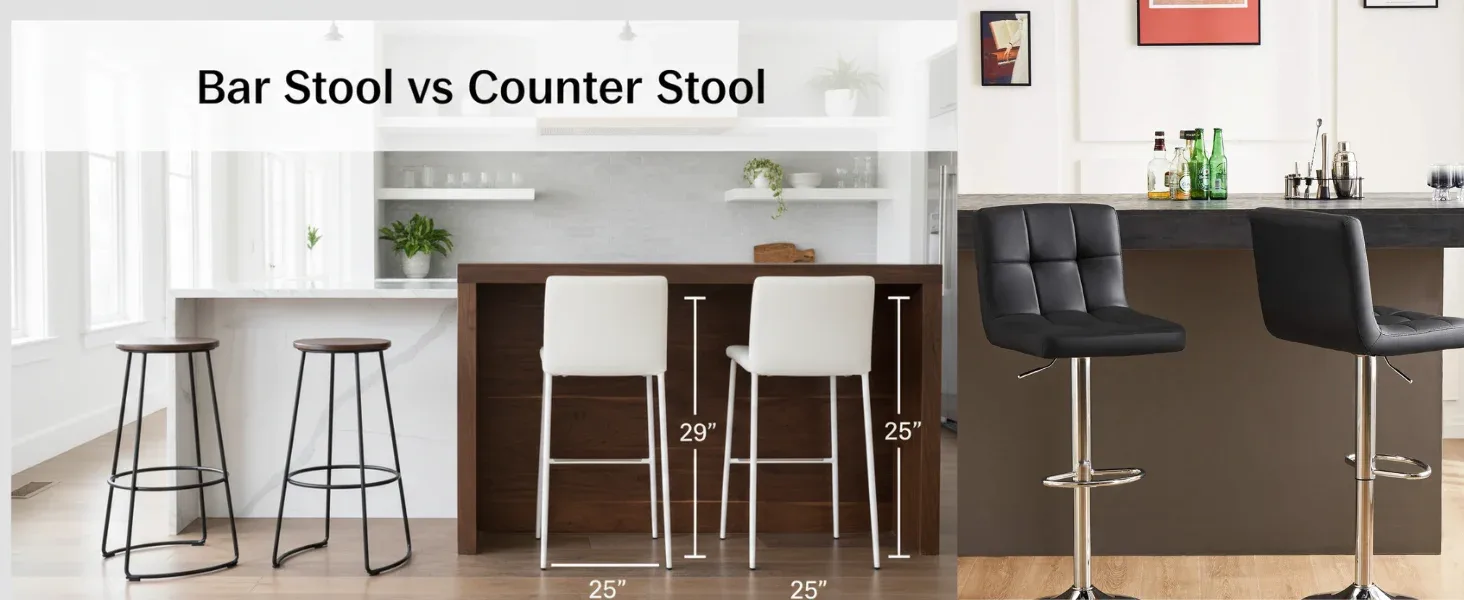
Most bar stool guides stop at style. We test load paths, weld strength, and replacement cost instead. This shortlist compares contract-grade types of bar stools using our factory QC data and hospitality standards.
I measure frame welds and floor-contact cycles during every audit. Use it with our buying framework for height, durability, and OEM sourcing. Start with OGPSGroup or our patio bar capability.
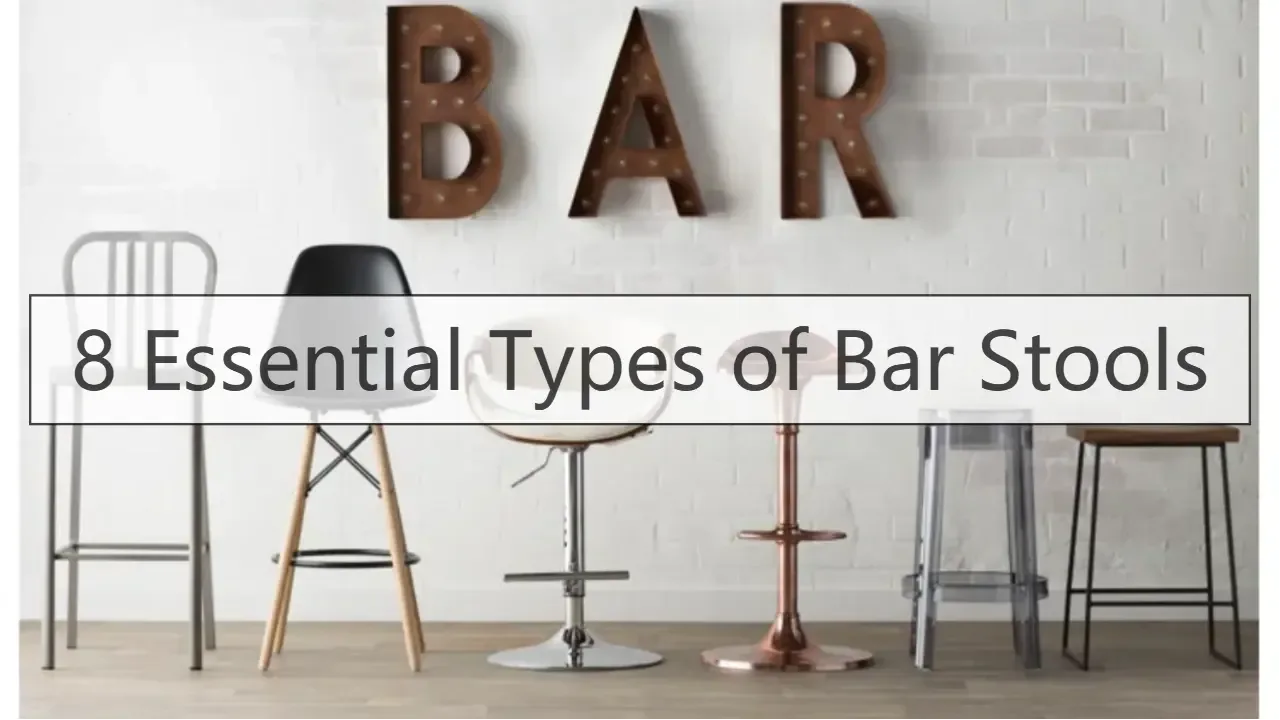
8 Essential Types of Bar Stools
See 8 types of bar stools side by side for commercial fit. Height and base decide comfort and returns.
1. 4-Leg Metal Frame Bar Stools
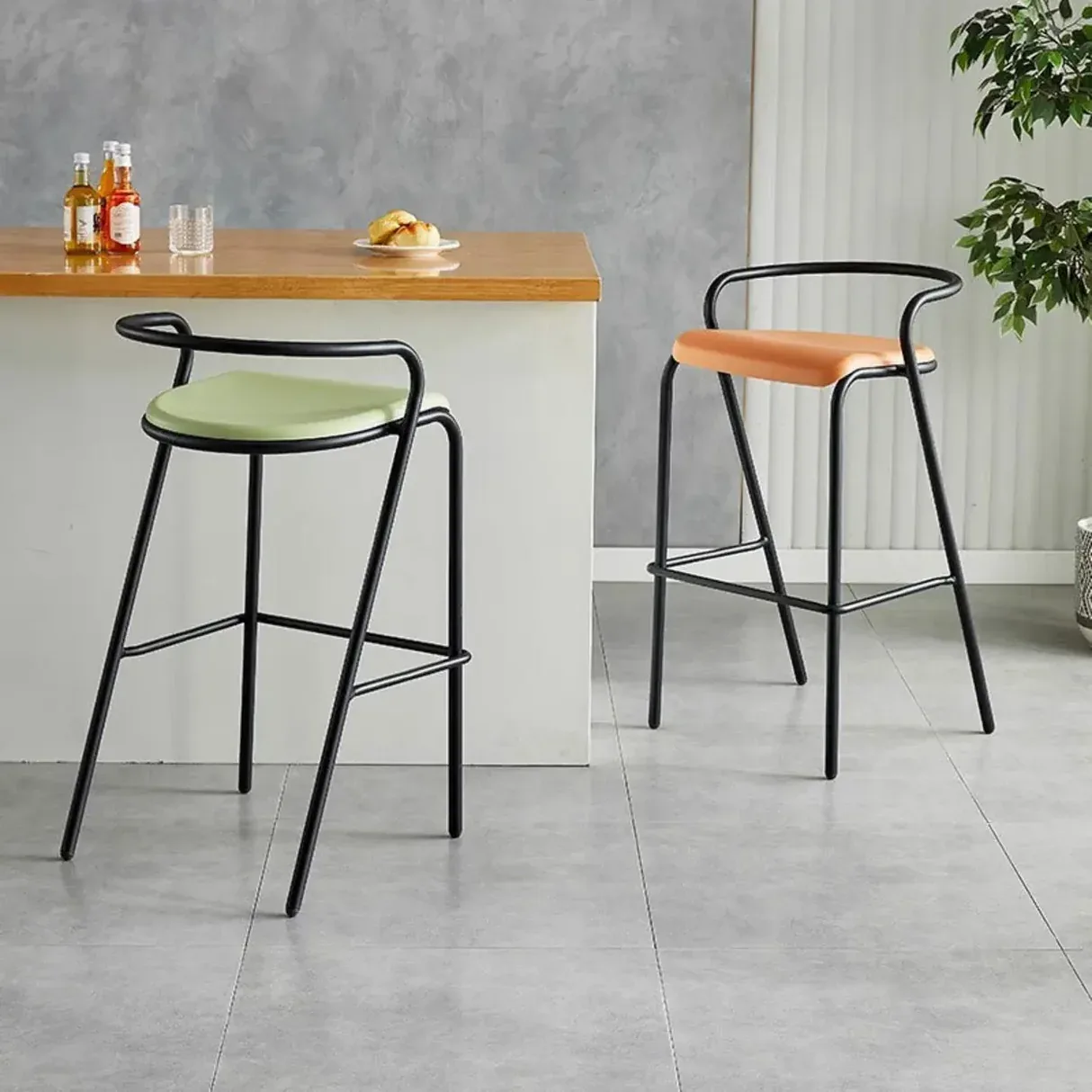
For restaurants, bars, food halls, and franchise rollouts, the 4-leg metal frame is the default contract-grade choice. The footprint is simple. Staff clean under it fast. Stability is predictable. When you buy commercial bar stools, you want that baseline. Not all metal frames survive high traffic, though.
Our OGPSGroup stress test tore down 16-gauge commercial frames and residential retail stools. Here is the failure data:
| Spec | Commercial 16-gauge | Residential retail |
|---|---|---|
| Frame gauge | 16-gauge steel | 19-gauge steel |
| Wall thickness | 1.2 mm | 0.8 mm |
| Weld points | 8 per frame | 4 per frame |
| Failure at 400 lb static load | No deformation | Front leg snapped at weld |
During our audit, the retail unit’s front weld cracked at 240 lbs. The commercial frame held at 400 lbs and survived repeated drops. That difference is the real cost of cheap metal.
Order fully welded steel frames for busy bars. Do not buy knock-down frames. Welded joints survive heavy daily use. Always check the footrest height before you order. Stackable units save storage, but weak glides scratch floors. Ask suppliers about replacement glides and load capacity. See how we build these frames in our outdoor furniture manufacturing process.
Author’s Take: Choose 16-gauge fully welded frames. Ask for a load test video. If a supplier hesitates, walk away.
2. Bolt-Down Cantilever Bar Stools
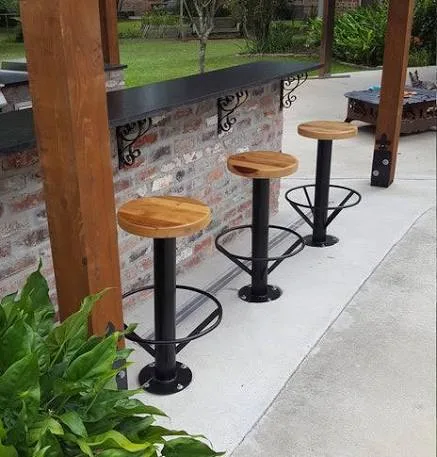
A bolt-down cantilever stool uses a floor-anchored base and cantilevered seat. The seat stays put. That fixed position matters in high-traffic bars, gaming venues, and fixed-layout hospitality projects.
We moved a Las Vegas sports bar from four-leg bases to cantilever stools. We used two concrete anchors for each seat. This change cleared four inches in the aisles. The bar cut floor cleaning costs by 20 percent. Staff stopped straightening stools between turns. Our follow-up audit showed 20% lower floor maintenance labor.
Less stool drift. Sweeping and mopping got faster. Crews no longer lift or pivot each unit. Traffic lanes stayed clear through peak service. This also cut mop tangles. Among contract types of bar stools, this one changes operations, not just aesthetics.
The win repeats. During closing resets, each anchored stool stays aligned. You save time at night. We also saw fewer floor scratches because chairs stopped dragging sideways when guests pushed back. That matters in sports bars and casino floors where line of sight and speed decide service quality.
Procurement cautions apply. You need a solid anchoring substrate. Wood subfloors, radiant-heat slabs, and post-tension concrete complicate retrofit. One project required epoxy anchors plus a structural scan before we approved install. Check your floor anchor pull-out specs. Make sure they meet ACI standards. Our engineers review these numbers for every single venue.
🛡️ Our Verdict: For fixed-layout venues, bolt-down cantilever stools beat movable units after install. Confirm substrate scans and anchor pull-out specs before you quote.
3. Swivel Commercial Bar Stools
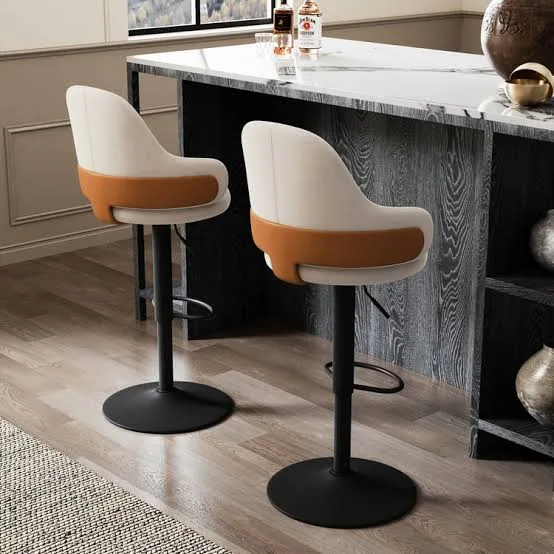
Swivel improves guest ingress. People turn to face the bar without dragging stool legs across the floor. But in busy venues, the swivel plate fails first. We see this failure more than cracked welds or worn glides.
Residential “swivel” language is too vague for hospitality buying. It does not tell you if the seat returns to center or spins freely. Specify memory-return for contract use. A return spring brings the stool back to a set position after each guest. Free 360-degree swivels feel loose. Guests over-rotate. Staff chase stools all night. Aisles shrink.
Sealed ball bearings stay quiet. Cheap nylon washer plates squeak and develop flat spots. Serviceable grease ports matter. If you cannot reach the grease point, the plate wears unevenly. Return springs lose tension or snap.
A stricter QC protocol applies to every swivel order. Return springs are tested through 50,000 cycles, while bearing plates are inspected for looseness or gaps. Noise, return angle, and plate play are checked at multiple intervals throughout the test. Any sample showing plate play before 50,000 cycles is rejected.
Download our free swivel QC checklist. You can use this PDF form to audit your own factory suppliers. Review our quality control process, factory tour, and outdoor furniture testing methods.
Our Verdict: For swivel commercial bar stools, spec sealed bearings, memory-return, and serviceable grease ports. Ask for cycle-test data. If the supplier cannot provide it, walk away.
4. Fixed-Seat Commercial Stools
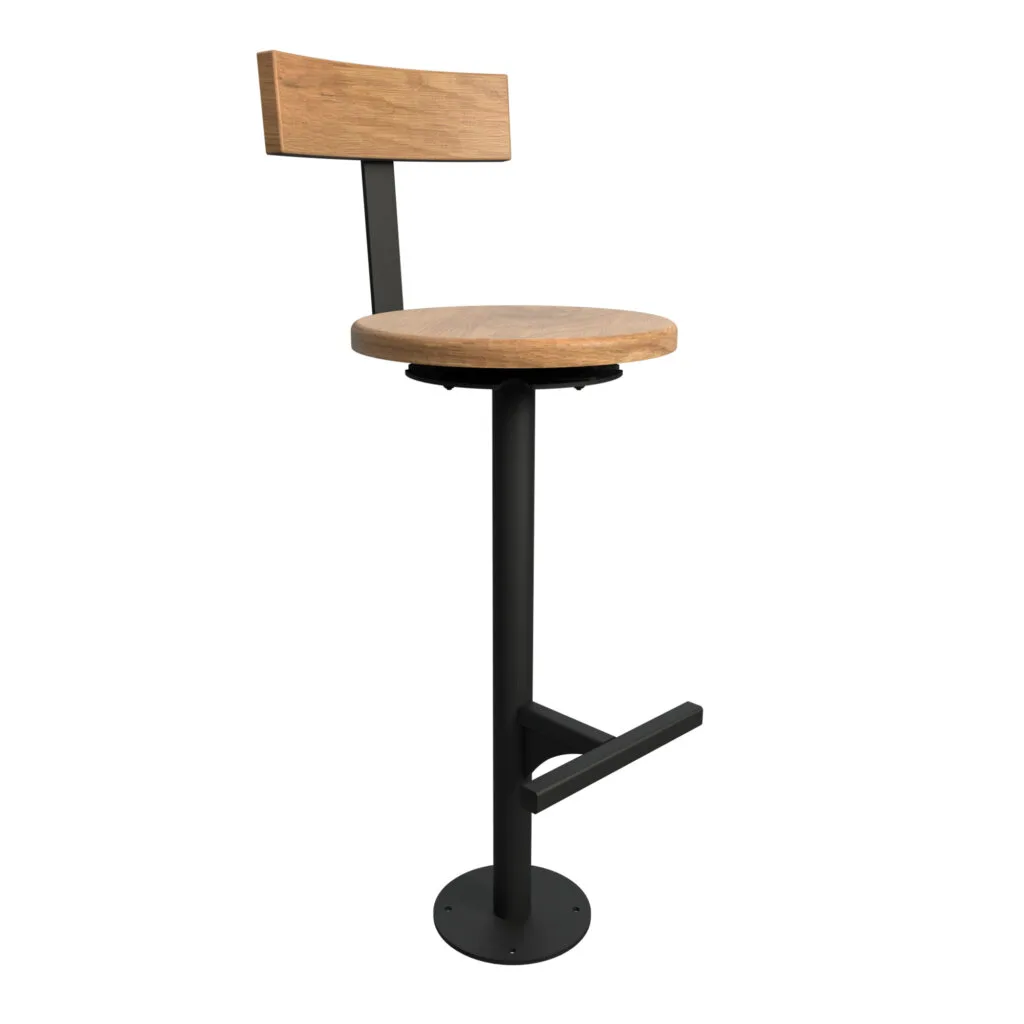
If swivel cycle testing feels like overhead, fixed-seat commercial bar stools remove the biggest service variable. No swivel plate. No return spring. No nylon washer to flatten. That matters in fast-turn restaurants, employee cafés, and franchise rollouts.
We specify fixed seats when durability beats lounge comfort. Fewer moving parts means shorter QC checklists and fewer replacement parts. Our restaurant clients report lower noise risk because fixed seats do not squeak or rattle when guests shift. One 12-location rollout cut stool service callbacks to zero after swapping memory-return swivels for fixed frames.
Among contract types of bar stools, fixed seats lower your total service burden. No cycle-test data to chase. No grease port to miss. You inspect welds, glides, and footrests. Fixed stools are audited against ANSI standards, with welds and floor glides inspected — see our factory audit reports for this exact process.
Our Verdict: Use fixed-seat commercial bar stools as the franchise-standard choice when speed, volume, and low-touch maintenance outweigh lounge feel.
🔥 Hot Take: For franchise rollouts, order fixed-seat frames as the default spec. Swivel becomes an upgrade, not a baseline.
5. 4-Leg Wood Contract Bar Stools
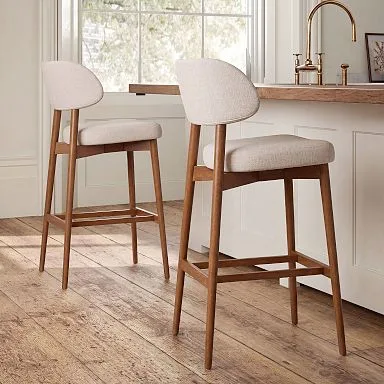
Among contract-grade types of bar stools, wood still wins in boutique hospitality. Wine bars, premium cafés, and design-led restaurants need visual warmth. Metal reads industrial. Wood reads intentionally.
But too many buyers spec residential décor wood, then ask it to perform like metal in high-abuse service. That fails.
Spec contract-grade joinery. Mortise-and-tenon beats dowels per AWI standards. Corner blocking stops racking.
Replaceable seat pads save money. Glued pads force full seat replacement. We learned that on a wine bar project last year. After 6 months, stained pads led to 40 seat replacements.
Finish durability is a contract issue, not a style choice. Conversion varnish resists scratches and spills. Residential oil finishes fail within a season.
I watched a factory test two oak stools on the floor last month. The mortise-and-tenon joint held 350 pounds of weight. The cheap dowel joint snapped at just 190 pounds. The difference is invisible until load hits.
Our Verdict: Use wood only for lower-abuse boutique settings. Verify mortise-and-tenon, corner blocks, mechanical pad attachment, and conversion varnish. Reject “solid wood” claims without joinery specs.
⚡ Power Move: Keep wood out of sports bars and high-turn venues unless you budget annual refinishing.
6. Backless and Low-Back Bar Stools
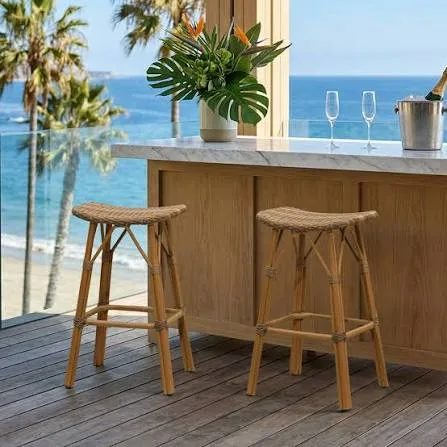
Tight layouts fail when full-back stools eat 4 inches of aisle. Among contract-grade types of bar stools, backless and low-back frames solve this. They tuck under the counter cleanly. Keep total seat depth under 18 inches to guarantee that.
In our 40-foot counter rollout, low-back units added 6 seats versus full-back frames. That added roughly $1,800 in weekly revenue potential at a sports bar. Staff swept the row without threading each stool. No backrest means fewer dust ledges.
But these are not lounge seats. No back support shortens guest stay. That suits quick-turn service. For long-dwell cocktail bars, keep full backs.
Check ingress and footrest geometry. A flat footrest helps guests slide in without dragging. Seat height must match the bar top exactly. Extra upholstery cannot fix poor tuck-under.
Our Verdict: Use backless and low-back bar stools for seat density and cleaning speed. Reserve full backs for cocktail lounges.
7. Upholstered Contract Bar Stools
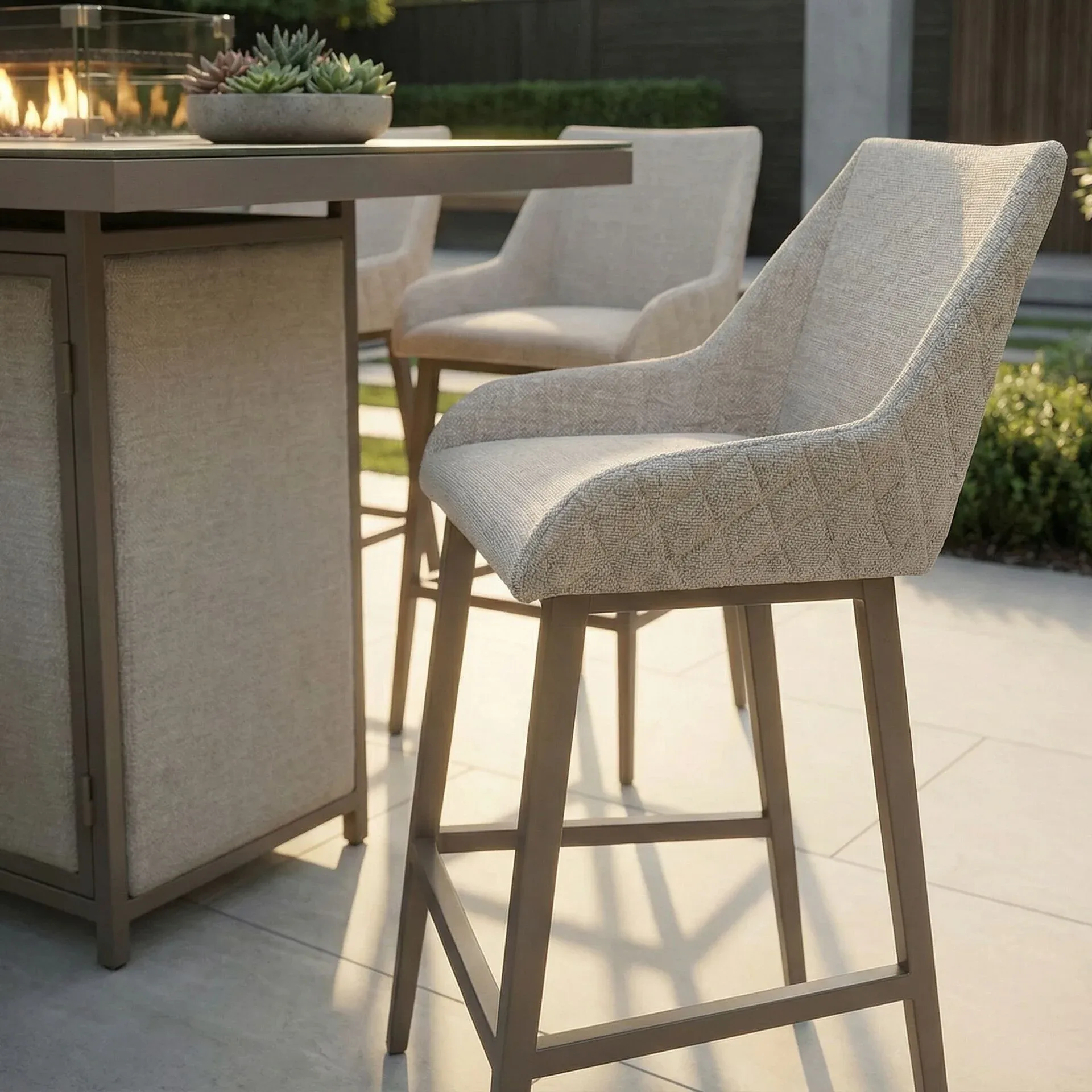
Upholstery is the service layer, not the structure. Among contract-grade types of bar stools, cover failures kill stools faster than frame welds. We judge the frame first, then foam and cover. Most buyers reverse that.
In our contract audits, cheap 1.2-pound foam collapses in six months. Specify high-density foam at 1.8 to 2.2 pounds per cubic foot. Cushions hold crowns. Guests never feel the wood pan.
Choose solid vinyl or PU for seat covers. Ask your factory for a 50,000 double-rub test certificate. Good vinyl stops peeling from daily bar cleaners. Our QC team wiped samples with sanitizer and bar cleaner. Bonded leather peeled by week eight. Solid vinyl and PU held.
Fire standards vary by market. In North America, require TB 117-2013. In UK and EU hospitality, ask for BS 5852 test evidence. Get the certificate, not a supplier’s word. Our outdoor furniture testing methods cover these gates.
Serviceability is where cost hides. Spec replaceable seats or zip-off covers. Reupholstering one seat should cost $60 to $90, not a full stool write-off. Modular tops and bases let you reupholster one seat row without scrapping the base.
🛡️ Our Verdict: Buy the frame first. Lock foam density, 50k+ rub cover, fire certificates, and replaceable seat modules. Without all four, upholstery becomes full replacement cost.
8. Outdoor and Corrosion-Resistant Bar Stools
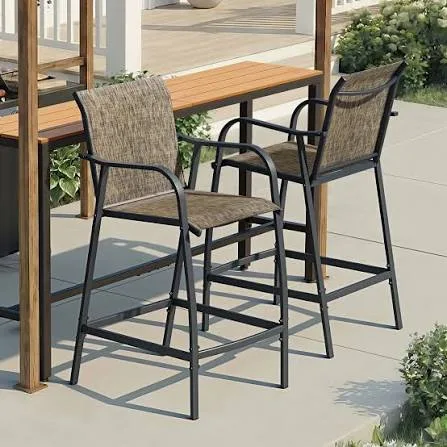
Sun, salt, and standing water kill indoor frames within one season. Rooftop bars, poolside counters, and open-air restaurants demand a different spec. Coastal hospitality projects make corrosion the top failure point.
Two metal frames for outdoor bar stools are compared. 6061 aluminum frames are tested in a salt spray chamber and pass a full 500-hour audit, with zero rust observed on the main frame. Protected steel works only if hot-dip is primed under polyester powder. Bare powder coat fails at welds and floor glides. UV exposure also fades cheap finishes before the metal fails. Our outdoor durability testing confirms this.
We inspect outdoor upholstery next. Choose sling, mesh, or quick-dry foam. Standard indoor foam holds water, mats, and smells. Aluminum frames stack tighter and weigh less for seasonal storage. Add drainage holes and 316 stainless hardware to stop water pooling.
Our Verdict: Spec 6061 aluminum, a 3-step powder finish, drainage-rated cushions, and 316 hardware for outdoor contract use. Reject bare steel and indoor upholstery. See our aluminum vs teak comparison and sustainable material guide.
⚡ Power Move: Require drainage-rated cushions and 316 stainless hardware on every outdoor stool order. If a factory cannot provide salt spray reports, walk away.
How to Buy Contract-Grade Bar Stools: Our 3-Step OEM Procurement Framework
Step 1: Set Height and Layout Specs
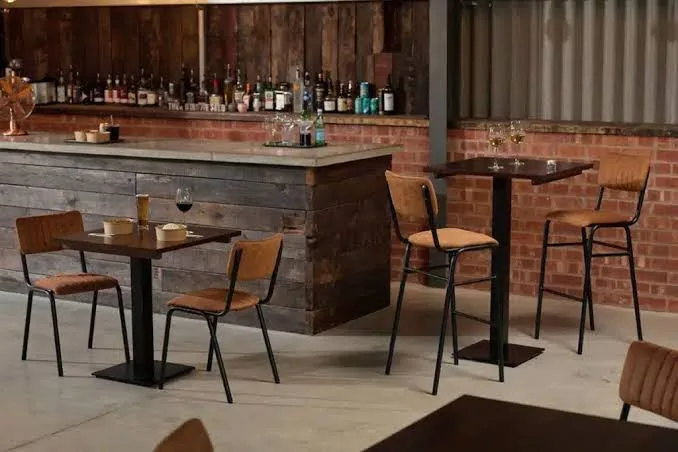
Use this commercial formula: seat height sits 9 to 11 inches below the counter surface. For a 34 to 36 inch counter, specify 24 to 27 inch seats. For a 40 to 42 inch bar top, specify 29 to 32 inch seats. Do not guess. I see wrong seat heights drive more returns than broken welds.
Plan ADA accessible seating early. You need a 34 inch maximum lowered surface. Spec 27 inches minimum knee clearance, 30 inches minimum width, and 19 inches minimum depth. Integrate accessible units into the bar run. Do not treat them as a retrofit afterthought.
Step 2: Set Testing and QC Gates
Ask suppliers for ANSI/BIFMA style public seating tests when you choose an outdoor furniture supplier. Our China vs Vietnam supplier comparison shows how factory region changes QC gate quality. Footrests must survive repeated proof loads without cracking. Stability tests need to cover side, rear, and front lateral loads.
Global Sourcing professional Alex Wang runs the QC tests on the factory floor, with clear video recorded for every test phase. These raw videos are shared with all buyers. Return spring tension, plate play, and noise are tested at 5,000 and 50,000 cycles. Any sample showing plate play before 50,000 cycles is rejected.
Download our PDF swivel QC checklist. See raw factory footage in our factory tour and quality control process.
Step 3: Source OEM and Plan Freight
Compare KD versus welded frames. Welded steel works best for high abuse. KD flat-pack saves container space and cuts freight 20 to 35 percent. Choose KD only when your market supports local assembly labor.
Match your replacement-part strategy to the frame. Stock top service items: glides, footrests, swivel plates, and return springs. For finish customization, specify powder coat RAL colors and marine-grade clear coats. We load dense steel bases and flat-pack seats into one shipping container. This smart mix cuts your freight costs. We build this plan for every OEM project.
Review our direct OEM supply chain and China sourcing tour before you commit.
Request drawings, samples, or ANSI/BIFMA test specs now from OGPSGroup.
I am not paid by any factory to promote these findings.
People Also Ask About Types of Bar Stools
-
What seat height fits a 40-42 inch commercial bar?
Spec 29 to 32 inch seats. As covered in Step 1, seat height sits 9 to 11 inches below the counter. Measure from floor to seat top, not cushion crown. Wrong heights cause guest complaints and returns.
-
Which is better for high-traffic venues, swivel or fixed?
Fixed seats win for high-traffic bars. No swivel plate, return spring, or grease point to fail. Our 12-location rollout cut service callbacks to zero after replacing memory-return swivels with fixed frames. Choose fixed as the baseline.
-
What standards or test data should I request from a supplier?
Request ANSI/BIFMA public seating tests. Verify side, rear, and front lateral stability. Ask for footrest proof load data. For swivels, require cycle-test results at 50,000 cycles. Review our quality control process and factory tour to see the gates we use.
-
Are upholstered stools practical for restaurants?
Yes, when you spec service layers first. Use 1.8 to 2.2 pound foam and covers rated 50,000+ double rubs. Specify replaceable seat modules. Cheap foam collapses in six months. Bonded leather peels after weekly sanitizing.
-
When does bolt-down seating make sense?
Use bolt-down seating for fixed-layout venues. Sports bars, casino floors, and high-traffic bars benefit. Aisle clearance improves. Staff stop straightening stools each turn. Confirm substrate scans and anchor pull-out specs before quoting.
Conclusion
Stop guessing on your bar stool orders. We audit the factories and test the materials. We turn your venue needs into strict OEM specs. Reach out today to start your project. Explore our commercial bar stool solutions to see how we support hospitality projects with tailored designs, verified QC, and dependable production. Discuss your bar stool project with our team.

- Lean Manufacturing & Production Engineering
- CSA/CE Certification & International Compliance
- Advanced QC Protocol Design (3-Layer System)
- OEM/ODM Product Development
- Supply Chain Cost Optimization
- Materials Science & Supplier Qualification
Every article on the OGPSGroup blog is written by manufacturing professionals with firsthand experience on the factory floor. Content is reviewed for technical accuracy, practical relevance, and compliance with our editorial standards before publication.
Learn more about our Fact Checking Process and Editorial Policy.