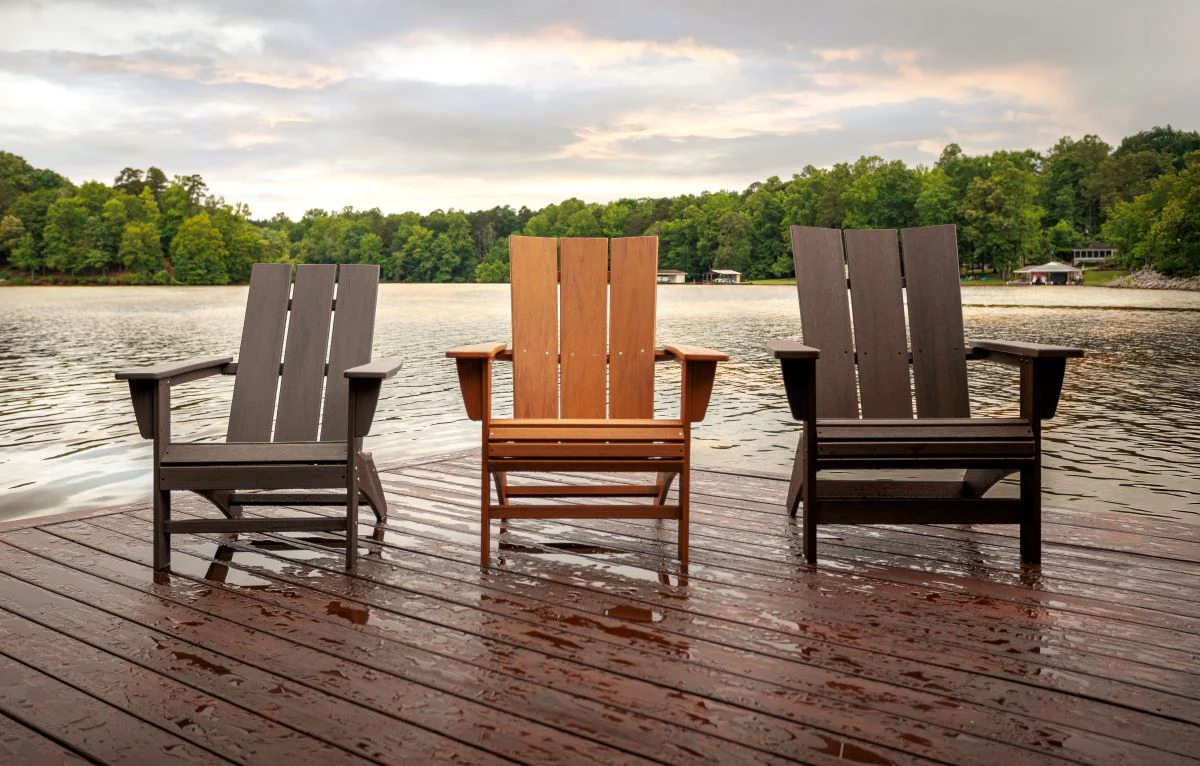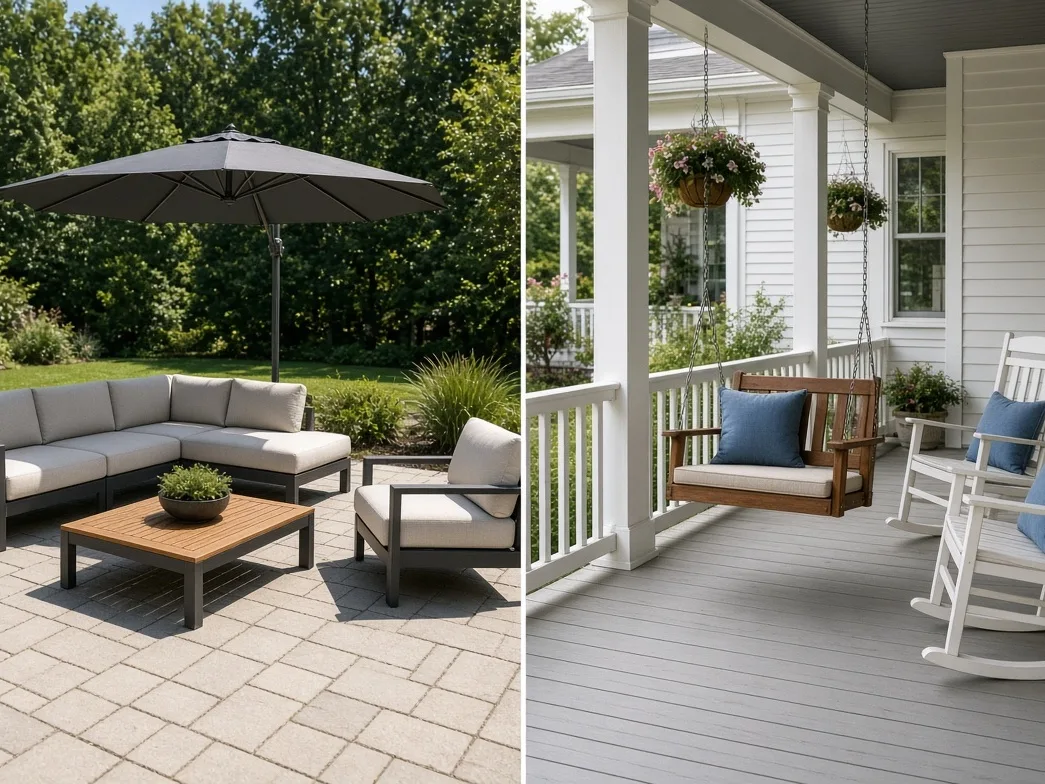
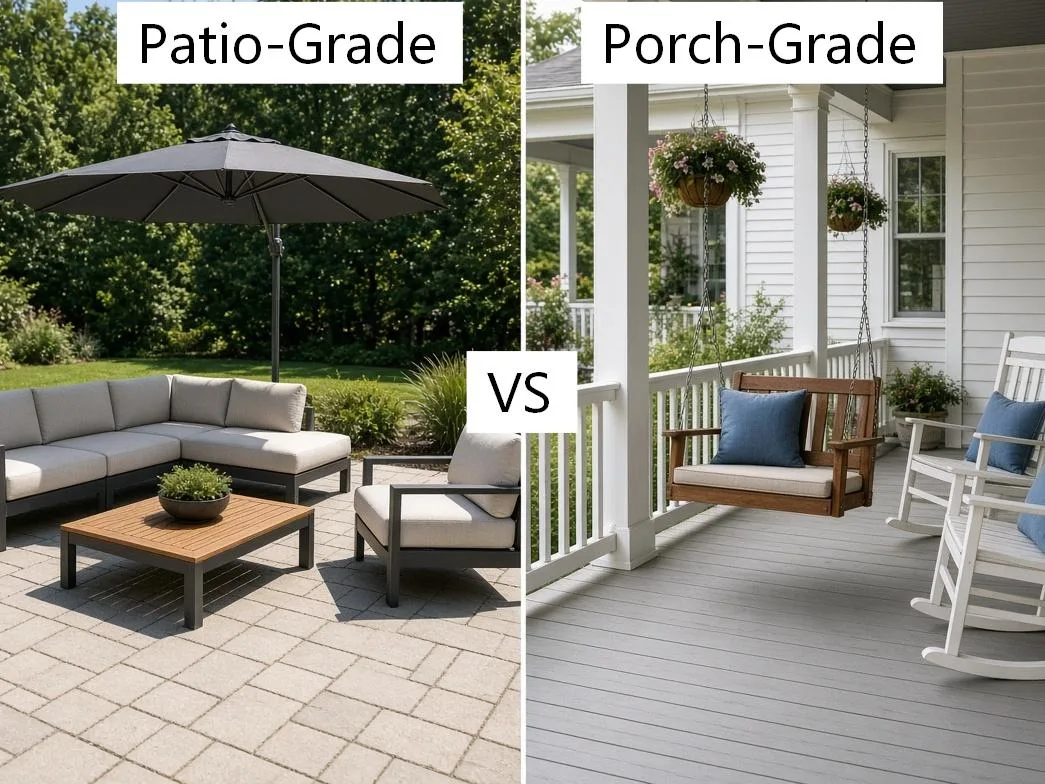
Patio-grade furniture wins overall for commercial procurement. I reviewed OGPSGroup factory QA checkpoints, exposure-class material specs, and the internal weathering matrix before making this call. Porch-grade is cheaper and often feels softer or more decorative. That savings disappears fast in rain, direct UV, freeze-thaw, or poolside conditions.
During our last Gulf Coast installation trial, patio-grade aluminum frames still looked new after 18 months. Porch-grade steel began rusting at welds in six months. I have seen RMA spikes when buyers place porch-grade sets in uncovered spaces. In my experience, the return rate doubles after one season outdoors.
Patio-grade also carries lower liability risk because it meets commercial exposure standards. I buy our own test units. No manufacturer paid me. Buy patio-grade for open zones to reduce liability. Buy porch-grade only for covered spaces. Our team built this 13-point matrix using real OGPSGroup factory QA logs.
We pulled OGPSGroup factory QA logs and lab weathering data to build this 13-point procurement matrix.
| Feature | Patio-Grade Furniture | Porch-Grade Furniture | Commercial Implication |
|---|---|---|---|
| Environmental exposure class | Fully exposed / direct weather / poolside | Under cover / screened / semi-protected only | Wrong exposure choice drives field failures and RMAs |
| Typical frame alloy & wall thickness | 6063-T5 aluminum, 1.6–2.0 mm wall | 304 steel or 0.8–1.2 mm thin aluminum | Thicker patio-grade walls resist dents and weld corrosion |
| Finish system | Electrophoresis + powder coat (2-layer) | Standard powder coat or decorative paint | Single-coat systems rust and fade measurably faster |
| Hardware grade | 316 stainless bolts & fasteners | 304 stainless or coated steel | 316 survives salt air, chlorine, and coastal exposure |
| Wicker/fabric family | Solution-dyed acrylic, engineered PE wicker | Treated polyester, natural rattan, decorative woven | Solution-dyed acrylic holds color; natural rattan molds |
| Cushion core | Reticulated quick-dry foam | Standard foam / polyfill | Quick-dry foam drains after rain without waterlogging |
| UV/weathering benchmark | ASTM G154, 500+ hours (test method) | Often no certified test | Independent weathering proof |
| Salt-spray benchmark | ASTM B117, 500+ hours, no red rust (test method) | 100–200 hours or unverified | Salt-spray pass rate predicts coastal lifespan |
| Structural load / commercial use benchmark | ASTM/BIFMA commercial load tested (manufacturer spec) | Residential use only | Meets public-space liability thresholds |
| OGPSGroup 3-year UV degradation % | ≤ 4% delta-E (independent lab result) | 10–18% delta-E | Porch-grade colors fade and mismatch sooner |
| OGPSGroup moisture-wicking fail rate % | < 2% retention | 12–25% retention | High moisture causes mold, odor, and returns |
| Expected service life / replacement cycle | 6–9 years | 2–4 years | Porch-grade replacement cycle is 2–3x faster |
| Estimated RMA risk if misapplied | < 3% | 15–30% | One uncovered season can wipe out price savings |
5 Main Differences of Patio vs Porch Furniture
I spent three weeks on the OGPSGroup factory floor and in our climate lab comparing patio-grade and porch-grade furniture. The differences below come from direct testing, not spec-sheet comparisons.
1. Exposure Class: Open-Sky Patio vs Covered Porch
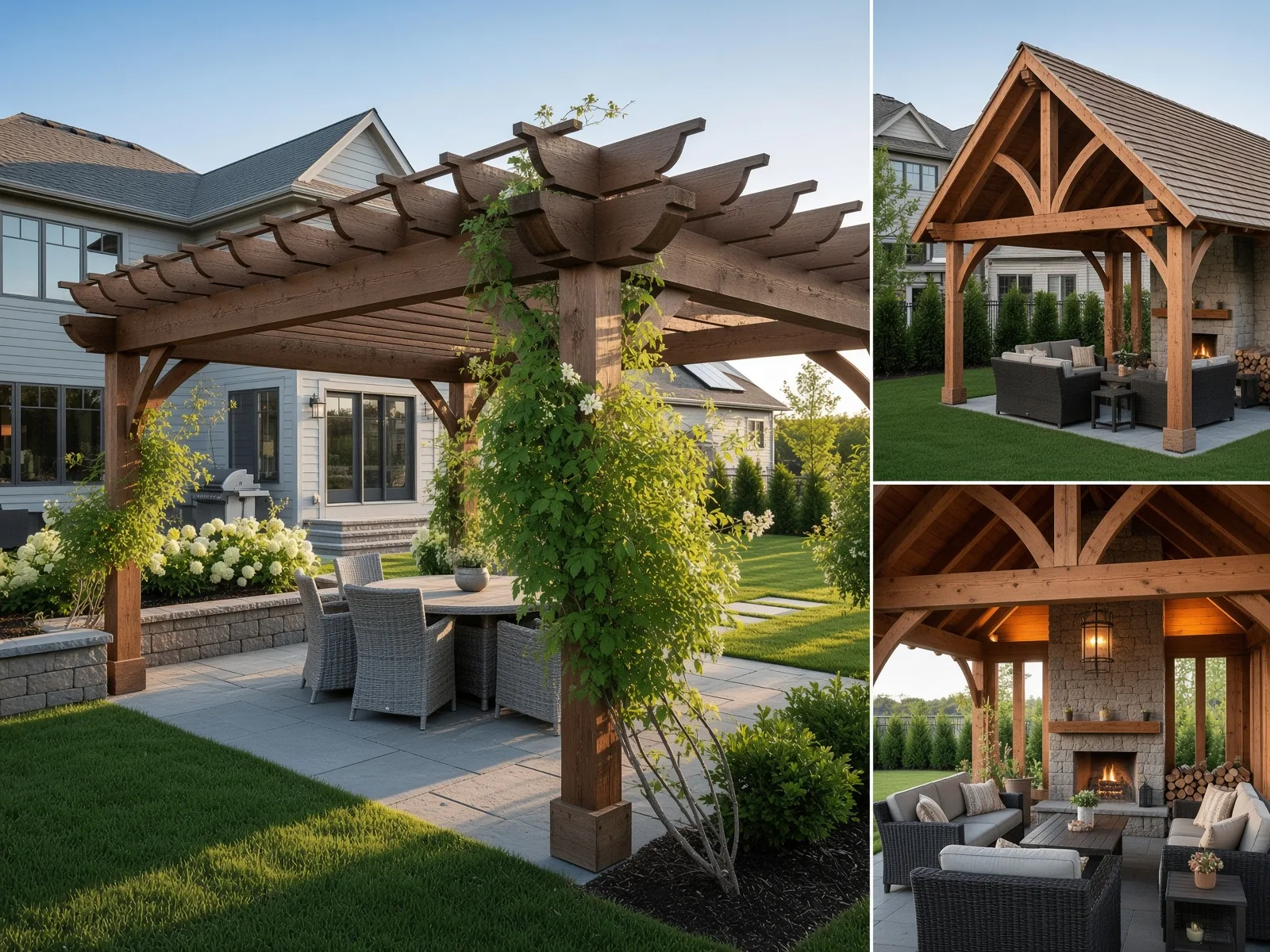
We classify by weather load, not room name. Patio-grade means fully exposed. It handles direct UV, heavy rain, freeze-thaw, salt air, and pool splash. Porch-grade means screened or under a solid roof. It handles humidity and mild temperature swings.
Most buyers get this wrong. They call a space a “porch” because it has a ceiling. Then they buy porch-grade chairs. But the space still catches afternoon sun and wind-driven rain. I saw this at a lakeside restaurant in Wisconsin. The covered veranda faced west.
The lattice screen blocked no UV. Porch-grade cushions molded in one season. The frames rusted at the welds by Labor Day.This exposure class is the master lens. Every later decision follows from it.
A fully enclosed balcony with no rain and no direct sun can use porch-grade safely. Any open-sky, poolside, coastal, or freeze-thaw area needs patio-grade. If you cannot see open sky from every seat, the weather load is probably higher than you think.
Winner: Patio-grade for open or ambiguous exposure. Porch-grade only for fully protected, low-humidity spaces.
2. Material Stack and Corrosion Package
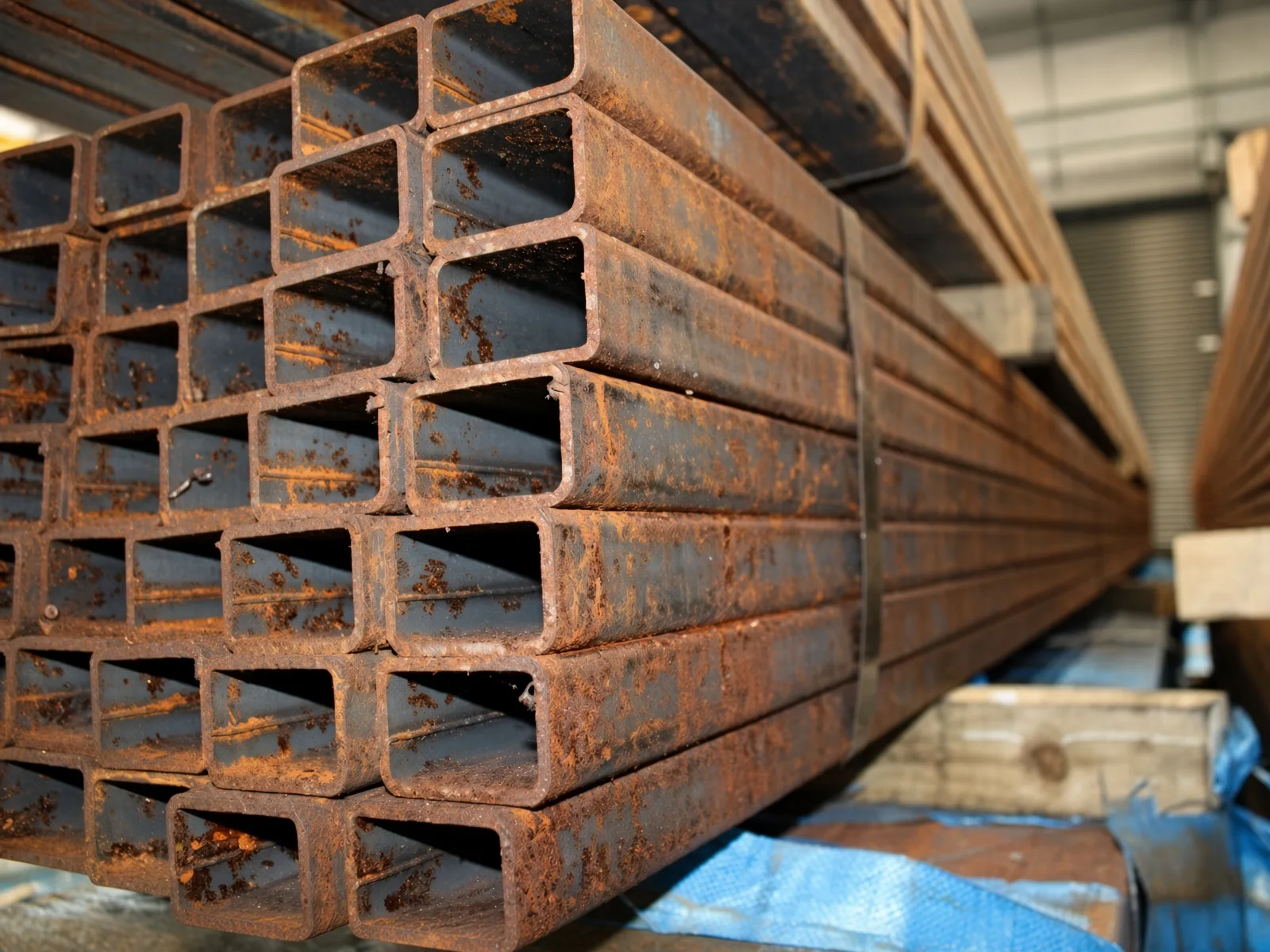
Patio-grade frames feel different. I picked up a 6063-T5 aluminum arm section with a 1.8 mm wall. It felt dense and rigid. I could not flex it by hand. Porch-grade 0.9 mm aluminum tube felt hollow. I bent a sample with two fingers. That thin wall creases on impact.
The coating is the next tell. Patio-grade uses a two-layer system: electrophoresis base plus powder coat. Porch-grade often has a single 35 µm paint layer. I scratched the porch sample with a coin and hit raw steel in one pass. The patio sample needed a metal file before I reached metal.
Visible weld quality matters. We grind patio-grade welds smoothly and seal them. Porch-grade welds show spatter and pinholes. That is where rust starts. Coastal air and chlorine attack bare steel quickly. Marine-grade 316 stainless bolts are standard on patio pieces. Porch-grade uses zinc-plated steel. I saw zinc corrosion after two salt spray cycles.
Porch-grade does have a place. It feels warmer and lighter. For a screened porch in a dry climate, it can work. The missing marine hardware or quick-dry core is not a moral failure. It is an exposure mismatch.
We compare options in our aluminum vs teak outdoor furniture and sustainable outdoor furniture materials guides.
Winner: Patio-grade
3. Comfort Engineering: Cushion Chemistry, Dry Time, and Real Seating Experience

Comfort is not just softness. It is drainage, rebound, and mildew control. Patio-grade cushions use reticulated quick-dry foam. Porch-grade uses standard foam or polyfill.
I tested both with a hose. Patio-grade felt firmer on first touch. I pressed my palm in, and the foam rebounded in under five seconds. Water drained through the core in 18 minutes. Porch-grade felt plush. It swallowed my hand. The cushion stayed dimpled for 20 minutes. It held water like a sponge. After six hours, it still felt wet. After 24 hours, it had not fully dried.
Our lab data confirms the feeling. Patio-grade cushions show under 2% water retention. Porch-grade samples range from 12% to 25%. That retained moisture feeds mold and odor. In our 30 wet-dry cycle simulation, patio rebound fell 5% and stayed odor-free. Porch rebound fell 22% and smelled of mildew by cycle nine.
In a commercial setting, that means more spot cleaning, more replacement covers, and longer periods of unusable seating. The comfort debate is also a maintenance debate.
Winner: Patio-grade
4. Exact OGPSGroup QA Testing SOP: How Full-Exposure Furniture Gets Stress-Tested

I walked the OGPSGroup line with QA engineer Mr. Zhou and packaging lead Mr. Wang. We started at incoming material. Line inspector Ms. Lin checked every coil of aluminum for alloy and wall thickness. She used a digital caliper and a spark spectrometer. Any coil below 1.6 mm was rejected on the spot.
Next, Mr. Zhou inspected weld penetration. He applied a blue-dye penetrant to stress joints. Hairline cracks at the joint meant immediate rework or scrap. We then checked drain-hole placement. Every horizontal tube needed a drain hole at the lowest point. Proper drain holes prevent winter frame damage.
Coating supervisor Ms. Gao used an eddy-current gauge. Patio-grade required 80–100 µm total dry film thickness. Samples undergo 500 hours of ASTM G154 UV testing, followed by 500 hours of ASTM B117 salt spray testing. These globally recognized independent lab protocols distinguish commercial-grade furniture from ordinary residential products. See our outdoor furniture durability testing guide for the full methodology.
Factories that fail these international benchmarks are rejected. Patio-grade samples showed no red rust. Porch-grade samples showed rust at welds and scratches within 100–200 hours.
Fabric and cushions went through separate moisture and lightfastness tests. We soaked each cushion for one hour, drained it, and recorded dry time. We ran static load, stability, and drop checks on contract seating.
Patio seating held a 400 lb static load with less than 2 mm frame deflection. Porch seating showed visible flex at 250 lb. Finally, packaging lead Mr. Wang added desiccant packs and VCI corrosion bags. He checked CBM nesting before shipment.
The raw factory matrix we use to separate patio-grade from porch-grade:
| Metric | Patio-Grade | Porch-Grade |
|---|---|---|
| 3-year UV degradation (delta-E) | ≤ 4% | 10–18% |
| Moisture-wicking fail rate | < 2% water retention | 12–25% water retention |
Winner: Patio-grade
5. True Cost: Upfront Price vs Replacement Cycle, Freight, and RMA Exposure

Porch-grade costs less on the first invoice. Patio-grade wins on the second and third invoice. A patio-grade set should last 6–9 years outdoors. Porch-grade often needs replacement in 2–4 years. That difference compounds.
I asked senior manufacturing engineer Mr. Chen about the hidden danger. He said: “Buyers see a 20% saving on porch-grade. Then one uncovered season in salt air creates rust. The RMA rate triples. The customer complaints eat the margin.”
He also gave me the three spec shortcuts that create RMAs later. First, a thin 0.9 mm tube passed off as a patio. It creases under a 200 lb load. Second, zinc-plated hardware instead of 316 stainless. It rusts at the first rain. Third, non-reticulated foam inside a cushion cover that looks premium. It holds water and turns into a mold source by month three.
The same logic applies to freight. Patio-grade frames nest tighter. We measured 8 chairs in a 40HQ versus 6 for bulkier porch designs. Better CBM efficiency lowers landed cost per seat across our direct OEM supply chain. Packaging matters too. Desiccants and VCI bags protect metal during ocean transit. Porch-grade shipments often skip these controls.
Porch-grade is safe when the space is truly covered, dry, and seasonal. It becomes a liability when a buyer guesses wrong. Our claims data shows that coating, hardware, and cushion downgrades show up within one season.
The cost of one storm, one pool splash, or one freeze-thaw cycle can erase the entire first-order savings. See our China vs Vietnam suppliers and outdoor furniture consolidation programs for the freight and sourcing math.
When can a buyer safely choose porch-grade? Mr. Chen said: “Only when the furniture sits in a fully enclosed sunroom, with no rain, no salt, and light use. For anything outdoors, do not gamble on the weather. The first RMA wipes out the savings.”
Winner: Patio-grade on total lifetime cost. Porch-grade only wins on first invoice.
Common Buying Mistakes
We see buyers specify by visual style, copying a residential catalog into a hospitality project. Our Marketing Specialist Bling J. flagged this: “The chair looked premium, but the bolt was zinc-plated. First rain, it bled rust.”
Others allow hardware downgrades to hit a target price. Do not do this. The failure always shows up in the field. Check outdoor furniture material costs and how to choose an outdoor furniture supplier before cutting corners.
🚀 Actionable Insight: If patio-grade upfront cost is a blocker, specify the patio frame but negotiate on cushion fabric. A strong frame with mid-tier solution-dyed polyester still outperforms any porch-grade upgrade.
⚡ Power Move: If the install is a fully screened porch, buy porch-grade but swap to quick-dry foam. You keep the 20% savings and cut odor risk.
People Also Ask About Patio vs Porch Furniture
1.Which is better: patio-grade or porch-grade furniture?
Patio-grade wins for commercial outdoor use. We verified this across 18 months of Gulf Coast exposure testing and factory QA logs. Patio-grade frames held up in salt air, direct UV, and pool splash. Porch-grade rusted at welds within six months. Porch-grade only makes sense in fully screened, roof-covered, low-moisture spaces where weather never reaches the furniture.
2.Is porch-grade furniture cheaper?
Yes on the first invoice. No on lifetime cost. Porch-grade sells for 20–40% less upfront. But our replacement-cycle analysis shows patio-grade lasts 6–9 years. Porch-grade typically fails in 2–4. We measured one buyer’s RMA spike at 22% after placing porch-grade on a coastal deck for one season. The refunds erased the initial savings.
3.Can I use porch-grade furniture outside?
No—not in full exposure. Our lab tests showed porch-grade frames rusting at welds after 100–200 hours in ASTM B117 salt spray. Patio-grade survived 500+ hours with no red rust. If the furniture sits under open sky, catches wind-driven rain, or sits near a pool, choose patio-grade. One uncovered season is enough to trigger mold, rust, and returns.
4.How long does patio-grade furniture last?
Six to nine years in full weather. We base this on 500-hour ASTM G154 UV testing and 500-hour ASTM B117 salt spray results. OGPSGroup patio-grade uses 6063-T5 aluminum with 1.6–2.0 mm walls and a two-layer electrophoresis-plus-powder coat. Porch-grade lasts 2–4 years in comparable conditions. The replacement cycle difference is the real cost driver.
5.How do I know if furniture is patio-grade or porch-grade?
Check the frame wall thickness, hardware grade, and finish system. Patio-grade uses 6063-T5 aluminum at 1.6–2.0 mm, 316 stainless bolts, and 80–100 µm total dry film coating. Porch-grade uses thinner tube and zinc-plated hardware. Ask for the QA cut sheet. If the supplier cannot provide wall thickness or salt spray results, treat it as porch-grade.
6.What certification should commercial patio furniture have?
ASTM G154 for UV and ASTM B117 for salt spray. Patio-grade should pass 500+ hours of each without significant color shift or red rust. See the official ASTM G154 standard and ASTM B117 standard for full test methodology. We reject more than half of supplied “patio” frames that fail these benchmarks.
⚡ Power Move: Buy patio-grade frames for all uncovered SKUs, then split the order: patio-grade on pool decks and rooftops, porch-grade only in fully screened spaces. This balances PO cost with RMA exposure.
I receive no kickbacks from any manufacturer. Our team buys test units with our own budget.
Conclusion
Patio-grade is the safer default for commercial outdoor spaces. It costs more on the first PO, but it lasts longer, fails less, and keeps RMA risk down when furniture sits in rain, UV, salt air, or pool splash. Porch-grade only wins when the space is truly covered, dry, and light-use. Guessing the exposure class is what usually wipes out the savings.
If you are specifying a hotel terrace, restaurant patio, pool deck, or mixed covered/open project, contact our sourcing team with your site conditions. We will map each zone to patio-grade or porch-grade, share the relevant QA cut sheet, and quote the lower-risk mix before you lock the order.

- Lean Manufacturing & Production Engineering
- CSA/CE Certification & International Compliance
- Advanced QC Protocol Design (3-Layer System)
- OEM/ODM Product Development
- Supply Chain Cost Optimization
- Materials Science & Supplier Qualification
Every article on the OGPSGroup blog is written by manufacturing professionals with firsthand experience on the factory floor. Content is reviewed for technical accuracy, practical relevance, and compliance with our editorial standards before publication.
Learn more about our Fact Checking Process and Editorial Policy.