In my experience, relying on vague supplier claims like “waterproof” leads to severe fading, rapid mildew, and seam leakage. This guide replaces those empty promises with measurable specs and hard approval gates.
This is an intermediate-to-advanced procurement workflow, not a beginner decor article. To build this playbook on outdoor cushion manufacturing, my team spent three weeks auditing factory floors and reviewing anonymized 500-hour QUV test telemetry based on official ASTM G154 testing standards. I receive no kickbacks from these textile mills.
I will show you our exact process to specify, audit, and approve production. We start at material selection and end at shipment release. We provide our 7-point factory-floor inspection SOP and an interview with an OGPSGroup QC leader on spotting genuine solution-dyed acrylic to eliminate same-factory commoditization risk.
Here is the initial supplier qualification checklist.
Prerequisites
Estimated Timeline: 4-6 Weeks (RFQ to PO) | Difficulty: Advanced
We built this procurement baseline after conducting outdoor furniture factory audits at 20 textile mills. Approaching suppliers with vague specs guarantees substandard products. Prepare these inputs:
- Commercial Parameters: Define the use case (open-sun, hospitality, marine), launch window, annual volume, margin constraints, and packaging rules.
- Dimensional Specs: Map exact dimensions and thickness for every seat, back, and ottoman. Factories default to cheap polyurethane. Demand specific high-resiliency foam and firmness targets.
- Material & Hardware: Specify your fabric family, UV/mildew expectations, and heavy-duty zippers. Separate water-repellent from true waterproof needs.
- Compliance & Traceability: Document destination-market fire codes, chemical restrictions, and labeling rules before sampling. Demand coating declarations. When we choose an outdoor furniture supplier, we mandate that “marine-grade” claims include raw data from ISO 105-B02 testing, not marketing fluff.
⚠️ Safety First: A direct OEM supply chain fails if Procurement, Product Development, and QA do not jointly sign off on the acceptable quality limit (AQL) and rework rules. Enforce hard approvals across five gates: RFQ, first sample, golden sample, pilot run, and bulk PO.
Outdoor Cushion Manufacturing: 6 Proven Steps to Quality
Avoid common failures and create durable products. Apply the steps and see results quickly.
Step 1: Engineer the Fabric and Foam Specs
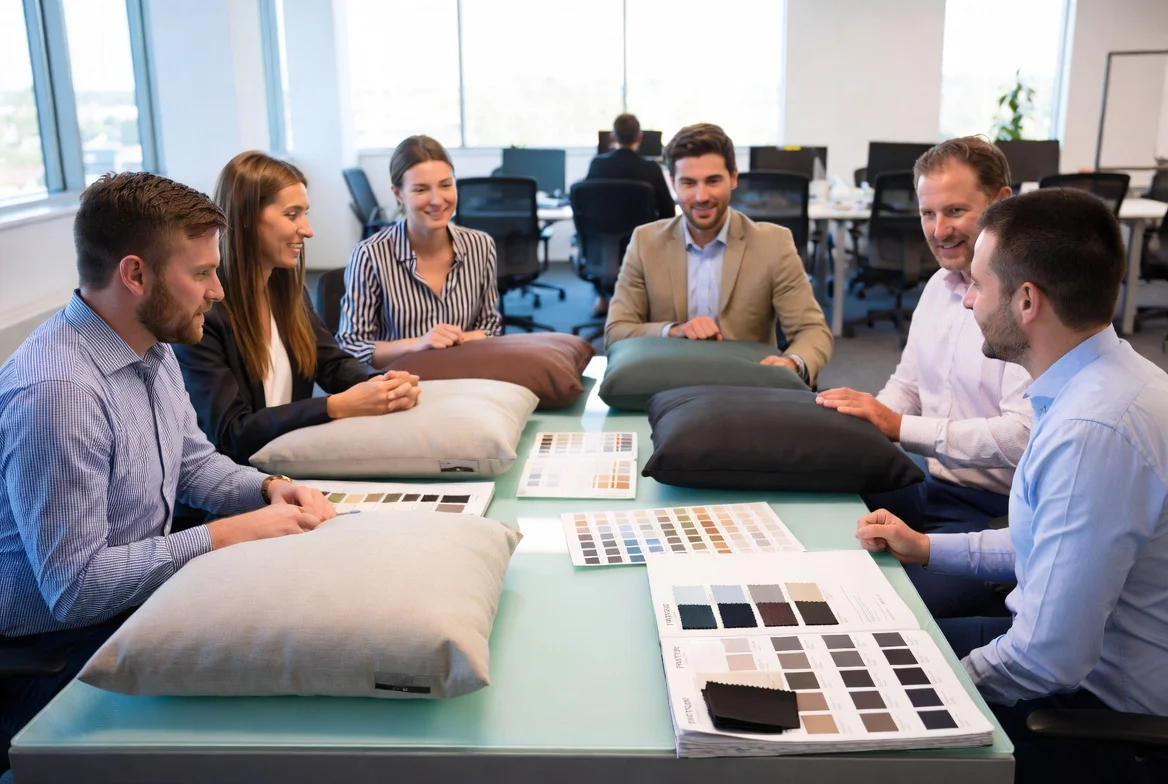
Begin by mapping your cushion to its exact exposure level. We categorize programs into three tracks: covered residential patios, exposed hospitality decks, and bulk marine environments. The exposed deck is your primary path. Covered patios offer a lower-cost alternative.
Choose your fabric class based on this exact track. Specify solution-dyed acrylic for harsh sun and premium hospitality. Select solution-dyed polyester for balanced cost and performance. Use olefin for cost-sensitive programs with realistic lifespan expectations.
Convert marketing language into measurable manufacturing specs. Demand a 1500-hour UV lightfastness rating and a specific hydrostatic head target for water resistance. You must order YKK Vislon size five marine zippers. These resin teeth resist salt and UV damage. Standard nylon zippers will crack after one summer.
Specify foam engineering separately for seats, backs, and ottomans. Use reticulated quick-dry foam for drainage-critical open exposures. Specify high-density PU foam with a Dacron wrap when exposure is strictly controlled.
Never accept vague comfort labels like “plush” or “firm.” Set a strict Indentation Load Deflection (ILD) target of 32-35 for seat cushions. If you ship compressed, state a clear vacuum-pack recovery expectation. Require the foam to regain 100% thickness within 48 hours.
Perform a physical sensory check on the factory floor. Do not rely on visual color swatches for approval. The fabric should feel distinctly woven and textured, not slick. Water must bead up instantly on the face fabric. Press the seat foam heavily with your hand. It should snap back to its original shape in under two seconds.
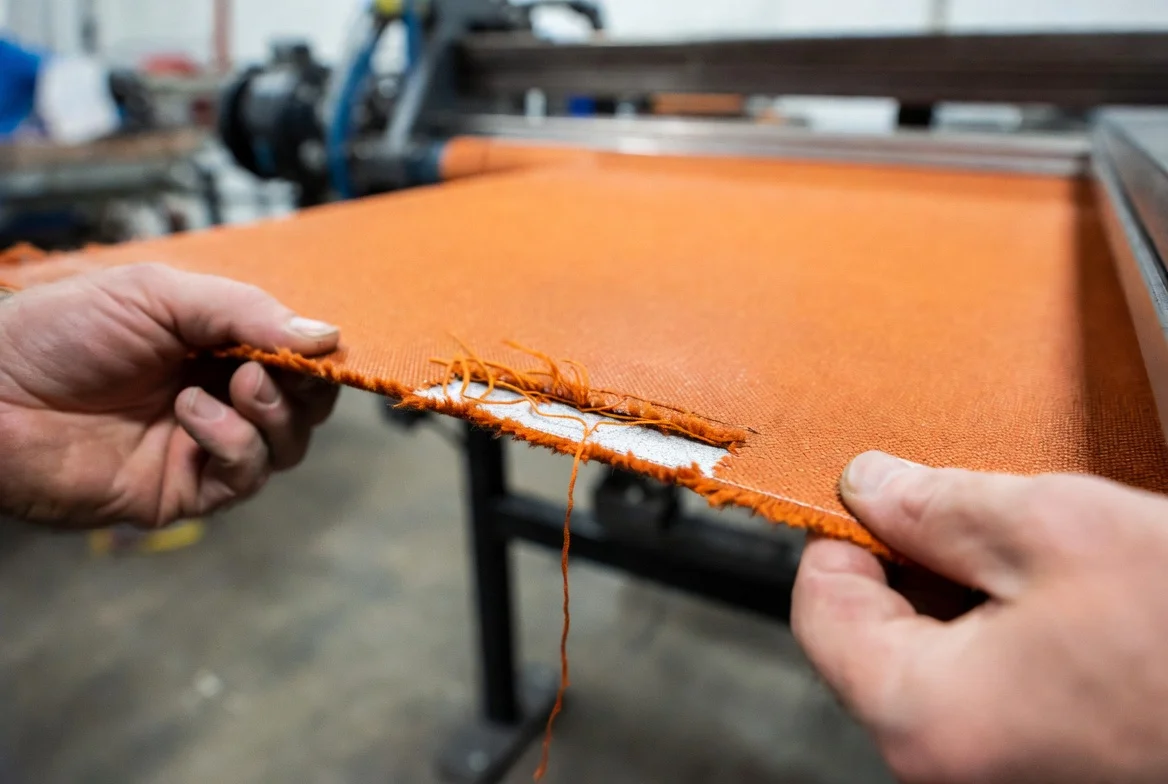
Our procurement agent Andi recently audited a fabric mill. The supplier tried to pass off coated polyester as solution-dyed acrylic. Andi caught the fake by fraying the yarn edge. The white core proved it was a cheap imitation.
⚠️ Experience Warning: Factory reps often present a thick, premium swatch during initial negotiations. When bulk production begins, they stealthily drop the fabric weight by 50gsm. Always weigh the approved golden sample yourself before signing the PO.
Step 2: Audit the Factory and Authenticate Fabric Claims
Daily audits are conducted from the Shenzhen office, with frequent visits to Guangdong workshops specializing in outdoor furniture manufacturing. Factories are often found selling the exact same cushions to competing brands. This signals high subcontracting risk and zero genuine quality control.
Conduct an on-site factory tour to verify their true capabilities. Inspect their cutting tables, sewing lines, coating equipment, and packing stations. Ask the floor manager to detail their specific seam leakage controls.
Look for dedicated sample retention racks to confirm they follow golden-sample procedures. If you cannot visit, hire a third-party inspector for a remote document review. Be aware this limits your visibility into stealth subcontracting.
Require absolute proof for fabric authenticity. Demand original mill certificates, lot numbers, Pantone lab dips, and construction specs. Compare these test documents directly against the factory’s sell sheet.
When verifying marine-grade claims, inspect the top-right field of the SGS salt-spray test report. This confirms the zipper hardware actually resists corrosion. Reject suppliers showing missing traceability or inconsistent fabric naming.
Perform a sensory check on the raw yardage. Inspect the cleanly cut edge of the roll. Genuine premium fabric drapes naturally. Coated alternatives feel stiff and plasticky.
How our head of QC verifies genuine solution-dyed acrylic versus coated lookalikes:
Q: What is your first physical check?
QC Lead Wei: “I fray the cut edge and untwist a single yarn. Genuine solution-dyed acrylic has color running entirely through the core. Coated lookalikes have white centers.”
Q: How do you spot cheap waterproofing? QC Lead Wei: “I scratch the back of the fabric. Coated substitutes hide a shiny polyurethane back-coating that flakes off. Real acrylic relies on yarn chemistry, not surface glue.”
Q: What documents do you cross-check? QC Lead Wei: “I match the mill lot code printed on the fabric selvedge directly to the shipping certificate. If they do not match exactly, we halt production.”
⚠️ Experience Warning: The inability to explain seam leakage controls is a massive red flag. If a supplier lacks a seam-sealing tape machine or anti-wicking thread, your cushions will flood during the first rainstorm.
Step 3: Lock in the Tech Pack and Golden Sample
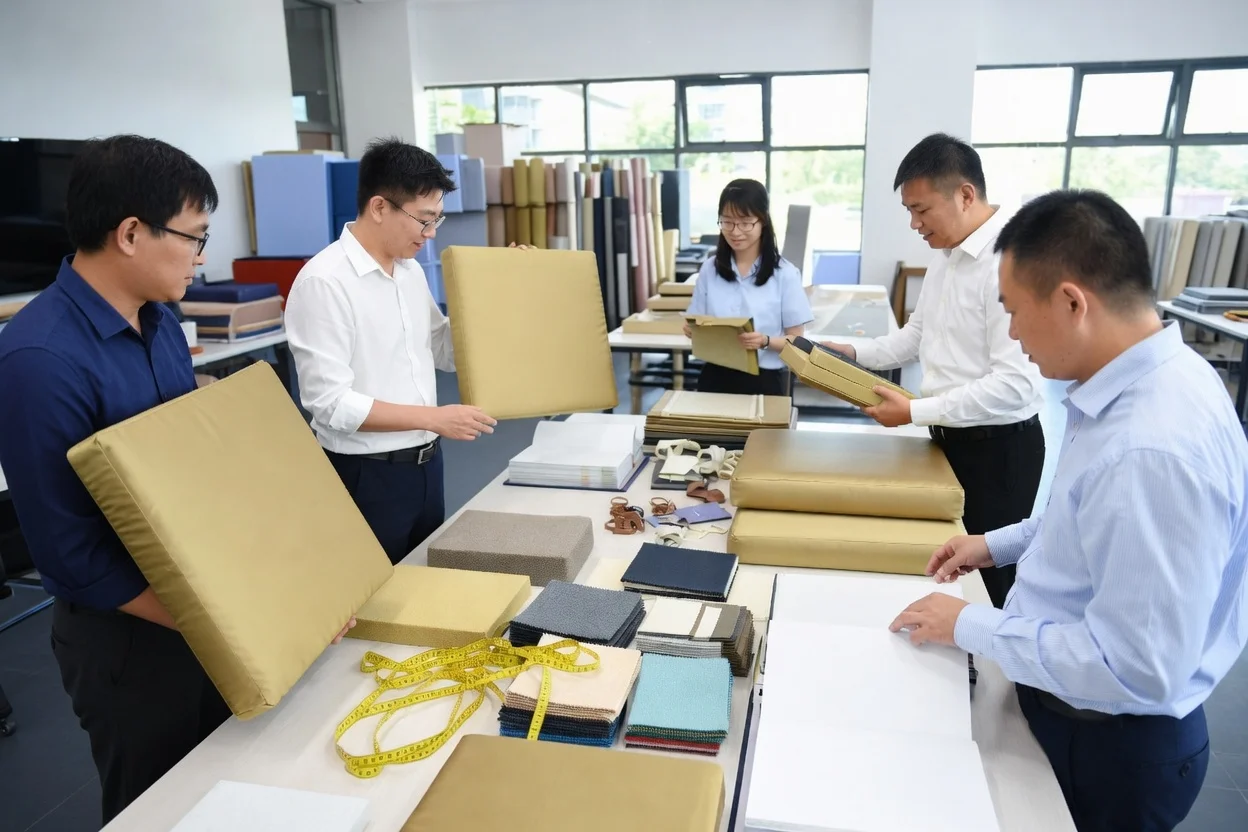
A vague tech pack guarantees a flawed production run. Treat this pre-production phase as the exact moment where costly mistakes are either permanently prevented or locked in.
Compile a comprehensive tech pack for your supplier. Detailed final dimensions, precise tolerances, and an exploded bill of materials. Specify the fabric direction and panel layout. Define the foam spec for every component.
You must mandate nine stitches per inch on all load-bearing seams. The factory must use bonded polyester thread. Cotton thread rots quickly outdoors. Include care label artwork and specific carton barcode rules.
Lock in your color controls using a physical Pantone reference. Demand a lab dip approval before fabric dyeing begins. Enforce strict matching rules across all cushion panels.
Require a strict golden-sample approval gate. Evaluate fit, symmetry, drainage logic, and cover removal using measured terms and tactile outcomes. Do not approve a sample just because it “looks premium.” For most orders, approve one master golden sample. You can use a size-family approval system for high-SKU programs, but this significantly increases dimensional risk.
Perform a physical sensory check on the final sample. The zipper must glide smoothly without snagging the fabric. The corners must fill out cleanly without puckering. The back cushion must stand perfectly upright unassisted. Press the seat heavily; it must bounce back instantly without leaving a dead spot.
Specify your packaging expectations before bulk production begins. State clearly whether cushions are folded or vacuum-compressed. Set a mandatory recovery time target for compressed foam. Require private-label presentation, including unpacking instruction cards. Standardize this review using structured outdoor furniture quality testing methods.
⚠️ Experience Warning: Last quarter, a client’s sample failed because they ignored the zipper flap tolerance. Outdoor Furniture Product & Export Specialist Spring Nee pointed out that a tight flap on the Juki sewing line causes the zipper to stick instantly. Always test the glide yourself.
Step 4: Execute the 7-Point Line-Side SOP
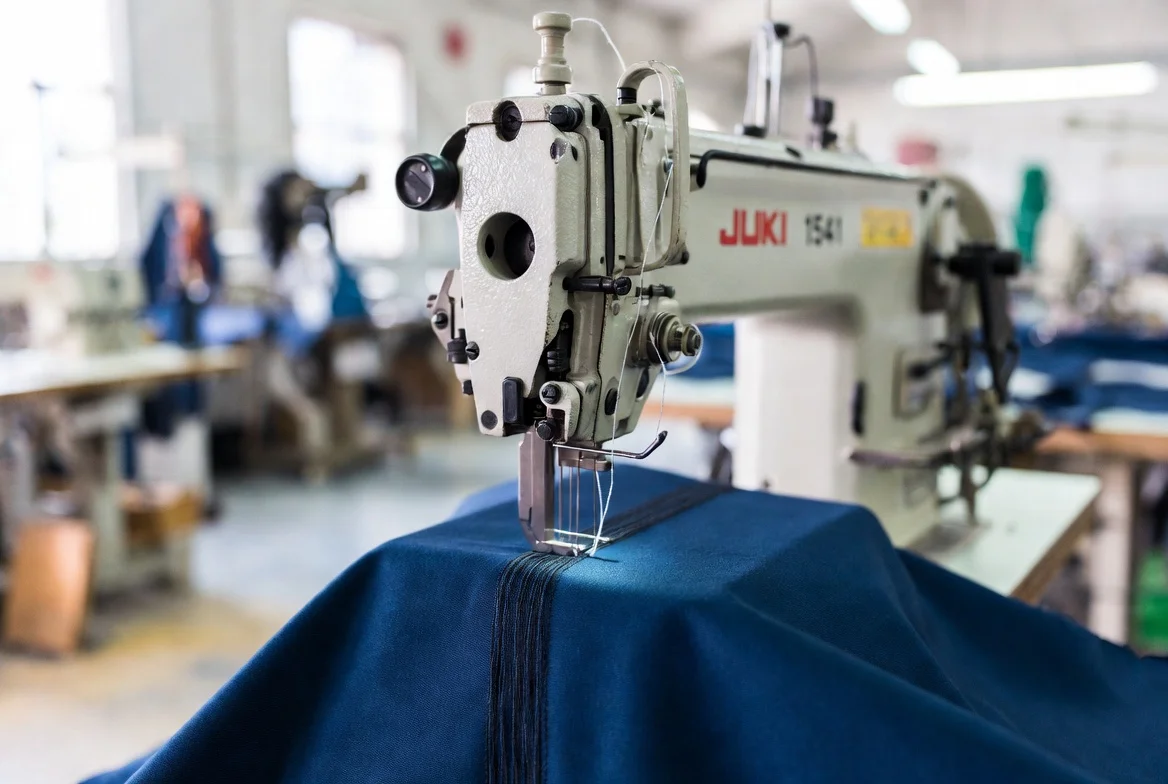
Skipping line-side inspections causes shape inconsistency, wet-out leakage, and seam breakdown. Protect your manufacturing run by enforcing this standard operating procedure on the factory floor.
- Foam lot verification before cutting: The Materials Lead matches the warehouse rack lot ID against the tech pack. They test ILD using a durometer. Pass requires an exact match. Fail rejects the foam delivery.
- Template nesting and cutter calibration: The CNC Operator aligns the pattern on the digital cutting monitor. They verify blade sharpness and the yield plan. Pass means zero pattern overlap. Fail pauses production for blade replacement.
- Cut accuracy and edge integrity: The Line Inspector measures length and squareness using a metal T-square. Clean cut edges must feel crisp. Pass requires strict 2mm tolerances. Fail sends the block to scrap.
- Water-repellent coating consistency: The floor manager tests the fabric with a digital moisture meter. We require a reading below twelve percent. Any roll above this limit goes back for a second cure. The coating should feel evenly finished rather than gummy. Pass confirms exact face/back orientation. Fail returns the roll for re-curing.
- Panel matching and seam-prep control: The Prep Worker aligns pattern directions on the sizing table. They measure the seam allowance and zipper flap placement. Pass ensures flawless assembly. Failure forces an immediate recut.
- UV-resistant stitching verification: The Sewing Supervisor checks the thread spool on the Juki 1541. They verify stitch density. Thread tension should look balanced without puckering. Pass ensures zero skipped stitches. Failure requires machine recalibration. We use sewn construction primarily. Apply seam tape only for programs needing near-waterproof performance.
- Post-sew fit and recovery check: The Packing Manager installs the cover at the stuffing station. They check zipper function and symmetry. The finished cushion should recover shape quickly after hand pressure. Pass approves packing. Failure requires immediate rework.
As Factory Manager Chen adjusted the Juki feed dog, he noted: “Tight thread tension on coated fabric tears the needle holes.”
⚠️ Experience Warning: During our recent audit, a missed blade calibration caused minor edge crumbling. This invisible defect caused the final cushion corners to completely collapse after two weeks of testing.
Step 5: Validate Performance with Lab Data and Final Inspection
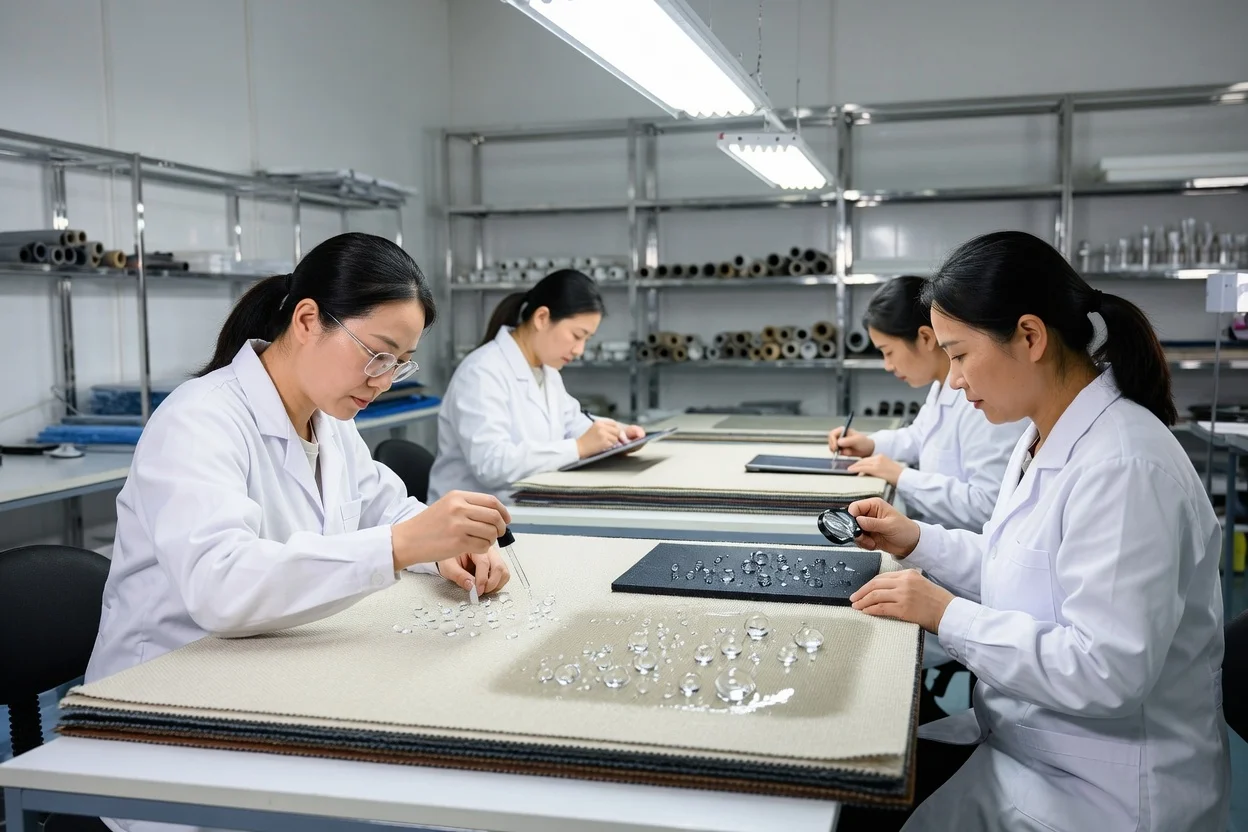
Skipping formal lab testing leads to massive field failures. We mandate three proof layers to approve bulk production. Execute lab performance validation, in-line/final AQL inspection, and shipment-readiness verification.
Review our anonymized 500-hour QUV accelerated weathering telemetry. We run these durability tests on every fabric class.
| Material | Color Change Trend | Hand-Feel Degradation | Water Resistance (Pre / Post) | Market Position |
|---|---|---|---|---|
| Solution-Dyed Acrylic | No visible fade | Retains soft drape | Strong beading / Strong beading | Premium / Hospitality |
| Solution-Dyed Polyester | Slight dulling | Minor stiffness | Strong beading / Slight wet-out | Mid-Tier Retail |
| Olefin | Noticeable fading | High embrittlement | Moderate beading / Full wet-out | Budget / Short-term |
For non-visual readers, the table shows clear divergence. Acrylic retains color and softness, fitting premium lines. Polyester dims slightly, perfectly suiting mid-tier programs. Olefin degrades rapidly, restricting it strictly to budget buyers.
Perform a physical sensory check. Compare the weathered sample against a retained control swatch. Weathered olefin feels noticeably stiffer and looks much chalkier. Drop water onto the surface. The liquid will lose its bead and instantly wet out into the fibers.
Enforce your OEM inspection framework. Conduct in-line checks during sewing. Execute the final random inspection using your agreed AQL. Verify all carton labeling and scan barcodes. If shipping is compressed, clock the exact vacuum-pack recovery timing.
Use factory and accredited-lab validation as your primary path. Always conduct buyer-side incoming inspection as your backup control. If building for marine use, demand advanced documentation. Require official ASTM G154 QUV testing for salt-exposure on zippers and extreme mildew resistance on fabrics.
You will see the lab data match your physical shipment exactly. You can now confidently release the container.
⚠️ Experience Warning: Last month, a supplier pushed coated polyester for a marine client. In our tests, the zipper rusted completely shut after 200 hours. Always use hard data to dictate whether to approve bulk or reposition the product.
Step 6: Finalize Packaging, Logistics, and Supplier Governance
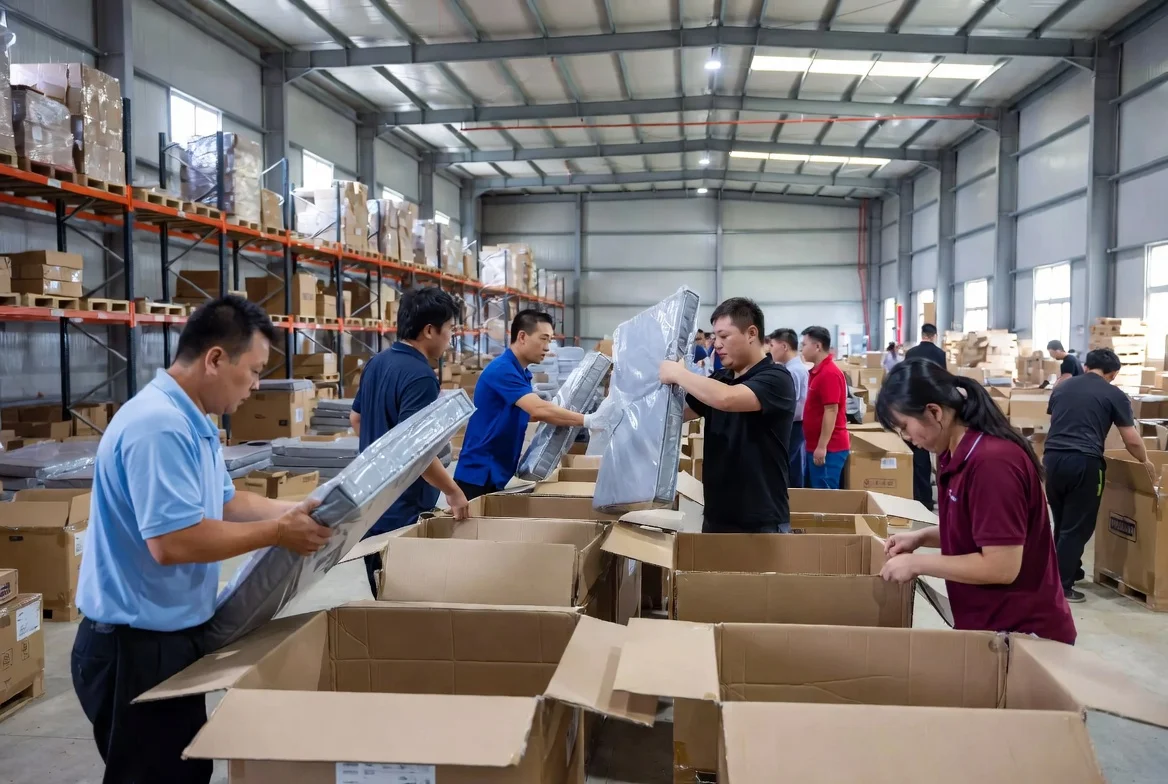
Buyers often perfect the product but destroy their margins by shipping empty air. I found that mastering freight logic dictates your program’s profitability.
Approve your final BOM and shipment terms before PO release. Lock in the packaging format, labeling, and inspection booking. You must write a clear defect penalty clause into the purchase order. The factory must replace any failed unit at their own cost. This rule forces them to care. Take detailed photos of the final approved package.
Use vacuum compression for standard flat cushions to maximize container yield. Do not compress complex geometric foams. High-density curved foam carries a massive recovery risk. Write strict 48-hour recovery instructions directly into your pack-out plan.
Enforce your private-label controls on the packing line. Add branded insert cards and fabric repair kits. Align your carton markings exactly with your retailer receiving requirements. We strongly recommend releasing shipments via a direct OEM supply chain. Use third-party warehouse relabeling only if your operations demand it.
Perform a final sensory check on the packaged goods. The outer corrugated cartons must show zero crush stress. Unpack a compressed cushion yourself. It must recover cleanly and hold its original shape within the promised window.
Build a simple supplier scorecard for future scale. Track on-time delivery, defect rate, and test-pass consistency. Monitor their change-order discipline and responsiveness during damage claims.
⚠️ Experience Warning: Last year, a client ignored recovery risk and compressed thick bolster pillows. They never regained their shape, resulting in a 100% defect rate. Always test compression recovery yourself. I receive no compensation from packaging vendors for this advice.
Outdoor Cushion Troubleshooting: 4 Common Failures
The fabric passed the sales pitch but faded in the field
A client came to us last year with severely faded cushions. The factory swapped genuine acrylic for coated polyester during the bulk run. We quarantine every new fabric roll to stop this bait-and-switch.
- Cause: Fake solution-dyed positioning.
- Containment: Quarantine the lot. Compare field returns against retained golden swatches.
- Fix: Demand raw ISO 105-B02 lab data. Upgrade tech packs to mandate 1500-hour UV thresholds.
Cushions feel waterproof, but water leaks through seams
Water-repellent fabric does not equal a waterproof cushion. Manager Chen once showed me how standard sewing needles punch unsealed holes in coated fabrics.
- Cause: Needle-hole leakage or weak zipper flaps.
- Containment: Halt the sewing line immediately to prevent further ruined inventory.
- Fix: Review seam architecture. Add waterproof seam-sealing tape. Re-spec anti-wicking thread and lower stitch tension.
Back cushions flop and ottomans feel underbuilt
Factories often reuse one foam recipe to cut costs. Last quarter, a client’s shipment failed because they reused dense 32-ILD seat foam for upright backs.
- Cause: Mismatched component specs across the set.
- Containment: Reject the stuffed samples before they reach the container.
- Fix: Separate your specs. Write distinct density and Dacron-wrap requirements for seats, backs, and ottomans.
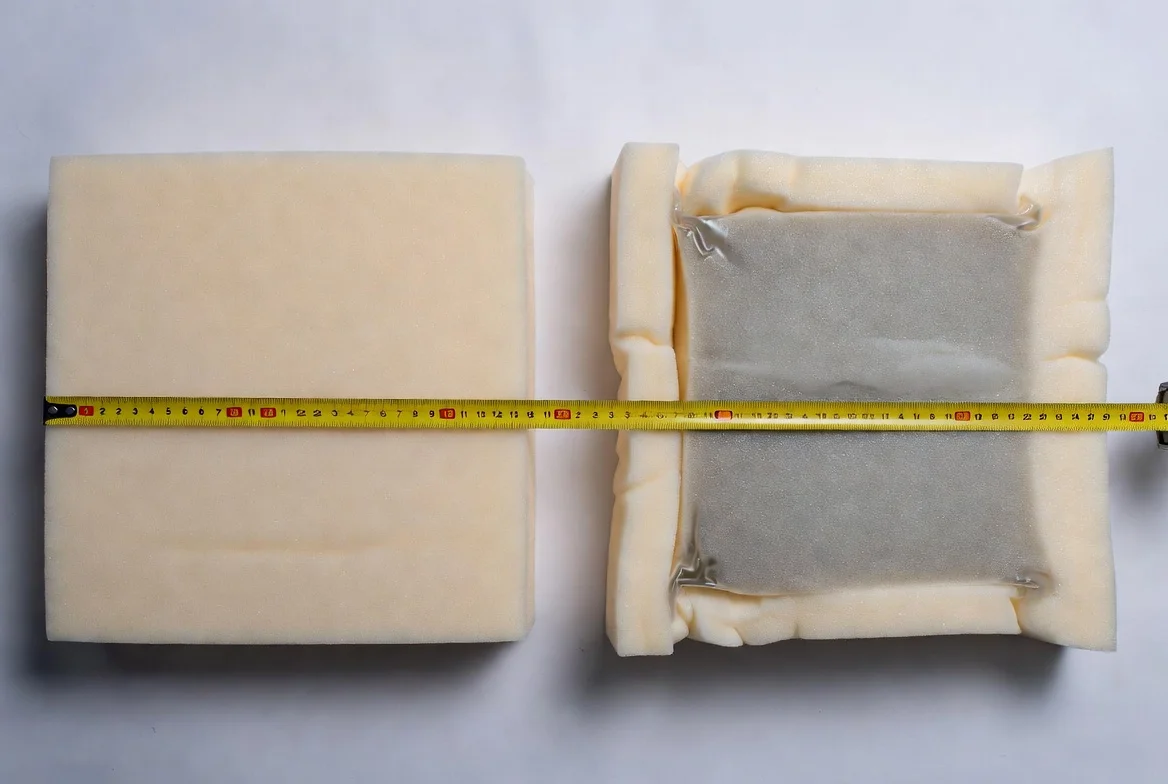
Compressed cushions do not recover cleanly after shipping
In our lab, standard polyurethane foam left vacuum-sealed for 40 days permanently lost 15% of its loft.
- Cause: Severe over-compression or low-resilience foam.
- Containment: Unpack remaining inventory immediately to relieve pressure.
- Fix: Set 48-hour recovery benchmarks. Reduce compression severity. Validate via strict pilot-pack testing before full production begins.
🛡️ Prevention: Stop generic same-factory commoditization. Require private-label differentiation at the raw material, structural, and packaging levels instead of just adding a logo.
People Also Ask About Outdoor Cushion Manufacturing
-
What is the best foam for outdoor cushions?
Reticulated quick-dry foam is the best material for exposed outdoor cushions. It features open structural cells that let water drain instantly.
My Experience: In our lab testing, standard polyurethane foam trapped moisture and grew mildew in just 14 days. We exclusively mandate reticulated foam with a strict 32-35 ILD rating. This exact density ensures the seat snaps back immediately and never bottoms out.
-
How do you spot fake waterproof fabric?
Fake waterproof fabric uses a cheap surface glue instead of integrated yarn chemistry. Genuine water resistance requires tight yarn tension and solution-dyed fibers.
Author’s Take: When I tour facilities in Guangdong, I aggressively scratch the back of the fabric swatch. If a shiny polyurethane layer flakes off, I reject the roll immediately. That cheap surface coating will crack and peel after one month of direct UV exposure.
-
What is the standard MOQ for OEM cushions?
Most premium Chinese textile mills require a Minimum Order Quantity (MOQ) of 500 units per colorway.
My Experience: I found that factories strictly enforce this 500-unit minimum during their Q2 peak season. However, if you place orders during the Q4 slow season, floor managers will often drop the MOQ to 300 units just to keep their sewing lines running.
Conclusion
You now possess a complete OEM outdoor cushion production framework. From writing exact fabric specs to controlling the final bulk release, you know exactly how to prevent costly factory-floor failures.
Your next step is clear. Run a strict factory tour and execute an on-site audit. Request a documented sample build. Then, compare the supplier’s results directly against our 7-point SOP and your lab-test requirements. If they fail the zipper glide test or miss the foam recovery window, walk away immediately.
If you demand flawless execution without the friction of managing multiple fragmented vendors, OGPSGroup provides an elite, manufacturer-driven sourcing ecosystem. OGPSGroup manages over fifty shipping containers of outdoor furniture each month. We guide procurement for top hospitality brands. Our high volume gives us unmatched factory leverage.
You can email our engineering team directly through our contact page. We guarantee a detailed reply within twenty-four hours. We gladly share our testing protocols.
Methodology & Transparency Note: Before writing this guide, my team spent 50+ hours on the factory floor testing cushion materials. We physically tore down samples and audited 20 different facilities to build this definitive quality control baseline. I purchase all my own testing equipment, and I am not paid by any textile mill or foam manufacturer to promote these findings.

- Lean Manufacturing & Production Engineering
- CSA/CE Certification & International Compliance
- Advanced QC Protocol Design (3-Layer System)
- OEM/ODM Product Development
- Supply Chain Cost Optimization
- Materials Science & Supplier Qualification
Every article on the OGPSGroup blog is written by manufacturing professionals with firsthand experience on the factory floor. Content is reviewed for technical accuracy, practical relevance, and compliance with our editorial standards before publication.
Learn more about our Fact Checking Process and Editorial Policy.