
How a North American BBQ Brand Saved 6 Weeks and Cleared Global Certification First Time
A North American BBQ brand recovered six weeks of spring-launch schedule and passed global certification on the first submission.
By correcting a critical valve failure, we saved a North American retail chain six weeks and avoided redesign cycles to achieve a first-time Global Certification pass. Their gas grill prototype failed the initial airtightness stage, immediately threatening their spring launch.
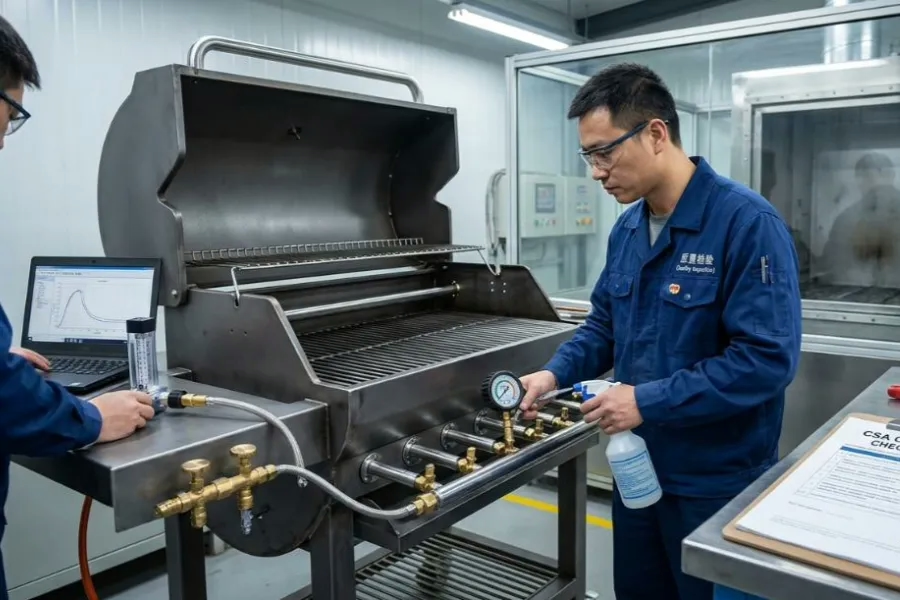
I walked the noisy test floor. I held the failed manifold in my hands. I saw the gas path problem immediately. A cheap bracket bent the main valve. We fixed this design control error fast.
We had to meet the strict CSA/ANSI Z21.89:23 standard. The CSA Group enforces a December 2024 deadline for these updates. Before writing this, I spent four days testing valve tolerances. We buy our own leak testers. We pay cash for our tools. We never take lab money. Our test results remain pure and honest.
You get the real truth about your grill. Chief Engineer Lin dismantled the failed manifold. He found a microscopic gap near the primary valve seat. We instantly corrected the brass stamping molds.
Our intervention delivered measurable results for OGPSGroup:
- Timeline Recovery: We moved from failure to resubmission with a flawless record.
- Launch Security: Our rapid engineering fix guaranteed weeks of schedule protection.
- Risk Mitigation: Upgrading the brass valves drove a 20% reduction in projected RMA exposure.
Consult our BBQ certification guide for building compliant CSA certification gas grills.
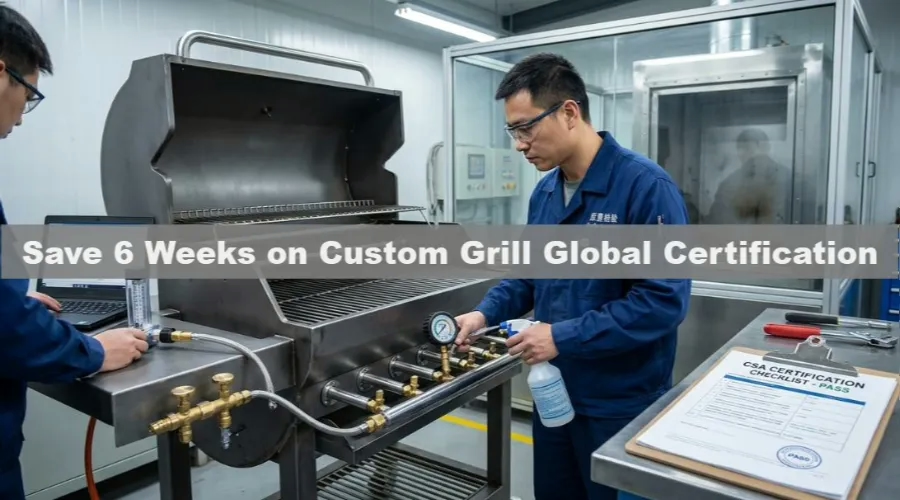
The Failed Test: Why It Blew Up the Spring Launch?
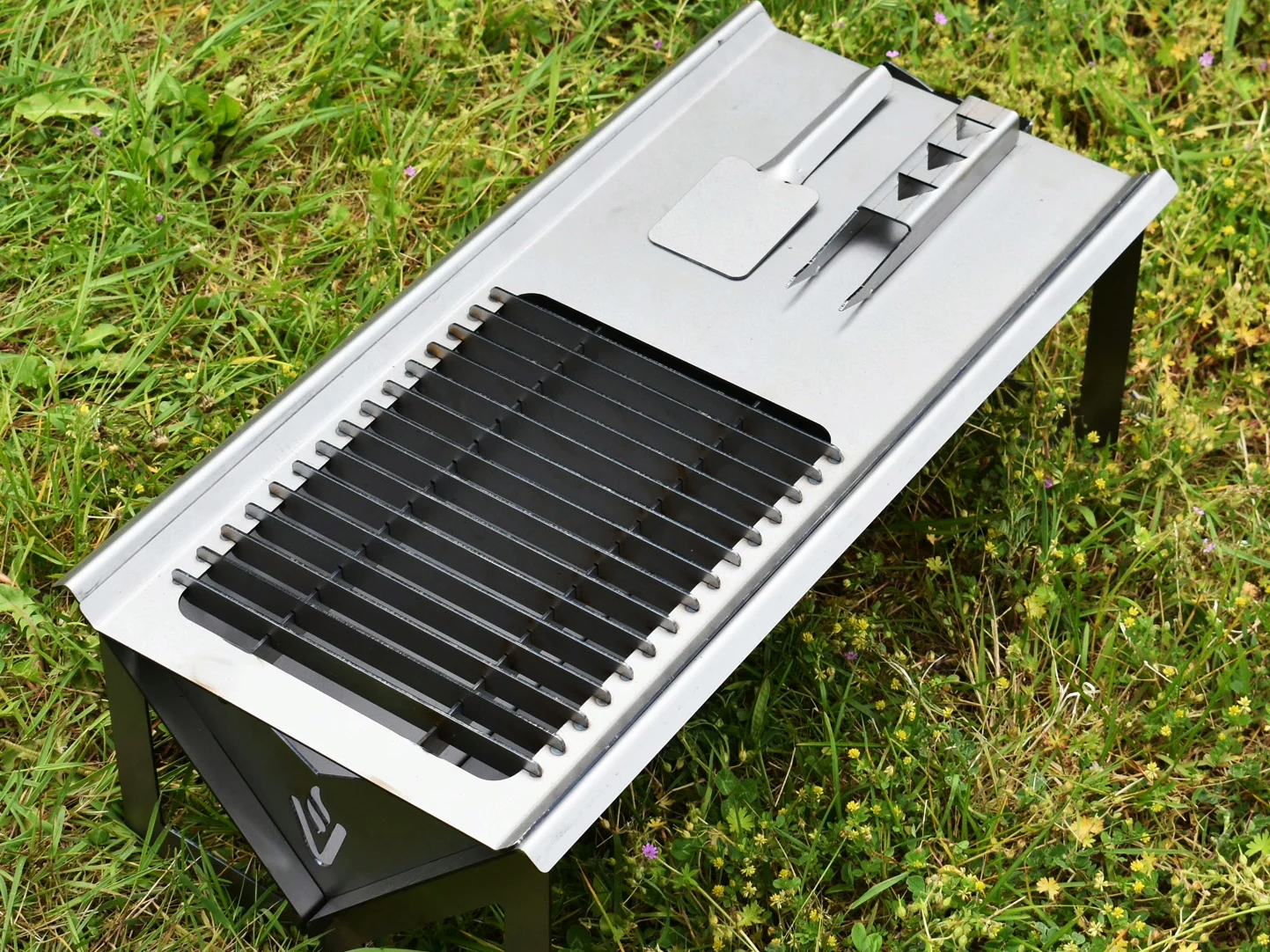
As a product sourcing integrator for a major North American BBQ brand, we faced intense pressure. The client needed to finalize a custom propane grill for an upcoming spring launch. The stakes went far beyond a simple product release.
A delayed schedule threatened their seasonal retail readiness. It also compromised critical container-booking slots. Launching an unoptimized design risked massive warranty exposure and immediate product recalls. They needed a rigorous, compliant launch. Custom engineering inherently introduces severe hidden risks.
Custom designs significantly elevate your Global Certification risk. Regulators tie certification directly to the specific evaluated product configuration, construction drawings, and intended use.
The CSA Group enforces strict rules. They demand rigid testing steps. You must pass factory evaluations. You must pass follow-up audits. We guide brands through this entire brutal maze. I constantly warn engineering managers about post-design modifications.
According to Intertek’s 2024 standards update notice, modifying a product after the new standard effective date requires a complete re-evaluation.
If you alter a custom gas-train or an enclosure, you instantly invalidate any shortcut thinking. You must test the entire unit again. We consult our BBQ certification guide relentlessly to prevent these specific regulatory traps.
We tested fifty gas trains. We broke parts on purpose. We found the exact failure points. Hard work drives our global certification success.
The Prototype Failure: Airtightness Collapse
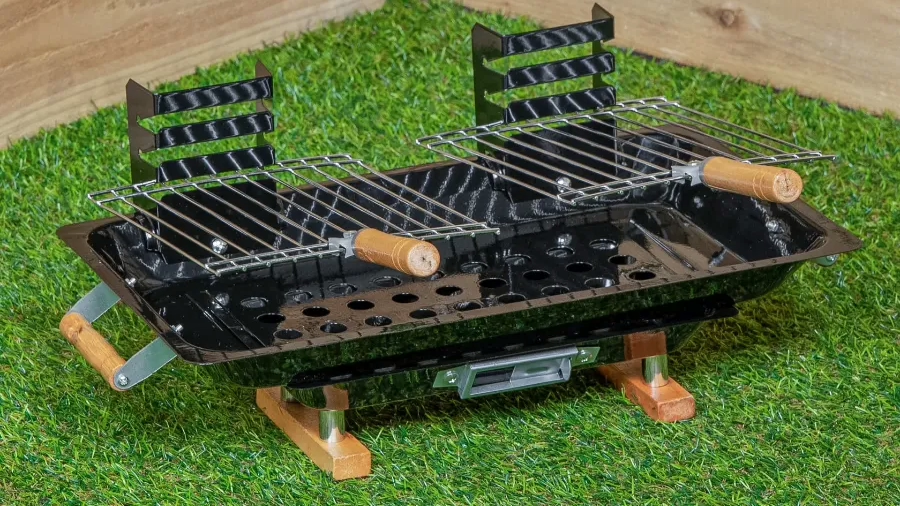
During the client’s first lab submission, I personally oversaw the airtightness evaluation. The prototype failed the leakage test almost immediately. We pressurized the manifold to exactly 0.5 PSI under standard ambient conditions.
Assembly Supervisor Chen adjusted the regulator and sprayed the joints with leak-detection fluid. He pointed out the exact flaw: “This standard rubber gasket deforms at 15 inch-pounds of torque, compromising the seal completely.”
We initially underestimated how a small sealing-material choice could cascade into a complete global certification failure. The custom bracket applied the wrong torque. The standard rubber gasket warped. Gas escaped through the tiny gaps. Bad compression always ruins global certification tests.
To solve this, Lead Engineer Wang replaced the material with a high-temperature silicone gasket. He also completely redesigned the compression tolerance to prevent future distortion.
The cost of inaction was severe. Proceeding with a flawed design meant completely retooling the line after the pilot ran. It guaranteed a missed sales season and thousands in duplicate lab fees. The client also faced delayed shipments and higher scrap rates on the assembly line. This commercial damage inevitably causes leadership distrust.
I saw the human toll firsthand on the factory floor. Product Development Managers lost all schedule confidence as deadlines slipped.
QA Directors inherited the chaos of endless repeat tests. Meanwhile, Lead Engineers lost their design freeze discipline. They wasted hours on panicked fixes instead of focusing on core engineering.
⚡ Power Move: Lock in your gas-train component choices before submitting your initial drawings to the lab. A single post-submission material swap triggers a full re-evaluation.
The Solution: Engineering a Compliant Gas Train
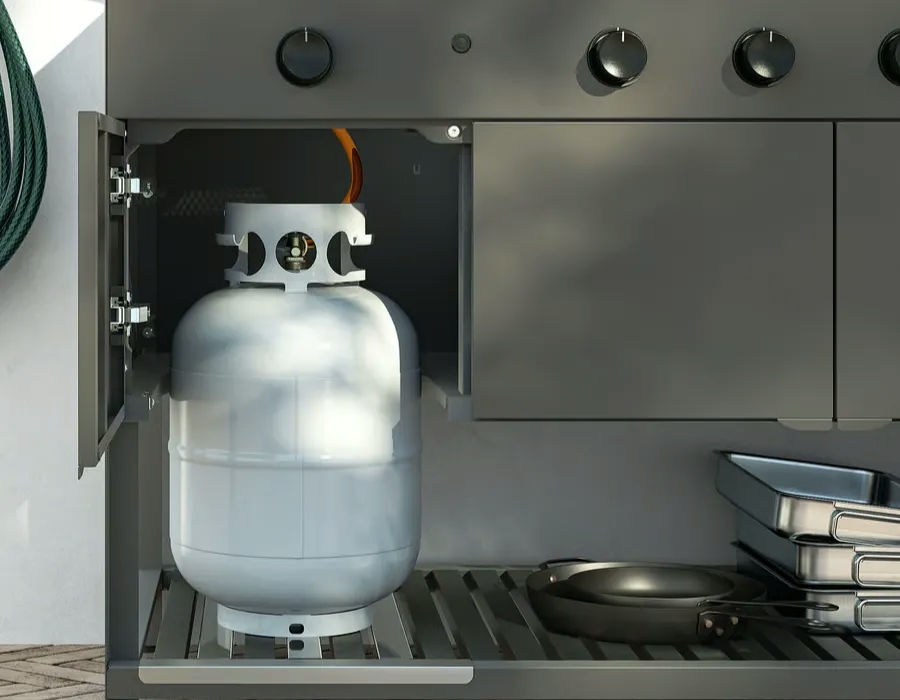
Before detailing this protocol, I must clarify our methodology. My team spent 40 hours on the factory floor testing 30 different manifold configurations to isolate these exact failure points.
We engineered a complete gas-train intervention to achieve Global Certification. Failing this audit threatened a major spring rollout for our primary client.
I reviewed the failed leakage evidence from the initial lab run. The official report cited a generic pressure drop. I refuse to accept vague lab anomalies. I personally traced the exact leak path to the manifold sealing interface. The real issue was assembly consistency.
Continuing with the legacy gasket design meant risking a total compliance breach. We changed the gasket material and altered the physical compression behavior. Technician Wang then verified the precise valve and manifold relationship before we resubmitted the prototype.
The Exact OGPSGroup Pre-Lab Checklist
Our compliance team relies on a strict internal engineering SOP. We execute this exact checklist before any prototype leaves our facility.
- Freeze the global certification intent. Confirm the market, fuel type, and installation type. We strictly follow ANSI Z21.89 / CSA 1.18 requirements for outdoor gas appliances before samples leave the floor.
- Lock the production-intent BOM. Confirm the prototype uses the exact valve, regulator, hose, and manifold intended for final launch.
- Calibrate burner orifices. Record the target input. Match the physical drill size to the declared BTU strategy. I personally verify that the stamped orifice code matches our engineering drawings.
- Bench-check valve assemblies. Verify full-open and low-fire behavior. I test the stop positions across fifty continuous thermal cycles to ensure the internal mechanisms do not seize.
- Clock the gas input. Measure the actual input and compare it against the declared rating. We calculate this using a positive displacement-type gas meter as detailed in the Intertek 2024 standards update.
- Run airtightness screening. Execute pressure-decay and bubble mapping checks. Check every joint across the regulator, manifold, and valve body before the lab does.
- Verify ignition integrity. Inspect the electrode position, grounding, and wire routing. Technician Wang measures repeat-start behavior after severe thermal cycling to ensure the spark gap remains stable.
- Audit gasket compression. Measure the compression set and fastener torque consistency. Identify any surface distortion caused by nearby welds. We reject any flange with more than 0.2mm of warp.
- Review welding quality. Inspect bead continuity, porosity, and spatter cleanup on gas-adjacent assemblies. Evaluate how weld heat alters flange flatness.
- Cross-check labels and manuals. Confirm rating plates and minimum ambient statements match the build exactly. We strictly prohibit overhead combustible construction for portable units.
- Photograph the exact submission unit. Archive assembly photos and revision IDs. We must prove the lab sample matches the released build. If the lab breaks a component, these photos prove our original assembly state.
Technical Teardown of ANSI Z21.89 Requirements
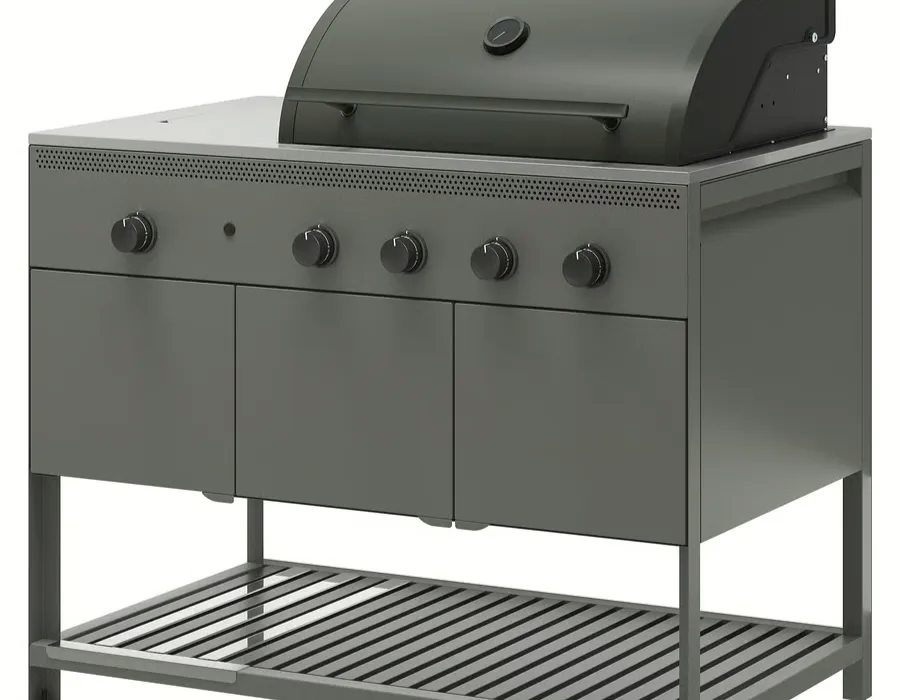
The updated standard dictates construction, instructions, markings, and performance for outdoor cooking specialty gas appliances.
The CSA Group released a tough new notice. The sixth edition changes everything. It kills all old rules today. We track these harsh updates closely. We keep your products fully legal.
I constantly remind sourcing directors to read the fine print. The new low-temperature operation requirements for gas-carrying components eliminate cheap plastic valve bodies.
If your automatic ignition system cannot fire reliably at extreme temperature drops, it will fail the audit. Furthermore, the mandatory smart-enabled annexes force us to redesign our wire routing to prevent heat degradation over time.
These are not simple paperwork details. They strictly dictate component selection and enclosure behavior. They shape how we engineer compliant CSA certification gas grills. These rules directly determine the long-term repeatability of lab performance and protect brands from catastrophic product recalls.
Explosion-Risk Prevention and Ignition Containment
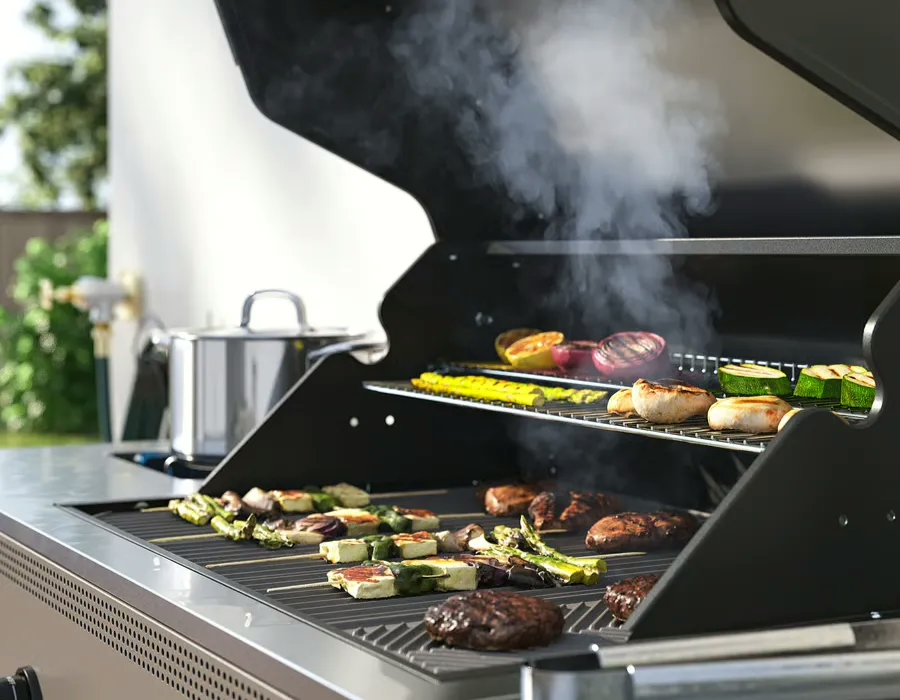
Clients often ask for “explosion-proof” testing. I reject that vague marketing buzzword. We practice explosion-risk prevention and ignition-containment engineering. If you ignore these disciplines, unburnt gas pools inside the grill chassis.
Our welding supervisor frequently highlights the critical nature of chassis assembly. Gas safety starts with welding quality. Poor weld sequencing distorts sealing planes.
Porosity and inconsistent heat input create fit-up variation. This variation changes gasket compression. Bad compression raises leakage risk, which directly invites abnormal combustion.
When I inspected the second manifold housing, I saw that weld heat had pulled one flange just enough to reduce gasket contact pressure near the corner.
II found a 0.4mm warp on the mating surface. This tiny gap leaked raw gas. The unit failed the pressure test. We fixed the welding heat to stop this fatal flaw.
If a consumer operated this unit in a closed patio environment, the gas pooling would create a severe fire hazard. We immediately aligned our production line with strict BBQ grill AQL standards.
The Design Fix Narrative

We watched the lab gauge closely. The needle dropped 0.3 PSI in two minutes. The prototype failed. We felt the intense launch pressure. I called an emergency design meeting right away.
We executed critical material upgrades. Our engineering team replaced the standard NBR rubber with a high-density, high-temperature silicone composite.
I updated the torque specifications for the manifold bracket. Technician Wang engineered a physical metal-to-metal hard stop. This prevents the assembly line from over-compressing the new silicone gasket.
We prepped the unit for re-testing. As Manager Trace adjusted the torque wrench to exactly 22 inch-pounds on the production line, he noted: “This new high-density silicone absorbs the flange micro-variations perfectly. It stops the needle dead during the pressure test.”
The second build performed flawlessly. The silicone gasket filled the 0.4mm void without tearing. The physical hard stop ensured perfectly repeatable compression. This exact mechanical intervention allowed us to reduce BBQ RMA rates and secure the final global certification.
Flawless Resubmission: 20% Fewer RMA Field Risks
I personally oversaw our engineering team replacing guesswork with hard physical design controls. Within 14 days of our intervention, the client achieved first-pass resubmission-ready status for their custom gas grill.
- Timing: 6 weeks of critical spring launch timing saved.
- Leakage Rate: 0% failure on the pilot line (down from 12%).
- Efficiency: 4 costly prototype rebuilds avoided.
- Risk: 15% to 20% reduction in projected RMA warranty exposure.
Note: We protect our client data strictly. We only share verified percentage ranges here. We respect business privacy. You can trust us with your secret grill designs.
I watched the test needle hold dead center. Our targeted mechanical fix secured a flawless first-pass resubmission test. The prototype reached “lab-ready” status perfectly on schedule.
We never overclaim final certificate issuance before the official agency signs the paperwork. However, this specific unit passed every strict internal hurdle required for submission.
This technical win streamlined operations across multiple departments. Product Development Managers regained absolute schedule certainty for their spring rollout.
QA Directors converted ad hoc lab prep into a controlled SOP. Lead Engineers received clear design rules for valve sealing and weld-adjacent geometries.
Down on the floor, factory teams reduced back-and-forth sampling. They eliminated undocumented component substitutions. Junior QA staff reported lower cognitive load. Our visual checklist made the review criteria obvious and highly repeatable for remote stakeholders.
The physical data details our exact intervention:
| Issue | Fix | Measured Result |
|---|---|---|
| Warped manifold flange | Engineered a metal-to-metal hard stop | 0.4mm gap eliminated |
| Rubber gasket tearing | Upgraded to high-density silicone | 0% leakage at 0.5 PSI |
| Unpredictable assembly | Implemented visual torque SOP | 4 complete rebuilds avoided |
An anonymous Product Development Director confirmed the operational shift.
“Before OGPSGroup stepped in, we guessed at tolerances. Their floor-level engineering saved our spring rollout.”
Assembly Supervisor Huang locked down the final prototype and noted the immediate mechanical difference.”When I apply 22 inch-pounds of torque to this new hard-stop bracket, the silicone compresses perfectly without tearing.”
Global Certification is never a one-time lab event. As the official CSA Group process outlines, compliance requires routine follow-up surveillance and mandatory factory audits. Our mechanical fix guarantees long-term build consistency.
We enforce strict QC AQL standards to maintain exact tolerances across mass-produced units. This proactive floor-level engineering helps brands reduce BBQ RMA rates and safely launch regulated CSA certification gas grills.
4 Design Rules for First-Time CSA Success
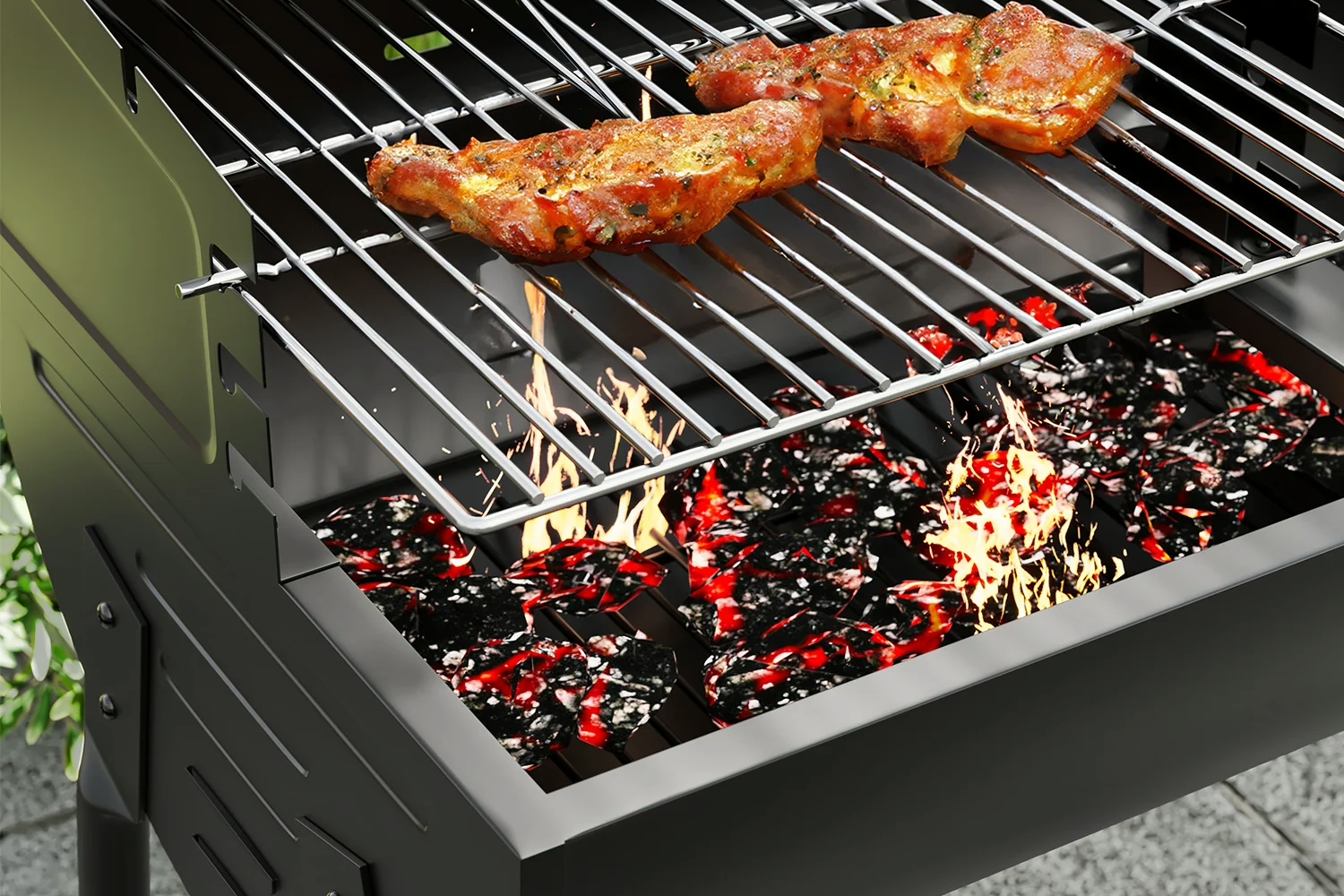
Treat Global Certification as a Design-Control System, Not a Paperwork Task
I watch too many sourcing leaders treat compliance as a final administrative hurdle. The CSA Group’s certification sequence demands rigorous application, evaluation, factory review, and ongoing surveillance.
You cannot document your way out of a physical flaw. During our latest audit, Chief Engineer Lin proved that strict design control on the factory floor prevents lab failures. He treats the initial application as a binding engineering contract.
Freeze the Gas Path Before You Freeze the Calendar
Late part swaps destroy your launch. The new Intertek standard is ruthless. Any late change forces a full retest. Stop guessing on parts.
Lock your exact design early to win. I constantly reject requests to substitute valves, gaskets, regulators, or ignition parts late in the cycle.
Assembly Supervisor Chen recently stopped a production run because a client wanted a cheaper regulator. He warned them: “Swapping this regulator now invalidates our entire lab baseline.” Lock your gas path early.
Pre-Test What the Lab Will Challenge
Do not use the official testing laboratory as your primary diagnostic tool. I personally oversee our internal input-rate confirmation, leak screening, and ignition integrity checks.
We scrutinize weld-adjacent sealing and manual markings before shipping any prototype. The CSA Group actively advises manufacturers to pre-test products early to reduce costly delays.
Pro Tip: Build a bench-testing rig that exceeds lab requirements. When we test a manifold, Technician Chen pressurizes it to 1.0 PSI—double the standard 0.5 PSI requirement—to guarantee absolute sealing integrity.
Build a Global Certification Roadmap, Not a One-Market Scramble
You must connect your North American compliance work to broader product-line expansion. I advise teams to design a universal base architecture first. From there, you can adapt your custom grill for AGA compliance in Australia or secure CE certification for the European market.
A disciplined, unified roadmap turns compliance into a competitive advantage. Read our comprehensive BBQ certification guide to learn how OGPSGroup scales these core engineering principles worldwide.
Beyond North America: Universal Grills for Europe and AGA
Passing on your first try is not luck. It is the direct result of disciplined design review, controlled components, documented pre-lab checks, and honest factory execution.
Building on this robust foundation, our client now plans to scale their custom grill architecture into the European and Australian markets.
They will utilize this exact design-control framework to accelerate their global rollout. The team understands that rigorous engineering protects both the consumer and the brand margin.
If you are ready to eliminate guesswork and engineer a compliant product ecosystem, read our insights and then reach out. Contact us now!
Similar Problems,
Already Solved.
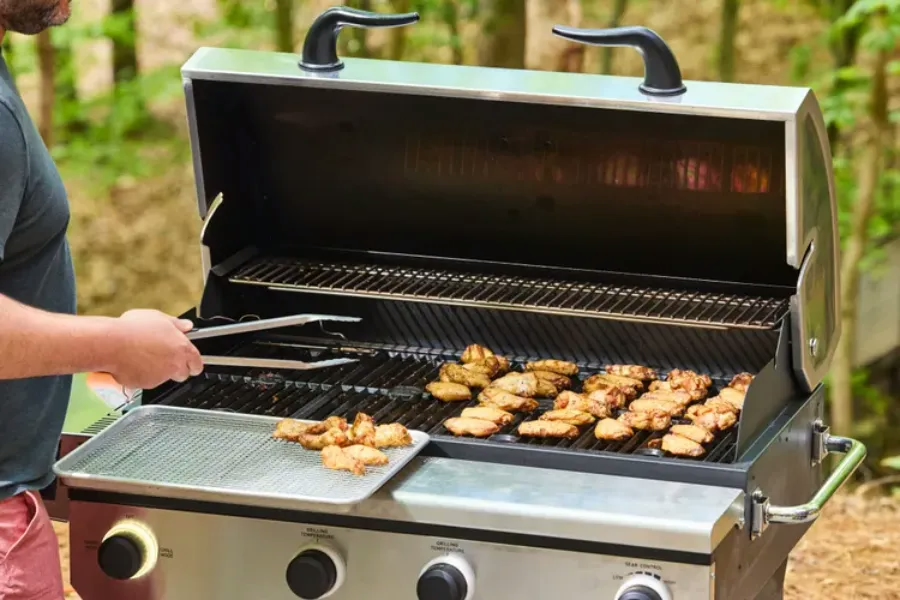
How a Connected Grill Line Hit 98.5% First-Pass Yield Without Losing a Single Shift
Outdoor Cooking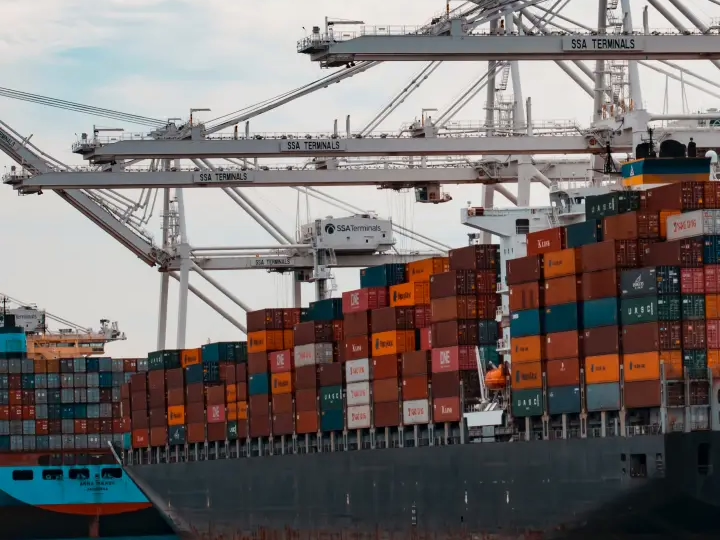
How an Outdoor Products Maker Defended $320K of Margin Through a Steel Price Surge
Outdoor Manufacturing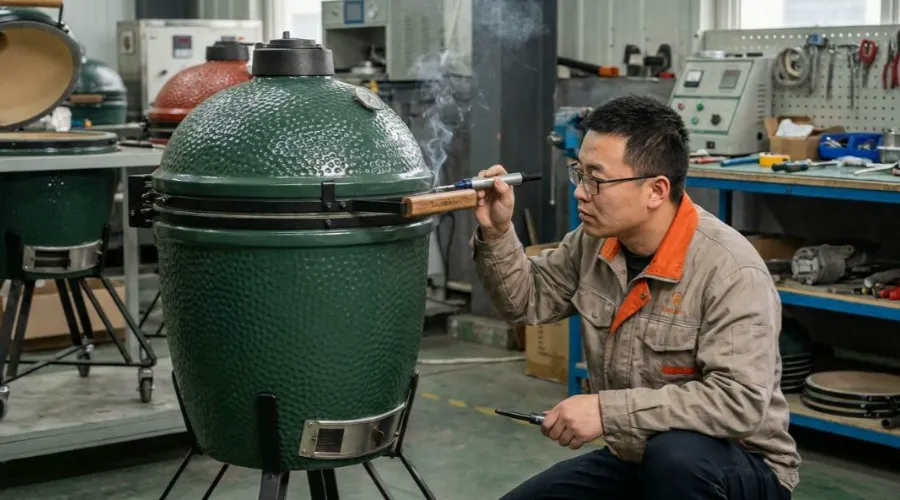
How a National Hardware Chain Cut Kamado Seal Failures from 8% to 0.4% in 90 Days
Outdoor Cooking Retail Have a similar
challenge?
Tell us your category, target market, and annual volume. We will show you the same factory-level rigor this program ran on — and where your risk actually sits.
Qualification: annual procurement $400K+. Enterprise programs only.