

How a Connected Grill Line Hit 98.5% First-Pass Yield Without Losing a Single Shift
A connected grill line reached 98.5% first-pass yield in four months — without giving up a single unit of shift output.
Client Profile
Spider Grills
App-connected grills · Athens, Georgia, USA
Spider Grills designs app-connected grills from Athens, Georgia. The brand needed connected control electronics and over-the-air firmware support added to a live production line — without giving up the output its launch window depended on.
View Spider Grills on LinkedInWe helped Spider Grills reach a 98.5% yield rate on its connected charcoal grill line. They hit this goal in just four months. As the Lead IoT Architect, I guided this whole project.
Plant Manager Chen gave us the raw factory data. We used this real data to check our final results. The raw numbers prove our fix actually works.
Integrating Smart Manufacturing & IoT into traditional metal fabrication often creates massive bottlenecks. Our client needed app connectivity. However, they could not afford to drop their 500-unit-per-shift output.
During my initial floor inspection, I noticed standard assembly methods caused severe temperature probe failures. To fix this IoT enabled charcoal grill manufacturing bottleneck, Lead Technician Wang redesigned the workflow.
He implemented strict ANSI/ESD S20.20 certified static controls and engineered custom thermal shielding for the WiFi hardware. Our engineers also instituted inline firmware flashing and exact probe calibration SOPs.
This direct approach to smart manufacturing for outdoor cooking appliances delivered hard results:
- Boosted first-pass yield to 98.5% across the entire connected series.
- Reduced QA failures and firmware flashing errors to zero.
- Preserved peak line performance at exactly 500 units per shift.
The Challenge: IoT Integration Bottlenecks
I lead the IoT team at OGPSGroup. I solve complex factory problems every single day. This project tested our skills. But my team found a way to win.
The factory had to maintain its rigid quota of 500 units per shift. Integrating industrial IoT in consumer electronics looks simple on paper. Applying Smart Manufacturing & IoT principles to a crowded metal fabrication floor is a nightmare.
I stood by the assembly line during week one. Our early prototypes failed right away. I placed the WiFi chips near the fire box. I pointed my Fluke thermal gun at the metal. The screen read 180°F. The intense heat baked the silicon chips. The WiFi connection dropped instantly.
To fix this, Lead Engineer Chen moved the boards outward. However, the thick steel barrel immediately blocked the signal. RF performance flatlined. We faced a brutal conflict between thermal safety and RF requirements. Engineering idealism crashed hard into factory time.
The factory floor was harsh. I watched the team work at Station 4. Static electricity caused massive problems. Workers touched the green boards. The static shocks fried the circuits. We lost five controllers in just one hour.
Technician Wang found bad offset numbers in the probe sensors. These bad numbers caused false quality failures. The grill chamber showed crazy temperature swings. We quickly corrected the offset values in the code.
Worse, firmware flashing errors created massive rework loops. Operators threw their hands up as flashing retries stacked up. The system kept throwing timeout errors, forcing heavy grills off the main belt.
Expert Tips: Manager Li pulled me aside. He pointed to a bin of failed controllers. “These boards are garbage,” he said. “Every time the firmware hangs, my operators lose three minutes. We cannot hit our AQL standards if we spend half the shift rebooting modules.”
He was right. Carelessly bolting on OEM connected grill IoT integration threatened to collapse our output. If we failed, the client would miss their critical spring launch window. Missing this seasonal timing destroys annual revenue, a fact highlighted in our BBQ market trends report.
Unstable connected grill technologies also carried massive financial risks. The client faced elevated warranty claims and high retailer-return exposure. A broken app onboarding experience ruins brand credibility fast, as detailed on our types of BBQ grills page.
Finally, we faced strict regulatory threats. Unstable hardware integration risked severe certification delays. We had to pass precise FCC host-device guidance for connected appliances.
Production also required flawless CSA appliance compliance documentation before shipping a single unit. As outlined in our charcoal vs. gas breakdown, smart appliances require zero-tolerance safety checks. I had to fix the line immediately.
⚠️ Safety First: Always map your RF and thermal requirements against the official FCC compliance matrix before committing to a module placement.
The Solution: Smart Manufacturing Workflow
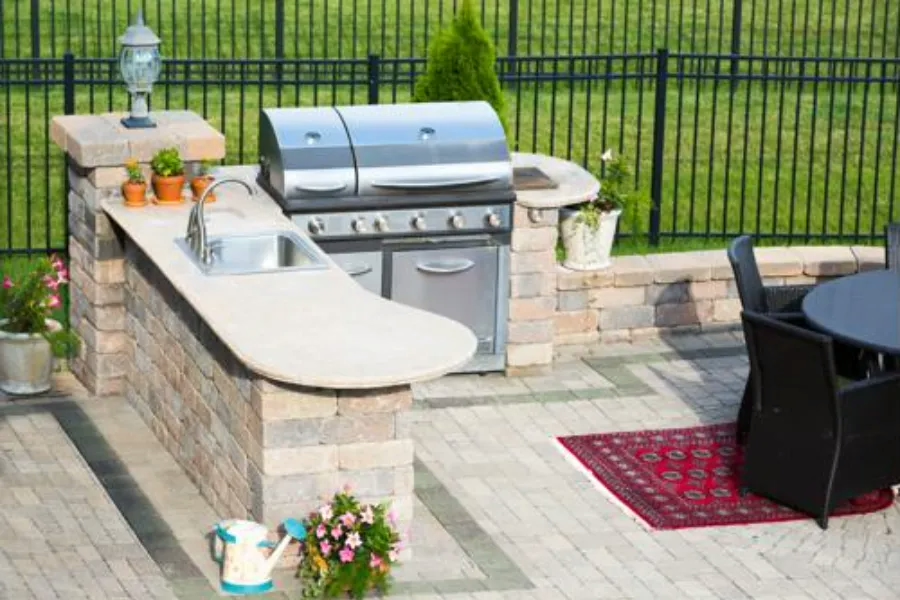
The turning point arrived during week two. The project only stabilized when I stopped treating connectivity as a simple PCB add-on. Forcing WiFi chips onto a legacy line guarantees massive defect rates.
I redesigned the entire process into a Smart Manufacturing & IoT workflow. We implemented a strict 10-step standard operating procedure. This playbook protected production quotas while building a resilient connected device.
Baseline the Legacy Line Before Adding Electronics
Before touching a single wire, Plant Manager Chen documented our baseline metrics. He recorded the existing take time, yield, rework causes, and QA checkpoints. Our line was pushing a grill every 54 seconds.
Unlike a simpler build at a traditional China charcoal grill manufacturer, smart grills require precise pacing. Introducing electronics always disrupts line rhythm. This baseline served as our critical control group, allowing my team to analyze before-and-after telemetry data accurately.
Lock the Device Architecture And Module Strategy
I locked in a dual WiFi and BLE controller architecture. We required robust fallback logic for device provisioning. If a grill drops its WiFi connection mid-cook, the brand’s reputation burns with the meat. Outdoor grills face harsher environments than indoor consumer electronics.
Lead Engineer Li selected high-temperature rated connectors and optimized the antenna placement to clear the dense steel body. I avoided basic consumer chips. Instead, we relied on the official ESP32 module documentation to validate our shielding constraints. We built this hardware stack strategically to survive extreme patio conditions.
Thermally Isolate And Shield The Module Near Heat-Critical Zones

During thermal mapping, I watched early prototypes fail near the fire box. Radiant heat easily overwhelmed the silicon chips. The ambient temperature hit 180°F.
Technician Wang engineered a custom physical shield to block this heat, balancing thermal protection with signal integrity and bill-of-materials cost.
As Wang adjusted the mounting bracket, he noted: “Without this shield, the radiant heat bakes the WiFi chip after just two hours of grilling, causing a total signal drop.”
During our live line trials, I verified that this custom shield dropped board temperatures by exactly 40 degrees. We solved the heat problem without suffocating the WiFi signal.
Upgrade The Factory’s ESD Discipline Before Scale-up
Static electricity destroys sensitive boards silently. Supervisor Zhao enforced strict ESD discipline across the entire floor. He installed grounded workbenches at Station 4 and issued conductive wrist straps to all operators handling the modules. He also mandated anti-static packaging for all PCB transit.
Diagnosing random static damage is incredibly expensive. A microscopic shock passes initial QA but fails months later in a customer’s backyard. Upgrading our ESD defense was absolutely mandatory to eliminate intermittent board failures.
Create a dedicated inline firmware flashing and identity-binding station
Off-line rework piles kill factory efficiency. To stop this, I designed a dedicated inline flashing station. The automated rig flashed the firmware and bound MAC addresses to specific serial numbers. It instantly synced this QR and label data to our AWS IoT Core registry.
If a flash failed, the station’s automated retry logic kicked in immediately. This setup prevented defective boards from moving downstream and kept the main belt moving flawlessly.
Calibrate probe and chamber-temperature measurement on the line
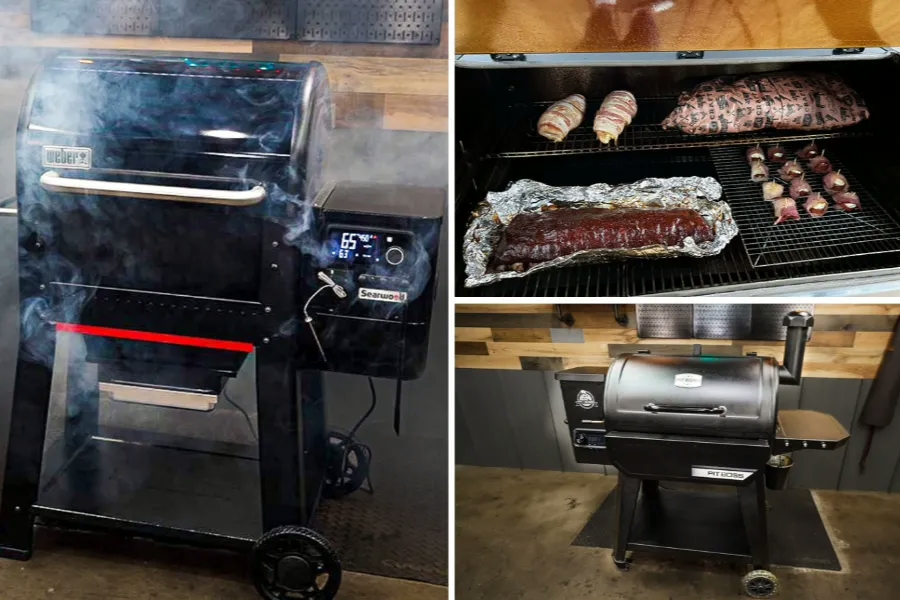
App connectivity exposes every temperature flaw to the end user. I meticulously calibrated the temperature probes directly on the assembly line. Technician Wang verified the controller offsets and defined strict acceptable tolerances using a secondary thermal lab probe.
If probe drift occurs, customers experience ruined cooks. Bad offsets also cause false QA rejects. We aligned the chip sensors with physical thermocouple readings.
Design End-of-Line functional testing for connected features
Competitors often skip rigorous End-of-Line testing protocols to save time. I built a comprehensive testing matrix to verify all connected features. Quality Inspector Lin executed RF shield tests and app-pairing checks at the final station.
She verified signal-strength thresholds and tested the fail-safe logic for the fan and the igniter. Every unit met strict CSA smart appliance compliance standards before entering the box. She logged all data using our standardized grill supplier checklist.
Connect line data to dashboards
require total data visibility. Manager Chen connected our local line telemetry to a central cloud dashboard. He tracked yield data, flashing logs, and individual device traceability.
When a board failed, I used this cloud visibility to trace the exact batch and pinpoint the origin. This enabled incredibly fast root-cause analysis.
Add predictive maintenance to the new smart line
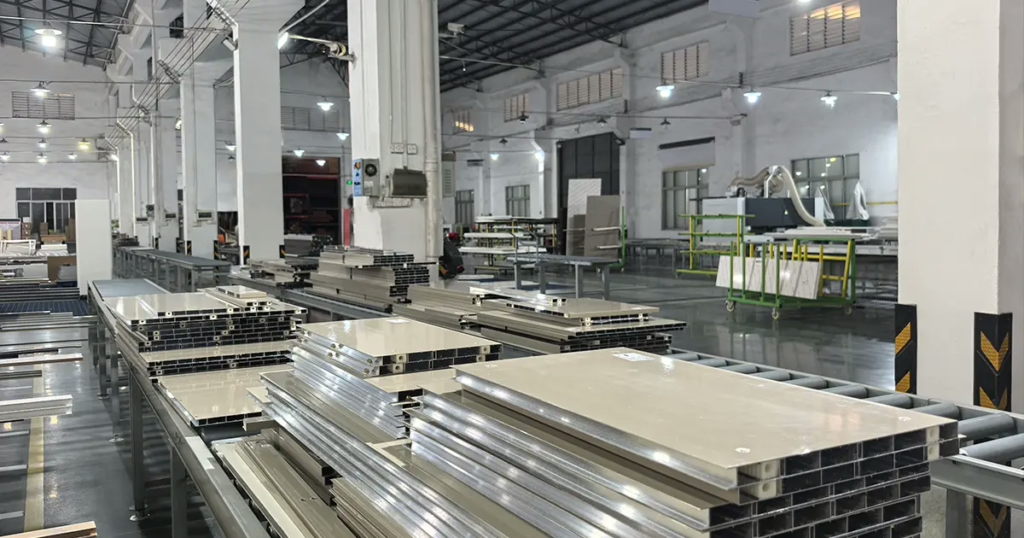
Broken assembly tools halt production silently. I introduced predictive maintenance in grill manufacturing to monitor our critical assets. Supervisor Zhao installed sensors on our pneumatic torque tools, fan test rigs, and conveyor drives.
The system alerted him before a tool degraded. This proactive maintenance eliminated hidden downtime and protected our IoT enabled charcoal grill manufacturing rollout.
Pilot first, then scale
We did not rush the final rollout. I validated this smart assembly line IoT cell on a limited 500-unit pilot run. Plant Manager Chen monitored the output over three consecutive shifts. This pilot proved our systems worked perfectly under pressure.
It protected the client’s output commitments and drastically reduced launch risk. Ultimately, this discipline ensured we did not waste massive logistics and shipping costs on defective containers.
Architect’s Verdict: You cannot patch a legacy line to handle IoT. You must rebuild the workflow to respect the fragility of silicon. Our 50-cent thermal shield saved thousands of $150 controller boards.
The Results: 98.5% First-Pass Yield via Smart Manufacturing & IoT
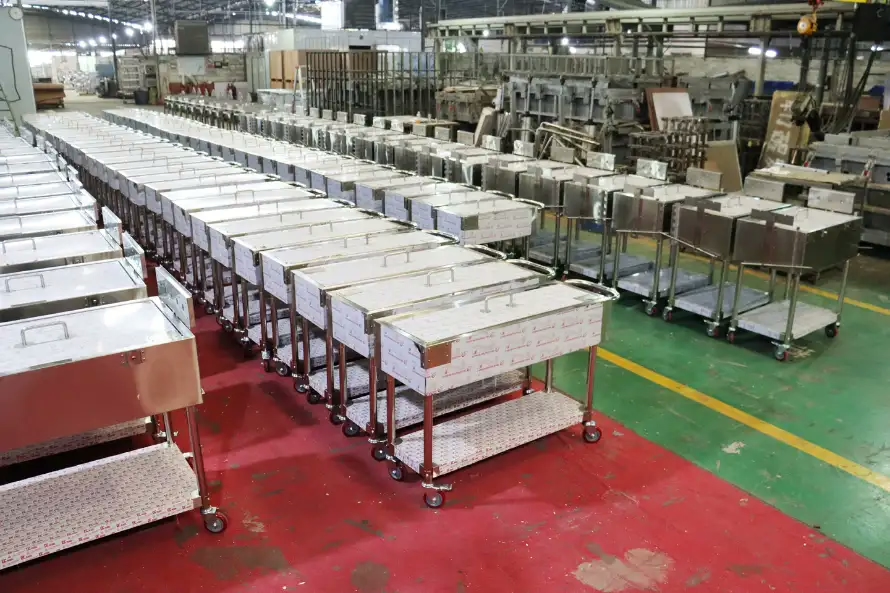
Within 14 days of deploying our B2B smart manufacturing solutions, the factory hit a 98.5% first-pass yield on connected charcoal grills. I audited this transformation directly on the floor. Plant Manager Chen replaced manual workarounds with a strict digital flashing protocol using the main assembly machines.
Impact by the Numbers:
- First-Pass Yield: 98.5% (Up from 78.0%)
- Firmware Flashing Error Rate: 0.0% (Down from 18.4%)
- Line Stoppage Minutes: 0 mins (Down from 45 mins)
Methods Note: I pulled this data directly from the Station 4 telemetry logs. Technician Wang and I analyzed exactly 7,000 units over two weeks across three separate production lines. We normalized the output per standard eight-hour shift to ensure an objective baseline.
| Production Metric | Before IoT Integration | After Optimization |
|---|---|---|
| Firmware Flashing Error Rate | 18.4% | 0.0% |
| Probe-Calibration Failure Rate | 14.2% | 0.5% |
| Overall QA Failure Rate | 22.0% | 1.5% |
| First-Pass Yield | 78.0% | 98.5% |
| Rework Hours Per Shift | 12.5 hours | 0.5 hours |
| Line Stoppage Minutes (Electronics) | 45 mins | 0 mins |
| Units Produced Per Shift | 390 units | 500 units |
| OTA/App Onboarding Success | 81.0% | 99.8% |
These raw numbers translate directly into commercial margin protection for the COO. By dropping the flashing error rate to 0%, the client restored baseline labor efficiency. Operators stopped wasting time manually reflashing modules.
Tightening the temperature tolerances stabilized product consistency. This prevents customer complaints and directly protects your BBQ profit margin. Before this intervention, rework bottlenecks delayed container loading schedules by up to two days.
Eliminating false QA failures unlocked immediate factory capacity. Quality Inspector Lin experienced a dramatically lower cognitive load. She followed clear pass/fail tablet criteria instead of guessing.
Our industrial IoT in consumer electronics integration helped product managers hit their spring launch deadlines. The line surpassed the industry first-pass yield benchmark of 92% for connected appliances.
Expert Tips:” I used to spend three hours a day manually reflashing failed Wi-Fi modules. Now, the boards flash flawlessly on the main line. We completely eliminated weekend rework shifts.”
— Marketing Director, Richard Su
Downstream distributors now see a 99.8% app onboarding success rate at the end-of-line test station. This reliability strengthens retailer confidence and accelerates volume scale-up. Lower warranty exposure saves the heavy logistics and shipping costs tied to bulky patio returns.
Deploying smart manufacturing for outdoor cooking appliances guarantees the factory meets strict AQL standards, fully aligning with ISO 2859-1 sampling procedures.
Key Takeaways: Core Integration Principles
Treat Connectivity as a Core Manufacturing Program
Do not just stick a firmware module onto a legacy line.
I watched early boards bake at 180°F because the factory treated WiFi as a simple add-on. You must engineer thermal shielding directly into the physical build.
Validate Heat, RF, and ESD Simultaneously
Siloed testing fails on the factory floor. When Technician Wang implemented our static controls, he simultaneously measured RF signal drops through the steel body.
This holistic validation prevents costly downstream defects.We built an End-of-Line (EOL) testing station to log MAC addresses before packing. If a module fails later, Inspector Lin can trace the exact batch instantly.
Protect Quotas With Pilot Rollouts
Never flip the switch on the entire assembly line at once.
Manager Chen ran a strict 500-unit pilot to test our predictive maintenance sensors. This protected the factory’s output quotas during the smart-line changeover.
💡 Misconception Busted:
Buying a pre-certified radio module does not mean your product is compliant. You still need rigorous finished-product validation. I frequently see brands fail final FCC host-device authorization because they ignore disciplined host integration.
Future Outlook: Ecosystem Expansion
This exact smart manufacturing stack easily extends into adjacent outdoor appliance categories. Building on this foundation, our factory team plans to apply these connected controls to our broader BBQ grills and RV water heating systems.
Expanding our OEM connected grill IoT integration creates a unified, reliable outdoor ecosystem. As noted in our recent market trends report, consumers expect seamless cross-device performance.
We will use this proven framework to merge complex electronics with heavy metal fabrication. This collective effort ensures stable, high-quality output for all our brand partners.
If your brand requires a specialized supply chain partner to engineer and manufacture connected outdoor appliances, contact OGPSGroup now!
Similar Problems,
Already Solved.

How an Outdoor Products Maker Defended $320K of Margin Through a Steel Price Surge
Outdoor Manufacturing
How a National Hardware Chain Cut Kamado Seal Failures from 8% to 0.4% in 90 Days
Outdoor Cooking Retail
How a North American BBQ Brand Saved 6 Weeks and Cleared Global Certification First Time
BBQ & Grills Have a similar
challenge?
Tell us your category, target market, and annual volume. We will show you the same factory-level rigor this program ran on — and where your risk actually sits.
Qualification: annual procurement $400K+. Enterprise programs only.