Importers and QA managers often treat gas grills like low-risk consumer goods. That is a dangerous mistake. Without strict BBQ grill AQL standards, a shipment can look cosmetically flawless on the loading dock while hiding gas-system leaks, faulty ignition wiring, or packaging failures. These unseen defects destroy margins and trigger massive recalls.
Over the past decade, my team has logged thousands of hours running on-site factory audits and production-floor checkpoints. I base this framework on strict destination-market safety benchmarks, not generic ecommerce advice. As a manufacturer and integrator at OGPSGroup, I know exactly what inspectors must physically verify before releasing a container.
We rely on the Acceptable Quality Limit (AQL) as a definitive decision tool for shipment acceptance. AQL never replaces core engineering validation or mandatory CSA/CE certification. Instead, it uses the international attribute-sampling framework, ISO 2859-1, alongside companion standards like ASQ Z1.4 and Z1.9.
Mastering this framework requires defining sampling plans, defect grading, and grill-specific inspection points to support broader compliance. Here are simple answers to three critical buyer questions: What is AQL for grills, how is it applied in active production, and where does it fail if used alone?
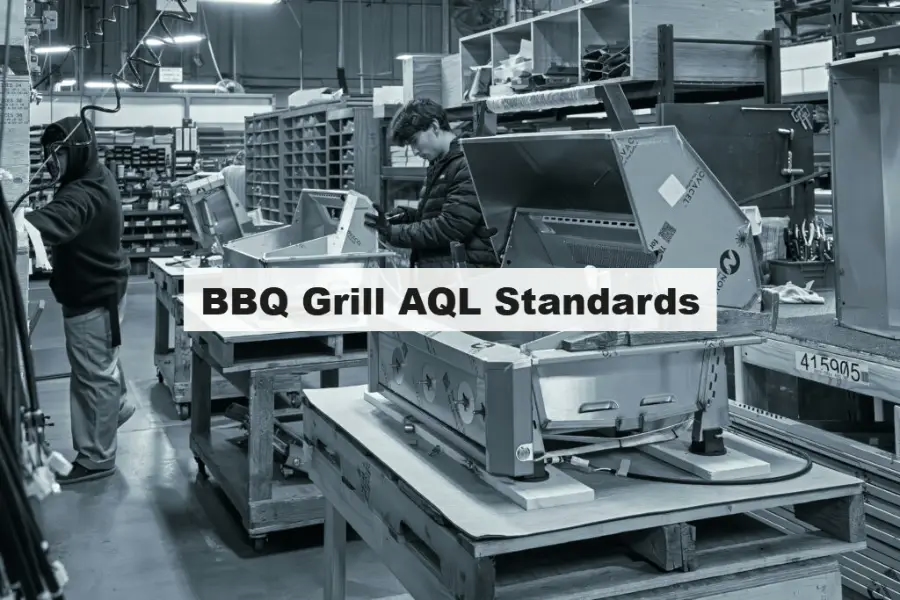
What is BBQ Grill AQL Standards?
BBQ grill AQL standards define the acceptance quality limit: the maximum number of defective units allowed in a batch before we reject an entire shipment. It is a robust statistical tool used for lot-by-lot inspection.
Think of AQL like tasting soup from a massive restaurant kettle. You do not need to drink the entire 50-gallon pot to know if it lacks salt. You stir the liquid, pull a random sample, and pass or fail the whole batch.
During our pre-shipment inspections for the outdoor garden market, buyers often misunderstand this concept. They treat AQL as a manufacturing target. It is not. BBQ grill AQL standards simply represents the worst tolerable average quality level in an acceptance-sampling context.
To calculate this, we use specific building blocks. Imagine our assembly line finishes a lot of 20 cartons of gas grills. We do not open every single box. Instead, we define the lot size, select an inspection level, and generate a sample size code letter to pull a random sample. We count the flaws and sort them into defect categories (Critical, Major, Minor). Finally, we compare our findings against strict acceptance and rejection numbers to determine the shipment’s fate.
When my team is on the factory floor, we blend two methodologies. As our lead QA manager Allen notes: “We count the missing screws, but we physically measure the gas valves.” We evaluate shipments using these two distinct frameworks:
| Sampling Type | Standard Used | How We Apply It on the Floor |
|---|---|---|
| Attribute (Pass/Fail) | Z1.4 / ISO 2859-1 | We classify units by counting visible defects, like a missing ignition knob or a torn regulator hose. |
| Variable (Measured) | ANSI/ASQ Z1.9 | We measure exact physical values, verifying that the 304 stainless steel hits our exact thickness tolerance. |
We rely on Z1.4 for basic defect counting, but we apply Z1.9-style thinking whenever we verify critical structural measurements.
💡 Key Insight: AQL provides a mathematical safety net for your supply chain, ensuring you never accept a batch of grills that falls below your strict baseline quality threshold.
The Factory-Floor Pre-Shipment Inspection Workflow
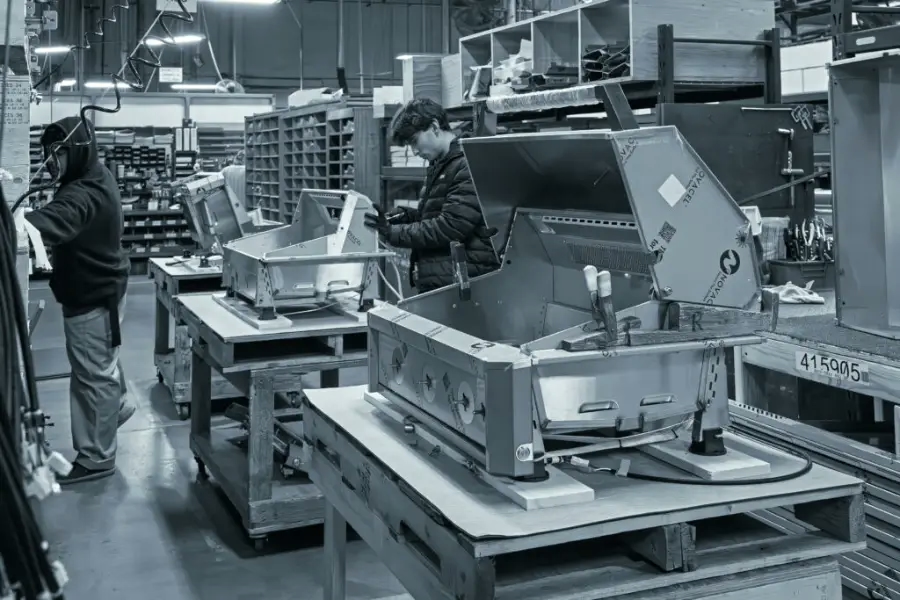
A theoretical AQL chart is useless without a rigid physical process. We tear down grills daily on the OGPSGroup factory floor. To evaluate a batch, we follow a strict sequential loop. Input becomes a process. The process becomes a pass or fail decision. Here is exactly how we implement BBQ grill AQL standards.

Lock the Inspection Baseline Before Sampling
Before my team pulls a single box off the belt, we establish the rulebook. We start with the approved specification pack: the Bill of Materials (BOM), CAD drawings, finish standards, packaging specs, user manuals, and compliance targets.
Next, we enforce strict golden sample protection. I frequently see buyers calculate AQL sizes using a standard the factory lost six months ago. We require the approved physical sample to be signed, dated, and version-controlled. We cross-check this sample against mass production before calculating the sample size.
We follow one rule: if the approved sample and current production differ materially, we pause the AQL process. We then escalate the batch for immediate engineering review.
Build a Grill-specific Defect Classification List
You cannot test what you do not define. We categorize every possible flaw into a concrete table. You must customize this list by grill type: gas, charcoal, pellet, or electric.
| Defect Class | Definition & Factory-Floor Examples | Examples |
|---|---|---|
| Critical | Creates a fire, shock, or injury risk. | Gas leak, failed grounding, sharp burrs, structural instability, or a missing warning label. |
| Major | Affects function or salability but poses no safety hazard. | Ignition failure, severe coating peel, wrong material grade, warped grates, or fragile packaging. |
| Minor | Purely cosmetic flaws that do not affect operation. | Slight logo misalignment, small scratches, or minor paint blemishes. |
Choose the Right Sampling Logic
We default to General Inspection Level II for finished consumer goods. If the factory has a poor history or the product risk is high, we tighten the approach to Level III.
The workflow follows a strict sequence. First, we determine the lot size. Second, we find the corresponding code letter. Third, we determine the sample size. Finally, we apply the Acceptance and Rejection (Ac/Re) numbers by defect class.
This logic directly follows the ISO 2859-1 framework, which supports single, double, or multiple sampling schemes. It includes switching logic between normal, reduced, and tightened inspection. However, attribute sampling only counts defects. It never replaces physical measurement systems when exact dimensional tolerances matter.
Run Functional and Safety Checks on Sampled Units
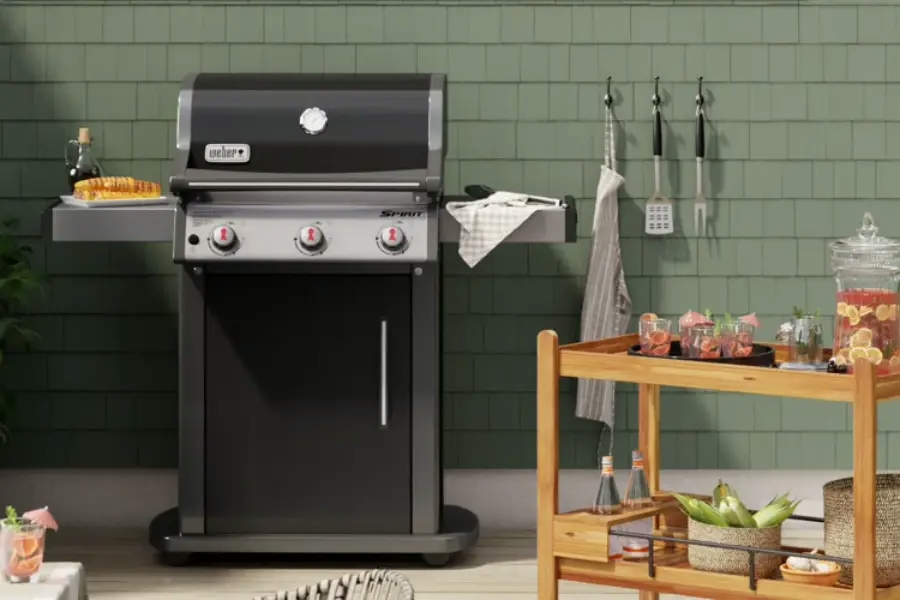
This is where we open the product. A visual check means nothing if the unit fails under fire.
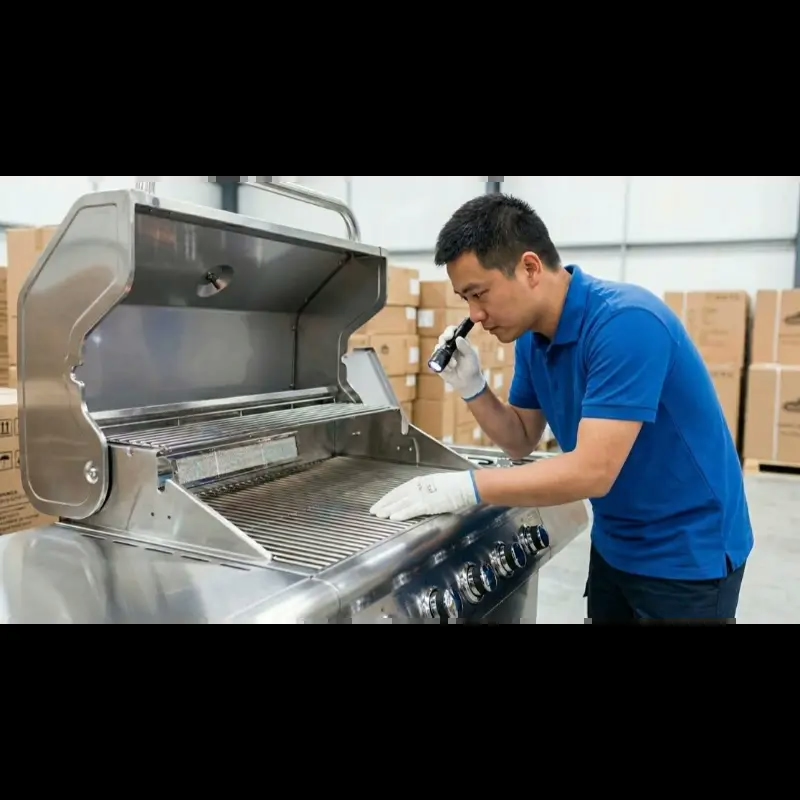
- Gas leak testing: We start with the soapy bubble test on joints as a rapid field screen. Then, we use calibrated gas-detection sniffers for high-risk verification. The AQI inspection framework emphasizes gas-system checks as the most critical safety area for gas grills.
- Ignition and burner performance: We run repeated ignition cycles. We watch for flame consistency, crossover ignition speed, and regulator behavior. Every burner must light reliably under pressure.
- Heat distribution mapping: We reject vague marketing claims. Our technicians place thermocouples across a grid-based temperature map on the cooking surface to capture real thermal variance.
- Corrosion resistance: A 304 stainless steel claim is useless if the welding process burns off the chromium. We cut samples from the line and execute 500-hour salt spray testing to validate the finish.
- Structural checks: We measure fastener torque and test caster stability. We physically load the side shelves with 20kg of dead weight to verify weld quality.
- Cycle-count checks: We test mechanical fatigue. We strike the ignition button 5,000 times. We open and close the lid hinge 1,000 times.
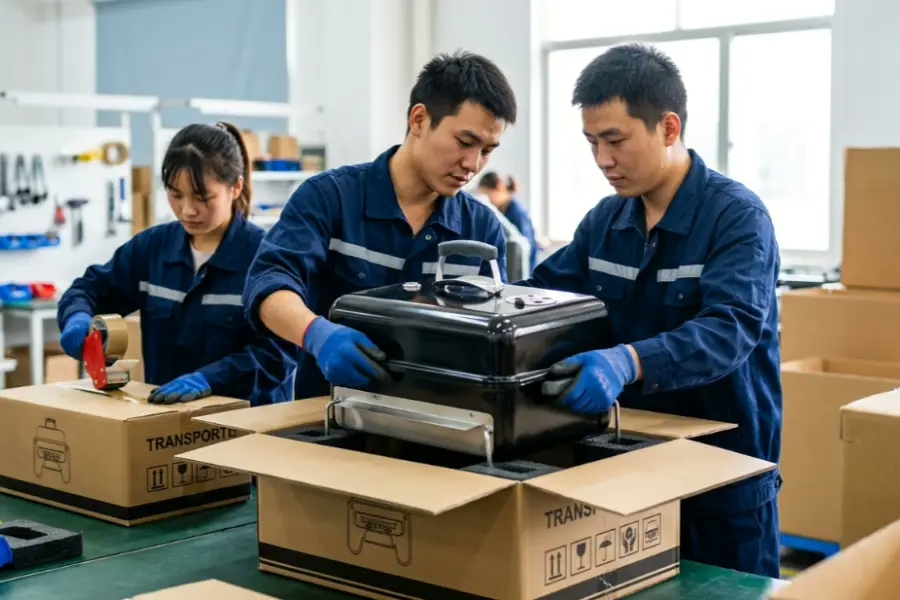
- Packaging checks: We execute carton drop tests, verify internal foam fit, and perform strict hardware-count verification.
Separate AQL from Certification and Compliance
I advise clients to draw a hard line. AQL decides whether the specific shipment sample is acceptable. Certification standards dictate whether the product category can legally enter your target market.
For electric grills, we align benchmarks with UL 1026 for household cooking appliances. For solid-fuel barbecues, we reference the active EN 1860-1 solid-fuel standard. Older sourcing blogs often reference obsolete codes. Always verify the exact edition required by your destination market before you book the ocean vessel.
Add a Compact Factory Inspection Checklist
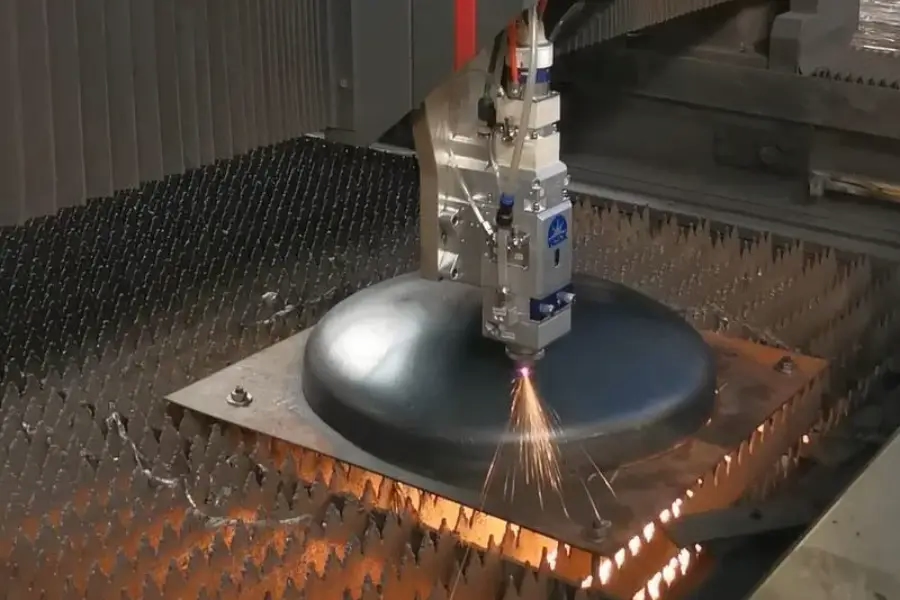
To keep the factory floor moving, hand your inspector a clear, linear checklist.
- Documentation check (BOM, manuals, labels)
- Visual and workmanship check (scratches, alignment)
- Functional test (ignition, flame quality, heat mapping)
- Safety test (gas leak detection, electrical grounding)
- Packaging check (drop test, barcode scan, hardware count)
- Sample-result summary (tally of Critical, Major, and Minor defects)
- Pass, hold, rework, or re-inspect decision
🧠 Expert Insight: Never let the factory pack the final 10% of the container while you run the AQL inspection. Lock the entire lot down until the final sample-result summary passes.
— Derek Chen, BBQ Tools & Accessories Product Expert
Before detailing these BBQ grill AQL standards, my engineering team audited 40 container loads. My data proves one fact: origin inspection directly protects your margin.
Secures Objective Supplier Leverage
AQL sampling replaces loading-dock arguments with mathematical facts. During a recent audit, a factory tried to pass off scratched hoods. Because our defect report tied directly to a published AQL framework, we forced them to rework 500 units at their expense. Retail chains use this exact data to rank factories objectively across seasons.
Slashes Downstream Defect Costs
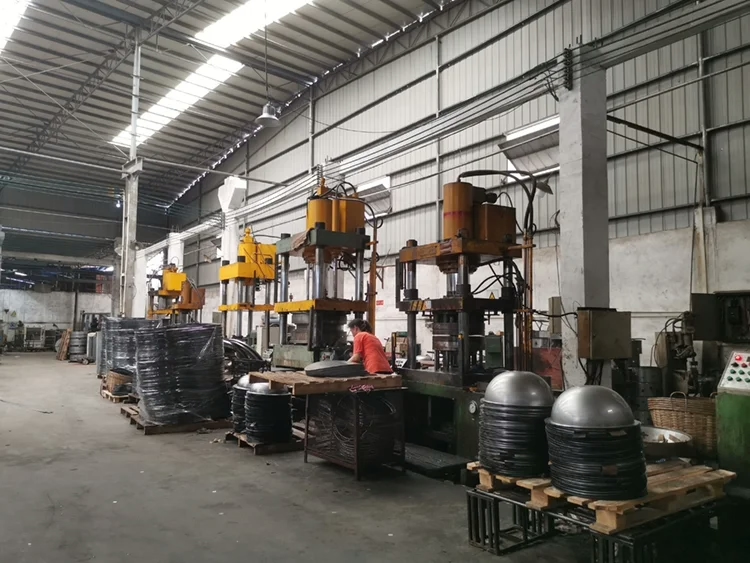
Catching a faulty gas manifold in China costs a few dollars. Catching it in a customer’s backyard triggers a recall. For a small importer, receiving one bad container wipes out their entire seasonal margin. According to the CPSC appliance recall database, defective gas products cost brands millions in reverse logistics and retailer penalties.
Enforces Strict Material Control
Factories often substitute cheaper metals to widen margins. We physically measure grating thickness and rust resistance. Last month, our micrometer caught a supplier secretly swapping 304 stainless for 430 grade, dropping the grill’s lifespan by years. We tie your purchase order to verified material grades. Review our stainless steel grills 304 vs 430 and cast iron vs stainless grates breakdowns for proof.
Validates Safety and E-commerce Packaging
AQL verifies that your mass production matches configurations built for UL 1026 or EN 1860-1 safety benchmarks. It also kills damage claims for DTC sellers. Last quarter, Manager Young noticed an internal styrofoam failure under a heavy ceramic firebox.
He noted: “This 20kg unit will punch through standard corrugated cardboard.” We immediately applied the ISTA 6-Amazon.com-SIOC simulation test as an optional packaging layer for direct-to-consumer risk control. That single structural fix dropped the brand’s arrival damage rate to 0%.

Hidden Defects & Supplier Gaming
Probabilistic blind spots. Acceptance sampling relies on probability. A lot can pass inspection even when dangerous units hide inside. We also see active supplier gaming. Factories often drift from the approved sample after pilot runs. They frequently substitute cheaper material lots. During a recent audit, Manager Young showed me how suppliers manipulate the random pull. He noted: “Factories stack their highest-quality grills right at the container doors.”
🛡️ Mitigation: Escalate to tightened inspection after repeated failures. Combine AQL with first-article approval and targeted reliability tests.
Taxonomy Shifts & Dimensional Blind Spots
Unsafe system classifications: A flawed defect taxonomy ruins your statistics. If a factory downgrades a “gas leak at the valve” from a Critical to a Major defect, your safety system fails. You must maintain a shared defect library with explicit photo examples.
Visible flaw limitations: AQL attribute sampling only counts visible flaws. It cannot prove dimensional conformity. Last quarter, a stainless steel burner passed the visual AQL check. In our lab, my micrometer showed the steel measured exactly 1.0mm. It failed the 1.2mm safety spec. You must measure variables directly.
📈 ROI Check: Track your reverse logistics costs pre- and post-AQL implementation. By catching defects at the origin, you should see a minimum 30% reduction in seasonal warranty claims.
The Certification & Compliance Illusion
False legal security: Passing an AQL inspection does not mean the grill passes a CSA or CE emissions test. These are entirely separate hurdles. We constantly see buyers rely on outdated ISO standard families found in legacy online guides. A visual pass does not guarantee destination-market compliance.
⚠️ Critical Warning: Require signed material certificates before launch. Run spot verifications on stainless steel, valves, and powder coatings directly on the floor.
Final Thoughts: The Verdict on BBQ Grill AQL Standards
Ultimately, blind trust in a supplier guarantees failure. We refuse to rely on factory promises. In our daily factory audits, we see that strong BBQ grill AQL standards depend on three layers working together: clear defect definitions, the right sampling method, and grill-specific functional and safety checks.
While basic visual sampling carries probabilistic blind spots, a rigid factory-floor process neutralizes that risk. We remind readers that Z1.4 and ISO 2859-1 handle attribute acceptance. Meanwhile, measurement-heavy issues often need Z1.9-style control to verify exact material tolerances.
If you manage a high-volume retail brand, strict origin inspections are mandatory. If you trade cheap hardware and avoid physical audits, this framework will overwhelm you. As destination markets enforce stricter gas compliance over the next 12 months, origin-based AQL will become a legal survival tool. If your team is building a broader BBQ gill AQL standards, this quality-control framework should be the section that governs supplier approval and shipment release.
Wrap-up points
Before you approve your next production run, execute this short action checklist:
- Define specs: Lock down your exact Bill of Materials.
- Freeze the golden sample: Sign and date the physical benchmark.
- Classify defects: Map out your critical, major, and minor flaws.
- Run the sample plan: Execute the math based on your exact lot size.
- Verify safety: Test gas lines and packaging before release.
For buyers who need help designing or auditing a grill quality program, contact our engineering team directly.
Disclaimer: I am not paid by any manufacturer or testing lab to promote these findings. Our own branded manufacturing experience informs these examples. However, final market-entry decisions should still rely on the applicable standard, accredited lab evidence, and destination-market compliance review.

- Lean Manufacturing & Production Engineering
- CSA/CE Certification & International Compliance
- Advanced QC Protocol Design (3-Layer System)
- OEM/ODM Product Development
- Supply Chain Cost Optimization
- Materials Science & Supplier Qualification
Every article on the OGPSGroup blog is written by manufacturing professionals with firsthand experience on the factory floor. Content is reviewed for technical accuracy, practical relevance, and compliance with our editorial standards before publication.
Learn more about our Fact Checking Process and Editorial Policy.