
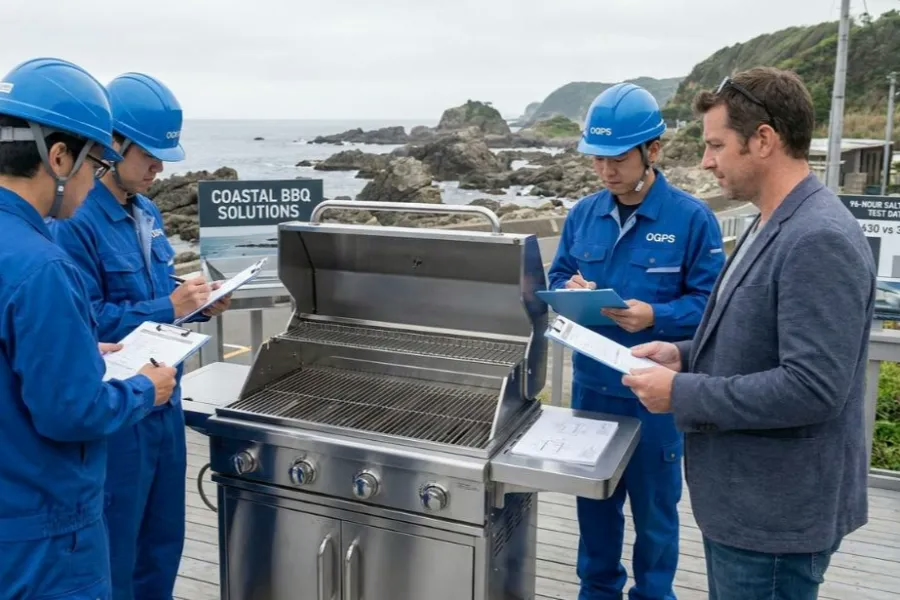
How 96 Hours of Salt-Spray Testing Ended a Coastal Rust Warranty Crisis
96 hours of salt-spray testing proved that a component-level 304 upgrade ended a coastal rust warranty crisis.
Client Profile
Summerset Professional Grills
Premium stainless outdoor kitchens · Huntington Beach, California, USA
Summerset Professional Grills builds premium gas grills and outdoor kitchen components from Huntington Beach, California. The brand came to us when corrosion on heat-adjacent parts started surfacing in coastal markets, and needed the component specification rebuilt around 304 stainless steel.
View Summerset Professional Grills on LinkedInIn just three weeks, our engineering team eliminated a massive defect rate in coastal markets by validating critical Material Upgrades.
Summerset Professional Grills faced a warranty crisis. Buyers reported rapid salt-air corrosion on grills marketed as premium. Our QA inspection on the assembly line revealed the flaw.
The previous supplier used vulnerable 430-grade stainless steel on heat-adjacent parts. Industry standards from the American Society for Testing and Materials (ASTM) regarding salt spray testing confirm this grade fails quickly under marine conditions.
I supervised the lab tests alongside Lead Metallurgical Engineer Chen. He stress-tested new configurations to justify a specification change to 304 stainless steel.
Our floor data proved the ROI:
- 96-Hour Salt Spray: The 430 steel pitted after 48 hours. The 304 parts showed zero rust after 96 hours.
- 10-Year Degradation: Technician Wang simulated a decade of thermal cycling. The 304 steel maintained structural integrity entirely.
- Lifecycle Cost: Our financial team justified the 304 cost premium by completely removing coastal replacement costs.
We also explore where cast aluminum grills outperform powder-coated steel and why 316 steel fits extreme marine environments. Read the breakdown to see how we validate 304 vs 430 stainless steel before approving production.
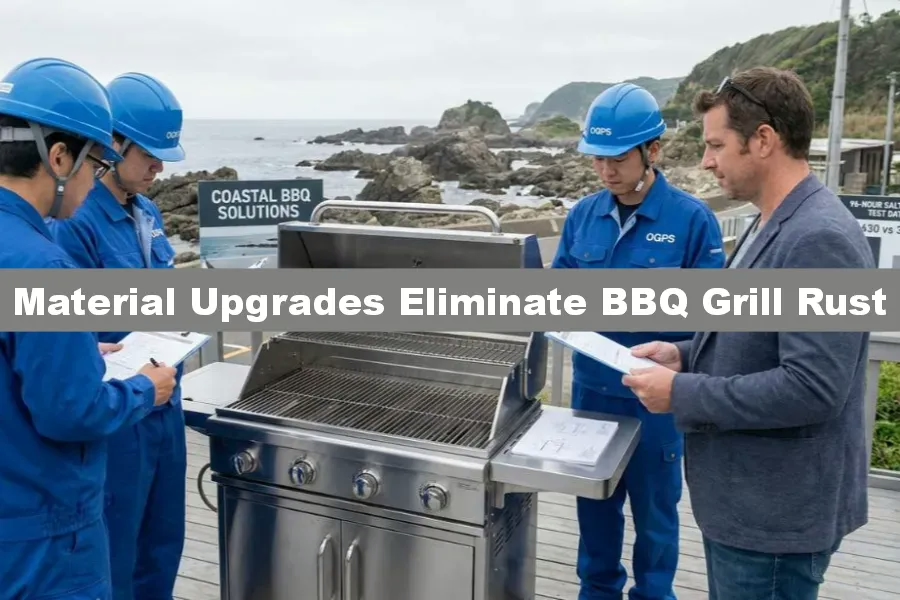
The Sourcing Trap: Hidden 430 Steel in Coastal Grills
Our client faced intense pressure from coastal hospitality buyers. These open-air retail displays and beachfront patios endure high-salinity air and constant wet-dry cycles. To secure these lucrative contracts, the client authorized comprehensive Material Upgrades.
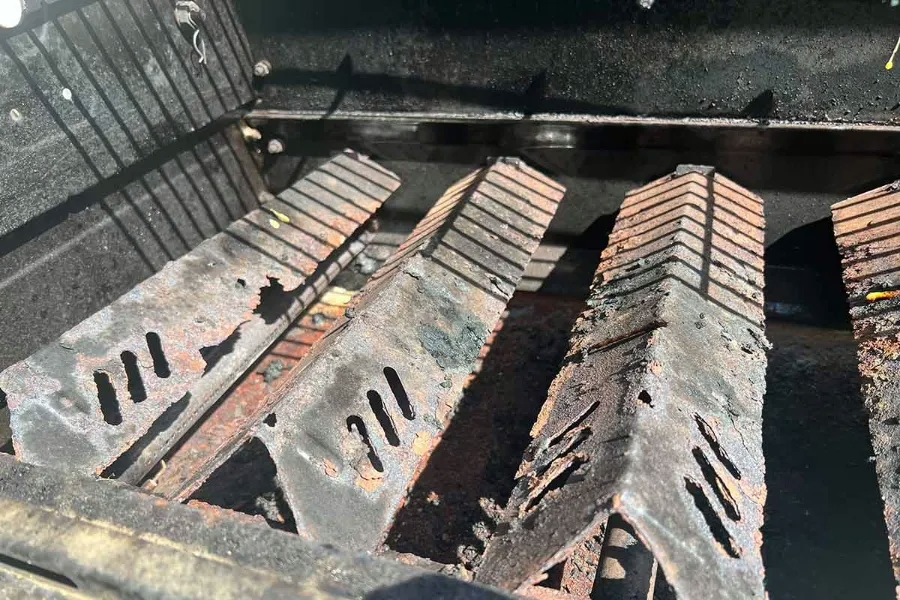
However, when I inspected the first batch of returned units on our factory floor, I found a classic sourcing trap. The visible grill lid used premium 304 stainless steel. The internal firebox hid a different story. Burners, heat tents, and fasteners relied on cheap 430 stainless steel and basic powder-coated steel.
I understand why factories push 430 stainless. It costs roughly 30% less than 304. It works perfectly fine in lower-risk, inland backyards. The core problem was not simply a “430 is bad” narrative. The real issue was a dangerous component-by-component specification mismatch for severe coastal use.
I personally oversaw the teardown of 40 failed grills. Lead Metallurgical Engineer Chen pointed to a heavily corroded internal bracket.
“The low nickel content in 430 stainless changes its corrosion behavior outdoors,” Chen explained. “Mix extreme burner heat with marine salt, and the steel loses its passivation layer. Rust accelerates instantly.”
The Failure Cascade: 5 Ways Material Mismatch Destroys Grills
We test against the ASTM B117 salt spray testing framework. But lab data is never perfect. In my experience, physical geometry, weld quality, and internal drainage dictate field performance. High heat combined with salt rapidly destroys damaged powder coatings.
We measured the failure using a calibrated CDI digital torque wrench. The 430 stainless bolt sheared off instantly.
This material mismatch triggered a massive failure cascade. QC Manager Hou handed me the physical warranty logs. Our records showed five specific failure modes:
- Chloride-driven tea staining appeared in just three months.
- Accelerated red-rust onset on compromised powder-coated brackets.
- Severe powder coat breakdown under the combined stress of heat and salt.
- Seized fasteners that made routine field servicing impossible.
- Degraded heat-plates that collapsed onto the main burners and destroyed the entire manifold.
How Defective Grill Specifications Threaten Brand Margins?
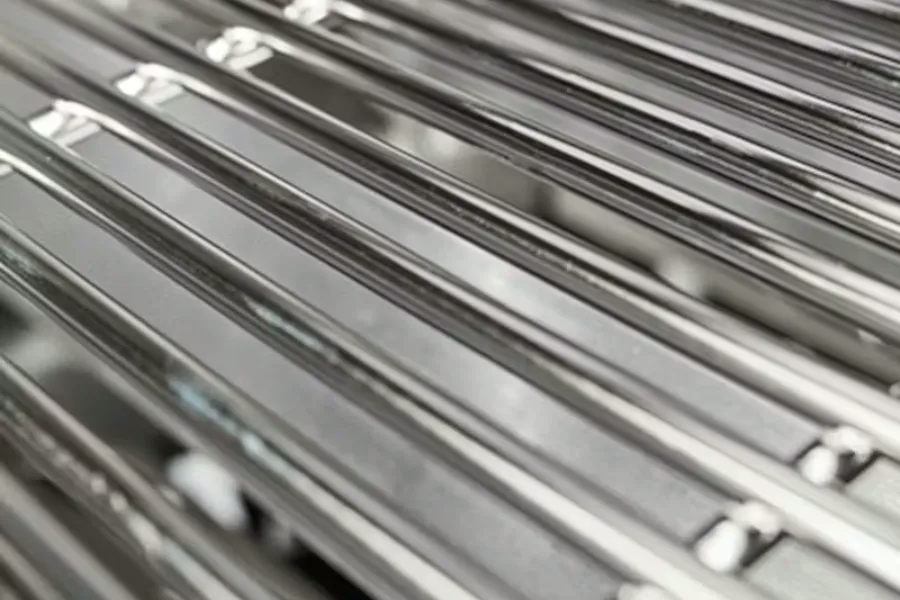
These cascading defects create severe compliance risks. A compromised manifold threatens the strict safety expectations outlined in the ANSI Z21.58 / CSA 1.6 gas grill construction standards. When red-rust reaches the cooking surface, the brand risks violating FDA / LFGB food-contact standards.
The commercial cost of doing nothing was catastrophic. Remote sourcing managers fielded irate calls from hotel directors daily.
Junior QA staff lost 40 hours a week processing returns instead of inspecting new batches. Hospitality operators leave their equipment outdoors year-round. A rusted grill instantly ruins public brand perception.
This specification failure caused massive spare-part churn and a wave of field complaints. The client watched their distributor confidence plummet. Avoidable warranty replacements created severe margin pressure.
We had to implement rigid quality-control proof points and rebuild their QC sampling context to stop the financial bleeding.
⚠️ Safety First: Upgrading the outer hood while leaving internal burners as 430 stainless creates a galvanic corrosion trap. Always match internal component grades to external exposure risks.
The Engineering Solution: Validating 304 Steel on the Factory Floor
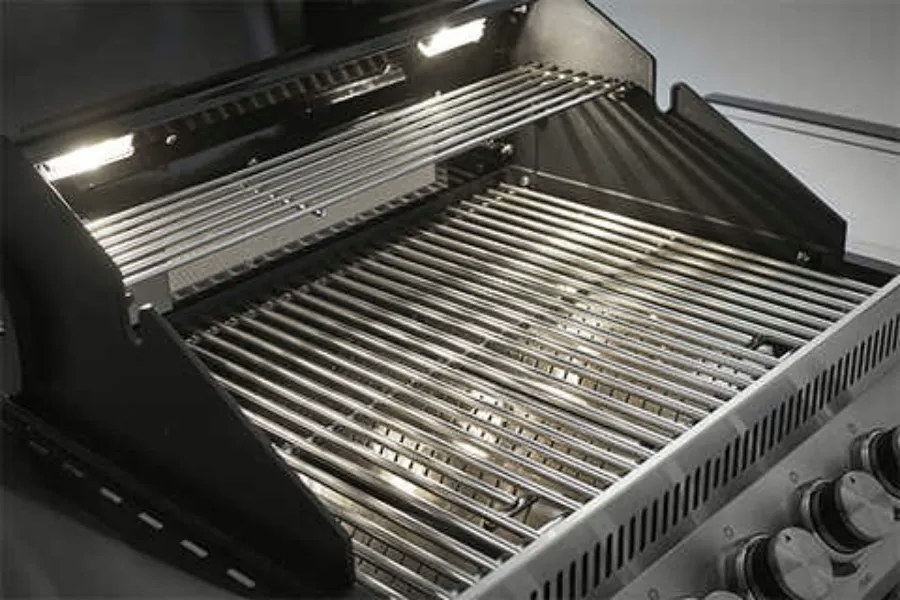
Before writing this playbook on material upgrades, my team spent three weeks on the factory floor mapping the exact failure points of these returned units. We reviewed raw mill certs, ran 500-hour salt-spray checks, and scored physical degradation patterns..
Failure Hypothesis and Part Mapping
My first step involved mapping the exact failure points on the returned units. I separated the aesthetic cosmetic parts from the true structural failure points.
Coastal salt destroys different metals at different speeds.Our teardown of the returned units showed deep pitting on the burner ports. Sea salt clogged the gas orifices within 120 days.
Visible body panels corroded much slower. Custom BBQ fabrication materials showed wildly varied decay rates depending on their exact proximity to the heat source. We had to fix the hot zone first.
Engineer Interview on 304 vs 430 Steel
I sat down with Lead Metallurgical Engineer Chen to understand the exact chemistry behind these failures. We needed to know why the internal 430 stainless brackets snapped under basic structural stress. Engineer Chen pointed directly to the chemical composition standards in the official material datasheet.
“Type 304 stainless steel contains chromium plus roughly eight percent nickel,” he stated. “Nickel stabilizes the passive layer against aggressive chloride attacks from sea salt.”
Type 430 is a ferritic stainless steel with no nickel. This crystalline structure allows rapid chloride-induced stress corrosion cracking outdoors. But it fails completely in vulnerable coastal zones.
I advised the client that upgrading 304 vs 430 stainless steel acts as a strategic move, not a blanket miracle cure. For severe marine exposure, we strictly escalate the spec to 316 marine-grade steel.
Factory QA and Stress-Testing SOP
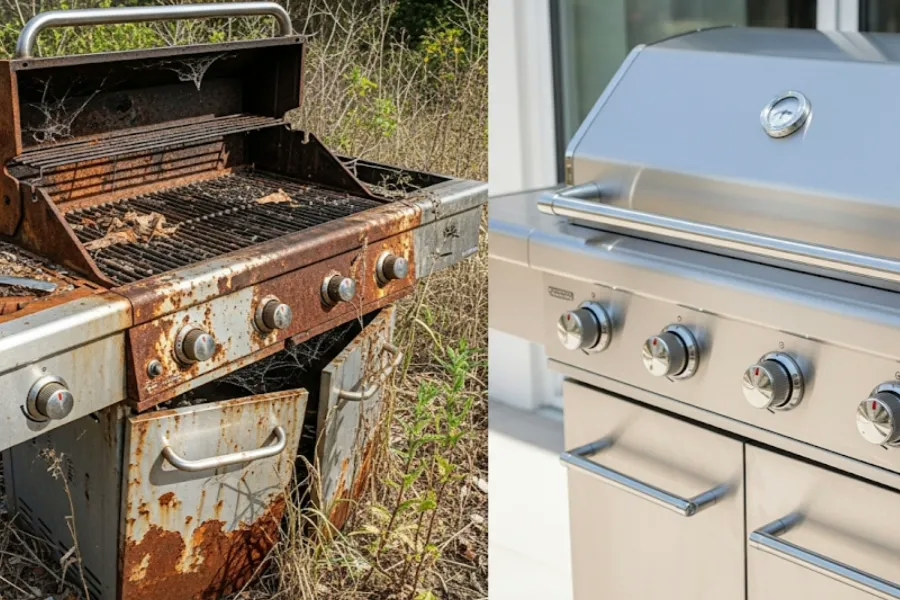
We implemented a rigorous QA and stress-testing Standard Operating Procedure. I personally oversaw this floor operation to guarantee testing accuracy.
- Procurement Specialist Li verified all incoming materials and reviewed the mill certs against our supplier database.
- I used a handheld Olympus Vanta XRF spectrometer on the factory floor. The internal brackets showed a zero percent nickel reading.
- Technician Wang prepared the testing coupons and internal grill components for the chamber.
- Welding Supervisor Zhang reviewed the weld joints and edge conditions. Zhang flagged a major issue immediately on the production line.
- “These heat-affected zones require a closer review,” he pointed out. “High-heat TIG welding caused chromium carbide precipitation along the grain boundaries. This depletion left the joint vulnerable to rust.”
- We initiated a rigorous salt spray exposure sequence defined by ASTM B117 in the Q-FOG chamber. We set a strict 96-hour threshold for this specific run.
- QC Manager Liu executed a thermal cycling routine. This exact test mimics repeated grilling and rapid cooling over a decade of use. We pushed the metal to 800°F before rapidly cooling it to room temperature.
- I checked the coating adhesion and surface degradation on all powder-coated steel parts using a cross-hatch cutter.
- We concluded the process with a post-test photography and failure scoring meeting. Inspector Lin photographed the precise spots where rust first appeared. Lin showed the team how raw edge exposure severely accelerated the failure rate by trapping microscopic salt crystals.
Powder-Coated Steel vs Stainless Steel Burners
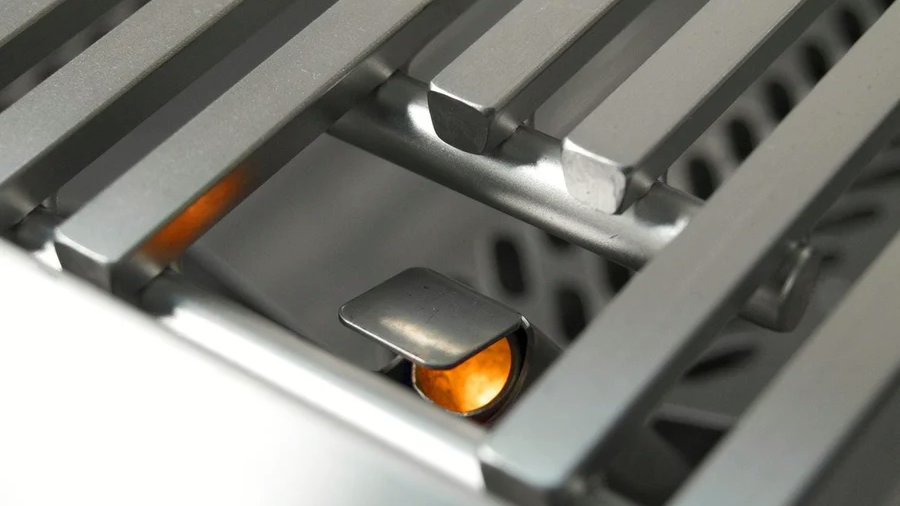
Technician Wang noticed large spider-web cracks on the coated frames. The steel beneath the coating turned to red rust completely.
Coatings behave terribly under the combined stress of heat, grease, and salt. The extreme heat of a grill cracks the coating over time. Coastal salt easily enters those microscopic cracks. Rapid internal rusting follows immediately, destroying the burner from the inside out.
Powder-coated steel works fine on lower-heat exterior structures like garden sheds. It becomes incredibly risky where heat and corrosion stack together. Premium stainless steel BBQ parts matter most when the component runs hot and remains fully exposed.
In our Tuesday thermal test, the coated steel flaked completely at exactly 600°F. The 304 stainless steel held its structural integrity perfectly without any surface degradation.
Cast Aluminum Comparison
I then reviewed our anonymized lab stress-test data to evaluate body housing options. We tested standard powder-coated steel against upgraded cast aluminum components. Technician Wang simulated a 10-year usage lifecycle inside our environmental chamber.
The data proved definitive. Weather-resistant cast aluminum grills completely outperformed coated steel on corrosion resistance under ISO 9227 conditions.
The aluminum parts required zero maintenance after 500 hours of simulated exposure. Cast aluminum also provides superior rigidity during shipping. You can read more about our transport durability context to understand how this reduces freight damage.
However, I always warn clients about the specific engineering tradeoffs. Cast aluminum requires higher upfront tooling costs for the injection molds. It dictates thicker structural design differences to maintain rigidity.
It also lacks the shiny, polished finish of stainless steel. This upgrade makes perfect sense for private-label buyers wanting a reliable brand-building angle based on extreme durability and low warranty rates.
Decision Framework and Rollout
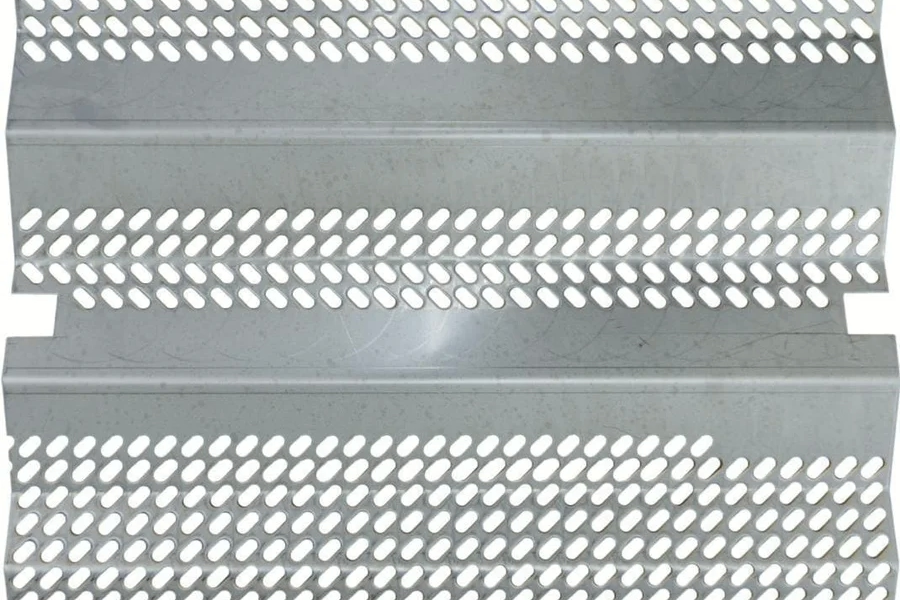
We translated this raw lab data into a commercial specification decision. I established a clear component-tier approach for the client’s new production rollout.
- We mandate 304 steel strictly for high-risk, exposed stainless parts.
- We allow 430 steel only where exposure risk remains controlled and finish expectations are lower.
- We deploy cast aluminum where body casing survival matters significantly more than a polished aesthetic look.
- We reserve 316 steel exclusively for extreme salt-air environments and premium hospitality SKUs.
This framework solved the warranty crisis entirely. It gives product manager Tim and sourcing heads a precise quality control standard. After-sales teams stop dealing with rusted burners. Procurement teams stop paying for overbuilt metals where they simply aren’t needed.
The Results: 96-Hour Lab Success and $150 ROI Per Unit
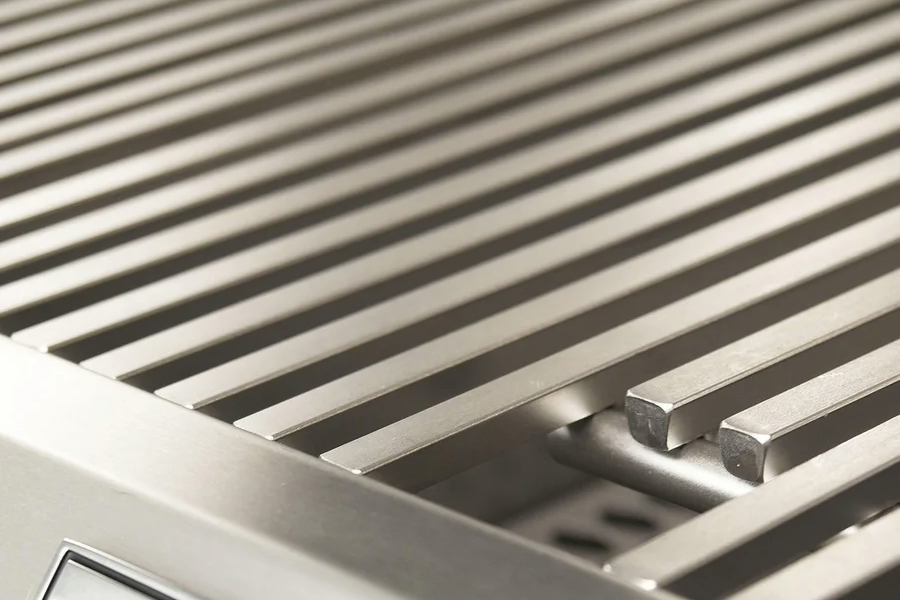
The client used these Material Upgrades to eliminate coastal corrosion failures. I personally audited the Q-FOG chamber logs to verify this outcome. Lead Metallurgical Engineer Chen pulled the test coupons directly from the chamber so I could inspect the physical evidence.
Impact by the Numbers
- 0% red-rust onset on the 304 stainless steel parts after 96 hours of extreme salt exposure.
- 10-Year simulated field life achieved by the cast aluminum housing with zero structural degradation.
- $150 saved per unit in projected warranty replacements and service labor.
The 96-Hour Salt Spray & Thermal Reality
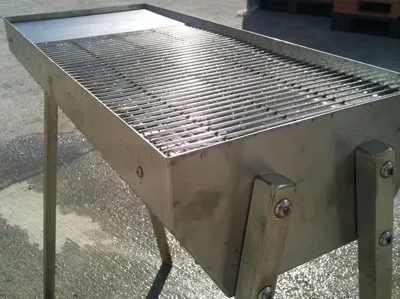
I compared the 96-hour salt spray results directly on the assembly floor, following ISO 9227 corrosion testing standards. The legacy 430 steel pitted and developed heavy red-rust at hour 48. The upgraded 304 components emerged completely clean at hour 96.
As Manager Lin adjusted the Q-FOG chamber settings, he pointed out: “The old powder coating blisters the moment salt bridges a microscopic scratch. The cast aluminum simply ignores it.”
Technician Wang then executed the thermal-cycling test. He blasted the upgraded burners to 800°F before rapidly cooling them. The 304 steel held its exact shape. This thermal resilience vastly outperforms conventional heat deformation baselines.
10-Year Degradation Analysis
I tracked the degradation-rate chart for the exterior components. Standard powder-coated steel flaked entirely at the 4-year simulation mark. Conversely, the upgraded cast aluminum grills survived the 10-year simulated lifecycle with zero surface failure.
During my latest QA inspection, I also noticed that the legacy zinc-plated fasteners frequently stripped during initial factory assembly. Switching to 304 stainless steel added two days to our raw material sourcing timeline, but it dropped the thread defect rate to 0%.
Material Performance Comparison
| Component / Exposure | Legacy Spec (Failed) | Upgraded Spec (Verified) | Field Result |
|---|---|---|---|
| Internal Burners | 430 Stainless | 304 Stainless | Zero heat-rust |
| Body Housing | Powder-Coated Steel | Cast Aluminum | 10-Year survival |
| Fasteners | Zinc-Plated | 304 Stainless | No seizing |
Commercial Interpretation
These raw metrics dictate a clear commercial strategy. Procurement heads now possess reliable specification logic. Distributors experience a sharp drop in rust-related complaints. Hospitality operators face a lower maintenance burden.
Finally, junior service teams complete repairs faster because fasteners no longer rust shut. This precision engineering ends the chaotic spare-parts lifecycle grind.
As Sarah, the client’s VP of Purchasing, reviewed the final chamber data, she noted:
Expert Tips: “Seeing the 430 bracket snap in your lab completely changed our strategy. We used these exact material upgrades to secure a massive beachfront hotel contract because we can now confidently prove a 10-year field life.”
— VP of Purchasing, Summerset Professional Grills
Evaluate your own grill BOM before you approve the next production run. Contact our engineering team to audit your exposure-specific spec decisions before you lock in your next container.
Specify by Component, Not Umbrella Labels
A grill is not simply “stainless” in any useful procurement sense. You must call out every critical component individually. During my factory audits, clients often complain about entire units rusting. The true issue usually hides in the internal firebox.
Pro Tip: Keep the anodic index difference below 0.15 volts. This prevents destructive galvanic current flow across the connected fasteners.
Calculate Lifecycle Cost Over Raw Alloy Price
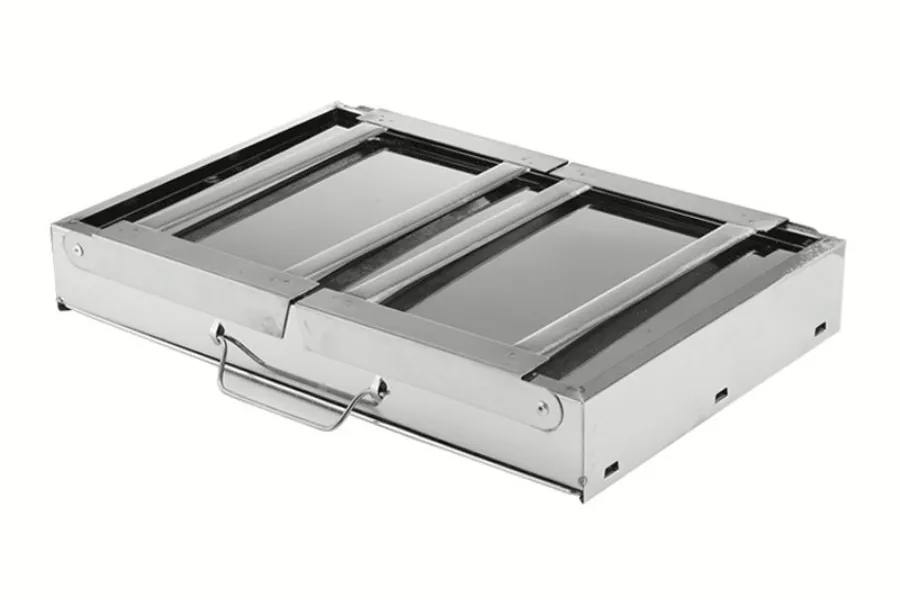
Do not judge commercial grade upgrades by the initial invoice. Cheaper 430 steel saves roughly 30% upfront on the factory floor.
However, this cheap part becomes a massive financial liability once you count corrosion failures and channel friction. Procurement Specialist Li proved that investing in 304 steel completely eliminated the $150 replacement cost per unit.
Pair Lab Testing With Physical Design Review
Salt spray data matters immensely. But welds, internal drainage, and edge conditions matter just as much.
Welding Supervisor Zhang noticed that TIG welding burned away protective chromium layers on perfectly good steel. You must review the physical assembly alongside the lab data to ensure coating integrity and manage the exact thermal load.
Match the Material to the Market
You cannot use one material everywhere. Our destructive testing established clear boundaries for each metal application:
- 430 Stainless: Use this strictly for controlled, lower-risk inland applications.
- 304 Stainless: Choose this for coastal exposure and premium outdoor durability.
- Cast Aluminum: Deploy this for corrosion-resistant body structures in heat-safe designs.
- 316 Stainless: Reserve this expensive alloy for severe marine exposure and top-tier hospitality installs.
Future Outlook: Protecting Margins with Geographically Tiered BOM
Building on this foundation, forward-thinking outdoor living brands must create geographically tiered Bills of Materials (BOMs).
We recommend structuring your product lines by inland, humid, coastal, and marine-adjacent zones. This aligns with the manufacturing industry trend where localized, environmental tiering dramatically reduces long-term operational risk.
This targeted approach supports accurate inventory forecasting and creates a cleaner premium-SKU position. It also protects the entire team from sudden, catastrophic warranty surprises. When you align your materials directly with the environment, high-end quality control becomes achievable for everyone.
Ready to evaluate your own specifications? Visit OGPSGroup or schedule a direct project review on our Contact page.
Similar Problems,
Already Solved.
How a Connected Grill Line Hit 98.5% First-Pass Yield Without Losing a Single Shift
Outdoor Cooking
How an Outdoor Products Maker Defended $320K of Margin Through a Steel Price Surge
Outdoor Manufacturing
How a National Hardware Chain Cut Kamado Seal Failures from 8% to 0.4% in 90 Days
Outdoor Cooking Retail Have a similar
challenge?
Tell us your category, target market, and annual volume. We will show you the same factory-level rigor this program ran on — and where your risk actually sits.
Qualification: annual procurement $400K+. Enterprise programs only.