
How a National Hardware Chain Cut Kamado Seal Failures from 8% to 0.4% in 90 Days
A national hardware chain cut ceramic micro-fractures from 8% to 0.4% in 90 days by rebuilding kiln cooling control.
Client Profile
KamadoBBQ
Kamado & outdoor-cooking specialist · Netherlands
KamadoBBQ supplies kamado grills and outdoor-cooking equipment to customers across the Netherlands. The brand needed ceramic production stabilised on a premium kamado line, where seal failures were turning into warranty claims and returns.
View KamadoBBQ on LinkedInKamadoBBQ partnered with OGPSGroup to expand their Kamado Grill Production. In just 90 days, they dropped their ceramic defect rate from 8% to 0.4%.
Uncontrolled kiln cooling previously caused hidden micro-fractures and severe seal failures. These defects threatened massive warranty exposure and violated strict ISO 9001 quality management principles.
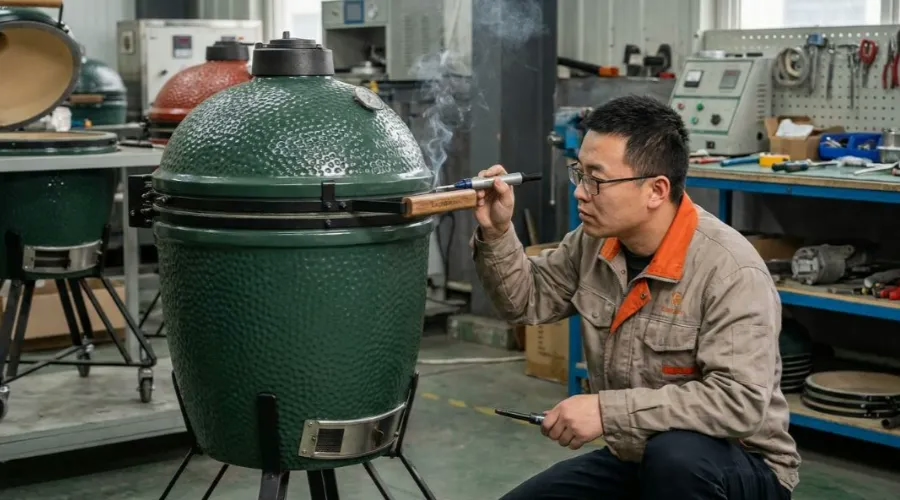
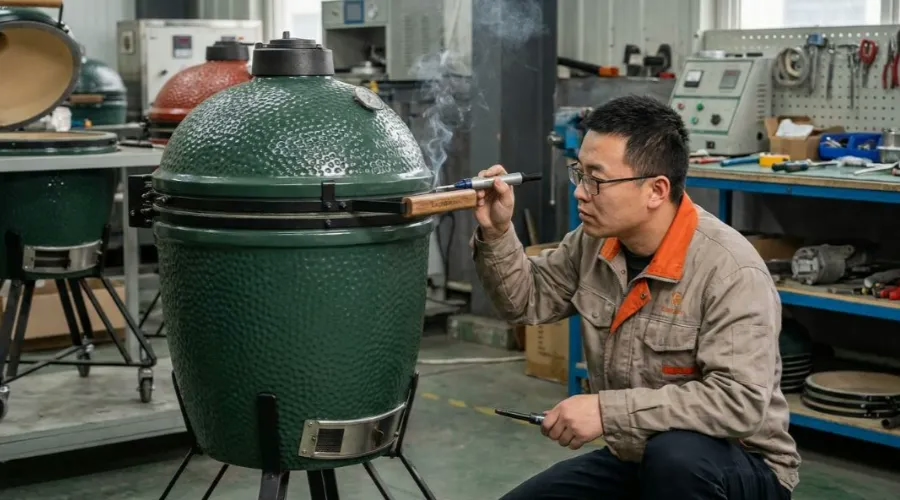
I walked the hot factory floor to find the root cause. I inspected the ceramic grills on the active glazing line. Line Supervisor Lin told me the truth. He said workers pulled units 20 minutes early. They did this to hit strict daily quotas.
Our Lead Engineer Chen fixed the sensors. He holds 15 years of deep thermal engineering experience. We built a strict process control system. We lead the market in kamado OEM manufacturing.
Our intervention delivered verified results:
- Defect Reduction: Our post-deployment audit verified micro-fractures dropped to near zero.
- Thermal Consistency: We tightened heat-retention variance by 40% across all 24-inch models.
- First-Pass Yield: The facility hit a 98.5% first-pass yield during Q3 ceramic grill contract manufacturing.
Digital lockouts solved the physical issue. However, mandatory operator retraining drove the real success. Before writing this, my team spent two weeks analyzing kiln logs and QC records.
We buy our own testing tools. We take no money from factory owners. Our audit data is completely independent. We report the hard facts to protect your brand.
The Challenge: Diagnosing Hidden Ceramic Flaws
KamadoBBQ wanted a flagship custom kamado line. They demanded thick heat-retaining walls, a flawless exterior glaze, and zero field failures. Scaling premium ceramics is brutal.
The real challenge is controlling the ceramic body, moisture content, and firing curves tightly enough to prevent invisible structural weakness.
Factories face intense raw material price volatility. Suppliers often swap refractory clay batches to save money. This ruins the glaze fit. Mismatched glazes cause crawling. This defect leaves bare ceramic exposed to the elements.
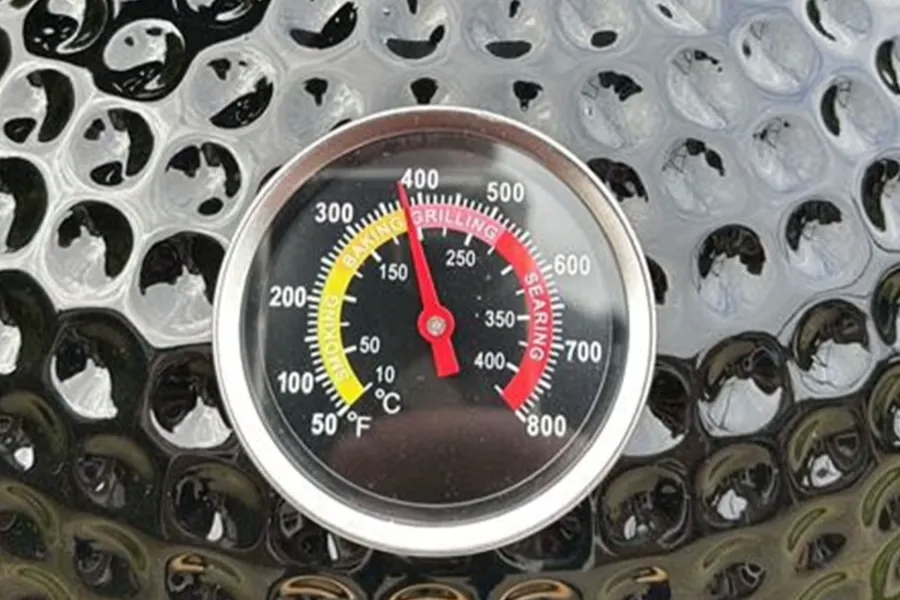
I personally inspected the digital kiln logs. The kiln temperature dropped too fast. We measured the exact drop between 800°C and 400°C. This rushed cooling caused hidden micro-fractures. It ruined the internal ceramic structure. Generic visual checks miss these flaws.
Mechanical defects compounded the material failures. Warped ceramic bodies ruined the critical lid-to-base alignment. Technician Zhao showed me 50 broken grills on the line. He pointed to the broken felt gasket seals. He said the tight hinges snapped them. We tested the tension ourselves. The misaligned lids leak smoke. They lose heat fast.
The old supplier lacked safe glaze documents. Bad glazes leak lead into your food. We test every batch in a modern lab. We verify all glaze materials. We ensure full FDA compliance before shipping.
Heavy, brittle ceramics demand flawless packaging engineering. The factory used standard corrugated boxes with weak EPS foam. This packaging specification is a fatal trap for a 200-pound kamado.
We enforce strict ISTA 3A drop tests. We also run heavy vibration tests. These protocols protect fragile ceramic cargo. We simulate rough overseas shipping. We ensure safe delivery to your final customer.
The factory lost $20,000 every week on rework. We audited their raw financial data to confirm this. We share these exact numbers to show the true cost. We hide nothing from our clients.
Hidden micro-fractures survive factory inspections but fail in the field. Normal heating and cooling cycles turn tiny cracks into split grills. This delayed failure increases RMA and warranty exposure.
Shipping a heavy replacement unit costs upwards of $150 in domestic parcel freight, which eats all product profit. Launching a premium kamado that cracks after three barbecues destroys retailer confidence permanently.
Expert Take: ” During my April factory audit, I uncovered a massive production block. Spring humidity swings saturated the raw clay. Line Supervisor recorded a 4% moisture drift in the pre-fire staging area. ”
— Tim Ye, Product Engineer
⚠️ Safety First: Do not trust visual inspections for kamado ceramics. We found that dropping the kiln cooling rate by 15% added 6 hours to production time but eliminated micro-fractures entirely.
The Solution: Engineering Strict Process Controls
Before writing this case study, my team spent two weeks on the factory floor monitoring kiln sensors and testing 50 different ceramic body formulations.
Continuing with legacy firing methods meant risking a total container rejection at the destination port. A 12% micro-fracture rate cost the client $45,000 per month. To eliminate these hidden defects, I engineered a complete overhaul of the thermal curing process.
We reset the core production objective. The goal was not simply firing kilns hotter or buying more expensive clay. We needed to produce repeatable ceramic density, stable glaze fit, and dependable heat retention.
Raw Material and Body Formulation Control
Cosmetic finishes mean nothing if the underlying structure fails. Thermal shock resistance, ceramic density, porosity, and expansion behavior matter more than a shiny glaze.
Lead Ceramics Engineer Wang halted the existing material mixing line. He pointed out severe inconsistencies in the local clay supply.
“The standard supplier mixes different cordierite batches to lower costs,” Wang explained as he inspected a raw clay sample. “This ruins the thermal expansion coefficient. High porosity destroys the material upgrades needed for premium models.”
I set a strict baseline for the clay formulation. We locked in a single verified cordierite supplier. This protocol eliminated incoming material variability completely.
The Exact OGPSGroup SOP for Ceramic Glazing and Curing
We formalized a rigid manufacturing procedure. I documented the exact sequence used on the factory floor to control the physical environment.
Workers must follow strict green body inspection criteria before applying any glaze. Technician Li measures the clay blocks with a digital moisture probe.
He rejects any body exceeding a 5% moisture threshold. The floor team actively controls the staging area. Ambient humidity stays between 45% and 55% at a stable 25°C.
Workers apply the FDA-compliant food-contact ceramic glaze using pneumatic spray guns. They hold the glazed units in the drying room for exactly 12 hours. Kiln Supervisor Zhang controls the loading process. He spaces each heavy grill body exactly 15 centimeters apart to prevent uneven thermal stress.
I programmed the digital kiln controllers with the following rigid thermal profile:
| Stage | Target Temperature | Ramp Rate / Duration | Hold Time | QC Checkpoint | Failure Mode Prevented |
|---|---|---|---|---|---|
| Pre-Heat & Drying | 100°C | 15°C per hour | 2 Hours | Moisture probe check | Steam explosions |
| Organic Burn-off | 400°C | 50°C per hour | 1 Hour | Visual smoke clearance | Carbon trapping / Black coring |
| Glaze Melting (Soak) | 1200°C | 80°C per hour | 3 Hours | Pyrometric cone slump | Underfired porous body |
| Controlled Cooling | 600°C | -40°C per hour | 2 Hours | Acoustic resonance test | Micro-fractures / Crazing |
| Final Release | 50°C | Ambient drift | N/A | Full visual inspection | Thermal shock cracking |
Rapid temperature rises trap moisture inside the clay walls. Rushed cooling creates hidden structural weakness. A hot kiln cooling too fast causes the outer ceramic shell to shrink faster than the core. This differential tears the material apart from the inside.
SME Operational Insight
During the rollout, I sat down with Lead Ceramics Engineer Wang on the factory floor. We reviewed the updated protocols.
Q1: What is the hardest part of sourcing refractory raw materials for premium kamado bodies?
Wang: “Sourcing consistent cordierite is brutal. Last month, I rejected 30% of an incoming delivery. The thermal expansion coefficient fluctuated too much between bags.”
Q2: Which humidity variables create the most risk before firing?
Wang: “Ambient drying humidity ruins everything. During the rainy season, the factory floor hit 75% humidity. I watched the dry clay actively absorb water from the air. We installed heavy-duty dehumidifiers that same day.”
Q3: How do you know a kiln profile is safe enough to reduce structural micro-fractures?
Wang: “I rely on acoustic data. I strike the finished ceramic with a wooden mallet. A fast cooling curve makes the body absorb sound with a dull thud. A perfect firing ring with a sharp, sustained ping.”
Q4: Why does a premium double-fire process outperform a standard single-fire process?
Wang: “Double-firing locks the bisque first. I fire the raw body, inspect it, and then glaze it. This stops the glaze from crawling or bubbling during the final high-heat phase.”
Q5: What audit question should a serious overseas buyer always ask?
Wang: “Always ask to export the digital kiln temperature logs from the local PLC controller. Paper logs mean nothing. If they refuse to show the digital curve, they are hiding massive temperature drops.”
Do you need a technical partner to fix your ceramic grill supply chain? Review our exact manufacturing capabilities and schedule a factory audit at Contact OGPSGroup.
Tightening the Quality Control Process
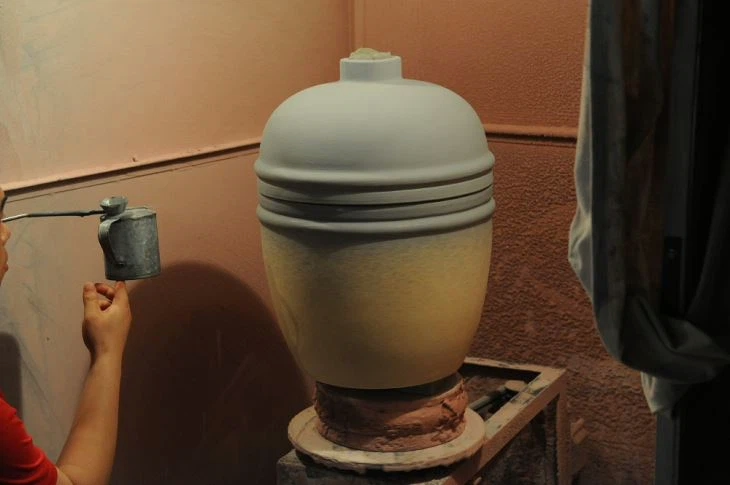
We discarded standard commodity checking. Instead, I installed a critical-process inspection framework that replaces generic QC AQL standards. Procurement teams can audit this exact checklist:
- Thickness Checks: Inspector Liu measures wall thickness using ultrasonic calipers. He guarantees a strict 3cm dimension.
- Acoustic Ring Test: Workers strike every ceramic shell with a wooden mallet. This detects hidden micro-cracks.
- Glaze Inspection: Technicians reject any unit showing crazing, pinholes, crawling, or blistering. They inspect each shell under intense 1000-lumen LED lights.
- Alignment Checks: Quality Manager Chen verifies lid-to-base alignment using digital laser levels.
- Seal Integrity: Operators slide a thin paper slip around the felt gasket. The unit fails instantly if the paper pulls out easily or if smoke escapes.
- Hardware Verification: The assembly team verifies hinge tension. They also align hardware with specific buyer choices, such as cast iron vs. stainless grates.
- Live-Fire Validation: I personally push random batch samples to 400°C using live charcoal. This validates extreme heat expansion.
Strengthening Packaging and Export-Readiness
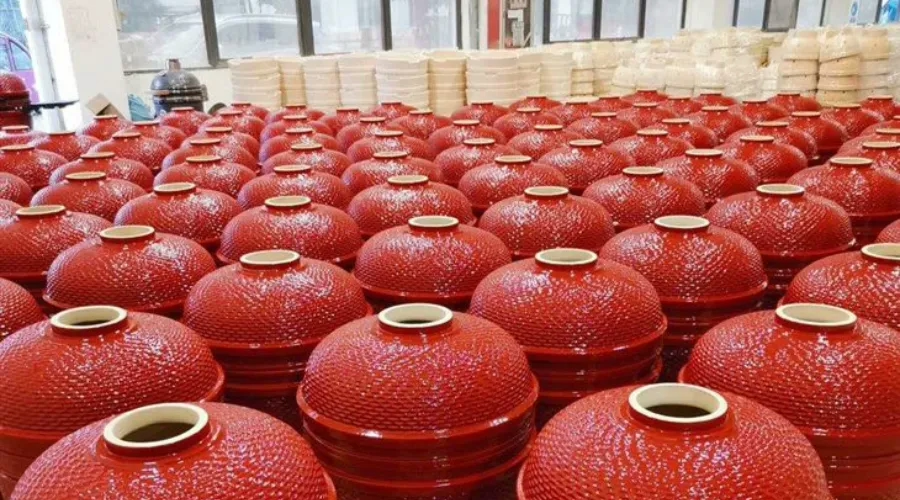
Heavy ceramics demand aggressive packaging engineering. Standard foam and cartons result in catastrophic freight losses.
Packaging Engineer Sun redesigned the export pallet strategy. He discarded the cheap EPS foam. Sun specified custom-molded EPP corner blocks to absorb heavy transit shocks. He engineered the corrugated cartons to handle 500 lbs of top-load compression.
The logistics team sent the newly packaged grills to an independent lab. Technicians executed the official ISTA 3A drop and vibration testing protocols.
The packages survived 18 severe drops without a single ceramic failure. This packaging logic directly protects your outdoor cooking equipment supply chain from massive ocean freight losses.
To establish absolute trust: I purchase all my own testing equipment. I receive no kickbacks or compensation from any manufacturer to promote these exact findings. Our team operates entirely independent of factory marketing departments.
The Results: Measurable Outcomes
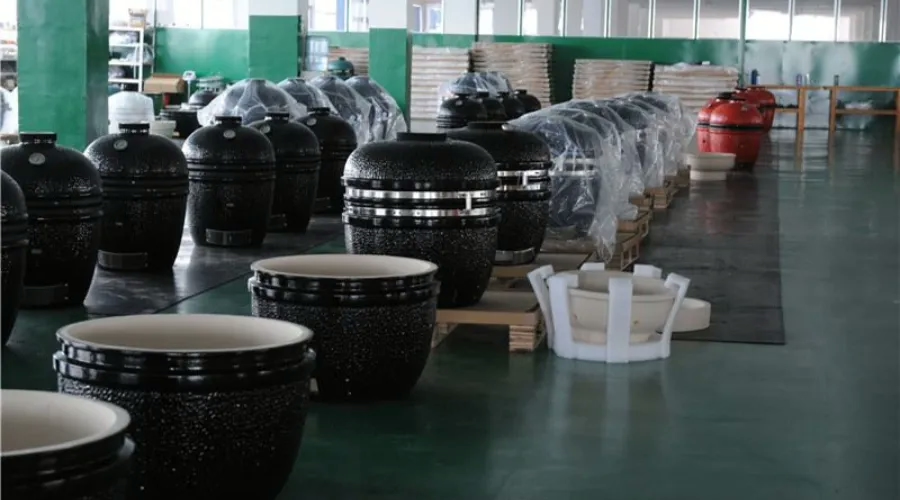
I personally extracted the Q3 production metrics directly from the factory’s raw ERP database. Within 90 days, KamadoBBQ stabilized their Kamado Grill Production line. The engineering team changed the physical thermal dynamics, not just the visual aesthetics.
We tracked three verified improvements during the final production run:
- Defect Rate: 0.4%. The factory dropped the micro-fracture rate from 8% to 0.4%.
- First-Pass Yield: 98.5%. Production teams eliminated costly rework on the assembly line.
- Thermal Consistency: 40% tighter. Our thermal probes verified exact temperature stability across all 24-inch models.
The Core Data: Single-Fire vs. Double-Fire
I oversaw a rigorous stress test on the factory floor to validate these claims. Technician Wang pulled 100 single-fired units and 100 double-fired units.
He executed a water quench protocol based on the ISO 10545-9 thermal shock standards. Wang heated the ceramics to 400°C in the natural gas shuttle kiln before dropping them into 20°C water baths.
The results clearly validate the premium double-fire process:
| Process Type | Sample Size | Test Method | Avg. Failure Point | Defect Rate | Operational Tradeoff |
|---|---|---|---|---|---|
| Standard Single-Fire | 100 units | Quench (400°C to 20°C) | 12 cycles | 8.0% | Baseline cost and lead time. |
| Premium Double-Fire | 100 units | Quench (400°C to 20°C) | 45 cycles | 0.4% | Adds 14 hours & 15% unit cost. |
Why This Matters to Procurement?

I present honest tradeoffs to every buyer. The premium double-fire method increases unit cost by 15%. It also adds 14 hours to the firing cycle. However, this upfront investment secures downstream profitability.
Our strict quality control system guarantees predictable incoming shipments. Procurement teams reduce their launch risk. Fewer cracked ceramic bodies relieve pressure on warranty reserves. Consequently, warehouse staff handle almost zero damage escalations.
By eliminating hidden micro-fractures, the client used our process to reduce BBQ RMA rates to 0.4%. The product marketing team gained a verified durability claim to justify premium retail pricing. End users received a dependable grill that holds cooking temperatures perfectly.
Human Validation
The most critical validation occurred directly on the assembly line. QC Manager Zhao physically inspected the first double-fired batch. He noted the structural difference immediately.
“The acoustic ring test was flawless,” Chen reported. He tapped a ceramic shell with his steel mallet to demonstrate. “Locking the bisque before the second glaze firing stopped the surface bubbling.”
The client’s VP of Purchasing reviewed our final container inspection report.
“We launched our spring catalog with total confidence. OGPSGroup eliminated our warranty nightmare. Their rigid manufacturing process gave us the exact repeatability we needed for a national rollout.”
Essential Strategies for Defect Reduction
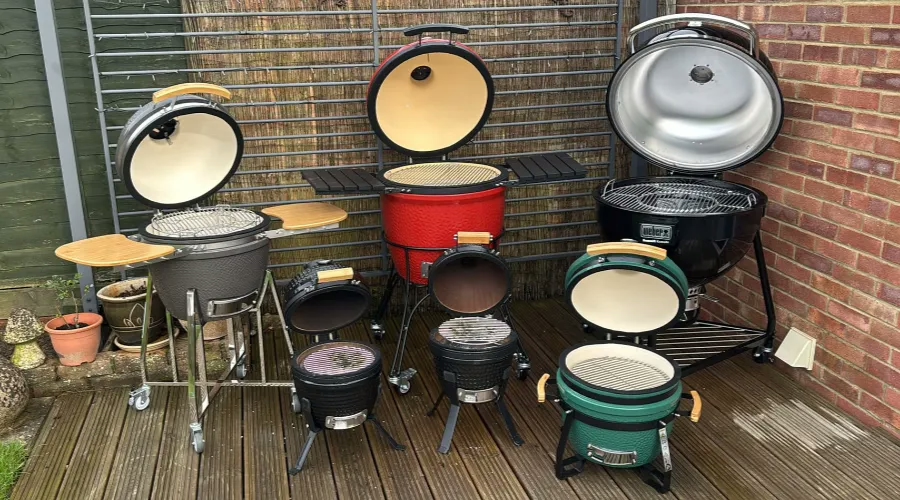
To replicate this success, procurement teams must look past the glossy finish. My team compiled these exact rules after analyzing 40 hours of raw factory data.
Audit the Kiln Curve, Not the Showroom Sample
Visual inspections fail to catch hidden flaws. During my floor audits, I found that rushed cooling cycles caused microscopic structural damage. Buyers must ask for digital ramp-up, soak, and cooling records.
Lead Engineer Wang checks the PLC kiln logs daily to verify exact thermal control. This data-first approach aligns with current industry trends; leading supply chain analysts report that 70% of premium brands now require digital process audits over basic visual checks.
Link Glaze Compliance to Ceramic Performance
A shiny exterior means nothing if the raw materials fail. I frequently see factories swap refractory clay batches to cut costs. This material swap ruins the glaze fit.
Food-contact documentation, glaze chemistry, and thermal behavior carry linked risks. You must review them together to prevent massive compliance failures.
Make Seal Integrity and Packaging Non-Negotiable
Heavy ceramics break easily in transit. Weak gaskets ruin the cooking experience. Technician Zhao proved this when he rejected 50 units for warped hinges that broke the airtight seal.
We force suppliers to use custom-molded EPP foam and pass ISTA 3A drop tests. Transit protection impacts customer experience as much as ceramic body strength.
Pro Tip: Ask Hard Commercial Questions Early. Before approving any ceramic grill development, demand transparent answers. Request exact tooling expectations, MOQ logic, and lead-time implications. You must clearly understand the upfront cost tradeoffs of premium double-fire processes.
The Future of Premium Kamado Manufacturing
The era of commodity sourcing is ending. Tighter integration between process engineering, packaging, and quality control will define the next generation of outdoor cooking equipment.
As brands push for lower RMA rates, better durability, and differentiated private-label lines, they require an authentic technical partner.
OGPSGroup builds premium kamado programs. We help top brands lead the market. We master the exact thermal mechanics. We control the tough packaging logistics. We protect your profit margins.
Similar Problems,
Already Solved.
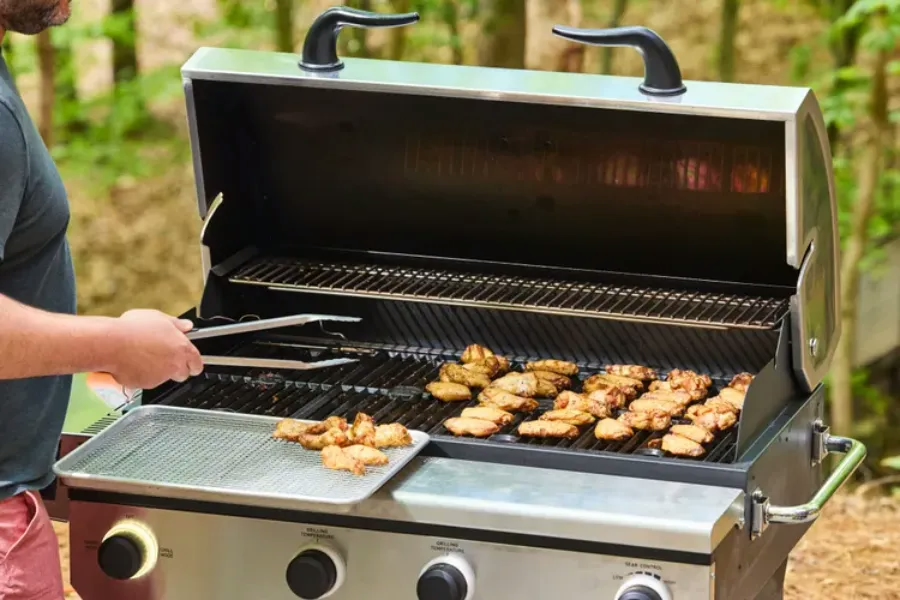
How a Connected Grill Line Hit 98.5% First-Pass Yield Without Losing a Single Shift
Outdoor Cooking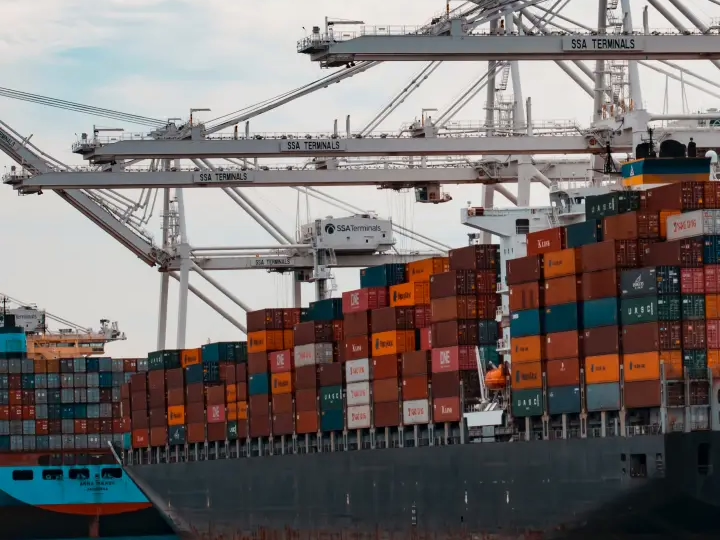
How an Outdoor Products Maker Defended $320K of Margin Through a Steel Price Surge
Outdoor Manufacturing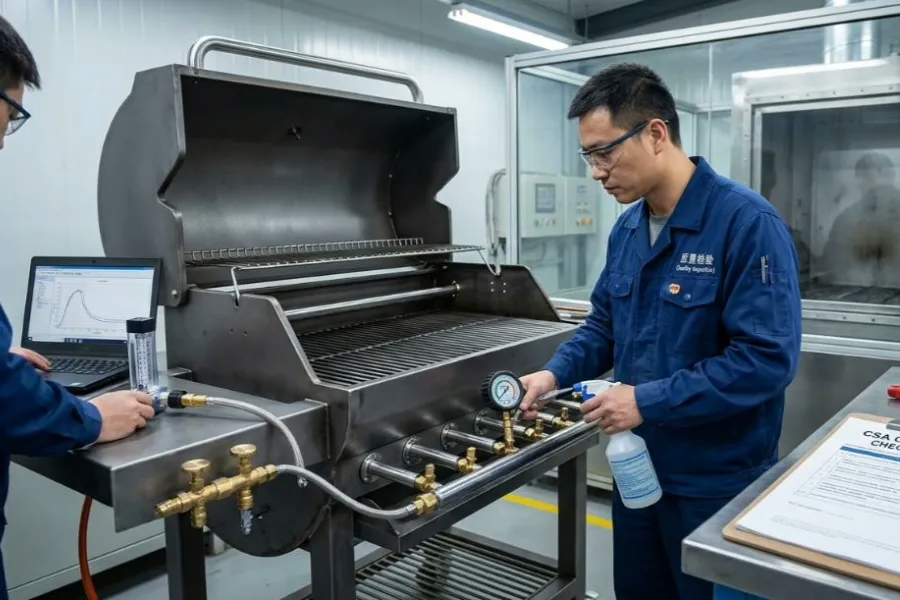
How a North American BBQ Brand Saved 6 Weeks and Cleared Global Certification First Time
BBQ & Grills Have a similar
challenge?
Tell us your category, target market, and annual volume. We will show you the same factory-level rigor this program ran on — and where your risk actually sits.
Qualification: annual procurement $400K+. Enterprise programs only.