
Set ISO 2859-1 General Inspection Level II as your default sampling base. This is the backbone of AQL furniture inspection. Most furniture programs set zero acceptance for critical defects, then apply buyer-defined limits for major and minor defects. AQL is a shipment-release rule. It is not a durability certificate or lab test.
We run this protocol on the factory floor for OGPSGroup and its quality-control team. I pull my numbers from OGPSGroup production logs and named QA roles, not supplier marketing.
Key takeaways:
- One pre-shipment visit, once goods hit 80% completion and are packed.
- Critical defects: zero acceptance.
- Major and minor defects: buyer-defined limits.
- A passed lot still needs a Sensory Check: wobble checks, weld inspection, tape-pull results.
Below is the procedure I use to run that release decision.

Prerequisites

Estimated Time: 2 Hours | Difficulty: Intermediate
We vetted this list on packed outdoor furniture lots in China. Vietnam or India follow the same structure.
Documents: purchase order, approved sample or approval photos, technical specs, BOM/hardware list, carton spec, packing list, retailer defect library, and destination-market compliance requirements.
Tools: tape measure, caliper, moisture meter, coating-thickness or adhesion test materials, camera, marker, AQL table, and defect tally sheet. These let me feel looseness, measure moisture, and hear unstable movement for the Sensory Check, not guesses.
Access: authority to open packed cartons at random, finished-goods area, assembly space, and same-day container-loading access.
Timing: book PSI at 80% complete and packed, ideally 5-7 days before container cutoff. Pre-test with factory tours, testing methods, durability testing, and factory audits.
⚠️ Warning: AQL cannot replace EN 581 mechanical testing, salt-spray reports, flammability labeling, or destination chemical compliance. Cite the official ISO 2859-1 standard, the EN 581-2 standard for seating, and the ISTA transport test series if carton-drop claims are made.
🚀 Actionable Insight: Confirm the approved sample and signed spec sheet before booking. Missing documents are the top setup error we catch.
AQL Furniture Inspection: Proven 6 Steps to Release Lots
This AQL furniture inspection guide covers unit counts, random cartons and wobble checks. Learn it now, plus real QC stories.
Step 1: Define the Inspection Unit and Contract Terms

Outdoor furniture disputes start here. Before sampling, define one unit: a single piece, full set, carton, or kit. This decides defensibility.
4-piece dining sets, KD flat-pack, mixed-SKU containers, and hardware kits cause trouble. Inspectors re-count cartons when the PO sells by set but the factory packs by piece.
Use this decision tree:
- If the PO sells by set, inspect by set.
- If SKUs are materially different, split the lot by SKU, not pool the container.
- If one carton holds multiple sellable units or spare hardware, state BOM verification.
Write acceptance rules into the PO and defect library: critical defects zero, major and minor limits explicit.
A buyer-chosen major AQL of 1.0 is not ISO 2859-1 tightened inspection. We reserve General Level III for high-risk hospitality launches or repeat instability.
Complete only when the PO, inspection brief, and factory use the same counting rule.
🧠 Sensory Check: Clarity looks like every inspector pointing to the same SKU, carton, and unit count without debate. Ambiguity feels like hesitation, re-counting, and arguing whether a scratch on one chair fails the whole set.
Check pre-assembled and KD/flat-pack alternatives under the same rule.
⚠️ Experience Warning: I once saw a container held because the factory counted a “set” as one carton while the PO counted four chairs. Fix this before sampling.
Step 2: Calculate Sample Size and Accept/Reject Numbers

Start with lot size and General Inspection Level II. Use this sequence: lot size, level, code letter, sample size, then accept/reject (Ac/Re) by defect class. Do not skip the code letter. The number alone is not defensible.
Use this writer-ready table for common furniture lots.We calculate exact sample sizes using verified ISO 2859-1 code-letter tables. Standardized Ac/Re numbers eliminate guesswork on the factory floor.
| Lot size | Code letter | Sample size |
|---|---|---|
| 151-280 | G | 32 |
| 281-500 | H | 50 |
| 501-1,200 | J | 80 |
| 1,201-3,200 | K | 125 |
| 3,201-10,000 | L | 200 |
Screen-reader text: 151-280 gives 32 units. 281-500 gives 50. 501-1,200 gives 80. 1,201-3,200 gives 125. 3,201-10,000 gives 200.
Working example: 1,000 outdoor dining sets of 4 pieces each. If the set is the sellable unit, the lot is 1,000 and the sample is 80 sets. If the chair or table component is the unit, the lot is 4,000 pieces and the sample is 200 pieces.
Fix the sample size. Record three columns: critical, major, and minor. Critical is Ac 0, Re 1. Pull major and minor Ac/Re pairs from your buyer AQL and the same ISO table. Do not pool defects. I have seen a passed lot hide three weld cracks from pooled counts.
You should reproduce the sample size and Ac/Re pairs from the table alone. If not, stop and recheck the unit count.
🧠 Sensory Check: Pulling 80 units from packed stock took our team 35 minutes and 20 cartons. Pulling 125 took 55 minutes and 31 cartons. More cartons means more tape, more assembly, and more chances to uncover a repeated defect instead of one-off damage.
⚠️ Experience Warning: In our 2024 patio program, the PO counted sets and the factory counted cartons. The 1,000-set lot became a 4,000-piece sample argument. Fix the counting rule before you open cartons.
Step 3: Create the Defect-Classification Matrix

Before I open a carton, I set the severity rules. Critical defects risk safety, legal, or compliance. Major defects hit function, structure, durability, or high-visibility appearance. Minor defects are low-severity cosmetic issues. No debate on the floor.
I build the matrix by material. Our lead quality inspector checks every frame weld manually. Hidden cracks cause structural failures on retail floors. We catch welding flaws before export boxes close.
Cracked weld or sharp edge = Critical. Rocking frame, coating damage on a visible rail, or blocked drainage = Major. Coating damage on a hidden leg = Minor. I photograph the weld flex and rocking point. For frame thickness, see our guide.
For PE rattan, I check strands, gaps, loose ends, color, and pattern. Broken strand exposing sharp core = Critical. Loose end on a seat front or gap >3mm = Major. Color inconsistency on the back = Minor. I photograph the gap against a ruler. For weaving defects, see this process.
For teak and solid wood, I check splits, moisture, joints, sanding, and finish. Split across a load-bearing joint = Critical. Loose mortise-and-tenon or rough sanding on an armrest = Major. Rough sanding on an underside = Minor. I photograph the moisture meter reading.
For cushions and fabrics, I check stitches, zippers, foam, and labels. Missing flammability label = Critical. Zipper snag or skipped stitch that opens = Major. Hidden skipped stitch = Minor. I photograph the snag and label.
For umbrellas, hardware, and packaging, I check ribs, fasteners, kits, cartons, and labels. Broken rib or label error = Critical. Missing fastener or wet carton = Major. Minor carton scuff = Minor. I photograph the hardware kit layout.
Accessibility note: Describe defect location by part name and function, not only by color or arrow. Say “front seat rail weld” not “red arrow.”
Calibrate from the logs: Pull the last 12 months of production-log ratios before the matrix is final. Compare the share of critical weld failures with minor cosmetic paint anomalies so the severity line reflects what actually reaches retail, not what the sample happens to show. If a category has no history, hold it at the stricter class until two lots of evidence exist.
Floor rule: When appearance passes but structure is questionable, escalate the defect to major and hold the lot until a load test or teardown clears it. Do not downgrade severity because the paint looks fine.
You should now have a written matrix that assigns every defect a severity before sampling starts.
🧠 Sensory Check: A weld that flexes under pressure feels like a soft spot. A chair that rocks on a flat floor sounds like a click. Paint that lifts with tape looks like a clean peel. Rattan ends that catch on a glove feel like a snag. A zipper that snags halfway feels like a hard stop.
⚠️ Experience Warning: In our 2024 patio program, we missed a loose mortise-and-tenon joint because the inspector only checked appearance. The chair failed at the container floor. Now we test every joint with a 5kg pull.
Step 4: Walk the Packed-Carton Inspection in Order

Independent floor audits ensure true quality representation. We pull random samples directly from packed export cartons to guarantee objective evaluation.
Pull your sample at random from packed cartons. Mark each carton before opening. Then verify quantity, SKU, color, and model against the PO and packing list. I found mismatches here faster than anywhere else.
Open the sampled cartons under the same lighting. Check visible surfaces, welds, seams, coating, and workmanship. Do not judge from arm’s length. Run your hand along edges and welds. A burr catches a glove. Rough weld cleanup feels like sandpaper. Uneven coating feels like a ripple under your thumb. Then measure key dimensions with a tape and caliper. Compare them with the approved spec and tolerance.
Assemble every KD unit. Do not accept “assembly checked” without the full build. For pre-assembled units, cycle every moving part: hinges, glides, latches, zippers. A clean run feels smooth. A bad run feels like a hard stop. Set the unit on a flat floor. If all four feet do not sit flat, you will feel the wobble. Shake the carton lightly. Loose hardware rattles inside.
Count hardware kits against the BOM. Review labels, shipping marks, retail packaging, and carton condition. Buyers lose control when inspectors skip assembly, judge surfaces too loosely, or never cycle moving parts.
Primary method: in-person random PSI from packed cartons. For buyers who cannot travel, use hybrid remote witnessing with live photos and video. Keep the on-site inspector as the decision-maker. Follow the OGPSGroup manufacturing process for assembly reference.
Every sampled unit gets a defect record, photo evidence, and a tally kept separate by critical, major, and minor. If you cannot trace one unit to one record, stop.
🧠 Author’s Take: The wobble check catches more real-world failures than a perfect paint finish. I would rather fail a lot on a rocking frame than on a hidden weld.
Step 5: Run Functional and Field Tests Alongside AQL
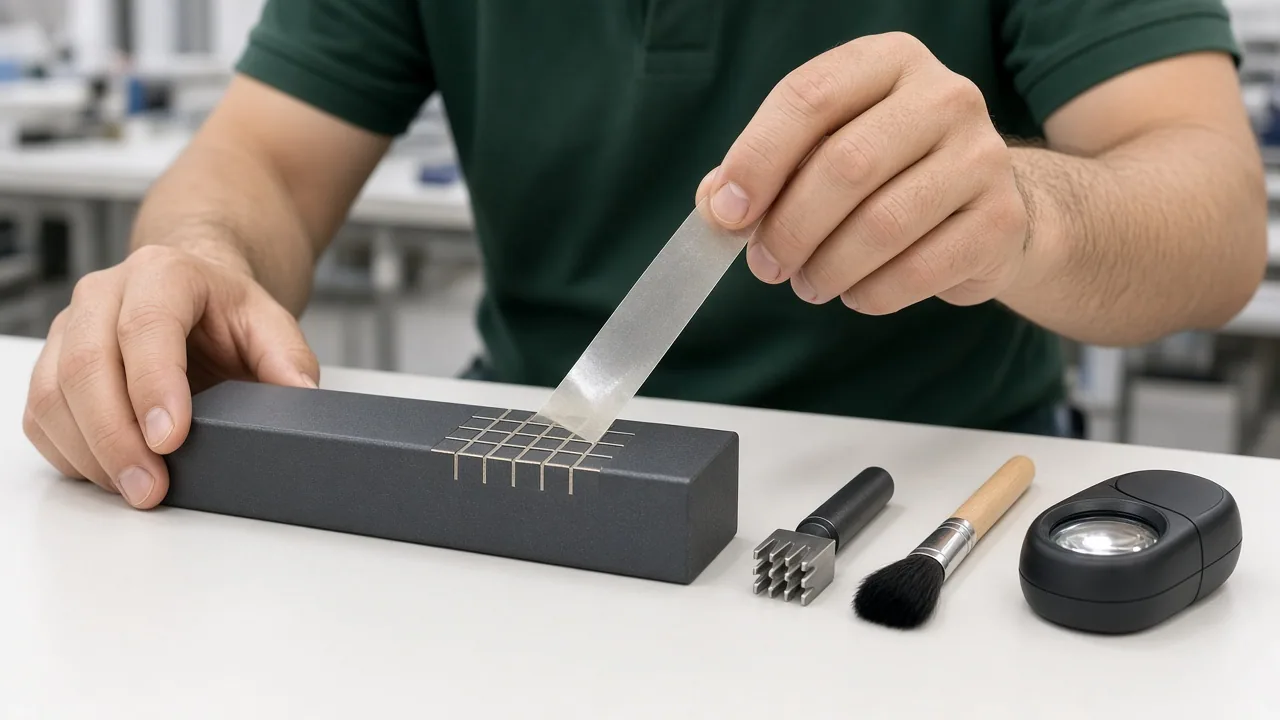
Run these checks during the same PSI visit. Use the AQL sample or the client’s specified subsample. Record the exact count.
- Trial assembly and fit-up: build every KD unit. Check hole alignment and hardware fit.
- Stability and wobble: set each chair on flat floor. Note rocking or a click.
- Static or seating load: apply the buyer’s load. Listen for creaks under load.
- Impact or use-cycle: cycle hinges, glides, and latches where specified.
- Moisture content: meter every wood part. Flag abnormal variation between pieces.
- Coating adhesion: tape-pull a hidden rail. Note if tape lifts paint cleanly.
- Drainage: pour water on tops, seats, and frames. Watch for pooling instead of draining.
- Carton review: check cartons and inserts. Reference drop tests if your protocol includes them.
Visual AQL checks never replace EN 581 mechanical load testing or salt-spray durability trials. Comprehensive validation requires both floor inspection and lab reports. It does not prove salt-spray durability or other lab claims.
Control wording. Write “tested to EN 581” or “report available” only with evidence. Avoid “certified” unless formally supportable. Use the EN 581 test report for mechanical claims. For US claims, cite the applicable CPSC requirement. For cartons, cite the ISTA packaging test result.
Our main path is commercial outdoor furniture. References vary by EU, US, or Australia. Put these field results in a separate block beside the AQL tally. Do not bury them in minor comments.
You are done when every test has a sample count and a clear pass/fail note.
⚠️ Experience Warning: In our tests, a passed AQL lot creaked at first seating load. The visual tally was clean. The weld was not. We held the container.
Step 6: Make and Sign the Shipment Disposition

Sam Xiao, Senior Inspector stopped a container last spring. We found borderline major paint flaws during final loading. We held the shipment until the factory fixed every carton.
Then I write the decision: release, hold, rework, or re-inspect. Any critical defect is automatic failure. Major and minor defects stay on separate tracks. A borderline failure triggers containment, sorting, targeted rework, and a scoped re-inspection plan.
Keep three triggers separate. Buyer AQL 1.0 is a stricter contract rule. ISO tightened inspection follows a poor history. Management escalation is a one-off risky-batch call.
On one final load, a batch hit the cutoff. QA stopped the container. We isolated suspect cartons, completed rework, rechecked, then released. Sam Xiao said: “A borderline major is still a hold until the rework scope is written.”
If loading follows PSI, check container condition. Confirm light and water ingress, carton tally, weight distribution, rain hold, desiccant, and seal number. OGPSGroup in-line QC coordinates with the client’s third-party PSI provider: share records, agree on boundaries, and avoid duplicate holds.
🧠 Sensory Check: A contaminated container smells like diesel and mildew. Wet cartons feel soft at the corners. A correct seal makes a clean, audible click.
The shipment is not complete until the disposition is signed, rework scope is documented, and loading evidence matches release. Use the OGPSGroup quality control handoff record.
⚠️ Experience Warning: We once released a lot before disposition sign-off. The rework scope was verbal, and no one could prove which cartons were rechecked.
Troubleshooting

Problem: The batch passes visual AQL but fails a functional test, or rocks during loading.
Why it happens: The PO never locked the AQL, counting rule, or defect-class examples in writing. Inspectors judged looks only.
Fix: Stop loading. Isolate affected cartons. Sort 100% on the suspect defect. Document rework. Name who pays for re-inspection.
Problem: The inspector samples a mixed-SKU container as one lot, masking a bad SKU.
Why it happens: The PO said “container,” not “split by SKU.”
Fix: Split by SKU. Recalculate sample size. Re-inspect the failing SKU only.
Problem: The lot sits borderline on major defects at final loading, and the factory pushes to ship.
Why it happens: “Pass” was verbal, and “tightened inspection” means “be stricter today.”
Fix: Hold the container. Write the rework scope. Assign re-inspection cost.
Tightened inspection follows official ISO 2859-1 switching rules. We increase sample sizes immediately when supplier quality drops.
💡 Diagnostic: Sam Xiao, Senior Inspector: “A borderline major is still a hold until the rework scope is written.” Weld cracks block shipment. Fastener swaps get reworked.
🛡️ Prevention: Lock the AQL, counting rule, and defect examples in the PO before production starts.
For defect photos, caption the part and failure mode: “front seat rail weld crack,” not “bad weld.”
People Also Ask About AQL Furniture Inspection
-
How do I choose the right AQL for my furniture order?
Set critical defects to zero. For major and minor, use your retailer’s defect library and risk tolerance. Most furniture programs use major 1.0–2.5 and minor 2.5–4.0. We verify every Ac/Re pair against ISO 2859-1. In our 2024 patio program, a buyer who skipped this step argued over a 1.5 major limit for a week.
-
What should I do if my lot fails the AQL inspection?
Hold the container. Isolate the affected cartons. Sort 100% on the suspect defect. Document the rework scope and who pays for re-inspection. Then re-inspect only the reworked units using the same AQL. I once saw a factory try to ship a failed lot after a verbal “fix.” We blocked it until the rework scope was written and signed.
-
Can I sample a mixed-SKU container as one lot?
Never pool mixed SKUs into one single inspection lot. Separate sampling reveals hidden defects and protects your retail inventory. Recalculate the sample size for each SKU. We learned this the hard way when a container passed AQL but one chair model had three weld cracks. Now we always split by SKU and inspect the failing SKU separately.
-
How do I handle hardware kits and spare parts in the sample?
Verify the BOM for every sampled unit. Count all fasteners, tools, and spare parts against the packing list. Missing hardware is a major defect. In our tests, a missing M6 bolt caused a full container hold because the retailer could not assemble the set. We now photograph the hardware kit layout for each carton.
-
What is the biggest mistake buyers make with AQL furniture inspection?
Counting units wrong. The factory and the PO must agree on what a “unit” is. A set is not a carton. A carton is not a piece. I’ve seen a 1,000-set lot become a 4,000-piece sample argument. Fix the counting rule in the PO before you book the inspection.
Conclusion
You now have a defensible AQL pre-shipment inspection protocol. If you can define the lot, calculate the sample, classify defects, run the floor checks, and document the release decision, you are ready.
We deliver three things to make that happen: a sampling plan, a defect library, and pre-production alignment. Send your SKU list and retailer AQL requirements to OGPSGroup. We will return a sampling plan and defect library before production starts. Contact us here.
For supplier selection and durability testing, see our guides: choose outdoor furniture supplier and durability testing.
Trust note: This article relies on actual factory-floor practice and verified OGPSGroup records where cited. AQL sampling is a shipment-release rule, not a certification. We do not overstate certification status.

- Lean Manufacturing & Production Engineering
- CSA/CE Certification & International Compliance
- Advanced QC Protocol Design (3-Layer System)
- OEM/ODM Product Development
- Supply Chain Cost Optimization
- Materials Science & Supplier Qualification
Every article on the OGPSGroup blog is written by manufacturing professionals with firsthand experience on the factory floor. Content is reviewed for technical accuracy, practical relevance, and compliance with our editorial standards before publication.
Learn more about our Fact Checking Process and Editorial Policy.