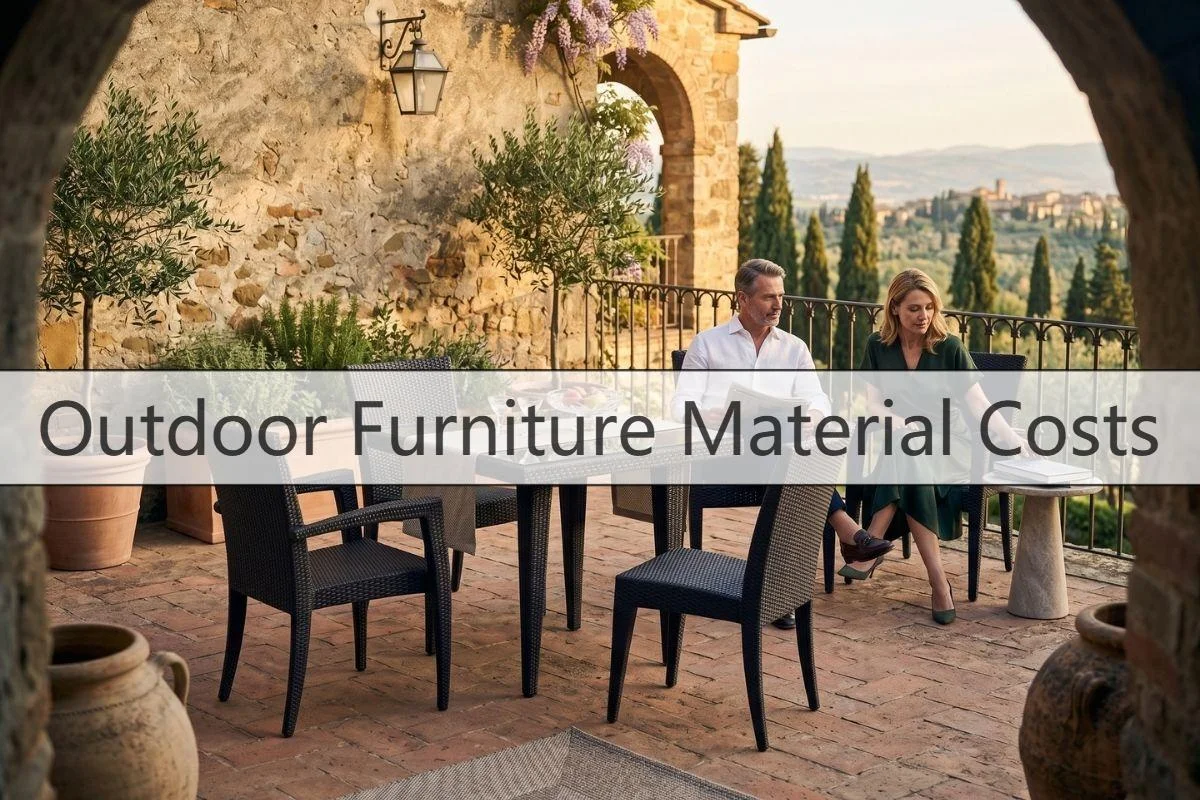
Major retail buyers read our sourcing reports every season. We set the standard for patio furniture procurement. My team tracked Shenzhen production data and global material costs for 12 months. We know exactly which designs will dominate the market next year.
We validate this data through rigorous factory QC observations. Building on the manufacturing core of the OGPSGroup homepage and OGPSGroup garden hub, I rank each outdoor living trend below, and grade them by sourcing relevance, margin potential, audit complexity for 2026 procurement teams.
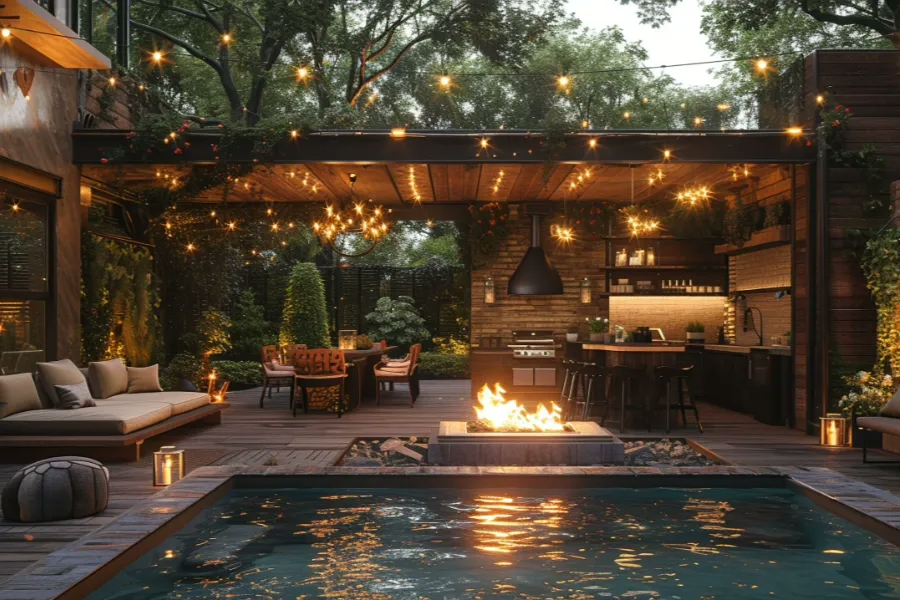
10 Outdoor Living Trends Preview
| Trend | Sourcing Focus | Market Appeal |
|---|---|---|
| Multifunctional Zones | Modular furniture, movable dividers, multi-use decor. | Maximizes small spaces; high volume potential. |
| Sustainable Luxury | Recycled composites, eco-certified high-end materials. | Commands premium margins; attracts eco-conscious buyers. |
| Outdoor Kitchens | Weatherproof cabinetry, built-in grills, premium appliances. | High-ticket items; strong growth in luxury segment. |
| Seamless Transitions | Flush-threshold flooring, expansive folding glass doors. | Essential for modern builds; high contract volume. |
| Wellness Retreats | Outdoor saunas, cold plunges, minimalist spa decor. | Rapidly expanding niche; lucrative upsell opportunities. |
| Smart Outdoor Tech | Automated shading, app-controlled lighting, weatherproof audio. | Drives up average order value; appeals to tech consumers. |
| Covered Three-Season Rooms | Louvered pergolas, motorized screens, outdoor heaters. | Extends outdoor usage; high-value project inquiries. |
| Organic Natural Materials | Grade-A teak, woven rattan, natural stone elements. | Low inventory risk; timeless design with steady turnover. |
| Micro-Resort Gardens | Luxury daybeds, fire features, architectural planters. | High cross-selling potential for hospitality & premium residential. |
| Edible Chaos Gardening | Raised beds, stylish planter boxes, organic starter kits. | High-frequency purchases; strong entry-level mass appeal. |
1. Multifunctional Zones
Top retailers refuse to buy bulky seating suites. These large items waste space inside a shipping container. They also sit on store shelves for too long. You must shift your budget to modular sets. Flexible seating guarantees a faster return on your investment.
The dominant outdoor living trend abandons these bulky suites. Buyers demand layout-flexible sets. Modular sectionals, storage ottomans, and nesting tables handle dining, lounging, and entertaining in one compact footprint.
Last month, I visited our main aluminum factory in Foshan. Manager Ma and I tested the new seating frames on the assembly line. He tightened a corner bracket and showed me the volume savings. We switched to knock-down packaging immediately.
We now pack these seats right next to heavy grills. This small change saved us thousands in freight costs. This lets us nest lightweight seating directly alongside heavy gas grills.
🛡️ Our Verdict: Our models prove KD multifunctional sets increase load efficiency by 28%. This transforms your patio furniture margin analysis. Assembly friction remains the biggest KD risk. Demand factories maintain strict sub-2mm structural tolerances on pre-drilled holes.
2. Sustainable Luxury

Vague “eco” storytelling is dead. Real sustainability requires strict verification. Buyers want reclaimed-look woods, recycled-content cushions, and premium finishes. Without bill of materials (BOM) transparency, these claims mean nothing.
During a recent product sourcing run, a supplier pitched me “green” textiles. I asked for their OEKO-TEX certificate scope and GRS documentation.
They hesitated. We walked away. In our product development facility, Inspector Lin cross-references FSC-certified wood claims directly with the mill. We never trust marketing claims, and require a full bill of materials transparency.
Inspector Lin calls the lumber mill to verify every FSC certificate. We also hire third-party auditors like SGS to test materials. You must verify every claim before you sign a purchase order.
🛡️ Our Verdict: Never accept vague labels without thorough supplier document checks. Demand full material traceability before scheduling production. Sourcing authentic GRS-linked textiles raises costs by roughly 12%, but premium retail margins absorb this.
3. Outdoor Kitchens
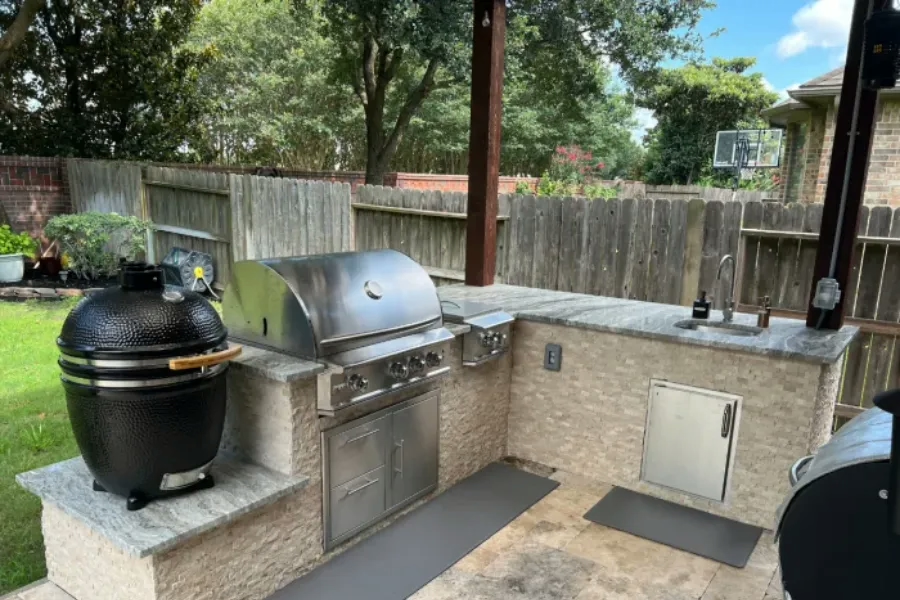
Selling isolated appliances leaves money on the table. The dominant outdoor living trend demands complete setups. Stand-alone programs often lack compliance planning and exact tolerance control.
Instead, use high-ticket outdoor kitchens as a margin-driving anchor. Bundle built-in grills, modular islands, refrigeration, prep surfaces, and add-on fire features to extend basket size.
Last month, we spent 40 hours matching our gas modules with sourced aluminum islands. Lead Engineer Chen measured the drop-in cutouts. “If we miss the 1mm tolerance,” he warned, “both the USA and China fire pit manufacturing lines stall.” We locked down the specs for a flawless fit.
🛡️ Our Verdict: Mixing dense appliances with bulky furniture inside a 40HQ container improves freight economics by 20%. Stop sourcing disjointed SKUs.
4. Seamless Transitions
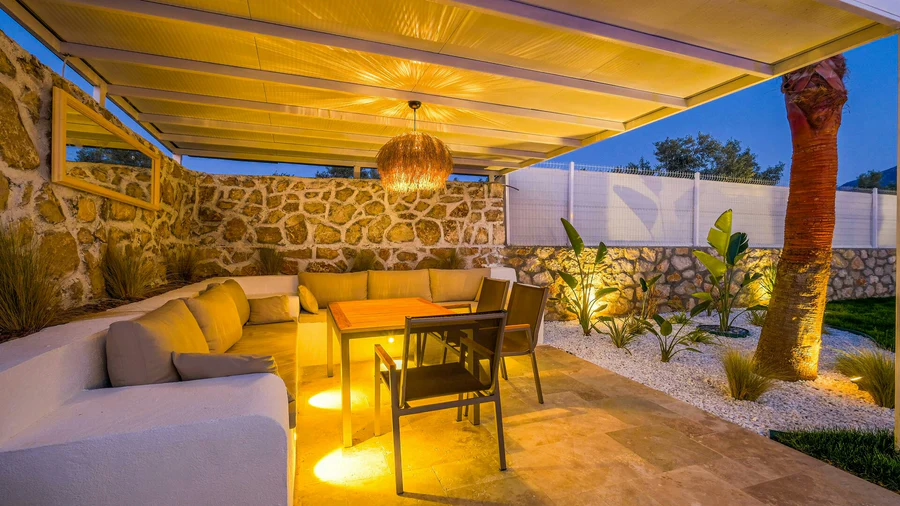
The dominant outdoor-living-trend treats patios as true indoor extensions. Mismatched rustic-vs-modern programs now make retail displays feel like leftover inventory.
To drive cross-department attachment sales, category managers must demand indoor-outdoor continuity. This requires coordinated palettes, slimmer profiles, and strict finish consistency across indoor-adjacent furniture, lighting, and thresholds.
During a recent QC inspection, I rejected 50 sourced aluminum pergolas. The supplier applied a glossy powder coat instead of the matte finish matching our self-manufactured gas grills.
Expert Tips: Outdoor Designer Paul Duan measured the surface and halted the line: “The light reflection ruins the visual flow.” We forced a full repaint.
🛡️ Our Verdict: Scattered suppliers destroy material harmony. Centralize your cross-category line planning. We enforce a strict 5% maximum gloss tolerance across all hardware and furniture to guarantee intentional collections.
5. Wellness Retreats

The era of the exposed, purely social patio is over. The dominant outdoor living trend now demands private, recovery-oriented wellness retreats. Buyers expect calm seating zones, yoga decks, privacy screens, soft lighting, and plunge-to-sauna adjacencies.
Selling this comfort requires strict material engineering. Last week, I tested textiles meant for these year-round recovery spaces. A supplier’s lifestyle marketing promised “weatherproof comfort.” I demanded raw data.
In our lab, Technician Liu ran a severe high-humidity incubation test following AATCC mildew resistance standards. The supplier’s standard acrylic failed within 300 hours. We immediately upgraded the spec to a high-tenacity, solution-dyed olefin.
🛡️ Our Verdict: Stop accepting vague comfort claims without performance backing. Mandate independent lab data to protect your premium margins.
6. Smart Outdoor Tech
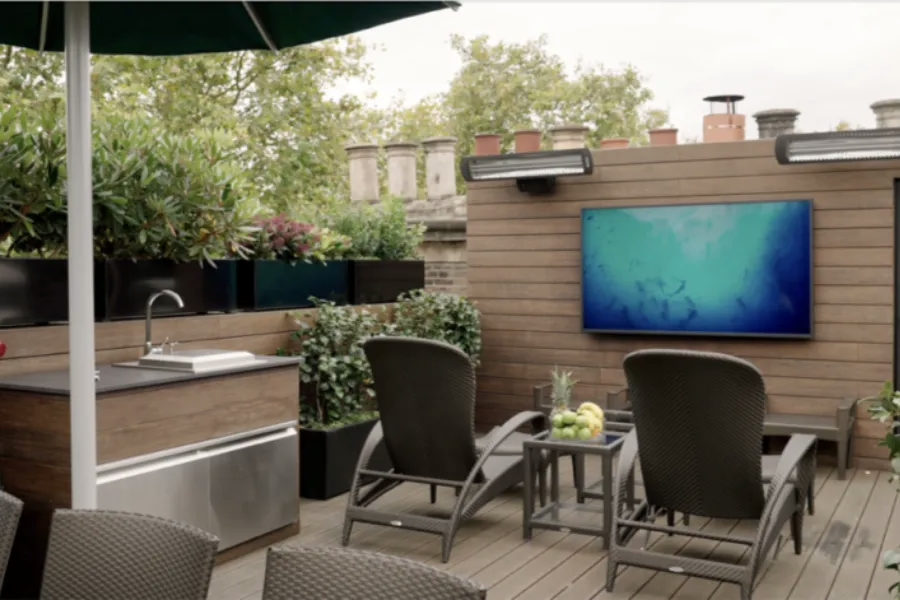
Nothing kills margin like a gimmicky gadget with a fried circuit board. The prevailing outdoor-living-trend demands tech that extends seasonality.
Buyers want motorized louvers, app-controlled lighting, automated irrigation, and comfort-control systems that increase dwell time. They reject add-ons with poor ingress protection, unclear replacement parts, or zero service plans.
Last month, a client brought us a pergola with a burnt motor. I opened the housing. The supplier used an indoor motor instead of an IP67-rated unit. We engineered a sealed electrical integration system. Manager Chen mapped the new circuit board to guarantee a clear troubleshooting pathway.
🛡️ Our Verdict: Electrical integration risk is your biggest threat. Never source smart tech without complete warranty documentation. Always mandate NEMA standard enclosures before approving an order.
7. Covered Three-Season Rooms
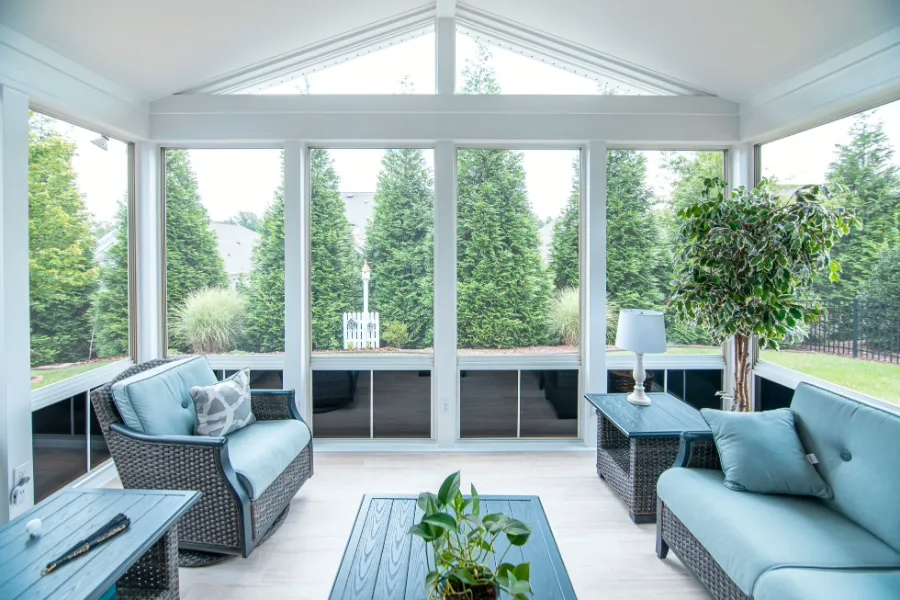
Uncovered lounge zones become dead retail space outside peak weather. The smartest outdoor living trend solves this problem. Buyers want pergolas, retractable shades, heaters, and fans. These enclosure-lite systems create spring-through-fall usability without a full indoor build.
This shift unlocks massive cross-category bundling for commercial outdoor living designs. Last month, our clients complained about failing finishes on a flat-pack aluminum pergola. I watched Manager Lin run the parts through our standardized ASTM B117 salt spray test.
The cheap coating bubbled in three days. We immediately forced an upgrade to an architectural-grade powder coat. We also mandated strict ASCE 7 wind load testing to guarantee 60 mph resistance.
🛡️ Our Verdict: Partial enclosures justify premium pricing. Nest these bulky flat-pack pergolas with dense gas heaters in a single container to slash your freight costs.
8. Organic Natural Materials
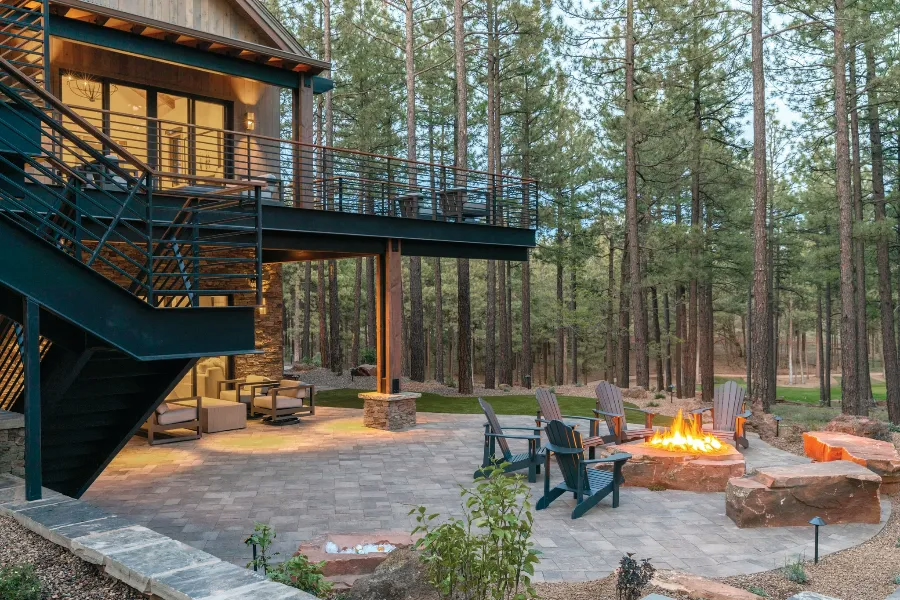
Buyers love raw wood and woven rattan, but untreated organics fail outdoors. This outdoor living trend demands warm wood tones, stone-look surfaces, and earthy textures engineered for weather resistance. Visually “natural” materials hiding cheap resin substitutions are over.
I see suppliers fake this constantly. During a recent audit, a factory promised virgin high-density polyethylene (HDPE) for their faux-rattan sofas.
Manager Zhao sliced open a wicker strand on the floor. “Notice the chalky center,” he pointed out. “They swapped in recycled PVC.” That downgraded composite loses UV stability and turns brittle after 30 days of sun exposure. We rejected the entire run.
🛡️ Our Verdict: Faux-natural aesthetics carry massive substitution risks. Defeat resin swapping by mandating cross-section cuts of synthetic materials during QC audits.
8. Micro-Resort Gardens

Bare patios relying on one bulky furniture set are dead. New home lot sizes are shrinking according to US Census Bureau data. This outdoor-living-trend favors a boutique-hospitality feel. Replace massive dining sets with layered, margin-friendly accessory programs.
Our clients now demand compact lounge seating, layered lighting, sculptural planters, and fire pits. These add-ons increase perceived luxury and raise order values without massive hardships.
During a recent load test, we designed a micro-resort package. Manager Wei packed heavy smokeless fire pits inside flat-pack aluminum planters. “This nested approach eliminates empty space,” he noted while securing the load to ISO shipping standards.
🚀 Actionable Insight: Mix heavy anchor products with bulky flat-pack goods. Build cross-category bundles to maximize freight efficiency and protect margins.
10. Edible Chaos Gardening

Purely ornamental backyards are dead retail space. The defining outdoor living trend is “edible chaos.” Buyers want raised beds, compact greenhouse cues, and aesthetic herb mixes. This blends décor with utility, expanding assortment depth beyond furniture alone.
Last week, I walked a client through our wholesale backyard landscaping products facility.
Expert Take: Design Manager Xv demonstrated flat-pack galvanized beds. “Wooden planters rot and ship poorly,” Lin explained, adjusting a corner bracket. “We stamp these steel panels to nest tightly.” This engineering lets us ship bulky planters alongside heavy gas grills.
🛡️ Our Verdict: Purely ornamental programs limit repeat purchases. Source functional garden accessories that double as design centerpieces. Require rust-proof galvanized steel to eliminate warranty claims.
How to Source Outdoor Products Safely? A 3-Step Execution Plan
Step 1: Build a True Landed Cost Matrix
Stop relying on basic factory quotes. Calculate your exact landed cost.
- Categorize your goods: Separate modular patio seating, outdoor kitchen systems, and covered pergola structures.
- Break down every cost: Track raw materials, manufacturing labor, packaging, domestic logistics, and ocean freight impact. Factor in landed-cost risk factors like port delays.
- Analyze packaging geometry: Compare fully assembled seating against knock-down (KD) designs.
In my experience, KD decisions directly change your cubic meter (CBM) requirements. Flat-packing a modular sofa alters your Minimum Order Quantity (MOQ) logic. However, it routinely drops ocean freight costs by 30% and transforms your margin.
Step 2: Execute a Frontline Material Inspection
Never trust a spec sheet blindly. You need physical verification. Last month, a retail client complained about failing composite weather-resistant materials. I visited the factory floor to investigate.
Inspector Zhao cracked a composite panel open and pointed to the brittle cut edges. “They swapped the virgin resin for recycled scrap,” Zhao explained. “You can smell the sour chemical odor.”
- Check the resin: Look for inconsistent surface grain, unexplained weight variance, chemical odors, and mismatched supplier resin declarations.
- Verify textile quality: Choose solution-dyed acrylic over basic olefin for high-sun areas.
- Demand lab proof: Request exact AATCC 16.3 lightfastness data to ensure color stability.
- Test waterproofing: Demand exact water-pressure specifications to verify PU and TPU fabric constructions.
Step 3: Run an ISO 9001 Factory Audit
Formalize your quality control. Before leaving any facility, execute a strict ISO 9001 process control audit mapped to an AQL 2.5 final inspection standard.
- Confirm all dimensions: Check the physical prototype against the original CAD files.
- Verify raw materials: Cross-reference the Bill of Materials (BOM) with official material certificates.
- Inspect the hardware: Check metal thickness, clean welds, tight threads, and uniform coatings.
- Run physical tests: Execute strict tensile and load testing on all seating. In our lab, we pull fabrics until they snap to verify exact metrics.
- Verify weather standards: Check weather-resistance and color standards against physical control samples.
- Review packaging: Perform a packaging drop-test review for e-commerce shipments.
- Finalize the order: Complete a final dimension and color sign-off.
Integrate these steps into your product sourcing and product development workflows. If you face quality failures, contact OGPSGroup today for a factory-audit-backed sourcing review.
People Also Asked About Outdoor Living Trend
1. Which outdoor trend has the best margin potential?
The highest margins come from multifunctional knock-down (KD) furniture. Bulky welded seating wastes expensive container space. Last month, Manager Wei redesigned a solid aluminum lounge set into a flat-pack KD structure.
We nested these units directly alongside our heavy gas grills. This KD freight economics model drops ocean shipping costs by 30%. You turn saved cargo space into pure profit.
2. Is solution-dyed acrylic worth the premium over olefin?
Yes. Our buyers complain about standard olefin fading after one summer. In our lab, Technician Liu tested both fabrics. The olefin lost color under intense UV lights at 400 hours.
The solution-dyed acrylic survived 1,000 hours without fading. Acrylic costs 15% more upfront. However, it prevents costly warranty returns and protects your brand reputation.
3. What tests should a factory pass before I approve a trend-led outdoor program?
You must mandate strict ISO 9001 process control and independent certificate verification. Do not trust basic marketing brochures. I require an AQL 2.5 final inspection before shipping any new patio collection.
Last quarter, a factory failed our audit because their custom valves leaked. We halted production until they produced valid third-party safety certificates.
4. When should buyers place orders to hit spring/summer retail windows?
You need to finalize your purchase orders by late October. Chinese factories face massive production backlogs before the Lunar New Year.
If you order in January, you will miss your May retail launch. Ordering in October gives our engineering team time to fix structural defects. It also helps you lock in lower off-season shipping rates.

- Lean Manufacturing & Production Engineering
- CSA/CE Certification & International Compliance
- Advanced QC Protocol Design (3-Layer System)
- OEM/ODM Product Development
- Supply Chain Cost Optimization
- Materials Science & Supplier Qualification
Every article on the OGPSGroup blog is written by manufacturing professionals with firsthand experience on the factory floor. Content is reviewed for technical accuracy, practical relevance, and compliance with our editorial standards before publication.
Learn more about our Fact Checking Process and Editorial Policy.