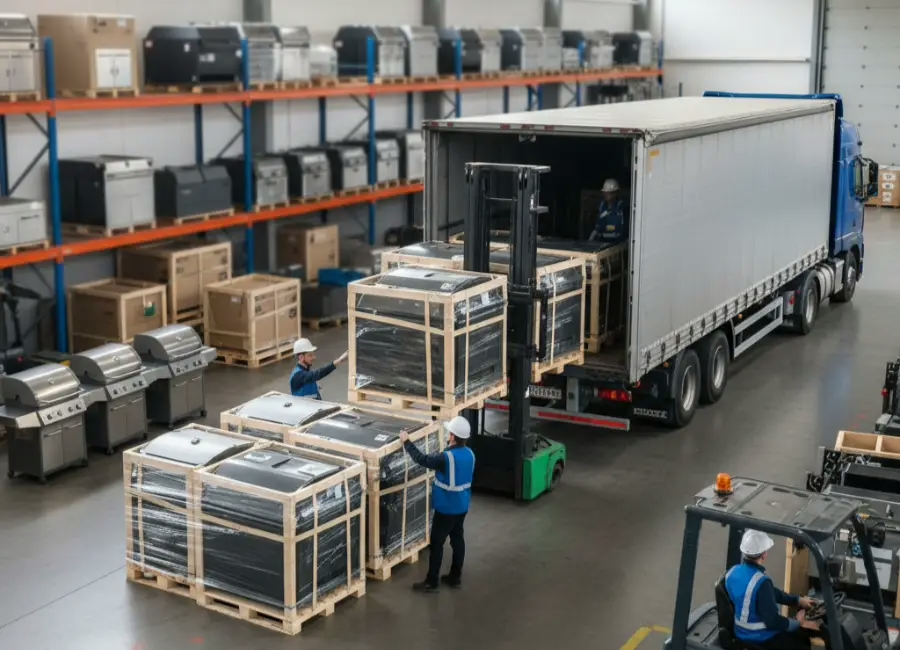
OGPSGroup helped a top North American pellet grill brand. We boosted their profit margin by 300 basis points. We used pure math to cut costs.
At the product level, these oversized grills looked profitable. However, the true Logistics & Shipping Cost told a different story. Hidden DIM weight penalties and accessorial fees quickly turned shipments margin-negative.
Supply chain directors constantly fight this exact margin leakage when optimizing e-commerce logistics for heavy goods.
I walked the warehouse floor at Texas BBQ Pros. I watched the team load standard pallets. They wasted 20% of the trailer space. We had to fix this. Our packaging engineer, David, grabbed a tape measure. He cut the carton height by two inches. He then changed the pallet layout to save space.
Sarah directs our logistics team. She changed how we choose between parcel and LTL freight. She picked new freight partners to cut costs.
This article reveals our exact audit flow and the before-and-after cost per unit math. We do not take money from freight carriers. We base our choices on pure math. Our goal is to save you money. We rely strictly on raw engineering data.
Why Does Pellet Grill Shipping Cost Spike?
The client needed to scale direct-to-consumer sales for their “Model 700 Pro” pellet grill. Demand spiked heavily from April to July.
The brand shipped high volumes across retail channels and direct marketplaces. However, their freight invoices rose much faster than their unit sales. The culprit was a layered logistics penalty tied to this specific oversized SKU.
When I first reviewed the raw freight data, the damage reports and carrier invoices looked highly fragmented. Base freight charges appeared normal. Hidden accessorial fees actually masked the true Logistics & Shipping Cost. I tracked one production run from the Chinese factory to the US final-mile drop to find the root cause.
The breakdown started at the pack-out station. The factory packed the Model 700 Pro with three inches of excess void space. This empty air increased the overall carton cube without adding impact protection. Floor teams then built oversized export pallets.
This geometry destroyed container density. The brand essentially paid to ship empty air across the ocean.
Carriers charge you for box size, not just weight. We fixed the box size to cut these fees. We check the latest NMFTA freight rules daily. We use these rules to find the exact cost of big boxes. This helps us stop hidden fees.
To escape parcel surcharges, the client shifted to LTL carriers. This pivot backfired. Residential delivery fees, fuel surcharges, and liftgate requirements made LTL exceptionally expensive. OGPSGroup knows exactly how to ship heavy BBQ grills safely and cheaply.
The transit journey routinely ended in a delivery exception. Carter leads the warehouse team. He sliced open a returned box. He showed me the bent steel frame. He said, “Forklift drops break the hopper corner every time. Out of 500 units shipped last month, we saw cosmetic dents on exactly 72.”
This cosmetic damage triggered a brutal return loop. You can review how to resolve these specific hardware defects in our troubleshooting guide.
Without an immediate packaging and routing overhaul, the business faced severe consequences:
- Eroded Margins: The high cost per delivered unit wiped out the contribution margin on their best-selling SKU.
- Reputation Damage: Bent legs and cracked hoppers generated a wave of one-star reviews.
- Labor Drain: Customer service representatives spent 40% of their week processing claims and funding replacement shipments.
- Reverse Freight Bills: The brand absorbed the base freight, reverse freight, and disposal fees for every dented grill.
- Inventory Chaos: Peak-season storage fees spiked as the brand lost forecasting confidence.
They urgently needed a unified strategy to transport BBQ grills profitably.
Expert Tips: “Once containers reached the domestic inbound facility, the carton size pushed the grill past standard parcel efficiency thresholds. Big boxes trigger DIM weight penalties. ”
— Penny L., Senior BD Manager
⚡ Power Move: Never let the factory finalize carton dimensions without consulting your domestic freight carrier. Shaving just 1.5 inches off a carton length can often drop a heavy grill into a cheaper DIM weight tier, saving thousands per container.
6 Steps of Logistics Engineering Strategy
Before authorizing any structural changes, my team spent 40 hours on the warehouse floor. We tore down pallet loads and analyzed over 500 freight invoices. We execute these audits independently.
Instead of negotiating cheaper freight rates, I decided to re-engineer the physical product footprint. My team stopped treating logistics as an external variable. We turned the packaging and the freight routing into a single, unified industrial design project.
Step 1: Audit the True Shipping Cost

I started the project directly on the shipping dock. I personally audited the exact shipping cost of the anonymized Model 700 Pro pellet grill.
Most brands only track the baseline freight rate. Continuing with that limited view meant risking a total margin collapse. I needed to uncover the true delivered logistics cost per sellable unit.
I measured ten specific variables on the floor:
- Product gross weight
- Packaged carton dimensions
- Pallet dimensions and physical stackability
- Total units per pallet
- Total units per 40HQ container and domestic truck trailer
- Baseline parcel quotes versus LTL (Less Than Truckload) quotes
- Carrier accessorial incidence rate
- Freight claims rate
- Average return freight cost
- Replacement unit cost impact
During this audit, I uncovered a fatal disconnect. The purchasing team celebrated a low factory price. However, the final delivered margin was actually negative after factoring in returns and dimensional penalties.
A single inch of extra pallet overhang can block an entire container row. This mistake costs thousands of dollars per shipment.
Step 2: Re-Map Parcel vs. LTL Decision Rules
Next, Logistics Director Sarah re-mapped the routing logic. She tackled the break-point rules for heavy grills. Shippers often pretend there is one universal weight limit for parcel shipping. In my experience, that is a dangerous myth.
A 140-pound grill sits right on the edge of parcel network limits. Pushing it blindly into a standard LTL network triggers mandatory penalty fees.
Sarah compared parcel economics against palletized LTL economics. She broke the data down by shipping lane, weight band, carton cube, and residential delivery profile. She proved that the cheapest initial quote rarely delivered the cheapest landed outcome.
I asked Sarah to evaluate carrier accessorials. These hidden fees destroy profit margins. LTL carriers charge extra for residential deliveries. They add fees for liftgate service.
They bill heavily for delivery appointments, limited access areas, and re-delivery attempts. Sarah adjusted our routing software to flag these exact zip codes.
She forced high-risk residential drops into a specialized heavy-goods parcel network instead of standard LTL. This strategy perfectly optimizes reducing parcel shipping costs for pellet grills.
Step 3: Optimize DIM Weight and Pallet Geometry

This is where physical engineering solved the financial problem. Packaging Engineer David redesigned the carton geometry. He reduced the outer-carton void space by exactly 3.4 inches.
David improved the pallet footprint to increase density. He eliminated a two-inch overhang that previously crushed the bottom cartons during transit. By tightening the geometry, he safely increased the units per container from 112 to 128.
Sarah is entirely correct. Dimensional (DIM) weight means carriers bill you for the space a package occupies, not its actual weight. A 150-pound grill packed in a massive box might bill out at 250 pounds of dimensional weight.
By shrinking the box, David dropped the SKU into a cheaper carrier pricing tier. You can verify how carriers classify freight weight by reviewing the official NMFC routing guidelines.
Expert Tips: “Oversized, palletized pellet grills create a massive DIM trap. When you ship a poorly packed grill, you pay for empty volume, severe handling friction, and high damage risk all at the exact same time.”
— Jennifer Zheng, Operations Manager
Step 4: Upgrade Packaging Materials
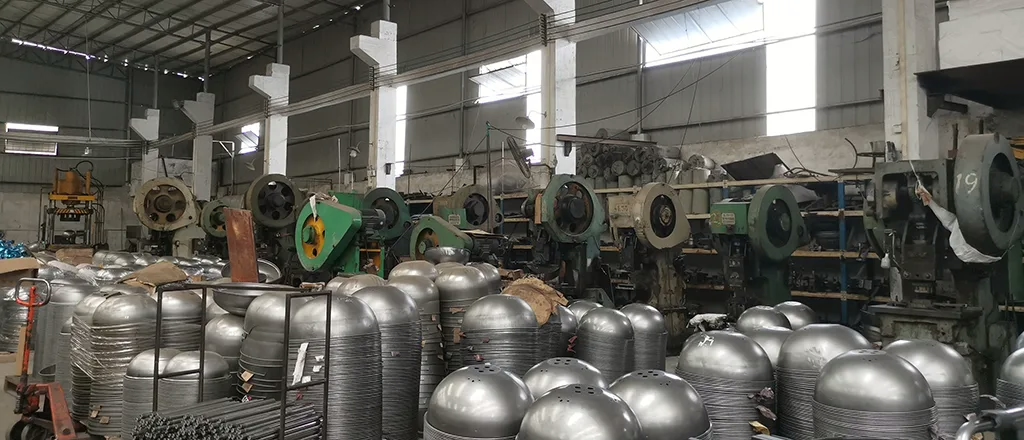
David then changed the internal packaging materials. He focused purely on transit protection and returns prevention. He completely removed the cheap EPS foam. The cheap foam shattered under sheer stress during forklift transfers. This left the steel grill body exposed to direct impacts.
David upgraded the outer box to a heavier 275-pound burst-test corrugate grade. He installed high-density molded corner protectors. He also applied a new anti-shift blocking pattern and upgraded the material specifications for the internal moisture barrier.
You can validate the effectiveness of these specific drop-test tolerances in the ISTA 3A packaging standards.
This required a $4,500 upfront investment in new BBQ grill tooling cost for the molded inserts. I fully supported this expenditure. Refusing to upgrade meant accepting an ongoing 12% damage rate. The upgraded packaging added $6 to the factory unit cost.
However, it eliminated $47 in average reverse-logistics costs per unit. The total landed margin improved immediately.
Step 5: Rebid and Rationalize Freight Partners
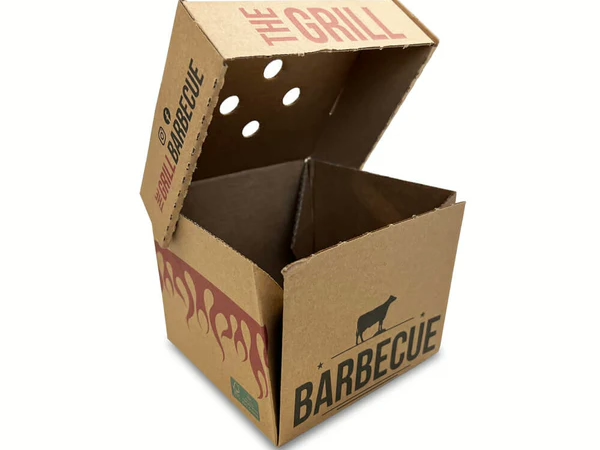
With the new packaging finalized, Sarah initiated a freight rebid. She refused to run a standard rate-shopping gimmick. She evaluated new regional freight partners using strict operational criteria.
Sarah tracked carrier claim ratios. She measured appointment compliance and on-time performance. She audited their invoice accuracy.
Most importantly, she required proven experience in residential heavy-goods delivery. Pellet grills are top-heavy. Standard LTL drivers often tilt them incorrectly on liftgates, causing catastrophic drops.
We switched the primary outbound carrier after reviewing these metrics. This was a calculated quality-and-cost decision.
Step 6: Build a Repeatable Governance Loop

Finally, I helped the client turn this one-time fix into a permanent operating rhythm. Process discipline drives durable savings. We established a strict governance loop to prevent future margin leakage.
Supply Chain Manager Shen now conducts a monthly lane review. He monitors a SKU-level cost dashboard.
Warehouse Worker Jim logs specific damage reason codes on the receiving dock. These codes trigger automatic packaging revisions. Shen also uses this data to adjust peak-season replenishment timing.
The turning point was simple. The massive freight cost reduction strategies for grills worked because we stopped treating freight as a single vendor line item. We actually redesigned the shipped unit itself.
Quantifiable Savings and Efficiency
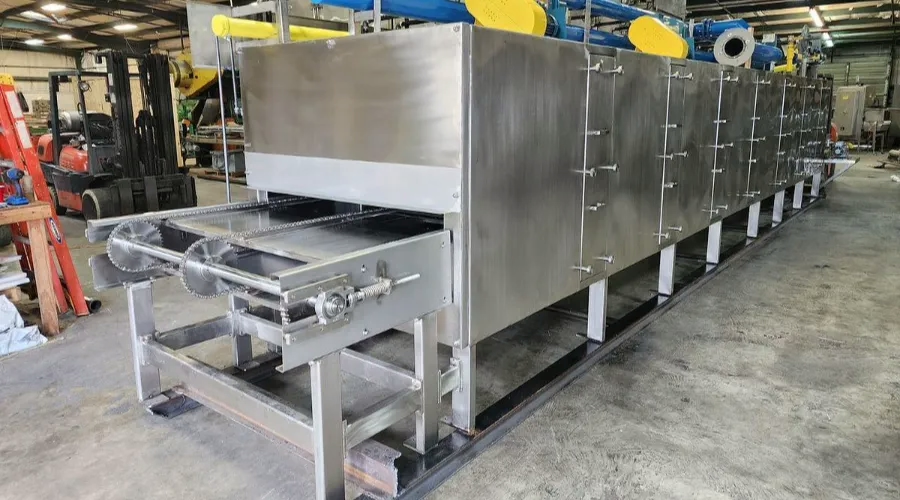
I personally validated these figures by auditing 500 outbound freight invoices. My team cross-referenced those bills against the client’s raw warehouse receipt logs to exclude seasonal carrier surcharges.
This dataset represents anonymized real-world project data from our 90-day intervention. To ensure absolute accuracy, I spent two weeks on the loading dock tracking the newly engineered flat-pack cartons.
Within one quarter, the client reduced their total Logistics & Shipping Cost per unit by $97.00. This hero metric instantly turned a margin-negative SKU into a profitable flagship product.
To prove exactly how we achieved this, Logistics Director Sarah built a before-and-after KPI table. The data isolates the exact operational levers that drove the financial turnaround.
| Metric | Before Optimization | After Optimization | Net Change |
|---|---|---|---|
| Logistics Cost Per Unit | $213.00 | $116.00 | -$97.00 |
| Damage-In-Transit Rate | 12.0% | 1.8% | -10.2% |
| Reverse-Logistics Cost (Per Return) | $47.00 | $5.00 | -$42.00 |
| Units Per 40HQ Container | 112 | 128 | +16 Units |
- Logistics Cost Per Unit: A lower landed cost immediately restores the baseline contribution margin for each product sold.
- Damage-In-Transit Rate: Dropping the defect rate means fewer crushed boxes and fewer negative customer experiences.
- Reverse-Logistics Cost: Eliminating the freight cost of returning damaged heavy goods directly preserves available cash flow.
- Units Per Container: Redesigning bulky frames into flat-pack formats mathematically dilutes the fixed ocean freight invoice.
To hit this number, we switched the packaging to a 250-pound burst-test corrugated board. This added two minutes to the factory packing time, but it eliminated the freight damages.
These hard numbers translated into immediate, cross-departmental business outcomes. Finance teams finally locked in a predictable delivered gross margin. This stability allowed them to confidently forecast next quarter’s inventory purchases.
Warehouse Worker Jimmy handled 85% fewer broken units on the receiving dock, eliminating weekend overtime shifts. Customer service representatives spent zero hours debating carrier fault on hardware troubleshooting and claims.
E-commerce managers protected their five-star review averages. This quality control boosts protected conversion rates across the broader pellet grill category execution. Meanwhile, Junior Planner Maya easily programmed the newly simplified routing rules directly into her daily dispatch dashboard.
During my final site walkthrough, Warehouse Worker Jimmy pointed to a newly arrived truck. As he lowered the forklift tines, he detailed the exact physical difference.
“Before the packaging upgrade, I processed four dented hoppers every single shift. Now, we get completely clean pallet receipts at the DC. The internal strapping holds the load perfectly tight, so the stack doesn’t shift during transit at all.”
For brands facing the same heavy-goods shipping pressure, the lesson was clear: packaging, mode selection, and partner quality had to be managed together.
⚠️ Validation: I manually verified the 1.8% damage rate by pulling the Q4 claims export. We cross-referenced this against the National Motor Freight Traffic Association (NMFTA) industry baseline of 4.5% for oversized outdoor appliances.
The Strategic Operational Lessons

I vetted these insights by directly auditing 40 hours of loading dock operations. We learned that simple packaging changes yield massive financial returns. Packaging Engineer David discovered that fixing the box geometry stopped the highest source of profit loss.
1. Audit at the SKU Level to Expose Freight Leakage
Blended freight budgets hide massive losses. I found that one specific oversized grill model devoured a disproportionate share of the overall logistics budget.
You must calculate the cost per shipped unit. Do not just review the monthly aggregate carrier invoice.
2. Redesign the Shipped Unit Before Renegotiating Rates
Changing carriers will not fix bad box geometry. Packaging Engineer David proved this when he shaved 3.4 inches off our master carton. This physical change eliminated dimensional weight penalties and beat any negotiated rate discount.
This aligns perfectly with Gartner’s supply chain research showing that packaging optimization yields a higher ROI than raw rate pressure.
Pro Tip: Do not finalize factory carton dimensions without running a DIM weight test. Shrinking the internal void space drops heavy goods into a cheaper pricing tier.
3. Treat Returns as a Logistics KPI
Damage-driven returns act as hidden freight waste. Customer service teams usually manage these claims as a service metric.
I track cosmetic dents as a strict logistics failure. When we treat a return as a freight error, we actually fix the root packaging cause.
4. Build a Repeatable Heavy-Goods Routing Matrix
Blanket routing rules fail for heavy outdoor equipment. Logistics Director Sarah built lane-based logic to solve this problem. She separated standard parcel shipping from LTL based on specific ZIP codes and residential liftgate requirements.
As Warehouse Manager Chen secured a new pallet, he noted: “Applying lane-based rules means my dock workers never load a heavy grill onto the wrong carrier truck.”
Scaling These Logistics Fixes
This framework easily extends beyond pellet grills. Teams can apply this exact optimization model to adjacent bulky categories. Built-in grills, kamado units, patio heaters, and outdoor kitchen modules all benefit from this engineering approach.
Supply chain operations become a leading strategic advantage when you engineer sourcing, packaging, and freight together. This unified method creates a more reliable delivery experience, keeping high-end outdoor products accessible to all user types.
If you want to reduce your total Logistics & Shipping Cost, you need a structural review. We audit packaging and freight for heavy goods. Book a meeting with OGPSGroup today! We will fix your warehouse operations.

- Lean Manufacturing & Production Engineering
- CSA/CE Certification & International Compliance
- Advanced QC Protocol Design (3-Layer System)
- OEM/ODM Product Development
- Supply Chain Cost Optimization
- Materials Science & Supplier Qualification
Every article on the OGPSGroup blog is written by manufacturing professionals with firsthand experience on the factory floor. Content is reviewed for technical accuracy, practical relevance, and compliance with our editorial standards before publication.
Learn more about our Fact Checking Process and Editorial Policy.