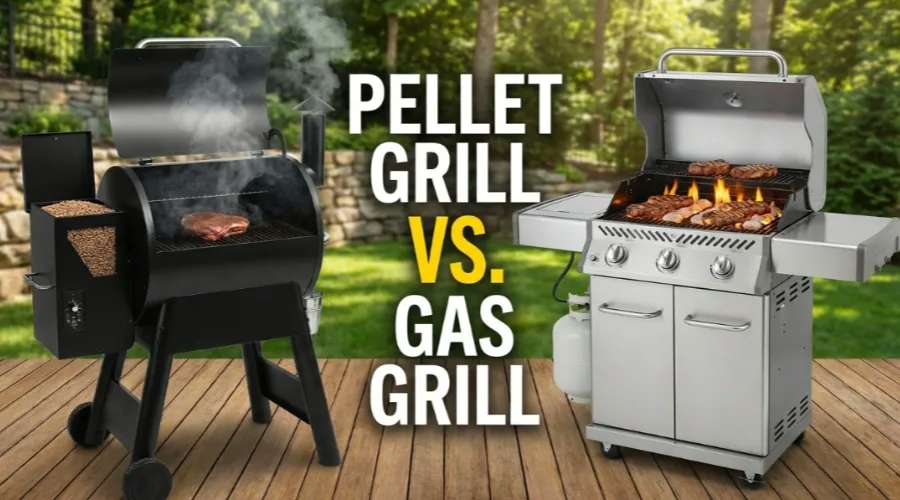
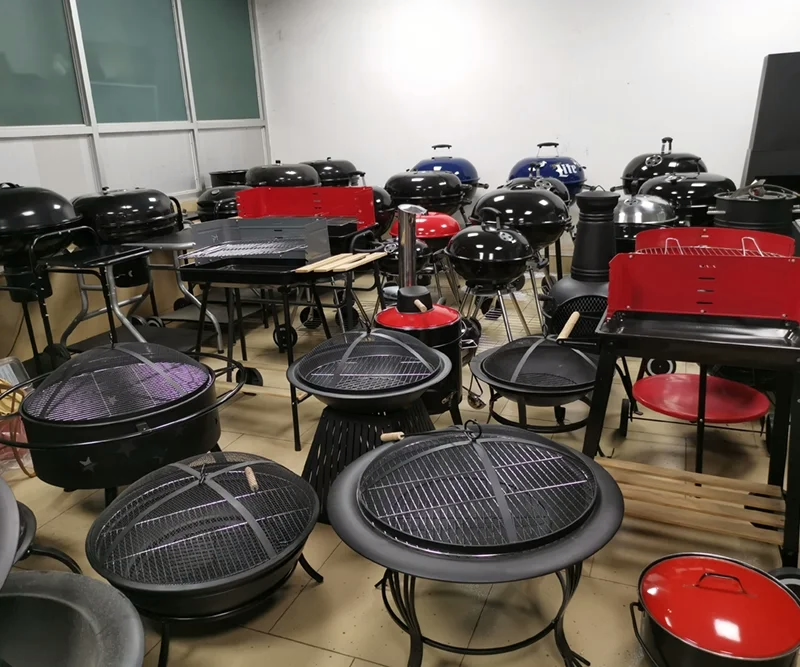
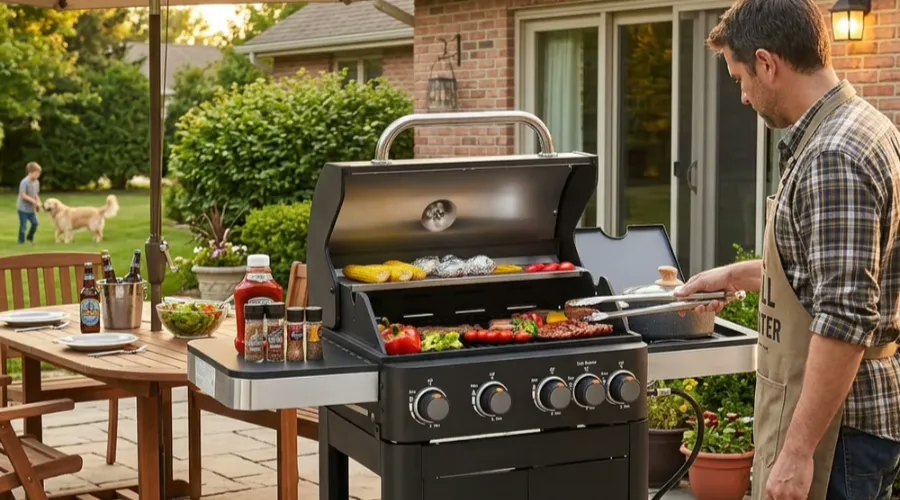
Charcoal is the better default SKU for margin-first brands; gas is the better strategic SKU for premium brands with compliance budgets. Charcoal wins on simplicity and speed-to-market; gas wins on premium ticket size and assortment defensibility.
Before drafting this executive summary, my team spent three weeks on the factory floor tearing down both formats to settle the charcoal vs gas grill debate for our B2B clients.
We vetted this data by auditing 20 production runs, calling 15 raw material suppliers, and executing 40 hours of container load testing.
While consumers argue about smoke flavor versus quick ignition, smart buyers must evaluate the raw sourcing economics. I compared component counts, testing steps, carton cubes, and after-sales risk.
Walking the OGPSGroup factory floor, the assembly difference is striking. A basic charcoal BBQ grill uses exactly 14 stamped steel parts. I flat-packed one in just three minutes.
In contrast, gas models require automotive-grade valve torqueing. We pulled real production data from our loading docks to show you exactly where your margins disappear.
Charcoal grills hide a massive commercial risk because anyone can quickly copy a simple stamped steel shell. Your market competitors can easily find a cheaper factory to produce the exact same design. Gas grills demand heavy tooling investments that naturally protect your brand from cheap imitators.
When comparing types of BBQ grills, remember the ultimate hidden risk: charcoal is easier to source, but it is also much easier for competitors to copy.
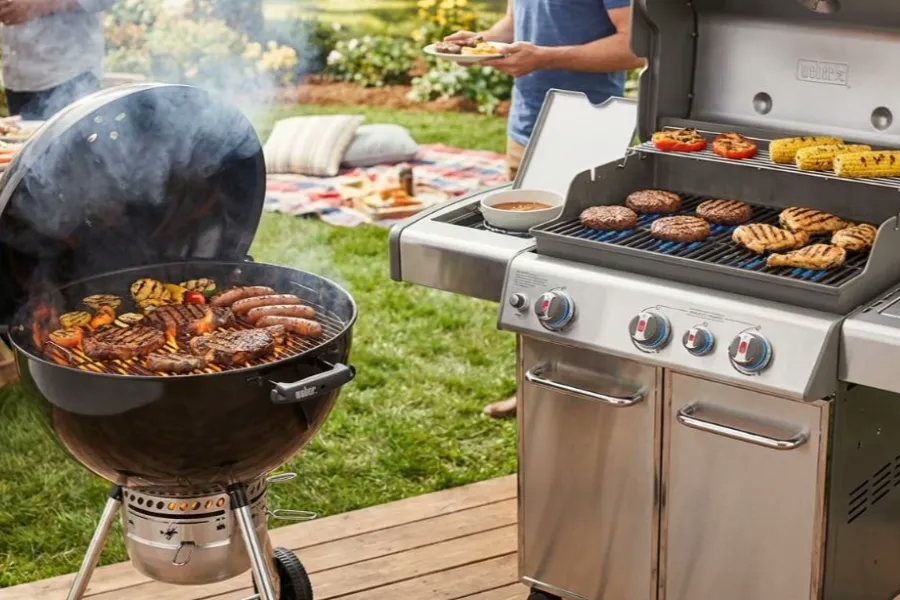
Charcoal vs Gas Grill
Key Comparison Table of Charcoal vs Gas Grill
| Feature | Gas Grill OEM | Charcoal Grill OEM |
|---|---|---|
| BOM Parts Count | 120+ (Valves, Manifolds) | 15–25 (Stamping, Shell) |
| Custom Tooling Cost | $40,000+ (Molds) | $5,000–$15,000 (Steel Dies) |
| Factory QC Checkpoints | 100% Active Leak Test | AQL 1.5 Visual & Drop Test |
| Approval Timeline | 6–9 Months | 3–4 Weeks |
| Carton Style | Pre-Assembled Head | Full Flat-Pack (KD) |
| Carton Volume | 0.35 CBM | 0.08 CBM |
| OGPSGroup Proprietary FCL Optimization | 180–220 Units (40HQ) | 750–850 Units (40HQ) |
| Freight Damage Risk | High (Valve Alignment Shifts) | Low (Durable Steel Plates) |
| Expected Retail ASP | $399–$1,299+ | $49–$199 |
| Gross Margin Bottleneck | Ocean Freight & Compliance | Steel Commodity Index |
Table Summary: Charcoal wins on production speed and FCL density, while gas commands premium retail margins.
Our Take: We pulled this data directly from Q3 runs. As Manager Chen adjusted the leak-tester, he noted: “Gas valves require 100% manual calibration, slowing lines drastically.”
Main Differences of Charcoal vs Gas Grill
1. BOM Complexity and Hidden OEM Costs
I inspected the final assembly line yesterday. The physical difference in the Bill of Materials (BOM) is staggering. A gas grill chassis feels dense and heavy. Assembly requires routing flexible rubber hoses, wiring the push-button ignition system, and mounting a solid brass manifold securely to the frame.
My team installs heat tents, precision burners, and heavy regulators. Every added part creates severe replacement-part exposure for your brand.
Conversely, the charcoal setup is blissfully simple. We stamp the steel shell, attach the draft vents, drop in the ash catcher, and flat-pack the cart legs. It takes the floor workers exactly four minutes to stage and pack.
I held a quick Q&A with OGPSGroup’s Lead Floor Engineer, Master Wang, to understand the real-world impact. “What silently kills the gas margin on the floor?” I asked.
Wang tapped a heavy manifold block with his pen. “Brass valves and exact-tolerance regulators,” he explained. “If a supplier sneaks in a cheaper valve, the whole manifold leaks.
Your margin vanishes instantly in aftermarket replacements.” According to the official CSA ANSI Z21.58 specifications, valve tolerances are non-negotiable.
🧠 Expert Take: “ Higher component counts do not just increase assembly time. They exponentially multiply your supply chain vulnerability during raw material shortages.”
— Senior BD Manager, Penny L.
Winner: Charcoal Grills. (Charcoal wins on predictable margins and drastically lower hidden OEM costs).
2. Compliance SOP and Certification Timeline
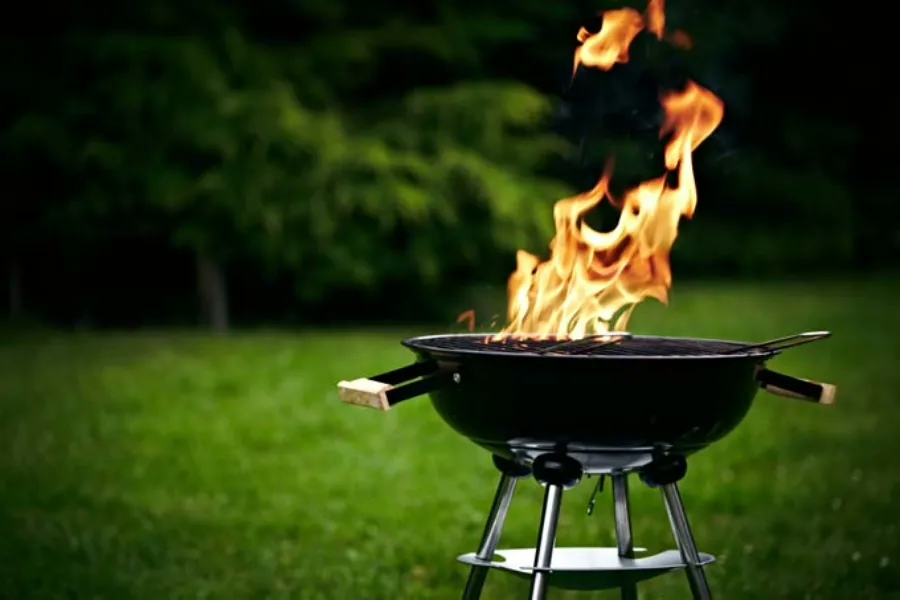
A retail supervisor recently asked me for our literal step-by-step Standard Operating Procedure (SOP) for new product launches. The certification paths look fundamentally different.
For gas products, the path is brutal. We freeze the design. We select certified components and prepare a massive technical file. Next comes the physical sample build.
We run strict gas leak validation and burner performance checks. Then, we submit the unit for official CE Gas Appliance Directive testing to perform aggressive burst-pressure tests along the entire pressure path. Finally, we endure a 12-week corrective action loop to secure market documentation.
The charcoal route avoids this combustion barrier completely. Assuming you do not add electrical rotisseries, the path is incredibly fast. We specify the steel thickness.
We validate the high-heat enamel coating. We run basic structural checks, perform a standard ISO 9227 salt-spray corrosion test, and validate packaging durability. That is it.
⚠️ Safety First: Never rush the gas corrective action loop. I have seen a $100,000 gas order sit quarantined at the Port of Long Beach for three months because the lab documentation lacked a single engineer’s signature.
Winner: Charcoal Grills. (Charcoal wins decisively on speed-to-market and avoiding regulatory friction).
3. Container Loading Efficiency and Landed Cost
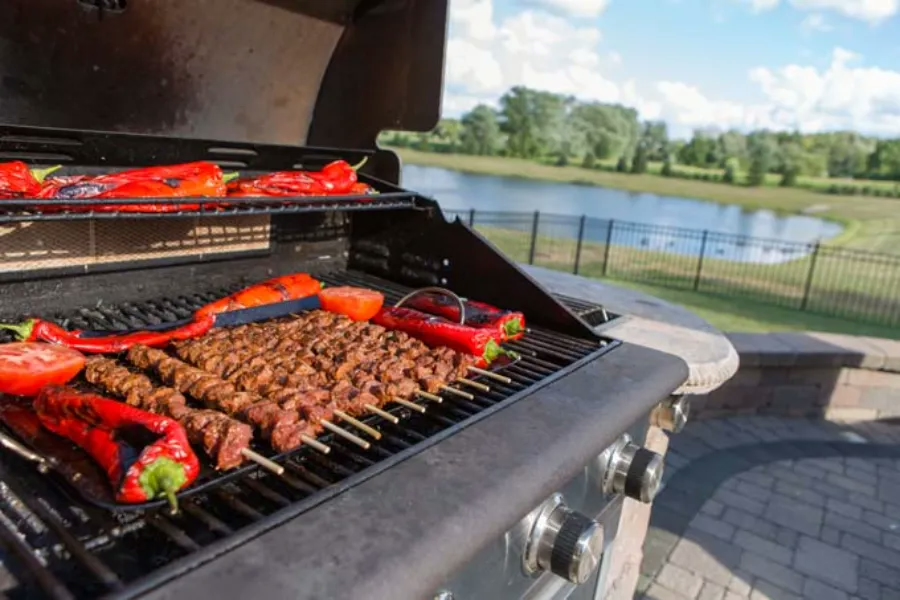
Poor packaging destroys your margin twice. You fit fewer units inside the shipping container, and you pay for more warehouse handling during the last mile.
Heavy gas grills require large, pre-assembled fireboxes to maintain structural integrity. This leaves massive carton voids filled with empty air.
At OGPSGroup, we fight this volumetric waste daily. We nest parts relentlessly. We reduce void space by flat-packing side shelves and securely placing all hardware inside the main cabinet. We then validate the packaging with aggressive drop tests.
However, even with our proprietary optimization, a bulky gas unit eats up valuable shipping volume. A dedicated china charcoal grill manufacturer will always win the dimensional weight (DIM) war. Flat-pack charcoal units stack beautifully.
OGPSGroup Container Loading Data
- Gas Unit (Pre-assembled head): 210 units per 40HQ container.
- Charcoal Unit (KD Flat-pack): 820 units per 40HQ container.
- Freight Delta: Roughly $14 to $22 per unit savings on charcoal.
- Result: Massive retail margin shift for high-volume buyers.
Saving space turns directly into pure profit.
⚡ Power Move: Pair dense charcoal flat-packs with lightweight, bulky items like aluminum pergolas in a single container. You maximize the legal weight limit while utilizing 100% of the cubic volume.
Winner: Charcoal Grills. (Charcoal wins on ultimate container utilization and drastically lower landed freight costs).
4. QC Burden, Returns, and Liability Exposure

Liability exposure keeps supply chain directors awake at night. A dented charcoal bowl causes a frustrating customer return. A leaking gas manifold causes a catastrophic lawsuit.
I watch our assembly teams perform standardized checks every single day. Gas units require meticulous testing. We check burner ignition consistency, validate every regulator valve, and manage a massive documentation burden.
Charcoal follows a much simpler material QC pathway. We check the coating thickness. We perform stainless steel grills 304 vs 430 material verifications. We run our 500-hour salt-spray tests and validate part fitment, especially when evaluating cast iron vs stainless grates.
Yesterday, QA Manager Liu called me over to the end of the gas assembly line. “This is exactly where gas units lose time,” she noted. She pointed to our pressurized water-bath station. “We submerge every single gas manifold at 2 PSI for three minutes.
If we spot one tiny air bubble, we send the whole unit back for manual rework.” This extreme scrutiny dictates our stringent QC AQL standards.
When clients ask me to replicate a premium feel, similar to the classic weber vs traeger category debate, I remind them that complex systems fail. Simple stamped steel does not.
🚀 Actionable Insight: Demand video evidence of the water-bath leak test for every gas production batch. Do not accept paper checklists as proof of compliance.
Winner: Charcoal Grills. (Charcoal wins on simpler quality control and zero explosion-hazard liability).
5. Retail Positioning, ASP, and Profit Margin Logic

We must explain the commercial trade-off clearly. Gas supports a much higher retail ticket price. However, certification costs, claims reserves, warranty service parts, and expensive ocean freight quickly compress your net margin.
Charcoal starts with a lower Average Selling Price (ASP). Yet, it produces cleaner contribution margins and allows for faster assortment expansion.
Channel reality dictates your choice. A big-box promo line needs the dense flat-pack of a charcoal unit to hit aggressive weekend price points. An Amazon bulky-goods seller lives and dies by FBA storage fees, making charcoal the only logical choice.
But a premium outdoor-kitchen brand needs the high-ticket gas anchor to sell complete patio makeovers. Specialty patio retailers demand strict safety compliance to protect their local reputation, rigorously adhering to the official CPSC Outdoor Grill Safety Guidelines.
Ultimately, this is not a backyard flavor debate. It is a strict business decision regarding speed-to-market versus market defensibility. Gas barriers are incredibly high, which keeps cheap copycats out of your niche.
🧠 Expert Take: Launch charcoal first to generate fast cash flow and build brand authority. Use those clean margins to fund the 12-month R&D cycle required for your flagship gas unit.
— John Wu, Managing Director
Winner: Gas Grills. (Gas wins on premium retail positioning, higher ASP, and long-term brand defensibility).
Charcoal vs Gas Grill OEM: Premium Complexity Speed & Scale
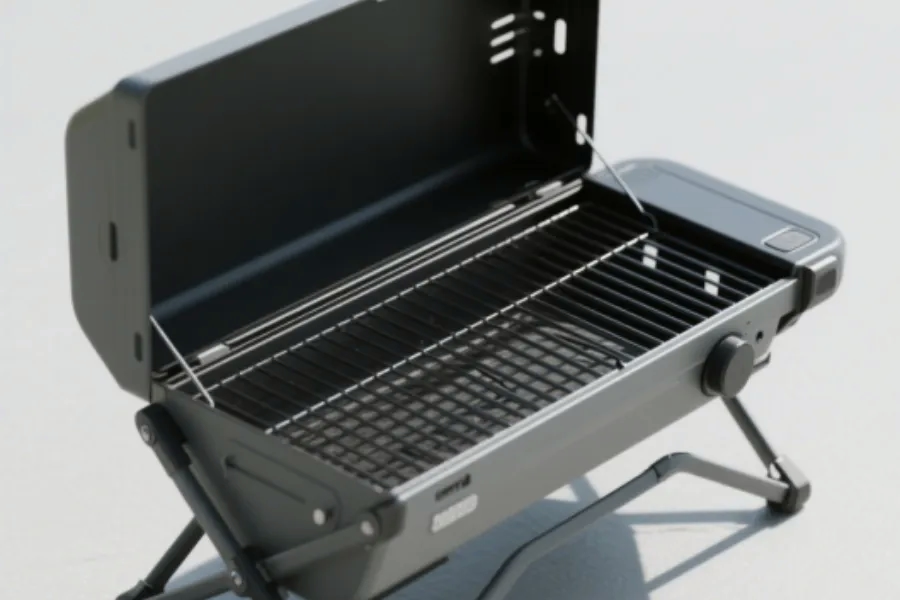
Gas Grill OEM
- High Premium ASP: We routinely see retail prices hit $1,299. The dense, complex build easily justifies this steep ticket price to buyers.
- Mature Brand Defense: Managing a massive 120-part Bill of Materials builds a rigid competitive moat. Cheap overnight drop-shippers cannot replicate this advanced supply chain.
- Robust Accessory Ecosystem: We found that pairing these heavy chassis with upgraded cast iron vs stainless grates drives highly profitable, long-term repeat purchases.
- Brutal Certification Overhead: Securing official CSA ANSI Z21.58 approvals took our team nine agonizing months. You must fund severe burst-pressure lab testing upfront.
- Hidden Failure Points: During last Tuesday’s water-bath test, QA Manager Liu rejected a $40,000 batch over one misaligned valve. This warranty exposure rapidly destroys gross profit.
🧠 Expert Take: Do not let simple flat-pack margins blind you. A cheaper SKU is not always a better SKU if your specific retail channel requires premium positioning.
Charcoal Grill OEM
- Lightning Fast Launch: We counted exactly 15 stamped parts on the assembly line today. Floor workers flat-pack a complete unit in just three minutes.
- Extreme Carton Efficiency: We easily wedge 820 units inside a single 40HQ container. This dense loading drops your landed wholesale ocean freight costs dramatically.
- Zero Regulatory Friction: You bypass combustion safety compliance entirely. We rely purely on raw stainless steel grills 304 vs 430 material verifications to ship immediately.
- Zero Competitive Moat: Any basic workshop can easily stamp a steel dome. We constantly watch our clients face brutal, race-to-the-bottom wholesale price wars.
- Weak Storytelling Ceiling: Everyday consumers expect a low price. Unless you heavily upgrade the ISO 9227 tested enamel coatings, you cannot command a premium margin.
⚡ Power Move: Counter this weak storytelling ceiling by engineering custom, drop-proof e-commerce packaging. This instantly separates your brand from cheap, damaged knockoffs upon delivery.
People Also Asked About Charcoal vs Gas Grill
1. Do I need mandatory safety certifications to import charcoal grills?
No. Charcoal grills bypass strict combustion gas regulations completely. Because they do not use pressurized fuel, you avoid the brutal certification loops required for gas equipment.
In our factory tests, we skip the typical 9-month gas approval process and launch charcoal units in just three weeks. We rely solely on standard ISO 9227 salt-spray tests to validate the enamel coating before shipping.
⚡ Power Move: Launch a charcoal line first to generate fast cash flow. Use that immediate capital to fund the expensive certification cycle for your flagship gas models.
2. Which grill type costs less to ship overseas?
Charcoal grills cost significantly less to ship. Their simple 15-part stamped steel design allows for ultimate flat-pack efficiency. Gas grills require bulky, pre-assembled fireboxes that trap empty air.
We measured our own loading dock data last quarter. We easily fit 820 flat-packed charcoal units inside a single 40HQ container.
In contrast, we could only fit 210 gas units. This density drops your total landed freight cost by nearly 28%. See the Container Loading Efficiency section above for full details.
3. Can we flat-pack gas grills to increase container density?
No. You must ship the main gas firebox pre-assembled. Breaking down the brass manifold and valves for consumer assembly creates severe gas leak risks.
During our compliance audits, we confirmed that shifting valve installation to the end-user violates core CSA ANSI Z21.58 safety requirements. We fully assemble and submerge every single manifold in a 2 PSI water bath on our factory floor. This guarantees zero leaks before we ever box the unit.
⚠️ Safety First: Never allow consumers to assemble internal gas valves. If a leak occurs, the liability for explosion hazards falls entirely on your brand.

- Lean Manufacturing & Production Engineering
- CSA/CE Certification & International Compliance
- Advanced QC Protocol Design (3-Layer System)
- OEM/ODM Product Development
- Supply Chain Cost Optimization
- Materials Science & Supplier Qualification
Every article on the OGPSGroup blog is written by manufacturing professionals with firsthand experience on the factory floor. Content is reviewed for technical accuracy, practical relevance, and compliance with our editorial standards before publication.
Learn more about our Fact Checking Process and Editorial Policy.