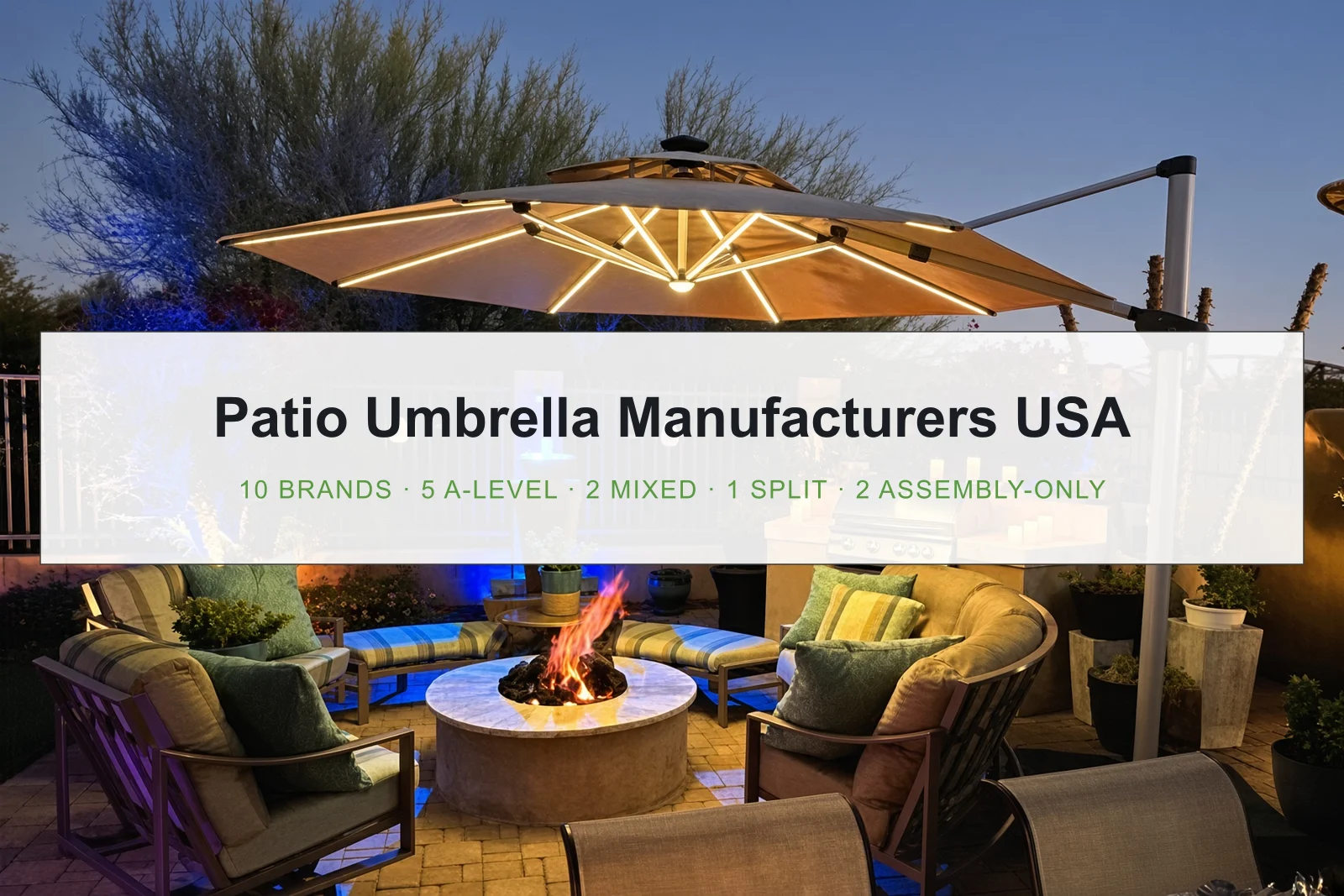
Five of these 10 brands publish manufacturing language strong enough to rate A-Level on U.S.-made evidence. Two are mixed, one is split-origin, and two only claim U.S. assembly.
This ranking of patio umbrella manufacturers USA options is built from public brand websites, checked in November 2026. Each entry records what the brand publishes about factory location, assembly, and sourcing, plus the questions to put in your RFQ. It is not an FTC audit and not legal advice: “Assembled in USA” does not equal “Made in USA,” per the FTC’s Made in USA standard.
Disclosure: OGPSGroup is a China-based outdoor furniture manufacturer and sourcing partner. This list compares U.S. brands; it is not an argument for buying domestic over imported shade.
Brand sites last checked: November 2026. The claims below are as published by each brand and have not been independently tested. Re-confirm every figure on the current site before you rely on it in a contract.
Key Takeaways: 10 Patio Umbrella Manufacturers USA at a Glance
Ten US umbrella brands, graded by the U.S.-made evidence they publish.
- Santa Barbara Designs (California) — A-level; heritage workshop. Best for luxury hospitality; no published lead time or MOQ.
- East Coast Umbrella (North Carolina) — A-level; cut-and-sew factory. Best for restaurants, hotels and clubs.
- FiberBuilt Umbrellas — B-level; 93% U.S. content claim on Prestige only. Best for hospitality and windy pools; origin varies by collection.
- American Holtzkraft (Pennsylvania) — A-level craftsmanship. Best for branded restaurant patios; confirm cantilever range and lead time.
- Tuuci (Miami) — B-level; global footprint. Best for design-driven hotels; geography is mixed per SKU.
- Fiberlite Umbrellas — A-level; U.S. hand assembly with imported parts. Best for windy rooftop bars; verify the warranty.
- Superior Shade (Carrollton, GA) — A-level; commercial only. Best for municipal and code-sensitive work; wind rating assumes fabric removed.
- Frankford Umbrellas (New Jersey) — D-level; assembly only. Assembly does not equal made in the USA.
- Greencorner — C-level; U.S. canopies and bases, Tunisian frames. Best for classic luxury projects; frame origin is imported.
- Shade Systems (Florida) — D-level; model-level origin unclear. Best for engineered commercial shade.
Patio Umbrella Manufacturers USA – Best 10 by US-Made Level
The A/B/C/D ladder turns each brand’s site language into RFQ-ready data. It is not an independent FTC finding. A means explicit U.S. manufacturing evidence. B means mixed footprint or collection-level domestic claims. C means split origin. D means assembly-in-USA or unclear origin for key SKUs.
| Company | U.S.-made level | Manufacturing language | Best fit | Customization strength | Main verification caveat |
|---|---|---|---|---|---|
| Santa Barbara Designs | A | California workshop, heritage | Luxury hospitality | Frame finish, canopy, valance | No published lead time or MOQ |
| East Coast Umbrella | A | NC cut-and-sew factory | Restaurants, hotels, clubs | Canopy replacement, custom | No model-level lead times |
| FiberBuilt | B | 93% claim on Prestige only | Hospitality, windy pools | Fiberglass ribs, parts | Origin varies by collection |
| American Holtzkraft | A | Pennsylvania craftsmanship | Branded restaurant patios | Logo, design match | Confirm cantilever range and lead time |
| Tuuci | B | Miami center, global footprint | Design-driven hotels | In-house logo printing | Mixed geography per SKU |
| Fiberlite | A | U.S. hand assembly, imported parts | Windy rooftop bars | Logo canopy, custom fabric | Mixed sourcing; verify warranty |
| Superior Shade | A | Carrollton, GA commercial only | Municipal, code-sensitive | Fire-rated fabric, engineering | Wind rating assumes fabric removed |
| Frankford | D | Assembly in NJ, global supply chain | U.S. assembly and support | Limited domestic content | Assembly does not equal made in USA |
| Greencorner | C | U.S. canopies and bases, Tunisia frames | Classic luxury projects | Canopy and base options | Frame origin is imported |
| Shade Systems | D | Florida plant, unclear umbrella origin | Engineered commercial shade | Engineering focus | Model-level origin unclear |
Each entry below covers what the brand publishes, who it suits, and the questions to put in your RFQ.
1. Santa Barbara Designs (A-Level)
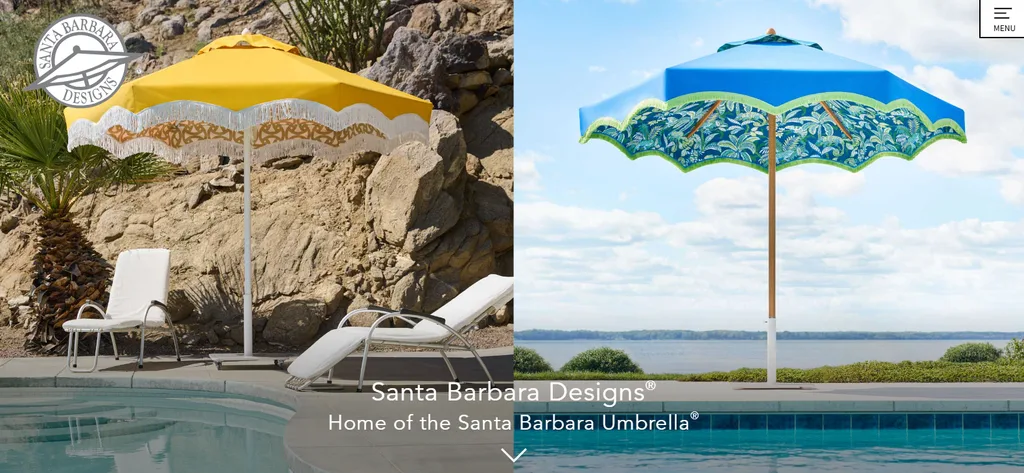
Santa Barbara Designs suits luxury hospitality buyers who want a California-crafted story and accept bespoke quotes.
Its site centers on a Southern California workshop rather than an overseas container, and the brand heritage runs back decades. That workshop language is the clearest manufacturing evidence on the page.
Pricing is fully bespoke, with no catalog tiers. Customization is strongest in frame finish, canopy fabric, and valance trim. Ideal projects: resort pool decks, boutique hotel courtyards, restaurant terraces.
The site does not publish lead time, MOQ, or a standard price sheet, so all three have to come out of the quote conversation.
Ask before you shortlist:
- What is your lead time for a 200-unit hotel order?
- What is your MOQ per canopy fabric colorway?
- Which components come from outside your workshop?
⚡ Author’s Take: With no published lead time or MOQ, the first quote is a design conversation, not a schedule. Get fabric substitution rules and a dated delivery commitment in writing before you sign.
Haiyan Zhang — Export Manager of outdoor furniture
Ask OGPSGroup about Santa Barbara Designs
2. East Coast Umbrella (A-Level)
East Coast Umbrella earns A-Level because the factory is named and sized. The brand cites a 68,000-square-foot cut-and-sew facility in North Carolina that builds custom patio umbrellas start to finish. That is more concrete than most distributor pages, which never say where the welding happens.
The published 3-year top-to-bottom warranty covers frame and fabric. Its market umbrella lists a 1/8-inch wall thickness, heavier than the 16-gauge steel common on many imported frames, which trades wind resistance against weight.
Best fit: restaurant terraces, hotel pool decks, and country clubs that need fast canopy replacements.
Two gaps remain. The brand does not publish model-level lead times or cantilever depth specs. Ask for both before you commit.
⚡ Author’s Take: The warranty is the strongest published term in this group. Lead times are quoted only after you pick a frame finish, so put lead time and cantilever arm depth on the RFQ as written line items.
Ask OGPSGroup about East Coast Umbrella
3. FiberBuilt Umbrellas (B-Level)
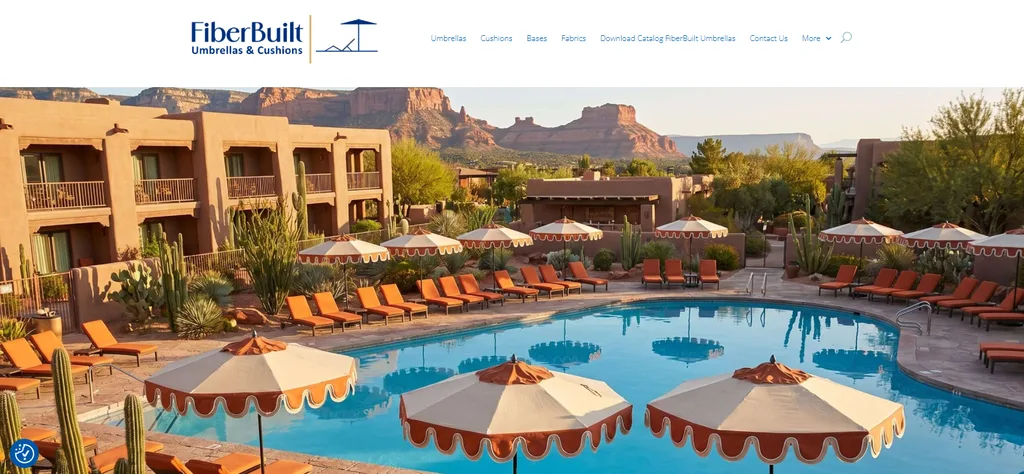
FiberBuilt Umbrellas belongs on your shortlist, but not as a blanket domestic buy. Grade it by collection.
The Prestige Collection carries a 93% Made in America claim. That is a strong number, and FiberBuilt’s own FAQ says sourcing varies by collection, so a quote for one line says nothing about the next. That caveat is why it rates B-Level, not A-Level.
Commercially, FiberBuilt matters for a different reason. It built its name on fiberglass ribs that flex in gusty pool decks instead of snapping, and replaceable parts mean a torn canopy does not scrap the whole frame. Hospitality buyers like that math.
Before you sign, request written country-of-origin confirmation for the exact SKU and collection on your quote.
🛡️ Our Verdict: Assume nothing from the catalog page. Get the SKU-level letter before printing “Made in USA” on any spec sheet.
Ask OGPSGroup about FiberBuilt Umbrellas
4. American Holtzkraft (A-Level)
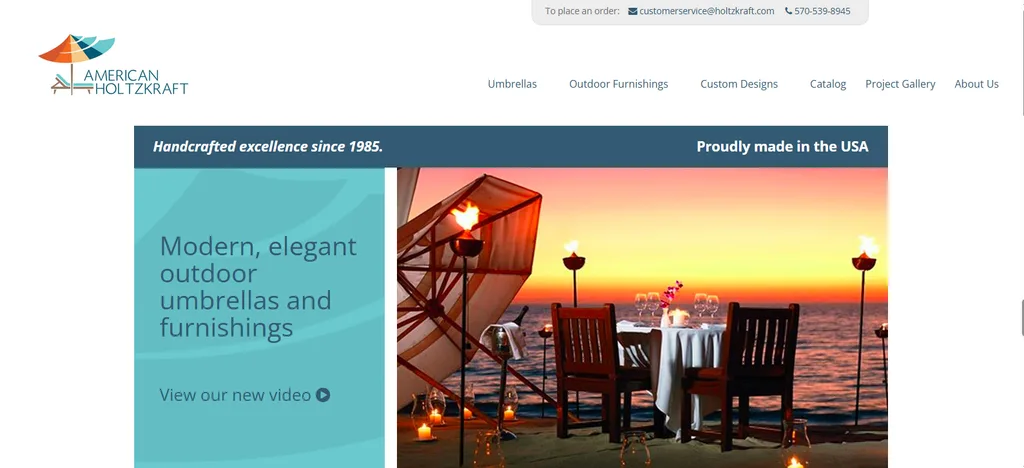
American Holtzkraft earns A-Level on published manufacturing language, not a flag graphic. The brand states its umbrellas are made in the USA and ties production to Pennsylvania craftsmanship. Its 74.5 mph wind-tunnel claim is the clearest performance number in this set.
That matters when you compare wood or classic commercial umbrellas against generic imports. Branded restaurant patios, hotel courtyards, and club terraces benefit most. Logo and design customization can match an existing visual standard, and the heritage story still sells in guest-facing spaces.
Before you shortlist, verify three items. Ask for the modern cantilever range, not just market umbrellas. Confirm the quoting process and lead time. Check refurbishment support for frames and canopies.
🛡️ Our Verdict: Treat 74.5 mph as the brand’s own published figure and ask what test conditions sit behind it: canopy on or off, mounting method, and exposure class. Request a sample canopy, ask what the frame looks like after two seasons, and make the wind number a line item in your RFQ.
Ask OGPSGroup about American Holtzkraft
5. Tuuci (B-Level)
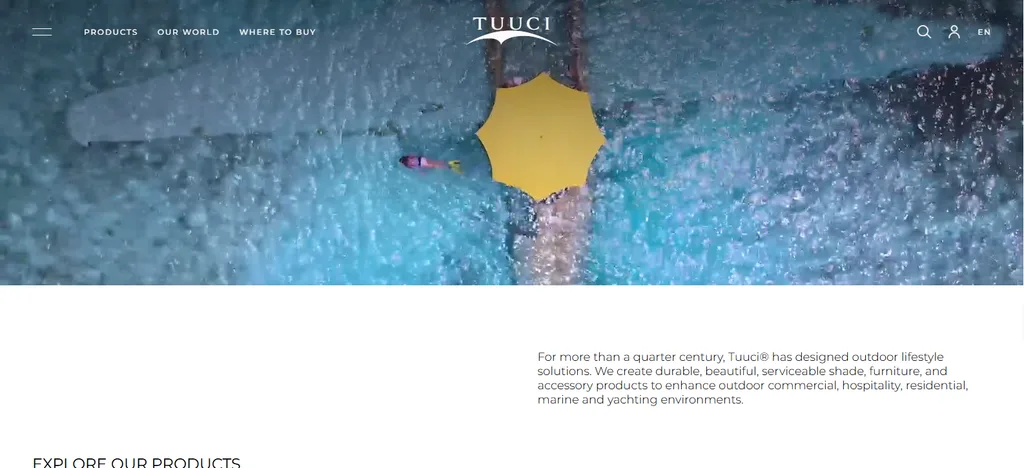
Tuuci fits design-driven hospitality projects that prioritize premium shade aesthetics and branding. It is not for buyers who need a pure domestic-only sourcing story.
Tuuci operates a Miami manufacturing center, and its own materials describe a production footprint across North America and Asia Pacific. That mixed geography is why it rates B-Level, not A-Level.
The upside: in-house branded parasol printing, so your logo goes on the canopy at the source. Best-fit projects: boutique hotels, rooftop bars, and restaurants where the umbrella carries the brand.
A mixed footprint is not automatically a weakness. It can improve capacity and cost on select lines. Your buyer task: pin down origin and assembly path for the exact commercial line you are quoting.
🛡️ Our Verdict: The Miami center is real, but do not assume every commercial umbrella in the catalog touches that floor. Request a written origin statement per SKU and map the assembly path before project sign-off.
6. Fiberlite Umbrellas (A-Level)
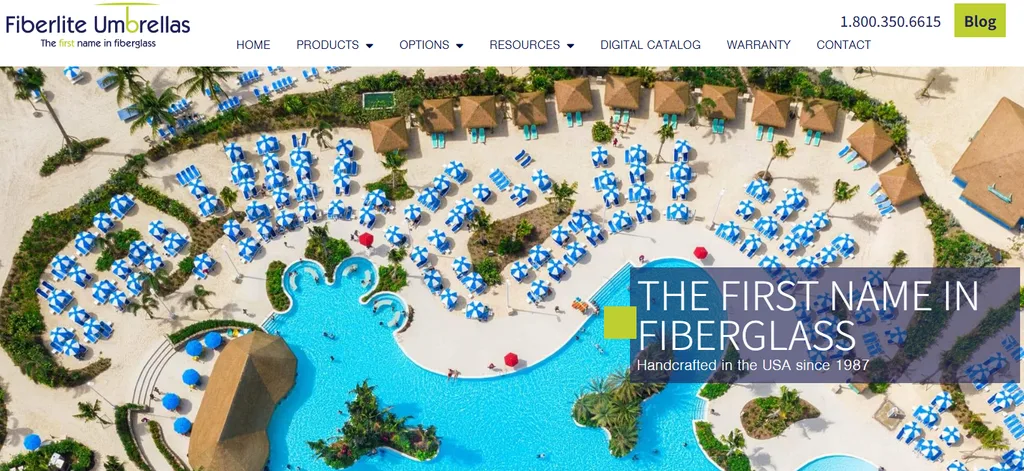
Fiberlite Umbrellas is the A-Level pick for commercial buyers after U.S. handcrafting and real fiberglass-frame expertise. The company claims the first U.S. patent for a fiberglass umbrella frame, a useful heritage signal for windy rooftop bars and coastal resorts.
According to the brand, components are sourced domestically and abroad, then hand-assembled in the U.S. That mixed sourcing keeps it A-Level rather than pure domestic.
Fiberglass ribs flex instead of snapping under gust loads, a property composite manufacturers rely on for wind-rated structures. For branded hospitality, Fiberlite offers logo canopy printing and custom fabric selection.
Verify warranty boundaries by collection. Ask for replacement rib pricing and lead times for custom logo runs, and get collection-level origin in writing before printing “Made in USA.” Confirm replacement-rib stock and warranty terms before you approve artwork.
Ask OGPSGroup about Fiberlite Umbrellas
7. Superior Shade (A-Level)
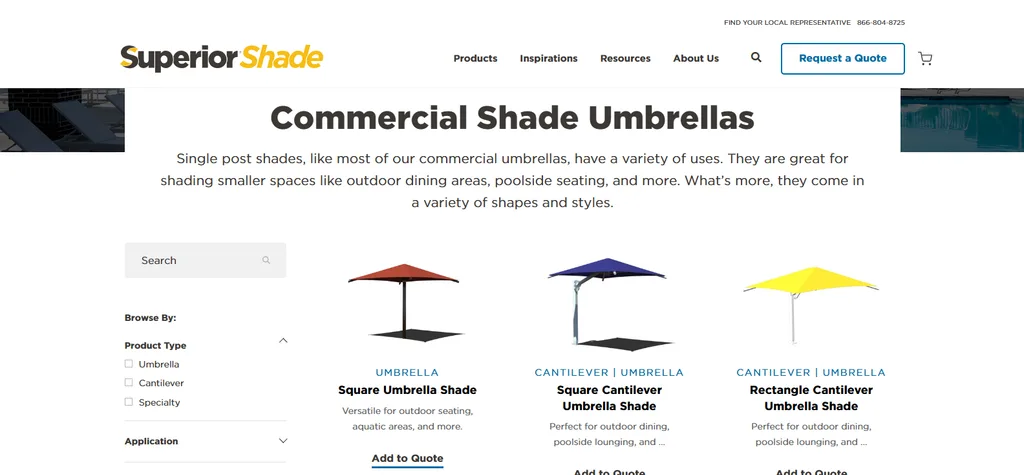
Superior Shade is one of the few suppliers in this set that leads on compliance before looks. It earns A-Level because it manufactures in Carrollton, Georgia and sells a commercial-only line. No decorative patio framing, no casual residential catalog. That engineered focus suits code-sensitive shade projects.
Two proof points matter to specifiers. Require strict fire compliance, and check for official NFPA 701 and ASTM E84 test reports. Its published wind-gust rating is high, but that number assumes the fabric is removed. Miss that caveat and you overstate the spec.
Best fit: municipalities, school districts, resorts, and parks departments. Before you issue a PO, confirm at model level:
- Which fire standard applies to your exact canopy fabric
- The gust rating with fabric installed
- Anchor and base plate specs for your substrate
Check fire language per SKU, never per catalog page. Suppliers swap fabric mills mid-season.
🧠 Expert Take: Ask for the current test report with your quote and read the date stamp.
Ask OGPSGroup about Superior Shade
8. Frankford Umbrellas (D-Level)
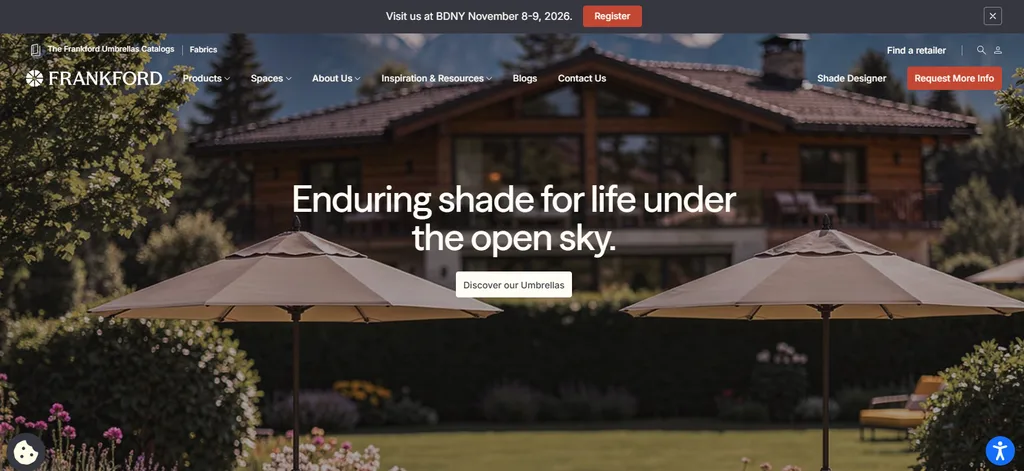
Frankford Umbrellas may be commercially attractive, but its website supports an assembly-in-USA story, not an unqualified U.S.-made claim. That gap lands it at D-Level on this ladder.
Two phrases on the site stand out. The company states a worldwide supply chain. It also names Mount Laurel, New Jersey as its assembly location.
Frankford is a respected U.S. assembler, and assembly is not domestic component manufacturing. That distinction matters in any domestic-versus-import comparison. The FTC treats assembly claims separately from all-or-virtually-all U.S. content.
- Consider Frankford if you need U.S.-based assembly and fast domestic support, and can accept globally sourced parts.
- Read warranty language. The published note that wind ratings are not part of the warranty matters in contract review.
- Ask origin questions for the exact frame and canopy configuration on your quote.
🛡️ Our Verdict: Get written origin confirmation for the frame and canopy before you print a domestic claim.
Ask OGPSGroup about Frankford Umbrellas
9. Greencorner (C-Level)
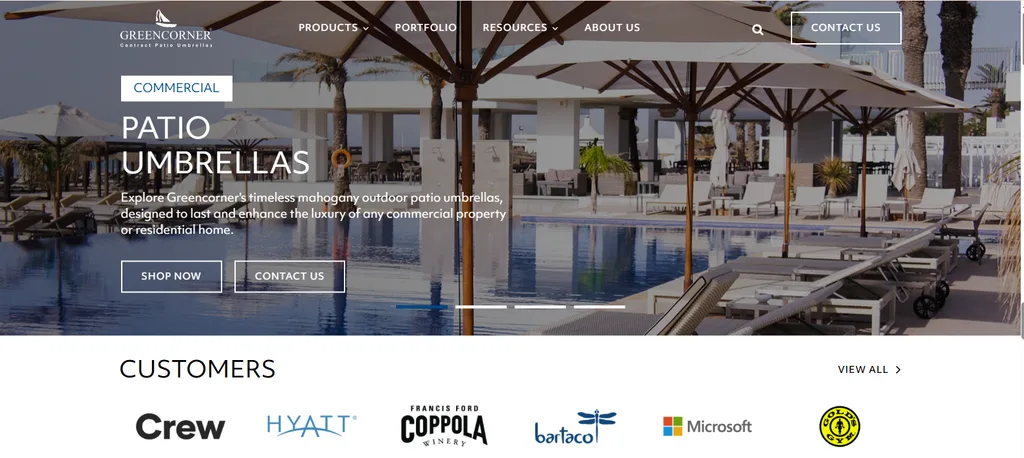
Greencorner is a split-origin supplier. It suits buyers who want U.S.-made canopies and bases but accept imported wood frames.
The brand states canopies and bases are made in the USA. Mahogany frames come from Tunisia. That mix keeps Greencorner at C-Level on this ladder. You get domestic soft goods; you do not get a domestic frame.
This fits classic luxury projects: hotel terraces, country clubs, heritage restaurant patios. The published 6-unit commercial order threshold signals whether Greencorner will prioritize your account.
Confirm four items in writing before you buy:
- Warranty terms on custom orders
- Replacement part lead times
- Frame-origin documentation per SKU, tied to the FTC Made in USA standard
- Long-term mahogany maintenance compared with a metal frame
🛡️ Our Verdict: The canopy may qualify as domestic; the frame will not. Get the origin trail in writing before you sign.
Ask OGPSGroup about Greencorner
10. Shade Systems (D-Level)
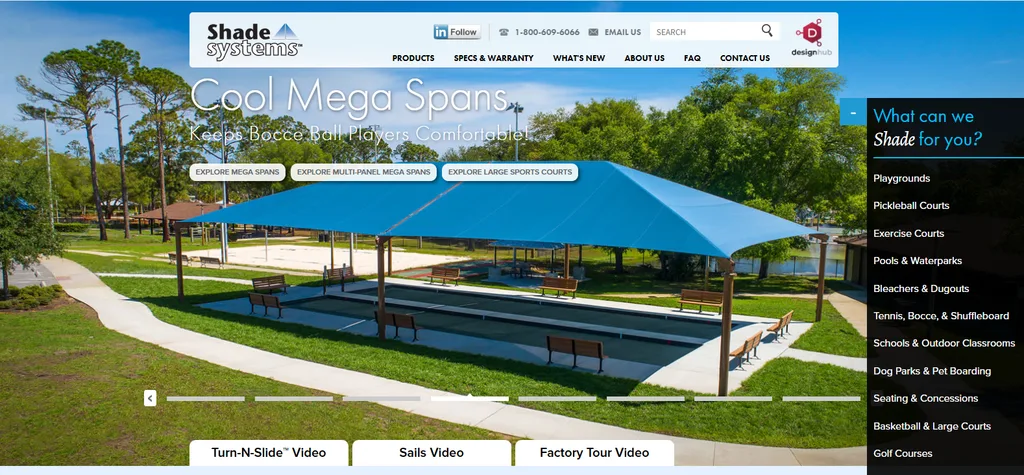
Shade Systems is a serious commercial shade player, but its umbrella line should not be called “Made in USA” without model-level confirmation. That gap lands it at D-Level.
The Florida plant and the manufacturing identity are clear. The umbrella-specific origin language is not. The company’s U.S. engineering and fabrication story is documented; the exact SKUs a buyer may source are not. That is what keeps it at this tier.
It still earns a spot on your shortlist. Engineering focus is strong. Published wind-speed figures help specifiers. Quick-ship programs matter for schools, parks, and institutional buyers.
Before you issue an RFQ, request three documents: production scope by product line, site-specific wind assumptions, and country-of-origin coverage for every component.
🛡️ Our Verdict: Shortlist Shade Systems for engineered commercial shade, not a blanket domestic claim. Make origin a line item, not an assumption.
Ask OGPSGroup about Shade Systems
Procurement Checklist and Made in USA Verification
Build Your Procurement Checklist
Use this checklist on every RFQ. It makes supplier answers comparable.
- Frame material and wall thickness: Ask for alloy grade and wall thickness. Set 2.0 mm as your minimum for commercial aluminum frames.
- Fiberglass vs. aluminum: Fiberglass ribs flex in gusts. Aluminum frames are stiffer and heavier. Pick fiberglass for coastal wind. Choose aluminum for longer spans, but only where you have solid anchors and base plates rated for the load.
- Wind performance: Ask for wind ratings tested with the fabric installed. A rating that assumes the canopy is off creates false security on coastal pools.
- Base requirements: Get anchor specs, base plate size, and substrate assumptions. Concrete vs. pavers changes the anchor.
- Fabric and UV: Ask for solution-dyed acrylic and 500+ hour UV test data. See our durability testing guide and quality testing methods.
- Fire code: Request NFPA 701 or ASTM E84 reports. Ask about CPAI-84 where it is project-relevant.
- Warranty and parts: Get warranty boundaries in writing. Confirm replacement rib and canopy lead times.
- Commercial terms: Lock lead time, MOQ, and branding capability. Ask for a logo print sample.
The biggest verification gap is model-level origin. A brand shows a U.S. factory photo, then quotes an imported SKU. Ask for the SKU in writing before you issue the PO.
Verify Made in USA Claims
Do not accept catalog-level answers.
- Ask for a model-specific country-of-origin statement per SKU.
- Confirm where final assembly happens. “Assembled in USA” is not “Made in USA.”
- Identify whether significant processing is domestic. Cutting, welding, sewing, and finishing count.
- Keep catalog pages and written origin claims in your procurement file.
For a vetted supplier shortlist and factory audit support, contact OGPSGroup, or see the imported side of the same comparison in our patio umbrella range.
People Also Ask About Patio Umbrella Manufacturers USA
1. What does “Made in USA” legally mean?
The FTC standard means all or virtually all of a product is made in the U.S. Final assembly and significant processing must happen here. Imported frames, canopies, or hardware can break the claim. Ask for a SKU-level statement and keep it with your quote.
2. Is “assembled in the USA” the same as “Made in the USA”?
No. Assembly is one step. A product can be assembled in New Jersey or Florida with imported frames and canopies. The FTC treats assembly claims separately from all-or-virtually-all U.S. content. Frankford sits at D-Level because it states a worldwide supply chain alongside its New Jersey assembly; Shade Systems sits there because its Florida plant is clear but its umbrella-specific origin is not. Verify the assembly path per SKU.
3. Which of these suppliers are strongest for luxury hospitality or branded projects?
Santa Barbara Designs fits bespoke luxury. Tuuci fits design-led hotels with in-house logo printing. American Holtzkraft fits classic branded patios. FiberBuilt fits windy pool decks. In each case, confirm origin by SKU before you print a domestic claim on a spec sheet.
4. Which publish the best wind, fire, or warranty details?
American Holtzkraft publishes a 74.5 mph wind claim. Superior Shade publishes NFPA 701 and ASTM E84 fire language. East Coast Umbrella publishes a 3-year top-to-bottom warranty. Read caveats closely. Superior’s gust figure assumes the fabric is removed. Ask for the report date, not just the logo.
5. When is a domestic-source umbrella worth more than an import option?
It wins when downtime costs more than unit price. East Coast Umbrella and Fiberlite support faster repair cycles and U.S. warranty contact. Import options win on standard jobs with long lead times. Run the math on replacement parts, freight, and lost terrace revenue before you approve either path.
6. What documents should a procurement team request before approving a commercial order?
Ask for a SKU-level country-of-origin statement, an FTC-style content breakdown, wind test data with fabric installed, current fire reports, warranty terms, replacement part lead times, and the assembly path. Put every requirement in writing before you issue the purchase order.

- Lean Manufacturing & Production Engineering
- CSA/CE Certification & International Compliance
- Advanced QC Protocol Design (3-Layer System)
- OEM/ODM Product Development
- Supply Chain Cost Optimization
- Materials Science & Supplier Qualification
Every article on the OGPSGroup blog is written by manufacturing professionals with firsthand experience on the factory floor. Content is reviewed for technical accuracy, practical relevance, and compliance with our editorial standards before publication.
Learn more about our Fact Checking Process and Editorial Policy.