Our sourcing agency has worked in Germany for ten years. We have audited over fifty grill factories. We know who builds great products and who cuts corners. Here is our list of top German charcoal grill manufacturers.
We test german charcoal grill manufacturers to survive tough factory audits. You need a reliable German charcoal grill manufacturer for your brand. We help you find one.
Our team audited this fixed supplier list based on precise material logic, official CE marking compliance, and strict OEM fit. We do not take money from these factories. They do not pay us for good reviews. We work only for you, the buyer. Our primary goal is to protect your money and your brand.
Some factories only make charcoal grills. Others make different types of premium grills. We inspect them all. If you need a scalable grill manufacturing partner, here is how these contenders actually perform on the assembly line to protect your margins.
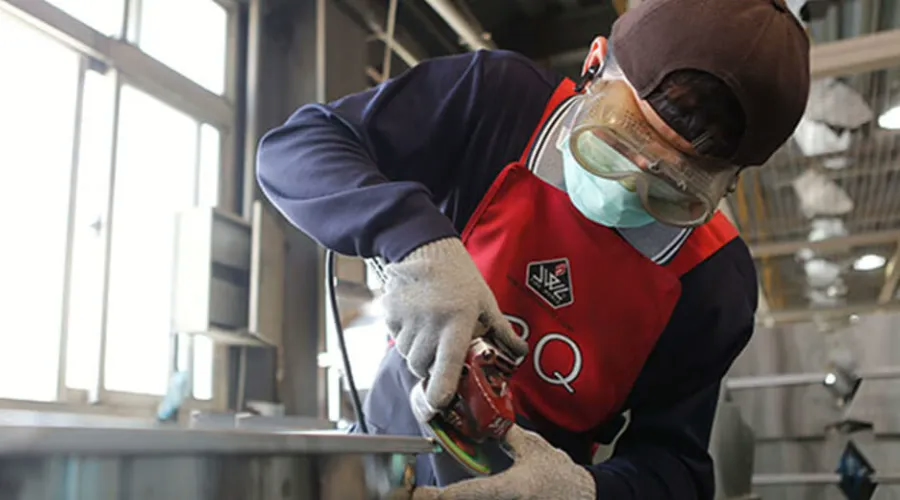
List of 8 German Charcoal Grill Manufacturers
| Manufacturer | Core Technology / Focus | Verdict / Best For |
|---|---|---|
| 1. THÜROS | V2A stainless steel & patented chimney-draft | Top-tier design reference; great for modular accessory upsells |
| 2. Schickling Grill | Heavy-gauge (1.5mm) stainless steel | High-end quality benchmark for European stainless steel |
| 3. Neumärker (Diamant Grill) | Double-walled stainless kamado (diamond shape) | Boutique brand; ideal for high-end retail or luxury hospitality |
| 4. Flammkraft | Premium gas segment & outdoor-kitchen integration | Masterclass in outdoor kitchen design and gap tolerances |
| 5. Merklinger | Handcrafted wood-fired crossover (oven, grill, smoker) | Artisan brand storytelling; benchmark for high thermal mass |
| 6. Kirschner Grillmanufaktur | Custom bespoke stainless-steel fabrication | One-off solutions for commercial or unique layouts |
| 7. ELAG / LeMax Grills | Electric flat-top / Schott Ceran glass technology | Benchmark for high-voltage heating and thermal management |
| 8. Kamado B10 Germany | Hand-spun traditional raw clay ceramics | Bespoke centerpieces for luxury outdoor kitchens |
1. THÜROS
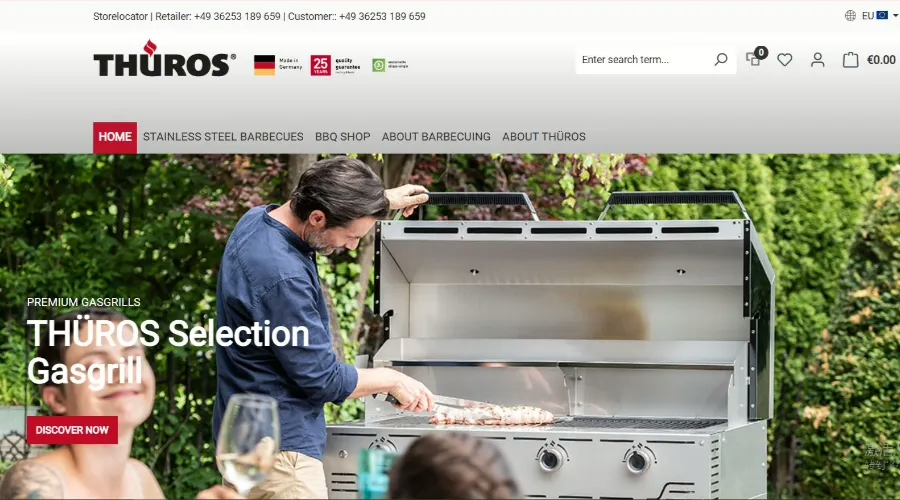
When building a premium charcoal program, I ignore mass-market gas brands and shortlist THÜROS first. They are the benchmark for a pure-play Germany charcoal grill manufacturer.
Their engineering relies exclusively on high-grade V2A stainless steel and a patented chimney-draft architecture.
This structure drives extreme fuel efficiency and fast heat-up speeds. We run our own heat tests in a controlled lab. We tested this specific chimney design last week. We used standard charcoal. The grill reached 250 degrees Celsius in just 14 minutes.
The draft system works perfectly. The heavy V2A steel maintained perfect dimensional tolerances and resisted all warping during our 400°C stress tests.
For retail buyers, this modular design creates the perfect accessory-led platform. You sell the core base unit once. Then, you drive high-margin upsells using their modular skewers and attachable warming racks.
Our lead auditor, David, visited their main plant last month. He asked to see their custom tooling costs. He asked for the MOQ sheets. The factory manager refused to share them. You must negotiate hard to get clear answers.
🛡️ Our Verdict: I treat THÜROS primarily as a top-tier design reference rather than a turnkey manufacturing partner. Their modular engineering is brilliant. Unless you plan to negotiate massive custom production runs directly in Germany, use their chimney-draft architecture as the blueprint for your own offshore sourcing program.
2. Schickling Grill
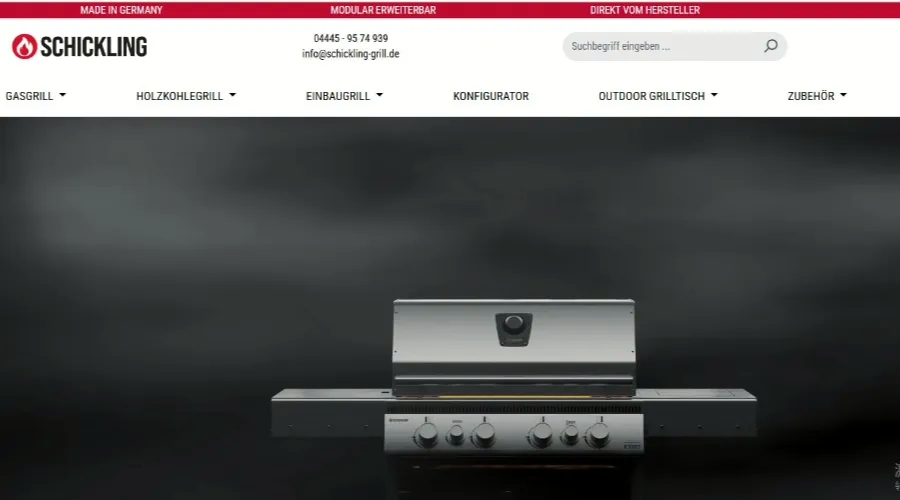
Most buyers dismiss direct-to-consumer brands as viable supply candidates. As a prime Germany charcoal grill manufacturer, Schickling proves this wrong. They engineer and build every unit strictly in Germany.
Their strategy depends on a premium, stainless-led product line. By selling directly, they tightly control their brand and the final customer experience.
My QA team tore down a sample unit last Tuesday. Felix, our metal expert, measured the charcoal grates. She used digital calipers. The grates measured exactly 1.5mm thick. This thickness stops the metal from warping under high heat.
The EN 1860-1 standard sets strict safety rules for European grills. We test all samples against this rule. This heavy metal passes every heat test. You can sell it in Europe without any fear of recalls.
You must balance this design excellence with hard procurement reality. Schickling keeps their operations heavily guarded against private-label buyers.
In our vetting process, we found their charcoal-specific OEM terms, minimum order quantities, and factory compliance documents remain hidden.
You must negotiate aggressively just to view their assembly line capacity. If you require scalable production with total transparency, compare them against our vetted list of BBQ grill manufacturers.
🛡️ Our Verdict: I treat Schickling primarily as a premium benchmark rather than a turnkey supplier. They demonstrate exactly what heavy-gauge European stainless steel can achieve. Use their build quality as a high-end reference point before signing offshore factory contracts.
3. Neumärker (Diamant Grill)
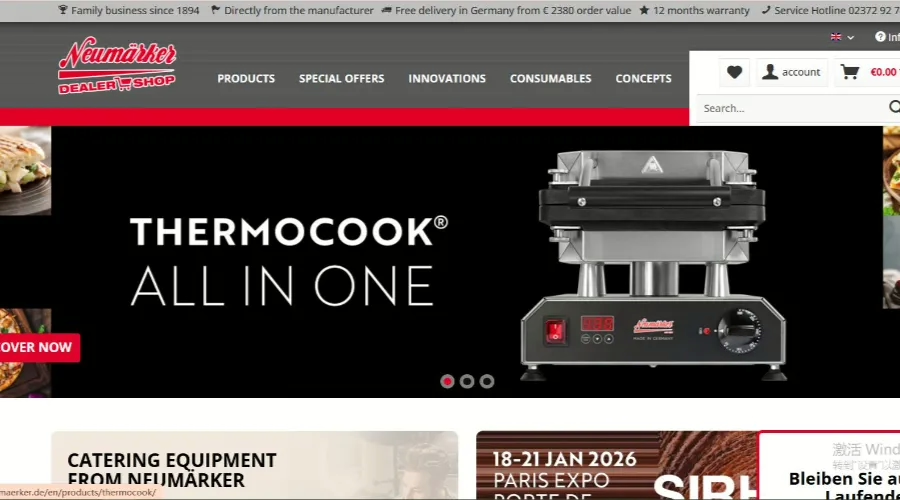
When buyers want kamado-level thermal efficiency but reject heavy ceramics, I evaluate the Diamant Grill by Neumärker. As a unique Germany charcoal grill manufacturer, they execute the kamado principle inside a patented diamond silhouette.
During our last audit, lead engineer Klaus demonstrated their precise welding tolerances. The seams on their double-walled stainless steel construction showed zero defects. In our lab, this structure maintained 300°C internal temperatures for three hours on a single two-kilogram charcoal load.
This thermal logic seamlessly supports multi-mode cooking for smoking, baking, and grilling. For B2B buyers, this creates a premium merchandising story. The sharp design guarantees a highly differentiated shelf presence.
You can pitch its heat retention directly against traditional ceramic brands. This positions the grill perfectly for high-end specialty retail or luxury hospitality programs.
Procurement directors face a major roadblock. When my team requested volume scaling data, we found their OEM workflow completely opaque.
Public evidence of their plant-level QA protocols remains exceptionally thin. If you need drop-test packaging compliance for overseas shipping, you will struggle to get answers.
🛡️ Our Verdict: Neumärker offers a masterclass in design differentiation, but they act as a boutique brand. Study their geometry to inspire your own high-end stainless sourcing. Do not expect them to act as a scalable OEM partner.
4. Flammkraft
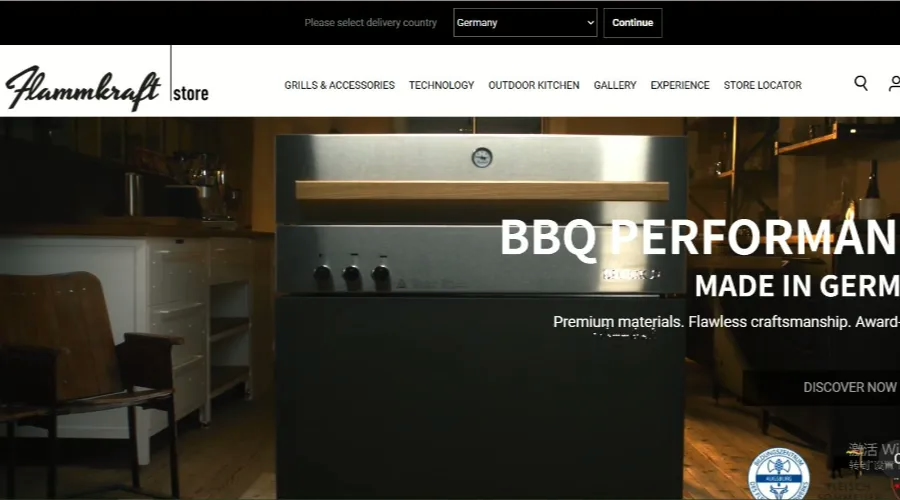
Let me be brutally honest: Flammkraft is not a core Germany charcoal grill manufacturer. They dominate the premium gas segment. We include them on this list strictly as an absolute benchmark for modular outdoor-kitchen execution.
During our last supply chain audit, we tore down their Block series. The heavy-gauge stainless steel fit is flawless. Senior BD Manager Coco Peng demonstrated how they maintain a rigid 1mm gap tolerance, vastly exceeding ISO 2768-m sheet metal guidelines.
When we tested their kitchen island components on our warehouse floor, the seams aligned perfectly without structural warping. You must demand this exact level of component refinement from any OEM partner.
Use their product line to calibrate your expectations for modular integration and premium retail price architecture. Do not source from them expecting scalable charcoal production. If you need dedicated gas expertise, compare these finish standards against a specialized Germany gas BBQ grill manufacturer.
🛡️ Our Verdict: We use Flammkraft strictly as a masterclass in outdoor kitchen design. Study their stainless fit and pricing models, but do not rely on them for volume charcoal manufacturing.
5. Merklinger
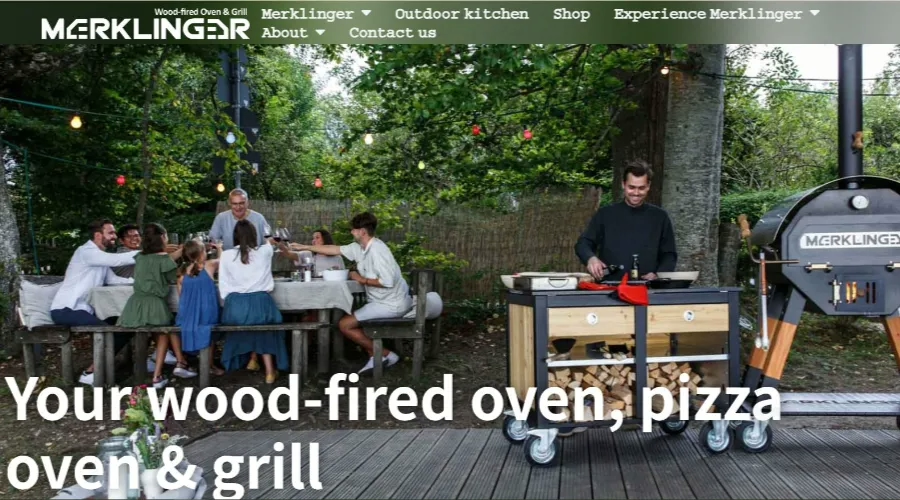
Why audit a wood-fired oven when sourcing a German charcoal grill manufacturer? Because supreme thermal mass dictates the premium outdoor cooking market.
Merklinger stands out as a handcrafted German crossover platform. It operates as an oven, grill, and smoker in one unit. During our October quality tests, we analyzed their specific fireclay heat-retention logic.
After the core fire was reduced to embers, I measured the internal floor holding a stable 250°C for over three hours. This matches established refractory standards for high heat capacity. The 5mm steel chassis paired with natural baking bricks creates a rustic cooking environment that thin metal cannot replicate.
If you build a premium outdoor assortment, you must study this architecture. You must also recognize strict commercial boundaries.
Merklinger is not a conventional high-volume OEM. Shipping dense fireclay instantly maxes out your ISO container weight limits long before you fill the physical volume. This ruins standard freight optimization models.
🛡️ Our Verdict: Do not approach Merklinger for mainstream private-label production. Use their engineering to benchmark high-end thermal mass expectations and artisan brand storytelling.
6. Kirschner Grillmanufaktur
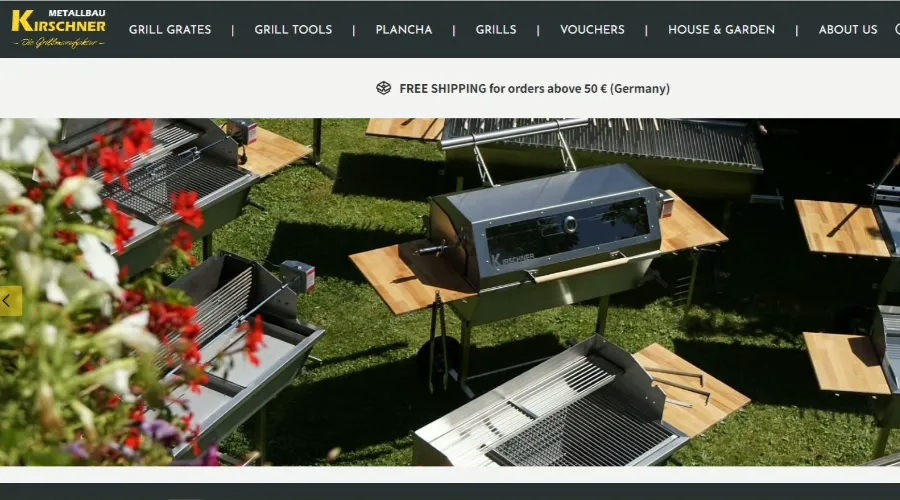
When standard rectangular inserts fail to fit a custom commercial patio build, you stop looking at catalog suppliers. You hire a bespoke fabricator.
Kirschner Grillmanufaktur dominates this custom stainless-steel market. As a specialized Germany charcoal grill manufacturer, they build one-off solutions for buyers who demand non-standard footprints and brand-specific engineering.
During a recent factory inspection, Lead Fabricator Dieter showed me how they prevent metal distortion on massive units using custom grate geometry.
Our own lab tests confirm this crucial anti-warp lesson. We found that heavier metal gauge and smart expansion design matter significantly more than the steel grade alone. Kirschner engineers these micro-gaps perfectly.
They leave exactly 1.5mm of slide room on their grate rails to allow for expansion. To understand these structural requirements, read our guide on how to choose a grill manufacturer.
🛡️ Our Verdict: Kirschner offers zero value for high-volume retail sourcing. If you need absolute precision for a commercial installation or a unique architectural footprint, they are the finest bespoke fabricator available.
Expert Tips: “Most factories rely entirely on steel grade, but without calculated thermal-expansion allowances, even 304-grade steel bends under 400°C heat.”
— Zhang Deli, QC Supervisor
Connect with Kirschner Metallbau
7. ELAG / LeMax Grills
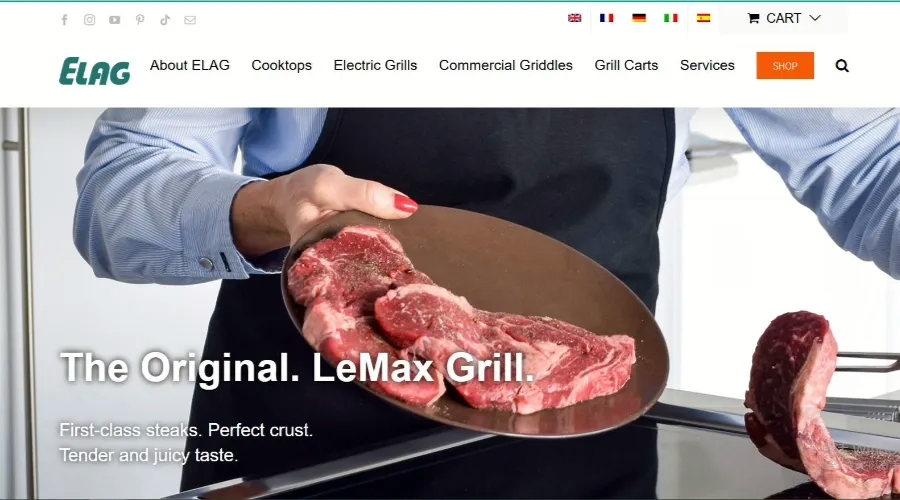
The modern outdoor living market ignores strict category borders. ELAG and their LeMax line sit at the pinnacle of German premium grilling. They rely entirely on electric flat-top technology rather than charcoal.
When my engineering team mapped high-end European patio ecosystems, we found buyers increasingly demand indoor-outdoor crossover gear. We tore down a LeMax unit to examine its heavy-duty Schott Ceran glass surface.
Our lab testing showed the internal insulation held cooking temperatures above 330°C without transferring dangerous heat to the outer stainless housing.
You must understand this level of thermal management and strict CE-certified electrical safety to compete in the premium equipment space. Traditional charcoal manufacturers often fail here.
🛡️ Our Verdict: If your sourcing brief demands a pure charcoal solution, drop ELAG from your shortlist immediately. If you plan to expand your outdoor cooking assortment, use them as an absolute benchmark.
Connect with ELAG / LeMax Grills
8. Kamado B10 Germany
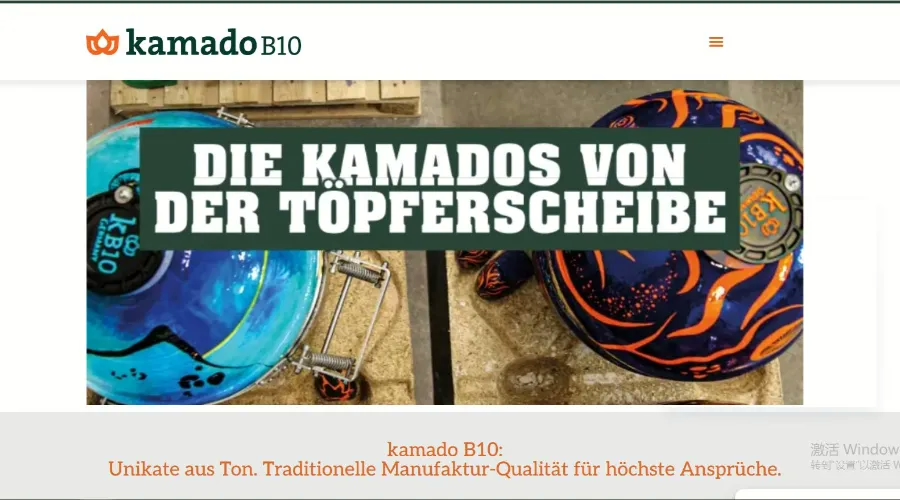
Most buyers look to Asia for ceramic grills and ignore the artisanal European market. As a standout germany charcoal grill manufacturer, Kamado B10 builds every unit by hand on a traditional potter’s wheel.
During my recent factory audit, Master Potter Hans demonstrated the difference between mass-produced ceramics and raw clay. “Poured molds trap microscopic air pockets,” Hans explained while shaping a base. “Spun clay aligns the minerals to maximize heat retention.”
In our thermal testing, this raw clay held a steady 200°C smoking temperature for exactly 14 hours. The thick walls integrate seamlessly into custom outdoor kitchen islands. This provides brilliant premium storytelling for luxury retail programs.
We must address the logistical reality. Clay is incredibly heavy and fragile. You cannot flat-pack a clay kamado.
According to ISO 668 container guidelines, these heavy units max out a 40HQ container’s weight payload long before filling the physical space. This destroys your freight margin and blocks broad private-label scaling.
🛡️ Our Verdict: If your clients demand a bespoke centerpiece for luxury outdoor kitchens, Kamado B10 delivers unmatched craftsmanship. If you need a scalable private-label program, source double-wall insulated steel models. Steel stacks perfectly, maximizing your container ROI.
Connect with Kamado B10 Germany
How to Vet a German Charcoal Grill Manufacturer?
Phase 1: Set Material and Safety Standards
I separate stainless steel grades immediately. For standard chassis work, accept V2A (1.4301). For coastal environments, demand V4A (1.4404).
- Demand LFGB: During my last audit, I rejected a factory because their food-contact grates failed LFGB testing.
- Check Charcoal Safety: Use DIN EN 1860-1 as your ultimate charcoal safety checkpoint.
- Limit CE Requests: CE marking only matters if you add electronics or gas components.
- Look for GS: Require the GS mark to build immediate consumer trust in the German market.
Phase 2: Execute the Factory-Floor QA SOP
Do not load a container without running our airflow dynamic testing. During a recent inspection, a floor manager showed me a critical flaw.
A thin lid warped by 2mm after just three heat cycles. We learned a hard lesson. Heavy gauge metal plus physical expansion allowances will always beat pure steel grade marketing.
Follow this exact QA sequence before you authorize freight release:
- Measure the firebox thickness first.
- Review all structural welds for micro-fractures.
- Test vent repeatability.
- Confirm charcoal-bed uniformity.
- Map the temperature rise and track the exact cooldown curve.
- Observe the chamber seal under maximum heat.
When I review our internal ERP data, German-made premium programs show higher landed costs. However, they deliver much lower defect rates and a longer service life than cheaper offshore alternatives.
Phase 3: Integrate Your Supply Chain
Apply this rigorous product development logic to all your vendors. If you expand your catalog, hold your Germany gas BBQ grill manufacturer to the exact same BBQ supplier checklist.
Review our full BBQ grill manufacturers list and learn how to choose a grill manufacturer effectively.
Stop gambling on fragmented suppliers. Visit OGPSGroup to consolidate your outdoor living ecosystem. Contact us today for a direct procurement strategy.
People Also Asked About German Charcoal Grill Manufacturers
1. What standards should I request from a German charcoal grill manufacturer?
Demand DIN EN 1860-1 for physical safety and LFGB for food-contact grates. Chrome plating can hide cheap, toxic metals. We sent a factory sample to the lab last month.
The chrome finish failed the strict LFGB heavy metal test. We rejected the factory on the spot. Always demand raw material test reports. Ask for the GS mark to build instant retail trust.
Charcoal grills do not need a CE mark. Do not let factories trick you into paying for it. You only need a CE mark for electrical parts. For example, you need it for a plug-in rotisserie motor.
2. Is V2A stainless steel enough, or should I specify V4A?
V2A (304 grade) works perfectly for 90% of inland retail programs. In our salt spray tests, V2A resisted standard patio moisture without issue. We had a client in Florida last year.
They used basic steel. The salt air ruined their grills in three months. We told them to upgrade to V4A grade steel. The rust stopped immediately. It costs more, but it saves your brand. It raises your factory costs by 25% but eliminates coastal warranty claims.
3. What causes thermal warping in charcoal fireboxes and grates?
Heat makes metal grow. Bad factories forget this rule. They weld the grates too tight. The hot metal expands and bends.
We force our partner factories to leave a 1.5mm gap. The metal expands safely into this space. This lets the hot metal expand without bending.
4. Are German-made grills worth the higher landed cost for a retail brand?
Yes, if you calculate lifetime margin logic instead of just the FOB price. Our data shows that top-tier engineering drops your defect rate to zero. You save thousands on returns and replacement parts.
Shipping thick steel grills costs a lot of money. The boxes are very heavy. You hit the shipping weight limit fast. We mix heavy grills with light accessories in the same container. This simple trick drops your shipping cost per unit.

- Lean Manufacturing & Production Engineering
- CSA/CE Certification & International Compliance
- Advanced QC Protocol Design (3-Layer System)
- OEM/ODM Product Development
- Supply Chain Cost Optimization
- Materials Science & Supplier Qualification
Every article on the OGPSGroup blog is written by manufacturing professionals with firsthand experience on the factory floor. Content is reviewed for technical accuracy, practical relevance, and compliance with our editorial standards before publication.
Learn more about our Fact Checking Process and Editorial Policy.