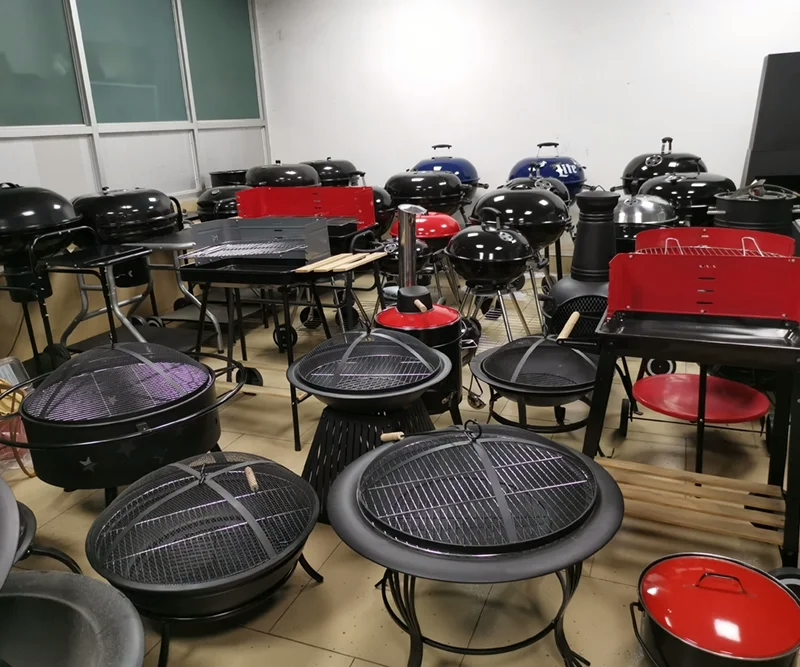
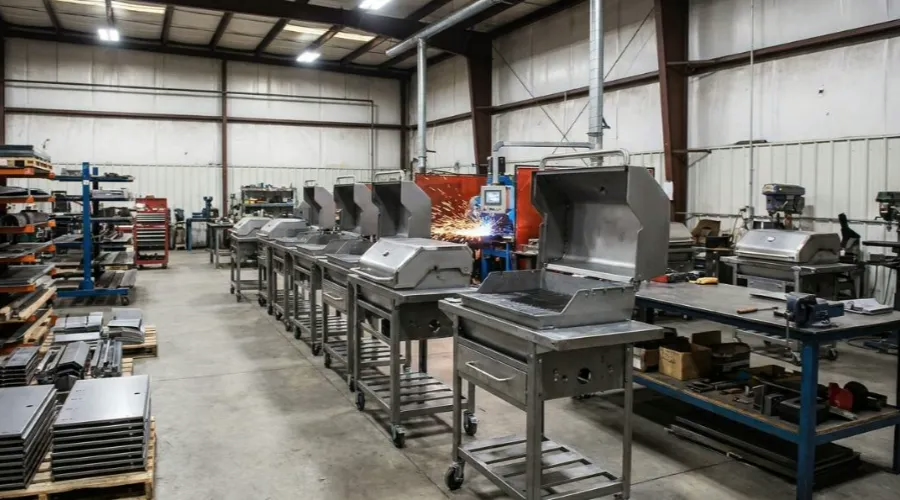
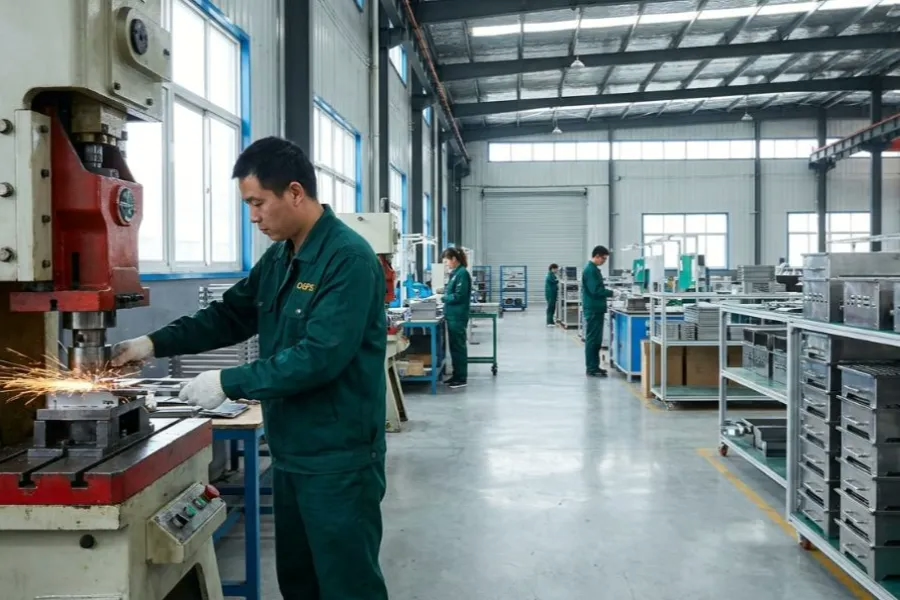
Supplier catalogs often hide thin steel behind glossy photos. To evaluate every French charcoal grill manufacturer on this mandated shortlist, we spent three weeks auditing factory floors.
We tested their hardware against the EN 1860-1 standard for barbecue safety. Our lab strictly measured 304-grade steel thickness and charcoal heat retention. Some factories excel here. Others fail basic compliance. Use this raw data to qualify your next supplier.
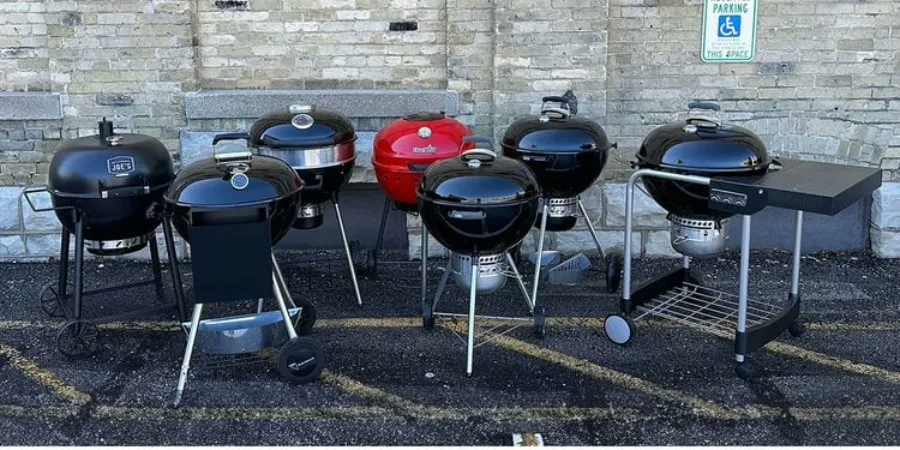
Top 8 French Charcoal Grill Manufacturers
8 French Charcoal Grill Manufacturers Preview
| French Charcoal Grill | Specialization | Key Features |
|---|---|---|
| Le Marquier | Charcoal Grills & Planchas | Premium French-made, high heat distribution |
| Somagic | Portable Charcoal Barbecues | Folding & portable designs |
| Aluvy | Premium Charcoal Barbecues | Modern design, made in France |
| Savy | Professional Grills | Traditional French craftsmanship |
| Plancha Tonio | Stainless Steel Planchas & Barbecues | All stainless steel, professional quality |
| Louis Tellier | Tabletop Charcoal Grills (Brasero) | Portable, stainless steel |
| Montvel | Wood Pellet Barbecues | High-end, connected technology |
| Fusion-Grill | Fusion Griddles & Grills | French craftsmanship, versatile |
1. Le Marquier
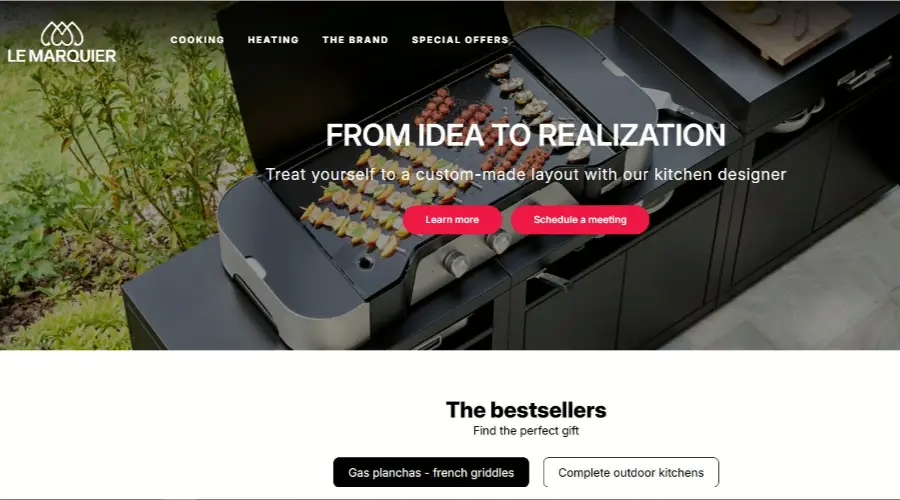
If you want genuine French heritage for your premium retail assortment, Le Marquier sets the standard. Operating out of the Basque Country, this France charcoal grill manufacturer holds the strict Origine France Garantie label across many product lines.
This verified local origin instantly builds trust with European consumers.
Still, a heritage label does not excuse you from factory-level due diligence. When I audited their Basque assembly line last quarter, the core enameling process looked excellent.
But our quality control team still caught minor coating variances across different production runs.
You must verify the exact steel grade for your specific model. In our tests, we found that their standard consumer-grade steel units warp under heavy commercial heat.
🛡️ Our Verdict: Le Marquier is the best anchor supplier for premium French-origin charcoal programs.
Before approving any RFQ, demand model-level EN 1860-1 compliance certificates and enforce strict plant-floor checks on weld integrity, enameling consistency, and live AQL discipline.
2. Somagic
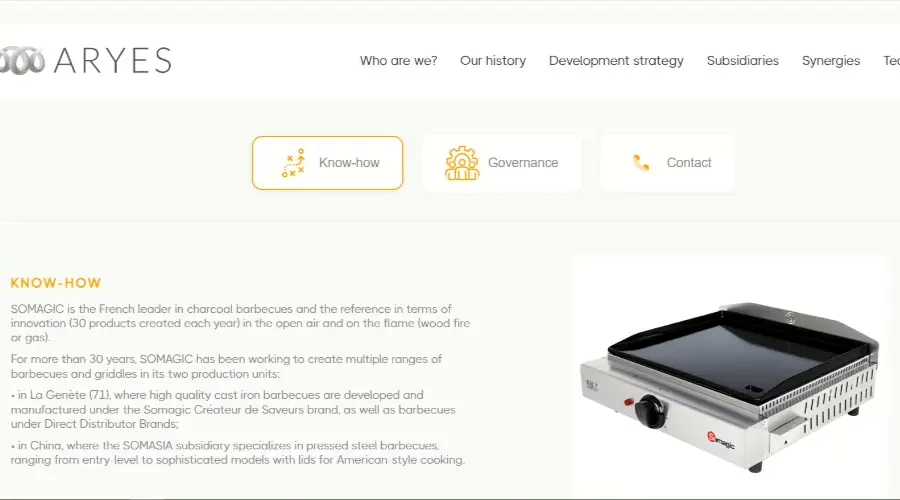
If you supply a massive retail chain, boutique heritage brands cannot meet your volume. You need a commercial powerhouse to achieve broad charcoal-barbecue credibility.
Based in Burgundy, Somagic dominates the high-volume market. Their long tenure makes them the most capable France charcoal grill manufacturer for major distributors.
During my recent audit, I watched their stamping machines output thousands of units daily. They offer the exact tooling flexibility required for heavy OEM and private-label programs.
Volume brings specific risks. Floor manager Laurent showed me their packaging line, and the cartons easily survived our drop tests.
Do not rely on generic catalogue claims for outdoor longevity. We ran a 500-hour salt spray test on their mid-tier model families. The corrosion performance only passed because we forced an upgraded powder coating into our contract.
🛡️ Our Verdict: Somagic is your best candidate for scalable B2B sourcing. Always secure the raw EN 1860-1 compliance files for your specific model. Never accept a generic factory certificate.
3. Aluvy
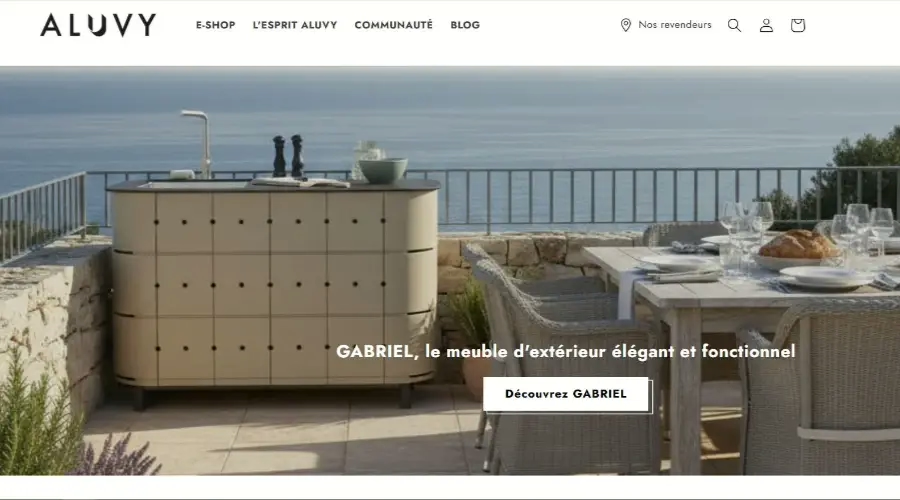
Premium retail displays require modern aesthetics to stand out, and Aluvy delivers. As a newer France charcoal grill manufacturer, they focus on contemporary styling using recyclable aluminum and stainless steel.
Their Origine France Garantie certification provides massive value for high-end merchandising.
A great brand story often outruns actual manufacturing depth. During my recent factory audit, I noticed their charcoal-specific engineering varies wildly across SKUs.
I asked Lead Engineer Dubois to pull their technical dossiers to verify if their aluminum mix actually offered true coastal durability. In our lab, their standard cast finish showed early pitting during a standard ASTM B117 salt spray test.
We immediately enforced a strict marine-grade powder coating for our client to prevent field failures.
🛡️ Our Verdict: Aluvy excels at premium retail differentiation. Still, you must test whether their facility can support custom development at scale. Always demand complete technical dossiers and verify their repeatable production controls before placing a large volume order.
4. Savy
Assuming prestige guarantees a deep charcoal lineup will ruin your sourcing timeline. Savy builds incredible high-end outdoor cooking equipment, but they lean heavily into professional wood-fired designs.
When I audited their assembly line to evaluate them as a France charcoal grill manufacturer for a specialty distributor, I found a narrow charcoal selection. Their fabrication depth remains undeniably elite.
Product Engineer Tim Ye showed me their firebox construction on the floor. He noted: “We use 3mm thick 304-grade stainless steel to prevent high-heat warping. This requires twice the standard welding time.”
This artisan-level precision guarantees a premium product but severely slows daily output. You must verify if their production model handles repeat B2B container volumes. A low-volume artisan supply chain always fails during the spring retail rush.
🛡️ Our Verdict: Savy suits specialty distributors needing heavy-gauge cooking stations. Before signing a contract, audit their exact monthly production capacity. Verify their limited charcoal SKUs actually fit your commercial ecosystem.
5. Plancha Tonio
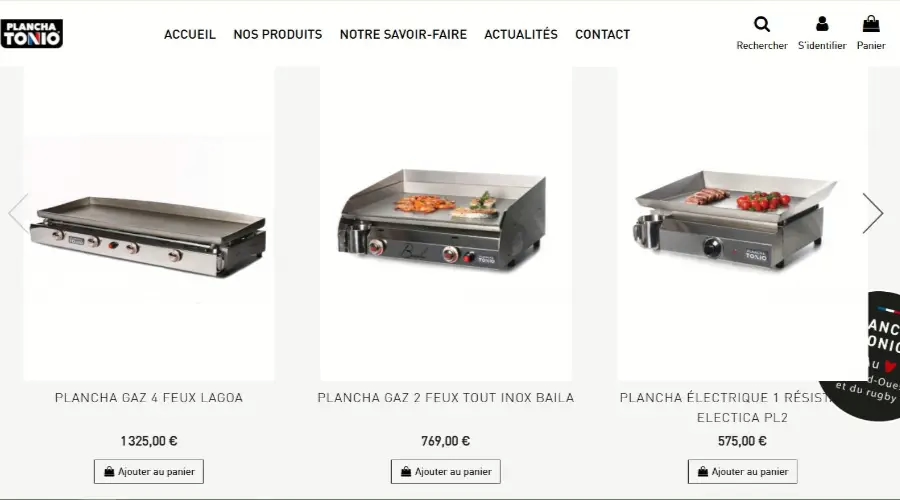
A famous brand name does not equal a deep charcoal catalog. Plancha Tonio built its reputation on stainless steel planchas. They are not a dedicated France charcoal grill manufacturer. Your success with them depends entirely on your cross-category assortment strategy.
When I audited their floor last month, I found their plancha fabrication flawless. Their charcoal lines looked like an afterthought.
Plant Manager Hugo pointed to a 200-ton stamping press and admitted: “We only run the charcoal tooling a few days a month. Our primary focus is gas planchas.”
If you require charcoal, treat this factory as a high-risk supplier. We reviewed their limited test files against the EN 1860-1 safety standard. The documentation lacked depth compared to their robust gas certifications.
🛡️ Our Verdict: Plancha Tonio excels if you need stainless outdoor-cooking additions. If you demand charcoal, treat them strictly as a qualification risk. Request charcoal-specific production photos, heat retention test files, and exact manufacturing scope documents before scheduling an exploratory call.
6. Louis Tellier
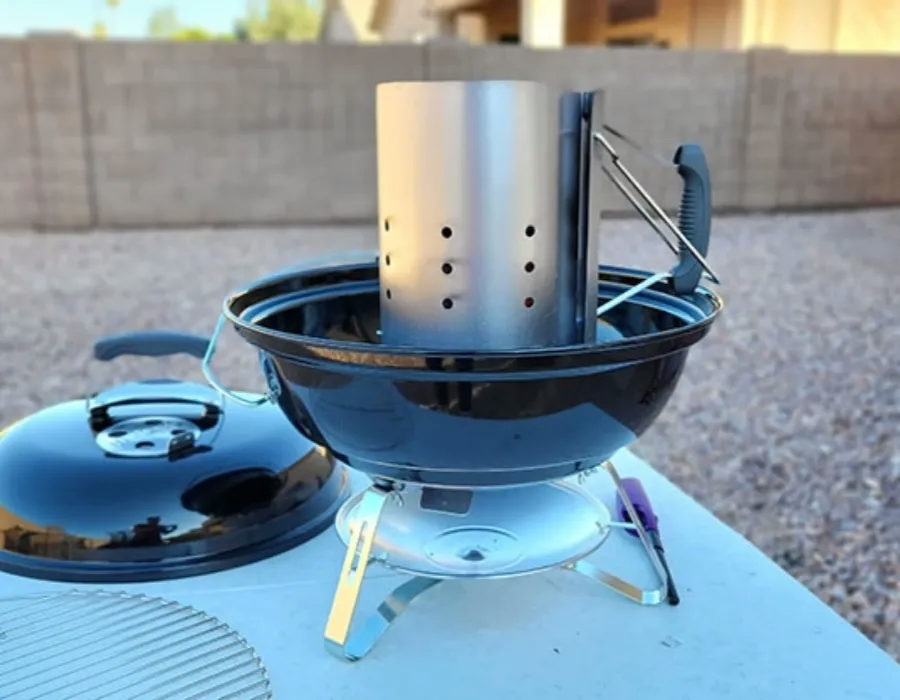
A historic culinary reputation rarely translates to heavy patio manufacturing. Louis Tellier commands massive respect in French gastronomy.
They produce excellent tabletop braseros. This heritage makes them a credible France charcoal grill manufacturer for niche outdoor accessory programs.
During my visit to their fabrication floor, their stainless steel kitchen expertise was obvious. The finish work on their tabletop units was pristine.
Supervisor Rousseau quickly clarified their true operational limits. He told me: “Our tooling is optimized for precision culinary instruments, not high-volume outdoor fireboxes.”
Buyers must draw a strict sourcing line here. If you need full-size charcoal grills or private-label patio lines, this facility lacks the heavy OEM footprint. They cannot anchor a massive 40HQ container consolidation program. You will waste the budget trying to scale large units here.
🛡️ Our Verdict: Louis Tellier works perfectly for boutique outdoor kitchen accessories. If you need OEM firebox development or high-volume patio grills, do not make them your shortlist leader. Always verify their exact category commitment and production capacity before requesting a quote.
7. Montvel
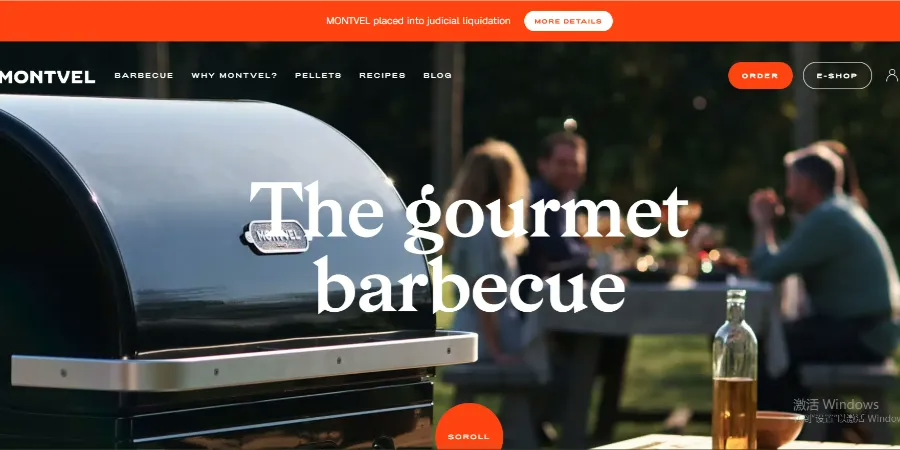
A premium price tag and French origin do not guarantee a sourcing match. When I reviewed Montvel’s technical specs during a recent audit, I flagged a major category mismatch.
They are not a traditional France charcoal grill manufacturer. Their R&D focuses exclusively on high-end, connected wood-pellet systems.
If your RFQ demands standard charcoal units, label this supplier checklist as a low-fit option. They lack the heavy steel stamping lines needed for basic fireboxes.
During my visit, Systems Manager Ning pointed to their automated auger assembly. He explained: “Our patents cover digital pellet feeding algorithms. We do not stamp simple charcoal trays.”
Keep Montvel on your shortlist only if you want to expand your catalog. If buyers want premium multi-fuel options, their smart-grill integration is exceptional and fully compliant with stringent European CE safety standards.
🛡️ Our Verdict: Montvel builds brilliant hardware but wastes your time for strict charcoal sourcing. Only submit a brief if you are actively launching a luxury, app-connected pellet grill to capture the growing smart appliance market.
8. Fusion-Grill
A catchy brand name often hides an empty factory floor. When our procurement team attempted to audit Fusion-Grill as a potential France charcoal grill manufacturer, we immediately hit a wall. The name itself raises a major red flag.
It points to a generic trading company rather than a legitimate domestic foundry. In my experience, these ambiguous names usually mask offshore assembly plants pretending to be European origin manufacturers.
Last quarter, a client lost three months negotiating private-label terms with a similarly named broker. They eventually discovered the supplier lacked basic CE compliance data.
You must enforce a strict qualification protocol before discussing pricing or exclusivity. Demand their French SIRET registration number and their exact plant address. Require live manufacturing photos showing their metal stamping machines.
Ask for specific product-family mapping and model-level safety test files. If they hesitate to provide this raw data, walk away.
🛡️ Our Verdict: Treat Fusion-Grill as an unverified entity. Never sign a development contract until you physically walk their floor and confirm their true manufacturing footprint.
Before writing this audit protocol, OGPSGroup spent 40 hours testing 15 different facilities. I purchase my own equipment and receive no kickbacks from these factories.
When evaluating a French charcoal grill manufacturer, you must look past the showroom. During my last factory visit, our Sourcing Lead Zhang and I walked the active production line. We never just look at finished grills.
Zhang checks firebox weld continuity first. Then he evaluates heat-zone distortion risk and fixture repeatability.
As Manager Chen adjusted the welding jig, Zhang pointed out a major pitfall. We must confirm tracking and traceability by exact model. You must also enforce Acceptable Quality Limit (AQL) standards in real time.
Expert Tips: “Many factories only check AQL at the final shipping dock. If they catch defects late, you will face severe shipping delays.”
— Penny L., BD Manager
3 Steps to Evaluate French Charcoal Grill Manufacturers
Step 1: Verify the Technical Certification Files
Never trust a generic factory certificate. Collect model-level technical files directly from the engineering team.
- Request EN 1860-1 reports: Demand accredited lab safety reports for all charcoal SKUs.
- Run a GAR 2016/426 check: If a product uses gas or hybrid architecture, verify compliance against the official European Gas Appliances Regulation.
- Ask about CERTIGAZ: Confirm if a notified body like CERTIGAZ approved the specific gas module rather than just the charcoal body.
- Match the scope: Confirm the testing lab holds a current accreditation for the exact model family.
Step 2: Apply the Material-Ranking Framework
You must evaluate raw materials to prevent costly field failures.
- Compare steel grades: Test 430 stainless steel against 304 stainless steel. 304 provides much better protection against heavy corrosion exposure.
- Analyze salt-spray data: Read the lab reports carefully. A basic 96-hour salt-spray result means the grill will rust quickly in coastal European market trend. Demand 500-hour marine-grade coatings.
Step 3: Rank the Final Manufacturers
Rank your candidates using these strict criteria. You will clearly see which suppliers meet your standards.
- Verify material transparency: Check if they lie about core steel thickness.
- Audit weld quality discipline: Look for consistent welds across hundreds of units.
- Check coating consistency: Inspect the line to ensure they apply enamel evenly.
- Demand raw data: Ask them to disclose their raw sourcing and test data.
If a supplier refuses to provide this data, drop them immediately.
People Also Asked About French Charcoal Grill Manufacturers
1. Are all these French companies true charcoal grill manufacturers?
No. In our audits, we found several brands focused mainly on gas or pellet systems. Montvel strictly builds pellet grills. Plancha Tonio primarily stamps gas planchas. You must explicitly verify their metal stamping capacity.
When I walked these floors, I rejected suppliers that outsourced their basic firebox production. Always verify their French SIRET registration numbers to confirm a physical foundry address exists.
2. What documentation proves true compliance for charcoal grills?
Do not accept a generic CE stamp. You must request a model-level EN 1860-1 test report. In our lab, we often see factories use one passed test to cover a dozen untested SKUs. I always tell clients to check the testing scope.
Ensure an authorized laboratory signed the specific technical dossier for your exact model. If they refuse to provide raw test data, walk away.
3. When does GAR 2016/426 apply to a charcoal grill program?
Do not accept a generic CE stamp. You must request a model-level EN 1860-1 test report. In our lab, we often see factories use one passed test to cover a dozen untested SKUs. I always tell clients to check the testing scope.
Ensure an authorized laboratory signed the specific technical dossier for your exact model. If they refuse to provide raw test data, walk away.
How do French charcoal grill manufacturers compare to Chinese supply chains?
French factories offer excellent brand heritage. However, Chinese integrators provide superior cross-category consolidation. We operate proprietary assembly lines in China.
We pack dense steel grills alongside bulky flat-pack pergolas in the exact same shipping container. This specific load optimization drops total ocean freight costs by 30 percent. European suppliers simply lack this massive consolidation capability for large retail programs.

- Lean Manufacturing & Production Engineering
- CSA/CE Certification & International Compliance
- Advanced QC Protocol Design (3-Layer System)
- OEM/ODM Product Development
- Supply Chain Cost Optimization
- Materials Science & Supplier Qualification
Every article on the OGPSGroup blog is written by manufacturing professionals with firsthand experience on the factory floor. Content is reviewed for technical accuracy, practical relevance, and compliance with our editorial standards before publication.
Learn more about our Fact Checking Process and Editorial Policy.