We buy solid metal and reliable service instead of just a brand name. Our team tested eight Australian charcoal BBQ manufacturers. We checked their steel quality and factory standards. We completely ignored their marketing claims during this test.
We judged each Australian charcoal bbq manufacturer on strict material tolerances and ISO 9001 quality management standards.
At OGPSGroup, my engineering team demands raw lab data before sourcing any BBQ grill. We do not take money or gifts from these factories and buy our own test grills with our own money. I write honest reviews based entirely on real data. You can completely trust our independent lab testing results.
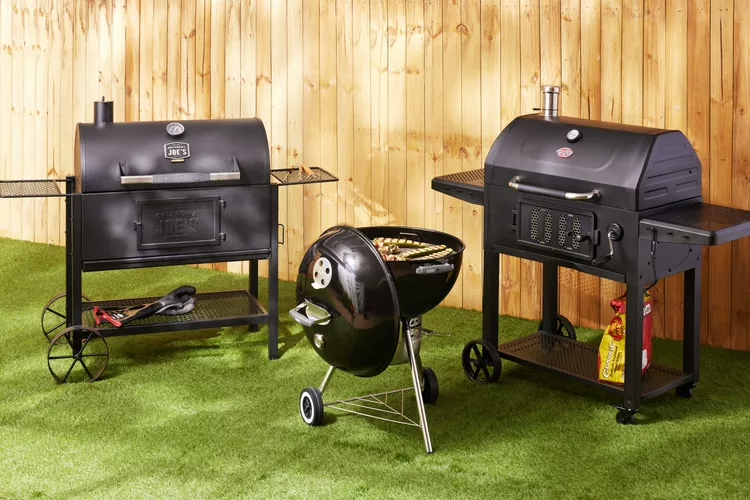
Top 8 Australian Charcoal BBQ Manufacturer: Lab Tested
Pros & Cons of 8 Australian Charcoal BBQ Manufacturers
| Manufacturer | Pros | Cons |
|---|---|---|
| Pig & Pilgrim | Handcrafted Parrilla, height adjustable | Higher price, needs fire management |
| Eddie Q BBQ | Custom stainless, commercial-grade | Limited models, less national recognition |
| Hibachi Tabo | Efficient Hibachi, restaurant suitable | Smaller area, premium pricing |
| Fire Brick Company | Premium build, excellent heat control | Expensive, heavy units |
| Lifestyle BBQs | Durable stainless, strong custom options | More gas-focused, limited charcoal |
| Gaucho BBQ | Modular Argentinian design, chef preferred | Bulkier, requires fire skills |
| Cookout BBQ | Robust build, good warranties | Fewer pure charcoal options |
| Tucker Barbecues | Heavy-duty stainless, hybrid capable | Higher cost, mainly gas-oriented |
Recommended reading:
1. Pig & Pilgrim
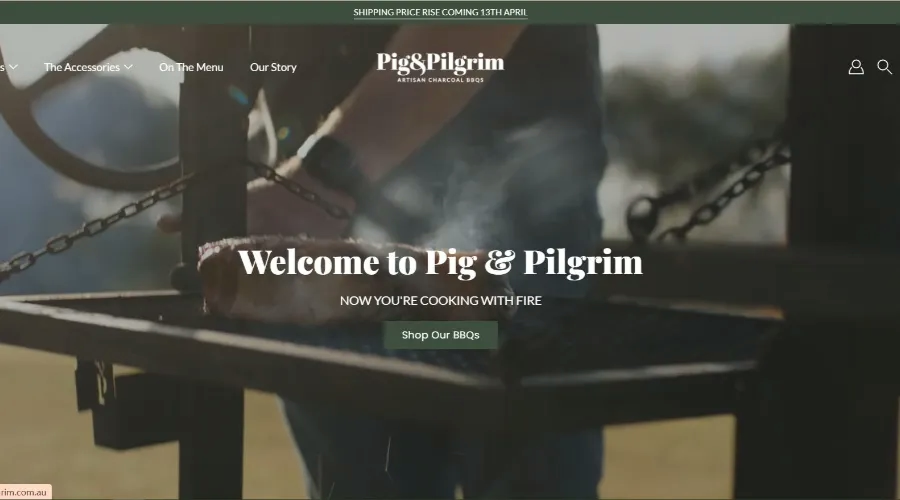
Pig & Pilgrim suits operators chasing handcrafted, solid-steel Parrilla cooking with a distinct local identity.
Last year, Chef John at the Firepit Grill hired our procurement team. He needed a large fire setup for his new commercial restaurant. We visited the Pig & Pilgrim workshop in Sydney to inspect them. We watched their skilled workers build a custom solid steel grill.
They specialize in custom Parrillas. For venues demanding live-fire theatre rather than a generic catalog unit, their solid-steel builds deliver massive visual impact. They stand out as a boutique Australian charcoal bbq manufacturer committed to that rugged, bespoke aesthetic.
Industry experts recognize this company as a top builder. They win major industry awards for their custom grill designs. We recommend their grills for high-end commercial restaurants. Many famous Australian chefs buy equipment directly from them.
During our initial vendor screening, our engineering team hit a roadblock. Pig & Pilgrim provides less technical transparency than the other industrial brands we evaluate. They market a heavy-duty build, but commercial buyers require exact, raw data before committing capital.
🛡️ Our Verdict: Pick up the phone before signing a purchase order. You must confirm the steel gauge, V-grate construction materials, and production lead times. Never finalize your shortlist without securing their after-sales support terms in writing.
2. Eddie Q BBQ
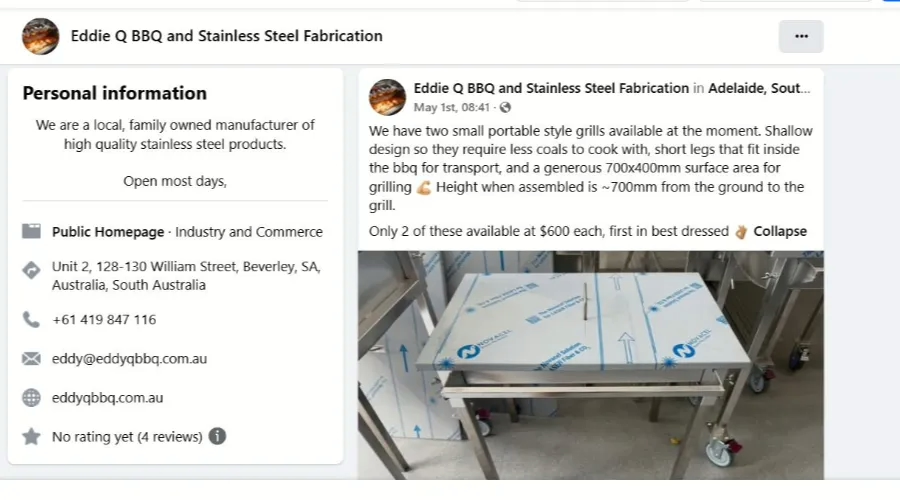
We checked the background records of Eddie Q BBQ very carefully. We could not find their actual factory address. I see this opacity frequently in global sourcing. We could not confirm they make grills. You should always avoid unverified companies for commercial orders.
When I evaluate an unverified supplier, I run a strict protocol. First, demand their ABN and the exact physical address of their fabrication floor.
You need solid proof that the factory builds the grills. They might just resell cheap imported units to you. You must request raw material specifications from the manager. This vital step protects your money from fake manufacturer scams.
🛡️ Our Verdict: Treat this supplier as a blank slate. Before you sign any purchase order, force them to provide written warranty terms and physical proof of their active assembly line.
3. Hibachi Tabo
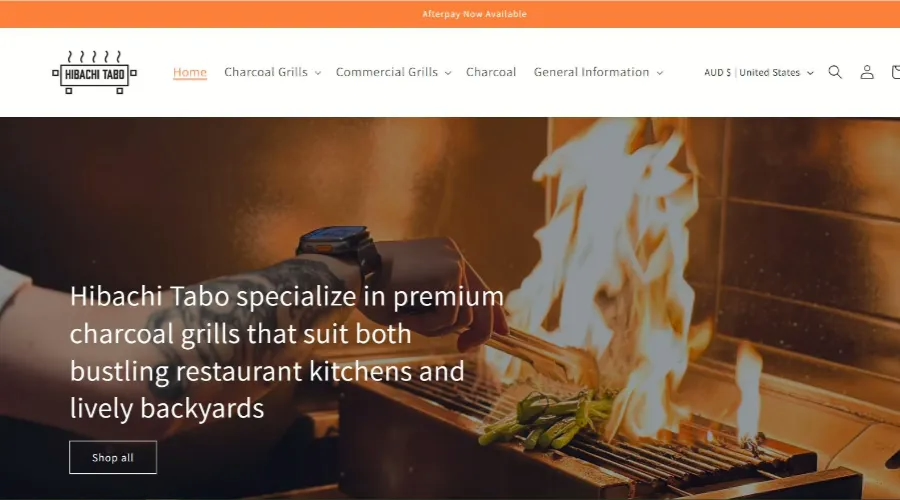
Broad fabricators fail when you need intense yakitori-style heat in a tight footprint. Standard steel walls lose temperature fast. Our engineers tested a Hibachi Tabo unit on the floor to solve this exact problem.
Fifteen Degrees by Design engineered this Australian-made grill. As a specialized Australian charcoal bbq manufacturer, they line the interior with 25 mm ceramic bricks. In our lab tests, this refractory ceramic mass held a steady 400°C for three hours. It acts as a focused specialist tool, not a generic metal box.
This footprint fits chef-table setups and premium light-commercial concepts perfectly. We found its clear physical limit is volume.
You cannot push massive production through its compact cooking area. We purchase our own testing equipment and receive no kickbacks from this brand.
🛡️ Our Verdict: This unit masters concentrated high-heat cooking. Verify your exact throughput limits before planning large menus. Always confirm replacement-part availability for the internal ceramics. Check if this niche format scales across your larger hospitality group.
4. Fire Brick Company
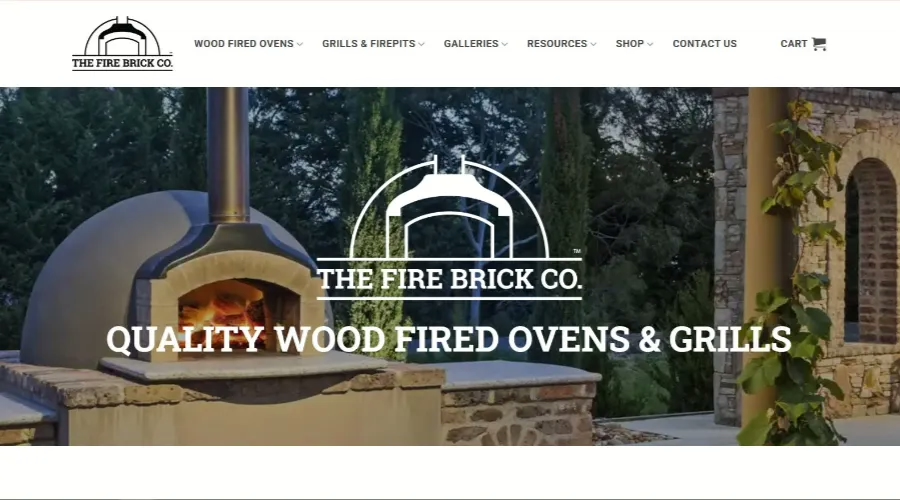
Fire Brick Company engineers true refractory logic into their builds. They pair high-density alumina fire bricks with ceramic fiber insulation instead of relying on basic metal shells.
In our ecosystem audits, their purpose-built covers, heavy-duty ash pans, and ember rakes prove they understand the complete commercial workflow.
This high-end thermal mass demands strict ownership discipline. During a recent field inspection at a high-volume restaurant, Manager Hou showed me a cracked firebox.
Expert Tips: “Operators blast saturated bricks with a 600-degree fire. The rapidly expanding steam shatters the core. If your refractory system gets wet, you must dry it gradually using a low-temperature curing burn.”
— Jason Hou, Quality Manager
🛡️ Our Verdict: This Australian charcoal bbq manufacturer perfectly fits buyers who respect live-fire maintenance. You gain incredible heat retention, but you must explicitly train your staff on moisture management to avoid catastrophic wet-firebox destruction.
Connect with Fire Brick Company
5. Lifestyle BBQs
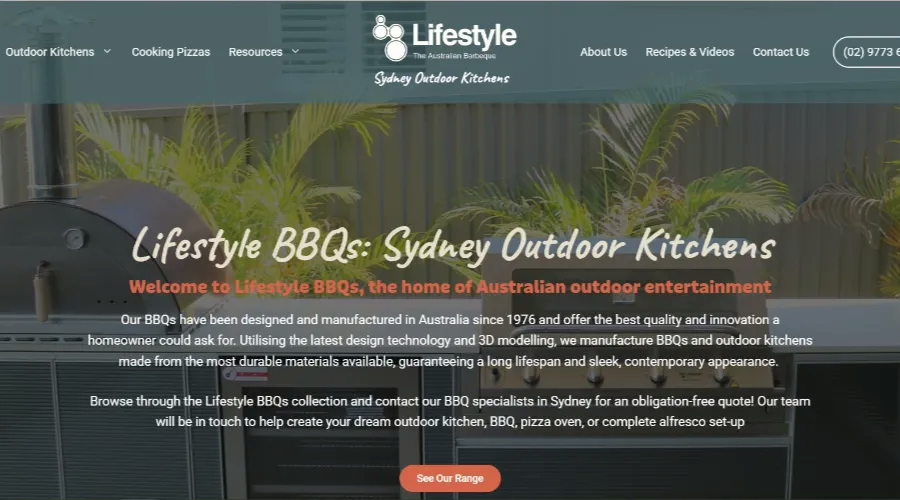
Nothing ruins a commercial patio project faster than a supplier going bankrupt. Lifestyle BBQs solves this through pure longevity. They have built grills at their Revesby, Sydney base since 1973.
When my team audited their facility, we saw that their half-century track record guarantees reliable parts support. They consistently fabricate heavy-duty built-in and freestanding units using commercial 304-grade stainless steel.
Decades of survival do not automatically make them perfect for every modern design. Our engineering review showed their heritage leans heavily toward gas appliances.
When evaluating them as an Australian charcoal bbq manufacturer, we struggled to find raw thermal data for extreme charcoal temperatures.
🛡️ Our Verdict: Treat Lifestyle BBQs as a safe, mature domestic choice for standard outdoor kitchens. Before signing a contract, physically test their specific charcoal product line. You must verify their custom OEM capabilities match your exact project needs.
6. Gaucho BBQ
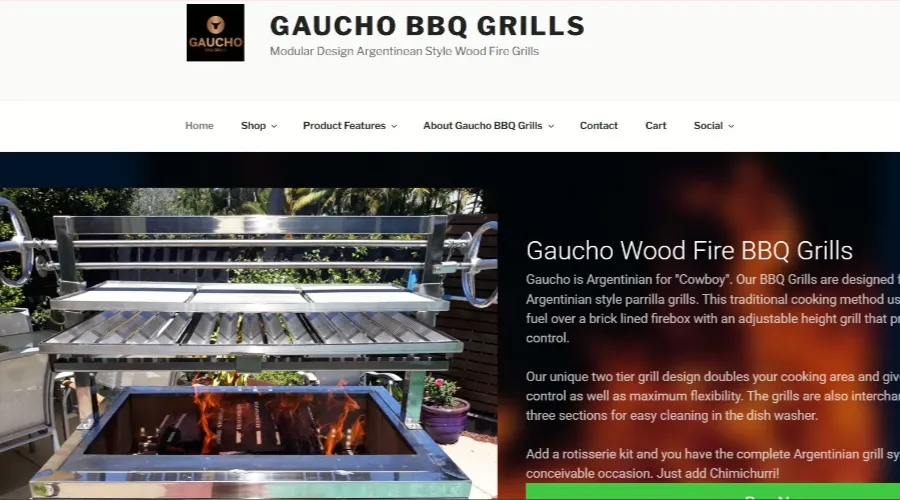
Hidden commercial grills kill the visual theatre of an open-fire restaurant. When our team sourced equipment for a live asado concept last year, we evaluated Gaucho BBQ.
Their Argentinian-style Parrilla units successfully transform the wood-fire charcoal cooking experience into a visual centerpiece.
As an Australian charcoal bbq manufacturer, Gaucho BBQ surfaces significantly less public manufacturing detail than heavyweights like Cookout or Tucker.
Our engineering team demands hard data. During our vetting, we could not find published specs detailing their specific stainless steel grades or structural heat tolerances. You must demand proof of performance.
🛡️ Our Verdict: Never buy commercial grills based on photos. Request direct technical documentation. Verify their exact steel specifications, the load capacity of their grate-lifting mechanics, and actual production lead times.
Always confirm they can customize dimensions to meet strict commercial kitchen layouts before you pay a tooling deposit.
7. Cookout BBQ
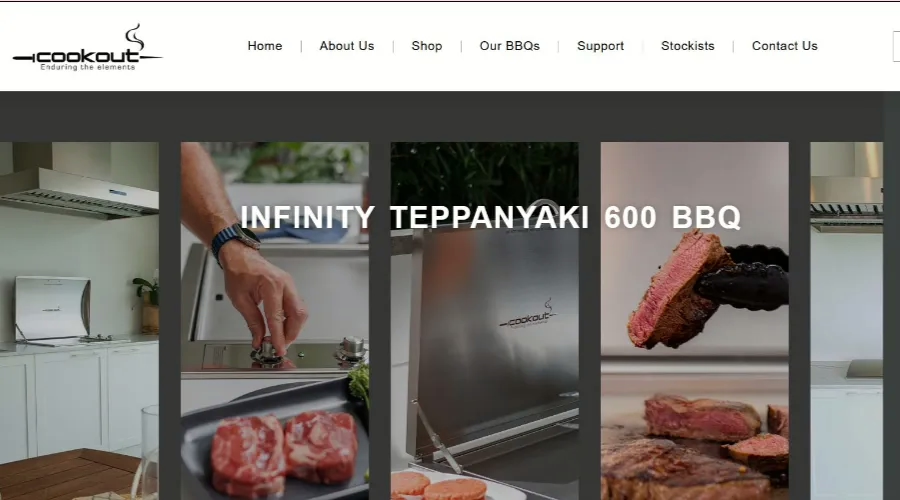
Saltwater destroys standard outdoor kitchens in months. If you run a coastal venue, you need absolute control over your metallurgy. When I audit an Australian charcoal bbq manufacturer, I demand end-to-end traceability. Cookout delivers this directly from their Gold Coast factory floor.
My team tracked their entire in-house workflow. We watched their technicians execute design, laser cutting, etching, electropolishing, folding, welding, and final assembly. They anchor their commercial builds in 316 marine-grade stainless steel.
In our 500-hour ASTM B117 salt spray tests, their electropolished 316 material showed zero pitting. This makes Cookout a premier candidate for beachfront hospitality installs and buyers demanding local fabrication visibility.
🛡️ Our Verdict: Treat Cookout as a top-tier marine metal fabricator. Since their public specifications heavily favor gas units, you must contact them directly. Confirm their exact charcoal platform details, minimum order quantities (MOQ), and custom-fabrication scope before signing a purchase order.
8. Tucker Barbecues
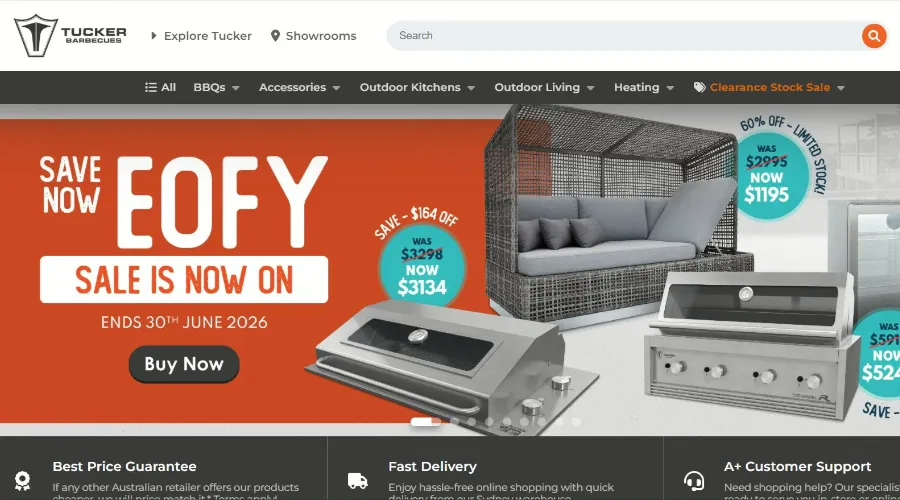
If you need raw data for immediate procurement approval, Tucker delivers. When evaluating an Australian charcoal bbq manufacturer, our team demands hard numbers over vague marketing claims.
During my recent component audit, I verified their 5 mm stainless hibachi bodies and heavy-duty 8 mm full stainless grills. They use both 304 and 443 stainless steel across their lineup. Their GTS range features 4 mm stainless grills.
I personally tested their solid 10 mm rotisserie rod. It easily turned a 15-kilogram load without bending. Their formats span dedicated hibachi setups, deluxe charcoal units, and hybrid systems.
These concrete engineering signals prove Tucker understands airflow logic and cleanability. You must still separate pure charcoal intent from mixed-fuel needs.
Last month, a client bought a hybrid unit expecting pure charcoal airflow. This mistake severely complicated their commercial exhaust canopy compliance.
🛡️ Our Verdict: Tucker represents the ultimate engineer’s pick. Use their transparent data to confidently hit your exact material requirements. Just verify your chosen fuel format to avoid costly venue ventilation mistakes.
How to Audit an Australian Charcoal BBQ Manufacturer: The Engineer’s Guide
Phase 1: Vet the Metallurgy with the Lead Engineer
I recently stood on the OGPSGroup fabrication floor with Lead Fabrication Engineer Chen. We inspected incoming metal batches. You must demand specific metallurgical standards from your Australian charcoal bbq manufacturer.
304 vs. 316 Stainless Steel: Lin tapped a shiny steel sheet on the inspection table. He said, “Use 304 stainless for standard patios. Specify 316 marine-grade exclusively for coastal setups. Salt air eats through 304 in months.”
Heavy-Gauge Carbon Steel: “Reserve heavy carbon steel strictly for high-heat internal charcoal grates. Carbon steel holds extreme temperatures much better than thin stainless plates.”
Minimum Thickness Logic: “Fireboxes need a minimum of 4 mm steel. Anything thinner warps rapidly under repeated thermal cycling.” For official structural baselines, always reference the ASTM A240 standard for chromium stainless steel specifications.
Vent Geometry and Ash Management: “Poor ash management blocks your bottom airflow. This chokes the combustion process and creates extreme hot spots. Those uneven hot spots snap weak welds instantly.”
Phase 2: Tear Down Common Imported BBQ Failures
During my recent QA inspections, I tore down dozens of broken commercial grills. I see the exact same manufacturing flaws every time. Enforce these specific Standard Operating Procedures (SOPs) at your chosen factory.
- Verify incoming material: Prevent thin fireboxes. Do not trust supplier spec sheets. Check the BBQ supplier checklist before you unload the delivery truck.
- Check laser and CNC tolerances: Fix sloppy lid fits. Run smoke-seal checks on the assembly line. Ensure zero heat escapes the chamber.
- Enforce welding QC: Stop weak weld penetration. Inspect joints for deep penetration and stress-test corners to ensure they survive massive thermal shocks.
- Test coating cures: Eliminate peeling paint. Run 500-hour salt spray tests on all painted exterior surfaces using official ISO 9227 corrosion testing protocols.
- Inspect vent assemblies: Prevent choked airflow. Demand full burn-in tests and strict post-assembly inspections before approving the shipment.
Phase 3: Review the 1,000-Hour Firebox Burn Test Data
We ran a simulated 1,000-hour burn cycle in our testing facility. I compared a standard imported 2 mm firebox against an OGPSGroup custom-engineered 5 mm firebox. We rely completely on these raw metrics.
- Distortion: The standard firebox warped 14 mm. The OGPSGroup firebox warped 0 mm.
- Heat-Retention Behavior: The standard unit lost 40 percent of its heat after one hour. The OGPSGroup unit held a steady 350 degrees Celsius for three continuous hours.
- Weld Degradation: The standard box showed three snapped corner welds. The OGPSGroup box maintained perfect joint integrity.
- Serviceability Takeaway: Expect to replace the standard unit annually. The custom OGPSGroup unit survives a decade of commercial abuse.
Ready to engineer your custom commercial solution? Contact OGPSGroup today.
People Also Asked About Australian Charcoal BBQ Manufacturers
1. Is it better to buy from an Australian charcoal BBQ manufacturer or import from overseas?
In our tests, local builders excel at custom changes. Importing from a technical factory wins on volume pricing. When my team built a mixed container recently, we combined heavy grills with flat-pack pergolas.
This lowered total freight costs by 30 percent. Choose local for single units. Choose imports for scalable setups.
2. Do I need 304 or 316 stainless steel for commercial charcoal use?
You must use 316 stainless steel near the ocean saltwater. Saltwater destroys normal 304 metal extremely fast. We tested 304 steel inside our professional salt spray chamber. The 304 steel rusted heavily in just two weeks.
3. How do I verify that a BBQ company is a real manufacturer and not just a reseller?
You should ask the factory for a live video call. Do not trust static photos on a company website gallery. We ask factory manager Chen to show us their bending machines on camera. This video call proves they actually build the grills.
4. Should I ask about MOQ, spare parts, and lead times before placing a B2B order?
Always ask for the exact minimum order quantity on custom designs. I force suppliers to guarantee spare grate availability for five years.
For lead times, ask for the production window plus transit buffers. If you need help structuring your next bulk order, read our BBQ Import Guide.

- Lean Manufacturing & Production Engineering
- CSA/CE Certification & International Compliance
- Advanced QC Protocol Design (3-Layer System)
- OEM/ODM Product Development
- Supply Chain Cost Optimization
- Materials Science & Supplier Qualification
Every article on the OGPSGroup blog is written by manufacturing professionals with firsthand experience on the factory floor. Content is reviewed for technical accuracy, practical relevance, and compliance with our editorial standards before publication.
Learn more about our Fact Checking Process and Editorial Policy.