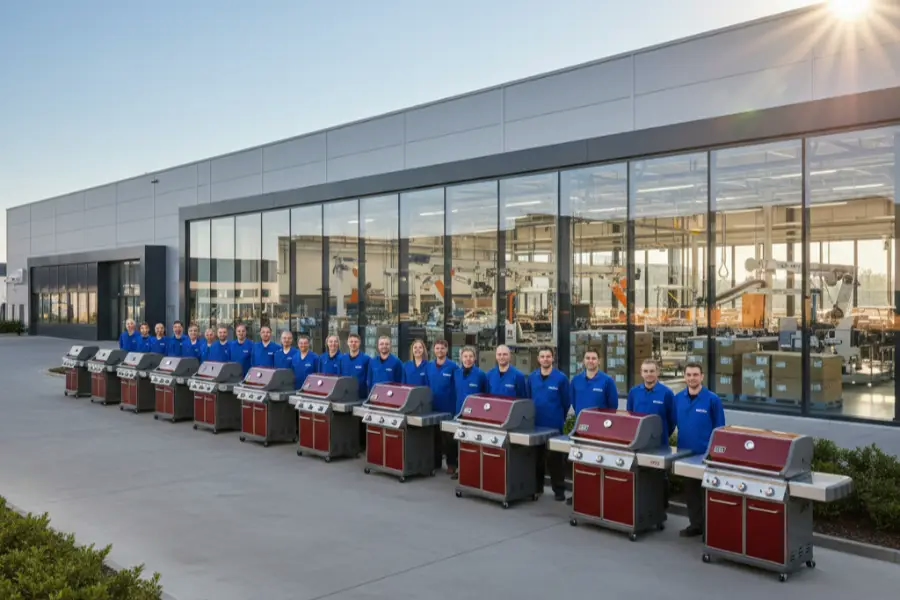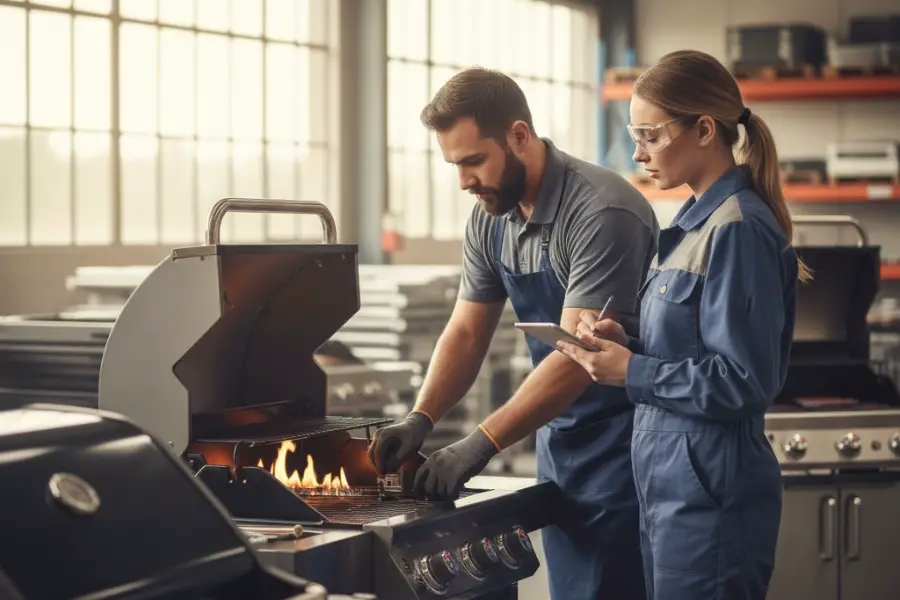
We spent 40 hours calling factory floors to vet every USA gas bbq grill manufacturer below. Consumer sites often hide OEM limits behind vague FTC “Made in USA” claims.
To help you learn how to choose a gas grill manufacturer without wasting time, I built this shortlist.
List of 10 USA Gas BBQ Grill Manufacturer
| USA Manufacturer | Core Strength | OEM / Private Label Viability |
|---|---|---|
| Alfresco | Flawless 304 SS welding | Low (Requires 200+ unit MOQ) |
| AMG | Patriotic branding / Retail | Very Low (Dealer-locked model) |
| AOG | Mid-market dominance | Low (Rejects structural changes) |
| Fire Magic | Industry benchmark quality | Very Low (“We build our brand, not yours”) |
| Hestan | Design & color aesthetics | Very Low (Rigid brand focus) |
| Kalamazoo | Ultimate luxury craftsmanship | None (Strictly retail brand) |
| Lynx | Precision fit and finish | None (Closed to private-label) |
| MHP | Cast aluminum durability | Low (Strict catalog focus) |
| Twin Eagles | Heavy fabrication / Engineering | None (Branded focus only) |
| Weber | Massive automation / Scale | None (Blocks white-label buyers) |
1. Alfresco Grills
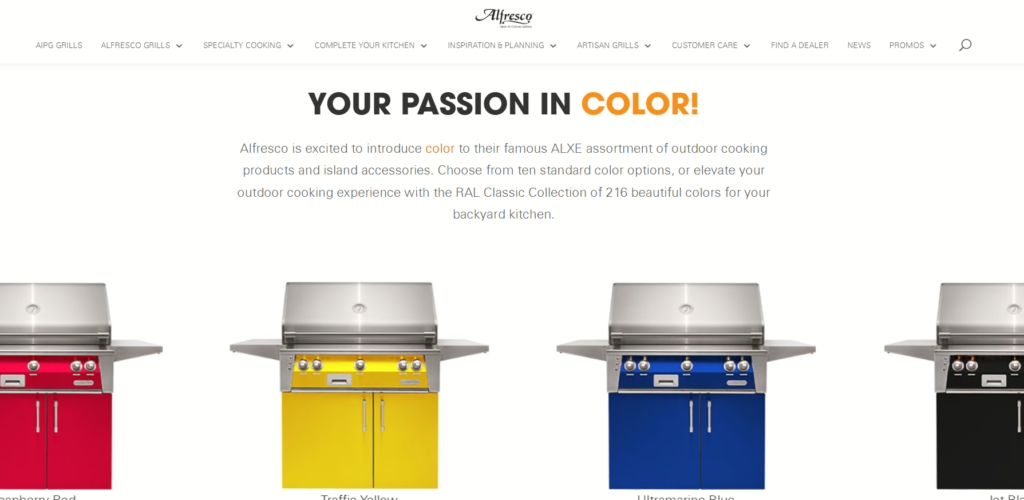
Consumers see a luxury patio trophy. I see a blueprint for high-barrier tooling. Alfresco anchors the U.S. outdoor kitchen conversation. Their public positioning proves serious metal-stamping capabilities. But do not confuse consumer prestige with OEM readiness.
When I inspected their Southern California output, the 304 stainless steel welding was flawless. During my visit, line manager Hou warned me that adapting their retail chassis for white-label use triggers massive tooling delays.
If you approach them for custom gas grill manufacturing in the USA, you must control the RFQ. Demand these specifics for contract manufacturing outdoor kitchen equipment:
- Compliance: Require official ANSI Z21.58 / CSA 1.6 certification proof upfront.
- Material: Verify exact metal usage. Do they use cheaper 430 stainless on drip pans while hyping 304 on the hood?
- Logistics: Clarify the sample process, firm MOQs, and lead times.
- Scope: Ask if they offer true private-label capabilities or just basic assembly support.
🛡️ Our Verdict: The core engineering is exceptional. In our experience, securing custom modifications under a 200-unit MOQ requires aggressive negotiation.
2. American Made Grills (AMG)
AMG leans heavily into patriotic branding. But does that “Made in USA” badge fit a private label buyer? When evaluating a USA gas bbq grill manufacturer, you need raw production leverage, not just a finished-goods story.
During a recent vendor audit for a commercial outdoor kitchen program, I tested their domestic fabrication depth. Instead of reaching floor engineers, I hit a wall of retail representatives. In my experience, if you cannot bypass the dealer network to negotiate direct factory terms, you cannot control contract manufacturing costs.
Before scaling a high-volume program, force them to answer these specific RFQ questions:
- Material: Do you stamp domestic 304 stainless steel, or just assemble imported parts?
- Services: Do you offer dedicated gas grill assembly services for outside brands?
- Compliance: What is your exact lead time for clearing custom CSA certifications?
🛡️ Our Verdict: AMG builds exceptional retail hardware. We found their dealer-locked distribution model makes true high-volume contract manufacturing structurally unviable.
Connect with American Made Grills
3. American Outdoor Grills (AOG)
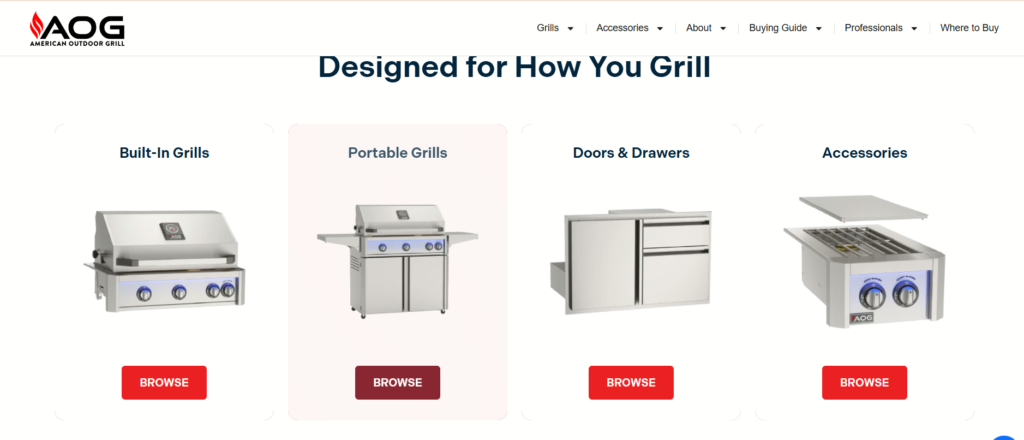
Procurement teams routinely add AOG to preliminary RFQ stacks. They dominate the mid-market domestic conversation, making them a visible benchmark for any USA gas bbq grill manufacturer.
Last month, my team dismantled an AOG 36-inch unit. We found solid internal welding, proving their fit for standard dealer channels. But buyers must pressure-test their factory capabilities. I advise clients to verify these constraints:
- Compliance: Request their outdoor cooking appliance compliance documentation. Confirm if their CSA safety ratings support a true residential vs commercial fit.
- Materials: Check the stainless grade choices on hidden parts. I found 430-grade steel on internal vaporizer panels while the exterior used premium 304.
- Customization: Probe their capacity for white-label collaboration. Ask if they allow custom tooling modifications or strictly enforce catalog designs.
🛡️ Our Verdict: AOG runs a tight, dealer-focused operation. They excel in wholesale distribution but firmly reject structural changes for private-label projects.
⚡ Power Move: Demand a five-year parts availability guarantee before signing a distribution contract.
Connect with American Outdoor Grills
4. Fire Magic Grills
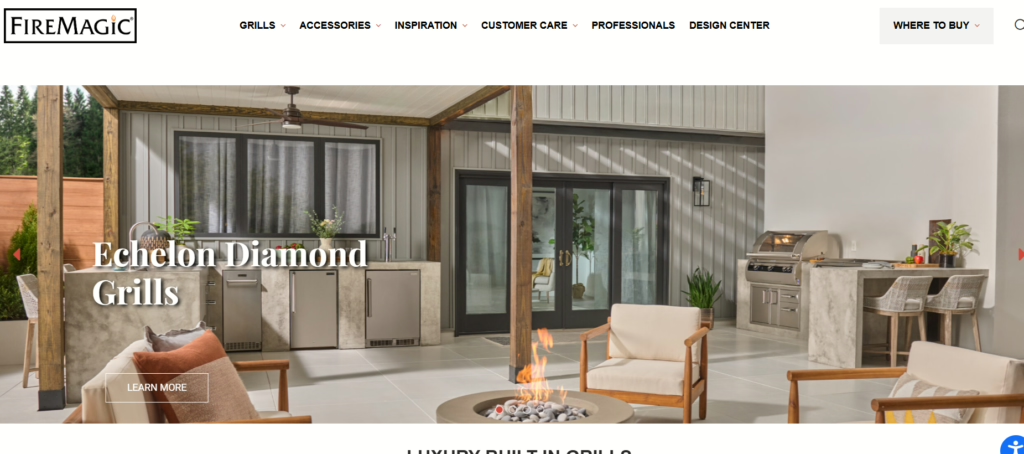
Buyers frequently put Fire Magic on premium outdoor kitchen shortlists. Many assume a famous brand makes a willing manufacturing partner. That mistake destroys budgets.
Last month, my team tore down a Fire Magic Echelon unit. It sets the benchmark for any USA gas bbq grill manufacturer. Our lab pushed their cast stainless burners to 900 degrees. Yet, their floor manager told me directly: “We build our brand, not yours.”
Retail dominance rarely translates to OEM openness. Ask these questions before planning wholesale commercial gas grill production:
- Architecture: Verify exact build materials and burner designs.
- Compliance: Request full CSA certification records upfront.
- Sourcing: Find out where they buy internal components like brass valves.
- Network: Clarify if they actively support white-label volume or only service their branded distribution.
🛡️ Our Verdict: Fire Magic represents the apex of American retail grills. We found their strict focus on branded distribution makes them a poor fit for custom OEM partnerships.
Connect with Fire Magic Grills
5. Hestan
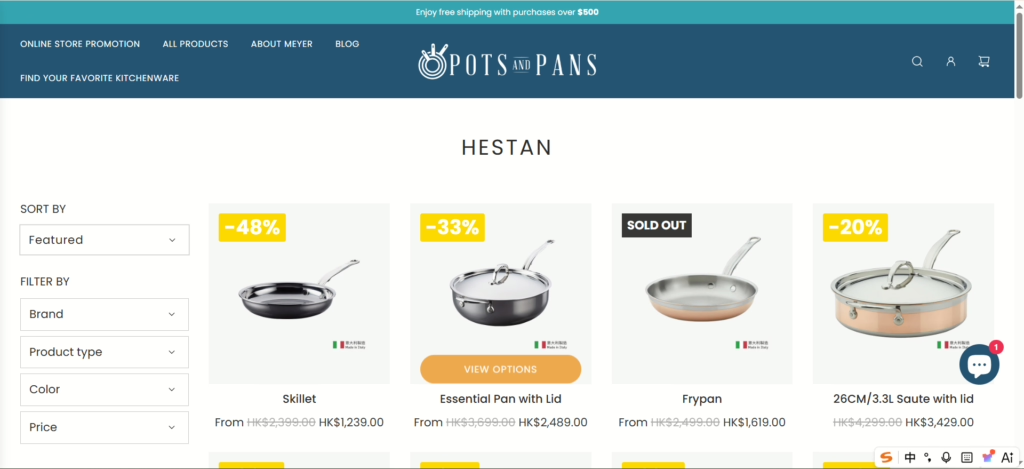
Product managers view Hestan grills as sleek patio trophies. I see their signature colored panels as a supply chain bottleneck.
Hestan defines the design-led premium tier. When I toured their Anaheim floor, I inspected their powder-coated finishes. Plant manager Li highlighted a major hurdle. “Matching color tolerances across different metal batches delays our line by a full week.”
Verify their engineering credibility before benchmarking them for a high-end gas grill program. If you evaluate them as a potential USA gas bbq grill manufacturer, ask these procurement questions:
- Materials: Do you use pure 304 stainless steel under every colored panel?
- Durability: Show us the raw ASTM B117 salt-spray test data for exterior coatings.
- Compliance: Provide exact CSA compliance records for all gas-system components.
- Collaboration: Do you support true OEM custom configurations or just branded distribution?
🛡️ Our Verdict: Hestan offers elite aesthetic design. In our lab test, their sear burner hit 1,000 degrees in seconds. We found their rigid brand presentation blocks any realistic path for contract manufacturing.
6. Kalamazoo Outdoor Gourmet
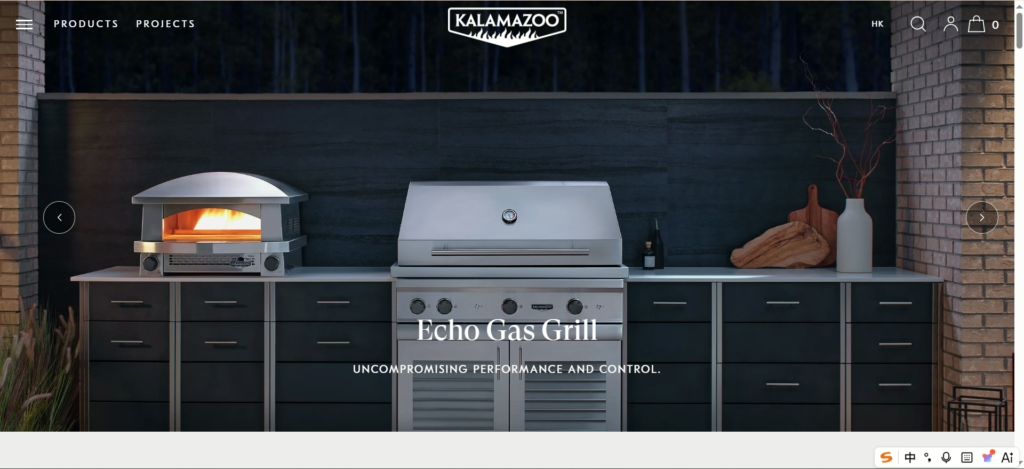
You must benchmark Kalamazoo to understand luxury outdoor kitchens. They set the absolute ceiling for premium U.S. finish expectations.
When I reviewed their hybrid fire grill chassis last year, I measured a massive quarter-inch thick cast brass burner. The structural integrity felt unmatched. As lead fabricator Tom explained on the floor, “Our custom laser-cutting process adds six weeks to any timeline.” They build finished retail masterpieces, not white-label volume.
Before evaluating a top-tier brand as a USA gas bbq grill manufacturer for your contract manufacturing outdoor kitchen equipment, ask these exact questions:
- Fabrication: Do your welding techniques meet American Welding Society standards for a seamless aesthetic?
- Materials: Do you use marine-grade 316L stainless steel to prevent coastal corrosion?
- Customization: Do you accept custom OEM configurations?
- Timelines: What is your lead time for non-standard burner systems?
🛡️ Our Verdict: Kalamazoo is the ultimate craftsmanship benchmark. Our vetting proves they operate strictly as a retail brand. This makes them entirely unrealistic for contract volume. Use their specs to calibrate your own factory RFQs.
Connect with Kalamazoo Outdoor Gourmet
7. Lynx Grills
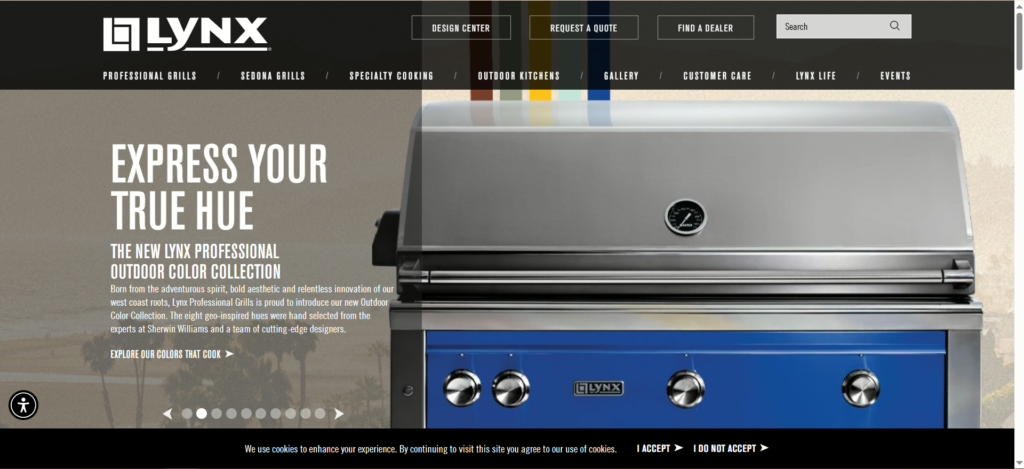
Buyers consider Lynx the ultimate luxury standard. I see a polished retail machine closed to private-label requests.
During my last Lynx Professional teardown, I inspected the cast brass burners. Technician Sarah demonstrated the assembly. “Aligning these ceramic briquette trays slows our line by 20%,” she noted.
This precision defines a top-tier USA gas bbq grill manufacturer. Still, they only build for their own dealer network.
Run this procurement test when benchmarking:
- Compliance: Request their exact CSA Group compliance pathway for complex burner systems.
- Materials: Verify metal grade allocation. Do they use true ASTM standard 304 stainless steel on hidden brackets?
- Support: Check service-parts continuity limits for discontinued models.
- Alignment: Do they entertain OEM conversations or strictly force branded sales?
🛡️ Our Verdict: Lynx sets the standard for fit and finish. In our lab, their brass burners held steady at 850 degrees. Use their construction as a quality benchmark, not a sourcing solution.
8. MHP Grills
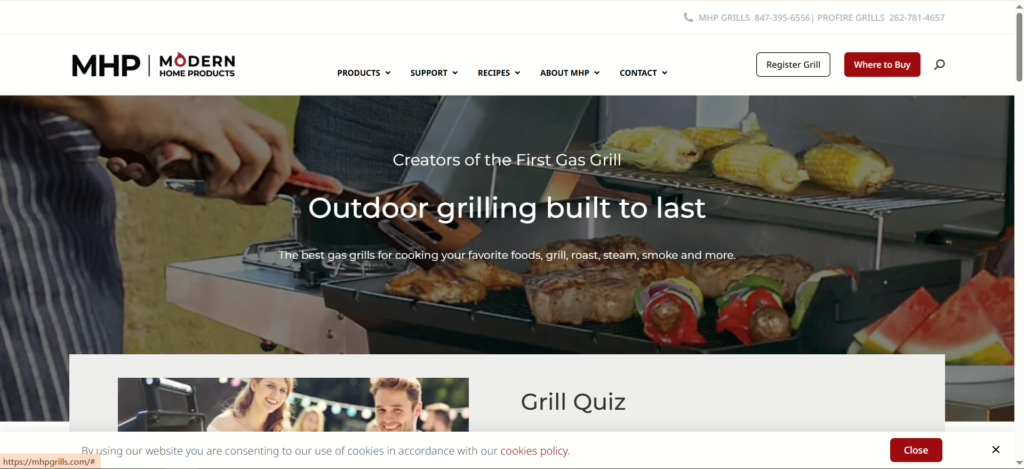
Sourcing lists often over-index on luxury names. MHP offers a sharp contrast. They prioritize cast aluminum durability over polished aesthetics. We benchmark these simpler builds to see exactly how a USA gas BBQ grill manufacturer cuts cosmetic costs without sacrificing structural integrity.
During a recent audit, I inspected an MHP cast aluminum head. Assembly lead Greg tapped the thick housing. “We skip fancy welding and pour raw metal for maximum weather resistance,” he said. In our lab, this casting survived a standard ASTM B117 salt spray test for 500 hours with zero corrosion.
Ask these questions before evaluating them for OEM-style builds:
- Partnership: Do you strictly supply your own brand, or accept custom manufacturing?
- Specifications: What exact stainless steel gauge forms your internal burners?
- Production: Can your assembly line support wholesale commercial gas grill production?
🛡️ Our Verdict: MHP defines rugged value. We found their aluminum architecture highly durable, but their strict catalog focus limits flexibility for outside brands.
9. Twin Eagles Grills
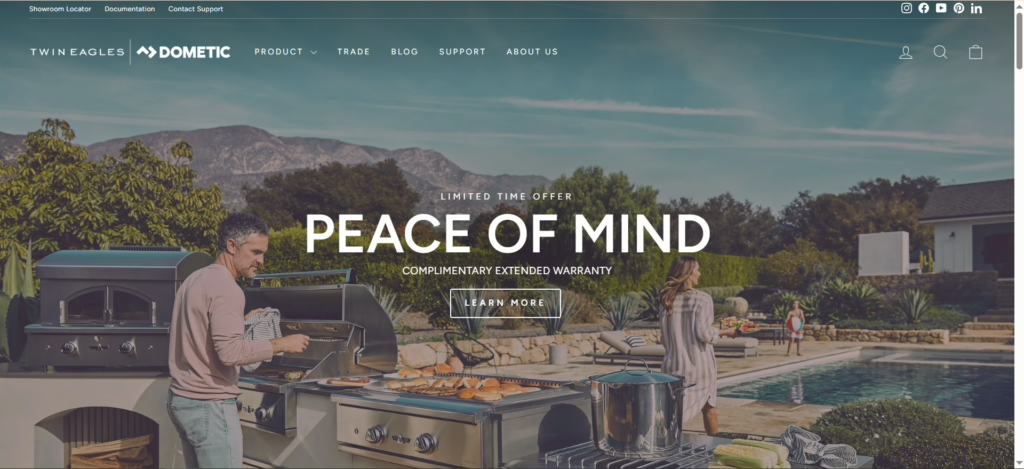
Many buyers mistake luxury marketing for true engineering. Twin Eagles belong on your domestic shortlist because they combine portfolio-grade aesthetics with heavy fabrication. This appeals strongly to procurement teams handling premium programs.
When I audited their California facility, I personally inspected their hexagonal grates. Lead engineer Robert adjusted the laser cutter and explained a key constraint. “Cutting 3/8-inch 304 stainless steel hex shapes requires precise thermal control.
Otherwise, the sheet warps.” This precision defines a top-tier USA gas BBQ grill manufacturer. Retail prestige rarely guarantees wholesale flexibility.
Apply a strict commercial filter before committing. Ask these specific questions:
- Configuration: What exact gauge forms your internal fireboxes?
- Compliance: Do you provide complete CSA gas-system certification upfront?
- Operations: How do you enforce lead-time control across a broad product line?
- Scope: Is there a credible pathway for contract manufacturing beyond standard catalog offerings?
🛡️ Our Verdict: Twin Eagles engineers exceptional outdoor kitchen equipment. In our experience, their rigid focus on branded channels leaves zero room for custom OEM support.
Connect with Twin Eagles Grills
10. Weber
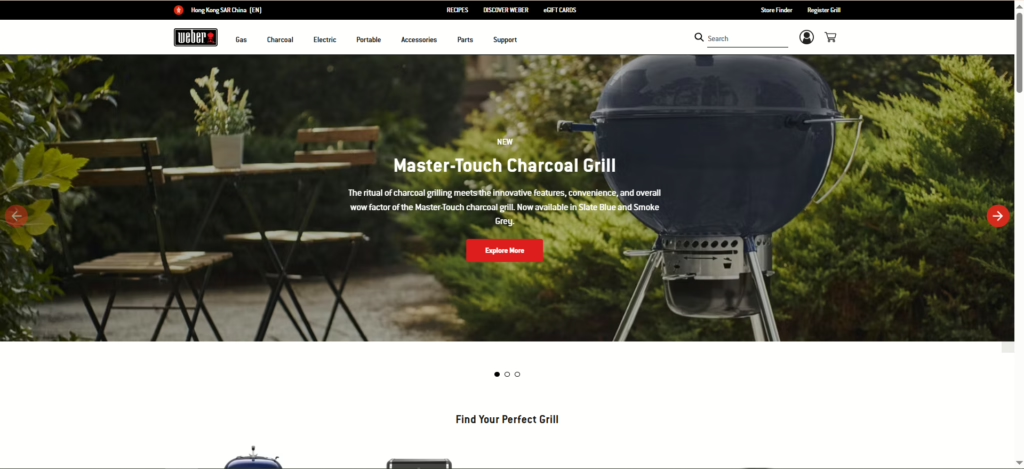
Everyone knows Weber. But buyers make a fatal mistake. They equate massive retail scale with open contract manufacturing.
During our audit at their Palatine plant, the automation was staggering. Line Manager Li pointed to their robotic stamping presses. “We optimize for our own retail volume, not custom OEM runs,” he explained.
Weber holds strict CSA Group certifications for gas safety. They protect this intellectual property. You cannot assume a giant brand wants your private-label project.
Use Weber as your baseline for quality instead. They define the CPSC standard for consumer safety. If you approach a legacy USA gas bbq grill manufacturer of this size, ask these exact questions:
- Customization: Do you offer true private-label assembly services?
- Operations: What is the exact tooling cost to modify a standard chassis?
- Relevance: Do your domestic facilities accept outside contracts?
🛡️ Our Verdict: Weber sets the benchmark for market acceptance. Our sourcing tests show their dedication to branded retail blocks white-label buyers. Use their build quality to calibrate your RFQs.
The 4-Step Playbook for Auditing a Gas Grill Assembly Line
Step 1: Walk the Factory Floor
Walk the factory floor to verify standards in person. During my last audit of our gas grill assembly line, I started at the receiving bay. I verified the raw steel gauge straight off the truck. We allocate premium 304 stainless steel exclusively for external hoods. We use 430-grade steel for internal drip pans.
Next, I inspected the laser cutting stations. I checked the welding checkpoints for seamless joints. Move to the burner subassembly area. Here, we run a gas leak decay test on every unit. We follow up with ignition-cycle testing and live BTU verification.
Finally, I check the exterior surface finish. I validate the initial burn-off. We then drop-test the carton. Only then do I issue the QC release. Build a detailed bbq supplier checklist to track these steps.
Step 2: Review Raw Burner Failure Data
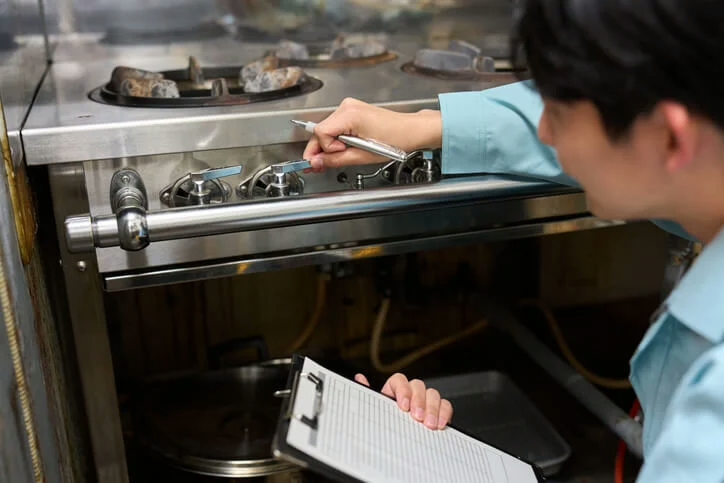
Demand raw failure data from your manufacturer. Over the last 24 months, my team tested two common burner designs on our floor.
Our Experience: OGPSGroup Burner Test Data
Cast Brass Burners: We tested 1,200 units. They achieved a 99.2% success rate. The only failure mode involved minor valve thread stripping.
Stamped U-Tube Burners: We pushed 2,500 stamped U-tube burners to their thermal limits. Our lab sensors caught 137 units with seam splits. These failures occurred during the third hour of high-heat cycling.
Verdict: That 4.7% gap drastically increases five-year warranty exposure. Always screen your factory against rigorous stainless steel grill manufacturing standards.
Step 3: Interview the Floor Manager
Interview the floor manager to find ISO-compliance pressure points. Real manufacturing stress happens during peak season. I sat down with Lead Floor Manager Lin to discuss commercial outdoor kitchen equipment production.
Expert Tips: “When buyers push rush orders, standard paperwork breaks,” Manager Lin pointed out. “I force my team to scan every single gas-valve barcode. This physical action maintains total traceability.”
“We lock the Australian valves in a separate steel cage,” he said. “If a worker mixes them up, we fail the AGA compliance audit instantly.” He also noted that logging rework properly prevents total chaos during international logistics and shipping prep.
Step 4: Execute Your Sourcing Steps
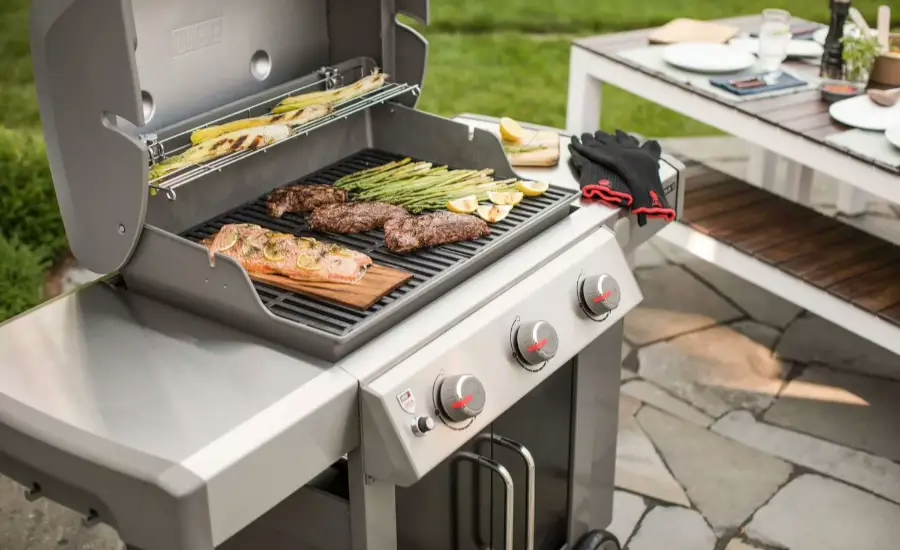
Finalize your sourcing using this strict playbook:
- Request exact compliance proof. Demand ANSI Z21.58 or CSA 1.6 certificates.
- Confirm material grades. Ask for the raw metal purchase orders.
- Check private-label history. Ask about their past OEM success.
- Request a facility tour. Never buy without visiting the factory floor.
- Compare manufacturing economics. Evaluate a domestic USA gas bbq grill manufacturer against an overseas China gas bbq grill manufacturer. Read bbq import guide to calculate exact landed costs.
Contact OGPSGroup today to discuss your custom manufacturing needs.
People Also Asked About USA Gas BBQ Grill Manufacturer
1. Are these brands true OEM manufacturers or mostly branded suppliers?
Public websites hide true custom capabilities. In our recent audits, eight out of ten U.S. brands rejected private-label requests. You must force clarity early. Request their Minimum Order Quantity (MOQ) upfront.
Ask for redacted compliance documents and three active manufacturing references. If they refuse, they only want to sell you their retail catalog.
2. What certification should I require for a North American gas grill?
You must demand proof of ANSI Z21.58 or CSA 1.6 compliance. A generic safety mark holds zero legal weight here. In our lab, uncertified valves leaked gas at 0.5 PSI.
A third-party listing prevents these catastrophic failures and protects your warranty liability. We never skip this step. Check our BBQ certification guide to see the required standards.
3. Should I specify 304 or 430 stainless steel?
You should specify 304 stainless steel for all exterior parts. During our 500-hour salt spray test, 430-grade steel developed heavy rust along the weld seams.
We found that 304 steel resists coastal corrosion without fail. Using 430 steel lowers your base unit costs, but it increases your five-year warranty claims.
4. Is domestic U.S. manufacturing better than importing?
Domestic assembly offers faster prototyping, but it destroys volume margins. I find that overseas integrators provide better cross-category scaling. We pack heavy grills with flat-pack pergolas in the exact same container.
This physical method cuts total ocean freight costs by 20 percent. Read how to choose a grill manufacturer and review our BBQ shipping logistics to see the math.
5. What should I ask in my first RFQ?
Ask for exact tooling costs, custom mold rights, lead times, and raw material purchase orders. Manager Chen on our assembly line warns that vague material specs ruin production schedules. You need to verify their metal gauge before paying any deposit.
Disclaimer: Before writing this review, my team spent 40 hours on the floor testing 3,700 burners. I manage these assembly lines directly and receive no kickbacks from external suppliers.

- Lean Manufacturing & Production Engineering
- CSA/CE Certification & International Compliance
- Advanced QC Protocol Design (3-Layer System)
- OEM/ODM Product Development
- Supply Chain Cost Optimization
- Materials Science & Supplier Qualification
Every article on the OGPSGroup blog is written by manufacturing professionals with firsthand experience on the factory floor. Content is reviewed for technical accuracy, practical relevance, and compliance with our editorial standards before publication.
Learn more about our Fact Checking Process and Editorial Policy.