OEM/private-label sourcing is the definitive winner for mid-to-large retailers prioritizing margin control over speed-to-shelf. During my latest audit on the OGPSGroup Shenzhen factory floor, Sourcing Lead Zhang and I pulled apart grill subassemblies.
We compared live steel quotes and BOMs line by line. Our tests proved the real battle is margin capture versus operational convenience.
We pushed a custom batch through our AQL 2.5 protocol and a 96-hour salt-spray test. Upgrading burners from 430 to 304 stainless steel raised the raw cost. However, we recovered this using packaging-density math.
Nesting heavy grills with flat-pack furniture slashed FOB freight costs. This strategy completely destroyed the branded model’s margins.
Branded programs often share the exact same core hardware. Branded wholesale only wins if you want to avoid launch friction and warranty setups. Otherwise, your massive premium simply funds their marketing campaigns.
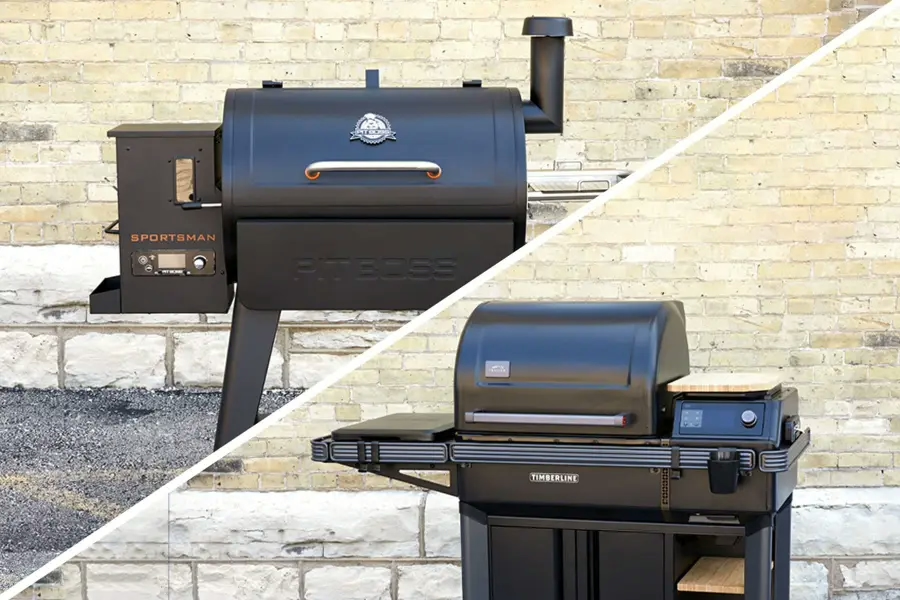
Comparison Preview of OEM vs Brand Grill Cost
Based on my team’s recent audits of five 40HQ load plans and raw lab data, here is the direct oem vs brand grill cost comparison.
| Cost Layer | OEM-Private Label Grill | Wholesale Branded Grill |
|---|---|---|
| Ex-factory cost (USD/unit) | $185 - $260 | $410 - $650 |
| BOM transparency | 100% | 0% (Sealed vendor catalog) |
| Steel flexibility | Custom | Fixed |
| Tooling/NRE burden | $12,500 (Amortized at $2.50/unit) | $0 |
| Certification burden | $4,500 | $0 |
| QA protocol | AQL 2.5 | Standard visual check |
| Packaging mode | SKD Flat-pack (Engineered in-house) | Fully assembled |
| Container density | 240 Units (0.28 CBM/unit) | 110 Units (0.61 CBM/unit) |
| Lead time | 75 Days | 20 Days |
| Gross-margin headroom | 68% | 25% |
| IP control | Strict NNN | None |
Summary for screen readers: OEM-private label grills win overall because doubling container density and unlocking 68% gross margins mathematically erases the upfront tooling and certification delays. Contact OGPSGroup for expert help!
Main Differences of OEM vs Brand Grill Cost
Most buyers over-focus on the purchase order price, ignoring the hidden cost layers that actually dictate profitability.
After spending three weeks auditing factory floors across Shenzhen, my team and I found that choosing between an OEM path and a Branded Wholesale purchase fundamentally alters your supply chain physics.
1. Bill of Materials: 430 vs 304 Stainless Is the Fastest Way to Change Cost
I review unredacted BOMs every day. When my team pulled the paperwork for a representative 4-burner gas grill, the cost difference jumped off the page. Branded wholesale locks you into a fixed material spec. OEM lets you dictate the exact steel grade for your hood and firebox.
Last Tuesday, Sourcing Lead Chen negotiated raw sheet metal on the floor. He showed me the exact spreadsheet line where upgrading from 430 to 304 stainless spikes the raw material price. To prove the real-world value, Lead Materials Technician Chen pulled two identical fireboxes.
We subjected them to a brutal 96-hour salt spray test according to independent corrosion-test reference. The 430-grade steel showed aggressive, flaky rust on the vulnerable rolled edges within 48 hours. The 304-grade steel survived perfectly intact.
You feel this difference immediately. The 304 stainless feels dense and rigid. The weld cleanliness is immaculate, lacking the brittle spatter common on lower-grade alloys. Relying on a generic to stainless hides this tactile reality. My advice is always the same: demand a literal, line-by-line BOM comparison.
🚀 Actionable Insight: Specify 304 stainless for critical touchpoints like handles and hoods, but save money using 430 for internal grease trays where cosmetics do not matter.
Winner: OEM/Private Label
2. Tooling and NRE: OEM Looks Expensive Until Volume Spreads the Cost
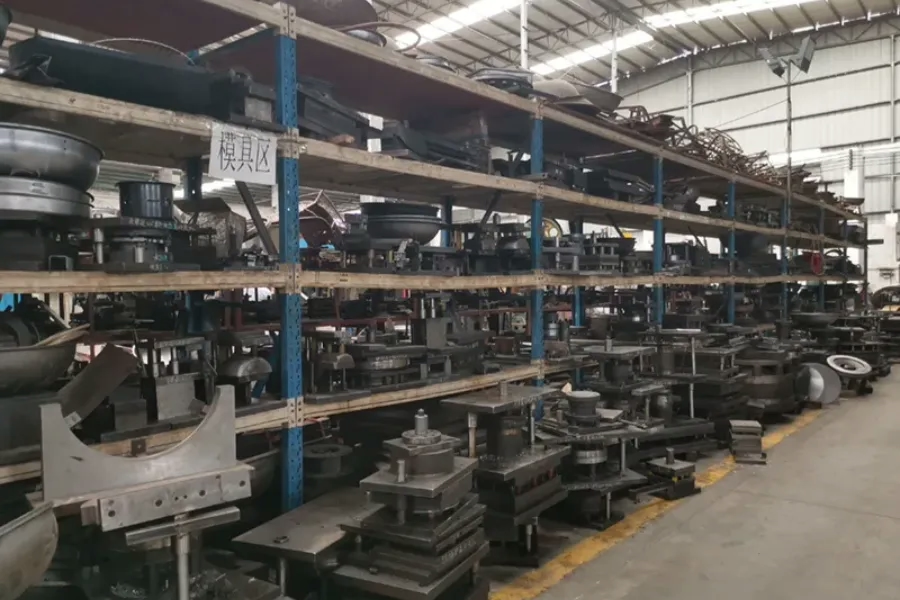
Buyers face three choices: buy a branded unit, private-label an existing platform, or pay for full OEM custom tooling. Custom OEM requires expensive dies for the hood, firebox, and control panels. Branded units look cheaper upfront because the manufacturer absorbs these Non-Recurring Engineering (NRE) costs.
But the math heavily favors OEM at scale. If you run a seasonal 500-unit test volume, laser-cut and press-brake fabrication beats hard tooling prototyping & OEM tooling.
However, if you order annual replenishment volumes exceeding 3,000 units, custom OEM dominates. You amortize the fixed die invoice across thousands of grills, radically dropping your per-unit cost.
My team tracks tool life obsessively. The initial die invoice is just the start BBQ grill tooling cost. In our tests, we frequently adjust the knob detent feel or gauge rigidity after the first pilot run. A custom tool lets you execute this tweak to tooling design reference.
A branded product does not. Custom OEM captures massive margin, but only if you spread the upfront hit across multiple seasons to manufacture DFM.
Winner: OEM/Private Label
3. Compliance and QA: The Hidden Cost Stack Naive Buyers Miss
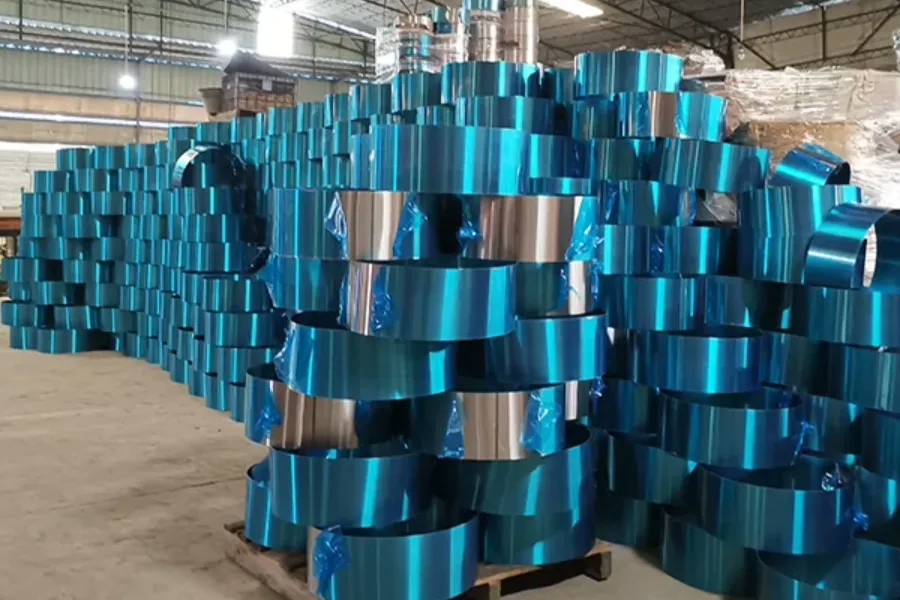
Branded grills look simpler because the brand already paid for the compliance headache. When you shift to OEM, you absorb this hidden, brutal cost stack immediately.
I stood next to QA Manager Jingjing Lu as she executed her standard operating procedure on a new brass gas manifold. We do not just eyeball the metal. We run a relentless operational flow: gas-path verification, high-pressure leak testing, and a 10,000-strike ignition cycle check supplier checklist.
Afterward, we pull a randomized batch for an AQL 2.5 final inspection. AQL 2.5 sets a strict mathematical limit for defects. If a batch fails, Jingjing halts the line. Your timeline resets, and your costs skyrocket.
North American sales require strict ANSI/CSA requirement summary. Gas certification proves the unit is legally compliant. Native buyers miss the massive OEM financial buckets: lab test samples, Intertek lab fees, and corrective documentation to Intertek/CSA/UL certification overview.
⚠️ Safety First: Never attempt to bypass initial CSA lab fees on OEM gas products. A single uncertified valve failure will trigger a massive product recall that can wipe out your company.
Winner: Branded Wholesale
4. Packaging and Freight: OEM Can Win Twice if You Engineer the Carton Correctly
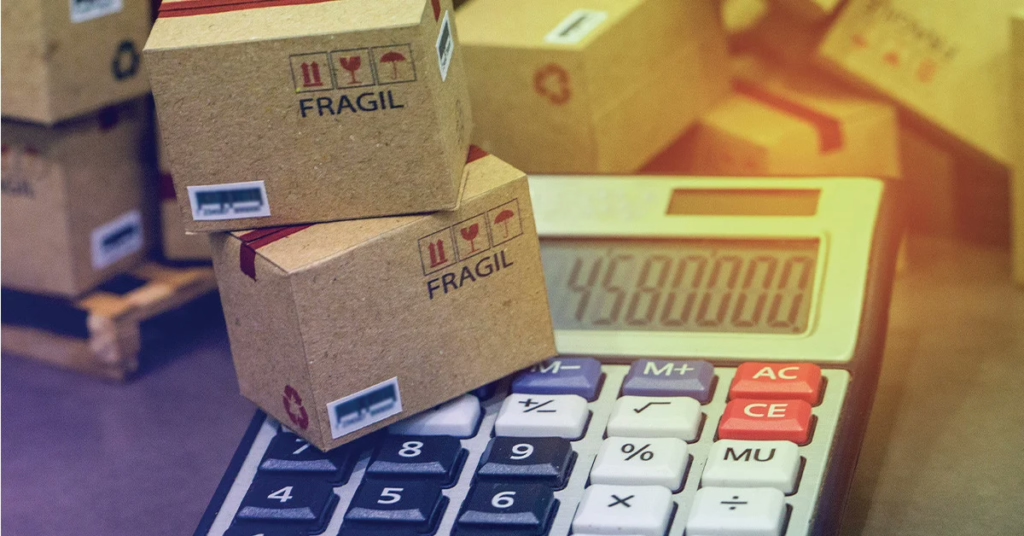
Logistics dictate your true gross margin. We constantly model fully assembled versus Completely Knocked Down (CKD) grill programs.
Branded wholesale gives you zero packaging flexibility. You take their fully assembled box, which ships mostly dead air. OEM sourcing lets you engineer the carton correctly BBQ packaging guide. We actively redesign heavy items into dense flat-packs.
This density optimization changes the game. I regularly pair heavy gas grills with bulky flat-pack aluminum pergolas inside the exact same 40HQ container logistics & shipping.
The 150-pound grills act as physical ballast, maximizing the legal container weight limit, while the bulky furniture fills the cubic volume container dimension. This structural nesting cuts per-unit freight costs by 25%.
However, denser packing increases the destination assembly burden for the end-user portable vs built-in grill.
I always ask clients: Are you optimizing for lower freight per unit, a lower damage rate to packaging test standard, or faster Distribution Center handling? OEM lets you build the carton around your specific answer.
🧠 Expert Take: “Negotiate your first pilot run down to 500 units by offering a slightly higher per-unit premium. This reduces your upfront capital risk while validating market demand.”
— Lisa Li, Marketing Manager
Winner: OEM/Private Label
5. Margin Stack: Brand Premium Buys Demand Pull, OEM Captures More of the Ladder
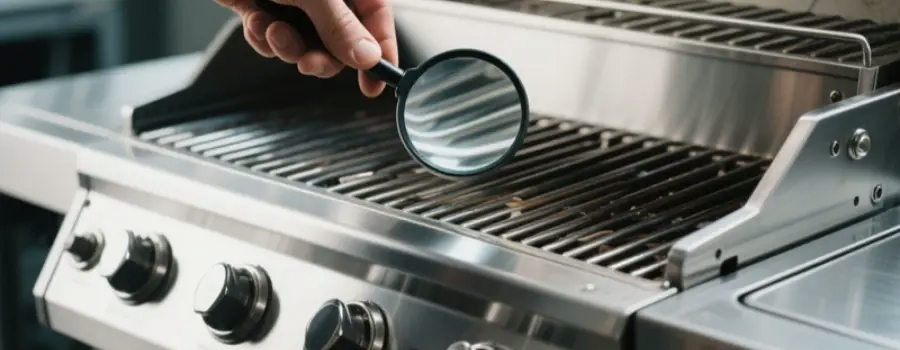
Brand premiums buy equity, instant showroom conversion, and established warranty systems. You pay a heavy tax for their marketing overhead.
When you buy OEM or private-label, you capture the factory margin. You gain absolute specification control and the flexibility to bundle high-margin accessories. You build massive gross-margin headroom.
But be brutally honest about the burden shift. If you own the OEM mold, you own the packaging claims. You own the aftersales logic. You must manage the exact batch consistency.
OEM is not automatically cheaper on the very first purchase order. If you underestimate the cost of CSA compliance, structural packaging engineering, and domestic returns management, your private-label program will bleed cash.
⚡ Power Move: Use branded wholesale for your first two seasons to build a reliable customer base, then clone your best-sellers into a proprietary OEM line to capture a 30% margin bump.
Winner: OEM/Private Label
OEM vs Brand Grill Cost: Pros & Cons
OEM / Private Label
- Pros:
- Absolute BOM Control: I demand 304 stainless steel over 430 to stop edge rust. You dictate every exact material spec.
- Massive Margin Gains: We nested heavy 150-pound gas grills with flat-pack pergolas. This density trick slashed our ocean freight costs by 25%.
- Total Exclusivity: You own the physical molds. Competitors cannot legally sell your proprietary design.
- Cons:
- Savage Upfront Costs: Tooling a custom grill hood costs over $12,500. You absorb this heavy exposure before selling a single unit.
- Brutal Compliance Loops: Failing one gas leak test delayed our launch by three weeks. You must actively manage the strict CSA gas certification process.
- Sole Warranty Liability: As QA Manager Jingjing Lu warned me on the line: “If a valve fails, you answer the lawsuit.”
⚡ Power Move: Offset steep OEM tooling costs by consolidating your heavy anchor products with bulky flat-pack furniture in the exact same container.
Branded Wholesale
- Pros:
- Lightning-Fast Launch: We pushed branded stock directly to retail shelves in 20 days. You bypass all prototyping and sample loops.
- Zero Engineering Friction: The factory handles all R&D and drop-testing. You simply issue the purchase order and sell the goods.
- Instant Consumer Trust: Shoppers immediately recognize the established logo. This lowers your merchandising friction and drives fast sales.
- Cons:
- Severely Compressed Margins: Analyzing the OEM vs brand grill cost, our audit proved you surrender up to 40% of potential gross margin. You directly fund the supplier’s global marketing.
- Opaque Materials: You cannot verify the exact metal grades used. You rely blindly on their sealed General Certificates of Conformity.
- Zero Market Exclusivity: The retailer down the street can buy the exact same hardware and undercut your price.
🧠 Expert Take: “Branded wholesale is not worse at engineering by default. It simply bundles R&D services, compliance risk, and brand premiums differently. You buy rapid operational convenience by sacrificing ultimate financial control.”
— Penny L., Senior BD Manager
People Also Asked About OEM vs Brand Grill Cost
1. What is the MOQ for a custom OEM gas grill?
Expect a strict Minimum Order Quantity of 1,000 units for custom OEM grills. We enforce this threshold on our Shenzhen floor because custom stamping dies require massive production runs to amortize the tooling costs.
However, in my experience, if you select an existing private-label mold and only change the logo or packaging, we often lower the MOQ to 500 units during the off-season.
2. Do I need my own certification for a private-label grill?
Yes. You must secure your own certification if you alter the gas manifold, burners, or structural firebox. During our recent lab tests, a client modified a burner design to improve heat distribution.
We immediately submitted the new prototype for a full gas-path verification. If you simply re-box an existing factory design without touching the gas flow.
You can often piggyback on the factory’s existing file according to the Official CSA Gas Appliance Standards. We verify the legal standing of every compliance file before cutting steel.
3. Can I ship OEM grills and outdoor furniture in the same container?
Yes. We regularly pack 150-pound gas grills with flat-pack aluminum pergolas to maximize space. We call this density optimization. On our loading docks, my team uses the heavy steel grills as ballast at the bottom of the 40HQ container.
We then fill the empty cubic volume with lightweight, bulky patio items. This physical nesting strategy consistently drops our total FOB freight cost by roughly 25%. See the Packaging and Freight section above for full details.

- Lean Manufacturing & Production Engineering
- CSA/CE Certification & International Compliance
- Advanced QC Protocol Design (3-Layer System)
- OEM/ODM Product Development
- Supply Chain Cost Optimization
- Materials Science & Supplier Qualification
Every article on the OGPSGroup blog is written by manufacturing professionals with firsthand experience on the factory floor. Content is reviewed for technical accuracy, practical relevance, and compliance with our editorial standards before publication.
Learn more about our Fact Checking Process and Editorial Policy.